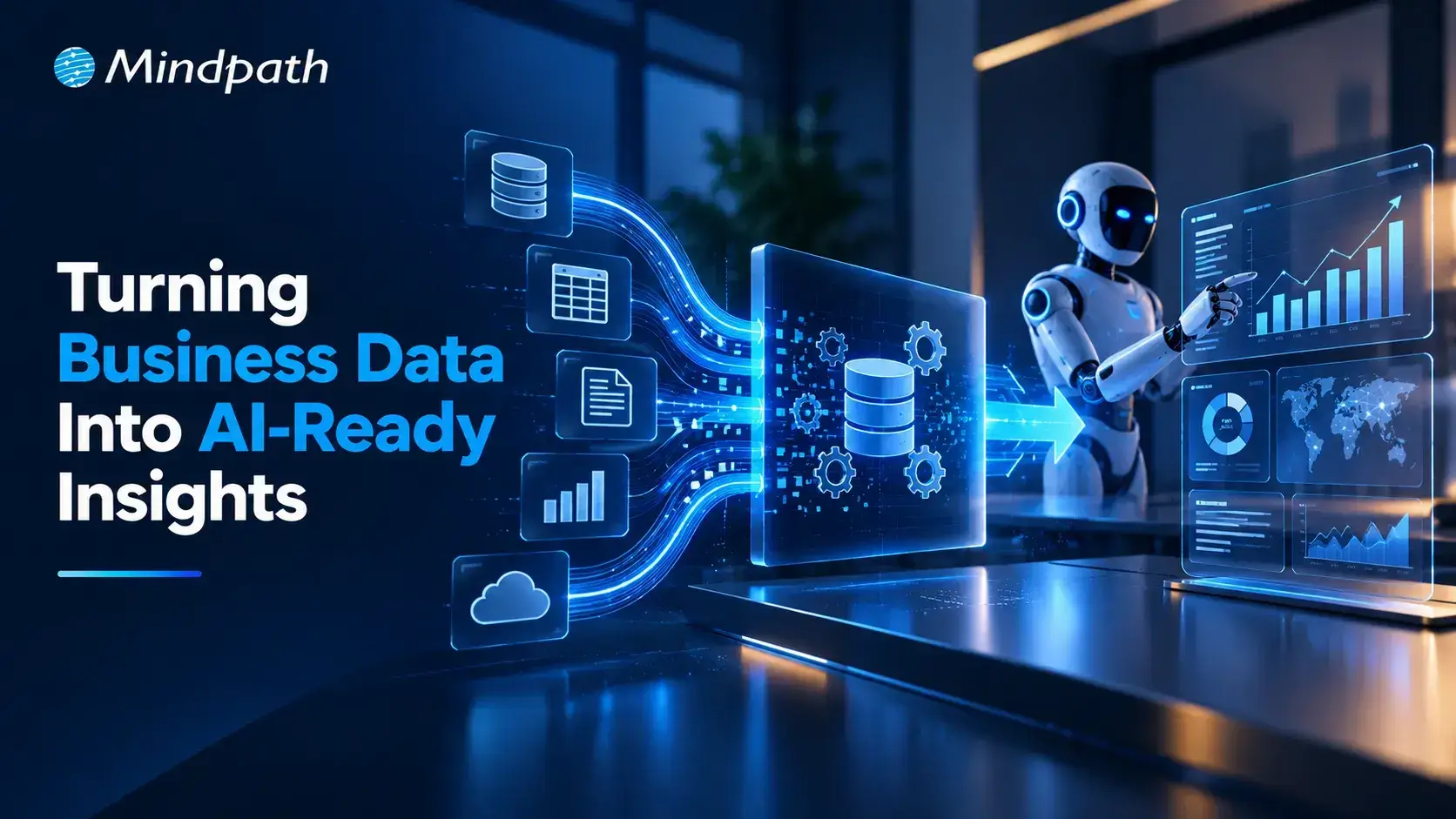
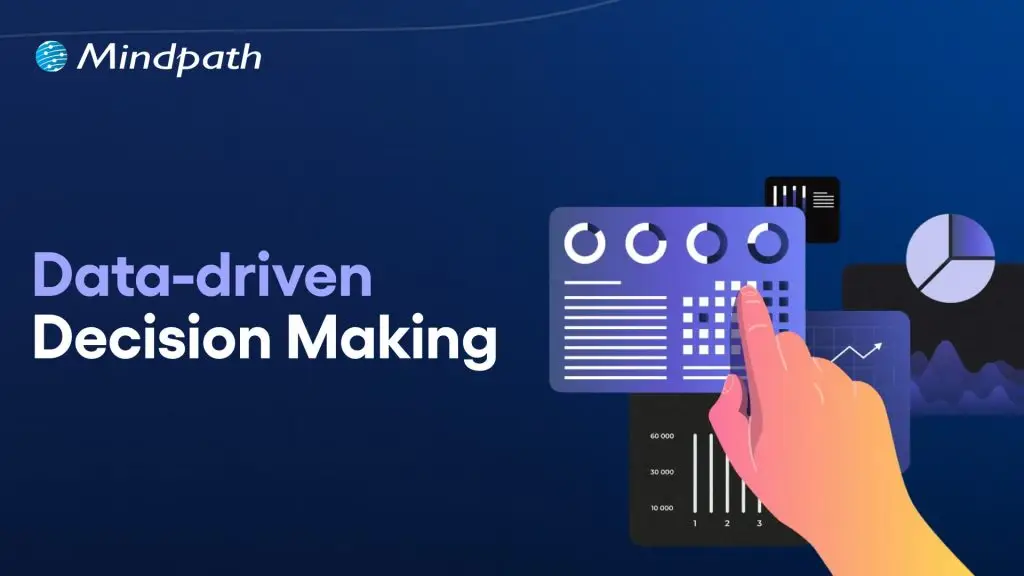
Data-driven decision-making helps businesses make informed choices instead of relying on assumptions. By analyzing data, organizations can develop effective strategies, improve outcomes, and stay competitive in a rapidly evolving market.
Due to increasing access to digital tools and analytics, data has become the most priceless asset a business can possess. With data, businesses can anticipate trends, monitor risk, and develop opportunities for expansion based on sound data.
This is the difference between guessing what will work and knowing what will work. In this blog, we will discuss how data-driven decision-making enables businesses to make better decisions and ensure lasting success.
Ready to strengthen your data-driven decision-making strategy? Our AI development services help you build intelligent systems that convert complex data into a clear business direction.
What is Data-Driven Decision-Making?
Data-driven decision-making refers to the practice of using data and measurable results to inform business decisions. It means collecting data from key performance indicators, analyzing it, and then making it into usable insights to influence strategically better planning.
This methodology allows companies to make decisions on quantitative data rather than instinct and intuition. By relying on accurate data, businesses will improve performance, identify new opportunities, and with greater accuracy achieve their goals.
What are Data-Driven Decisions?
Data-driven decisions are decisions based on factual information, data and analysis, rather than gut feelings. These data-based decisions will help companies to understand trends, measure performance, and select the best next steps. With factual data, companies can make better decisions that improve outcomes and can reduce uncertainty.
Importance of Data-Driven Decision-Making
DDDM is more than simply using numbers. It is a solid foundation for more intelligent business planning that allows organizations to act with clear and confident decision-making.
1. Making decisions based on data improves accuracy by grounding decisions in real facts which also leads to more reliable decision-making and reduced risk.
2. It enhances efficiency and profits by detecting waste, optimizing available resources, and enhancing overall performance.
3. When relating to planning and forecasting, data provides insights into potential patterns that enable more intelligent approaches.
4. Data supports enhanced customer knowledge, which helps businesses determine which personalized services provide the best levels of satisfaction.
5. Businesses can use data insights to engage in continual innovation and improvement of business strategy.
6. Data provides a competitive advantage by allowing businesses to undertake strategies faster and stay ahead of competitors.
7. Data-driven decision-making supports transparency and accountability when businesses set targets and make decisions based on measured facts.
Want to know more in detail? Explore our blog on the importance of data-driven decision-making to understand how data insights lead to smarter and more impactful business decisions.
Benefits of Data-Driven Decision Making
Organizations that embed data in decision-making empower themselves to move with certainty and confidence. Data turns information into a meaningful and actionable outcome that enhances strategy and improves decision-making.
1. Smarter Decisions That Save Time and Resources
Using data-driven decision-making, businesses can move quicker and make smarter decisions. It creates efficiencies in processes, decreases waste, and allocates resources where most needed or impactful. For instance, analyzing sales data and patterns allow businesses to manage inventories more effectively and decrease costs that aren’t necessary, and have efficiency improvements.
2. Stronger Market Alignment and Competitive Growth
Businesses benefit from data analytics in relation to market trends and shifts in customer needs. By tracking changes early, businesses can make adjustments to their strategy or develop a new offering that meets consumer needs. In turn, they can build a favorable market position that keeps them ahead of the competition.
3. Clear Accountability Across Teams
Using data to inform decisions makes it much easier to track results and see what worked. This increased clarity allows for accountability and transparency in every aspect of the work. The team will learn from both successes and failures and will create more enhanced results from the learnings.
4. Continuous Improvement Through Data Insights
Analyzing what has been successful before gives organizations an understanding of success factors. Additionally, conducting regular data analyses will identify inefficiencies and allow organizations to make better decisions in the future. This cyclical process keeps businesses flexible, creative, and committed to continuous growth.
5. Confident and Faster Decision Making
Data-driven decision making provides assurance by removing ambiguity, making things more factual. Leadership can act faster with confidence, knowing that their decision is based on workable data. This fast, assured decision making allows companies to take advantage of looking after positively into opportunities and challenges.
Wondering how businesses turn raw data into smarter and faster decisions? Explore AI in decision making to discover how artificial intelligence enhances data-driven strategies.
Key Steps for Making Data-Driven Decisions
Using data properly begins with a clear and structured process. Thoughtfully adhering to the necessary steps allows a business to convert raw data into valuable intelligence, which can inform better decisions.
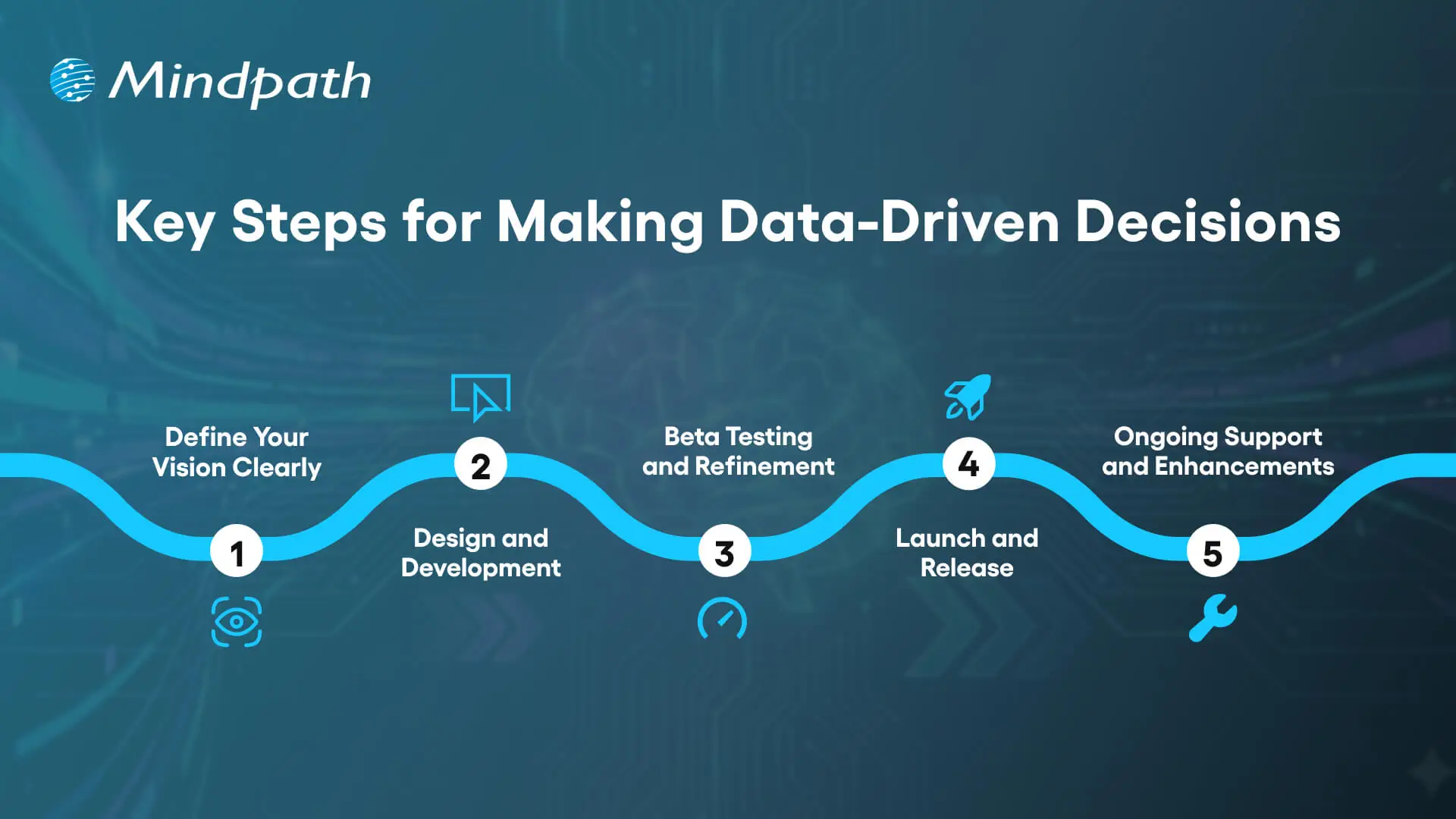
1. Define Your Vision Clearly
Start by understanding your company’s main goals and direction before diving into the data. If you have a direction, that gives you an idea of how you can utilize the insights coming from the analysis as part of your overall business strategy. Data driven decision making is effective when each data point will drive measurable and long-lasting goals.
2. Identify Reliable Data Sources
After you’ve established your vision, it’s time to determine which tools and platforms are best suited to collect your data. Use sources that best match your business objectives: internal reports, customer analytics, market trends, etc. Having trustworthy data ensures that your data-driven decisions remain accurate and relevant.
3. Organize and Visualize Your Data
Consolidating key information into a clear and predetermined structure provides insight. Dashboards or reporting tools make visualization and a higher level of understanding simpler. Organized data allows for more timely and confident business decision-making, and teams can start to see connections.
4. Analyze to Discover Insights
Carefully analyze the information you’ve compiled for trends, opportunities, and challenges. Use your performance data along with genuine customer feedback to develop an even clearer picture. When you are analyzing data together with others, you can be confident that decisions represent a more comprehensive and accurate picture of your business.
5. Act on Your Conclusions
Following analysis, you should outline specific conclusions that summarize what the data is telling you, and what actions to take next. You will want to focus on linking conclusions to realizable goals and measurable results. Making conclusions and creating action steps develops from raw data to actionable steps and infers an ongoing step you will take in their continuous growth and improvement.
How can data-driven insights shape long-term business strategy? Read our blog on AI in business strategy to take a deeper understanding of how intelligent decisions fuel competitive advantage.
Tools and Technologies for Data-Driven Decision Making
Using the right tools and technology can speed up, simplify, and substantiate data-driven decision making. Beneficial technology allows organizations to collect, analyze, and visualize data to give investigators the tools to convert complicated information into digestible information in the form of insights for decision making.
1. Business Intelligence Platforms
Business intelligence tools such as Tableau, Power BI, and Qlik Sense are utilized by businesses to display their data visually and to develop interactive dashboards. They break down complicated data sets into simple insights that can be quickly acted upon by the business. These platforms are instrumental in opening up and involving more people in the process of making decisions based on data.
2. Programming Languages for Data Analysis
Massive datasets and high-level analytics are unimaginable without the use of programming languages like Python and R. In general, Python is the tool of choice when it comes to statistical modeling and automation, whereas R is more effective when the focus is on data visualization and statistical computing. Together they are a force to reckon with for all those professionals that solve problems and make decisions on the basis of data.
3. Data Management and Manipulation Tools
SQL and Microsoft Excel are still the main tools used for organizing and analyzing data. SQL is used for managing and querying relational databases in an efficient manner, whereas Excel is utilized for carrying out quick analysis and generating reports. Combined, they are the means to keep data accurate and make it accessible for decisions to be taken at any level of the business.
4. Data Collection and Integration Tools
Google Analytics, Apache Airflow, and SQL databases are examples of platforms that retrieve and integrate data from various sources. They are instrumental in measuring the performance of a website, keeping an eye on the progression of tasks, and maintaining the data exchange between systems in a trouble-free manner. Such instruments provide a convenient way to obtain trustworthy data that can be used as a basis for making decisions.
5. Advanced Analytics and Machine Learning Tools
Information technologies such as SAS and Apache Spark are employed to handle massive data collections and to produce resulting projections. These tools enable businesses to foresee changes in the market and to tailor their tactics accordingly for maximum advantage. The use of machine learning in analytics further enhances the basis of data-driven decision-making.
6. Generative AI for Data Insights
Generative AI is changing the way companies understand and utilize their data. They get it done at much faster speeds with the help of AI, where it can also unveil the hidden patterns, and use predictive modeling to get the best results. This innovative technology is like an extra layer of depth and brains in the whole data-driven decision process.
Data-Driven Decision-Making Examples
Decision-making based on data is changing how companies manage strategies, operations, and growth, as it aids organizations to leverage real insights to make more intelligent and effective business decisions.
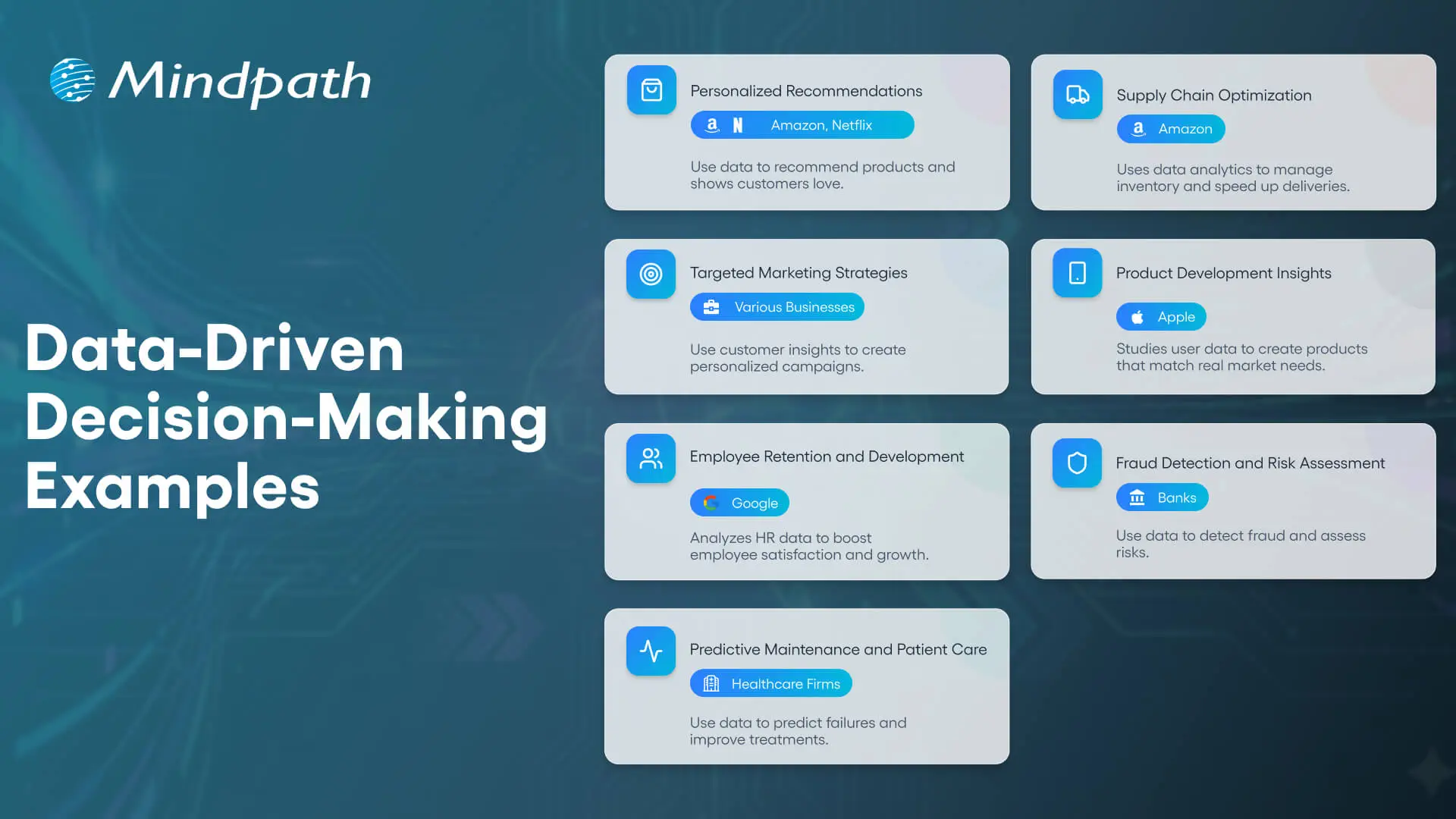
1. Personalized Recommendations
Interactive data is a valuable source of information for online retailers like Amazon and for streaming services like Netflix. Based on this data, these companies suggest products or content that the customers might be interested in. As a result, customers become more engaged, produce more sales and have a better experience of the service.
2. Supply Chain Optimization
Companies like Amazon evaluate stock levels, consumer need, and delivery time to achieve optimal efficiency in logistics while minimizing delay and cost, and ultimately completing orders faster and more efficiently.
3. Targeted Marketing Strategies
Companies look into customer data to predict buying habits and carry out an intelligent and personalized marketing campaign. The use of empirical methods has been demonstrated to be effective in raising brand awareness and increasing the conversion rate through the use of data.
4. Product Development Insights
Companies such as Apple analyze data to identify user needs and market trends. This insight fosters innovation, allowing companies to create products that truly align with consumer needs.
5. Employee Retention and Development
The HR teams analyze survey data, along with performance data, to examine root causes of turnover and ways to increase employee satisfaction. Insights are also used to develop targeted training programs that can close gaps in knowledge or training to further their own career advancement.
6. Fraud Detection and Risk Assessment
Banks and other financial services organizations deploy data analytics to identify unusual behavior and reduce fraud. They also analyze customer data for risk assessment and improved product development.
7. Predictive Maintenance and Patient Care
Manufacturers use sensor data to catch and resolve a potential failure in the machinery early to mitigate down-time and related costs of maintenance. In the health care sector, using data from a patient’s medical chart will improve the quality of care by creating a more proactive treatment plan.
Looking to improve healthcare outcomes through better decision-making? Explore hospital management system insights to discover how real-time data drives operational and clinical efficiency.
Common Challenge While Implementing Data-Driven Decision Making
Without the right strategy and systems to properly execute data-driven decision-making, it can be complicated. Many organizations face challenges, often slowing their ability to adopt data-driven decision-making and, as a result, impacting the accuracy or impact of their decisions.
1. Poor data quality can lead to wrong insights and poor outcomes, making it vital to maintain accurate, consistent, and complete data.
2. Protecting sensitive information is essential, and organizations must ensure strong security measures and compliance with data privacy regulations.
3. Resistance to change can slow progress, so clear communication and proper training help employees adapt to data-driven decision-making.
4. Managing large datasets requires modern tools like cloud platforms and data lakes to ensure efficiency and accessibility.
5. Limited data skills can hold back growth, making it important to train teams and build confidence in using data effectively.
Looking to see data-driven decision-making in action? Discover AI chatbot examples that increased conversions to understand how insights improve customer engagement and sales.
Ready to Turn Data into Smarter Business Decisions?
Data-driven decision making helps businesses act with precision, clarity, and confidence. It turns raw information into actionable insights that lead to better strategies, improved performance, and stronger growth. By trusting data over assumptions, organizations can make choices that truly create impact and drive long-term success.
At Mindpath, we provide advanced AI development services that help businesses harness the full potential of data. From predictive analytics to intelligent automation, our AI solutions empower smarter, faster, and more informed decisions. Partner with Mindpath to transform your business insights into measurable outcomes and achieve sustainable success in a data-driven world.
Imagine being in a world where each online action gets monitored, analyzed, and at times, even targeted. In this world, safeguarding digital data is one of an organization’s biggest challenges. This is where AI in cybersecurity takes effect because it brings intelligence and speed to the way we identify and halt a threat. It allows the system to learn, adapt, and respond in real time, creating a more intelligent defence against an ever-evolving threat environment.
As cyberattacks become more sophisticated, companies are searching for solutions that can think faster than the attackers can. AI accomplishes this by providing a way to leverage raw data into insights that drive security improvements.
AI is changing cybersecurity from a reactive to a predictive process. In this post, we will discuss how AI is improving cybersecurity and helping organizations to secure themselves in today’s digital world.
In today’s digital world, cyber threats are evolving fast. Our AI development services will help you in building smarter defenses that will protect against attacks and keep your data and system safe.
Understanding the Concept of AI in Cybersecurity
AI in cybersecurity means the application of AI technologies such as machine learning, deep learning, and data analytics to security issues that result from evil actors on the net. By doing so, the systems become capable of going through a huge volume of security logs, finding the abnormal patterns, and foreseeing the potential attacks with a much higher level of accuracy and in less time as compared to conventional security measures.
When AI and cybersecurity combine, they create intelligent defense systems that detect and adjust to continuously evolving threats. These defense systems continuously learn from every new piece of data, becoming increasingly smart, adaptive, and flexible with each new piece of data.
Organizations are able to utilize human judgment in conjunction with AI-enabled data analysis to develop defenses that are stronger, faster, and more dependable to protect their networks and digital ecosystems.
Concerned about securing applications against evolving cyber threats? Explore application security best practices for web and mobile apps to discover proven methods for strengthening digital defenses.
Benefits of Using AI in Cybersecurity
With AI, cybersecurity is changing the manner in which enterprises are protecting their digital systems. One of the key features of this technology is that the introduced intelligent tools are capable of quick thinking, learning, and acting, thus they can be a great support to the overall protective measures against cyber risks which keep on evolving.
1. Smarter Threat Detection
AI in cybersecurity expedites the identification of threats by utilizing enormous amounts of data from multiple sources. It will find strange behaviors and advanced attacks that humans would not normally be able to put together. With AI detection, organizations are then better prepared to make timely decisions and strengthen cybersecurity.
2. Adaptive Learning Against New Threats
AI tools are distinct from conventional tools in that they also learn from recent data and attacking behaviours. Ongoing learning enables a rapid adaptation to new and unknown threats, even before they spread. With this flexibility, the effectiveness of AI cybersecurity and reliance on it will only grow in the future.
3. Automated Processes with Fewer Errors
Artificial Intelligence takes over the tedious security tasks that are usually done wrong by humans. It will handle monitoring, scanning, and alerting in a more timely and accurate manner. This allows security teams to shift their attention towards the strategy and high-priority security decisions.
Also Read: AI Consulting
4. Stronger Vulnerability Detection
AI in cybersecurity examines systems and applications to uncover vulnerabilities before an attacker can exploit them. It points out anything that may require immediate action, and can help avoid problems down the line. When issues are detected and resolved in real-time, organizations can better protect their digital environments.
5. Faster Incident Handling
AI decreases response time through automation, performing alerting and preliminary analysis, increasing recovery time through threat prioritizing and assisting the expert in additional fast decision-making. Rather promptly, taking action reduces the potential for damage or disruption while helping mitigate the impact on systems.
6. Deeper Behavioral Insights
AI’s examination of ordinary usage and activity behavior leads to the detection of deviant behaviour patterns. A change in behaviour can indicate an insider threat, or a compromised account and/or device. AI’s behavioural insights give organizations the ability to respond quickly and maintain a higher level of control over their digital assets.
How can organizations respond faster to security threats using intelligent insights? Read about AI in decision-making to understand how AI improves cybersecurity decisions.
Use Cases of AI In Cybersecurity
The intersection of cybersecurity and AI technologies will change the way businesses identify, prevent, and respond to digital attacks. Through the utilization of intelligent systems which learn and adapt, organizations can construct greater and more proactive security strategies for the contemporary digital environment.
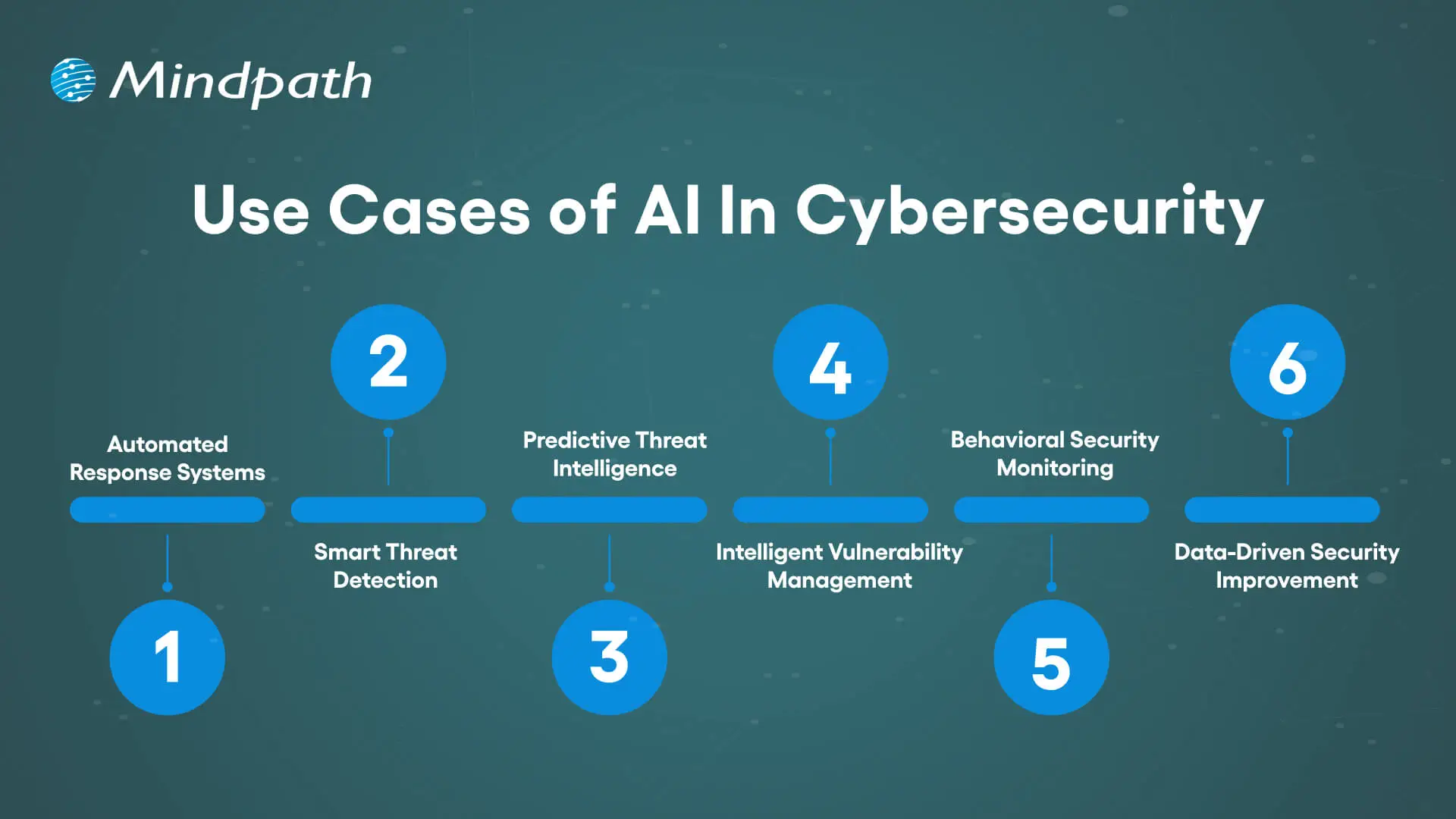
1. Automated Response Systems
With AI, security incidents can be detected and acted instantly by taking actions such as isolating devices, or blocking malicious IPs, which mitigates attack impact and time to respond.
2. Smart Threat Detection
Artificial intelligence will scan data in near real-time, detect abnormal patterns, and uncover hidden, discreet threats that traditional tools may miss, such as phishing or network intrusions.
3. Predictive Threat Intelligence
AI will analyze behaviors and outside factors related to threats around the world and can predict and potentially prevent the next attack by turning data into actionable and meaningful defense-in-depth.
4. Intelligent Vulnerability Management
To help organizations stave off attacks, AI in cybersecurity finds all system vulnerabilities and ranks them based on severity, so that teams can manage the top-priority vulnerabilities and patch the most critical ones first.
5. Behavioral Security Monitoring
Cybersecurity and AI combine security monitoring with tracking users and better monitoring for suspicious behavior, stopping insider attacks and credential-based attacks before damage occurs.
6. Data-Driven Security Improvement
AI in cybersecurity changes data into usable intelligence based on the data, helping organizations improve detection, prevention, and overall protection.
Struggling to manage cybersecurity risks with limited visibility? Explore the importance of data-driven decision-making for businesses to discover how data strengthens security strategies.
Ready to Strengthen Your Cybersecurity with AI?
Artificial intelligence in cybersecurity is transforming the methods by which organizations protect their digital systems. It adds intelligence, speed and agility to security operations enabling organizations to proactively identify, prevent and respond to threats in real time. Given the growth of cyber risks, AI helps organizations be prepared, proactive, and resilient in the digital age.
At Mindpath, we offer advanced AI development solutions that help businesses enhance security and efficiency. Our expert team builds intelligent systems that detect risks, automate responses, and strengthen digital protection. With innovative AI-driven strategies, Mindpath helps organizations stay ahead of threats and achieve a safer, smarter, and more secure future.
Frequently Asked Questions
1. Can AI completely replace human cybersecurity experts?
No, AI works best when combined with human expertise. AI can quickly detect threats and automate repetitive tasks, but human professionals are still needed for strategy, investigation, and handling complex security situations that require judgment and
experience.
2. Is AI cybersecurity only useful for large enterprises?
Not at all. Small and medium businesses also face cyber threats every day. AI-powered security tools are becoming more accessible and affordable, helping businesses of all sizes improve protection, monitor risks, and respond to attacks more efficiently.
3. How long does it take to implement AI in cybersecurity systems?
The timeline depends on the size of the organization, existing infrastructure, and security goals. Some AI security tools can be integrated within weeks, while more advanced enterprise-level implementations may require several months for proper setup and training.
4. Can AI help prevent ransomware attacks?
Yes, AI can identify unusual behavior patterns linked to ransomware before major damage happens. It can detect suspicious file activity, unauthorized access attempts, and abnormal network behavior, helping security teams respond faster and reduce the impact of attacks.
5. What industries benefit the most from AI in cybersecurity?
Industries handling sensitive data benefit greatly from AI-powered security. Healthcare, banking, e-commerce, government, and education sectors use AI to protect customer information, detect fraud, secure networks, and manage growing cybersecurity risks more effectively.


What can cause a well-planned software project to stray off track? Have you ever thought about this? Most of you must have found yourself in a similar situation, right? If so, you are not alone. Many organizations, just like yours, start with the right intentions, a highly skilled team, and a strong idea, but often face delays or an unexpected outcome. Typically, the problem dwells in small custom software development mistakes that begin in the early phases, and it ultimately grows into bigger challenges. If you ignore the early warning signs, it can quickly slow down the whole process. So, how do you keep a custom software project on target, on a clear and quick path toward your business goals?
Every custom software project is full of important decisions that shape the final product. From how you outline your needs to how your team communicates, every aspect matters a little more than you think. Without a defined process, even good ideas have a tendency to derail. In this blog, we will highlight the key custom software development pitfalls you need to avoid, making sure your custom software project stays on track! So, keep reading to find out!
Looking forward to tailoring a software which exactly fit your organizational needs? At Mindpath, we offer custom software development services that help in designing and developing software that meets your business goals.
Why Choose Custom Software Development for Your Business?
Custom software development is a process to create tailor-made software for your organization. It reflects your exact workflow, needs, and goals of the users. It is designed to suit your needs by solving your problems, rather than using predefined features as is the case with off-the-shelf software. Custom software offers better performance, is easily scaled, and puts you in control of the functionality, design, and updates as your business adapts and grows.
Standard software may be quicker to set up; however, it is inflexible, comes with ongoing licensing, and requires ongoing hardware changes. Custom software, on the other hand, is a long-term investment. It does not have unnecessary features, it supports your effective operation, and it also fits in smoothly with your systems. Interestingly, if it is designed by your team, it reduces time, minimizes long-term costs to improve decision-making throughout your business.
Let us take a quick dive into the benefits of custom software development:
1. Custom software will scale with your business as it grows. It also adapts easily when you expand your services or change your processes without incurring the costs of upgrades.
2. It is developed around your specific workflows and business objectives. This provides you with smoother operations without the restrictions and inefficiencies of a one-size-fits-all system.
3. Custom software also integrates well with your current systems. It allows data to flow from one platform to another with minimal manual work and with fewer mistakes.
4. It ultimately saves you money over time, and you won’t incur future licensing fees. You pay for only what you require, and the total cost of ownership is lower.
5. Custom solutions differentiate you in the marketplace. With unique features and enhancements to the user experience, you can be more competitive and more customer-centric.
6. It makes teams more productive in their daily tasks. When software matches each role, teams work faster, make fewer mistakes, and deliver better results.
Want to know more about the benefits of custom software development for your business? Head to our blog: Top Benefits of Custom Software Development
Top Mistakes to Avoid in Custom Software Development
Knowing the common challenges of custom software development is important for creating a successful solution. Many teams overlook some small but critical details, which are often the reason why custom software projects fail or are delayed.
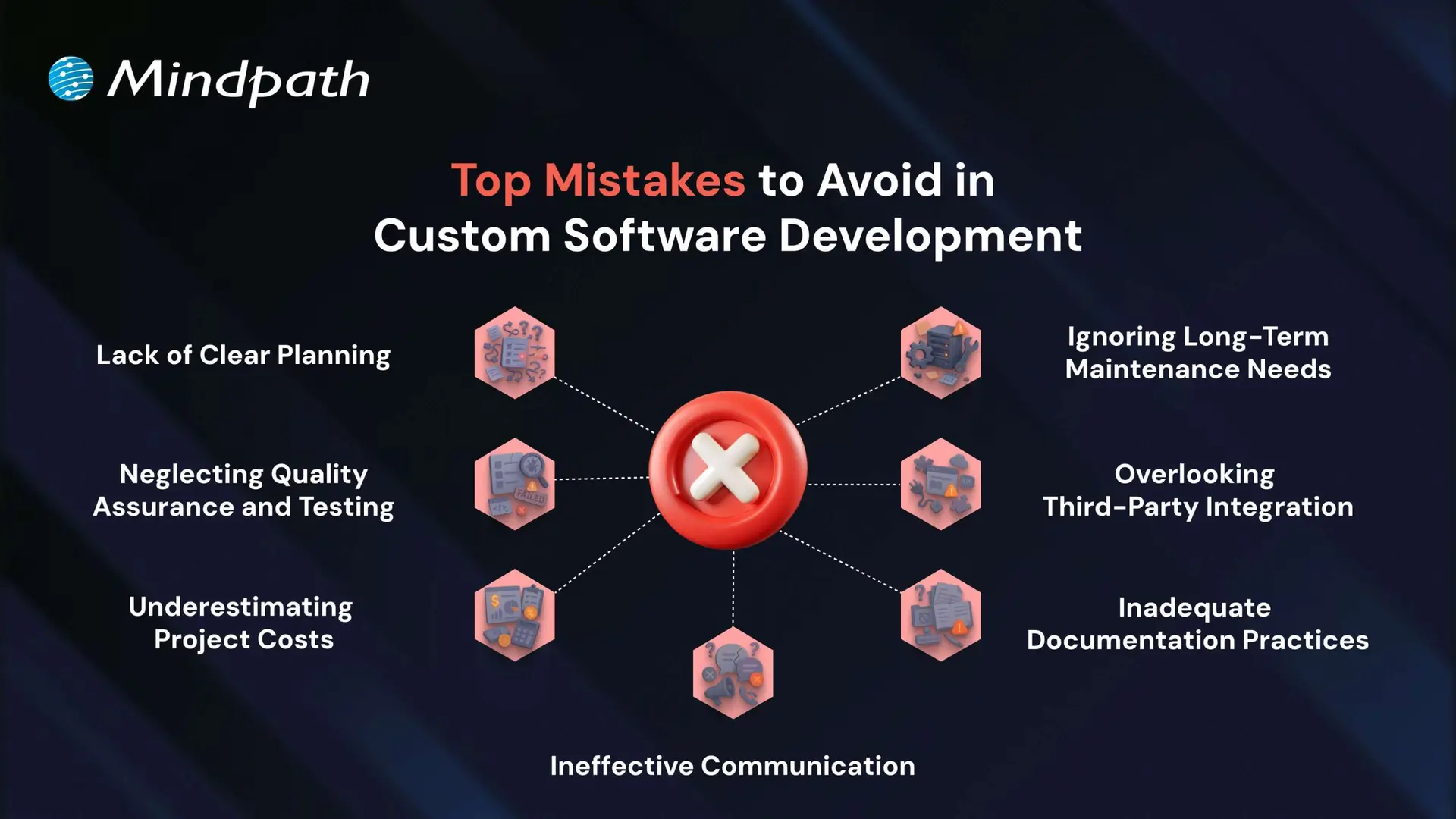
1. Lack of Clear Planning
A very frequently made mistake in custom software development is a lack of planning. If the business objectives are unclear and there is no well-structured roadmap in place, projects like these can end up with inflated costs and delays.
To prevent this, first ensure that key stakeholders are engaged and assess current processes, technologies, and long-term needs. Specify system requirements in detail, including integrations, UI/UX, architecture, and security, before you start the development.
2. Neglecting Quality Assurance and Testing
Omitting or neglecting testing is one of the common custom software development mistakes that can result in considerable problems post-launch. In many instances, some form of quality assurance takes place; however, in sufficient time to perform quality assurance, or altogether ignoring QA means bugs are left unidentified until it has become much harder (and much more expensive to fix).
In order to eliminate custom software mistakes like this, testing should be completed by qualified individuals using legitimate QA and UAT practices to deliver software that provides the customer or user, by and large, what they require to a fully qualified and operational level.
3. Underestimating Project Costs
Cost overruns are one of the most frequent custom software mistakes, primarily due to vague requirements and complexities not being properly assessed. When there is no clear requirement scope, budgets can easily become unbounded, creating delays and the likelihood of project failure.
To tackle this issue, establish a clear MVP with key features and distinguish them from desirable features. This will lead to realistic budgets and phases that can be developed incrementally and in alignment with business goals.
4. Ignoring Long-Term Maintenance Needs
Lack of planning for the ongoing maintenance of software is a challenge in the software development process. It can result in performance and obsolescence issues. Many well-built software solutions are inefficient and potentially vulnerable when support doesn’t happen, and you should not be surprised if yours is in the same boat when software support does not take place.
How can you prevent this? One place to start is with a clear maintenance strategy from the beginning. Budget for planned updates, security patches, and feature improvements so your software can run efficiently and securely.
If you’re planning a custom solution, our step-by-step guide to the custom software development process will help you understand each stage clearly.
5. Overlooking Third-Party Integration
Not considering compatibility issues with third-party systems is a custom software development mistake that can slow down development and reduce software performance. A poor integration strategy can result in data flow problems, missing functionality, and even unanticipated system failures.
To avoid this possibility, complete a full tech audit and feasibility study at the beginning of the project to help ensure the intended integration will go smoothly when the project is complete. This allows you to make informed decisions to move forward with a strategy that meets your business needs.
6. Inadequate Documentation Practices
Poor documentation is a custom software development mistake that results in a misalignment of expectations, confusion, and challenges for long-term maintenance. Documenting decisions and details of the project is imperative. Without documentation, teams cannot go back to understand or support the software later.
To avoid this mistake, be sure to define the scope of the project in advance and document as you go. Another solid practice is to have complete user documentation and technical documentation to enhance transparency, ease of handoff, and longevity.
7. Ineffective Communication
Poor communication is a common issue that leads to misunderstandings, missed deadlines, and project inefficiencies. When teams and stakeholders are not aligned, important decisions and updates can be lost or misinterpreted.
Following custom software development best practices involves maintaining open communication channels, regular check-ins, and clear documentation. This helps ensure transparency, accountability, and better collaboration throughout the development process.
Want to Build Smarter by Avoiding Common Custom Development Mistakes
Successful software projects rely on clear planning, communication, testing, and proper budgeting. Avoiding these common custom software development mistakes helps keep your solution on track and aligned with your business goals. By recognizing early pitfalls and following best practices, your team can build scalable, efficient software that delivers long-term value.
As a trusted custom software development company, we at Mindpath provide tailored solutions built around your unique business goals. Our custom software development services ensure seamless integration, ongoing support, and full transparency throughout the project lifecycle. Partner with us to turn your vision into a secure, high-performing solution that grows with your business.

Approaching software development without a flexible mindset can often result in delays and stress. This is where the benefits of agile methodology come into play. Agile allows a team to react quickly to change, provide value continuously, and maintain common goals.
Agile fosters teamwork, quick delivery, and incremental updates. If you ever find that you are constantly feeling stuck or that things are moving too slowly, then Agile can provide a steady flow that will keep things moving forward and adjust its plans accordingly.
Agile offers structure while maintaining flexibility. Project work is broken down into smaller bits and allows for feedback and change along the way. This helps keep developers, testers, and clients engaged through the process. People can track progress more easily and receive results faster.
Agile doesn’t just focus on completing tasks, but on building something useful at every step. This blog highlights some of the primary benefits of Agile that many of today’s teams prefer to embrace.
Explore how custom software development services using agile methodologies elevate your business performance. Reach us at Minpath, and we will provide expert guidance to you every step of the way.
What is Agile Methodology?
Agile methodology is an adaptive and collaborative method of software development based on the principles set forth in the values of the Agile Manifesto. Agile focuses on teamwork, the ability to adapt, continuous improvement, and the delivery of working software in small, manageable pieces.
An agile team is self-organized and can adapt quickly to changes during the development life cycle. So, what is the main objective of agile methodology? It is to be responsive and provide value more quickly.
Agile focuses on helping teams select tools and techniques for their goals rather than abiding by a single standardized process. Each project can look a little different, but they all follow the same Agile principles by planning in short iterative cycles, soliciting feedback, and adjusting from there. Ultimately, Agile allows teams to deal with uncertainty during a project in order to improve at every turn.
Types of Agile Methodologies
Agile provides several methodologies that adhere to its fundamental principles; however, they differ in structure and practice. Each is intended to foster teamwork, speed, and flexibility in its own unique way.
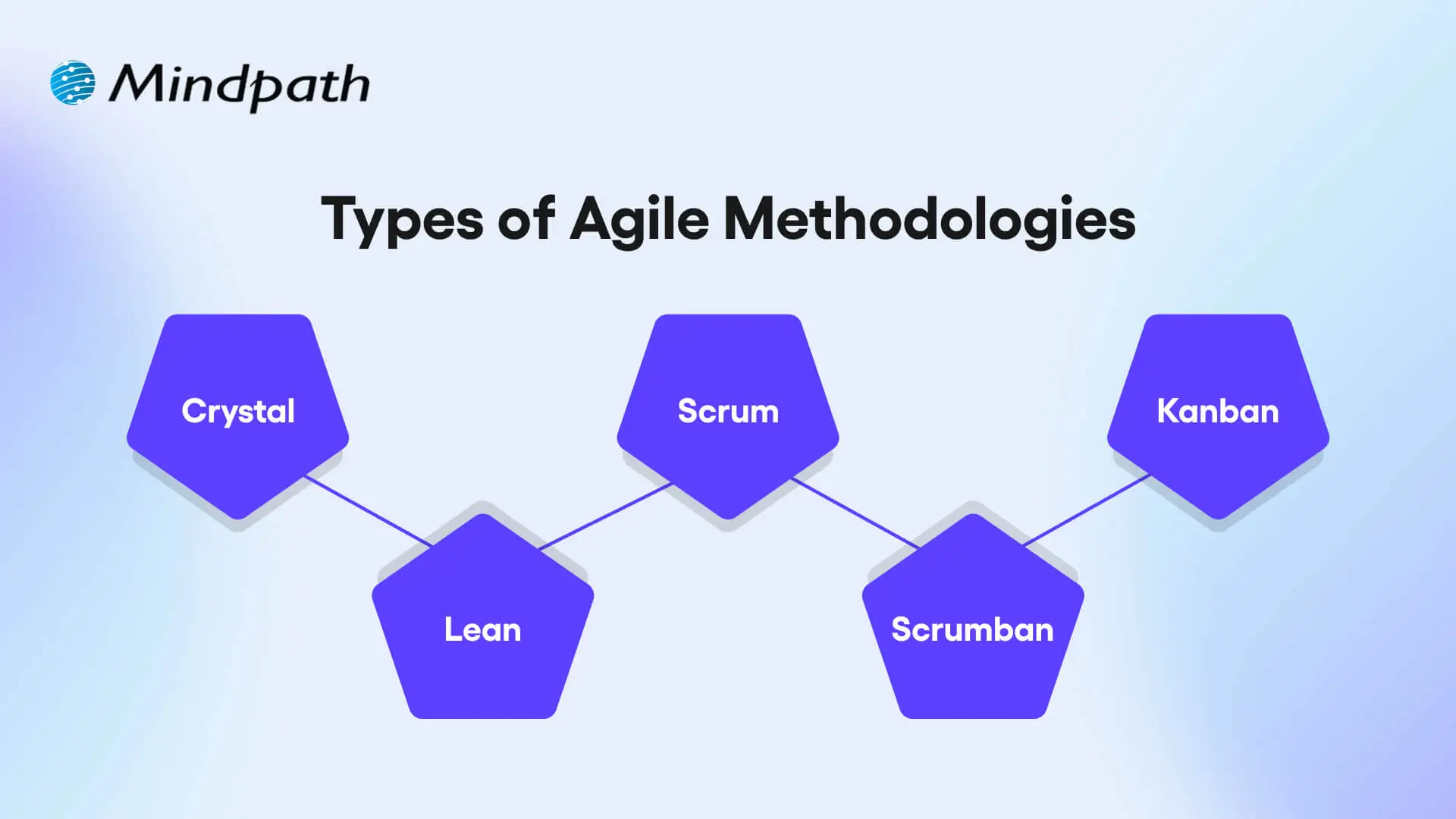
1. Crystal
Crystal is a lightweight agile methodology that encourages rapid delivery of working software, communication with customers, reducing risks, and frequent releases. It is flexible with respect to team size and project complexity, and it promotes collaboration and communication to improve team and customer feedback.
2. Scrum
Scrum is a prescribed agile framework that arranges work into fixed-length sprints, which allow the team the opportunity to inspect how much work was done so far and adjust based on that. The goal is to enhance visibility, facilitate some level of collaboration consistently, and have continuous improvement as the team works through it with prescribed roles and ceremonies.
3. Kanban
The kanban approach is concerned with delivering work continuously and has a strong lean focus on improving the process. The visual workflow helps teams find bottlenecks, work on reducing cycle times, and allows managing work to be simplified using boards and cards.
4. Lean
Lean focuses on maximizing customer value by eliminating waste and improving efficiency throughout the development process. It supports fast delivery, strong team collaboration, and quick response to feedback.
5. Scrumban
Scrumban fuses the structured planning of Scrum with the visual task management of Kanban to allow flexible value-based delivery. It is an adaptable and process-focused method that allows teams to incorporate regular updates, rapid releases, clear task ownership, and adaptability as project needs change.
Wondering how Agile practices fit into the bigger picture of building high-impact web applications, our web app development roadmap outlines the full step-by-step journey from planning to deployment.
Top Benefits of Agile Methodology
Agile provides a modern approach for the management of software projects, which is focused on flexibility, collaboration, and rapid delivery. Here are some important agile software development benefits that aid teams in creating better products with better timeliness.
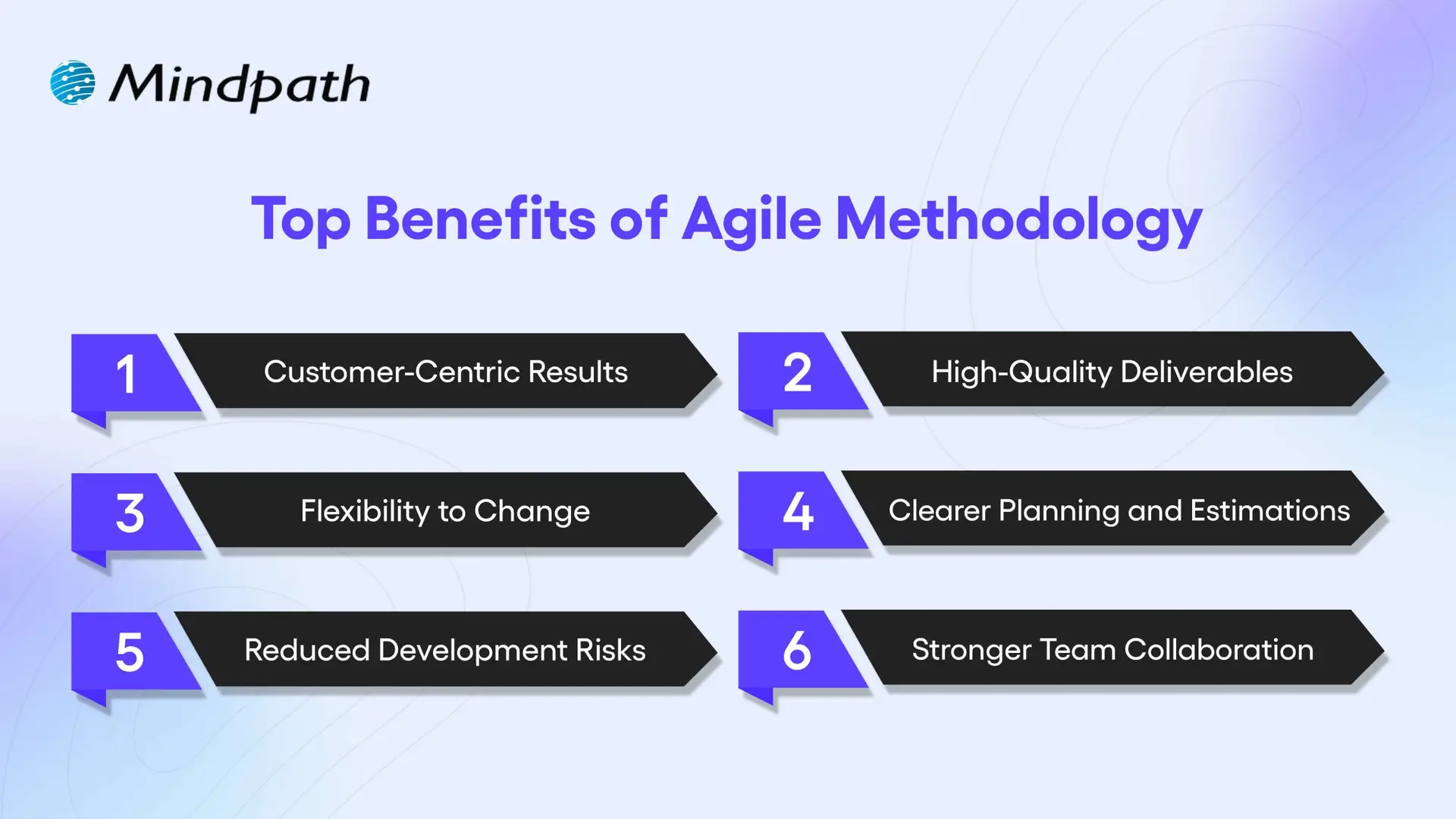
1. Customer-Centric Results
Agile methodologies promote regular feedback and involvement from customers in every aspect of development, leading to products that can be tailored to more accurately fit the needs of the user. One of the key agile software development advantages is that this increases customer satisfaction (as perceived by customers during development) and trust moving forward.
2. High-Quality Deliverables
With every sprint of work teams are testing and improving their work. You will note that the ongoing improvement is one of the key benefits of agile software development, and it helps teams develop stable and reliable products. Solving problems early is part of the workflow.
3. Flexibility to Change
Agile teams can quickly adjust plans in response to new feedback or ever-changing goals, and ease of change is one of the greatest strengths of agile software development. The essence of agility is the ability to stay aligned with business needs without spending unnecessary time or going off track.
4. Clearer Planning and Estimations
Agile operates within short, structured cycles, which allow for considerably improved estimation of timelines and budgets. This is one of the most important benefits of agile software development, especially for project managers whose primary goal is to solicit the meters for project planning in the most effective way possible. Predictable progress encourages smarter decisions.
5. Reduced Development Risks
Frequent reviews and updates allow teams to catch issues early when they are still not serious problems. This built-in risk control offered by agile is of major benefit to agile project success. Agile provides full visibility into work progressing at all times.
6. Stronger Team Collaboration
Agile encourages daily stand-ups, a routine dialogue, and real-time feedback/updates. This collectively helps with teamwork, collaboration, and confusion regardless of role. Better communication is one of the fundamental advantages of agile methodology and contributes to an easier, smoother project flow.
Want to know how businesses turn ideas into scalable software solutions? Explore the custom software development process and the role Agile plays in efficient execution.
Ready to Embrace the Agile Advantage?
Agile has changed the way modern teams build software by promoting collaboration, speed, and flexibility. The benefits of agile methodology include higher customer satisfaction, better product quality, reduced risk, and smoother workflows. By using short cycles and continuous feedback, Agile helps teams deliver faster, smarter, and with greater confidence, making it a preferred choice for many development teams today.
Want to apply these custom software development benefits to your next project? At Mindpath, we offer custom software development services built around proven agile methodologies. Contact us and our team will help you with clear communication, flexible planning, and faster delivery that meets your business goals. With Mindpath, you get tailored solutions that revolve around your business requirements and deliver long-term value with every sprint.
Companies today understand that it’s essential to have satisfied customers at every touchpoint, to keep in front, and that is where the magic of Conversational AI resides. Are you wondering what is conversational AI? It is the technology that informs smart chatbots and virtual assistants that provide 24/7 interactions for infinitely scalable engagements. Organizations leverage conversational AI to reduce waiting hours, respond to customer inquiries in real-time, and keep delivering a consistent quality of service.
This amazing technology is enhancing efficiencies, saving costs, and maximizing customer satisfaction. Conversational AI stands to revolutionize the performance of an organization, as well as the measurement of its growth, by automating processes with personalized support. If you’re interested in how it works and what benefits it has in store for you, let’s discuss all its amazing features in this blog, step by step.
Are you looking to implement smart chatbots or a virtual assistant in your business to enhance customer engagement? Mindpath’s AI Development Services will help you achieve customer satisfaction with 24/7 support.
What is Conversational AI?
Conversational AI is smart technology that helps artificial intelligence bots like chatbots and virtual assistants talk with people in a natural, human-like way. It’s all about making AI more human, so interactions feel real and engaging. By understanding what we say and how we say it, these systems make conversations easier and more helpful for everyone.
Conversational AI is built using machine learning and natural language processing, and it harnesses the knowledge of millions of conversations. Learning from these conversations allows artificial intelligence bots to improve upon responding to questions, solving problems, and predicting what a customer may need next more accurately. It’s a powerful step toward making AI more human and building better customer experiences.
Types of Conversational AI
There are different types of Conversational AI technologies a business can use to meet customers and deliver its services to them. Each one operates in its own way and could have its own niche when it comes to customer support, sales, or engagement objectives.
1. Voice Bots/Assistants
Voice bots and assistants are a type of conversational technology that interacts with people through spoken language. They listen to what a person says, figure out what they need, and respond naturally. This makes everyday tasks easier, from playing music to managing smart home devices.
2. AI Chatbots
AI chatbots are a powerful type of conversational AI designed to hold natural, human-like chats. These conversational agents use advanced language models to understand context and respond in a way that feels personal and clear. They help businesses handle complex questions and provide better support around the clock.
3. Interactive voice response (IVR)/Interactive voice assistants (IVA)
Interactive Voice Response and Interactive Voice Assistants are a type of conversational AI that helps people navigate phone systems using voice or keypad inputs. They understand what a caller needs and guide them to the right solution without long wait times. This makes customer service smoother, faster, and more convenient.
Wondering how conversational AI is advancing into systems capable of autonomous action and decision-making? Explore how Agentic AI is redefining intelligent, self-directed digital behavior.
Advantages of Conversational AI
Conversational AI has become an important part of how companies connect with people today. Here are some key advantages it can bring to your business.
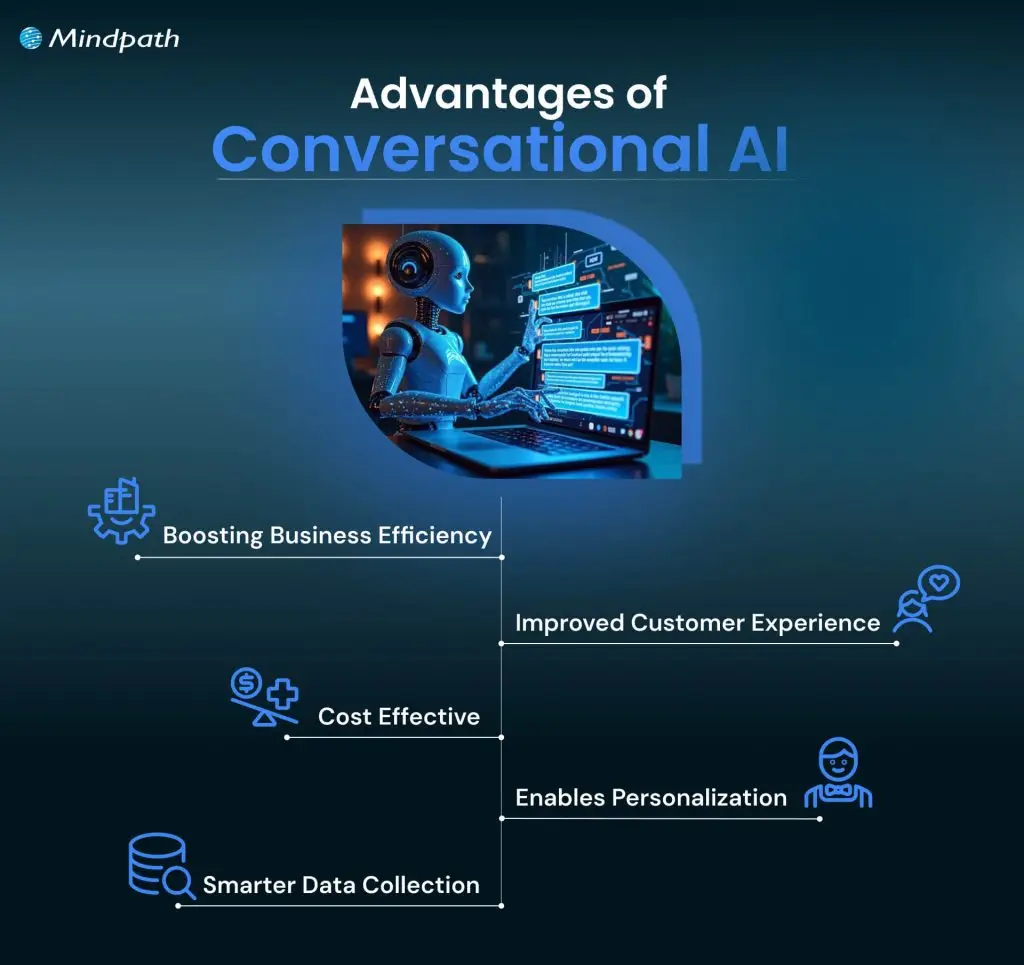
1. Boosting Business Efficiency
Conversational Artificial Intelligence can manage many routine tasks without needing a human agent every time. This means your team can spend more time on important work while the AI handles simple customer conversations. With artificial intelligence conversation tools available 24/7, your business can solve customer queries faster and work more efficiently, showcasing the many benefits of chatbot technology for operational productivity.
2. Cost-Effective
A good conversational AI platform can handle customer calls and chats automatically, with little need for extra staff. By making AI more human and accurate, it helps you manage high volumes of requests without extra cost. This saves money on daily operations and reduces mistakes, keeping your business cost-effective.
3. Improved Customer Experience
Artificial intelligence bots make it easy for customers to get quick answers and help whenever they need it. This technology offers personalized replies and a smooth, contactless service for people all over the world. It creates a better customer experience and keeps people happy with your business.
4. Enables Personalization
This technology learns from each customer’s information, like location and past interactions, to offer a more personal chat experience. It can suggest helpful answers and next steps based on what each person needs. This makes solving problems faster and reduces the need for follow-up calls.
5. Smarter Data Collection
This technology helps you collect useful information from every customer conversation. By tracking what people say and how they interact, you can spot trends and understand what customers really want. This makes it easier to improve your sales and marketing strategies over time.
Want to explore the innovations shaping the future of conversational AI? Explore our blog on the top AI trends to discover the emerging technologies redefining intelligent communication.
Use Cases of Conversational AI
Conversational AI can be used in many ways to make business operations smoother and customer interactions better. Here are some common use cases that show how an example of conversational AI works in real life.
1. Conversational IVR Systems
Modern IVR systems let customers speak naturally instead of pressing buttons to find help. For example, airlines now use conversational IVR to let travelers say things like “Change my flight” or “Check flight status” and get quick answers without waiting for a live agent.
2. Seamless Transfer to Live Agents
When a bot can’t handle a request, it passes the chat to a live agent along with all the details, so nothing gets lost. For example, a telecom company’s virtual assistant can detect when a billing issue is too complex and smoothly transfer the full conversation to a specialist who can resolve it faster.
3. Round-the-Clock Support
These chatbots answer simple customer questions at any time of day without needing a live agent. For example, an online retailer’s chatbot can help shoppers check order status or find return instructions even after business hours.
4. Tailored Product Recommendation
This technology suggests items people might like based on what they’ve bought or browsed before. For example, a streaming service’s chatbot can recommend new shows or movies based on what you’ve just finished watching.
Ready to build conversational AI that boosts sales and strengthens customer engagement? Learn how AI in e-commerce transforms online shopping experiences and drives measurable business growth.
5. Effortless Onboarding
These assistants help new employees feel confident and prepared by guiding them through company policies and tasks step by step. For example, an HR team can use an AI onboarding assistant to help new hires complete paperwork, set up work tools, and get reminders about training sessions.
6. Task Automation
These bots connect chats to your business tools, so tasks like updating customer records or creating tickets happen instantly. For example, the best conversational AI chatbot for an e-commerce store can automatically create a return request and send an update to the warehouse team.
7. Faster Lead Conversion
These chatbots ask visitors the right questions to see if they’re a good fit for your product or service. For example, a real estate company’s chatbot can collect details about a buyer’s budget and location, then connect them with the right agent.
8. Timely Updates
These AI tools send helpful reminders and updates before customers even ask, keeping everyone informed and stress-free. For example, a healthcare provider can use this to remind patients about upcoming appointments or share wellness tips.
If you want to use AI to improve your healthcare services. Learn from our blog AI in Healthcare, where we highlight real-world use cases of conversational systems supporting medical professionals and patients.
Conversational AI Best Practices
Using Conversational AI, the right way can help you get the best results for your business and your customers. Here are some best practices to keep in mind as you build and manage your AI solutions.
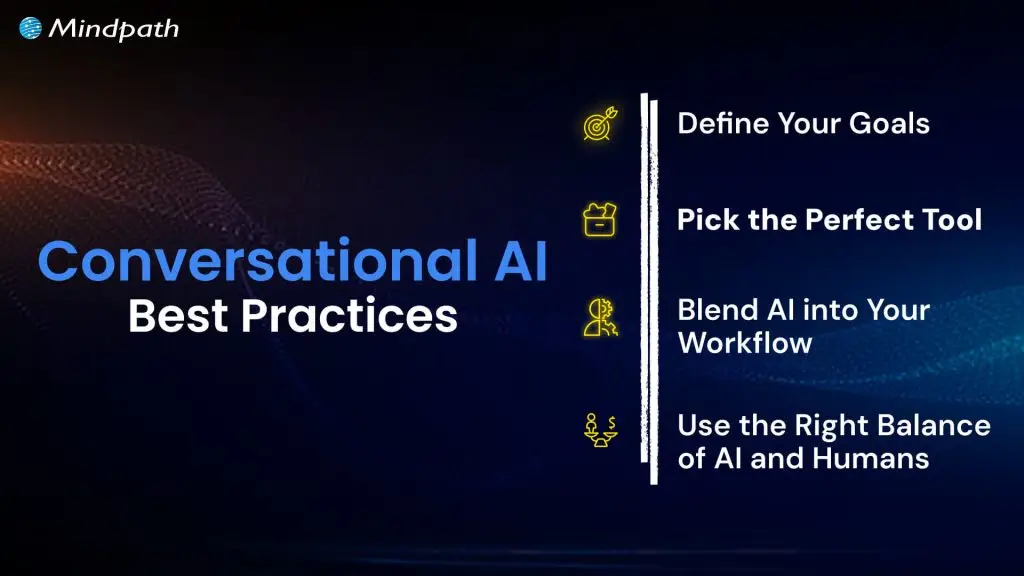
1. Define Your Goals
Always be clear about why you want to use conversational AI and what you want to achieve. Make sure it fits well with your bigger business plans, so it truly adds value.
2. Pick the Perfect Tool
Pick a conversational AI tool that fits your industry and matches your budget and goals. Make sure it can grow with your business, so you get the most value over time.
3. Blend AI into Your Workflow
Connect your conversational AI with your other business tools so it works smoothly with your daily tasks. This makes your processes faster, more accurate, and more useful for your team.
4. Use the Right Balance of AI and Humans
Let AI handle simple, repetitive tasks while your team focuses on work that needs a human touch. Always set clear points where the bot should hand over to a person for the best customer experience.
Curious how AI can optimize your workforce and improve business outcomes? Check out AI redefining job roles in Tech to see how intelligent systems are reshaping employee roles and driving operational efficiency.
Ready to Take the Next Step with Conversational AI?
Conversational AI is transforming how businesses connect with people by making everyday interactions faster and more personal. It helps companies work smarter, serve customers better, and grow with less effort. Now that you know what is conversational AI, you can start using it to create more value.
Mindpath offers professional custom chatbot development services to help you build and launch conversational AI that matches your business goals. Our experts create secure, easy-to-scale chatbots, voice assistants, and smart integrations. Let us help you deliver great customer experiences and stay ahead in the AI space.
Frequently Asked Questions
1. What industries benefit the most from conversational AI?
Industries like ecommerce, healthcare, banking, travel, education, and telecom benefit greatly from conversational AI. These businesses handle large customer interactions daily, so AI helps improve response times, customer engagement, and operational efficiency without increasing support workload.
2. Can conversational AI handle complex customer conversations?
Modern conversational AI can manage many complex conversations by understanding context and customer intent. When situations become too advanced, the system can transfer the conversation to a human agent while keeping the discussion history for a smoother experience.
3. How does conversational AI improve customer retention?
Conversational AI improves retention by providing quick support, personalized recommendations, and consistent communication. Customers are more likely to stay loyal to businesses that respond fast, solve problems easily, and offer convenient experiences across different channels.
4. Is conversational AI difficult for employees to use?
Most conversational AI platforms are designed with simple dashboards and easy management tools. Employees usually need minimal training to monitor conversations, update responses, and manage workflows, making adoption much easier for teams across departments.
5. How can businesses measure the success of conversational AI?
Businesses can track metrics like response time, customer satisfaction, lead conversion, support cost reduction, and resolution rates. Monitoring these results helps companies understand how conversational AI improves operations and customer experiences over time.
Custom software development is becoming the primary driver for businesses to get ahead of the curve in 2026. Businesses no longer rely on ready-made tools as existing tools fall short of meeting unique requirements. More recently, there is a higher need for tailored solutions that incorporate an organization’s goals and can scale as the firm grows. So, how will businesses ensure their software not just helps with their operations, but ultimately provides a legitimate competitive advantage?
In today’s fast-paced digital landscape, the right software is not only technology but also a strategy in practice. With custom software, businesses foster solutions that face specific challenges and ignite innovation. This guide walks through the core aspects of custom software development, including its definition, different types, benefits, key factors, and process. With a successful approach, adequately designed custom-built systems will enable progress and lead to long-term success.
At Mindpath, our custom software development services deliver secure and scalable services that meet your business goals and enhance your business performance.
What is Custom Software Development?
Custom software development builds software solutions designed for a business’s specific needs. Instead of using generic tools developed for all businesses, many companies are developing their own custom software applications to support their unique company goals, internal workflows, and their customers. The custom software process includes planning, designing, developing custom software, and then ongoing software updates. This proactive approach might help a business increase efficiency, allow the business to expand, and create a steady stream of revenue.
The basis of this method is personalization. Developers create each feature with intention, supporting groups like marketing or sales, and enhancing customer brand participation through apps and platforms. These tailored solutions align and integrate smoothly into existing processes, improving productivity. When businesses select the right design and functionality, they receive a competitive advantage and increase their ability to outgrow the competition in a rapidly evolving digital landscape.
Must Read: Software Development Cost
Types of Custom Software Solutions
Businesses face unique challenges, so they will need specific solutions to meet their goals. When used effectively, there are many kinds of custom software development solutions that can take advantage of that to drive efficiency and growth.
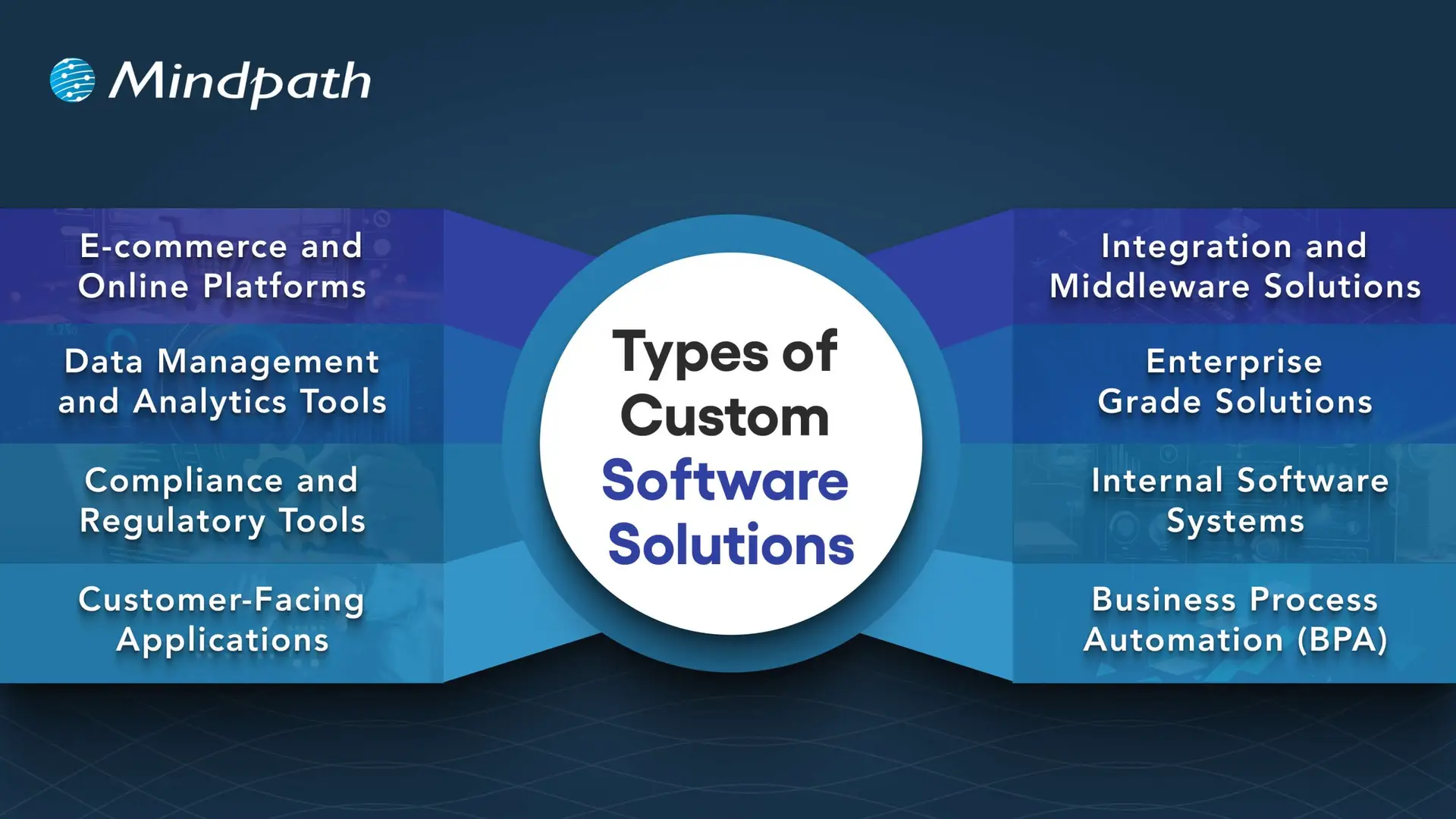
1. E-commerce and Online Platforms
Online businesses require more than a basic website. Custom platforms take care of payment, inventory, and customers quickly and accurately.
2. Data Management and Analytics Tools
Companies generate a never-ending amount of data every day. Analytics tools provide actionable insights from that data, which decision-makers can invest in, as there is confidence in the analytics.
3. Compliance and Regulatory Tools
The industries with strict rules continue to change at a breakneck speed. Compliance software can help you track, report, and reduce risks.
4. Customer-Facing Applications
Customers expect a seamless digital experience, and mobile apps, portals, or self-service tools can provide a simple and engaging interaction.
5. Integration and Middleware Solutions
It’s not very common for systems to connect themselves. Middleware acts as a bridge between those systems and allows for the free flow of information across platforms.
6. Enterprise Grade Solutions
Large organizations need powerful systems to maintain efficiency. ERP, CRM, and BI software all gather data into one controllable system.
7. Internal Software Systems
Day-to-day operations require intelligent systems. HR management platforms, scheduling software, and inventory solutions help maintain workflow efficiency.
8. Business Process Automation (BPA)
Manual tasks challenge the organization as a whole. Custom software development will provide a BPA solution that reduces repetitive, verifiably redundant work and frees up time.
Want to know the method behind building scalable and maintainable software? Learn how the software development life cycle helps you streamline development by providing a structured approach that improves efficiency and overall project outcomes.
Benefits of Custom Software Development
Each organization operates differently, so that’s why software customizations are very important. When you choose custom solutions, companies will have the tools that meet their needs and bring value over the long term.
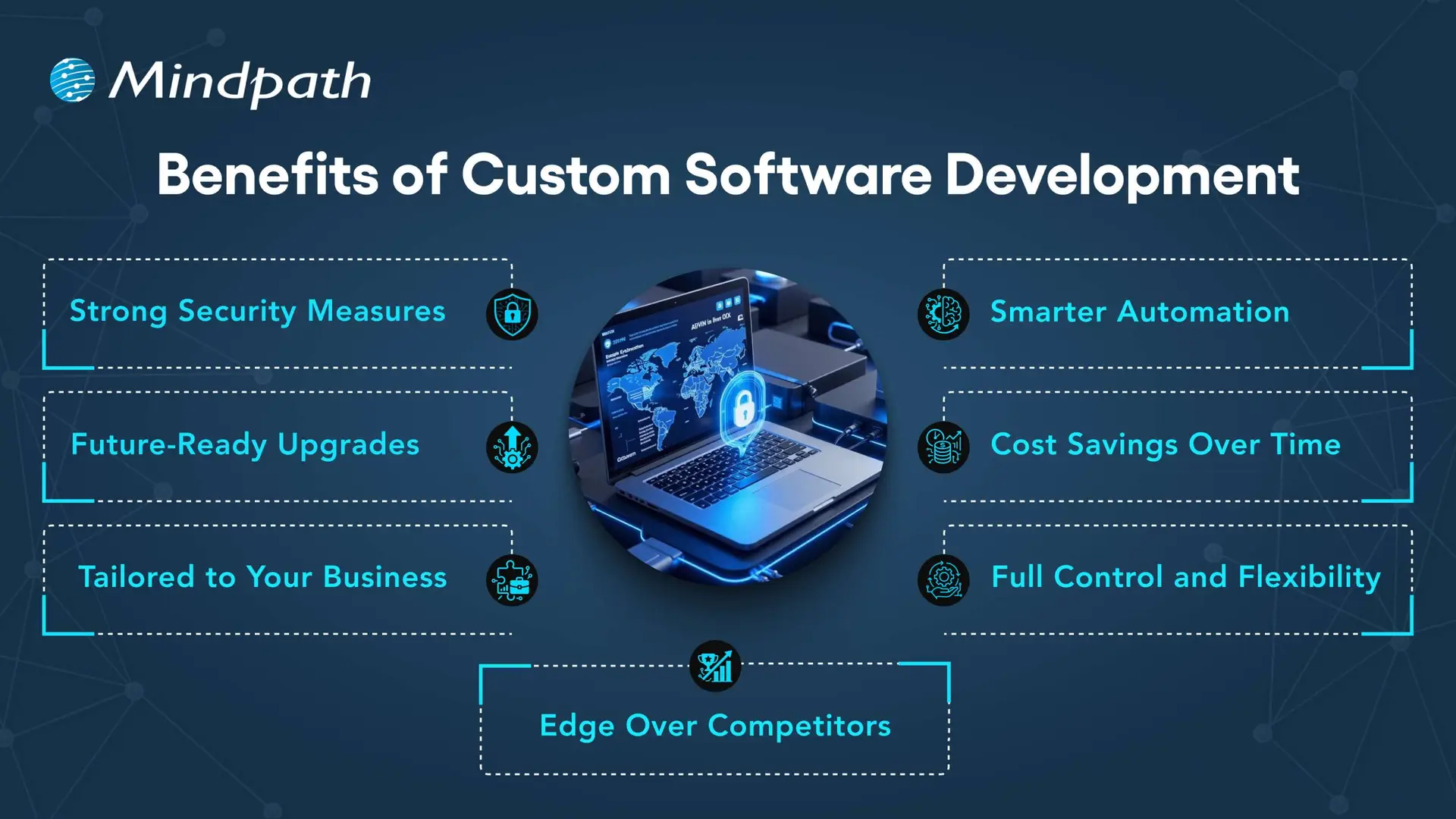
1. Strong Security Measures
Every day, businesses deal with the threat of crime, and good protection is necessary. With custom solutions, businesses can create the security features that fit their unique needs.
2. Smarter Automation
Repetitive work that wastes time is unnecessary. Automated workflows make everything more efficient, giving teams more time to focus on innovative opportunities.
3. Future-Ready Upgrades
Technology will continue to change, and existing systems are often outdated. A custom solution is easy to upgrade, so businesses can stay up to date.
4. Cost Savings Over Time
It’s common to think of generic tools as the less costly option, but they come with hidden costs. A custom-built system can expand with the business and reduce your long-term costs.
5. Tailored to Your Business
Every company has its own workflows, and off-the-shelf, one-size-fits-all tools rarely truly fit. Custom software design considers workflows and goals to create solutions tailored to specific needs.
6. Full Control and Flexibility
Companies have the decision on how their software evolves. From additional feature requests to maintenance, a company is in control of all aspects of software.
7. Edge Over Competitors
To be different, you need unique solutions. Custom software development allows companies to create custom tools that enhance their efficiency and develop stronger customer relationships.
Curious how businesses are building world-class software teams without geographical limits? Explore how our offshore software development can deliver skilled talent and cost-effective solutions.
Step-by-Step Custom Software Development Process
Custom software development has a well-defined process to deliver the best quality product. Using the proper methodology, a custom software development process business makes certain that everything is completed to specific objectives for each project. Here is the process:
1. Requirements and Planning
The process begins with identifying and researching the client’s needs to lay the right framework. The team documents goals, scope, and technology decisions in order to have a clear foundation. During this clarity stage, teams quickly put together custom-made software with a common understanding.
2. UX/UI & System Design
Once they define the requirements, designers and architects start creating wireframes, prototypes, and system architecture for the solution. They start defining the database structure, user experience (UX), and technical workflow in order to ensure everything flows and goes according to plan. Designers create all custom software to be easy to use, scalable, and low-risk.
3. Development Execution
Developers write code based on the approved design and requirements. They develop using agile and best practices and build the functional modules incrementally. Organizations will receive reliable solutions designed to promote their long-term success.
4. Testing & Quality Assurance
Testing validates both functional and performance on devices, platforms, and use cases. Testers perform unit, integration, and regression tests to detect any issues as soon as possible. This step guarantees quality standards in custom software development solutions before delivery.
5. Deployment & Continuous Support
Once testing verifies quality, the team deploys the software on-premises or in cloud environments. The team will continually provide updates, fixes, and improvements to help maintain the effectiveness of the system. We will perform a continuous improvement process to generate value and to prolong the entire application lifecycle.
Concerned about risks that could slow down your custom software build? Explore the major custom software development mistakes that can disrupt progress and find out how to avoid them.
Key Factors to Consider When Building Custom Software
When it comes to building a custom piece of software, it’s more than just writing the code. It’s important to pay attention to the factors that drive the success and make sure your software aligns with your vision of the future in your business.
1. Build vs Buy Decision
Evaluate if building from scratch or buying ready-made solutions best supports your custom software development goals.
2. In-House Team or Outsourcing
Choose between in-house development and outsourcing based on expertise, resources, and project scope.
3. Right Development Methodology
Select the right approach, like Agile or Waterfall, to match your project’s complexity and goals.
4. Focus on User Experience
Design software with intuitive navigation, usability, and efficiency to boost adoption
5. Scalability and Future Growth
Plan for growth by ensuring the custom software development solution can scale easily as your business expands and technology evolves.
Trying to understand the common pitfalls in creating custom software? Check out our blog to learn the essential custom software development dos and don’ts that every business should follow for a smooth process.
Ready to Transform Your Business with Custom Software?
Custom software development continues to be the core driver of innovation, growth, and competitive advantage. By focusing on tailored solutions, businesses overcome unique challenges, streamline operations, and stay prepared for the future. With the right approach, companies build systems that scale seamlessly, improve efficiency, and deliver long-term results in today’s fast-moving digital world.
Partnering with a trusted custom software development company gives you access to expert guidance, advanced technologies, and proven strategies. At Mindpath, our custom software development services empower businesses to create secure, scalable, and future-ready solutions. From strategy to execution, we ensure every step adds measurable value, helping organizations achieve their vision with confidence and clarity.