How Augmented Reality is Shaping the Future of E-Commerce

Join our Newsletter!

Featured Posts

Support Is One Click Away

Home

How Augmented Reality is Shaping the Future of E-Commerce

Augmented Reality

How Augmented Reality is Shaping the Future of E-Commerce

Have you ever wished you could try on clothes, see how furniture fits in your room, or visualize a product in your space before buying it online? Imagine the convenience of making more confident purchases without stepping into a store. That’s the power of Augmented Reality (AR) in e-commerce. But how exactly is AR transforming online shopping, and what does it mean for the future of retail? Let’s explore!  

What is Augmented Reality?

Augmented Reality (AR) is a technology that seamlessly integrates digital content with the real environment around you. Instead of transporting you to a totally virtual environment, like Virtual Reality (VR) does, AR enriches the actual world by adding pictures, noises, or other digital information that you can view using devices such as your smartphone, special glasses, or a headset. AR can help you make decisions, entertain you, and even teach you new things. It works by superimposing digital material over what you see in the actual world, resulting in an amalgamation of the physical and digital. For example, AR can show you how a new piece of furniture might appear in your space or make a game come to life right in your living space. The best part of AR is how seamlessly it blends the digital and real worlds, making your surroundings more interactive and engaging. 

Advantages of AR in Shaping the Future of E-Commerce

1. Visualizing Products

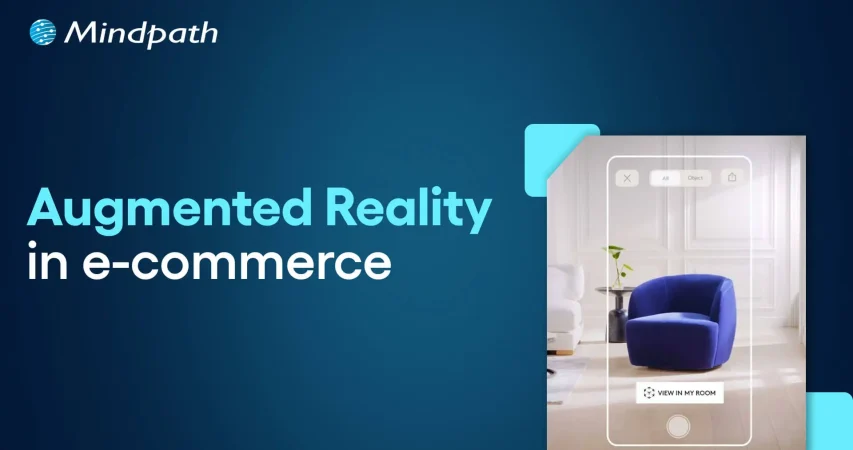
Augmented Reality (AR) enables customers to see how things will appear in their actual environment before making a purchase. For example, individuals can utilize their phone or AR glasses to arrange furniture in their living room or digitally try on garments to see how they fit without having to physically put them on. This provides clients with a greater understanding of how a product will perform in real life, allowing them to make more educated judgements. It also decreases confusion because customers can see how the product will seem and fit into their environment or lifestyle. Whether it’s selecting the ideal piece of furniture, determining the proper color for a product, or visualizing how a device will function in their house, AR helps buyers feel more confidence in their decisions. The ability to virtually “experience” the product before buying increases satisfaction and trust, leading to higher conversion rates. It also reduces the chances of returns, as customers are sure of their selections. 

2. Boosting Customer Engagement

Augmented Reality (AR) can greatly boost customer satisfaction by making the purchasing experience more interactive and engaging. Customers can use AR to virtually try on items, place furniture in their homes, and observe how a product functions in real time, making buying more personalized. This interactive experience encourages users to spend more time on a website or app, researching different items in an entertaining manner. As customers interact with products more extensively, they are more likely to examine more things, improving their chances of discovering exactly what they are searching for. AR also helps buyers see their products more clearly, decreasing confusion and increasing confidence in their selections. This leads to higher customer satisfaction, which can result in more conversions. Additionally, a more immersive shopping experience promotes repeat visits and enhances customer loyalty, ultimately fostering a deeper connection with the brand. 

3. Enhancing Product Design

Augmented Reality (AR) helps to accelerate product development by giving useful, near-real-time information from virtual product testers. Customers can interact with and experience items in digital form before they are released to the market using augmented reality. This allows businesses to receive instant feedback on product features, design, and functioning. For example, if a firm is creating a new piece of furniture, AR lets people see it in their own homes and offer feedback on dimensions, style, and usability. This rapid user feedback enables designers to quickly find areas for improvement, avoiding the need for several product revisions. The capacity to collect data fast enables organizations to adapt designs more effectively and efficiently, reducing development cycles and guaranteeing that the product satisfies customer demands. Companies who use AR for testing and feedback can enhance their product development process, increase innovation, and bring better goods to the market faster. 

4. Virtual Try-On Experience

Augmented Reality (AR) allows buyers to visually try on clothing, accessories, and even cosmetics, providing a good picture of how these products would appear on them before making a purchase. AR allows buyers to examine how an outfit fits, how a pair of shoes suits their style, or how a new piece of jewelry enhances their look, all from the comfort of their own home. This tool provides a more personalized buying experience, allowing buyers to visualize themselves using the products and feel confidence in their selections. Virtual try-ons assist buyers avoid buyer’s remorse by removing the uncertainty that typically comes with online buying, resulting in decreased return rates for businesses. Furthermore, AR enables buyers to mix and match different things, experimenting with designs and colors they may not have considered previously. As a consequence, virtual try-ons improve the whole shopping experience, boost customer satisfaction, and lead to more confident buying decisions. 

5. Staying Ahead of Competitors

Retailers who use Augmented Reality (AR) can gain a major advantage over competitors by offering a more engaging and personalized buying experience. Customers can employ augmented reality (AR) to engage with items in ways that are not possible with traditional internet shopping, such visually putting on clothing and accessories or seeing how a piece of furniture fits in their house. This results in a more engaging and entertaining shopping experience, perhaps leading to improved customer satisfaction and increased sales. By providing these unique features, businesses demonstrate their forward-thinking and commitment to improve their customer experience, which fosters trust and loyalty. Furthermore, as more firms use AR, early adopters can recognize themselves as industry leaders, attracting clients who are searching for a more modern and engaging experience. Ultimately, AR gives retailers the chance to differentiate themselves, attract a larger customer base, and stay ahead in a highly competitive e-commerce landscape.

Also Read: The Role of AR and VR in Education

Augmented Reality (AR) Services at Mindpath

Mindpath provides innovative Augmented Reality (AR) services that can alter the way your company interacts with customers. Our AR solutions enable you to build engaging, immersive shopping experiences that allow customers to see and interact with your items in real time. Whether it’s virtual try-ons, product visualization, or improving the online purchasing experience, we create personalized AR solutions that are suited to your company’s needs. Our team specializes in creating AR features that improve consumer engagement, lower return rates, and increase sales by providing a more personalized and interactive shopping experience. Customers can use augmented reality to examine how a product fits into their environment, try it on digitally, and make better informed purchase decisions. Mindpath’s AR services are designed to give your business a competitive advantage, enabling you to stand out in the crowded e-commerce market. Let us help you innovate and enhance your customer experience with our cutting-edge AR technology. 

Wrapping Note!

Augmented Reality (AR) is transforming the future of e-commerce by giving businesses new methods to engage customers and improve their purchasing experience. From virtual try-ons and product visualization to real-time feedback from customers and interactive features, augmented reality is changing the way we buy online. Retailers could increase sales by providing personalized and engaging experiences. As more businesses use AR technology, staying ahead of the competition becomes simpler by offering distinctive, engaging, and memorable purchasing experiences. Mindpath specializes in providing cutting-edge augmented reality solutions that not only increase customer engagement but also enable businesses to succeed in an increasingly competitive industry.  

Ready to revolutionize your business with AR?

Partner with Mindpath today and let us create innovative, interactive solutions for your e-commerce success!

Related Post

Explore how digital transformation reshapes businesses, boosts efficiency, enhances customer experiences, and drives sustainable growth for success.
How much does hiring a ReactJS developer cost? Learn about factors affecting rates, and how to find the best talent within your budget.
Hiring ReactJS developers? Explore essential factors like experience, skills, and project requirements to ensure a successful collaboration.

Related Post

The Complete Guide to Hiring Expert Node.js Developers in London
Hiring the right developer for your project is crucial, especially when it comes to complex web applications. If you’re looking for a solution that is scalable, high-performance, and capable of handling real-time data, Node.js might be the technology you need. But how do you ensure you’re hiring the best Node.js developers for your needs in a competitive tech hub like London? In this comprehensive guide, we’ll walk you through the essential aspects of hiring Node.js developers in London, what to look for in a candidate, and why London is an ideal place to find top-tier talent.

Why Hire Node.js Developers in London?

When it comes to building fast, scalable web applications, Node.js is one of the best frameworks available. Leveraging its ability to handle real-time data, build microservices, and manage high-performance APIs, many businesses are turning to Node.js developers to bring their vision to life. However, finding the right developers can be tricky. That’s where London comes in—a vibrant hub of innovation and tech talent.

Hiring Node.js developers in London gives you access to some of the most skilled professionals in the industry. These developers have a deep understanding of JavaScript and backend technologies, making them adept at creating modern, robust applications. Let’s dive into the benefits and considerations when hiring Node.js developers in this thriving city.

Key Benefits of Hiring Node.js Developers in London

1. Scalability and Performance

Node.js is known for its scalability and ability to handle large amounts of traffic. By hiring Node.js developers in London, you ensure your application is built to scale seamlessly. Whether your project involves real-time communications, an online marketplace, or a streaming service, Node.js can handle numerous requests simultaneously, making it ideal for high-performance apps. London’s developers are adept at building lightweight, fast, and scalable systems capable of supporting thousands of concurrent users without affecting performance. This makes it an excellent choice for businesses anticipating rapid growth or dealing with high user interaction.

2. Cost-Effectiveness

While London is known for its high living costs, it offers a wealth of skilled professionals at competitive rates. Node.js developers in London are highly efficient, and their expertise helps reduce development costs. Since Node.js operates on a single-threaded event loop, it reduces the need for additional servers, thus lowering infrastructure costs. Moreover, London-based developers are experienced in building scalable solutions, saving your company from costly redesigns or performance issues down the road.

3. Faster Development Cycles

One of the biggest advantages of Node.js is its speed. Because it allows developers to work on both the frontend and backend with JavaScript, development cycles are streamlined. Node.js also has a non-blocking architecture, which allows developers to build apps that process multiple requests at the same time without delay. This is especially beneficial for companies that need to get products to market quickly and react to changing business conditions.

4. Access to a Diverse Talent Pool

London boasts a large and diverse community of developers skilled in Node.js. The city’s reputation as a tech hub means that you can easily find developers with the right set of skills to meet your project requirements. Whether you need a single expert or an entire development team, London’s talent pool offers flexibility in terms of experience and specialization. Additionally, developers in London are well-versed in modern development practices like microservices, cloud computing, and API development, enabling them to tackle a variety of complex projects.

5. Expertise in Emerging Trends

London-based Node.js developers are often at the forefront of emerging technology trends. The city’s vibrant tech ecosystem ensures that developers are continuously learning and adapting to new tools and frameworks. Whether it’s serverless architecture, real-time applications, or the integration of microservices, London developers have firsthand experience in utilizing the latest technologies to build innovative solutions. Their deep knowledge of industry best practices ensures that your application will be developed with modern techniques, making it future proof.

Factors to Consider While Hiring Node.js Developers in London

When you start the hiring process, it’s crucial to know what to look for in a Node.js developer to ensure you find the right fit for your project. Experience, technical skills, problem-solving abilities, and familiarity with modern development tools all play a key role in making the right choice. Additionally, understanding the local job market and legal considerations can help streamline the process. Here are some of the key factors to consider while hiring Node.js developers in London to ensure you hire the best talent for your business needs.

1. Strong JavaScript Foundation

Since Node.js is built on JavaScript, your developers must have a deep understanding of the language. Developers should be proficient in core JavaScript concepts like closures, promises, asynchronous programming, and event loops. A strong foundation in JavaScript will ensure that your project runs smoothly and that the code is efficient and easy to maintain.

2. Experience with Popular Node.js Frameworks

Node.js frameworks like Express.js, Koa.js, and NestJS simplify the development process and make it faster. These frameworks offer tools to build scalable and efficient applications with minimal effort. Developers with experience using these frameworks will be able to deliver high-quality results in less time. When hiring, ensure the developer is comfortable with at least one of these frameworks to ensure efficiency.

3. Database Management Skills

Node.js developers should have experience working with databases such as MongoDB, MySQL, and PostgreSQL. Knowledge of both SQL and NoSQL databases is essential for building scalable and efficient applications. Developers should be able to design, query, and manage databases to store, retrieve, and manipulate data securely and efficiently.

4. Asynchronous Programming Expertise

Asynchronous programming is a key component of Node.js development. Node.js is non-blocking, meaning that it can process multiple requests simultaneously without delay. Developers need to be well-versed in callbacks, promises, and async/await to handle concurrent processes effectively. This is particularly important for real-time applications that need to respond quickly under heavy traffic loads.

5. Collaborative and Adaptable

In addition to technical skills, collaboration is essential. Node.js developers need to work well with other team members, including designers, front-end developers, and stakeholders. The ability to communicate effectively and adapt to changing requirements will ensure that your project stays on track and meets deadlines.

What Skills to Look for While Hiring Node.js Developers in London

Finding the right Node.js developer requires a deep understanding of the technical expertise needed for building high-performance applications. A skilled developer should have strong proficiency in JavaScript, experience with Node.js frameworks, and knowledge of database management and API development. Additionally, familiarity with performance optimization and security best practices is essential. Here are the critical skills to look for while hiring Node.js developers in London to ensure you select the best candidate for your project.

1. JavaScript Fundamentals: A solid understanding of JavaScript fundamentals, such as closures, scopes, and asynchronous programming, is essential for any Node.js developer. Mastery of these concepts will lead to clean, efficient code and optimal application performance.

2. Experience with Node.js Frameworks: Developers should have hands-on experience with popular Node.js frameworks such as Express, Koa, and NestJS. These frameworks help streamline the development process and offer tools for building scalable, secure applications.

3. Database Management: Node.js developers must be proficient in managing databases such as MongoDB, PostgreSQL, and MySQL. A strong grasp of data storage and retrieval methods is essential for building high-performance applications.

4. API Development: Node.js developers should have expertise in designing and implementing RESTful APIs. This is essential for integrating different parts of your application and enabling communication with external services.

5. Asynchronous Programming: Developers need to be familiar with asynchronous programming patterns like callbacks, promises, and async/await. This is vital for managing concurrent processes and ensuring the responsiveness of your application, especially under heavy traffic conditions.

6. Security Best Practices: Ensuring the security of your application is paramount. Developers should be well-versed in security best practices, such as input validation, data sanitization, and secure coding techniques to protect against vulnerabilities like SQL injection and cross-site scripting.

7. Version Control: Proficiency in Git is essential for managing code changes and collaborating with other developers. Node.js developers should be familiar with Git workflows to ensure smooth project development.

How Much Does It Cost to Hire Node.js Developers in London?

The cost of hiring Node.js developers in London can vary significantly based on their experience, the complexity of your project, and the company size. Here’s a breakdown of what you can expect:

1. Experience Level

Junior Developers: Junior developers with limited experience typically charge £30-£70 per hour. They are well-suited for handling simpler tasks but may need guidance on more complex issues.

Senior Developers: Experienced developers with advanced skills and expertise charge £70-£150 per hour. They are capable of managing complex projects, leading teams, and solving technical challenges, which justifies their higher rates.

2. Project Complexity

The complexity of your project also plays a key role in determining the cost. If your project requires advanced knowledge in areas like cloud computing, microservices, or real-time systems, you’ll need developers with specialized skills, which can increase rates.

3. Company Size and Location

Larger companies based in central London typically offer higher hourly rates, ranging from £70 to £150. Smaller startups or companies located in suburban areas may offer lower rates, often between £30 to £70 per hour, depending on their budget and project scale.

Wrapping Note!

Hiring skilled Node.js developers in London can significantly enhance the performance, scalability, and reliability of your web applications. With a rich talent pool, competitive pricing, and expertise in the latest technologies, London offers a great environment for finding developers who can bring your ideas to life. By considering factors such as experience, technical skills, and project requirements, you can ensure that you hire the right developers for your next big project.

Ready to take your project to the next level? Hire skilled Node.js developers At Mindpath in London and bring your vision to life with high-performance, scalable applications.

Contact us today to build a future-ready solution tailored to your needs!

Discover the ultimate guide to hiring Node.js developers in London. Learn about the skills, benefits, and cost factors involved in finding the right talent for your project.
Decision Intelligence

Have you ever wondered how top companies make quick, informed decisions that keep them ahead of the competition? That’s where decision intelligence comes in! But what does this mean for businesses like yours? How can harnessing decision intelligence help you navigate uncertainty and drive success? In this blog, we will explore the fascinating world of decision intelligence and uncover its potential. So, let’s dive in! 

What is Decision Intelligence?

Decision Intelligence (DI) is the way organizations utilize artificial intelligence (AI) to make smarter decisions. It focusses on achieving results that assist the organization to achieve its objectives. Companies can employ Decision Intelligence to improve the efficiency of each department and increase overall performance. A firm, for example, can utilize DI to analyze sales data, better understand client preferences, and develop new methods to generate profit. Businesses can become more efficient and productive by leveraging smart technology to support their choices.  

Why is Decision Intelligence Important for Businesses?

Decision intelligence is important because it enables businesses to make rapid and precise decisions by combining AI and data. This implies that firms can resolve problems more quickly and better satisfy their customers’ requirements. Companies that use Decision Intelligence can collect and analyze data using smart technologies to predict the best results for their decisions. However, Decision Intelligence does not replace people in decision-making processes. Instead, it empowers people by improving their access to all corporate data. This allows them to comprehend the full picture and make the best decisions possible. Businesses can use Decision Intelligence to make data-driven choices at all levels. Additionally, it improves their operational visibility, which can offer thrilling outcomes that could revolutionize their success! 

Benefits of Decision Intelligence (DI)

1. Better efficiency

One of the primary advantages of Decision Intelligence is its capacity to increase organizational efficiency. Decision Intelligence allows leaders to make faster and more informed decisions by delivering the relevant information at the right time. When leaders have access to real-time data, they can quickly analyze circumstances and comprehend the consequences of their decisions. This urgency is essential in today’s fast-paced corporate climate, when delays can result in missed opportunities or bad consequences. For example, if a corporation observes a rapid shift in client behavior, Decision Intelligence can assist executives in immediately analyzing the data, allowing them to adjust their strategy without wasting time. 

Furthermore, Decision Intelligence enables organizations to simplify their operations. When executives have easy access to important insights, they can eliminate superfluous processes in the decision-making process. This not only saves time, but also allows teams to focus on what is genuinely important, resulting in improved cooperation and more successful outcomes. As a result, businesses using Decision Intelligence become more responsive. They can adjust to market developments, client requirements, and internal issues more quickly and adaptably. 

2. Lower risks and uncertainty

Another significant benefit of Decision Intelligence is its capacity to assist organizations in reducing risks and uncertainties. While risks are always there in business, Decision Intelligence enables businesses to detect possible dangers earlier. Organizations can detect warning indicators, such as diminishing customer satisfaction, and take proactive efforts to resolve issues before they worsen. 

In addition to recognizing risks, Decision Intelligence enables firms to investigate several potential consequences of their actions. Organizations can utilize predictive analytics to model numerous scenarios and better understand the possible consequences of their decisions. This competence allows leaders to balance the benefits and drawbacks of many alternatives, making it simpler to select the best course forward while minimizing unwanted consequences. Furthermore, decision intelligence enables organizations to design effective risk management methods. Companies that anticipate possible issues might develop plans to limit their effect. For example, if a company expects supply chain interruptions, it might seek alternate suppliers ahead of time. 

3. Stronger teamwork

Improved teamwork is another significant advantage of Decision Intelligence. Decision Intelligence helps stakeholders align throughout the organization by providing a single source of truth for data and analytics. When everyone has access to the same correct information, it is simpler for teams to communicate effectively and collaborate on common goals. 

With Decision Intelligence, different departments can turn to the same data, minimizing misconceptions and promoting a cohesive strategy. This transparency guarantees that everyone understands the same thing, whether it’s about sales objectives, customer feedback, or operational issues. When teams understand their common goals and have accurate facts to back up their talks, they can work more effectively. Furthermore, Decision Intelligence promotes collaboration by breaking down the barriers between departments. When individuals from several departments exchange thoughts and data, it results in improved problem-solving and new solutions.  

4. Smarter decision-making

Improved decision-making is a major advantage of Decision Intelligence. Executives can more effectively recognize and analyze distinct scenarios by utilizing analytics in key moments. This helps people to better assess the probable repercussions of their choices, resulting in more informed judgements. 

When leaders use data-driven insights, they can consider the benefits and drawbacks of several solutions before making a decision. For example, if a firm is thinking about releasing a new product, Decision Intelligence can help executives evaluate market trends and client preferences. This thorough examination enables them to make the best choice that matches the company’s objectives. 

Also Read: 5 Conversational AI Trends To Watch Out For In 2024

Decision Intelligence Services at Mindpath

Mindpath’s Decision Intelligence services help organizations make informed choices by integrating advanced analytics with human insights. Unlike traditional artificial intelligence, which mostly automates processes and makes predictions, our methodology assists executives in evaluating many scenarios and outcomes, ensuring they have a comprehensive perspective of their corporate objectives.  By offering a single source of truth for data, we encourage stakeholder engagement and minimize divisions between departments. This alignment enables everyone to work towards shared goals, resulting in better informed, effective decision-making throughout the organization. 

Wrapping Note!

In today’s fast-paced corporate environment, decision intelligence is essential for organizations attempting to succeed in the face of uncertainty. Companies can make better, quicker choices by integrating modern analytics and human insights. The benefits like increased efficiency, lower risks, stronger cooperation, and better decision-making, show how Decision Intelligence can alter operations and drive performance. 

At Mindpath, we are dedicated to assisting organizations in achieving their objectives by using decision intelligence. By offering a single source of truth and encouraging cooperation, we enable organizations to successfully handle problems and grasp opportunities. Mindpath’s Decision Intelligence services can help you unleash your organization’s full potential. 

Ready to transform your business with smarter decision-making?

Partner with Mindpath’s Decision Intelligence services for data-driven success.

Discover how Decision Intelligence transforms businesses by improving efficiency, reducing risks and driving smarter decision-making.
Generative AI in Human Resources

Imagine a world where hiring the perfect candidate feels effortless, employee engagement is at an all-time high, and HR processes run like a well-oiled machine. Sounds like a dream, right? What if I told you that Generative AI could be the key to making this vision a reality? Have you ever wondered how technology could enhance talent acquisition, streamline onboarding, or even foster a more inclusive workplace? In this blog, we’ll explore the transformative role of Generative AI in HR. So, let’s dive in! 

What is Generative AI?

Generative artificial intelligence (generative AI) is a form of AI capable of producing new content and ideas, such as conversations, stories, images, videos, and music. AI technologies aim to replicate human intelligence in nontraditional computer tasks such as image identification, natural language processing (NLP), and translation. Generative AI represents the next phase in artificial intelligence. You can teach it to understand human language, programming languages, art, chemistry, biology, or any other complicated topic. It leverages previously trained data to tackle new issues. For example, it can acquire English vocabulary and compose a poem using the words it processes. Your organization can utilize generative AI for a variety of applications, including chatbots, media production, and product development and design.  Generative AI is important in HR because it alters old procedures and improves decision-making. HR personnel can focus on strategic efforts that encourage development by automating tedious duties like resume screening. Furthermore, Generative AI does data analysis to find insights that enhance employee engagement and talent acquisition. Integrating Generative AI in HR facilitates operations and creates a more responsive workforce, which boosts overall performance as firms look for efficiency and creativity. 

Role of Generative AI in HR

1. Smarter Recruiting

Generative AI can greatly simplify the employment and recruitment process. For instance, employment posts can be made visually appealing and with clarity using ChatGPT. In order to focus and improve the effectiveness of interviews, they can also create unique screening questions according to the position. 

AI can be used by HR departments and recruiters to save time and effort while writing various email correspondence throughout the employment process, such as outreach emails and rejection letters. 

Certain platforms now allow you to look for candidates by posing straightforward queries as an alternative to laborious search techniques. To identify the greatest fit for your vacant roles, these AI technologies may also compare the profiles of candidates with job descriptions. 

2. Streamlined Onboarding

AI chatbots can act as virtual assistants during the onboarding process, providing new hires with real-time help. The process runs more smoothly since they can respond to enquiries regarding corporate regulations, perks, salary, and how to obtain time off swiftly. These chatbots also offer assistance with utilizing the company’s systems, finding vital assets, and finishing required documentation. This not only makes the onboarding process better, but it also makes new recruits feel more at ease and established into their jobs faster. By simplifying duties, AI helps HR professionals to focus more on personal connection and assistance 

3. Training Transformation

The training and development of employees can be substantially enhanced by combining generative AI with HR. AI, for example, can evaluate a worker’s abilities, output, and career objectives to provide tailored learning programs that best suit their requirements. Additionally, AI-based training solutions are emerging. These technologies replicate the advantages of in-person coaching by giving advise, responding to queries, and providing real-time feedback. 

By automatically updating content to match industry standards, AI can maintain training materials current and guarantee that staff members are constantly learning the most recent knowledge. AI is also capable of producing realistic training simulations that adjust to the decisions made by staff members, giving them experience making decisions in actual situations. Employee confidence is increased, and practical skills are developed via this experiential learning. 

4. Enhancing Engagement

HR managers can utilize generative AI to create thoughtful survey questions for employee engagement. These questionnaires can provide insightful information on how to raise productivity, enhance workplace happiness, and resolve any issues inside the company. 

The previously discussed AI chatbots can also help to keep current employees engaged by routinely responding to enquiries about corporate perks, policies, and other important details. This enables workers to easily obtain what they want through self-service, freeing up HR personnel to concentrate on more crucial in-person contacts that enhance the working environment as a whole. 

5. Data-Driven HR Insights

Generative AI can help HR departments in analyzing enormous volumes of data and identifying relevant trends. It can also convert complicated information into simple visualizations, making data insights more understandable and appealing. 

For example, AI can analyze compensation data to identify trends or unexpected patterns, such as gaps in pay or attendance, which can indicate concerns such as employee unhappiness or management issues. AI can even construct scripts for deeper data analysis, allowing HR teams to explore more sophisticated insights and take quick action to address possible issues. 

6. Faster Task Automation

Generative AI can speed up numerous mundane operations for HR workers, such as arranging interviews, going through applicants, and creating reports. This enhanced efficiency enables HR teams to focus on higher-impact tasks such as strengthening business culture, implementing talent initiatives, and generating personalized employee development plans. 

By automating repeated operations, AI decreases the chance of human mistake while simultaneously ensuring process consistency. This not only increases HR efficiency, but it also enhances accuracy and decision-making. As a result, HR departments become increasingly important to the company’s performance, influencing its development and long-term strategy. 

7. Improving Internal Communications

Generative AI can assist in the development of internal communications that are suited to the needs of both the organization and its personnel. It can swiftly create material with the appropriate tone and voice to reflect the company’s ideals, as well as personalize messaging to better connect with each employee. AI ensures that messages within the organization are consistent, engaging, and accessible to everybody. 

AI can also personalize communications depending on an employee’s function, hobbies, geography, or career stage. Whether you’re communicating with recruits or current workers, generative AI ensures that your messages are smart, targeted, and successful at all levels. 

Generative AI Solutions at Mindpath

At Mindpath, we provide Artificial Intelligence solutions that make HR activities easier and faster. Our AI products assist HR teams in streamlining their operations by automating chores such as generating job posts, screening candidates, and drafting emails. We also utilize AI to analyze massive quantities of HR data, identifying patterns in employee performance, attendance, and pay.  HR teams can apply generative AI to develop personalized training materials, deliver targeted messages to staff, and improve internal communications. Our products allow HR professionals to devote more time to vital tasks such as employee development, talent management, and workplace culture improvement. Mindpath enables HR teams to work smarter and contribute more to company development. 

Wrapping Up!

Generative AI is revolutionizing the future of human resources by making procedures more efficient, personalized, and data driven. From smarter recruiting to increased employee engagement, AI enables HR professionals to focus on what is most important to people. As technology advances, adding AI into HR procedures will save time and effort while also creating a more inclusive, responsive, and effective workplace. At Mindpath, we help HR teams realize the full potential of generative AI, resulting in increased growth and innovation in your organization. The future of human resources is here, and it is powered by AI. 

Ready to transform your HR processes with Generative AI?

Partner with Mindpath to streamline recruitment, boost engagement, and drive business growth.

Explore how Generative AI in Human Resources is revolutionizing recruitment, making HR processes smarter and more efficient.