Key Factors to Consider When Hiring ReactJS Developers

Join our Newsletter!

Featured Posts

Support Is One Click Away

Home

Key Factors to Consider When Hiring ReactJS Developers

hiring reactjs developers

Key Factors to Consider When Hiring ReactJS Developers

The fast-paced growth of the digital landscape has not only empowered businesses but also made them think about their online presence. Companies have been hiring ReactJS developers to capitalize on the diverse capabilities of ReactJS for creating robust user interfaces. The notable features of ReactJS include the virtual DOM, a thriving ecosystem, and modular architecture. Let us find out the important factors you must keep in mind while hiring React developers.

Want to hire ReactJS expert for your next project? Discover how Mindpath’s ReactJS development services will help you achieve your specific business goals.

What Should You Keep in Mind While Hiring ReactJS Developers?

The search for expert ReactJS developers has gained momentum as a response to more businesses turning towards online platforms. However, business owners might experience some trouble in hiring React developer as they will find it difficult to understand coding nuances and technical jargon. At the same time, finding the best React developer who can also be a cultural fit is a huge challenge.

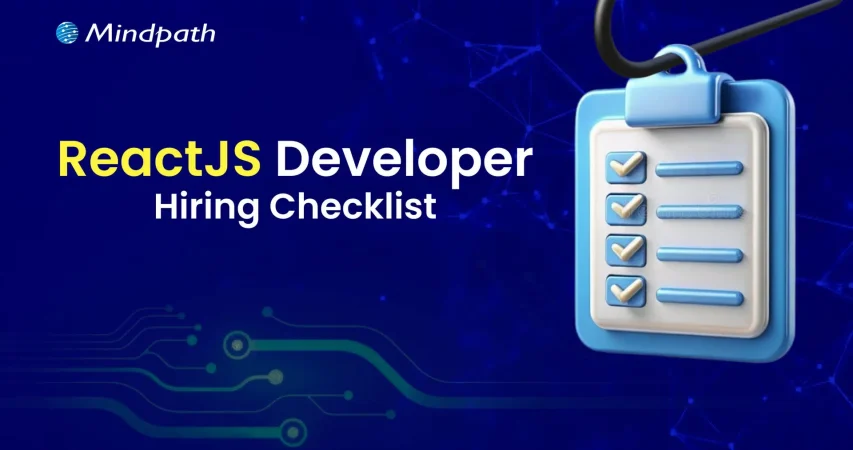
Hiring managers must also go through a massive talent pool of React developers to find the top expert for their next web project. On top of it, employers have to look for more than just technical skills in React developers to create successful web projects. The following checklist can help you hire the best ReactJS developers for your web projects.

Must Read: ReactJS Trends

1. Specify the Project Requirements

One of the foremost factors to consider when hiring ReactJS developers is the outline of project requirements. You should know your project scope and complexity level to identify the ideal React developer who would align with your project vision. The project requirements should not be limited to defining the type of project, but also the timeline, desired features, budget, and complexity.

With a clear impression of these aspects of your project, you can determine the skills and experience required from candidates. For instance, you will need a junior developer for smaller tasks and a senior developer for leading initiatives to scale up web projects.

2. Never Compromise with Technical Fluency

The easiest solution to challenges in hiring expert ReactJS developers involves focusing on the technical skills of applicants. You need developers who know more than the fundamental concepts of React and have various crucial technical skills. Candidates must have strong understanding of JavaScript features such as arrow functions, closures and destructuring.

Applicants for React developer jobs should also have in-depth understanding of the important concepts in ReactJS. Some of the important React concepts include React Hooks, component lifecycle methods, virtual DOM and reconciliation. People applying for ReactJS developer jobs must also know how to work with state management libraries such as Redux.

The other crucial technical skills in a checklist for hiring ReactJS developer include fluency in HTML and CSS, version control with Git and API integration. Aspiring React developer must also know how to work with testing frameworks, build tools and package managers like NPM. Another prominent technical skill that React developers must have is performance optimization.

Want to keep your large React app fast and responsive as it scales? Discover the best practices for optimizing React performance for large applications.

3. Optimizing the Interview Process

The effectiveness of your hiring process depends a lot on the quality of the interview. If the resume serves as an advertisement, then the interview helps you test the product. Employers should divide the interview process into different stages to evaluate the distinct competencies of applicants. The best practices for hiring ReactJS developers suggest that the interview must include technical assessment, portfolio review, live coding session and behavioral interview. Each stage in the interview process will help you measure the overall proficiency of candidates rather than focusing on specific areas of expertise.

The technical assessment should have coding challenges to test the problem-solving skills and coding style of applicants. You can find out whether they use efficient algorithms, data structures and React concepts in their code. Hiring managers should choose live coding sessions in interviews for senior React developer roles. The portfolio review involves checking for active contributions of candidates on GitHub and their past projects. Employers can use the portfolio review to find out whether the applicant has problem-solving skills.

The technical assessment and portfolio review must be accompanied with behavioral interview questions. The best react developer hiring tips point out that behavioral interview questions can help you learn more about the developer. For example, you can find out how they approach complex issues, their preferred development workflow and their preferences for collaboration. The behavioral interview will help you understand the capabilities of a React developer applicant on a more personal level.

4. Don’t Forget the Soft Skills

Among the many factors that you should keep in mind while hiring React developers, the list of soft skills will never lose its significance. As a matter of fact, soft skills like communication, adaptability, problem-solving and collaboration are essential requirements for almost every job. Why are soft skills important for ReactJS developers? Soft skills serve as the catalyst for transforming a group of individuals into a powerful team.

Most of the guides on how to hire ReactJS developers also focus on other soft skills such as attention to detail, proactivity and accountability. React developers need attention to every detail of the UI development process as it can help in crafting robust and engaging user experiences. On top of it, proactivity implies that the candidate will be always ready to take initiative. At the same time, accountability can ensure that the developers take responsibility for all their actions.

5. Determine Realistic Compensation

The most crucial highlight in the hiring process is the cost of hiring ReactJS developers. Hiring managers must offer a compensation package that fits perfectly with the role and responsibilities of the developer. For example, junior developers can earn between $70,000 and $90,000 while senior developers can earn more than $150,000.

The ideal way to make sure that the candidates feel that the compensation is right involves a clear job description and smooth onboarding process. Tell the developers what they have to do on the job to make them understand why they are being paid a specific amount. In addition, try to include programs for continuous learning and growth of developers.

Looking for specialists who can handle complex front-end challenges in your business? Learn why partnering with an expert React Development Company is a smart move.

Final Thoughts

The answers to “What are the key things to consider before hiring a ReactJS developer?” focus specifically on project requirements, technical skills, soft skills and the interview process. On top of it, determining the ideal compensation for ReactJS developers is also an important concern in the hiring process.

Do you need professional ReactJS development services for your next web application? At Mindpath Tech, we have the best developers who can handle all your frontend development needs. Our team of proficient ReactJS developers has the experience of working on multiple projects. We not only offer the assurance of efficient web development but also resourceful solutions to optimize your digital presence. Join us and work with top-tier ReactJS talent on your revolutionary web app right now.

Related Post

Discover how Infrastructure as Code (IaC) improves IT operations with faster deployments, enhanced security, and increased efficiency.
Discover the cost to hire Node.js developers in London: £30-£70/hour for juniors and £70-£150/hour for experienced, depending on expertise and project complexity.

Related Post

agentic ai examples

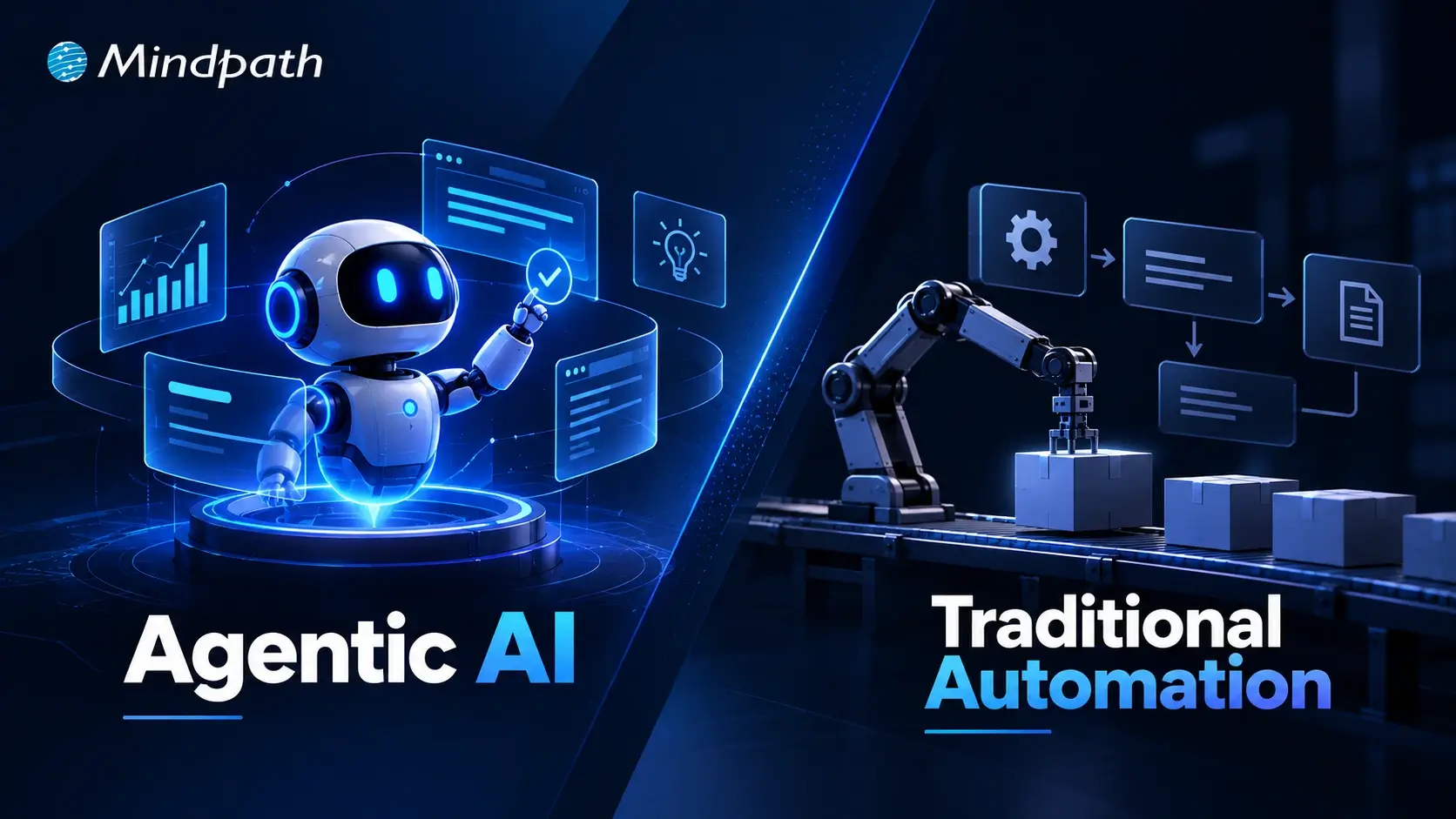
Generative AI represented a major milestone in the evolution of artificial intelligence. It played a crucial role in enhancing employee capabilities and brought AI closer to the average user. However, you should also look at agentic AI examples to discover how artificial intelligence has moved one step ahead. Agentic AI revolves around the use of agents that not only generate content but also have capabilities for autonomous decision-making.

You should know that big names, including NASA, NVIDIA and Microsoft, have been leading the race for adoption of AI agents. The growing use of AI agents in business is a testament to the fact that they are better than chatbots, which take thousands of prompts to generate remotely useful outputs. An overview of the business use cases of agentic AI can help you understand its true potential.

Ready to use the future-leading  AI solution in your operations? Mindpath offers AI development services that empower your businesses, help you automate processes, and drive innovation.

Understanding the Fundamentals of Agentic AI

LLMs empowered businesses with many capabilities, albeit with a reactive nature and the inability to retain context or memory. Therefore, the utility of LLMs and generative AI was restricted to improving individual productivity in different tasks. Agentic AI marked a shift towards autonomous decision-making and established the foundation of proactive artificial intelligence. 

The most popular agentic AI use cases showcase how agents have introduced a revolutionary transformation in the working of AI. Agentic AI encompasses autonomous AI systems that have capabilities like memory and reasoning and can solve complex problems. 

AI agents can understand the goals for multi-step problems and break them down into subtasks alongside interacting with humans and systems. The agents can also execute the subtasks and adapt to new changes with minimal human intervention. 

Also Read: Generative AI for Business

Why Should Your Business Choose AI Agents?

Many business owners will wonder why they should adopt AI agents. Is it just because big companies are using agentic AI? The examples of agents in AI have proved how agentic AI brings a new set of capabilities to the use cases of AI across different industries. 

Businesses can now have AI systems that not only learn from data but also process information in real-time and execute tasks with different levels of human oversight. Agentic AI delivers promising benefits for businesses such as

  • Enhanced productivity
  • Personalized workflows
  • Operational efficiency at scale
  • Better accuracy and faster decision-making
  • Cost optimization
  • Easier cross-team collaboration

Are you missing opportunities to make faster, smarter decisions because your business isn’t leveraging AI to its full potential? Learn from our blog AI decision-making use cases guide to discover practical ways AI can accelerate insights and give your business a competitive edge.

How Have Businesses Used AI Agents?

Agentic AI is capable of managing everyday tasks and can also enhance agility across enterprise operations. It has been reshaping the way businesses in different industries work with a proactive approach. The curiosity about agentic applications of artificial intelligence is gaining momentum among businesses as AI agents revolutionize workflows. Awareness of the use cases of AI agents in business can provide the ideal foundation to embrace them. 

1. Customer Support Automation

Chatbots and voice assistants have been the most prominent contributions of artificial intelligence in the domain of customer support. Businesses must recognize the limitations of chatbots and voice assistants as they require the right prompts to deliver useful responses. However, AI agents can achieve automation of customer service beyond answering few commonly asked questions.

AI-powered customer service agents don’t need human guidance to function and solve complex multi-step problems. AI agents can offer customer support in different industries for diverse functions without being limited to a specific number of questions. Their capabilities for autonomous decision-making help them in understanding the customer’s need and providing relevant answers.       

2. Proactive Threat Mitigation

Cybersecurity is one of the biggest concerns for businesses as most organizations have security systems that cannot keep up with emerging threats. The adaptability of agentic AI tools ensures that they can learn and respond to security risks in real time. Agents have smart capabilities for round-the-clock network monitoring to identify anomalies and respond to threats before they cause any damage. 

Agentic AI can add an intelligent and dynamic threat detection system that not only offers safeguards but also creates a more resilient security system. You can rely on AI agents for running simulations of attacks to identify vulnerabilities before malicious attackers. On top of it, agentic AI can also facilitate real-time scoring of user activity which helps your team focus on critical threats. 

3. Automation of Enterprise Workflows

Organizations have been experiencing different issues in managing their enterprise workflows with little to no improvement from using various tools. The search for answers to ‘what is agentic AI’ reveals how agents excel at automation without human intervention. Agents can help businesses in streamlining processes through automation of repetitive tasks. For example, AI agents can use meeting notes to issue project tickets without human inputs. 

Agentic AI can help businesses in pooling all their data to avoid information silos. Their ability to retain context helps them develop in-depth understanding of how your business works. As a result, AI agents can enhance productivity and efficiency in enterprise workflows without incurring additional overheads.

4. Faster and Streamlined Software Development

Businesses need smarter software development tools that enhance productivity and transform the traditional notions of customer experience. The rising adoption of AI development services is clearly visible in the use of AI coding assistants, also known as copilots. Agentic AI can help in creating a new generation of AI coding assistants that can write large segments of code. 

Even with mixed reviews, agentic AI has gained appreciation from experts who believe that smart agents will write most of the code in future. Coding assistants will not only help in writing code but also leverage special agents to review code and identify errors. Agents also have the capability to leverage reverse engineering for extracting specifications from code, which makes them a powerful catalyst for coding automation.

Curious how tailored solutions can accelerate growth? Check out the custom software development benefits to see how personalization drives efficiency and innovation.

5. Accelerated Lead Conversion

How many times have your sales teams struggled to convert leads into potential customers? You can find answers to ‘what is agentic AI example’ in the use of agents for lead conversion. Sales representatives can use AI agents to get the accurate insights for zeroing in on the right prospects. For example, agentic AI can help businesses by highlighting the prospects that are most likely to convert. As a result, your sales teams will focus specifically on leads that have real potential.

Another promising contribution of agentic AI to the sales department of your organization is the assurance of offering personalized content. Smart AI agents offer customized follow-up responses, thereby informing your sales representatives about how they can communicate with leads. Furthermore, agentic AI also helps in identifying high-risk deals that may lose momentum.

6. Creating Smarter Product Roadmaps

Business owners must also recognize the scope for improving the methods for developing product roadmaps with agentic AI. With every stakeholder demanding priority for their feature, it becomes difficult to know which aspect deserves your attention. The value of an agentic AI development company becomes clearly visible in such cases where your product team needs agentic AI. 

Professional development companies can help you avoid redundancies in product roadmap development with different functionalities. You can use agents for gathering qualitative data from user research, surveys and feedback to gain holistic understanding of customer requirements. The comprehensive user behavior analysis with agentic AI can create the path for developing smoother customer experiences.                    

7. Enhancing the Agility of Operations Teams

The real-world use cases of agentic AI in business also draw attention towards issues in operations teams. Manual processes not only lead to inefficiencies and delayed decisions but also the inability to dig deeper into data for identifying bottlenecks. The benefits evident in agentic AI examples across different business operations can be applied for operations teams of your organization.

AI agents can help businesses with demand forecasting by drawing accurate prediction of supply requirements. At the same time, the proactive nature of AI agents empowers them to adjust shipping and delivery routes in real time. Agentic AI also offers the advantage of tracking supplier performance and identifying risks which can slow down production. 

8. Establishing Intelligent HR Operations

HR is one of the prominent entries among the many business functions you can transform with AI agents. As a matter of fact, agentic AI use cases in HR operations are low-risk and high-value use cases. It is for this reason that most of the companies using agentic AI leverage it for human resource operations. 

AI agents can make many things easier for HR, including providing responses to simple questions of employees. In addition, smart AI agents can also help HR with internal knowledge retrieval, documentation and tagging alongside other business processes. Every agent in your HR system will be tailored for one specific task and will have the ability to interact with each other. 

Looking to stay ahead in the rapidly evolving world of artificial intelligence and understand how emerging technologies can impact your business? Check out our blog on the top AI trends to see how AI is transforming the industry and driving innovation.

Final Thoughts

The real use cases of agentic AI in businesses reveal many interesting insights on their actual potential. You can capitalize on AI agents to bring a certain degree of autonomy in various business operations while incorporating human oversight. Agentic AI marks another phase in the evolution of artificial intelligence by facilitating the creation of systems that are proactive and can take decisions on their own.

Mindpath is a pioneering agentic AI development company with a credible record in creating AI agents for different business functions. We have developed AI agents capable of integrating seamlessly into your enterprise workflows. Our team has the ability to ensure that your agentic AI systems align with your business needs and vision. Consult with our experts and discover the most efficient ways to embrace agentic AI now.

AI in Education
Have you ever wondered about how AI is revolutionizing education? How can AI make lessons more personalized for each student? What can be the benefits of implementing AI in education? If you are intrigued by these questions, you have arrived at the right place. In this blog, we are going to explore the key benefits as well as the use cases of AI in education.   The education system has changed from the traditional classroom setup. We are no longer limited to a physical room full of books and a blackboard to learn. Nowadays, education is easily accessible and flexible, with personalization at the tip of our fingers as AI is changing the education sector by offering tailored, adaptive learning experiences. It is making learning inclusive, supporting teachers in their tasks, and personalizing learning for everyone. This technology is going to turn conventional models of education and offer more personalized support to students in accordance with their needs, learning styles, and abilities.   Let us dive deep to explore the key benefits as well as the use cases of Artificial Intelligence in education! 

Benefits of AI in Education

1. Customized Learning

The greatest advantage of AI in education is that it offers personalized learning. With AI, learning becomes much more likely to be tailored to each student’s needs. If one student is weak in reading, AI can provide extra support by way of practice and activities. At the same time, another student who excels in reading can be given more challenging materials to engage their interest. This way, each student is presented with material that suits their levels best, making their work more effective and enjoyable. 

2. Expanded Accessibility and Inclusion

AI is overcoming distance and physical limitations in education. Students in remote places or with physical constraints may now access high-quality educational resources using AI-powered solutions such as virtual instructors, interactive course materials, and language translation services. This technology contributes to a more inclusive educational environment in which all students, regardless of location, have equal opportunities to learn and develop. 

3. Adaptive Assessments and Feedback

AI improves evaluations by employing exams, assignments, and even analyzing pupils’ facial expressions or posture to measure their development. This enables rapid feedback, indicating exactly where a learner requires further assistance and giving resources that will help them understand. This strategy not only improves academic achievement, but it also promotes students’ general well-being and trust regarding their learning journey. 

4. Streamlined Administrative Tasks

AI is excellent at both creating personalized teaching and performing administrative work. It can handle student information, organize lessons, and grade multiple-choice tests. This automation allows teachers to devote more time to what is most important: crafting interesting classes, developing strong connections with students, and providing useful feedback. 

5. Enhanced Student Engagement

AI is altering student engagement by offering fascinating new ways to study. Gamification, interactive simulations, and personalized learning plans provide students with dynamic educational experiences. Tools such as interactive classrooms and immersive platforms make learning more fun, allowing students to engage with one another and enthusiastically explore new topics. 

Use-cases of AI in Education

1. Advanced Tutoring Systems

Tutoring programs driven by AI provide pupils individualized support. As students work in classes, AI examines their responses, identifies areas where they may be suffering, and provides personalized explanations to make things simpler. This manner, the learning tempo is tailored to each student’s needs. These systems improve students’ understanding of difficult topics by providing rapid support and a learning style that is tailored to each learner. The continual contact with AI improves learning outcomes and raises students’ confidence and performance. 

2. Automated Grading and Evaluation

Grading is made easier by artificial intelligence, which evaluates student work rapidly and uniformly. This minimizes instructors’ burden, allowing them to focus on providing personalized help. By detecting patterns in pupil performance, AI can identify individuals who require further support and direct focused assistance. Additionally, AI delivers quick feedback, which improves the learning process. Automated grading and assessment improve teaching quality, assure fair assessments, and foster interaction among students and teachers. 

3. AI-Powered Chatbots and Assistants

AI-powered chatbots and virtual assistants play an important role in improving students’ educational experiences. They offer immediate assistance by walking students through assignments, answering problems, and providing comments. These resources are available 24 hours a day, seven days a week, and satisfy the demands of students at any time. Their personalized guidance promotes autonomous learning and helps students actively participate in their studies, hence enhancing academic progress and achievement. 

4. Educational Entertainment and Gamification

Edutainment and gamification make learning more enjoyable and engaging by incorporating artificial intelligence. By developing instructional games and simulations, AI transforms standard teachings into interactive experiences. Including game aspects such as prizes and competitiveness keeps students interested and engaged in their study. These gamified technologies not only capture students’ interest, but they also help them grasp and recall complicated concepts better. AI-driven edutainment and gamification mix education and entertainment to create a dynamic learning environment with thrilling gaming and interactive challenges. 

5. Interactive and Educational Games

Artificial intelligence improves interactive and educational games by providing interesting learning experiences. These games integrate AI algorithms, natural language processing, and machine learning to create interesting tales, react to player activities, and provide personalized insights. This technique encourages students to become more interested, creative, and deliberate in their learning. AI-powered learning systems use challenges, simulations, and virtual worlds to encourage active learning, improve problem-solving abilities, and foster collaboration among students. 

6. Smart Curriculum Planning

AI helps with creating curriculum by analyzing educational data to identify patterns or weaknesses in student learning. It can propose curriculum modifications and revisions based on current research and new standards of learning. AI may also assist in matching curricula with specific goals for learning, keeping the information relevant and up to date. This enhances curriculum design efficiency, allowing educators to make informed decisions and make better use of resources, ultimately improving educational quality and relevance. 

Mindpath’s AI Development Services for Education

AI development services at Mindpath are changing the face of learning in educational institutions with advanced technology. We utilize sophisticated algorithms and machine learning techniques in providing smart solutions for enhancing learning and process streamlining in education.  Our Predictive Analytics service examines educational data to forecast trends, identify learning gaps, and provide actionable insights, helping educators and institutions make better decisions. We apply machine learning to enable personalized, dynamic learning processes attuned to the needs of each student, increasing engagement and performance.  We have data-driven insights that provide detailed analysis and support for curriculum planning, progress monitoring of students, and optimal structuring of teaching strategies. Our automation solutions will make administrative tasks related to grading and scheduling easier, freeing educators to teach and engage with students more. 

Wrapping-Up

AI is revolutionizing the learning process with in-depth, personalized, and truly innovative experiences. From personalized lesson plans and adaptive feedback—reducing administrative burden—to interactive educational games, AI finds ways to make the learning process more efficient and accessible. These developments do not clearly indicate how students will learn better but arm educators with more focused support and lively classrooms. 

Mindpath is on the cutting edge of this revolution in education. Our AI development services enable powerful new levels of personalization in learning, the automation of administrative tasks, and insight-driven solutions. We empower institutions of education to make use of AI for better learning outcomes, teaching strategies, and, in fact, the educational environment. 

Curious how AI can revolutionize your classroom?

Explore Mindpath’s cutting-edge AI solutions and transform your educational experience today.

React state management

React has no doubt changed the way modern web applications are created. This library has become beneficial for many high-profile companies in making their web applications efficient and user-centric. Because of its features like UI elements and component-based architecture, it handles updates effortlessly. As per the trends, React usage has significantly increased, with around 100,000 new websites for better interfaces. But if the complexities of your app grow over time, it might be challenging for you to manage the state.

So, in this blog, we will go through an in-depth analysis of React state management. No matter if you are a beginner dealing with the struggles of uplifting your state or an experienced developer who is curious about Context API, this guide includes everything for your reference.

Want a faster, smarter web app that boosts your business? At Mindpath, we offer expert ReactJS development services to build high‑performance, scalable apps tailored to your needs.

What Does ReactJS State Interprets?

A state is an essential object present in React that involves significant data related to a component. It prominently represents the components that might change with time because of some critical events. Unlike props that pass down to child components from parents, the state remains mutable, and you can manage it within the component only.

ReactJS state is a crucial fundamental for giving rise to interactive React components while enabling seamless UI whenever your data changes or adopts certain updates. State is effectively used for conditionally rendering elements or to update form inputs. Further, it traces user interactions like inputs and clicks and stores API responses. Here, you can go through some key characteristics of the state.

1. Enables Re-renders

React is capable of re-rendering a component automatically when it sees changes in the state. This ensures your UI is in sync with the core data.

2. Local Scope

State is generally local to a component, but it can be easily shared with other components with the use of props.

3. Fixed Updates

It is necessary to update the state with the usage of dedicated methods like setState or the useState hook. State objects directly mutating can lead to unpredictable attributes and bugs.

Curious about the latest trends shaping React development and how they impact your projects? Explore our in-depth guide on ReactJS trends to stay ahead and make informed decisions.

The Core Difference between State and Props

Before we move forward with state management in React, it is necessary to understand how state differs from props.

  • Props are generally read-only values that pass down from parent to child components.
  • On the other hand, the state is managed within a component and can differ over time.

While props help in passing the data down the component tree, state manages the dynamic data. Moreover, issues arise when the state needs to be shared over multiple components. This leads developers to review how it manages and structures the state precisely.

What Does State Management in React Define?

State management in React refers to how the data or state is managed, shared, or updated in your React app. Further, state management ReactJS ensures that all the valuable components are in sync with the app’s state. This assures the developers of leveraging a seamless user experience.

  • You need state management to handle dynamic data and critical UI changes.
  • This is also valuable to share your data between the components.
  • It ensures the app’s maintainability and scalability.
  • Further, it simplifies the debugging and developmental approaches.

Looking for ways to optimize your React development workflow? Explore how leveraging ReactJS and AI can transform your frontend development in our detailed guide.

What are the Essential Types of ReactJS State?

Not all states available in a React application serve the same purpose. So, it is necessary for you to understand the type of ReactJS state to choose the right one for your management strategies. This will also help you prevent unnecessary complexities when your application grows.

1. Global State

It is shared over multiple components and highlights the data that needs to be accessed throughout the application. Some prominent examples include language preferences, user data, and much more. Further, handling the global state efficiently is viable for large-scale apps, as poor management can ruin your performance.

2. Local State

This state is famous among developers as it helps them manage UI-centric aspects. Moreover, this includes handling input values. You can discover its utmost potential by using React hooks. This keeps the components intact while keeping the handling seamless.

3. Derived State

This state management React is not stored directly, but you can calculate it from the existing state or props. While it minimizes duplication, overusing this state can give rise to severe risks. Further, it makes the debugging practices more challenging.

4. Server State

This state refers to data from external APIs like reports or dashboards. Unlike UI state, server state needs precise handling of loading states along with proper synchronization and caching.

Must Read: ReactJS Web Development

What are Some of the Best Tools for React State Management?

React includes a series of native tools that can be the legit foundation for your app’s state management. Here, you can go through the list of eminent tools that major developers use.

1. UseState

UseState is the simplest way of state management in React. It is highly beneficial for straightforward use cases where data changes within a component locally. However, with the growth of your application, handling several UseState hooks through multiple components can be challenging for you.

2. UseReducer

useReducer can offer you a seamless structure when the state logic invites a series of complexities. It gives rise to a single source of truth and predictable state transitions. Further, your complex workflows can adopt quick and impactful debugging features.  useReducer is exceptionally beneficial for multi-step processes, forms, and states that heavily depend on previous values.

External Libraries for Modern React State Management

With the scaling up of applications, developers usually turn to external libraries to handle complex state requirements more efficiently. So, out of all eminent options, Redux has turned out to be a beneficial choice as it handles global state in React apps. Apart from this, it offers a centralized store and predictable state updates. If you want to build large-scale applications, Redux can be a perfect match.

Developers in the recent scenario have shifted their interest towards adopting flexible solutions that can reduce risks while encouraging scalable features. So, some alternatives that you can prefer instead of Redux include state containers and hook-based global state solutions. However, picking the solution completely depends on your team’s experience and requirements.

Wondering how mastering React’s state management can impact your project’s growth? Exploring building scalable applications with React can provide the strategies and best practices you need.

Tips for Effective State Management in React

To be assured of seamless and valuable state management in ReactJS, you need to approach the process with the right elements. Some effective steps can help you achieve better growth while managing your state precisely.

1. Start Simple

Make sure to never over-architect your application. In fact, make sure to only store values that actually change over time in your React state. Further, your computed data should be calculated when required to avoid inefficiencies of duplication. Moreover, it can reduce the chances of inconsistent data.

2. Lift State Only When Required

You must lift the state to a common parent component only when multiple components need access to similar data.

3. Logically Split State

Instead of handling one large state object, make sure to divide the state into smaller pieces. This approach offers readability while making the updates more user-centric. Moreover, you can prevent your app from uncertain side effects.

Struggling to decide which framework to use for your next web application? Read this guide to explore how ReactJS for progressive web app development complements effective state management.

4. Maintain the Side Effects Effectively

It is useful to leverage hooks like useEffect only to maintain side effects such as API calls. So, segmenting the side effects from the state logic can assure you of clean and effective components.

5. Use Debugging Tools

To keep your React state management productive, you can leverage tools like React DevTools. This is how you can monitor and debug the changes when required.

What are Some Common Mistakes that a Developer Must Avoid in React State Management?

Experienced developers might commit some mistakes while doing React state management. For your reference, we have mentioned the major ones here.

  • Mutating the state directly instead of generating new copies.
  • Storing too much state globally.
  • Making your simple state logic heavily complex.
  • Ignoring essential performance implications.

So, being aware of such challenges can help your React applications to be extremely scalable while maintaining their performance for the user base.

Curious about how efficient ReactJS app development can improve your state management strategies? Read this in-depth guide on ReactJS app development to enhance your workflow.

Conclusion

React state management is considered to be the backbone of any successful React app. So, a thoughtful approach towards state management, React combined with the right tools, can help your app to be extremely scalable and enjoyable to work with. Organizations that want to create robust React solutions benefit from teams that understand how React works.

This is where you must prioritize partnership with experienced development partners like Mindpath. Here, the professionals can incorporate their technical aspects to keep your project unique. Further, you can customize your development process to suit your business goals. 

Master state management in React with this in-depth guide. Learn about local state, global state, and third-party libraries.