Essential ReactJS Developer Skills for Successful Web Projects

Join our Newsletter!

Featured Posts

Support Is One Click Away

Home

Essential ReactJS Developer Skills for Successful Web Projects

reactjs developer skills

Essential ReactJS Developer Skills for Successful Web Projects

The advantages of ReactJS have made every business owner think about its utility in developing web projects. It is the most powerful and commonly used JavaScript library for creating intuitive interfaces. If you want React developers in your team, then you must know the ReactJS developer skills that you should look for in candidates. The declarative approach and component-based architecture of ReactJS have revolutionized the process of front-end development. Let us find out the skills that you need in ReactJS developers to create successful web projects.

Want to hire ReactJS developers for your next web project? Explore more on Mindpath’s React JS development services to get expertise in developing a web application aligned with your business goals.

Discovering the Skillset of Expert ReactJS Developers

The general assumption about the skillset of ReactJS developers is that they know how to work with React. However, fluency in React itself is not the only addition in the React skill set for any developer. React developers must have a broader skillset beyond the library to craft impactful web projects. The following skills can help business owners identify the best React developers for their next web project.

1. HTML and CSS

The foremost addition in a list of ReactJS skills is the combination of HTML and CSS, which play a crucial role in organizing the styling of the web experience. React developers must know the concepts of semantic HTML and how to use the right HTML tags for better SEO and accessibility. ReactJS developers should have an in-depth understanding of the fundamentals of CSS, such as selectors, CSS Grid, responsive design principles, and the box model.

Apart from CSS fundamentals, the essential React skills for developers also include knowledge of CSS preprocessors and frameworks. Developers can use the pre-processors to streamline styling workflows and improve ease of maintenance in larger projects.

2. JavaScript ES6

JavaScript ES6 or ECMAScript 2015 brought many interesting features to the domain of modern web development. When you hire React developer for the next web project, you should check their level of fluency in JavaScript ES6. The distinctive features of JavaScript ES6, such as arrow functions, template literals, and ES6 classes, make React web development more efficient. For instance, arrow functions can ensure simpler syntax for functions and intuitive management of the context.

ReactJS developers must know how to leverage ES6 classes for a more structured use of JavaScript along the lines of component-based architecture. Developers can also use features like template literals to embed expressions in strings, thereby creating cleaner code.

3. Event Handling and DOM Manipulation

The virtual DOM in React is one of its distinctive features. All the listings for React JS developer jobs showcase the necessity of learning about DOM manipulation. At the same time, you must know that direct DOM manipulation is not required in React. On the other hand, developers must know the process through which the browser renders and interacts with the Document Object Model. DOM manipulation is required in scenarios where you want to build interactive and dynamic user interfaces.

Another crucial addition among skills required for ReactJS developer is event handling. It focuses on responding to different user events through event listeners and callback functions. Therefore, React developers must know the fundamentals of event delegation, capturing, and bubbling.

4. Git

You cannot think about hiring React developers who don’t know how to work with Git, the most popular version control system. Git helps in promoting team collaboration and source code revision management to ensure efficiency in the development lifecycle. ReactJS developers must know the fundamental concepts, such as commits, repositories, branches and merges. On top of it, developers must also know how to work with branching strategies, hosting platforms of Git and conflict management.

Git is a promising tool for frontend development with React as it provides the ideal foundation for collaborative development. Developers who know how to work with platforms like GitLab and GitHub can ensure better efficiency in team collaboration, project management and code reviews.

Must Read: Cost of Hiring ReactJS Developer

5. Redux

The list of technical skills you should search in the profiles of ReactJS developers also includes Redux. It is a specialized library used for state management in larger and more complex React applications. The cost of hiring ReactJS developers is justified when you notice how fluency in Redux can offer credible benefits to your web projects. The most promising features of Redux include centralized state management, application scalability and predictable state updates.

Redux works with a single storage for all states of an application, thereby ensuring consistency in management of state transition. Efficient state management also serves as a catalyst for easier scalability and managing increasing complexity without vulnerability to bugs. Centralized state management with Redux also ensures predictability in the behavior of your web applications, thereby facilitating easier maintenance and debugging.

6. JavaScript XML or JSX

Every ReactJS developer must know how to work with JavaScript XML or JSX. It is also one of the notable additions among react developer must-have skills as it serves a critical role in ensuring simpler development and management of UI components. JSX helps developers write HTML-like structures in JavaScript, offering a seamless blend of markup and JavaScript logic. JSX also provides an easier solution for creating and managing the user interface components of their web applications.

The other notable applications of JSX include data and logic integration. JSX can help in injecting data and logic directly into the UI, thereby ensuring dynamic content rendering, required for modern web applications. On top of it, the declarative nature of JSX ensures that the code is easily readable and accessible for debugging.

7. React Hooks

Professional ReactJS developers must also have strong command on React Hooks, a revolutionary feature for state management. Hooks have introduced new perspectives on managing React features in functional components. It is one of the essential ReactJS developer job skills and aspiring developers must know about the important hooks they must learn to create web applications.

The notable React Hooks that a developer must know include ‘useState’, ‘useEffect’, ‘useRef’ and ‘useContext’. Each hook serves a distinct function such as providing direct access to DOM elements or managing component-specific state. On top of it, ReactJS developers must know how to create reusable logic through custom hooks.

8. Testing, Debugging and Performance Optimization

The most important skill that you can find in expert React developers is testing and debugging skills. You can find answers to “why hire React developers?” in their skillsets that focus on comprehensive testing to create robust apps. The notable testing methods include unit testing, that involves testing the individual components independently or integration testing. React developers must also know how to work with debugging tools and browser developer tools to inspect the code.

Apart from testing and debugging, React developers must also know the best practices for performance optimization. Skilled ReactJS developers can use different techniques such as virtualization, code splitting and bundle size optimization to craft responsive applications.

Want to improve your application’s speed without increasing development time or infrastructure costs? Discover how optimizing React performance benefits business owners looking for efficiency and ROI.

Mandatory Soft Skills

Most of the discussions about skills of ReactJS developers focus only on the technical skills. Choosing a React JS development service for capitalizing on the expertise of skilled developers also requires attention to soft skills. You need developers who have the capabilities for critical thinking and problem-solving with efficient solutions. React developers must have skills for clear and concise communication that empowers them to work in collaboration with other teams.

React developers should also have attention to detail for crafting intuitive user experiences and writing code without bugs. Most important of all, ReactJS developers should strive to learn continuously and improve their skills to stay updated with emerging technologies and recent ReactJS trends.

Final Thoughts

The thought of hiring a developer from a reputed ReactJS development company might seem like a challenge. Interestingly, you can find the best ReactJS developers at Mindpath for your next web project; they help you build modern web solutions. The notable technical skills of React developers include knowledge of HTML and CSS, JSX, JavaScript ES6, React Hooks and direct DOM manipulation. On top of it, ReactJS developers must also have soft skills such as communication, adaptability, critical thinking and problem-solving. Learn how to pick the best ReactJS developers for your web projects now.

Related Post

Discover the basics of Large Language Models (LLMs) and how Mindpath can help you build a customized AI solution to enhance efficiency and drive innovation.
Explore how healthcare software development enhances patient care and operations. Discover services like EHR, medical databases, and more. Transform your practice today!

Related Post

custom software development benefit

Imagine this: your company is moving so fast, but your off-the-shelf software can’t keep pace. There are bottlenecks in your processes, your teams are slowing down, and your customers can feel the gulf. Here’s where the custom software development benefits can make a difference. You get tools that will be designed and built for your business goals. No extra features that you don’t need, and no limits that constrain you. It’s like you’re developing a system that scales with your growth, not against it. It’s smart, flexible, and designed for your journey.

As more organizations acknowledge the value of custom technology, businesses are increasingly demanding custom solutions to meet their specific requirements and functionality. Custom software solutions enable consistency and quality for your operational tasks, enhance the experience for your customers, and increase productivity for your team. Unlike off-the-shelf software, which offers limited flexibility and options for your business, custom solutions not only evolve with your organization but can reduce loss of time and expense in the long run. The benefits are real and tangible. In this blog, we will examine the top ten benefits of custom software development for growing businesses.

At Mindpath, our custom software development services are designed to help growing businesses build scalable, secure, and high-performing software solutions.

What is Custom Software Development?

Custom software development refers to the process of developing software solutions that are specifically designed to suit the needs of a particular business or user. It is different than commercially available software that is sold to a wide audience. A custom software solution is custom-built to fit important workflows, overcome specific challenges, and exceed business goals. This overall process includes planning, designing, developing, testing, deploying, and maintaining to ensure long-term continued use.

Interestingly, Grand View Research reports substantial growth in the custom software development market. According to the reports, its market value was USD 43.16 billion in 2024, and it is projected to grow to USD 146.18 billion by 2030 at a CAGR of 22.6%, from 2025. This growth in market size represents an increase in demand for digital solutions that are flexible and designed for the unique needs of organizations. The enterprise software segment represented over 60% of the market, while cloud deployment comprised 57%, all showing a movement toward systems that can be scaled and accessed remotely. Large enterprises made up more than 60% of the total revenue in the market.

Must Read: Types of Software Development

Top 10 Benefits of Custom Software Development

Picking the right software that meets the needs of your business is becoming increasingly important. If you are considering custom software development benefits for businesses, here are some of the greatest advantages that make it a brilliant and future-proof solution.

Top 10 Benefits of Custom Software Development

1. Scales with Your Business

One of the important custom software development benefits is that it grows as your business expands. Whether you open new locations or add services, customized software can easily adapt to your changing needs. It removes the limitations of ready-made tools that often require costly upgrades. With flexible and scalable features, your software stays aligned with your business goals.

2. Custom-Built for Your Business

Custom software is designed to match your specific workflows, goals, and daily operations. It helps avoid the inefficiencies that come with generic tools that don’t align with how you work. From logistics to finance, every feature is built to support what your business truly needs. This leads to better performance, less waste, and smoother processes across teams.

3. Seamless System Integration

Custom software works smoothly with your current tools and platforms. It helps different systems share data without the need for manual updates. This reduces errors and saves time across departments. The result is a more connected and efficient business operation.

4. Cost-Effective in the Long Run

A major custom software development benefit is reduced long-term costs. Unlike off-the-shelf tools, there are no ongoing license fees or expensive upgrades. You pay for what your business needs, and it stays efficient as you grow. Over time, this leads to better value and lower total cost of ownership.

5. Gives a Competitive Edge

Using custom software for a small business helps you create unique features that set you apart from others. It allows you to offer better user experiences and services tailored to your audience. This can increase customer loyalty and build a stronger brand. Staying ahead with the right technology gives your business a clear competitive advantage.

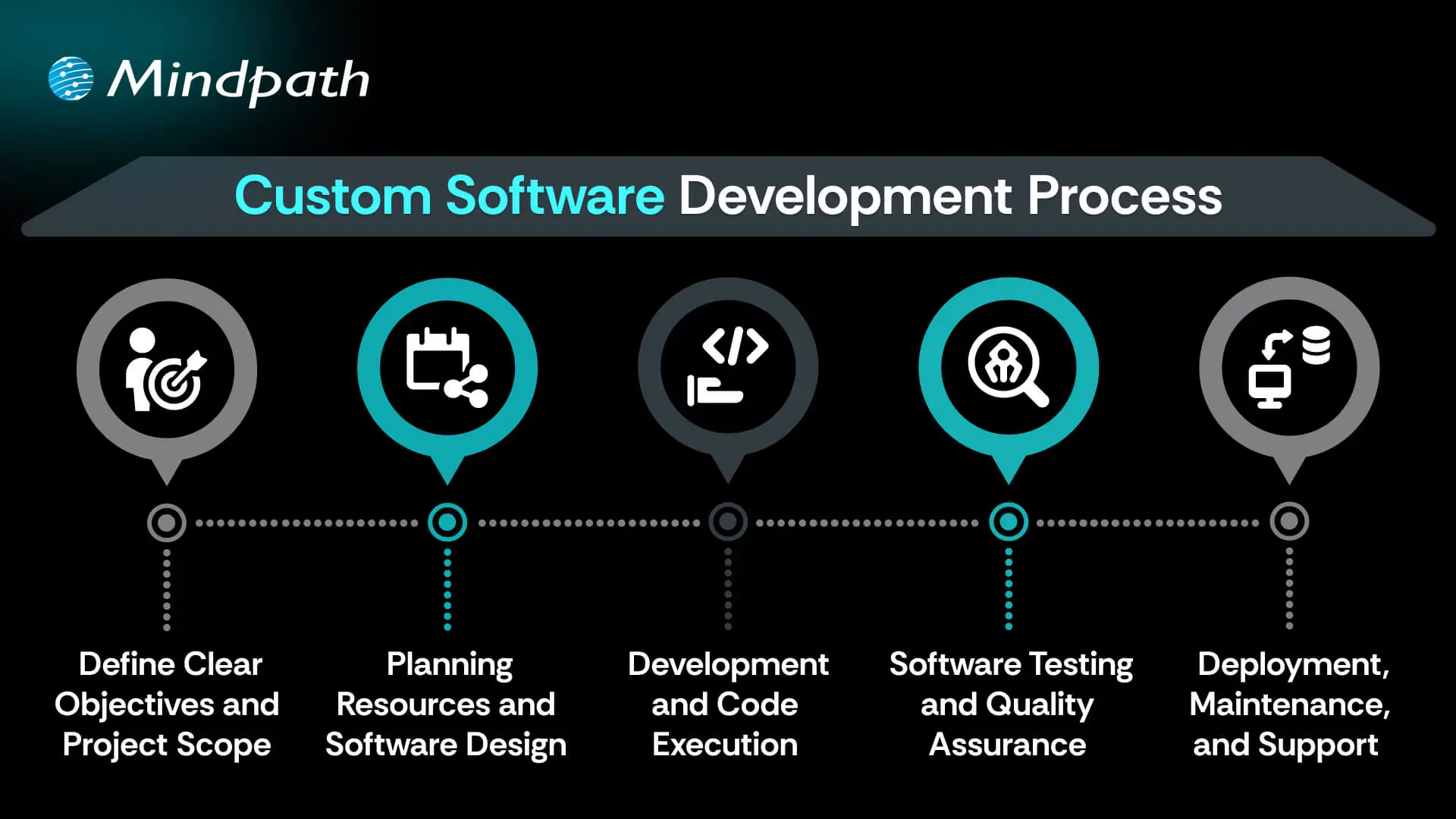
Wondering what it really takes to develop software that perfectly aligns with your business’s unique needs and goals? Explore the detailed custom software development process to see how thoughtful steps provide smooth execution and successful outcomes.

6. Boosts Team Productivity

Custom software streamlines your workflows by removing repetitive tasks and simplifying daily operations. It helps each team work faster and with fewer errors. When tools are designed for specific roles, employees can focus more on results than on fixing problems. This leads to better performance and a more efficient workplace.

7. Reliable and Responsive Support

With custom software, you get direct support from the team that understands your system inside out. This ensures quick responses and accurate fixes when issues arise. This custom software development benefits results in reduced downtime and improved reliability. Your business stays on track with expert help tailored to your specific setup.

8. Complete Ownership Rights

With custom software, your business has full control over features, updates, and improvements. You don’t have to rely on outside vendors or wait for scheduled upgrades. You can make changes anytime to match your growing needs. This gives you the freedom to make fast decisions and stay in control.

9. Adapts to Market Changes

Custom software allows your business to respond quickly when market demands shift. You can add new features or make changes without delay. This helps you stay competitive and meet customer expectations in real time. Being able to adapt fast keeps your business strong and relevant.

10. Enhances Customer Experience

Custom software allows you to create features that match your customers’ needs, making their experience smoother and more personal. This leads to higher satisfaction and stronger customer loyalty. It lets you design every interaction to reflect your brand and serve your audience better. It turns regular experiences into memorable ones that keep customers coming back.

Trying to understand the common pitfalls in creating custom software? Check out our blog to learn the essential custom software development dos and don’ts that every business should follow for a smooth process.

Looking to Build Software That Fits Your Business?

Custom software brings real value by helping your business grow, cut costs, and work more efficiently. It supports your goals with flexible tools that fit how you operate. Every custom software development benefit contributes to improving your team’s workflow and customer experience. Choosing the right solution now means fewer challenges and better results in the future.

At Mindpath, we offer expert custom software development services tailored to your business. As a trusted custom software development company, we build tools that match your goals and grow with you. From design to long-term support, our team works closely with you to deliver strong, flexible, and reliable solutions that keep your operations smooth and ready for the future.

AI Roadmap

Companies are pressured to adapt, innovate, and make faster decisions. Rapid changes in markets and increased competition mean that traditional approaches are not effective enough now. This is the role that an AI roadmap will serve. It provides leaders with a framework to use AI in ways that allow them to be more efficient, more innovative, and provide meaningful value to the business. However, developing one requires an appropriate balance of vision and pragmatic planning.

Rather than following fragmented opportunities, leaders need to craft a plan with steps that link AI to business objectives. The real power lies in asking the right questions, assessing their resources, and establishing priorities before starting execution. With a map pointing in the right direction, the AI effort becomes a coordinated effort with measurable influence. Now, let us consider how businesses can develop this map with confidence and clarity.

Do you want to adopt the AI roadmap in your business? Then you need to get the right expertise that can navigate you through the process. Our AI development services will deliver full support from planning to execution to help you attain real and measurable outcomes.

What is an AI Roadmap?

An AI roadmap for business offers a systematic approach for describing how a business plans to leverage Artificial Intelligence to meet its aims. It allows teams to create specific and manageable goals, outline the best potential use cases, allocate resources, and plan timelines. With an AI roadmap, managers can explain how the employees will move toward the longer-term strategy while providing confidence to the employee base.

A roadmap is a great tool for helping teams create the right skills and focus on the priorities they should be focusing on. It helps connect every AI project directly back to the AI in business strategy to ensure that your team’s work creates actual value and is not just a random attempt to test out AI. Companies can use it for an organization-wide adoption, or they can focus on those specific aspects of the business, but in either case, the roadmap makes AI a viable contributor to your growth and success.

Also Read: AI is Redefining Job Roles in Tech

Advantages of Having a Roadmap for AI

Developing an AI roadmap gives businesses clarity and helps eliminate uncertainty in the implementation stage. Rather than jumping to general-purpose AI without a clear structure, a roadmap ensures every action you take is aligned to your real goal with measurable results. Here are the primary benefits of having an AI roadmap.

Advantages of an AI Roadmap

1. Clear Direction for Business Goals

An AI roadmap links all work to the company’s longer-term vision. This keeps both leaders and teams aligned and working towards the same purpose, minimizing any confusion or delays.

2. Smarter Use of Resources

Make each business plan deliberate and focused, so budget, skills, and tools are applied to the most impactful projects. An AI roadmap generator can help you do this faster and with more precision.

3. Strong Risk Control

An AI roadmap allows organizations to tackle any aspects of security, compliance, or data quality up front. Having a plan reduces risk for organizations and ensures a more streamlined implementation.

Want to stay curious and ready for what’s next in AI? Explore AI trends to discover the innovations shaping the future of business.

4. Faster Innovation and Growth

A roadmap allows organizations to have agility and the ability to experiment and scale solutions. Even a beginner-friendly AI roadmap can outline the first steps that will lead to innovation and growth.

5. Better Decisions at Every Step

Leaders use the roadmap to select the appropriate use cases and monitor progress. With this practical approach, it resembles an AI developer roadmap in which each step takes you to the next level of value.

6. Stronger Team Collaboration

An explicit roadmap promotes better communication across departments. It builds teamwork and supports everyone in contributing to developing and using AI in the way it is most useful.

Struggling to make AI work for your business? Explore AI solutions for small businesses to discover practical, scalable solutions.

Key Steps to Build an AI Roadmap 2026

Constructing an AI roadmap in 2026 necessitates a defined plan that relates AI projects to real business objectives. Companies must assess their focus on strategy, resources, and measurable outcomes in order to ensure the AI investments add value. Here are the key steps for building an effective roadmap.

Key Steps to Build an AI Roadmap

1. Set Clear Business Goals

Every successful AI roadmap begins with a definitive goal. Set the desired outcomes that are most important. Simply articulate it so everyone understands what it means to them. This clarity likewise connects each project to real business value.

2. Build the Right Team

A roadmap is only effective if the correct drivers are behind the wheel. Organize your engineers, strategists, and experts in the domain who can operate at the intersection of technology and business. Taking a look at an AI engineer’s roadmap may help you frame up the skills you need to develop as a team.

3. Plan for Growth and Scale

A successful strategy looks to the future. Creating systems for larger datasets with multiple models and interconnected data with business apps. It translates minor pilots into a comprehensive AI roadmap, facilitating ongoing growth.

Want to make faster and smarter business decisions? Discover how AI in decision-making enables leaders to transform data into actionable insights.

4. Track Progress with Milestones

Break the journey into smaller, actionable segments. Start with a pilot, grow to teams, and then link to enterprise systems. As they reach a milestone, they will be able to see their progress and also validate that the roadmap is indeed compliant.

5. Keep the AI Roadmap Flexible

As the market landscape evolves, priorities shift. Consistently update your AI roadmap to reflect new goals and possibilities. The adaptability within your roadmap will allow AI to remain relevant as your business develops.

6. Monitor and Improve Continuously

AI models must receive ongoing maintenance to remain valuable. Form an AI team to monitor precision, solicit user feedback, and update models when the data or needs change. Researching a generative AI roadmap can also help in developing new capabilities.

Wondering how your AI roadmap can go beyond automation to deliver smarter outcomes? Explore how Large Language Models (LLMs) can streamline operations and unlock new business value.

How will You Shape Your AI Roadmap for Success?

An AI roadmap provides businesses that want to adopt Artificial Intelligence with structure, direction, and confidence on their journey. It allows business leaders to set and achieve organizational objectives, manage and allocate resources, reduce risk, and scale innovation with measurable outcomes. With a flexible and constantly evolving AI roadmap, organizations can adapt their actions to changes in the market and continue to reap value from AI initiatives. A solid plan will use a shared vision for long-term success.

At Mindpath, we are experts in conceptualizing and executing custom AI solutions, providing end-to-end AI development services, aligned with your business goals. Throughout the entire process, from strategy & roadmap planning to development and scaling, our specialists will assist you.  Our passion for innovation and growth allows us to harness the real power of AI and transform complex problems into quantified outcomes.

Hire wordpress developer

You have a great business idea and you just discovered that WordPress can help you build high-quality websites from scratch. Would you go for the DIY approach or choose an expert for the job? Many would choose to hire WordPress developer with the skills required to take up your project. With a large pool of WordPress developers in the world, it is difficult to navigate the hiring process.

The right WordPress developer can change the course of your web project with their skills to utilize available resources in the most efficient way. You may be launching a new site or switching your existing site to WordPress and in every case, you will need skilled developers to do the job. This guide will help you understand the hiring process for bringing a skilled WordPress developer to your team.

Ready to transform your online presence with a website designed to grow your business? At Mindpath, we offer expert WordPress development services to customize high-performing websites that drive your growth.

Unraveling the Reasons to Hire a WordPress Developer

The first thought that might come to your mind when conceptualizing a web project is the availability of website builders. You can use the ‘drag-and-drop’ features of website builders to create a website from scratch with preset themes. Why should you hire dedicated WordPress developers when you can do it on your own? When your website grows, you will need more features, specific design elements or better performance. Therefore, you cannot ignore the importance of a WordPress developer in the modern digital landscape.

You can rely on a professional developer to tailor the design of your website in a way that reflects your brand identity. Developers can add new features without relying solely on plugins and scale up your website as your business grows. Experienced developers also ensure that your website design is optimize for mobile devices and search engines. With the intervention of custom  WordPress development experts, you can create websites that work seamlessly on all types of devices and are more visible on search engines.

The next prominent advantage of WordPress experts for hire in any region is the assurance of security. Developers can take care of the security best practices, such as cleaning the code, using secure plugins and creating custom login URLs. In addition, you can rely on WordPress development professionals for ongoing maintenance and support services to keep your website running according to your expectations.

Also Read: Safeguarding WordPress Vulnerabilities

How Many Types of WordPress Developers are there?

Hiring professionals for WordPress development is quite difficult as you have to identify the right person for the role. Depending on the requirements of your project, you will have to hire the type of developer who will be the right fit for the project. While looking for expert WordPress developers, you must know that there are five distinct types of WordPress development experts.

The frontend developers work on user interface and design of websites with the help of JavaScript, HTML and CSS. Backend developers are responsible for creating the server-side logic, functionalities and managing database of the website with PHP and MySQL. If you need someone who can do both, then you should hire a full-stack developer.

The other notable types of WordPress development experts you will come across are WordPress theme developers and plugin developers. WordPress theme developers specialize in creating and customizing WordPress themes that you can use for your website. Similarly, WordPress plugin developers help in creating custom plugins that can help you add new features in a website.

What Does a WordPress Developer Do?

Anyone with general knowledge about WordPress would know that creating websites with WordPress doesn’t require coding. However, businesses want to hire WordPress programmers with design skills who can take care of their web projects. As a WordPress developer, you will have to fulfill various responsibilities that require programming skills. For instance, WordPress developer writes the code required to customize core WordPress files.

The WordPress developer is also responsible for testing and debugging the core WordPress software. In addition, developers have to update WordPress websites on a regular basis while working with different stakeholders. Another crucial responsibility of a WordPress developer revolves around creating WordPress themes and plugins according to client requirements.

Curious if your WordPress site is using the right PHP version for best performance and security? Our WordPress PHP Compatibility Guide will help you stay aligned with best practices and avoid technical issues.

Which Skills Should You Look for In a WordPress Developer?

The common thing about every business looking for a WordPress developer is that everyone wants the best professionals. How can you identify a WordPress expert from the crowd of applicants? Recruiters should have a candidate profile that helps them identify the essential skills required from a WordPress developer for their web projects.

Skills You Should Look for In a WordPress Developer

You should focus on the core competencies first to identify professionals who are capable of leveraging the capabilities of WordPress.

1. A skilled WordPress developer must be fluent in PHP, WordPress core, JavaScript, HTML and CSS.

2. The wordpress developer should have in-depth understanding and practical experience in building WordPress themes and plugins.

3. The core competencies of WordPress development experts also revolve around skills for ensuring cross-browser compatibility and responsive design.

4. A WordPress developer is expected to know the coding standards and best practices for WordPress development.

Ready to make your hiring process smooth and avoid picking the wrong developer? Our WordPress Developer Checklist gives you a clear, step-by-step framework to evaluate every candidate.

Are Core Competencies Enough for a WordPress Developer?

The core skills required from a WordPress developer showcase only one half of the picture. Recruiters must also look for candidates with additional skills that can bring more value to web projects. Business can hire remote WordPress developers or dedicated in-house experts after checking their capability to go beyond the norm. Candidates who know more than the core skills of a WordPress developer can take care of different aspects of web projects with minimal assistance.

You should look for candidates with experience in version control and performance optimization. On top of it, a WordPress developer who has in-depth understanding of SEO principles can be a valuable asset. The other additional skills that you can look for in a WordPress developer include familiarity with SQL and database management. Candidates with knowledge of working with WordPress REST API and RESTful APIs will definitely elevate the chances of creating better web projects.

While technical skills are a must-have for WordPress developers, it is impossible to ignore the importance of business acumen and soft skills. Any WordPress developer with business acumen can understand the vision and goals of a web project. In addition, they also need soft skills like communication and time management to work in a team and deliver their best performance.

Unsure if your WordPress site meets accessibility standards for all users? Explore our article on how to improve WordPress web accessibility and ensure your site is usable by everyone.

Which Hiring Model Should You Choose?

Diving straight into the hiring process without choosing a hiring option can lead recruiters into many roadblocks in future. Business owners and hiring managers must know the strengths and setbacks of each hiring model to figure out the ideal option for their web project. You can hire freelance developers or opt for an in-house developer and capitalize on different advantages. For instance, freelance developers are the best picks for web projects of small companies or startups. Freelance developers can work on tight budgets and serve as the most efficient assets for one-time web development projects.

The freelance hiring model may seem appealing due to the lower costs than hiring a dedicated in-house developer. However, many people don’t pay attention to the limitations that come with freelance developers. It is difficult to manage freelancers as they may be working with multiple clients and could not deliver your project on time. The alternative to a WordPress freelancer is an in-house developer who will work in your office. In-house developers understand your business goals and customer expectations more closely, which helps them create effective products.

You may have assumed that an in-house WordPress developer will be the ideal choice for your next web project. The problem with in-house developers is the cost and time required to welcome them into your team. Apart from the costs of salary and infrastructure, you will have to bear the burden of time required for onboarding an in-house developer.

Interestingly, you can find a solution to this setback in professional WordPress development agencies. Professional agencies offer access to a team of developers with full-stack development expertise and the assurance of project management. With a professional agency, you don’t have to worry about overheads or continuous maintenance and support.

Looking to scale your web project without long-term commitments? Check out our guide to hire a freelance full-stack developer and discover how to find skilled freelancers who meet your needs.

What are the Costs of Hiring WordPress Developers?

The type of hiring model you choose to hire expert WordPress developers for your web project will have a significant impact on the hiring costs. On top of it, you must also consider the location and experience of the developer to determine the hiring costs. It is also important to note that businesses can choose between hourly pricing and fixed pricing for different hiring models. For instance, a freelancer will charge around $20 to $100 per hour for their services or take a salary of $65,000 to $70,000 per year for different projects.

The location where a WordPress developer will work also has a significant influence on the hiring costs. The average WordPress developer salary in the United States varies between $42,000 and $103,000. On the other hand, the salary of a WordPress developer in Australia can be somewhere between $91,000 and $179,000. It is also important to note that the salary of WordPress developers may vary with changes in demand for talent and complexity of projects. Awareness of salary ranges can help you ensure that you make the right offers to skilled candidates.

Must Read: WordPress vs Drupal Guide

Roadmap for Hiring an Expert WordPress Developer

Once you know what you are looking for, the search for a skilled WordPress developer becomes a lot easier. You can follow a few simple steps to establish a solid hiring process for WordPress development projects.

1. Know Your Business Goals

The first step in the hiring process involves understanding that you are not listing WordPress jobs to follow a trend. You must identify the problems you want to solve with the help of a WordPress developer. Understanding your problems and business goals will help you identify developers with the skills required to solve them.

2. Establish a Clear Budget

Another area where you should be very clear while hiring WordPress development experts is the budget. As a matter of fact, your budget will determine the type of hiring model that will suit your project. The important factors that help you define a budget for web projects include the scope of the project and its complexity. On top of it, the experience of developers will also come into play as you will have to pay more to senior developers.

3. Rigorous Testing and Interview Process

The most common mistake recruiters make while hiring a WordPress developer is the lack of attention to the testing and interview process. You should use different types of tests to evaluate the proficiency of candidates in PHP, HTML, JavaScript and SQL. The best way to test the technical proficiency of candidates involves providing hands-on assignments. Furthermore, the interview process should be more sophisticated with questions to evaluate the business knowledge and soft skills of candidates.

4. Finalize the Hiring Process

After identifying the right candidate for your WordPress project, you can complete the hiring process. It is important to create verified contracts that include comprehensive details about the project scope, terms of payment and timeline of the project. The hiring contract must also specify the clauses of confidentiality, ownership rights and terms of contract termination. With both parties agreeing to the contract, you can finalize the hiring process and welcome the developer into your team.

Ready to upgrade your HTML site to something more powerful and manageable? Explore why converting HTML to WordPress can streamline updates and improve your online presence.

Ready to Hire the Right WordPress Developer for Your Project?

The benefits of working with a professional WordPress developer can elevate your web project. You can hire offshore WordPress developers or choose an in-house developer for your team, depending on your requirements. However, the process to choose the ideal candidate for WordPress development projects remains the same in almost every case.

Mindpath is a trusted WordPress development company that has been helping businesses discover new solutions to a better digital presence. Our experience in working on different types of WordPress development projects has empowered us with the skills and confidence to deliver the best results. We offer WordPress development services tailored to the needs and vision of each business, thereby ensuring that you get desired outcomes from your web projects. Consult with us and make the most of WordPress for web development projects now.

Learn how to hire the ideal freelance WordPress developer with our guide. From defining needs to securing the right talent, ensure a high-performance website.