WordPress vs Drupal: 2026 Guide to Choose the Right CMS

Join our Newsletter!

Featured Posts

Support Is One Click Away

Home

WordPress vs Drupal: 2026 Guide to Choose the Right CMS

Drupal vs wordpress

WordPress vs Drupal: 2026 Guide to Choose the Right CMS

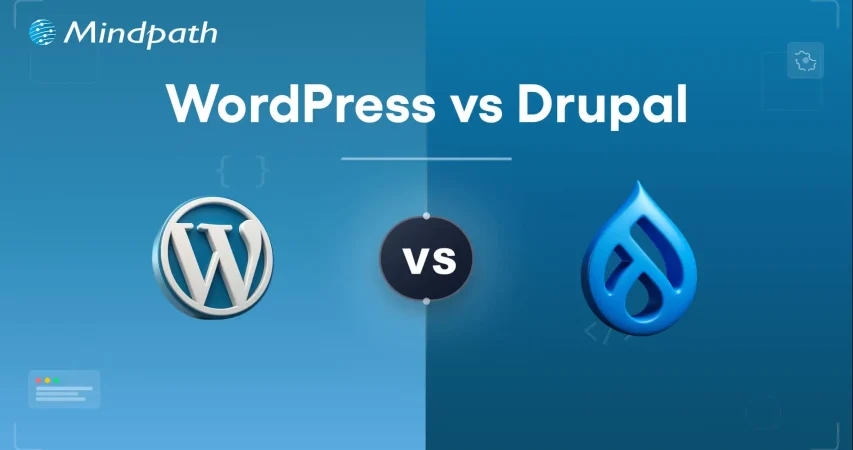
At present, the debate of Drupal vs WordPress is more relevant than ever. WordPress is already powering a large number of websites all across the world. Gradually, Drupal has been strengthening its foothold in enterprise as well as government projects. This has given rise to an important question among businesses and professionals: Is Drupal better than WordPress, or is WordPress still the easier choice for users? 

The guide gives a comprehensive insight into both Drupal and WordPress. You need to get a holistic insight into these platforms so that you can choose the best solution that perfectly fits your needs.  An in-depth comparison between these novel platforms has been made, which can simplify your selection process and help identify the right CMS for your needs in 2026.

Want to build a CMS in your online presence that is flexible, user-friendly, and reliable? Our WordPress development services help you with custom solutions focused on delivering a secure and future-proof CMS tailored to your business needs.

WordPress at a Glance

In the year 2026, WordPress certainly remains the world’s most popular web content management system. Within a short span of time, WordPress has been powering over 40% of the web. The platform is known for its ease of use, along with a massive plugin library. The availability of flexible full-site editing tools makes WordPress perfect for professionals as well as small and medium-sized entities. 

Some of the unique attributes of WordPress that make it a useful CMS solution are the availability of a plethora of themes coupled with robust SEO plugin support. The existence of a thriving developer community allows users to get the optimum value by choosing WordPress.

An Insight into Drupal

Drupal has emerged as a powerful enterprise-grade CMS tool. You can use the free open-source web CMS for the purpose of building websites and web applications. Drupal has gained immense trust among government agencies and large organizations within a short period of time.

Drupal is known for its security and flexibility. Moreover, it is capable of handling a large volume of content and complex user workflows. These characteristics make Drupal a world-class CMS platform that is suitable for meeting the needs of content-heavy platforms. It is time to dive deeper and look at the differences, as now you have clarity about Drupal WordPress

Planning to, but don’t know what to look for when hiring a professional to handle your WordPress development needs? Discover our guide to hiring WordPress developers to help you make a smart, confident, and informed hiring decision. 

Comparison Between WordPress and Drupal

Are you wondering – Is Drupal similar to WordPress? The answer is Yes! However, even though WordPress Drupal are web content management systems, they have a number of differences. If you are planning on developing a website or web application, you need to have clarity on Drupal vs WordPress. Some of the main differences between WordPress and Drupal include

1. Ease of Use

When it comes to ease of use, WordPress is undoubtedly the clear winner in the year 2026. WordPress offers unmatched accessibility for beginners. Moreover, it can be scaled to handle complex projects. Some of the key features of WordPress include its Full Site Editing as well as the Gutenberg block editor. These elements make it easy for beginners to not only design but also publish pages without having to rely on coding. Furthermore, thousands of pre-built themes and plugins are available, which allow users to launch a site within a few hours.

However, Drupal has a steeper learning curve. You need to remember that its interface is less intuitive for non-developers. Moreover, configuring its modules requires technical knowledge. Experienced developers can leverage the tool, and it can offer them great flexibility and control.

2. Security

There exist differences between Drupal and WordPress when it comes to security. Security is undoubtedly one of the best features of Drupal. Drupal continues to be the ultimate CMS tool that is preferred by government websites and enterprise organizations. It not only offers a dedicated security team but also detailed advisories for minimizing vulnerabilities.

Even though WordPress can be considered to be secure at its core, it faces a greater risk. This is mainly because of its massive plugin ecosystem. Vulnerabilities may often arise from third-party plugins as well as outdated themes. Thus, in terms of security, Drupal is the clear winner out of the two CMS solutions. 

3. Performance

While making a comparison between Drupal or WordPress, the former shines when it comes to performance. Drupal delivers exceptional performance thanks to its advanced caching as well as API-first design. Moreover, its optimized architecture ensures that users can derive optimum value from the CMS tool. The entities that handle millions of pageviews can certainly rely on Drupal without having to sacrifice speed and efficiency. 

Over the years, the performance delivered by WordPress has improved. The improvement has been mainly because of the modern PHP versions coupled with block-based design. Similarly, the headless options have also contributed to improved performance. Users can derive immense value if they pair WordPress with strong hosting and caching layers. This can certainly help WordPress to scale well. However, users must bear in mind that the CMS tool typically requires more plugins as well as third-party optimizations.

Must Read: WordPress and PHP Compatibility

4. Cost

A common question that one may have is: What is the cost of using CMS tools? The core software is free in the case of WordPress. Moreover, several themes as well as lug-ins are free or low-cost. Furthermore, the development costs are lower because of the availability of a large talent pool.  

The Drupal software is free. However, users need to remember that the development as well as maintenance costs are higher. Currently, skilled and talented Drupal developers are in short supply in the labor market. This automatically makes Drupal development more costly in comparison to WordPress. It is important that users bear in mind while choosing between WordPress and Drupal. 

5. Flexibility

Flexibility is another important dimension that you must take into consideration while comparing WordPress and Drupal. WordPress definitely serves as a more flexible tool for everyday users. However, Drupal is better in terms of flexibility if you are working on highly structured and enterprise-level sites. These CMS tools adopt a different approach, which influences their overall flexibility. 

WordPress mainly thrives on its plugin and theme ecosystem. These elements make it flexible for individuals as well as small businesses. However, Drupal excels in areas such as complex workflow as well as content modeling. The fact that it focuses on granular user permissions and enterprise-grade content management enables developers to tailor Drupal to meet their complex needs. 

6. SEO Capabilities

SEO is indispensable in 2026, and both CMS tools offer solid, strong SEO options. WordPress is known to have popular SEO plugins such as Rank Math as well as Yoast. They provide beginner-friendly tools along with AI-driven optimization tips for users. Another benefit in the case of WordPress revolves around the presence of mobile-first templates.

When it comes to Drupal, it lacks plug-and-play tools. However, it offers granular control over SEO, including URL structure and metadata. These are other features as well relating to multilingual optimization, as well as structured content management. These features are highly appealing to enterprise SEO teams who are in search of precision.

Do you want your website to be accessible to every visitor? Learn how to improve WordPress web accessibility can help you reach more users and create an inclusive online experience.

WordPress vs Drupal: A Quick Comparison

Now that you have gone through the various comparison factors to understand the differences between Drupal and WordPress, let’s have a look at the quick comparison table. The table below gives an overview of the differences between WordPress and Drupal. 

Features WordPress Drupal
Ease of Use User-friendly  Ideal for Experienced developers
Security Low Security High security 
Performance Efficient performance for small and mid-sized sites High performance for enterprise-scale sites 
Cost Less Expensive More Expensive 
Flexibility High flexibility for everyday users Ideal for highly structured websites 
SEO Capability Better for quick SEO optimization Better for advanced SEO strategies 

Which Is Better, WordPress or Drupal?

The answer regarding which is better – Drupal or WordPress depends on your specific needs as a user. Whether you are a professional or a business entity, you need to know – WordPress versus Drupal. The insight can certainly help you choose between the two robust CMS platforms. 

WordPress is better for users who are looking for a user-friendly CMS tool. It can act as an easy-to-use CMS solution that will allow fast setup. The rich plugin options that are available make it ideal for blogs and the marketing sites of small and medium-sized enterprises. 

On the other hand, Drupal is a top content management system for handling enterprise projects. You can choose the solution if you are looking for top-grade security, a custom workflow, and excellent multilingual support. At present, both WordPress and Drupal have established themselves as amazing CMS solutions for businesses and professionals.   

Curious which platform will better support your website’s growth and design needs? Discover WordPress vs Webflow to understand their differences and choose the best option for your business.

Final Words

When it comes to WordPress versus Drupal, you need to bear in mind that there is no one-size-fits-all solution. WordPress has been dominating the market for ease of use, as well as affordability. It is the ideal choice for blogs and small and medium-sized businesses. However, Drupal is built for high complexity. It offers unmatched security along with enterprise-level content management.

If you want to leverage WordPress to the fullest, you must certainly choose our WordPress development services. The experts at Mindpath ensure that you get immense value from the novel CMS solution. Whether you are a business owner or a professional, you must consider leveraging these solutions to witness your website flourish.
Related Post

Discover the ultimate guide to hiring Node.js developers in London. Learn about the skills, benefits, and cost factors involved in finding the right talent for your project.
Discover the top benefits of custom WordPress development—easy maintenance, SEO-friendly, quick launch, and more. Transform your website today with Mindpath!

Related Post

React Roadmap

React is one of the most powerful and useful JavaScript libraries that developers around the world are using to build amazing web applications. ReactJS allows developers to create fast, interactive user interfaces for websites and apps, and has even improved their workflows. When you have the intention to progress your skills or improve your existing projects, a React roadmap can help you navigate what to learn next. Rather than blindly choosing where to begin and what is most important, a roadmap allows you to advance in your learning with confidence and real intent.

React trends in 2026 are expanding forward with new capabilities such as server components, rendering methods, and development tools, to make learning React more valuable for new and expert users. Seeing how to use your time wisely and knowing what you may look at for a specific reason helps to save you time, but also helps to make modern applications. In this blog, you will discover a step-by-step process of learning, which can simplify mastering and using React in a project. Let’s get started!

If you’re planning to leverage React in your next project, our ReactJS development services can help you in creating modern, scalable web applications meeting your business goals.

Need for React Roadmap

It’s essential to have a clear learning plan when starting with React. A ReactJS roadmap for beginners allows you to learn complex subjects such as JSX, components, state, and hooks by breaking these subjects down into smaller, more manageable pieces. Having step-by-step tasks gives you a foundation and keeps a focus on what matters. Instead of doing random tutorials every day, you have a learning path that makes sense and keeps your learning organized and flowing.

With new features and developments coming in the future of React, it’s good to be prepared. Having a React developer roadmap can give you a path of what you can learn and when you can learn it. This can help you eliminate confusion and wasted time. Roadmaps can often have actual projects where you actually perform them as a learning experience. This kind of experience will only help you to grow and develop your learning experience and skills, but it will also keep you motivated because you are able to see your progress clearly on your journey!

Planning to improve user engagement and deliver smoother interactions on your platform? Learn how the benefits of ReactJS development services help businesses create more responsive apps.

Key Concepts to Master Before Learning ReactJS

Before diving into React, it’s helpful to understand some core web development concepts that make learning smoother and more effective. These basics form the starting point of any React roadmap and give you the confidence to build with React efficiently.

Key Concepts to Master Before Learning ReactJS

1. JavaScript Basics

It is important for you to understand variables, functions, arrays, and objects in JavaScript. These are the building blocks for the logic and data in React.

2. Understanding the DOM

It is important for you to understand what the browser is doing in terms of displaying things and changing things via the DOM. React uses the DOM structure to show on the screen and make changes to it easily and efficiently.

3. Version Control with Git

It is important for you to understand how to track and manage your changes in your projects, via version control, specifically with Git. It is a vital part of a real-world React application, especially when working with a team.

4. HTML and CSS

Learning the fundamentals of HTML for structuring web pages and CSS for styling them is important. Understanding layouts related to flexbox or grids is necessary for developing responsive user interfaces in React. 

Curious to identify which technology aligns best with your development team’s strengths? Read about the practical implications of choosing React vs Vue for your business projects.

ReactJS Roadmap 2026

To become a skilled React developer in 2026, it’s important to follow a clear and practical learning path. This React tutorial, based on the latest ReactJS roadmap 2026, will guide you through the key topics to focus on at each stage of your journey.

ReactJS Roadmap

1. Setup & Basics

Start by setting up your environment with tools like Node.js and npm to begin working with React. Learn how JSX works and how it allows writing HTML-like code inside JavaScript, which is essential in any React roadmap.

2. React Components

Understand the structure and role of components, which form the UI of any React application. Functional components, props, and state are core parts of this architecture, making them a key focus in the front-end roadmap.

3. React Hooks

Hooks let you use features like state and lifecycle in functional components without writing classes. Mastering built-in hooks such as useState, useEffect, and useContext is crucial in any modern React Roadmap.

4. Routing

Routing allows smooth navigation between pages in single-page applications using tools like React Router. It enhances user experience by loading components based on the URL, as commonly seen in apps.

5. State Management

State holds the data that drives your UI and updates the app when changes. Techniques like React Context API and Redux help manage local and global states effectively within your project.

Also Read: Techniques to Optimize ReactJS Performance

6. Event Handling

React handles user actions such as clicks, form submissions, and scrolls through event handlers. Learning how to work with these events improves interactivity and responsiveness in your application.

7. Advanced & Custom Hooks

Explore patterns like component composition, higher-order components, and custom hooks to reuse complex logic. These advanced topics align with current React trends and best practices.

8. React Animations

Animations create smooth transitions and improve the user experience using tools like Framer Motion or React Spring. These libraries offer a flexible way to add motion to your interface.

9. React Frameworks

Explore frameworks built on top of React, such as Next.js and Gatsby, that enhance app performance and SEO. These tools are often mentioned in ReactJS blogs for speeding up development.

10. Projects

Apply what you learn by building real-world applications that solve problems and test your skills. Project-based learning is a major part of the React tutorial approach and strengthens your understanding of concepts in the JavaScript roadmap.

Looking for ways to improve user engagement and overall app performance? Read the top reasons to choose ReactJS for app development and see why it’s preferred by many leading businesses.

Ready to Start Your React Journey?

Following a structured React roadmap helps you learn React with purpose and confidence. This blog covered everything from the basics to advanced tools and trends that matter in 2026. By focusing on key concepts, building projects, and staying updated, you’ll be better prepared to grow as a skilled React developer in today’s fast-moving web world.

This React roadmap is just the beginning. At Mindpath, we bring these React concepts to life through modern and scalable solutions built by expert developers. Our ReactJS development services align perfectly with what you’ve explored in this blog, delivering clean architecture, smart component reuse, and performance-focused interfaces that work seamlessly across devices. Let us help you turn learning into real results through expert-driven development.

Cloud Disaster Recovery

Have you ever wondered what would happen to your business if a disaster struck and you lost access to critical data or systems? Whether it’s a hardware failure, cyberattack, or even a natural disaster, the impact can be devastating. But what if there was a way to ensure that your business could quickly recover and keep running smoothly? That’s where Cloud Disaster Recovery comes in. In this blog, we will explore how this powerful solution can safeguard your data and help your business bounce back faster than ever. Let’s dive in! 

What Is Cloud Disaster Recovery?

Cloud Disaster Recovery (Cloud DR) is a dependable method for organizations to backup and recover essential data and systems in the event of an unforeseen catastrophe. It entails keeping copies of apps, information, and resources in a secure cloud setting. When disaster strikes, such as a hardware breakdown or a cyberattack, organizations can swiftly recover their data and restart operations. Cloud DR also includes capabilities like automation, which make the recovery process faster and more efficient. It is adaptable, letting businesses scale their storage and recovery requirements as they develop, assuring ongoing protection and minimal downtime. 

Why is Cloud Disaster Recovery Important?

Cloud Disaster Recovery is vital because it enables organizations to remain safe and recover rapidly when unforeseen difficulties arise, such as system outages, cyberattacks, or natural catastrophes. Losing data or access to vital systems can result in delays, financial losses, and reputational damage. Businesses can use Cloud DR to swiftly recover their data and resume operations without taking extensive interruptions. It guarantees that essential information is always secure and ready for use. It also saves time and money by automating the recovery process and offering a flexible option to scale with the company’s demands. This makes it a wise and dependable option for being prepared.

Advantages of Cloud Disaster Recovery

1. Flexible Scaling

Traditional disaster recovery systems frequently rely on physical data centers, which can be expensive and limited in flexibility. Businesses must purchase servers, storage devices, and networking equipment while also maintaining the complete system for recovery operations. This method not only requires a significant initial expenditure, but it also fails to respond rapidly to changing needs. Cloud Disaster Recovery addresses this issue by providing flexible and scalable solutions. Businesses can employ resources on demand through services such as public cloud alternatives or Disaster Recovery as a Service (DRaaS). This means customers can adjust the capacity they require, like storage or processing power, immediately through user-friendly websites. This strategy saves money by removing the need for costly physical infrastructure and maintenance. It also enables organizations to adapt rapidly to expansion or unanticipated events, ensuring that they have the necessary resources when they need them. Businesses who migrate to cloud disaster recovery benefit from a cost-effective and adaptive solution to preserve their data and systems while focusing on their core activities. 

2. Fast Recovery

Cloud-based disaster recovery guarantees faster and easier recovery operations, allowing organizations to minimize downtime. One of the primary benefits is the usage of virtual machines (VMs), which allow you to verify workload availability without impacting everyday operations. This allows firms to routinely review their recovery plans and ensure they are prepared to respond in the event of an emergency. The cloud also provides high-speed bandwidth and enhanced disc performance that can be customized to meet certain recovery time objectives (RTOs). These customizable solutions let firms recover vital systems and data more effectively. Unlike traditional techniques, which rely on physical resources, cloud services allow faster access to the tools and backups required for recovery. Cloud disaster recovery minimizes the time required to restart regular operations after an interruption by combining simplicity of testing, customizable choices, and quicker data retrieval. This guarantees that firms remain robust, retain loyal customers, and reduce financial and operational losses. 

3. No Location Limits

Cloud Disaster Recovery (Cloud DR) has the benefit of being independent of a specific physical location. Unlike traditional disaster recovery solutions, which rely on local or remote data centers, Cloud DR enables enterprises to store backups in data centers located anywhere in the world. This avoids the possibility of losing access to important data and systems if a calamity strikes the principal site of the organization’s equipment. Businesses can utilize Cloud DR to pick backup facilities in various geographic areas, ensuring that their data is secured from local threats such as floods, fires, and power outages. This flexibility enables businesses to develop a disaster recovery strategy that meets their specific demands while avoiding any disruptions caused by physical location limits. Additionally, the cloud’s global reach enables organizations to expand and modify their recovery solutions to individual requirements, without being constrained by on-premises equipment. This gives greater protection and business continuity, regardless of where the calamity occurs. 

4. Geo-Redundant Backup

Geo-redundancy in cloud disaster recovery improves data security and availability by utilizing a cloud provider’s worldwide network of data centers. These data centers are dispersed across numerous areas, allowing firms to store disaster recovery resources in various places. This regional spread serves as a safety net against local calamities such as earthquakes, floods, and power outages that can affect a particular region. Businesses that deploy disaster recovery resources in several areas can ensure that if one data center fails, backup systems in other places will continue to function. This not only improves the dependability of disaster recovery plans, but it also minimizes the likelihood of downtime and data loss. Geo-redundancy also offers shorter recovery times by allowing firms to retrieve their data from neighboring regions if one location faces issues. This worldwide approach to data security is especially useful for enterprises that operate in numerous locations, as it provides a resilient and scalable solution for protecting essential data and maintaining uninterrupted operations in the face of regional interruptions. 

5. Usage-Based Pricing

The cloud disaster recovery pay-as-you-go model gives companies a cost-effective method to set up recovery facilities without having to pay large upfront fees. Unlike traditional managed co-location providers, which sometimes demand long-term contracts, cloud services allow businesses to pay only for the resources they utilize. This means that organizations might avoid making large initial expenditures and instead see catastrophe recovery costs as continuous, flexible expenses. With this strategy, corporations can adjust their payments depending on their real needs, adding or subtracting resources as needed. This allows organizations to grow their disaster recovery solutions without worrying about paying for wasted capacity. Pay-per-use alternatives assist firms in maintaining a cost-effective and adaptive data security strategy by converting substantial capital expenditures into affordable operational costs. 

Also Read: Cloud Computing Attacks: A Comprehensive Guide for Prevention

Cloud Computing Services at Mindpath

Mindpath provides flexible and dependable cloud computing services to match your company requirements. Our cloud solutions provide safe data storage and access from anywhere. We have you covered for disaster recovery, data storage, and scalable computing power. Our pay-as-you-go strategy allows you to pay for just the resources you use, making it both cost-effective and flexible. This allows you to scale up or down as needed, without incurring significant upfront expenditures. Our cloud services are supported by a worldwide network of data centers, which guarantees excellent availability and security. Fast recovery options allow you to swiftly get back on track if something goes wrong.  

Final Note!

Cloud Disaster Recovery is a crucial option for organizations seeking to secure data and reduce downtime in the event of unforeseen interruptions. Businesses can safeguard their operations while controlling costs by utilizing flexible scalability, rapid recovery, geo-redundancy, and usage-based pricing. The cloud provides unrivalled flexibility, speed, and global reach, making it the best option for modern disaster recovery. Mindpath offers dependable and scalable cloud computing services to help you stay safe, adaptive, and prepared for any emergency. With our pay-as-you-go strategy, you can focus on your core business while we handle catastrophe recovery, ensuring that your data and systems are always secure and accessible.  

Ready to protect your business with reliable cloud solutions?

Partner with Mindpath today and discover how our flexible, cost-effective cloud computing services can keep you secure and run smoothly.

Learn how Cloud Disaster Recovery safeguards your business with flexible, cost-effective solutions for fast recovery and data protection.
hiring offshore developers

The software development market size is expected to reach USD 1.11 trillion by 2031. Software development is all about building applications and programs that are used on our mobile devices and computers. This is why the trend of hiring offshore developers has escalated drastically due to the global shortage of skilled IT talent. Further, offshoring experts can be cost-effective while lowering your overhead charges.

As per a detailed survey of Manpower, around 76% of employers in the recent scenario lack the right talent in the IT sector. So, businesses growing with escalating digital demands need offshore development to stay competitive without overburdening their budgets.

Let us explore the major steps involved in choosing the right offshore developers while preventing common pitfalls.

Looking to scale your team quickly without long hiring delays? At Mindpath, we offer expert staff augmentation services to fill your talent gaps efficiently.

Who are Offshore Developers?

Offshore developers generally work from distant regions to assist in certain software development tasks. So, by sticking to the expertise of offshore developers, your company can leverage the values of skilled experts to generate or balance its programs. Moreover, such professionals can include backend engineers, DevOps Experts and much more.

When you hire offshore developers, make sure to maintain collaboration through advanced communication tools and effective workflows. Further, they also value structured project management processes.

What are Some Advantages of Hiring Offshore Developers?

Hiring offshore developers can be extremely beneficial for your company while unlocking potential opportunities. Some of the convenient aspects have been given here for your reference.

1. Enjoy Access to Global Technical Expertise

Local hiring markets majorly suffer from skill shortages and high competition. So, offshore software engineers give your business access to a wider pool of experienced professionals. Further, the experts will have utmost knowledge about emerging technologies like data engineering and AI to make your software perform effectively.

This global rich can make it easy for you to hire offshore development with industry-rich skills that you might not get locally.

2. Faster Development Cycles

Your team will be distributed across different time zones. This can support faster development cycles without hampering quality. So, while your one team signs off for the day, the other one will continue to make progress.

3. Cost Optimization with Sacrificing Quality

One of the most essential advantages of offshore hire is cost-effectiveness. Your company can easily reduce the development charges while still working with skilled professionals. Additionally, lower operational charges allow your business to invest more in product innovation and customer satisfaction.

Planning to scale your project without overspending? Explore our comprehensive guide on offshore software development strategies for expert insights..

What are Some Different Ways to Hire Offshore Developers?

It is very important for you to pick the right engagement model to achieve success. So, consider the values of hiring offshore developer as they are flexible and businesses can adapt them as per the project requirements.

1. Project-Oriented Offshore Development

This type of model suits businesses with a clear and defined scope while holding clarity about their budget and timeline. You can hire offshore developers to leverage specific features or applications. This makes it convenient for short-term or fixed-requirement projects.

2. Dedicated Teams

A dedicated offshore team majorly works on your project and functions as an extension of your in-house team. Additionally, this approach can benefit your long-term projects or evolving projects. This is efficient when you want to strengthen your team by scaling it up.

3. Offshore Staff Augmentation

Such an offshore development model allows your company to strengthen existing teams by adding software engineers with specific skill sets. This approach is extremely useful during peak workloads.

Want to know the best practices for managing an offshore development team successfully? Explore our comprehensive blog on offshore software development for business for actionable tips.

How to Hire Industry-Leading Offshore Developers?

You can go through the steps below to make your offshore hiring process effective and result-oriented. Moreover, these streamlined steps have always been advantageous for many leading tech giants.

1. Assess Your Requirements

Before you pick any offshore developers, it is necessary for you to understand your requirements. Figure out what you actually want to achieve from the project and what features it should include. As different projects require different skill sets, determine the specific talent you need from your offshore developers.

Set a timeline for your project and assess how much you are willing to spend on this development success. This approach can narrow down your search while fulfilling your requirements on time.

2. Search for Desirable Candidates

Once you are assured about your project requirements, you can start searching for the right candidate. Browse online platforms and efficient job portals to find reliable candidates. Further, you can value the recommendations and referrals of your colleagues and friends to find talented developers.

You can also search in the professional networks and communities to find a suitable offshore development team that strives for better results.

3. Conduct Interviews and Verify the Candidates

Prepare a list of useful questions before you conduct any interviews. Always include those questions that can help you assess the candidate deeply. You can ask about their experience in custom software development and how they are committed to their service. Further, you can also assess their technical expertise.

You can also ask them to explain certain concepts and how they can easily solve multiple levels of project risks. Also, verify their communication skills and how transparent they are with their points of view.

4. Onboard Your Developers

Once you are done with hiring the best developers from around the globe, you can onboard and manage them as per your project requirements. Further, to be assured of successful communication and effective collaboration, use necessary tools like Skype and Slack.

Wondering how remote developers can enhance your project efficiency without breaking the budget? Discover the benefits of hiring remote developers to optimize your offshore hiring strategy.

How to Evaluate the Talent of Offshore Developers?

Hiring an offshore development team requires more than just reviewing the resumes. So, a detailed assessment can ensure you are getting your hands on the right professionals.

  • Communication Expertise

Your offshore development team will work remotely. So, it becomes essential for them to value clear communication. You need to assess if they are capable of explaining multiple technical concepts, and they must respond to your feedback quickly.

  • Technical Knowledge

It is necessary to go through the offshore developers’ previous projects. Moreover, consider experts who have experience working with similar type of technologies that your industry prioritizes on daily basis.

  • Problem-Solving Techniques

Offshore developers should also be aware of authentic analytics skills instead of just coding knowledge. They should innovate and instead of strictly working on instructions.

Are you finding it challenging to keep your offshore development team aligned and productive? Learn about top remote work tools that simplify team management.

Conclusion

Hiring offshore developers comes with its own incredible benefits. However, the complete process of picking the right development team might feel challenging to you. So, if you are willing to leverage the expertise of the best offshore team of developers, then Mindpath can be your ultimate solution.

We bring a trusted expertise in custom software engineering and staff augmentation. With a focus on quality and long-term collaboration, we help businesses turn their offshore development into a competitive benefit.

FAQs

1. Is Offshore Development Convenient for Entrepreneurial Businesses?

Startups often value the work of offshore development to reduce costs and adapt quickly as per the changing markets. Further, this approach can help you maintain product quality without harming your pockets.

2. Can Offshore Developers Work with Complicated Projects?

Professional offshore developers can easily handle complex projects when they are supported with the right planning and tools.

3. What Is One of the Biggest Challenges in Offshore Hiring?

Unclear expectations and poor communication are the most dangerous risks, and both can hamper your workflows.

4. How Do Offshore Developers Integrate with My In-House Team?

Offshore developers can easily integrate with your in-house team through shared workflows and multiple collaboration tools like Skype.

5. What Should I Include in an Offshore Development Contract?

Your offshore development contract should clearly mention the objective of the work along with the pricing model and confidentiality protocols.

Learn how to hire offshore developers with our comprehensive guide. Maximize your business growth by accessing skilled talent and streamlining your process.