Home

Agentic AI vs. Traditional Automation: What’s Actually Different?

Agentic AI vs. Traditional Automation: What’s Actually Different?

Join our Newsletter!

Agentic AI vs Traditional Automation

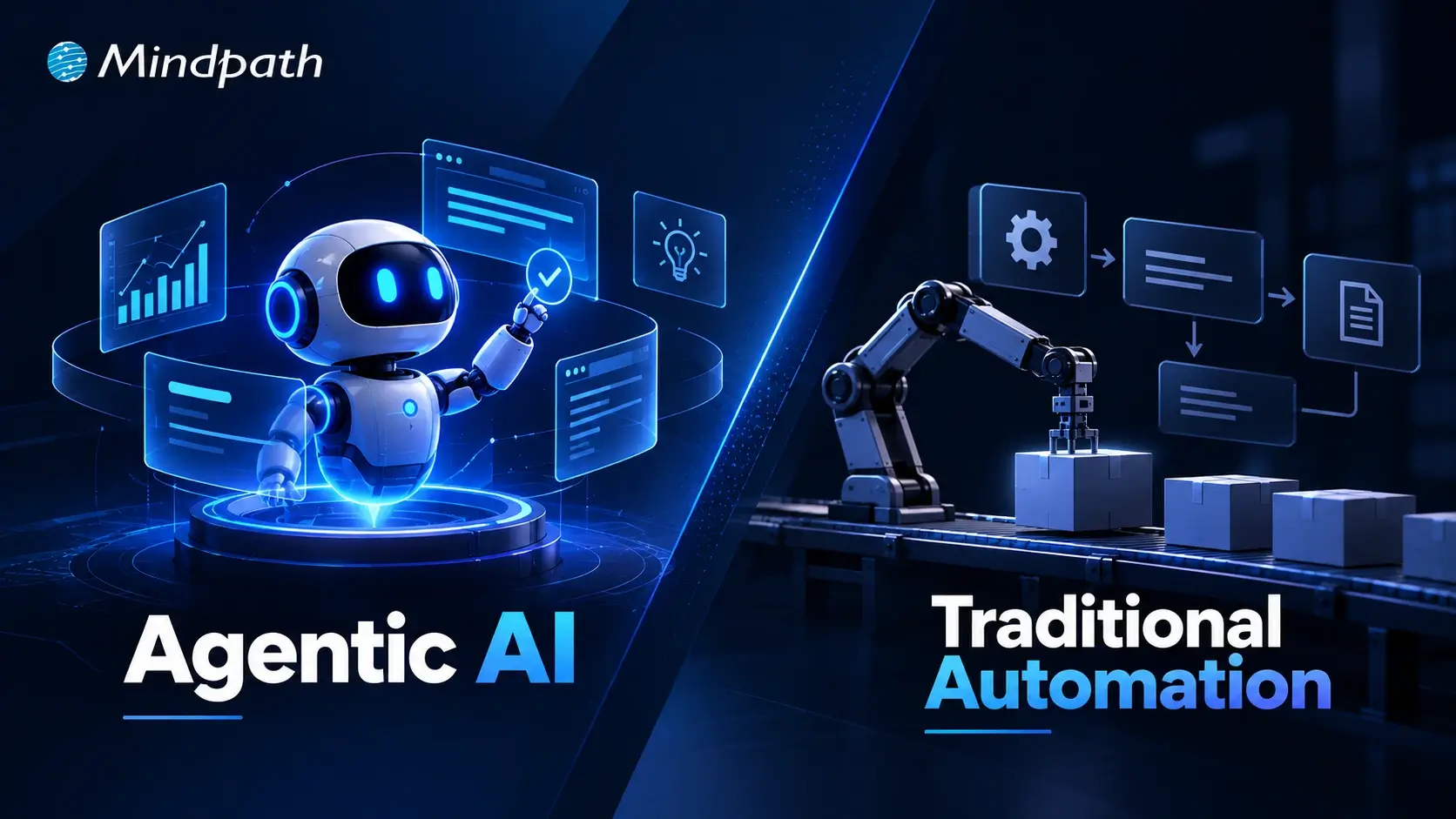
A workflow can run perfectly for years until one unexpected exception exposes its limits. That is where the difference between agentic AI vs traditional automation becomes important. Automation follows defined rules and paths, while agentic AI can interpret context, make decisions, and adapt its actions as conditions change.

Key Takeaways

  • 01
    Traditional automation works best for predictable, repetitive, and rule-based business processes.
  • 02
    Agentic AI handles workflows requiring reasoning, adaptability, and context-based decisions.
  • 03
    AI agents can manage unstructured information, exceptions, multiple systems, and complex objectives.
  • 04
    Businesses should choose technology based on workflow requirements rather than replacing automation unnecessarily.
  • 05
    A hybrid approach can combine automation for routine tasks with AI agents for complex decisions.

The real question is not which technology is better, but which one fits the work. Businesses need to understand where predictable automation delivers greater efficiency and where autonomous decision-making creates measurable value. In this blog, we compare both approaches to help you choose the right one for your business workflows.

Need the right AI approach for your workflow?

Explore Mindpath’s AI development services to design, build, and deploy intelligent solutions aligned with your business goals.

What is Agentic AI?

Agentic AI refers to AI systems that can pursue a defined goal by interpreting information, making decisions, using tools, and adjusting their actions based on what happens next. Instead of relying entirely on a fixed sequence, an AI agent can determine the next appropriate step within a given set of boundaries.

In a business environment, an agent might review customer information, search internal knowledge, interact with business applications, analyze the results, and decide whether to complete a task or escalate it to a person.

Key advantages of agentic AI include:

1. Adaptive Execution

Adjusts actions when conditions or requirements change.

2. Contextual Decisions

Uses available information to determine the next step.

3. Exception Handling

Can assess situations that fall outside standard workflows.

4. Multi-step Execution

Coordinates several actions toward a single business goal.

5. Tool Interaction

Can work with APIs, databases, software platforms, and other business systems.

What is Traditional Automation?

Traditional automation uses predefined rules, triggers, and workflows to complete specific tasks without requiring manual intervention at every stage. The process is designed in advance, and the system executes those instructions consistently whenever the required conditions are met.

For example, an automated workflow can receive an invoice, check predefined criteria, send it to the appropriate approver, update a database, and trigger a notification. The workflow performs each action according to the logic established by the business.

Key advantages of traditional automation include:

1. Predictable Execution

Follows established workflows consistently.

2. Fast Processing

Handles repetitive tasks efficiently at scale.

3. Cost Efficiency

Reduces manual effort for routine processes.

4. Process Consistency

Applies the same rules across every transaction.

5. Easy Control

Gives businesses clear visibility into predefined actions and outcomes.

Agentic AI vs Traditional Automation: The Core Difference

The agentic AI vs traditional automation comparison becomes clearer when you look at how each system handles work after the initial instruction. Traditional automation is designed around known rules and predictable paths. Agentic AI is designed to work toward an outcome, making context-based decisions when the path changes.

The biggest difference is how much flexibility the system has during execution. An automated workflow generally does what it was programmed to do. An AI agent can assess the current situation, choose an action, observe the result, and determine what should happen next.

Capability Traditional Automation Agentic AI
Primary approach Executes predefined instructions Works toward a defined goal
Decision logic If/then rules and fixed conditions Context-based reasoning and planning
Workflow path Predetermined sequence Can change based on circumstances
Input handling Best with structured inputs Can interpret structured and unstructured inputs
Exception handling Follows predefined exception rules Can assess unfamiliar situations
Adaptability Changes require workflow updates Can adjust actions within defined boundaries
Task planning Business defines the sequence Agent can determine the next step
Tool usage Specific integrations trigger specific actions Can select and use available tools based on the task
Retries Usually follow programmed retry logic Can reassess why an action failed and try another path
Escalation Triggered by predefined conditions Can escalate when it cannot confidently proceed
Human involvement Often required for predefined exceptions Can operate independently while keeping humans in the loop
Best suited for Repetitive, predictable processes Variable, multi-step, decision-heavy work

When Traditional Automation Is Still the Better Choice?

Agentic AI can handle complex workflows, but that does not mean every business process needs an AI agent. When to use agentic AI instead of traditional automation depends largely on how predictable the work is. If a process follows clear rules, receives structured inputs, and produces consistent outcomes; traditional automation is often simpler, faster, and easier to control.

Traditional automation is usually the better fit when:

1. Rules Are Clearly Defined

The process can be mapped using fixed conditions and actions.

2. Tasks Are Repetitive

High-volume activities follow the same sequence every time.

3. Inputs Are Structured

Data comes in predictable formats that require little interpretation.

4. Consistency Is Critical

Every transaction needs to follow the same approved process.

5. Exceptions Are Limited

Unusual cases can be handled through predefined rules or human escalation.

When Agentic AI Creates More Value?

Agentic AI becomes valuable when a workflow cannot be mapped into a fixed sequence of rules. Businesses may know the outcome they want, but the steps required to reach it can change with each situation. That is where AI agents can interpret context, evaluate options, and determine what action should come next.

Businesses can build AI agents for business when their workflows involve:

1. Unstructured Information

Emails, documents, conversations, and other inputs need interpretation.

2. Dynamic Decisions

The next action depends on what the system discovers during execution.

3. Multiple Systems

A task requires information or actions across CRM, databases, APIs, or business applications.

4. Complex Objectives

The desired outcome is clear, but the exact execution path is not.

5. Frequent Exceptions

Unusual cases require contextual decisions rather than another fixed rule.

Choosing the Right Approach for Your Workflow

The right choice between agentic AI vs traditional automation depends on the kind of work you want to automate. If the steps are clear and repeatable, traditional automation is usually enough. If the workflow changes often and needs decisions, agentic AI can be a better fit. Some workflows can also use both.

If your workflow is Best approach Why
Repetitive and predictable Traditional automation Follows fixed rules quickly and consistently
Based on clear business rules Traditional automation Easy to control, monitor, and audit
High-volume and structured Traditional automation Handles routine work efficiently
Unstructured or variable Agentic AI Can interpret changing information
Dependent on decisions Agentic AI Can assess context before acting
Spread across multiple systems Agentic AI Can coordinate different tools and actions
Partly predictable, partly complex Hybrid approach Uses automation for routine steps and AI for decisions

For agentic AI vs automation for business processes, the goal should be to choose the simplest approach that can reliably achieve the desired outcome. You do not need an AI agent where a straightforward automated workflow already works well.

What to Consider Before Deploying AI Agents?

Understanding how agentic AI works is an important first step before introducing agents into a business workflow. The system needs clear goals, access to relevant information, defined boundaries, and a reliable way to handle situations it cannot resolve.

Before deployment, businesses should consider:

1. Business Goal

Define the specific outcome the agent needs to deliver.

2. Data Quality

Make sure the agent can access accurate and relevant information.

3. Permissions

Control which systems, data, and actions the agent can access.

4. Human Oversight

Set clear points for review and escalation.

5. Integration

Connect the agent with the tools already used by the business.

6. Performance

Measure accuracy, task completion, failures, and business impact.

An experienced AI agent development company can help assess these requirements and design an architecture around the workflow. Businesses that plan to hire AI agent developers should also look for experience in integrations, security, agent evaluation, and production deployment.

Which Approach Is Right for Your Business?

The choice between agentic AI vs traditional automation depends on the workflow, not the technology trend. Traditional automation remains ideal for predictable tasks, while agentic AI fits work requiring reasoning, adaptability, and dynamic decisions. The strongest strategy often combines both to create efficient, practical, and scalable business workflows.

Mindpath helps businesses identify where AI can create meaningful operational value and build solutions around those opportunities. Our agentic AI development services cover strategy, agent development, integrations, and deployment, helping businesses introduce AI agents with the right architecture, controls, and business objectives.
Ready to Move Beyond Traditional Automation?

Build AI agents that adapt, decide, and automate complex workflows.

Frequently Asked Questions

Traditional automation can be more cost-efficient for repetitive tasks, while agentic AI can justify higher costs when complex decisions reduce manual effort.
Yes. Businesses can introduce agents into specific workflow stages where decisions, exceptions, or unstructured information create limitations.
Businesses should assess workflow complexity, data quality, system access, security requirements, human oversight, integration needs, and measurable business outcomes.
Yes. Routine steps can remain automated while AI agents handle decisions, exceptions, and tasks requiring greater flexibility.
Agentic AI may be unnecessary when a workflow already follows simple, predictable rules that traditional automation can execute reliably and efficiently.

Support Is One Click Away

Featured Posts

Related Post

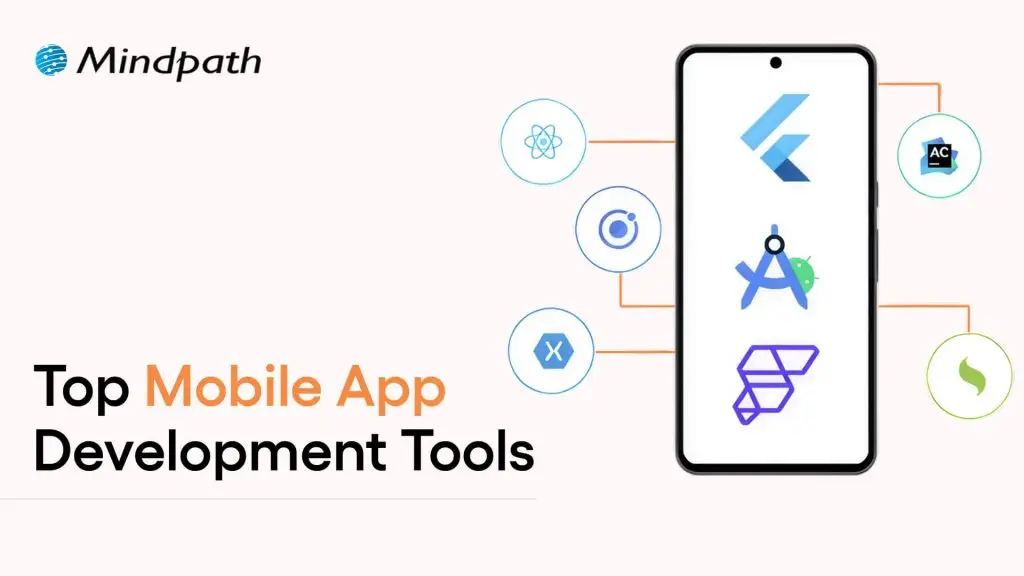
Mobile app development tools

In today’s rapid technological environment, businesses and developers are always trying to find new ways to create apps that engage users and run efficiently. This is why understanding what is mobile application development is essential. In short, mobile application development is the creation of software applications that run on mobile devices, such as smartphones and tablets, involving both creativity and technical skill. Selecting the best mobile app development tools can greatly enhance speed, quality, and innovation. The right tools will make coding, design, testing, and deployment easier for teams of people. It fosters the idea developed into a real app more quickly and effectively.

Investigation into the mobile app development ecosystem demonstrates a rapid and reliable delivery of apps to users. Tools shape the entire process, from user interface design to backend integration. This indicates that choices of tools are critical to success. The right set of tools maximizes people’s efficiency while conserving time, minimizing mistakes, and encouraging collaboration on projects. This provides support for more modern amenities. In this blog, we will highlight some of the best mobile development tools that are leading the industry today. So, keep reading further!

With advanced knowledge and expertise, Mindpath offers mobile app development services that are designed to deliver high-performing and user-centric apps, also ensure that your mobile product stands out in performance and design.

What is a Mobile App Development Tool?

A mobile app development tool is a software program, framework, or environment used to design, build, test, and deploy applications for mobile devices like smartphones and tablets. It offers developers resources such as integrated development environments, visual design interfaces, pre-built components, and code-free solutions to make the app-building process faster and easier. These tools also enable API integration, automated testing, data syncing, and analytics, all while helping teams build robust, user-friendly apps.

By employing mobile app development tools, developers can operate in a visual environment with hardware reliability and flow design. They also simplify the backend of features such as push notifications and cloud services. App development becomes equitable, faster, organized, and with fewer errors leading developers to be able to innovate and enhance quality.

Want to build a mobile app but don’t know which technology to use for better execution? Learn from the mobile app development technologies blog to understand what suits best for your business.

Top 10 Mobile App Development Tools

Selecting the appropriate mobile app development tools is essential for developing performant and conveniently accessible applications. The right development tool simplifies coding and design, enhances collaboration, and increases testing and deployment features. It helps developers bring their ideas to reality more effectively. Here is a list of some of the best mobile app development tools:

1. React Native

React Native is one of the best mobile application development frameworks for producing high-quality applications across platforms. It lets developers apply their existing expertise in JavaScript and React framework to develop native-like interactions for iOS, Android, and other platforms. The cross-platform features of React Native let developers build applications with a higher degree of speed, efficiency, and consistency while maintaining performance.

2. Ionic

Ionic is another notable cross-platform mobile app development tool that allows developers to create applications for iOS, Android, and the web, all using standard web technologies, such as HTML, CSS, and JavaScript. It offers a vast set of UI components that have been pre-designed to help you build engaging and visually enhancing applications. It allows developers to enhance their engagement in the applications while maintaining a consistent level of speed and efficiency for multi-platform development.

3. Xamarin

Xamarin is a powerful mobile app development software that provides developers the ability to build Android, iOS, and Windows apps using a single C# codebase. It integrates nicely with Microsoft Visual Studio, allowing developers to build apps more quickly and efficiently. Xamarin allows the development of high-performance apps that will feel and appear native-like while multiplexing and simplifying maintenance.

4. Flutter

Flutter is a widely used development framework by Google that enables developers to build native applications for iOS, Android, the web, and even desktop, all from a single codebase. Thanks to its large offering of fully customizable widgets, developing visually attractive, highly responsive applications is easy. Its cross-platform capability allows teams to develop applications rapidly while continuing to provide a level of consistency across devices.

5. Xcode

Xcode is a full-fledged development environment focused on developing applications on Apple devices (iOS, macOS, iPadOS, watchOS, tvOS). It is an integrated development environment (IDE) that has a structured interface, designed to create, debug, and manage a significant project effectively. Additionally, it provides support for a number of languages, enabling developers to produce the high quality of Apple’s native applications.

6. Swift

Swift is regarded as one of the top tools for mobile application development, specifically for creating apps on iOS, macOS, and watchOS. Its speed, security, and user-friendliness enable developers to build high-performance native applications easily and swiftly. Modern syntax and capabilities make Swift the preferred programming language for application development work on Apple.

7. Kotlin Multiplatform

Kotlin Multiplatform is considered one of the best tools in mobile app development because it allows developers to share code across platforms but still maintain native performance. That is, it allows you to build apps for Android, iOS, and more using a single codebase and reusing your business logic, while still using the native user interface libraries. With support from Google and a growing community, Kotlin Multiplatform is an excellent option for cross-platform mobile app development.

8. Firebase

Firebase is one of the top mobile application development tools. It supplies developers with a complete backend platform for constructing mobile applications and continually enhancing, updating, or developing for future use. It also provides high-level services such as, real-time databases, authentication, analytics, and cloud messaging to make managing a mobile app much easier. Firebase allows developers to solely focus on the front end of the mobile app. Developers use Firebase when they want a fully functioning backend infrastructure that allows for the mobile app to run smoothly.

9. Apache Cordova

Apache Cordova is a mobile app development tool that is popular among developers because it provides the framework to create cross-platform applications using standard web technologies (HTML, CSS, and JavaScript). It makes it easy to develop applications for an entire app by interfacing with native device features through a variety of plugins. Cordova supports faster development and an easy maintenance process while delivering applications that run effectively and efficiently across multiple platforms.

10. Titanium SDK

Titanium SDK is a widely used mobile application development tool framework that affords developers the ability to create native applications for iOS and Android using a single codebase in JavaScript. It also provides access to native device features and enables teams to test simultaneously across platforms. Titanium SDK helps teams iterate faster at development without sacrificing performance or consistency of mobile applications.

Curious how mobile apps can leverage AI to transform your business and stay ahead in 2025? Explore our blog on Mobile App Development Trends to discover how these innovations can enhance user experiences.

Ready to Choose the Right Mobile App Development Tool?

Selecting the right mobile app development tools can make a significant difference in creating high-quality, efficient, and engaging applications. The tools highlighted in this blog help streamline coding, design, testing, and deployment, enabling developers to deliver reliable and innovative apps faster. Choosing the right framework ensures better performance, consistency, and a smoother development process.

At Mindpath, we offer professional mobile app development services that help businesses turn their ideas into fully functional applications. Their team uses modern tools and frameworks to deliver scalable, secure, and high-performing apps for iOS, Android, and cross-platform projects. Mindpath focuses on quality, efficiency, and user experience, ensuring that your app stands out in today’s competitive market.

Cloud computing vulnerabilities

In the contemporary business setting, more business entities are making use of cloud services like never before. The rising popularity of cloud computing technology can be attributed to diverse factors such as high cost-effectiveness and flexibility. These cloud computing trends have contributed to the rapid adoption of cloud services. However, the increasing reliance on the cloud has escalated the risks relating to cloud computing vulnerabilities.

Businesses that plan to move to the cloud or that have already moved to the cloud need to be aware of cloud computing vulnerabilities. In addition to this knowledge, they need to be aware of ways of fixing such vulnerabilities. Such holistic knowledge can truly empower modern businesses to leverage cloud services in an optimal manner. 

Looking for a proven way to fix cloud vulnerabilities and strengthen security? Mindpath’s managed cloud services deliver expert support and 24/7 protection so you can focus on scaling.

What are Cloud Computing Vulnerabilities?

Cloud computing vulnerabilities are security weaknesses, flaws, or gaps in a cloud computing environment, including infrastructure provided by platforms like Amazon Web Services (AWS), Microsoft Azure, or Google Cloud. Hackers and cybercriminals can exploit these gaps to gain unauthorized access, steal confidential business data, hijack user accounts, or disrupt normal business operations.

Businesses need to bear in mind that such vulnerabilities may exist anywhere in the cloud environment, in the infrastructure, communication pathways, or data storage. Because cloud systems are highly distributed and rely on shared infrastructure across multiple users, a single weak point can affect several organizations at once. These vulnerabilities are often caused by software bugs or the absence of proper encryption, which is why it’s critical for businesses to identify the root cause and address it promptly.

Planning to secure your cloud systems against potential weaknesses? Check out cloud security tools to learn how to detect and fix vulnerabilities before they’re exploited.

Types of Cloud Computing Vulnerabilities

In the year 2026, there are a number of common cloud vulnerabilities that businesses need to be familiar with. The insight is crucial so that they can understand the serious cloud computing threats that they face in the cloud setting. Moreover, the knowledge in these areas can help them to find the right solutions to these problems. Some of the top cloud security vulnerabilities that impact businesses today include:

1. Cloud Security Misconfigurations

Cloud security misconfigurations can be defined as mistakes or errors in the setup relating to cloud systems. Such errors may give rise to vulnerabilities. Some of the common errors that may lead to vulnerabilities include the use of insecure default settings and leaving the storage accessible to the public. It is key to bear in mind that such mistakes may lead to serious security incidents for organizations.  Some of the common consequences include unauthorized access, data breach incidents, and many other incidents. 

2. Insecure API

In cloud computing, insecure APIs can be defined as flaws or weaknesses in the application. These types of cloud security vulnerabilities may be because of the adoption of poor coding practices or the absence of proper API authentication protocols. Some of the common kinds of API vulnerabilities include injection flaws, high data exposure, and broken authentication. The insecure nature of APIs makes them vulnerable to different types of cyberattacks, such as injection attacks, as well as denial-of-service attacks. 

3. Absence of Visibility

In the cloud computing context, the issue relating to the absence of visibility arises when organizations struggle to monitor as well as track activities within their cloud environment. Due to this issue, they may not be aware of which users are accessing data or which particular data is being accessed in the cloud environment. In the absence of proper visibility, organizations are likely to face difficulty in effectively detecting cloud computing security threats. It is a serious vulnerability that business entities cannot ignore since it can increase the possibility of attacks on the cloud.

4. Poor Authentication and Authorization Protocols

In case cloud systems fail to effectively verify the identity of users and manage their access controls, it may lead to unauthorized users gaining access to the environment. It may compromise the quality of sensitive data. Some of the common authentication vulnerabilities include the use of weak passwords and the absence of multi-factor authentication. Furthermore, in case users are granted more access than necessary, it may lead to data leaks or abuse of power. It is key for organizations to make sure that only authorized users are able to access specific resources and data. 

5. Insider Threats

Insider threats refer to the cloud computing attacks that arise from individuals who exist within the organization. They could be employees, business partners, or even former employees. Insider threats basically have legitimate access to the cloud environment, and they take advantage of this power and are responsible for attacks on the cloud. They may misuse their power to steal confidential information or leak sensitive data to outsiders.

A broad range of vulnerabilities may exist in the cloud setting. Organizations need to adopt a proactive approach to tackle such issues in a prompt and proactive manner. It is essential to fix the vulnerabilities as soon as they are found, and also to promote cybersecurity resilience within the organization.  

Planning to simplify application deployment in the cloud? Explore serverless architecture in cloud computing to learn how you can build apps without managing servers.

Best Practices to Fix Cloud Computing Vulnerabilities

Now that you are aware of some of the most common cloud computing threats, you need to expand your insight into how to manage such vulnerabilities. Business entities need to adopt best practices and deploy proper measures in place so that they can capitalize on the cloud computing technology in an optimal manner. Some of the best practices that can help fix cloud computing vulnerabilities include:

1. Keeping Up with Patch Management

Business entities that use cloud services need to keep up with patch management. It is crucial for businesses to methodically identify, test, and deploy the necessary software updates. Moreover, they need to prioritize proper security configuration so that gaps can be eliminated that may be exploited by cybercriminals and other malicious actors. 

2. Using Identity and Access Management Solutions

It is a must for modern businesses to use Identity and Access Management (IAM) solutions. It can help restrict unauthorized access to the cloud resources and infrastructure of the business. You need to make sure that appropriate policies, practices, and protocols are in place that make sure that the right individuals can have the right access to the right kind of resources. 

3. Regular Back-Up of Data

Businesses face a high level of uncertainty in the prevailing business landscape. In such times, it is essential to maintain frequent back-ups of data. Additionally, the principle relating to least privilege access must be followed at all times. It is key to establish a zero-trust cloud security architecture while hardening the network security.  These cloud security solutions are a must to tackle the vulnerabilities that arise in the cloud environment. 

4. Strengthening Of Data Governance Policies

Business entities that intend to strengthen their cloud vulnerability management must make sure that robust data governance policies and standards are in place. It is equally important to consolidate cloud security solutions so that the issue relating to silos can be eliminated. Business owners need to prioritize an incident response plan as well. It can guide the authorized personnel to adopt appropriate measures while handling a challenging situation.

5. Enabling Multi-Factor Authentication

Multi-factor authentication is the security process that requires two or more verification methods for the purpose of logging in. It makes it harder for unauthorized users to gain access to an account. In order to minimize cloud vulnerabilities and mitigate cloud security risks, organizations need to adopt the practice of multi-factor authentication. It can minimize the risk of unauthorized parties gaining access to your cloud infrastructure. Multi-factor authentication is equally important to check API configurations as well as address any security misconfiguration issues that may exist. 

It is crucial for businesses to bear in mind that cloud vulnerability management is an ongoing process. Business entities need to be alert and vigilant at all times so that they can locate any kind of security weaknesses or gaps that may exist in the environment. Businesses must also train their staff so that they can identify gaps in the security posture and inform the appropriate personnel immediately. 

Ready to modernize your cloud infrastructure? Explore multi-cloud vs. hybrid cloud to see which strategy aligns with your goals.

Final Words

Organizations may not be able to predict cloud computing vulnerabilities as they are diverse in nature. However, malicious actors may exploit them and cause serious damage to the organizations that operate today. It is essential for business entities to be aware of the major cloud vulnerabilities. In order to maintain a secure posture, it is important to adopt best practices relating to cloud vulnerability management. 

Mindpath’s top-quality cloud-managed services can certainly ensure that no vulnerabilities arise in your path while leveraging our cloud services. Our experts will ensure that you can get professional help to effectively overcome possible complexities and challenges in your journey. 

Web development trends

The landscape of web development is evolving faster than ever. What was an innovation just a few years ago is now obsolete. Developers and businesses should stay ahead of the curve to remain relevant and competitive. From decentralized technology to AI-powered automation, the latest web development trends are redefining how web apps and websites are developed and optimized. 

These trends do not just revolve around making technical upgrades. They involve strategic shifts that influence digital growth and user experience. By embracing these advancements early, you can enjoy a decisive edge in this competitive digital world. Following a well-structured web development roadmap can help you prioritize the right technologies, tools, and methodologies for maximum impact.

In this blog, we will talk about some major trends in web development processes, methodologies, and tools that are constantly transforming this landscape. 

Using these trends in your business requires expert guidance. At Mindpath, we offer web development services where our guidance will provide you with the direction you need to stay ahead of the competition.

Why Web Development Trends Matter?

Web development is now entering a transformative era, significantly driven by user-centric designs and technological innovations. In the future, we can expect to see faster, personalized, and smarter websites.

Besides, the demand for Progressive Web Apps will increase as these apps provide users with an app-like experience without downloading an app. What’s more? With machine learning and IoT widely integrated into websites, the web will evolve into a more responsive, intelligent, and interactive ecosystem. 

Let’s further explore the top web development trends that are shaping the next generation of digital experience.  

Top Web Development Trends to Watch in 2026

As we move deeper into 2026, here are some trends that are reshaping how web applications and websites are built and deployed. These innovations enhance scalability, performance and align with increasing demand for transparency, security and personalization.

1. Code Will Become Optional: AI-Assisted Development

In 2026, AI-powered web development tools will streamline multiple tasks, from code creation to UX enhancement. Platforms such as OpenAI Codex, GitHub Copilot, Tabnine, and more help developers by suggesting improvements, writing boilerplate code, debugging, and more. 

Besides, web application development trends in 2026 include predictive analytics, AI-assisted personalization, intelligent chatbots, etc. Such intelligent capabilities have become integral to modern web development projects with source code, reducing development time and enhancing user engagement. 

2. The Rise of Jamstack Architecture

Jamstack (which combines JavaScript, APIs, and Markup) has become one of the most popular web development technologies. This modern architecture decouples the front-end from the back-end. It leads to improved security, better scalability, as well as faster load times. For marketing pages, e-commerce sites, and content-heavy platforms, Jamstack would be an excellent choice 

3. Blockchain Technology

Blockchain is here to facilitate continuous flows of records and transactions, called blocks. This technology is cryptographically secure and records every transaction in a tamper-proof and transparent manner.  

Web developers can use this to create high-performance, decentralized applications that eliminate centralized control and intermediaries. 

4. Progressive Web Apps

By combining the features and functionalities of native mobile apps and websites, PWAs are changing the web development process. These apps offer an app-like experience while being cost-effective and accessible. 

A report indicates that the global PWA market is projected to grow from USD 1.9 billion in 2014 to USD 9.7 billion by the end of 2034 (Source: Emergen Research). This clearly shows the rising adoption of PWAs by businesses.

5. Machine Learning in Browsers

Thanks to the latest web development technologies like TensorFlow.js and WebAssembly, web developers can easily run various machine learning models in browsers. This facilitates voice recognition, real-time personalization, predictive UX, and more. It is now possible to create privacy-conscious and faster applications that can adapt to user behaviour. 

Are your web apps providing the best possible experience for users? Discover UI/UX design trends in web application development to learn how modern design trends can enhance usability and engagement.

6. Micro-Frontends

It breaks down the complete UI into manageable, smaller components. This modular approach significantly enhances scalability and facilitates parallel development. This can be an excellent solution for large-scale development projects. 

7. No-Code and Low-Code Platforms

Low-code development is getting popular among developers. Platforms such as Bubble, OutSystems, and Webflow let non-technical users create functional websites with minimal coding. It reduces costs and accelerates prototyping. Low-code or no-code development is one of the impactful dev trends in 2026 for small businesses and startups.  

8. Single Page Applications

These web apps are created as a single page, and they can dynamically update content in real-time. SPAs help reduce costs, and businesses can use cloud technology to attain scalability. Some examples of popular SPAs are Google Maps, Facebook, Airbnb, Twitter, and Netflix. 

9. WebRTC Advancements

WebRTC is a major technical advancement in the field of web app development. It is an open-source technology and uses HTML and JavaScript APIs to add communication features to browsers. There is no need to use any external software or plugins.

With the help of RTCPeerConnection, RTCDataChannel, and MediaStream, it enables peer-to-peer data, video, and audio sharing. 

10. Edge Computing

It refers to the processing of data closer to the source instead of depending on centralized data centers. It reduces latency, improves privacy and performance while helping businesses to keep costs low. 

Edge computing is becoming significantly crucial for business, and it is estimated that by 2028, it will reach USD 378 billion. 

Choosing the right technologies is crucial for building a high-performing web app. Explore the tech stack for your web app success to discover the best tools and frameworks for your project.

11. Motion UI Frameworks

These frameworks help bring a static interface to life by integrating optimized transitions and animations. For example, Animate.css offers ready-to-use animations that are compatible with multiple browsers. It is a great option for sliders and home pages. 

You can implement animations that are not just visually appealing but also serve functional purposes, such as highlighting vital information, guiding visitors through a certain process, etc. 

12. Adaptive and Responsive Design

Web development trends in 2026 also include the wide use of adaptive designs. With wearables and foldable devices entering the mainstream, adaptive design is now evolving. Developers are prioritizing gesture optimization, context-centric layouts, and device-specific breakpoints. 

This shift is central to modern web development trends, ensuring a consistent user interface across screens and devices. 

13. Server-Driven UI

It enables servers to identify the behaviour and structure of the front-end for dynamic content rendering and quick updates. It transmits JSON-based instructions to the frontend and controls the UI layouts.

This development approach allows faster deployment, seamless CMS integration, personalization, and cross-platform consistency. It is a strategic shift in today’s web development trends.

14. Data-Driven UX and Real-Time Analytics

Developers are now integrating session recording, heatmaps, real-time user behaviour tracking, and more for design decisions. This approach reduces guesswork and assumptions while enhancing user satisfaction. 

Product metrics, email analytics, Google Analytics, and social media analytics are some commonly used analytics tools to get important quantitative data. This approach aligns with new web development trends and can also boost conversion rates. 

15. AI-Assisted SEO Optimization

With search engines, SEO is also evolving. AI tools are now helping with content scoring, meta tag generation, keyword clustering, and improving internal linking. 

For developers and content strategists, it means better alignment with user needs and faster optimization cycles. 

Looking to build a website that drives engagement and conversions? Explore web design and development services to discover how professional design and development make an impact.

Best Programming Languages for Modern Web Development

Staying updated with the Latest Web Development Languages is also important to create future-proof and scalable web applications. Here are some key languages that cater to frontend as well as backend needs.

1. JavaScript

The backbone of front-end development, and it helps create interactive and dynamic user interfaces. 

2. TypeScript

An ideal option for large-scale projects due to its error reduction and maintainability. 

3. Go

Also called Golang, it is popular for its concurrency and speed. It is widely used for websites requiring high performance. 

4. PHP

A dominating language for server-side scripting. Frameworks such as Laravel are modernizing PHP development.

5. Rust

Well-known for performance and memory safety, Rust works well for secure backend systems and web assembly projects. 

Want a web application built to match your workflow perfectly? Discover our custom web development services to learn how we create bespoke digital experiences.

Emerging Software Development Trends in 2026

In 2026, the application development trends cover CI/CD automation, AI coding, and more. Here are some major dev trends you should consider. 

1. Micro Frontends

Dividing user interfaces into independently-deployed, smaller parts with an aim to achieve flexibility, collaboration, and scalability. 

2. AI-Assisted Coding

Smart testing tools and code generation tools powered by AI are simplifying workflows. 

3. CI/CD Pipelines

Automated testing ensures that web applications and websites are updated on time and faster. 

4. Sustainable Development

Coding architectures and practices that meet global accessibility standards and reduce energy consumption are getting popular in dev trends. 

5. 5G Integration

Developers can leverage 5G technology to optimize CDNs or Content Delivery Networks and create high-performing websites. 

It can be said that the future of web development holds more such exciting innovations. 

Integrating CI/CD into your development cycle can boost productivity. Explore CI/CD Pipelines to discover tools and techniques for seamless automation.

It’s Time to Embrace the Trends

The 2026 web development trends clearly signal a shift toward adaptability, speed, and intelligence. Businesses optimizing their landing pages or creating new websites from scratch, these new technologies in web development can offer strategic opportunities to enhance the digital experience.  

If you are searching for an expert who can guide you through this evolving landscape, Mindpath would be the best option for you. We offer comprehensive web development solutions designed to take your digital experience to a whole new level. Our experts keep themselves updated with the current web development trends so that you can enjoy the desired results. Let us develop a perfect website integrated with advanced features and capabilities, and stand out in this competitive market.  

Frequently Asked Questions