Key Takeaways
- 01
Human approval at critical decision points helps balance AI automation with business accountability. - 02
Risk-based approval rules direct human attention toward decisions with serious consequences. - 03
Clear interfaces and contextual information help reviewers evaluate AI recommendations efficiently. - 04
Defined ownership, deadlines, and escalation paths prevent approval delays from disrupting workflows. - 05
Audit trails and performance metrics support transparency, compliance, and continuous improvement.
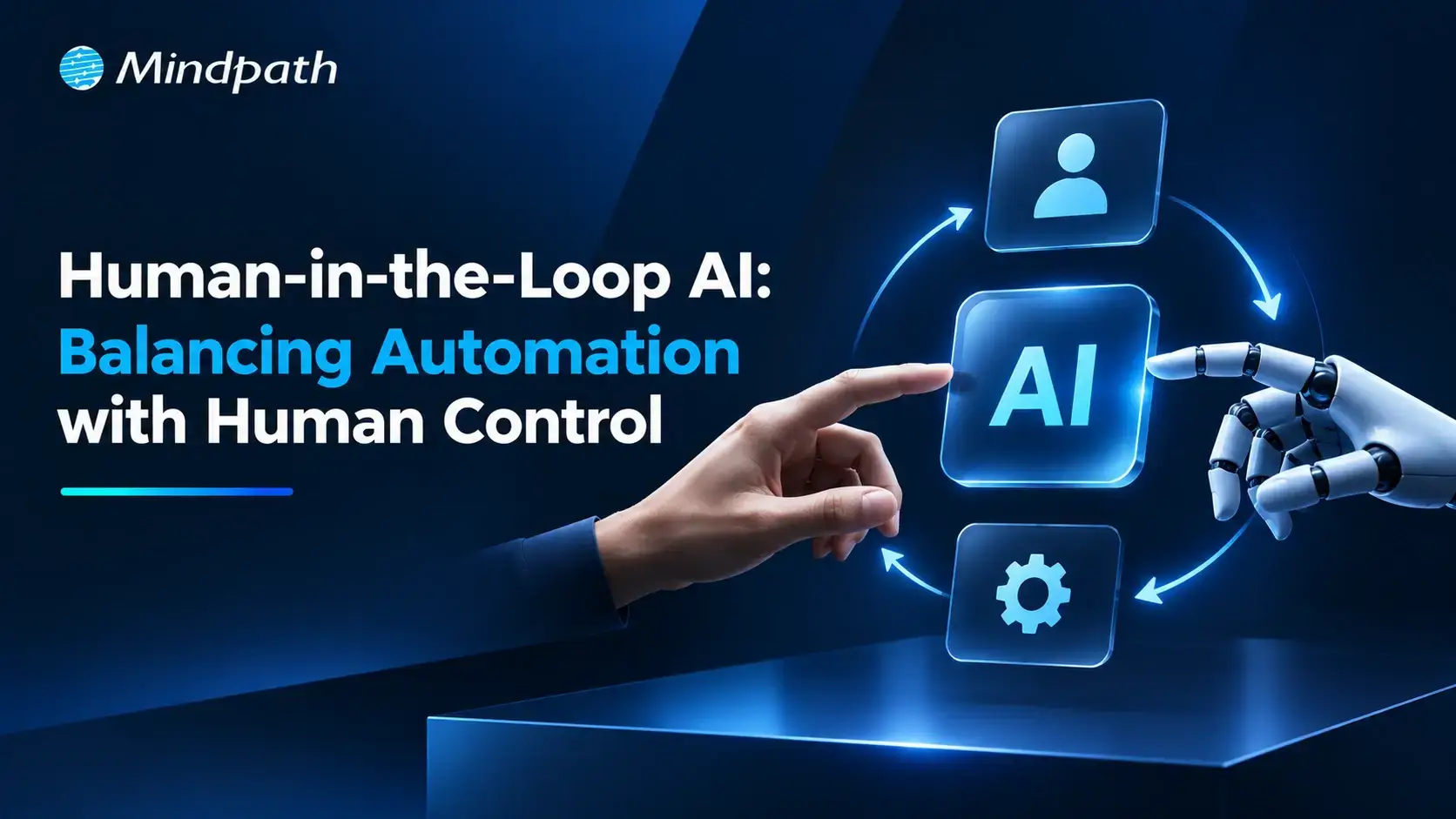
Human-in-the-loop AI provides that balance by introducing human review at critical decision points. Instead of checking every AI action, teams can focus their attention on decisions that require judgment, accountability, or additional verification. In this blog, we examine how businesses can design effective approval workflows that keep automation efficient while ensuring important decisions remain under human oversight.
Ready to Build Smarter AI Workflows?
Mindpath offers AI agent development services to integrate human oversight, automate business processes, and build reliable AI-powered workflows.
Understanding the Human-in-the-Loop AI Model
HITL AI is an approach to automation in which human reviewers assess specific AI-generated outputs before those outputs trigger important actions. The model allows AI to handle repetitive tasks, analyze information, and generate recommendations while people retain control over decisions that require judgment or accountability. For businesses, this creates a structured way to use AI capabilities without handing over every decision to an automated system.
HITL differs from human-on-the-loop AI, where people primarily monitor automated systems and intervene when problems arise. In fully autonomous workflows, AI completes defined tasks without routine human approval. The appropriate model depends on the risk involved and the level of control a business needs.
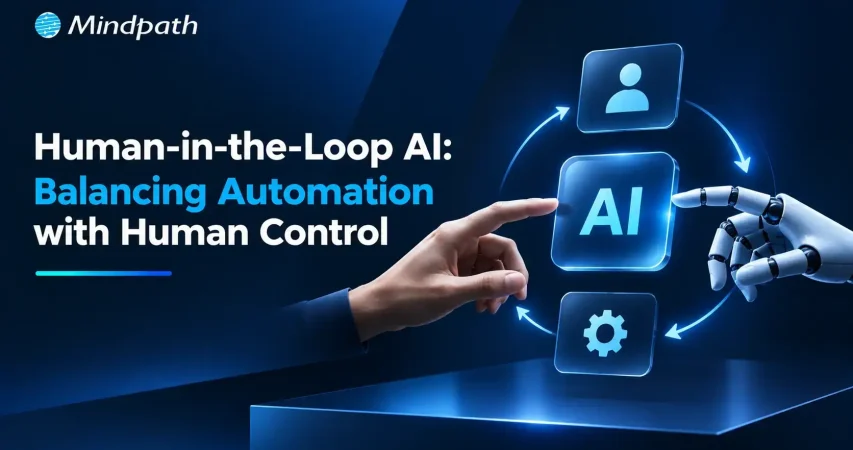
A typical HITL workflow follows a clear sequence:
- AI generates an output:
The system analyzes information and proposes an action or decision. - A human reviews the result:
The reviewer checks the recommendation, supporting evidence, and relevant business rules. - The decision is confirmed or corrected:
The reviewer approves, rejects, or modifies the output before the workflow proceeds.
For example, an AI system may prepare a supplier payment for processing, but a finance manager must verify the amount and approve the transaction before funds are released. This approach keeps routine work efficient while reserving critical decisions for human judgment.
Identifying Where Human Approval Is Necessary
Deciding where to introduce human oversight: AI requires a clear understanding of the risks within each workflow. Reviewing every AI-generated output can slow operations, while allowing every decision to proceed automatically can expose businesses to avoidable errors. The goal is to identify specific decision points where human judgment adds meaningful value.
1. Assess the Risk of Each Decision
Evaluate the potential consequences of an incorrect AI output. Financial losses, operational disruptions, and customer impact may justify mandatory human approval.
2. Protect Sensitive Information
Identify workflows that process confidential customer details, financial records, or proprietary business data. Human review can help verify that sensitive information is handled according to established policies.
3. Consider Regulatory Requirements
Review applicable laws, industry standards, and internal governance policies before automating decisions. Certain processes may require documented approval, additional verification, or specific human involvement.
4. Evaluate the Cost of Errors
Determine the financial and operational impact of mistakes at each workflow stage. Prioritize human intervention where an incorrect decision could create expensive rework, contractual disputes, or lasting business damage.
5. Separate Routine Tasks from Critical Decisions
Allow AI to handle predictable, low-risk activities that follow established rules. Reserve human approval for exceptions, unusual requests, and decisions that require contextual understanding.
6. Define Clear Approval Thresholds
Establish measurable conditions that determine when an AI action requires human review. For example, a finance workflow could automatically process transactions within approved limits while routing unusually large payments to a manager for authorization.
Designing an Effective AI Approval Workflow
A well-designed human-in-the-loop AI workflow gives reviewers the information they need to make accurate decisions without adding unnecessary complexity. The interface should make AI recommendations easy to understand, highlight potential risks, and provide clear options for approving or correcting outputs. A thoughtful design also reduces review fatigue and helps teams maintain consistent decisions as automation expands.
1. Present AI Outputs Clearly
Display recommendations, relevant data, and proposed actions in a structured format. Reviewers should understand what the system suggests without searching through multiple screens.
2. Provide Relevant Context
Include the information and evidence behind each AI-generated recommendation. Context summaries help reviewers assess decisions without manually reviewing every detail.
3. Display Confidence Indicators
Use confidence scores to indicate how certain the AI system is about its output. Treat these scores as supporting signals rather than guarantees of accuracy and combine them with risk-based review rules.
4. Enable Simple Approval Actions
Provide clear options to approve, reject, edit, or escalate a recommendation. Straightforward controls help reviewers complete decisions efficiently and correct outputs when necessary.
5. Highlight Potential Risks
Flag unusual patterns, missing information, policy conflicts, and other issues that require closer attention. Visual alerts help reviewers prioritize decisions that may have significant consequences.
6. Maintain a Clear Review History
Record the original recommendation, reviewer decision, and any changes made before execution. Accessible records support accountability, troubleshooting, and continuous improvement across the workflow.
Keeping Human Review from Becoming a Bottleneck
Human review can slow automated processes when approval requests pile up; responsibilities are unclear, or decisions wait too long for attention. A well-planned human-in-the-loop AI system should account for these delays during workflow design. The aim is to keep the AI approval workflow moving efficiently while ensuring that critical decisions receive the attention they require.
1. Group Similar Requests
Combine routine, low-risk approval requests into batches when individual review is unnecessary. This helps reviewers process similar decisions efficiently without compromising essential checks.
2. Set Clear Review Deadlines
Assign reasonable time limits for different types of approval requests. Clear deadlines help teams prioritize pending decisions and prevent avoidable delays.
3. Route Requests by Risk Level
Direct high-impact decisions to experienced reviewers and routine cases to appropriate team members. Risk-based routing helps allocate review time where it matters most.
4. Automate Escalation Paths
Forward overdue requests to designated backup reviewers or managers. Defined escalation rules prevent stalled approvals from disrupting the wider workflow.
5. Assign Clear Ownership
Specify who is responsible for reviewing, approving, and escalating each type of request. Clear accountability reduces confusion and prevents approval tasks from being overlooked.
6. Establish Safe Fallback Procedures
Define what happens when reviewers are unavailable, or an approval deadline expires. High-risk actions should remain on hold until authorized, rather than proceeding automatically without the required approval.
Building Accountability, Trust, and Continuous Improvement
Reliable AI workflows require clear ownership, transparent decisions, and regular performance reviews. Human oversight helps businesses identify errors, question questionable recommendations, and maintain control over automated actions.
A structured approach also makes it easier to demonstrate compliance, build stakeholder confidence, and improve workflow performance as business requirements change.
1. Maintain Detailed Audit Trails
Record AI recommendations, approval decisions, timestamps, and reviewer actions. These records help businesses investigate errors and demonstrate compliance with internal policies.
2. Define Roles and Responsibilities
Establish clear responsibilities for reviewers, workflow owners, and technical teams. Everyone involved should understand who can approve decisions and who handles exceptions.
3. Train Human Reviewers
Teach employees to recognize inaccurate outputs, potential bias, and missing context. Regular training helps reviewers make informed decisions rather than accepting AI recommendations without scrutiny.
4. Monitor Approval Patterns
Track approval rates, rejection frequency, and instances where reviewers modify AI-generated outputs. These patterns can reveal recurring system weaknesses and opportunities for improvement.
5. Measure Workflow Performance
Evaluate review times, error rates, and the frequency of escalations. Comparing these metrics over time helps determine if human oversight is improving accuracy without creating unnecessary delays.
6. Refine Approval Rules Regularly
Review workflow performance and adjust approval thresholds as system reliability and business needs evolve. Use reviewer feedback and documented outcomes to strengthen controls while preserving operational efficiency.
Ready to Build Smarter AI Workflows?
Human-in-the-loop AI helps businesses balance automation with accountability by placing human approval at critical decision points. Clear review processes, risk-based controls, and regular performance monitoring improve decision quality while keeping workflows efficient. Starting with one workflow allows teams to measure results and expand oversight strategically.
At Mindpath, we help businesses design and integrate AI-driven workflows aligned with their operational needs. Our AI development services support intelligent automation, human approval mechanisms, and reliable system integration, helping businesses improve efficiency while maintaining control over important decisions.