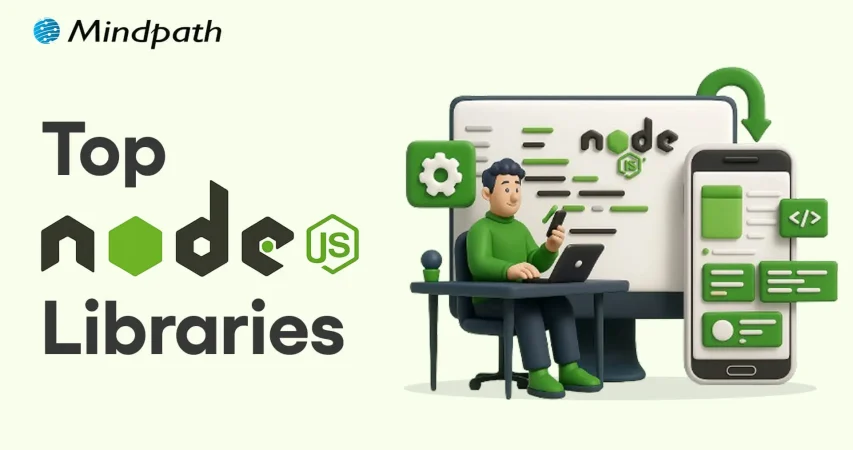
Top 25 Node.js Libraries in 2025 

Join our Newsletter!

Featured Posts

Support Is One Click Away

Home

Top 25 Node.js Libraries in 2025 

Node.js libraries 

Top 25 Node.js Libraries in 2025 

In the modern application development landscape, having speed, flexibility, and smart tools is paramount to success. This is why Node.js libraries are so valuable to both developers and businesses, in that they are all about making a complex task easy, reducing development time, and inspiring innovation. In fact, you can think of libraries as the building blocks of development that enable you to focus on truly valuable features rather than repeatable boilerplate code.

Now, the issue isn’t even finding libraries but just figuring out which is the right one to choose. Each year, new alternatives come out, which provide interesting features and improved performance. So, which libraries really made a difference in 2025? Looking at the top 25 libraries below gives you a good glimpse into what aspects of development are affecting Node.js. Let’s walk through the best options to help you shape your projects for speed, ease of use, and reliability.

Choosing right NodeJS libraries is just the beginning of a successful project. Mindpath’s Node.js development services help you implement latest libraries and best practices effectively for seamless development.

What is a Node.js Library?

Many developers are curious and often wonder: Is Node.js a library? The answer is no. Node.js is a runtime environment that allows JavaScript to run outside of a browser. It is the groundwork to build fast, scalable applications, but it is not a library itself. It can be used with libraries, and it has the possibility to run countless libraries.

When we refer to Node.js libraries, we will consider them as tools explicitly designed to run in the Node.js environment. These libraries are reusable chunks of code that help you with repetitive or simple tasks, such as handling a database, authentication, or file processing. They give developers the freedom to add features without having to rewrite functions. Libraries also do not dictate the structure of a project like frameworks might; they allow developers to develop more intelligently and rapidly.

Top 25 Libraries in Node.js

Choosing a Node library can drastically improve the speed and efficiency of your application build. These libraries can provide you with a pre-packaged solution to a common challenge, so you don’t need to write the code from scratch. Let’s take a look at the top 25 libraries that Node.js developers are using in 2025.

1. Async.js

Async.js is one of the most valuable Node.js libraries that enhances asynchronous code without complication. It inhibits render-blocking JavaScript, allowing webpages to load faster and make more fluid transitions. JavaScript content loads asynchronously alongside other page elements, resulting in better overall performance and user experience.

2. Request

Request is a widely used library for making HTTP calls in Node.js apps, and it is super easy and reliable to connect with external entities such as APIs or websites through the HTTP protocol and later retrieve data from them. There are so many libraries for Node.js, but developers often choose Request for tasks like authentication and establishing communication between apps.

3. Express

Express is one of the most popular libraries in Node.js for building fast and scalable web applications. It is important because it is designed to be minimal. This means that it is flexible enough for developers to add features as they like and not worry about excessive complexity. Express is one of the most downloaded NPM packages because it’s popular for building APIs and server-side applications.

4. Socket.io

Socket.io is a reliable library to help developers create real-time applications quickly. It allows for advanced two-way communication between servers and clients, making it ideal for chat apps, live feeds, or real-time updates of any kind. Counted as one of the most popular Node packages used today, the benefits of Socket.io include speed, reliability, and platform compatibility.

5. Jest

Jest is an open-source testing framework for React, Vue, and Angular projects. It is made up of a test runner, mocking library, and assertion library, all in one. Jest is trusted amongst the best Node.js libraries and minimizes velocity, allowing developers to ensure quality with a quick and safe test process.

6. CORS

CORS is part of the Express Libraries that enables cross-origin requests for Node.js applications. It ultimately allows the server to enable which domains can access it as a resource. It is one of the essential libraries and would enable developers to build a secure and modern web application.

7. UglifyJS2

UglifyJS2 is by far one of the best libraries for minifying and compressing JavaScript files with Node.js. It will minimize the file size, take up space on computer systems, and improve the ability for your pages to load quickly. Many developers utilize this option to improve performance for their web applications.

8. Ethers.js

Ethers.js is a fairly small library that can be used to build Ethereum-based apps. It has a clean API for wallets, smart contracts, and transactions. Developers like to use it because of its security, its flexibility, and its strong community support for Ethereum.

9. Mongoose

Mongoose is an Object Data Modeling library that allows developers to connect MongoDB to Node.js with ease. It provides schemas, validations, and hooks that allow developers to organize and manage data more conveniently. This library allows for a more organized and easier workflow when working with databases.

10. Multer

Multer is a Node.js middleware for handling file uploads. It is specifically for multipart forms, which handle file uploads gracefully. It is a very fast and lightweight middleware for managing files uploaded by the user.

11. Gulp

Gulp is a task runner used for automating repetitive tasks in a development process. Its job includes file minifications, compiling CSS, and optimizing a workflow. Gulp is one of the popular Node.js libraries that allows teams to save time and be more effective.

12. PM2

The PM2 is a process manager built to run Node.js applications in production, and has the ability to restart apps if necessary, monitor performance, and handle scaling. PM2 keeps serious applications running without any downtime.

13. Passport

Passport is a flexible authentication middleware that works smoothly with Express applications. It is easy to add new login methods as it can be extended by many plugins. Developers like it for its modularity, simplicity, and power to secure their apps.

14. Browserify

Browserify brings Node.js modules into the browser. It bundles dependencies for convenience when writing a client. It structures and organizes front-end projects.

15. Parser

In Node.js, parser middleware allows a developer to use something with a request body. Developers create parsers to take data from forms or JSON files. Parsers give developers a fast and clean way to interact with data.

16. Nodemailer

Nodemailer sends emails using Node.js. Teams often use it for alerts, notifications, and transactions. It is simple to set up and very reliable.

17. Sequelize

Sequelize is an Object-Relational Mapping tool for Node.js and databases. It works with MySQL, PostgreSQL, SQLite, and more. It simplifies how developers work with data through its query and relation methods.

18. JSHint

JSHint is a linter for JavaScript code that looks for errors, syntax issues, and bad practices. It saves time by catching issues early.

19. Axios

Axios is a client based on promises to make HTTP requests. Works in Node.js and the browser. Among other libraries for Node.js, experts consider it safe and note that it supports modern clients.

20. Morgan

Morgan is middleware for Express applications dedicated to logging. It logs requests, responses, and errors. It can help you monitor your app and even debug.

21. Dotenv

Dotenv is a module that can manage your environment variables in your project. It helps keep sensitive information like passwords private. It’s safe, small, and very simple to use.

22. Faker

Faker generates fake data to test with. It’s quick to create names, emails, and addresses. Node.js libraries, such as Faker, help you build mock datasets quickly.

23. Puppeteer

Puppeteer is a powerful tool that automates Chrome and helps with tasks like frontend testing and performance checking. It makes website crawling and UI testing much faster and easier for developers.

24. Lodash

Lodash is a utility library that offers many functions to simplify common programming tasks. It helps developers keep their code clean, short, and easy to manage.

25. Winston

Winston is a logging library that helps manage and store logs in one place. It supports multiple formats and storage options, making application monitoring more reliable.

Looking to integrate AI in your Node.js projects? Explore our Ultimate Guide to Node.js Libraries for AI Integrations to discover the most effective libraries for building smart, scalable, and future-ready applications.

Ready to Choose the Right Node.js Libraries?

Exploring the top Node.js libraries in 2025 shows how much they improve speed, reliability, and ease of development. These tools help developers focus on features that matter most without wasting time on repetitive work. From testing and logging to database management and performance optimization, each library adds value and creates smoother workflows for modern applications.

At Mindpath, we offer expert Node.js development services that help businesses build scalable, secure, and efficient applications. Our skilled developers use proven Node.js libraries to design solutions tailored to your goals. With deep technical expertise and a focus on quality, we deliver results that save time and enhance performance. Let us help you bring your project to life.

Related Post

Learn how web development with ReactJS is flexible, component-based structure and advanced features ensure seamless growth.
Discover best practices for onboarding augmented IT staff, from identifying team needs to seamless integration, ensuring success.
Discover how to hire a freelance software developer with our easy guide. Learn steps to define needs, evaluate talent, and set clear terms for success.

Related Post

Headless CMS

Have you ever wondered how websites deliver content so seamlessly across different platforms? What if there was a way to manage your content in one place and have it appear perfectly on websites, apps, and even smart devices? Welcome to the world of Headless CMS—a modern solution that’s redefining how businesses manage and deliver content. Curious to know why it’s a game-changer? 

Let’s explore! 

What Is Headless CMS?

A headless CMS is a cutting-edge method of content management that simplifies and expands options. Unlike traditional CMS platforms, where content and design are inextricably linked, a headless CMS keeps both apart. A headless CMS allows you to produce and organize all of your content in one location. Then you can distribute that information across any platform, including websites, applications, smart devices, and even wearables. This separation enables marketers to update and maintain content without requiring assistance from developers. At the same time, developers can focus on creating rapid and inventive digital experiences without being constrained by predefined designs or structures. In contrast, traditional CMS systems combine content with design, making it more difficult to reuse content or build new digital experiences. A headless CMS maximizes your content’s potential by allowing you to scale and adapt as your needs change. 

Advantages of Headless CMS

1. Faster Launches

A headless CMS allows organizations to speed up content delivery by separating the front-end (what users see) from the back end. This implies that developers do not need to re-create user experiences for each platform; instead, they can construct effective solutions using their preferred tools and frameworks. The flexibility of a headless CMS enables teams to integrate new technologies, add features, and deploy changes without delay. Front-end developers can concentrate on creating contemporary, engaging interfaces using the most recent frameworks and technologies, while back-end developers handle content separately. This parallel workflow saves significant time. One of the most significant advantages is how rapidly material can be updated and circulated. Since modifications do not affect the underlying system, teams can quickly deploy upgrades or communicate information across platforms. This is particularly important for firms that must respond fast to market developments, client needs, or new possibilities. Businesses can utilize a headless CMS to significantly cut development time, keep ahead of competition, and guarantee their content reaches customers faster, therefore improving their whole digital strategy. 

2. Tailored User Experiences

A headless CMS allows you to easily personalize and share information across several platforms, including websites, applications, and even wearable devices. Businesses can employ atomic content design to offer personalized and dynamic information suited to each customer, improving their experience regardless of the platform they use. This personalized strategy not only increases engagement but also helps to strengthen client connections. Enterprises can offer personalized content at each stage of the buyer’s journey, resulting in a smooth and relevant experience. Furthermore, the ability to track user behavior enables organizations to better understand client preferences and modify their tactics for greater success. Personalized content delivered via a headless CMS not only increases customer happiness but also helps retain visitors, converting them into loyal, long-term clients. It’s a clever way to enhance user experiences while strengthening business growth. 

3. Better Speed and Performance

A headless CMS separates the front-end from the back end, allowing for faster and more efficient website development. This decoupling allows developers to create lightweight programs, while content is provided swiftly via APIs. This approach is especially beneficial to static sites and single-page applications since it allows for quicker content loading and smoother user experiences. Developers can enhance efficiency even further by using sophisticated techniques like code splitting, caching, and lazy loading. These strategies minimize load times, optimize resource utilization, and ensure that customers receive content promptly. Furthermore, the increased speed of headless CMS websites promotes better SEO performance. Faster-loading sites score higher on search engines such as Google, increasing exposure and visitors. With improved performance, organizations can give a better user experience and drive greater engagement and conversions. 

4. Seamless Tech Integration

A headless CMS’s API-first approach streamlines the integration of third-party systems like ERP, CRM, and marketing automation applications, hence improving your application’s overall capabilities. This adaptability enables firms to seamlessly adopt modern technology into their existing settings while minimizing interruptions. The decoupled design also allows for the usage of AI-powered tools for personalized content creation, automation, and predictive analytics. By integrating third-party APIs, organizations can create smarter solutions that adapt to changing demands and provide more value to customers. This technique enhances data analysis, simplifies operations, and greatly eliminates human error, resulting in faster and more informed decision-making. Additionally, it guarantees that your online apps are scalable, resilient, and available across all platforms, providing clients with a seamless experience. The ability to integrate modern technologies with existing systems not only future proofs your digital infrastructure but also empowers businesses to innovate and grow with confidence.  

5. Scalable and Future-Ready

A headless CMS allows organizations to easily develop and adapt to new technology. Its API-first architecture enables content distribution to a variety of platforms, including websites, mobile applications, and potentially future technologies like AR/VR and the metaverse. This means you don’t require several content systems, which reduces development time while guaranteeing your material reaches the intended audience. Businesses can utilize a modular content approach to build reusable blocks like product descriptions, testimonials, and call-to-actions. These blocks can be merged and customized to work with diverse platforms and situations, making content management more efficient and adaptable. Headless CMS also provides localization and multilingual options, making it simple to reach worldwide audiences while maintaining content consistency across platforms. This flexibility means that organizations can expand without sacrificing performance or brand identity. 

How Mindpath Can Help?

Mindpath understands the value of headless CMS and how it can revolutionize your digital presence. Our team specializes in developing customized solutions to help your business expand and remain ahead of the competition. We can assist you in integrating modern technologies such as AI tools, ERP, and CRM systems into your headless CMS to achieve smarter automation and more productivity. Whether you want to offer speedier content, increase website performance, or develop personalized user experiences, we have you covered. Our expertise make sure your headless CMS is scalable, safe, and future proof. We ensure that everything functions fluidly across platforms such as websites, mobile applications, AR/VR, and even emerging technologies, making your material available to all audiences. Mindpath allows you to fully embrace the flexibility and power of headless CMS while maintaining consistency and performance.  

Wrapping Up!

A headless CMS provides unparalleled flexibility, speed, and scalability, allowing organizations to provide personalized, high-performance content across various platforms. Whether you want to accelerate launches, improve user experiences, or incorporate innovative technology, a headless CMS is the future-proof option for your digital strategy. At Mindpath, we’re here to help you realise its full potential, ensuring that your company remains ahead of the competition and efficiently reaches customers across all channels. Let’s harness the potential of headless CMS together!  

Ready to leverage the power of headless CMS?

Partner with Mindpath today for custom solutions that drive performance and scalability!

Discover the benefits of headless CMS for faster content delivery, personalized experiences, and seamless integration.
Node.js libraries 

In the modern application development landscape, having speed, flexibility, and smart tools is paramount to success. This is why Node.js libraries are so valuable to both developers and businesses, in that they are all about making a complex task easy, reducing development time, and inspiring innovation. In fact, you can think of libraries as the building blocks of development that enable you to focus on truly valuable features rather than repeatable boilerplate code.

Now, the issue isn’t even finding libraries but just figuring out which is the right one to choose. Each year, new alternatives come out, which provide interesting features and improved performance. So, which libraries really made a difference in 2025? Looking at the top 25 libraries below gives you a good glimpse into what aspects of development are affecting Node.js. Let’s walk through the best options to help you shape your projects for speed, ease of use, and reliability.

Choosing right NodeJS libraries is just the beginning of a successful project. Mindpath’s Node.js development services help you implement latest libraries and best practices effectively for seamless development.

What is a Node.js Library?

Many developers are curious and often wonder: Is Node.js a library? The answer is no. Node.js is a runtime environment that allows JavaScript to run outside of a browser. It is the groundwork to build fast, scalable applications, but it is not a library itself. It can be used with libraries, and it has the possibility to run countless libraries.

When we refer to Node.js libraries, we will consider them as tools explicitly designed to run in the Node.js environment. These libraries are reusable chunks of code that help you with repetitive or simple tasks, such as handling a database, authentication, or file processing. They give developers the freedom to add features without having to rewrite functions. Libraries also do not dictate the structure of a project like frameworks might; they allow developers to develop more intelligently and rapidly.

Top 25 Libraries in Node.js

Choosing a Node library can drastically improve the speed and efficiency of your application build. These libraries can provide you with a pre-packaged solution to a common challenge, so you don’t need to write the code from scratch. Let’s take a look at the top 25 libraries that Node.js developers are using in 2025.

1. Async.js

Async.js is one of the most valuable Node.js libraries that enhances asynchronous code without complication. It inhibits render-blocking JavaScript, allowing webpages to load faster and make more fluid transitions. JavaScript content loads asynchronously alongside other page elements, resulting in better overall performance and user experience.

2. Request

Request is a widely used library for making HTTP calls in Node.js apps, and it is super easy and reliable to connect with external entities such as APIs or websites through the HTTP protocol and later retrieve data from them. There are so many libraries for Node.js, but developers often choose Request for tasks like authentication and establishing communication between apps.

3. Express

Express is one of the most popular libraries in Node.js for building fast and scalable web applications. It is important because it is designed to be minimal. This means that it is flexible enough for developers to add features as they like and not worry about excessive complexity. Express is one of the most downloaded NPM packages because it’s popular for building APIs and server-side applications.

4. Socket.io

Socket.io is a reliable library to help developers create real-time applications quickly. It allows for advanced two-way communication between servers and clients, making it ideal for chat apps, live feeds, or real-time updates of any kind. Counted as one of the most popular Node packages used today, the benefits of Socket.io include speed, reliability, and platform compatibility.

5. Jest

Jest is an open-source testing framework for React, Vue, and Angular projects. It is made up of a test runner, mocking library, and assertion library, all in one. Jest is trusted amongst the best Node.js libraries and minimizes velocity, allowing developers to ensure quality with a quick and safe test process.

6. CORS

CORS is part of the Express Libraries that enables cross-origin requests for Node.js applications. It ultimately allows the server to enable which domains can access it as a resource. It is one of the essential libraries and would enable developers to build a secure and modern web application.

7. UglifyJS2

UglifyJS2 is by far one of the best libraries for minifying and compressing JavaScript files with Node.js. It will minimize the file size, take up space on computer systems, and improve the ability for your pages to load quickly. Many developers utilize this option to improve performance for their web applications.

8. Ethers.js

Ethers.js is a fairly small library that can be used to build Ethereum-based apps. It has a clean API for wallets, smart contracts, and transactions. Developers like to use it because of its security, its flexibility, and its strong community support for Ethereum.

9. Mongoose

Mongoose is an Object Data Modeling library that allows developers to connect MongoDB to Node.js with ease. It provides schemas, validations, and hooks that allow developers to organize and manage data more conveniently. This library allows for a more organized and easier workflow when working with databases.

10. Multer

Multer is a Node.js middleware for handling file uploads. It is specifically for multipart forms, which handle file uploads gracefully. It is a very fast and lightweight middleware for managing files uploaded by the user.

11. Gulp

Gulp is a task runner used for automating repetitive tasks in a development process. Its job includes file minifications, compiling CSS, and optimizing a workflow. Gulp is one of the popular Node.js libraries that allows teams to save time and be more effective.

12. PM2

The PM2 is a process manager built to run Node.js applications in production, and has the ability to restart apps if necessary, monitor performance, and handle scaling. PM2 keeps serious applications running without any downtime.

13. Passport

Passport is a flexible authentication middleware that works smoothly with Express applications. It is easy to add new login methods as it can be extended by many plugins. Developers like it for its modularity, simplicity, and power to secure their apps.

14. Browserify

Browserify brings Node.js modules into the browser. It bundles dependencies for convenience when writing a client. It structures and organizes front-end projects.

15. Parser

In Node.js, parser middleware allows a developer to use something with a request body. Developers create parsers to take data from forms or JSON files. Parsers give developers a fast and clean way to interact with data.

16. Nodemailer

Nodemailer sends emails using Node.js. Teams often use it for alerts, notifications, and transactions. It is simple to set up and very reliable.

17. Sequelize

Sequelize is an Object-Relational Mapping tool for Node.js and databases. It works with MySQL, PostgreSQL, SQLite, and more. It simplifies how developers work with data through its query and relation methods.

18. JSHint

JSHint is a linter for JavaScript code that looks for errors, syntax issues, and bad practices. It saves time by catching issues early.

19. Axios

Axios is a client based on promises to make HTTP requests. Works in Node.js and the browser. Among other libraries for Node.js, experts consider it safe and note that it supports modern clients.

20. Morgan

Morgan is middleware for Express applications dedicated to logging. It logs requests, responses, and errors. It can help you monitor your app and even debug.

21. Dotenv

Dotenv is a module that can manage your environment variables in your project. It helps keep sensitive information like passwords private. It’s safe, small, and very simple to use.

22. Faker

Faker generates fake data to test with. It’s quick to create names, emails, and addresses. Node.js libraries, such as Faker, help you build mock datasets quickly.

23. Puppeteer

Puppeteer is a powerful tool that automates Chrome and helps with tasks like frontend testing and performance checking. It makes website crawling and UI testing much faster and easier for developers.

24. Lodash

Lodash is a utility library that offers many functions to simplify common programming tasks. It helps developers keep their code clean, short, and easy to manage.

25. Winston

Winston is a logging library that helps manage and store logs in one place. It supports multiple formats and storage options, making application monitoring more reliable.

Looking to integrate AI in your Node.js projects? Explore our Ultimate Guide to Node.js Libraries for AI Integrations to discover the most effective libraries for building smart, scalable, and future-ready applications.

Ready to Choose the Right Node.js Libraries?

Exploring the top Node.js libraries in 2025 shows how much they improve speed, reliability, and ease of development. These tools help developers focus on features that matter most without wasting time on repetitive work. From testing and logging to database management and performance optimization, each library adds value and creates smoother workflows for modern applications.

At Mindpath, we offer expert Node.js development services that help businesses build scalable, secure, and efficient applications. Our skilled developers use proven Node.js libraries to design solutions tailored to your goals. With deep technical expertise and a focus on quality, we deliver results that save time and enhance performance. Let us help you bring your project to life.

AI in Web Development

Imagine a world where websites not only look great but also adapt to user needs in real time, offer personalized content, and even predict future trends. Sounds futuristic, right? Well, with AI now playing a pivotal role in web development, this is becoming a reality. But how exactly can artificial intelligence transform the way we design, build, and maintain websites? And what advantages does it offer for businesses and developers alike? In this blog, we will explore how AI can be leveraged in web development. 

Artificial intelligence (AI) is the development of computer programs that are capable of doing activities that would typically require human intelligence, such as pattern recognition, decision-making, and voice understanding. It encompasses technologies such as natural language processing, deep learning, and machine learning. AI is playing an increasing part in web development since it makes websites smarter and more effective. Websites can utilize AI to provide personalized content, learn from user behavior, and even automate processes like chat assistance and recommendation systems. By streamlining repeated tasks, it saves developers time and enhances the user experience overall, making websites more approachable. AI can help in improving security, speeding up performance, and creating more intelligent search functions, which will make websites easier to create and more beneficial for customers. 

Want to know more? Let’s explore how leveraging Ai in web development can be beneficial! 

Benefits of AI in Web Development

1. Minimized Human Errors

AI reduces the possibility of human errors during web development, such as errors or bugs. It can automate testing, which enables AI to swiftly identify and address coding errors. This not only speeds up the entire development process but also improves the stability and dependability of the product. Developers can guarantee fewer mistakes and produce websites of a higher quality by outsourcing these responsibilities to AI. In the long term, it improves efficiency and saves time by enabling engineers to concentrate on more difficult jobs. In order to ensure seamless operation and reduce the need for ongoing manual monitoring, AI can also continually monitor the website, identifying any problems even after launch. This leads to improved site stability and user experience.  

2. Personalized Solutions

AI is rapidly being used by web developers to provide personalized user experiences on websites. AI enables websites to personalize content based on each user’s choices, behavior, and past interactions. AI-powered systems can provide personalized content, product recommendations, and targeted marketing messages by analyzing user data. This personalization increases user engagement and conversion rates, making users more inclined to act on the site. A customized experience also helps to promote client loyalty by making people feel valued and appreciated. 

Furthermore, AI can forecast future user behavior by identifying patterns and trends, allowing businesses to stay one step ahead in satisfying client wants. This proactive strategy can improve client satisfaction and sales.  

3. Optimized Communication

There are many different types of websites, and some can be difficult to use. Artificial intelligence-powered virtual assistants and chatbots offer real-time customer care, answering queries and supporting customers around the clock. They can manage a wide range of interactions, from simple enquiries to more complicated activities, increasing customer satisfaction while reducing the effort for support workers. 

These AI technologies help develop user trust by providing quick assistance, making them feel supported and appreciated. This short response time can substantially enhance the entire user experience, increasing the likelihood that visitors will return to the website. Furthermore, since AI learns from interactions, these chatbots can enhance their replies over time, delivering even greater service and awareness of customer needs.  

4. Elevated User Experience

Businesses can now provide personalized experiences to each visitor thanks to AI-powered websites, which greatly increases engagement levels. AI can adapt to users’ choices and tailor material to their interests and behaviors. Web designers use this feature to provide a more personalized experience for each user, ensuring that the material is relevant to their interests. AI improves the entire user experience by offering relevant information, recommendations, and features that are both pleasurable and engaging. This level of personalization not only keeps customers on the site longer, but also motivates them to explore further, resulting in higher satisfaction and loyalty. As a consequence, organizations can develop stronger relationships with their target audience and achieve greater conversion rates. 

5. Responsive Design Enhancement

AI plays an important role in optimizing websites for responsive design, guaranteeing a consistent user experience across devices and screen sizes. It enables developers to construct flexible layouts that can dynamically modify information in response to user preferences and device capabilities. 

AI allows websites to analyze how visitors engage on various mobile, tablet, or desktop platforms and adapt appropriately. This implies that users will get a consistent and user-friendly experience no matter how they visit the site. Businesses that offer responsive design can improve customer happiness, lower bounce rates, and ultimately generate more engagement and conversions. This versatility not only improves the overall aesthetic appeal of the site, but also guarantees that customers discover what they need fast and simply, regardless of the device they are using. 

6. Enhanced SEO and Ranking Improvement

AI improves SEO strategy by analyzing search engine algorithms, detecting relevant keywords, and offering optimizations to boost search ranks. AI systems can analyze website performance in real time, watch rivals’ activity, and recommend SEO modifications to increase organic traffic. 

AI’s capacity to digest large volumes of data quickly allows it to discover insights that human marketers might not recognize right away. This enables organizations to keep on top of trends and adjust their plans accordingly. Websites that use AI-driven suggestions can boost their exposure in search engines, attract more visitors, and eventually increase conversions. This emphasis on continual optimization guarantees that organizations can effectively compete in the digital world while maintaining a strong online presence. 

Leverage AI in Web Development at Mindpath

Mindpath leverages artificial intelligence to improve web development and boost innovation. Our AI development services use modern algorithms and machine learning. Our Predictive Analytics solution helps you forecast trends, while Machine Learning Applications improve operational efficiency. Automation Solutions frees your team from everyday activities, allowing them to focus on strategic goals. With our Business Intelligence solution, we turn raw data into usable insights, providing visualizations and reports to help you make educated decisions. Our Conversational AI services create chatbots and virtual assistants that increase user engagement and offer immediate assistance. 

Final Note!

Implementing AI in web development enables firms to improve user experiences and optimize processes. AI builds websites that surpass user expectations by eliminating human error, personalizing information, optimizing communication, and enhancing responsive design. Additionally, AI-driven SEO tactics assist organizations in remaining competitive in a rapidly changing digital market. 

Mindpath leverages AI’s potential to generate innovation and success. Our services, ranging from predictive analytics to conversational AI, are meant to keep you ahead of the curve, allowing you to make informed decisions and provide amazing user experiences. With Mindpath, you can embrace the future of web development and open up new chances for growth. 

Ready to elevate your web development with AI?

Partner with Mindpath today to unlock innovative solutions tailored to your business needs.

Explore AI in web development and how it enhances user experiences, streamlines operations, and drives business success.