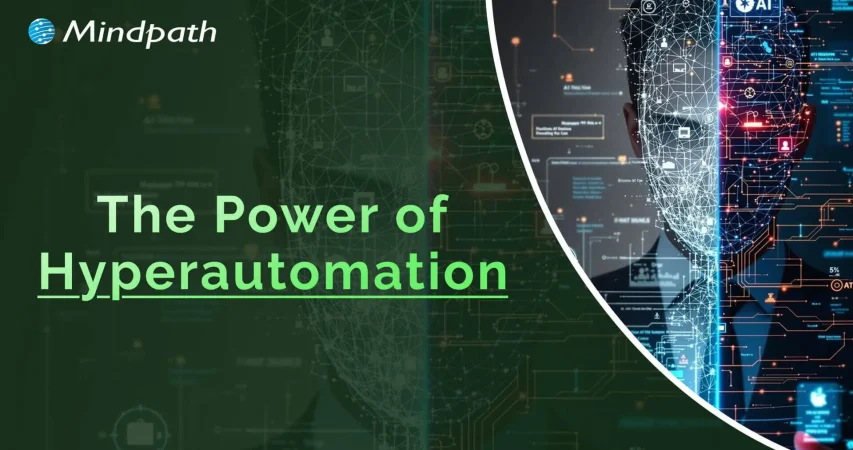
Hyperautomation Technology: The Power of End-to-End Automation

Join our Newsletter!

Featured Posts

Support Is One Click Away

Home

Hyperautomation Technology: The Power of End-to-End Automation

hyperautomation technology

Hyperautomation Technology: The Power of End-to-End Automation

The rapid evolution of the business landscape has made organizations think about approaches to improve efficiency and customer satisfaction while reducing costs. The adoption of hyperautomation technology is a testament to the fact that businesses want more than traditional automation. Hyperautomation represents a huge paradigm shift that helps businesses achieve comprehensive automation in all their operations. 

Many people believe that automation is the sole answer to queries regarding the adaptability of businesses in competitive markets. However, the scope of automation is limited to specific tasks. Hyperautomation calls for using multiple technologies together to optimize their business operations with an integrated approach. Let us learn more about hyperautomation and how it is better than simple automation.  

Ready to take advantage of Hyperautomation for your business? Contact us to discover the customized solutions can bring to the table, which streamline your processes and boost efficiency.

Understanding the Fundamentals of Hyperautomation

The definition of hyper automation by Gartner describes it as a disciplined and business-centric approach used to recognize, refine, and ensure automation of different business and IT processes. The distinctive highlight of hyperautomation is the fact that it involves the coordinated use of different technologies, tools, and platforms. Some of the notable technologies that drive hyperautomation include robotic process automation or RPA, low-code/no-code tools, business process management, event-driven architectures, and machine learning. 

Upon diving deeper into answers to “what is hyperautomation,” you will also find how each technology helps with hyperautomation. The following technologies serve distinct advantages to every business that adopts hyperautomation.

Also Read: AI Trends

1. Robotic Process Automation

Robotic process automation serves as the foundation layer for automation of repetitive tasks in high volumes. The working of RPA systems is almost similar to how human users would interact with digital systems. 

2. Artificial Intelligence

You might come across queries like “what is the difference between AI and hyperautomation” when you learn about hyperautomation. The primary difference between AI and hyperautomation is that artificial intelligence is a technology that drives hyperautomation. AI technologies such as machine learning, computer vision, and natural language processing offer the cognitive capabilities required to understand, analyze, and draw predictions or decisions.

3. Low-code/No-code Platforms

The effectiveness of hyperautomation strategies also depends on how a business utilizes low-code or no-code platforms. These platforms can help developers craft and deploy applications with minimal coding. As a result, businesses can automate processes while enjoying the benefits of faster time to market and accelerated adoption.

4. Business Process Management Suites

Business process management tools and intelligent BPM suites also play a major role in fostering hyperautomation in 2026 through optimized workflows. The BPM tools and suites offer the ideal framework to design, execute, monitor, and optimize complex business workflows alongside managing different automation components. 

5. Process Mining, Task Mining, and Analytics

The effectiveness of hyperautomation strategies depends significantly on the identification of the right processes and tasks for automation. Process mining and task mining are crucial processes for the discovery, mapping, and analysis of existing processes. The two mining methods help in identifying opportunities for automation as well as the potential bottlenecks for the same. On top of it, real-time analytics and reporting can offer useful insights before, during, and after automation to ensure data-backed decisions and continuous improvement. 

The combined use of these technologies explains the hyperautomation vs. automation difference, as hyperautomation focuses on more than automating tasks. On the contrary, hyperautomation emphasizes adaptability and a cycle of continuous improvement in the automation process.      

Struggling to scale automation across your business without a clear strategy? Explore digital transformation for businesses to see how end-to-end automation and modern technologies work together to drive efficiency and growth.

How Does Hyperautomation Work?

Many of you might be wondering about the necessity of adopting hyperautomation when businesses can opt for automation of individual steps. The focus on end-to-end automation makes hyperautomation better than simple automation. Hyperautomation aims to ensure automation of all business processes from their beginning to completion. The scope of hyperautomation can include processes that span different systems and departments. You can rely on hyperautomation for automation of processes that rely on structured data and even the ones that use unstructured data.

You can use a simple example of a customer onboarding process to understand how hyperautomation works. If you use a traditional RPA system for the customer onboarding process, it will automate the data entry process. The RPA system will only facilitate automated entry of data from a structured form into CRM systems.

Hyperautomation delivers more than just automated data entry for the customer onboarding process. You can notice the end-to-end automation with hyperautomation in business processes with the customer onboarding process, where other technologies like NLP, AI, and ML come into play. For instance, NLP will help in extracting information from unstructured data, like customer emails. Subsequently, hyperautomation can leverage RPA for populating multiple systems with the data and use AI/ML for risk assessment and identity verification. The use of BPM tools can help in managing approvals, while analytics can support monitoring of the onboarding process to ensure compliance and efficiency.

Almost all answers to “what is an example of hyperautomation” will help you understand that hyperautomation is a holistic approach. It focuses on achieving seamless integration between different systems and processes, thereby reducing manual handoffs and errors. Hyperautomation breaks down departmental silos and supports a unified workflow for all business operations rather than relying on fragmented automation.

Looking to automate processes without increasing energy costs or resource usage? Discover how energy-efficient computing supports sustainable, high-performance automation across end-to-end business operations.

Unraveling the Advantages of Hyperautomation

The effectiveness of hyperautomation is clearly visible in the different ways in which it helps in transforming automation. The following benefits of hyperautomation will encourage more businesses to embrace it right away.

1. Reduced Costs

The most obvious benefit of hyperautomation is the assurance of cost reduction. Businesses can reduce operational costs across various processes by replacing manual efforts, reducing errors, and time invested in administrative tasks. The combination of hyperautomation tools and technologies with redefined operations and processes can reduce operational costs by a significant margin.        

2. Better Productivity

The automation of repetitive and time-intensive tasks with lower chances of human errors helps in reducing the workload of employees. As a result, employees can focus on more strategic activities that require critical thinking, empathy, and human creativity. Organizations can achieve improvements in overall productivity as hyperautomation empowers employees to add more value to the business.

3. Agility and Scalability

The widespread adoption of hyperautomation technology also empowers businesses to adapt quickly to fluctuating market conditions. Hyperautomation also helps in adapting to changing customer demands and regulatory requirements, thereby improving agility. On top of it, hyperautomation also enables easier scaling of processes to meet changing workloads and achieve competitive advantage.

4. Enhanced Customer and Team Experience

The benefits of hyperautomation, such as reduced manual errors and faster processing times, ensure that employees can have better experience. In addition, the customer experience also gets better with round-the-clock availability of automated services. The utility of intelligent tools in hyperautomation plays a vital role in ensuring job satisfaction and improving customer engagement.

5. Accurate and Timely Decisions

The keyword in any hyperautomation meaning is automation with an integrated approach. The innovative approach to automation ensures better precision and consistency with the use of technologies like AI and ML. Furthermore, the technologies for hyperautomation also help in drawing more insights from process data. As a result, the organization can take improved data-driven decisions and draw predictions for future trends with ease.

Wondering how to streamline automated workflows while maintaining speed and reliability? Explore devOps best practices to learn how optimized pipelines and continuous automation support scalable, end-to-end hyperautomation.

Final Thoughts

As the world steps into a new age of digital transformation, automation becomes more important than ever. The benefits derived from hyperautomation use cases across different industries encourage more businesses to choose hyperautomation. It is an integrated approach to automation that focuses on automating all business processes from initiation to completion. 

At Mindpath, we aim to deliver the best end-to-end automation solutions tailored to your business requirements with different technologies. We believe in crafting our hyperautomation approach in alignment with the client’s business goals and vision to achieve the ideal results. Consult with us and discover the promising advantages of hyperautomation right now.

FAQs Related to Hyperautomation Technology

While the introduction to hyperautomation may have helped you learn its fundamentals, there might be many other doubts on your mind. Let us take a look at some of the common FAQs to resolve the biggest doubts regarding hyperautomation.
What is the difference between RPA and hyperautomation?

The primary difference between RPA and hyperautomation is that RPA, or Robotic Process Automation, is one of the technologies used in automation. On the other hand, hyperautomation is a novel approach to automation that relies on the integrated use of different technologies, including RPA.

How does hyperautomation work?

Hyperautomation works by using different tools and technologies to recognize and vet organizational processes and tasks for automation. It involves coordinated use of technologies such as RPA, AI, machine learning, business process management tools, and low-code or no-code platforms. 

What are the benefits of hyperautomation?

The benefits of hyperautomation include reduced costs, limited chances of human error, and better overall productivity of an organization. Hyperautomation also empowers businesses with the essential tools to draw accurate insights from process data to make relevant and informed decisions.

How is hyperautomation different from traditional automation?

Hyperautomation is different from traditional automation in the fact that it does not focus on a single task or process. On the contrary, it aims to achieve comprehensive automation of all business processes and workflows while ensuring continuous improvement.

Which industries use hyperautomation?

Hyperautomation has found applications in various industries, such as finance, telecommunications, retail, healthcare and manufacturing. The use cases of hyperautomation in these industries help in reducing costs, enhancing decision-making, and improving efficiency in different tasks.

Related Post

Hiring ReactJS developers? Explore essential factors like experience, skills, and project requirements to ensure a successful collaboration.
Explore emerging technologies like robotics, AI, and cybersecurity innovations and driving future success for businesses.

Related Post

lead generation chatbot

Have you thought about the impact that a lead generation chatbot could have on attracting and engaging customers for your business? The benefits of chatbots are clear: Because these chatbots start conversations immediately, they create a welcoming experience that encourages visitors to leave their details. They make conversation feel fluid and natural, keeping prospects looking, listening, and engaged, without breaks. They can help you seize opportunities as soon as they arrive, ensuring no lead gets away, and usually bring a steady stream of interested prospects to your business.

In addition to just collecting contact details, these chatbots can also qualify a lead, figuring out their needs and pairing those needs with the appropriate solution. They can answer questions quickly, suggest services, and schedule meetings in real time. This efficient method saves time for your sales team while keeping the customer journey uninterrupted. Chatbots are automating lead management and personalizing lead management like never before. In this blog, we will take a closer look at their use cases.

Want to build a powerful chatbot tailored to your business needs? Mindpath’s custom chatbot development services will provide expert solutions to enhance customer experience and boost lead generation.

What is a Lead Generation Chatbot?

A lead generation bot is an intelligent online marketing tool that engages with visitors on your website, captures their information, and even starts to categorize them as potential customers. The chatbot works constantly, so you will never miss another sales opportunity. It will ask some thoughtful questions and have a pleasant tone to ensure prospects feel like they were treated respectfully, while also extracting valuable contact information for your business.

A chatbot does not wait for visitors to do something like the outdated contact form. Its proactive behavior opens up the conversation and allows visitors to interact. A chatbot speaks to visitors instantly, answers questions, leads visitors to book a demo, or suggests the next step. Your chatbot can take information collected and send it directly to your marketing tools, so lead follow-up is fast and organized.

Looking to see how AI chatbots can boost your sales? Check out real-life examples of AI chatbots that increased conversions to discover strategies that truly work.

Benefits of AI Chatbots for Lead Generation

Lead bots are impacting how companies are collecting and converting potential customers through real-time interaction. Utilizing AI chatbots for lead generation allows for the quick acquisition of information while taking potential customers smoothly into the next step.

Benefits of AI Chatbots for Lead Generation

1. Expand Your Reach Across Channels

A lead generation chatbot can talk to prospects through your website, email, social media, and various messaging channels such as WhatsApp. You’re connected to customers on their most convenient platforms, and it makes it easy to have a conversation. The more dialogues you open across key communication points, the more customers will engage, putting you in a better position to convert a quality lead. When you utilize lead generation tools such as chatbots, your business remains prominent and accessible across all communications.

2. Boost Lead Conversion Speed

A sales chatbot AI can qualify prospects quickly and send them on to your sales team or follow-up system. With real-time engagement, you can respond to inquiries and gather needed information without delays. Which means that leads stay warm and are more likely to take action sooner rather than later. An AI chatbot for customer support can also help field questions that affect purchasing decisions, enhancing conversion rates even further.

3. Provide Consistent, 24/7 Engagement

A lead generation chatbot is available 24/7 and is able to engage with visitors when they show that they are serious about purchasing. Customers can get answers or help whenever they need them without waiting for store hours. This establishes trust with the customer and reduces the chances they will drop off during the purchasing process. This level of availability also strengthens connections with customers and the level of engagement overall.

Also Read: AI for Customer Services

4. Lower Your Cost Per Lead

Chatbot sales systems take away the manual and extra people that traditionally went into copy and qualifying leads, which will have a direct impact on chatbot pricing as more value is received for less money. Because of the efficiency of Conversational AI chatbot sales automation and how they scale, businesses won’t have to pay more to scale the amount of leads generated to scale resulting in every lead gained becoming progressively cheaper over time.

5. Scale Without Limits

By utilizing a chatbot for sales automation, businesses have the ability to manage hundreds of conversations simultaneously. This means you will never miss out on having a conversation with a potential customer, regardless of the demand, and your chatbot will operate seamlessly even during peak traffic and campaigns. Scalability like this means everything to growing businesses that want to take their reach to the next level.

6. Unlock Actionable Data Insights

A sales chatbot AI is able to collect in-depth insights around visitor behavior, intentions to buy, and preferences that can help improve your marketing campaigns and target customers more accurately. Captured custom chatbot analytics can inform more about which conversations converted into sales and why. Taking this data-driven approach, every single interaction, both now and in the future, improves through the method of practice.

Wondering how top businesses make smarter choices? Discover the importance of data-driven decision-making for businesses to drive growth and stay ahead.

How to Build Your Own AI Chatbot for Lead Generation?

Building a lead generation AI chatbot can help your business engage prospects, answer questions instantly, and collect valuable data automatically. With the right tools and strategy, you can create a chatbot that not only interacts with visitors but also converts them into potential customers.

Steps to Build Your Own AI Chatbot for Lead Generation

1. Plan and Design Lead Qualification

Define what a valuable lead means for your business before creating your lead generation chatbot. Plan key questions to qualify prospects and decide the follow-up steps, such as sending them to sales or booking meetings. Choose the platforms, like your website or WhatsApp, where the chatbot can engage the most visitors.

2. Integrate With Key Business Tools

Connect your chatbot to essential tools like CRM for tracking, email platforms for follow-ups, and scheduling tools for instant bookings. Use analytics to track performance and refine your strategy. Whether through custom or pre-built options, integrations make your chatbot a powerful automated sales AI bot.

3. Build a Strong Base

Plug-in solutions offer ready-made bot structures but limit customization. AI-powered platforms can set up your chatbot quickly with features that save time. A DIY build gives full control but requires more effort to create a flexible and high-performing bot.

4. Choose the Right Platform

Pick a platform with features like lead scoring, CRM integration, and multi-channel capabilities. Decide between coding, low-code, or no-code options based on your team’s skills. The right choice will help you create a reliable lead generation chatbot template that supports your goals.

5. Launch and Optimize Your Bot

Deploy your bot where it can have the most impact, such as your website or popular messaging apps. Start with a small audience to test and refine performance. Keep updating it to ensure your lead generation chatbot consistently delivers results.

Curious how chatbots understand and respond like humans? Learn what conversational AI is to see how it powers smarter lead generation and sales.

Looking to Build a Custom Chatbot for Your Business?

A lead generation chatbot improves the way businesses connect with potential customers. It engages prospects instantly, qualifies them effectively, and guides them toward the next step. With features like multi-channel reach, scalability, and data insights, it streamlines lead capture and boosts conversion rates while ensuring a smooth and professional customer experience at every stage of the interaction.

At Mindpath, our custom chatbot development services are designed to create solutions that match your business goals and enhance lead generation. We build chatbots that engage visitors, qualify leads faster, and integrate smoothly with your existing systems. With our expertise, you can deploy a chatbot that drives conversions, strengthens relationships, and supports your business growth effectively.

full-stack development for web projects 

Building a website today is about combining design, speed, and performance, all in one place. That’s where full-stack development for web projects plays a big role, as it encompasses everything from the look of a site to how it performs. As websites grow bigger and more complex, the full-stack development approach allows teams to work smarter rather than harder and deliver stronger solutions without any delay or confusion. This is why full-stack development is an increasingly popular way to develop truly distinct web projects.

By managing the front-end and back-end together, teams can react more quickly to updates and allow them to maintain their website without interruptions. In addition, it allows for greater control of the entire process, which leads to much better user experiences. Many companies are adopting this approach to develop websites that will grow and improve over time. Curious to know more? Well, in this blog, we will discuss how full-stack development is going to shape the future of web projects in detail.

Want to bring future-ready development to your business? Explore how Mindpath’s full-stack development services can help you stay ahead and provide end-to-end support.

Fundamentals of Full-Stack Development

Full-stack development means building both the front-end and the back-end of a website or app. The front part is what we interact with and see, such as buttons, images, menus, and links. The back part is what is going on behind the screen to make everything work: saving things, logging in, sending emails, etc. A full-stack developer knows how to build and manage both parts of a project, so it all works properly from beginning to end.

Companies want websites that are visually appealing, load quickly, and are easy to navigate. Most companies prefer hiring one full-stack developer rather than two separate developers (one for front-end and one for back-end) because this saves time and avoids paying for two separate developers. Full-stack developers can build complete web projects on their own. That’s why companies continue to search for strong full-stack developers that can do the full job and help make better websites quicker.

Planning to scale quickly? Learn why hiring a freelancer full-stack developer boosts your project.

Reasons Why Full-Stack Development is the Future of Web Projects

Full-stack development makes end-to-end web development more effective by combining both the visual design and the behind-the-scenes logic into one smooth process. As we move toward full-stack development in 2025, more businesses are choosing this method for its flexibility, speed, and complete control over web projects. Here are some key reasons why:

Top Reasons to choose full-stack development for web projects

1. Complete Technical Expertise

Full-stack development for web projects requires knowledge of both front-end and back-end technologies. Developers in this field work with HTML, CSS, and JavaScript for user interfaces and use tools like Node.js or Python for server-side logic. They also manage databases such as MySQL or MongoDB to store and retrieve data efficiently. This complete skill set makes full-stack development for businesses highly practical and reliable.

2. Optimized Development Efficiency

One of the key advantages of full-stack development for web projects is the ability to complete tasks faster without needing multiple specialized developers. It reduces development time, lowers project costs, and helps deliver results more quickly. Teams can avoid delays caused by handovers between front-end and back-end teams. That’s why many companies now prefer full-stack development to keep their projects on track and within budget.

3. High Project Flexibility

Developers skilled in full-stack development can switch between tasks easily based on what the project needs. They are comfortable using different tools and frameworks and can adjust to changes without slowing down progress. This flexibility is valuable when requirements evolve or when rapid updates are needed. It also supports the use of the best tech stack for web projects tailored to each client’s goals.

Also Read: Full-stack Development Benefits

4. Stronger Problem-Solving Capability

A full-stack developer understands how both the client-facing side and the server work together. This broad view helps in identifying issues quickly and finding effective solutions without back-and-forth between teams. It leads to fewer errors and a more stable final product. As a result, full-stack development for web projects brings stronger control and problem-solving to the entire build process.

5. Improved Team Communication

Fewer handoffs mean fewer communication gaps between developers and project managers. In full-stack development for web projects, one person or a small team handles most of the workflow, which keeps messaging clear and consistent. This improves team collaboration and speeds up approvals and fixes. It also supports better planning throughout the stages of full-stack web development.

6. Growing Market Demand

With digital needs growing, full-stack development has become one of the most valuable skills in the tech world. Companies are hiring developers who can handle everything from front-end to database, increasing demand across industries. It also offers room to grow in multiple areas, including project leadership and architecture, through understanding full-stack development trends. This rise is a direct result of businesses investing more in full-stack development for modern digital solutions.

Key Skills Required in a Full-Stack Web Project Team

A successful full-stack web project relies on more than just writing code. It needs the right mix of skills across the team, covering everything from design to database management for smooth and efficient web solutions. Let’s have a quick look at the skills:

1. Front-End Development

Developers need strong skills in HTML, CSS, and JavaScript to build the structure and style of web pages. Frameworks like React, Angular, or Vue.js help create dynamic and responsive user interfaces.

2. Back-End Development

Understanding server-side languages such as Node.js, Python, or Java is essential for creating logic and functionality. Frameworks like Express.js or Django support faster and more organized development.

Planning to build smarter web solutions? Discover how full-stack development with Node.js can streamline your digital growth.

3. Database Management

Developers should know how to use both SQL and NoSQL databases like MySQL, PostgreSQL, or MongoDB. Good database skills help manage, store, and retrieve data efficiently.

4. API Development

Designing RESTful APIs is important for connecting front-end and back-end systems. APIs must be secure, scalable, and easy to maintain in web projects.

5. DevOps and Deployment

Version control with Git and CI/CD tools helps automate code testing and deployment. Cloud platforms like AWS or Azure make it easier to launch and scale applications smoothly.

6. Soft Skills for Team Performance

Effective communication, adaptability, and time management help teams meet deadlines and solve problems together. These qualities support a smooth workflow in full-stack development for web projects.

Confused between full stack and traditional web development? Discover how smart businesses choose from full-stack vs traditional web development for the success of project. 

Full-Stack vs Front-End and Back-End: A Comparison Table

Understanding the difference between full-stack vs front-end and back-end roles helps in choosing the right approach for a web project. Below is a comparison table that highlights their core responsibilities and capabilities.

Full-Stack vs Front-End and Back-End A Comparison Table

Ready to Elevate Your Next Web Project with Full-Stack Development?

Full-stack development for web projects offers a balanced, future-ready approach that blends front-end creativity with back-end power. It simplifies workflows, speeds up launches, and ensures better user experiences. As digital needs continue to evolve, adopting full-stack practices gives businesses the edge to build smarter and scale faster with fewer roadblocks.

At Mindpath, we offer full-stack development services tailored to support your business growth. Our expert full-stack developers handle everything from user interface to server-side logic, ensuring smooth performance and cohesive functionality. With deep technical knowledge and a collaborative mindset, we deliver reliable, scalable, and efficient digital solutions that meet your unique project needs.

Reactjs web development

Are you looking forward to finding out what makes ReactJS web development incredibly popular among both developers and businesses today? All those smooth and dynamic websites and apps you use daily, many of them are built with ReactJS. If you’ve ever wanted to know how you can build something just as interactive and amazing, you’re in the right spot because ReactJS development unlocks so many possibilities for bringing your ideas to life.

ReactJS enables you to create UIs that will appear fast and be easy to use for users. Also, developers love that it is component-based and allows projects to progress from simple to complex as you grow them. The real-world project examples will display how individuals are leveraging ReactJS in different industries and how they solve problems using it. If you’re ready to bring your ideas to life, you’ll find plenty to learn in this blog.

Want to present your ReactJS project idea to the world, but don’t know how to bring it to life? At Mindpath, we offer ReactJS development services where our seasoned developers will provide full guidance from concept to launch, ensuring your project’s success.

What is ReactJS?

ReactJS is a popular tool that helps developers build the parts of a website that people see and use. It’s not a programming language, but a JavaScript library used for creating user interfaces. ReactJS makes it easier to build websites and apps that are fast and simple to manage. It uses Webpack to put all the code together and make sure everything runs smoothly in the browser. According to W3Techs, React is used by 7.1% of websites using a well-known JavaScript library, which is 5.8% of all websites.

ReactJS was first created by Jordan Walke, a software engineer at Facebook, in 2011. It was inspired by a tool called XHP that helped Facebook work with HTML better. ReactJS was first used for Facebook’s newsfeed, and then Instagram used it too. Today, it’s one of the most popular front-end tools.

Looking to future-proof your web applications with a technology that scales as your business grows? Discover the strategic top reasons to choose ReactJS for Progressive Web App development for business owners.

Benefits of ReactJS

When it comes to modern web development, understanding React JS benefits can help you decide if it’s the right fit for your projects. Many developers choose this library because it makes building user interfaces simpler and faster. Let’s look at some key ReactJS advantages that make it so popular.

1. Component-Based Structure

A big benefit of React development is its reusable components that make updates and maintenance simple. This keeps your project organized as it grows.

2. Faster Performance

React uses a virtual DOM that makes updates quick and smooth. This keeps websites and apps fast for a better user experience.

3. Cross-Platform Flexibility

With React Native, you can reuse your code for mobile apps too. This saves time when you want to create a React app for both web and mobile devices.

4. Easy to Learn and Use

Many developers choose web development with React because it’s simple to learn yet powerful. Its clear structure and helpful tools make building projects smooth for everyone.

5. Strong Community Support

ReactJS Web Development has a large, active community with helpful resources and tools. This makes building and fixing projects much easier for developers.

Wondering what separates a good ReactJS project from a truly successful one? Read the essential ReactJS Developer Skills for successful web projects to make smarter hiring and development decisions.

What are the Best Projects to Build with ReactJS?

React web development is trusted by businesses and developers to build many kinds of web apps that work smoothly and look great. It’s flexible enough to handle different goals, whether you want something simple or more advanced. You’ll see just how many possibilities open up when you choose ReactJS.

Best Projects to Build with ReactJS

1. Single Page Applications (SPAs)

SPAs load one main HTML page and update content without refreshing the whole page. This makes the user experience faster and smoother. Many developers use ReactJS Web Development to build SPAs like Trello or modern email platforms.

2. Interactive User Interfaces

Apps that need frequent user actions benefit from React’s component-based setup. It keeps interfaces dynamic and responsive to every click or input. Dashboards and social platforms are great examples of this.

3. Social Media Platforms

Social apps handle lots of data and need to stay quick and easy to use. React works well for feeds, notifications, and real-time chats. Platforms like Instagram and Facebook show how powerful it can be.

4. E-commerce Websites

Online stores have many parts, like product pages, shopping carts, and checkout steps. React helps keep all these features organized and easy to update. It’s a smart choice for anyone planning an online store.

Also Read: React vs Vue

5. Data Visualization Tools

React lets you build charts, graphs, and dashboards that help people see and understand data. These tools often need real-time updates as new data comes in. Using React makes complex data feel simple to explore.

6. Custom Web Applications

Businesses often need apps designed just for their work. ReactJS web development gives developers the tools to build custom features and workflows. This could be anything from task trackers to learning portals.

7. Booking Systems

Booking apps help people reserve flights, hotels, or services quickly. React keeps the process smooth with fast updates and clear forms. It’s trusted by many companies to handle large numbers of users at once.

8. Admin Panels and Dashboards

Businesses use admin panels to track performance and manage users or data. React’s reusable components make building these panels efficient. A well-built dashboard makes complex info clear and easy to manage.

Is your current team struggling to handle large-scale React applications? Learn why hiring a React Development Company might be the smarter choice. 

Real-World Examples of ReactJS Web Development

Many well-known companies rely on ReactJS Web Development to power their websites and apps. It helps them build fast, interactive experiences that keep users coming back. Here are some real-world examples of how ReactJS is used successfully.

Real-World Examples of ReactJS Web Development

1. Facebook

Facebook uses React to handle its entire web interface. They also depend on React Native to keep their mobile app running smoothly.

2. Instagram

Instagram depends on React to manage its photo feeds, stories, and user interactions. React’s virtual DOM makes the app fast and helps deliver an easy browsing and sharing experience.

3. Netflix

Netflix uses React to manage its user interface, from browsing shows to streaming. React’s efficient rendering keeps the platform responsive and smooth for millions of viewers.

4. Airbnb

Airbnb relies on React to display listings, filters, and booking options. Its component-based structure makes the platform simple to update with new features.

5. Walmart

Walmart’s online store uses React to manage its huge product catalog and shopping features. React helps deliver a consistent shopping experience with fast page updates.

6. Uber

Uber’s web dashboard for drivers and riders uses React for live updates like ride tracking and driver status. React makes real-time changes visible without slowing down the app.

7. Shopify

Shopify uses React to build dynamic storefronts and checkout pages. This keeps the shopping process smooth for both store owners and customers.

8. Dropbox

Dropbox uses React to create an easy-to-use file storage and sharing experience. The interface stays clear and quick to navigate thanks to React’s reusable components.

Looking to build a high-performance frontend that scales with your business and delivers real ROI? Learn from our ReactJS for App Development guide to understand how React empowers business owners to make smarter, future-ready technology decisions.

Ready to Unlock the Power of ReactJS Web Development?

ReactJS web development has proven its value for businesses and developers who want faster, interactive, and scalable web apps. From single-page applications to custom dashboards, React makes it easier to build projects people enjoy using. Real-world examples show just how flexible and powerful this library can be. With React, your ideas can become smooth, engaging digital experiences.

At Mindpath, we have built successful React and React Native projects for clients in many industries. Our team has strong expertise in developing user-friendly web apps and mobile apps that work beautifully together. We focus on clean code, reusable components, and performance that scales with your business. Let Mindpath be your trusted partner for professional ReactJS development services that bring your ideas to life.

Explore top projects built with ReactJS, from personal websites to SaaS apps. Learn why ReactJS is ideal for scalable, high-performance web solutions.