Expert Tips for Hiring Remote Software Developers in New York

Join our Newsletter!

Featured Posts

Support Is One Click Away

Home

Expert Tips for Hiring Remote Software Developers in New York

Hiring remote software developer

Expert Tips for Hiring Remote Software Developers in New York

If you are in search of good remote software developers in New York, you might be aware of the challenges behind it. Due to the competitive landscape, it is hard to find an expert who can communicate well and integrate effortlessly into your team without any friction. So, companies in New York are essentially hiring remote software developers to scale faster and to access specialized skills while reducing operational costs. As the software development market size is going to touch 1.04 trillion by 2030, businesses are looking forward to unveiling something unique to lead the graph. 

In this blog, you can go through the expert-backed tips and the best practices to confidently assess the remote hiring process in New York. With the professional assets by your side, you can be assured of long-term business growth. 

Planning to turn your software idea into a powerful business solution? Mindpath offers custom software development services in New York tailored to your unique requirements.

Why Hiring a Remote Software Developer in New York Is So Essential

Talking about New York, it is a global tech hub. But competition for top talent is expensive and intense at the same time. So, you can hire a remote software developer to encourage your business and to remain competitive without compromising on skills or speed. 

There are some key elements present in New York that drive the demand for hiring remote software developers. This includes high local salaries that allow companies to prioritize remote options. Further, global talent pools also leverage niche expertise that suits the companies’ requirements. 

As a result, hiring a software engineer for remote roles has become a strategic decision rather than a temporary solution. 

Must Read: Remote Work Tools for Developers

Challenges of Hiring a Remote Software Engineer in New York

Hiring remote developers in New York can help you leverage the excellence of incredible talent. However, it has certain complications. 

1. Cultural and Communication Barriers

Considering people from different countries and backgrounds can strengthen your team, but it comes with some friction. What feels like significant and effective feedback to one developer might be blunt for another one. So, you must be clear about your expectations and communicate everything with clarity to ensure smoothness. 

There are some teams that even include short sessions to make new employees understand the basic rules of the company. 

2. Time Zone Disturbance

Coordinating across time zones might sound easier, but it is much more complex than expected. So, creating certain overlapping hours for real-time meetings majorly depends on async tools to keep things moving. So, it is necessary for remote software engineer jobs to understand the essential time zone and communicate with the right people. 

3. Onboarding and Training Difficulties

It is not possible for you to onboard remotely. However, your company should prioritize an intentional structure. You just can’t depend on casual conversations to bridge the gaps. You must stick to a documented process combined with scheduled check-ins. This ensures your new remote software engineer is feeling less isolated. 

Looking to reduce hiring costs while maintaining quality? Learn about the key benefits of hiring remote developers and how they help companies stay competitive.

What Skills Should You Look for in a Remote Software Engineer?

When you are assessing a software developer for remote roles, verifying only technical readiness is not enough. Remote working requires a proper balance of hard and soft skills to ensure productivity. 

Major Technical Skills

  • The developer should be proficient in leading programming languages. 
  • They should have proper experience in handling cloud platforms and APIs.
  • The experts possess coding best practices to make your company lead with innovations. 
  • They should be familiar with modern and advanced frameworks. 

Important Soft Skills

  • Talking about the soft skills, the remote software developer jobs include proper communication abilities. 
  • They should maintain self-discipline and timelines to complete a project on time. 
  • The experts should have a problem-solving mindset that can encourage innovations. 
  • Most importantly, they should have experience working independently without continuous supervision. 

These qualities are essential for success in remote software engineer jobs, especially when your team is operating in different time zones. 

Looking to hire the right remote developers for your projects? Check out most popular web programming languages to understand which technologies top developers use and how they impact project success.

Steps to Hire the Best Remote Software Developers in Town

If you are looking forward to hiring a remote software developer for the competitive network of New York, you must break the chain of the traditional hiring process and follow a structured approach as given below.

1. Define Your Project Requirements

Before you pile up your desk with multiple resumes, take a pause and clarify what you are actually looking for. Think of these one-off features that need to be completed within a month, or a long-term role. It is also essential to understand if you are looking for a single developer or a team for your remote Dev jobs

Being specific about your requirements can prevent you from interviewing candidates who are not meeting your expectations.

2. Be Specific About Your Job Descriptions

A good job description can define what expectations you are setting. As a series of companies in New York might be structuring their job description, you need to be unique. Outline the daily responsibilities and the skills that are non-negotiable. Further, it is efficient to list down the tools that the remote software developer should be acquainted with. 

For example, if your development criteria rely heavily on React and Node, just be open about it. It can save you and the application from future frustrations.

3. Source Your Candidates

Where you are sourcing your candidates speaks a lot about the kind of developer you will find. Freelance marketplaces can bring you a lot of choices quickly, but the quality might be missing. On the other hand, talent networks generally examine their candidates, but the price can be on the upper side. So, most of the companies rely on outsourcing agencies as everything fits perfectly with them as per the requirements. 

However, the decision completely depends on your priorities and needs. So, assess properly.

Want to combine remote hiring with global expertise? Check out offshore software development to understand how offshore teams support faster, flexible software delivery.

4. Go Through the Applications and Portfolios

A portfolio of the remote software developer can represent what they have built in the past and how it has influenced the business’s profile. Look, if their work has some resemblance to your project scopes and complexities. This is one of the most important steps you need to look for when hiring a remote software developer in New York.

5. Verify Technical Skills

Pair-programming sessions, coding challenges, and small paid projects can unveil if a candidate’s skills align with their claims. So, you can assess their technical knowledge through some quick and easy tests. But, do not overdo it, as it can hamper their confidence while making your company lose a true talent.

6. Evaluate Cultural Fit

Technical ability is just half the picture. You want someone who can communicate properly and can take feedback positively. This is very important for remote teams where communication is more essential than ever.

7. Onboard Efficiently

Hiring a remote software developer with a signed contract is not enough. It also depends on how you involve them in your team. Offer them the tools and make them acquainted with the documentation. Make clear introductions and make them feel like part of the team. 

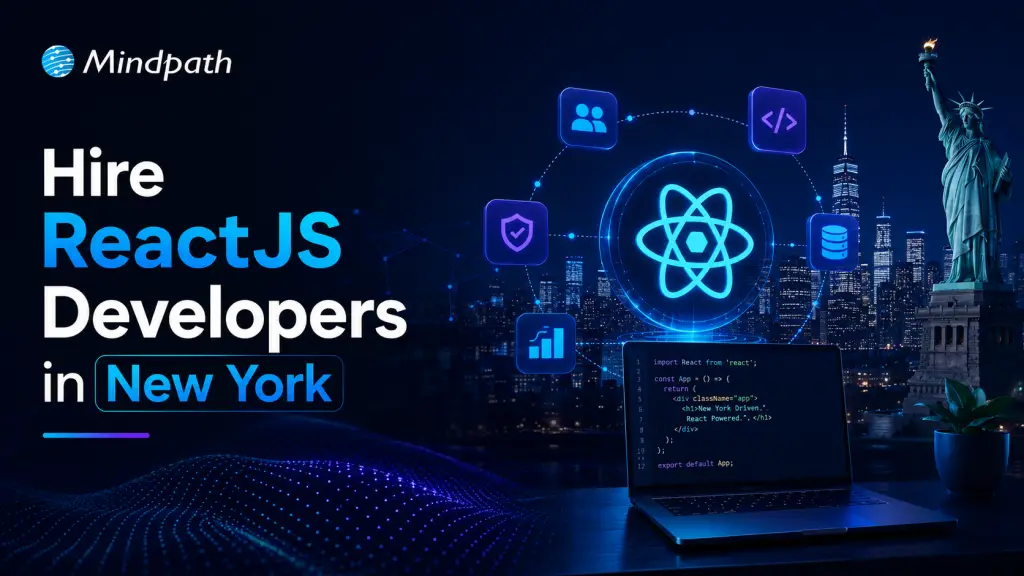
Looking for experienced ReactJS developers to support remote projects in New York? Discover how to hire ReactJS developers in New York and build a high-performing development team.

Why Experience is Important When Hiring Remote Developers?

Not all developers thrive in remote settings. For better adaptability, you should hire a remote software developer with prior experience. 

  • Experienced remote professionals require less supervision.
  • They can communicate proactively while eliminating all the gaps.
  • They understand async workflows and offer consistent results without failing. 

Final Words

The demand for a remote software developer in New York is continuously growing due to agility and innovation. So, understanding the right techniques to hire remote developers can allow the New York companies to adopt world-class expertise without any geographical limits. However, your success depends on your expectations and a strong focus on collaboration and compliance. 

So, if your organization is aiming to build a remote development team, it is essential to partner with a technology company that understands engineering and delivery at the same time. This is where Mindpath comes into the picture. Mindpath offers custom software developments services which provide support your business by offering complete technology solutions while making your digital platforms scalable. Collaborate with skilled software developers here who can make your outcomes align with the business demands. 
Related Post

Discover the ultimate guide to hiring Node.js developers in London. Learn about the skills, benefits, and cost factors involved in finding the right talent for your project.

Related Post

Saas trends

The landscape of Software as a Service (SaaS) is changing faster than ever. As all businesses are now adopting the cloud-first approach, SaaS tech leaders should stay ahead of SaaS trends to remain innovative and competitive.

Current market trends can help service providers to know about the challenges and come up with feasible solutions to tackle them. Whether you are investing in a SaaS technology, scaling your development strategy, or leading SaaS projects, these 14 SaaS trends will help you understand the market and what approaches you should consider to remain competitive.

Want to stay ahead of your competitors by using the latest Saas technologies in your business? Mindpath offer SaaS devlopment services to receive customized solutions that help you innovate faster and smarter.

The Rising Popularity of SaaS Technologies

SaaS has emerged as a dominant force in today’s digital landscape. It is transforming the way businesses deploy, access, and scale their software programs. With time, the popularity of SaaS platforms continues to rise across all industries. And some major reasons behind this are:

  • Businesses don’t have to worry about local installations and get instant access to solutions.
  • SaaS is scalable, and businesses can adjust usage without investing in the IT infrastructure.
  • Subscription models lower expenditure, making it accessible to all, including startups and SMBs.
  • Deployment, upgrades, and maintenance are handled by the service providers.
  • SaaS is highly beneficial to support the remote teams and provides access to necessary resources in real time.
  • SaaS platforms have the ability to integrate with existing workflows and systems.

SaaS service providers enable businesses to be customer-centric and agile. However, to remain competitive, these service providers have to keep up with innovation and adapt their platforms to the changing market demands.

The optimal way to attain that is by adhering to the trends arising in the SaaS market. Read to explore those trends.

14 SaaS Trends Driving the Future of SaaS

Now that we have unpacked SaaS’s impressive benefits, let’s uncover the SaaS trends that are redefining the landscape of SaaS technologies. Here is what is driving the next big wave of SaaS innovation.

1. API-First Architecture – The New Standard

Most modern SaaS projects now opt for API-first design since it can integrate third-party services and tools without any difficulty. It can assist in increasing flexibility and scalability as well as developer experience. Besides, this approach will simplify the process of creating custom workflows.

2. Edge Computing and SaaS

With the help of edge computing, the SaaS platforms can process data closer to the source. This, in turn, reduces latency while enhancing performance. It is quite helpful in real-time analytics, logistics, and IoT.

Through edge capability integration, SaaS solution providers can enhance security, offline functionality, and responsiveness.

3. AI-Powered SaaS Solutions

Artificial Intelligence has become a necessity. Most SaaS platforms are now embedding AI to personalize user experiences, automate workflows, and offer predictive insights. It has also enabled accurate fraud or risk detection.

SaaS platforms that are lacking intelligence are losing relevance. After all, customers want more than just task automation. They want tools that can anticipate requirements and support their decision-making.

4. Changes in Subscription Models

SaaS pricing is now shifting from the monthly packages to hybrid, freemium, and usage-based models. Some are also available with outcome-based pricing models. Such flexible pricing structures have helped service providers to improve retention and customer value.

As these platforms evolve, businesses significantly benefit from personalized pricing. On the other hand, providers get deep insight into product engagement and user behaviour.

5. Enhanced Privacy, Compliance, and Security

Trust is an important asset. The customers believe that service providers are safe and in compliance. But that trust can be hampered with just a single instance of data breach or GDPR conflict. Thus, SaaS providers should focus on the use of zero-trust frameworks and advanced encryption.

Besides, the deployment of automated compliance tools can help a lot here. Furthermore, they should keep themselves updated about evolving regulations such as DORA, HIPAA, GDPR, and PDPL.

6. Vertical SaaS

SaaS development companies are now going niche. Why? Well, generic SaaS tools may not help users with industry-specific needs, workflows, or regulations. They are launching SaaS technologies for specific industries like finance, education, or healthcare.

Vertical SaaS platforms are significantly influencing the future of SaaS by offering tailored compliance, deep domain expertise, and flexibility. The vertical SaaS market is expanding, and it is forecast to reach USD 263420 million by 2031 (Source: Market Monitor Global)

7. Micro-SaaS Solutions

Micro-SaaS businesses typically have a narrow focus on use cases and develop add-ons for big SaaS platforms. They are agile, quick to launch, and lean. Micro-SaaS businesses offer highly targeted solutions, with their flexibility supporting rapid adaptation to changes. They are best suited to deal with overlooked issues in various saturated SaaS markets.

8. Conversational UX Will Be a Game Changer

The interface of SaaS platforms is evolving rapidly, with chat-based navigation, natural language processing, and voice assistants. These features increase accessibility and user engagement.

This is one of the vital SaaS trends that most SaaS providers have adopted, making their software interaction feel more human-centric. This trend has become a core component of SaaS development.

9. RevOps

Speaking of the most significant trends in SaaS, we cannot omit the emergence of Revenue Operations (RevOps). It unifies marketing, customer success, and sales into an AI-powered platform. These tools provide SaaS companies with end-to-end visibility.

This means that the retention, forecasting and profitability can be easily enhanced. For instance, the advanced lead scoring system in the RevOps tool can help sales teams focus on prospects who are more likely to convert.

10. Blockchain Integration in SaaS

It is undeniable that blockchain is quickly changing the SaaS market by introducing decentralized, secure, and transparent data management. Other use cases that we may take as an example are encrypted transactions, smart contracts, and identity verification.

The adoption of blockchain in SaaS applications provides better trust, compliance, and traceability. This is essential for legal, healthcare, and finance SaaS providers who aim to have better data integrity.

11. Low-Code/No-Code Platforms

The low-code and no-code approach is one of the most popular trends in 2025, as it can support easy and fast development. SaaS providers are also supporting this move. In fact, they are also integrating this into their platforms.

Why? In a world where speed matters, allowing non-technical teams to create their own tools can help unlock a new level of productivity. The workflow of finance, operations, and HR teams can be automated with a couple of clicks.

12. Business Intelligence and Predictive Analytics

SaaS platforms are now using predictive analytics to predict market trends, customer behavior, operational risks, and more. This helps businesses to make data-driven decisions faster than before.

Service providers have realized that business intelligence has become a crucial asset. They are optimizing it to enable businesses to enhance performance.

13. Sustainability-Focused Solutions

Sustainability-focused SaaS, or green SaaS, is now gaining traction as organizations are prioritizing eco-friendly options. Carbon tracking, cloud efficiency, and sustainable hosting are leading this transformation.

These trends in the SaaS industry reveal growth in the demand for ethical solutions. And the future of SaaS will be based on how it is aligned with long-term business sustainability and environmental responsibilities.

14. Localization and Globalization of SaaS Tech

It has been seen that SaaS service providers are now expanding globally, and they are also localizing compliance, customer support, and content. By offering region-specific features and multilingual interfaces, they are enjoying continuous international growth.

SaaS companies are evolving and scaling their platforms across multiple geographies while offering all the necessary elements.

The Next Chapter in SaaS Innovation and Growth

Well, the current trends are looking really impressive, establishing a solid foundation for SaaS market growth. But what will happen after 2025? Well, predicting the future of SaaS technologies is a little difficult. However, the direction of the journey is clear: SaaS is becoming more intelligent, ambient, and embedded.

New technologies like quantum computing, Zero-UI, blockchain, etc., will bring massive changes in this landscape. For instance, quantum computing will force developers to rethink SaaS security models. On the other hand, Zero UI will lead to enhanced user engagement by offering interfaces powered by context, voice, and predictive behavior.

What’s more? There will be an increasing focus on regulation, privacy, and sustainability. SaaS leaders who thrive will not be the ones who just predict the future, but those who design for resilience and volatility.

SaaS is More Than Just a Trend- It’s the Future

If SaaS has taught us anything in 2025, it’s that change is not just constant, it’s compounding. If you are still wondering is SaaS the future, the answer is definitely yes. SaaS solutions are becoming popular across different industries. After all, these solutions help them to establish a solid digital presence and save money.

Besides, it is highly customizable, and you can configure it for your specific needs. If you want to stay ahead of the competition, then you must embrace Software-as-a-Service. This is where Mindpath can help. We can help businesses leverage advanced SaaS platforms and the latest SaaS trends that prioritize continuous innovation, seamless integration, and security.

We also ensure your SaaS projects align with the changing customer needs. Let us guide you in this evolving landscape of SaaS and capitalize on every SaaS opportunity.

generative AI for customer service

In the technology-driven era, the customer service landscape has undergone a transformational change.  A key technology that has been serving as a catalyst is generative AI. The rising popularity of generative AI for customer service is evident, as about 65 % of leaders in customer service intend to leverage the technology along with conversational AI to boost customer satisfaction (Source: IBM). 

The emergence of Gen AI has been nothing short of transformational for businesses. One of the main areas that has witnessed a remarkable change because of Gen AI is customer service. The novel technology has undoubtedly broadened the boundaries of customer support. Business entities across diverse industries can focus on enhancing customer experience with AI, especially generative AI. Let’s explore how modern businesses can capitalize on Generative AI in customer service.

If you are looking to leverage the user experience with the use of Gen AI. Contact us to unlock the full potential of Gen AI in enhancing your customer support and delivering personalized services.

An Insight into Generative AI

Before answering the question – How generative AI is improving customer service, it is crucial to have clarity on Gen AI. Generative AI refers to the specific branch of Artificial Intelligence that is capable of creating new content in the form of text, audio, video, and image formats. The output of Generative AI mainly depends on the type of data that it has been trained on.

In recent years, Generative AI has undoubtedly been considered a major breakthrough in the AI landscape. It has not only expanded the boundaries of Artificial Intelligence but also redefined how individuals and businesses interact with AI technology. The functionality of generative AI is not restricted to generating new content. It can also generate chat responses, create deepfakes, and personalize interactions.

Wondering how artists and creators are adapting to AI? Discover how Generative AI is changing the creative industry, and see how automation and imagination now work together.

Role of Generative AI in Customer Service

Customer service is the specific domain where companies offer support and assistance to their customers. The assistance could be offered prior to, during, or after the purchase of their offering. Regardless of the timing of such service, the role of customer service is indispensable since it can have a major influence on the overall experience and satisfaction of customers. At present, the customer service arena has undergone revolutionary change thanks to the adoption of Gen AI by businesses.

Generative AI for customer service has been a boon in the business world. It has certainly equipped businesses to automate their customer service function. As a result, the overall efficiency of business entities to promptly respond to the queries and concerns of their customers has increased significantly. Today, the role of GenAI customer service is of high strategic importance for businesses. By leveraging the core capabilities of Generative AI, businesses are able to redefine how they deliver support to their customers.

Curious about how generative AI is applied in real-world scenarios? Explore Generative AI Use Cases to discover how businesses leverage AI for content, design and innovation.

Key Benefits of Generative AI-based Customer Service

The strategic deployment of Generative AI technology in a customer service setting can give rise to a host of benefits for businesses.  In order to take advantage of the novel technology in an optimum manner, it is a must for businesses to understand its potential at an in-depth level. Some of the major benefits that can arise for businesses by integrating generative AI in customer service include:

1. Prompt Response

By integrating Gen AI-powered customer service, businesses are able to promptly respond to the concerns or queries of their customers. Customers do not have to wait for long hours to get support from businesses. Gen AI undoubtedly empowers businesses to respond to their customers instantly. Moreover, thanks to the use of Gen AI in customer support, businesses are able to offer 24/7 assistance to their customers. This automatically increases the overall convenience of customers and strengthens their association with businesses.  

2. Personalization of Interactions

One of the chief benefits of gen AI in customer support is that it facilitates personalization. As a result, business entities can tailor the interaction to meet the exact needs of their customers. Generative AI technology is basically capable of accessing customer data and past interactions, thereby personalizing the conversations. The integration of Generative AI for chatbots has been revolutionary since it has taken personalization to the next level. Thus, in the competitive business environment, businesses are able to have meaningful conversations as well as interactions with their customers.  

3. Better Productivity of Customer Service Agents

One of the benefits of AI in support teams revolves around the higher productivity of agents. Thanks to the automation of conversations with customers, the workload of customer service agents has significantly reduced. Therefore, they are able to focus on complex interactions and deliver value to customers. Moreover, the possibility of customer service agents suffering from burnout and fatigue can also be significantly reduced.

Must Read: Generative AI Trends 

4. Downside of Gen AI in Customer Service

Although Generative AI technology has been disrupting customer service like no other technology, it has also given rise to a few concerns. In order to get a holistic insight into the potential of Gen AI, it is crucial to take into consideration its shortcomings. By having a comprehensive insight into these next-gen customer service solutions, businesses can leverage the novel technology in an optimal manner.

5. Hallucinations 

One of the major shortcomings revolves around hallucinations. There may be a number of occasions when Gen AI may generate inaccurate or counterfeit responses that may seem plausible. However, due to their inaccuracy, the risk of misinformation may arise. Furthermore, customers may be on the receiving end because of this particular flaw. In sensitive industries such as healthcare or finance, it may act as a major hindrance for both businesses and customers.

6. Absence of domain knowledge

Another downside that businesses need to take into consideration is the lack of domain knowledge. Unless and until companies fine-tune Gen AI prior to its implementation, there may arise knowledge-related gaps. Due to such gaps, Gen AI may not be able to address complex queries that may be asked by customers. As a result, the results may not be relevant and useful for customers.  

7. High reliance on automation

The excessive reliance on automation has the potential to affect the personalization component of the interaction. When customers may expect to get empathetic and emotionally sensitive responses, generative AI may not be the ideal customer service solution to meet their needs. As a result, the issue relating to emotional disconnect may arise, diminishing customer satisfaction.  

It is imperative for businesses to take into account the positives as well as the negatives of Gen AI. It can certainly create an opportunity for businesses to capitalize on the core capabilities of Gen AI and redefine how they deliver customer service. As a result, they can strategically leverage Gen AI to strengthen their association with their target audience.

Trying to keep up with rapid AI advancements? Read Generative AI Revolution to learn how this transformation is redefining business and creativity.

Final Words

The customer service realm has undergone a dynamic change in recent years due to the adoption of Generative AI by businesses. Even though Gen AI is still in its nascent stage, it holds immense promise, especially in the customer service setting. It is essential to bear in mind the associated benefits as well as drawbacks of the generative AI technology.

The novel technology has given rise to a plethora of opportunities for firms to redefine how they interact and engage with their customers while extending customer support to them. In order to leverage Generative AI, you can choose Mindpath as your success partner. The novel digital solutions offered by the company can help businesses take advantage of Gen AI capabilities and enhance their customer service. Thus, businesses across diverse industries and sectors can strategically deploy Gen AI to reshape their customer interactions.

Discover how Generative AI is revolutionizing customer service with automation, efficiency, enhancing customer experience and more.
SaaS Development Services

Selecting the appropriate SaaS development services may seem like walking through a rapidly shifting technological environment. Businesses in the present day require solutions that are innovative, scalable, and flexible. You may end up comparing different providers, and each one of them claims to have unique expertise. The difficulty lies in finding a service that is consistent with your objectives and generates real value. It involves thinking outside the box and taking into account teamwork, problem-solving, and sustainability. So, how are you going to find a service that best suits your business vision?

The key is to find a partner that is knowledgeable about your growth strategy and technology needs. Successful SaaS development services engage both hands-on experience and progressive innovation. When you are seeking options, make sure you take into account compatibility with your team, development strategy, and scalability. You require a clear understanding of procedures, communication, and delivery schedule. This blog will help you make the right decision in your SaaS development journey. Let’s dive in together!

Want to choose the right partner to build scalable and efficient SaaS software for your business? Mindpath’s  SaaS Development Services provide expert developers and custom solutions to deliver growth-oriented applications.

Understanding Software-as-a-Service (SaaS) Development

SaaS development refers to the development, deployment, and maintenance of software applications delivered over the Internet as a service. These applications are cloud-based, unlike the conventional software. They are available to users either on a web browser or on an app interface. An effective SaaS development service makes applications to be scalable, secure and user-friendly. It concentrates on delivering constant updates and excellent user experiences across all devices.

SaaS development needs proper software engineering and cloud knowledge. Developers should also know what customers require and what is trending in the market. This understanding enables the creation of software, which is efficient, reliable, and sustainable. SaaS development focuses on cooperation, problem-solving, and constant enhancement in order to fulfill business objectives. It guarantees the product to expand with the user requirements without compromising the performance or security at any point.

The following are reasons why businesses today require SaaS development services:

1. Cost Optimization

SaaS reduces start-up infrastructure and the cost of licensing. Companies enjoy the benefit of stable prices and expenditure.

2. Scalable Architecture

SaaS software development is capable of scaling users and features in an easy way. The systems can easily adapt to growth and demand.

3. Anywhere Accessibility

The use of the cloud allows remote and distributed teams. Users can be able to work anywhere safely.

4. Rapid Deployment

The SaaS solutions take a shorter time to launch via browsers. This minimizes the setup time and fast-tracks time to value.

5. Simplified Maintenance

Service providers deal with updates, security, and performance. SaaS developers assist in lowering internal IT workloads.

6. Innovation Readiness

SaaS solutions are compatible with contemporary tools and artificial intelligence. This helps companies remain competitive and data oriented.

Key Steps to Choose the Right SaaS Development Services

The choice of SaaS development services requires a clear idea, planning, and business orientation. The most important steps to selecting SaaS application development services that facilitate long-term growth are as follows.

1. Define Your SaaS Idea and Objectives

Be clear about your SaaS concept, what problem it will address, and who your audience will be. Clear goals contribute to the alignment of attributes, functionality, and business objectives in the long run. This transparency enables the SaaS development services to create a product that is focused and efficient.

2. Research Potential Development Partners

Begin by doing research on credible SaaS development companies that have a successful track record with SaaS projects. Check their portfolios, case studies, and feedback from clients to determine credibility. This study can assist you in narrowing down partners who can provide scalable solutions.

3. Assess Technical Skills and Expertise

Evaluate the technical competence of the in-house development team in the front end, back end, and cloud computing. Ensure that they know the process of developing secure and scalable SaaS applications. Well-developed technical capabilities reduce the development risks and improve the overall performance of the product.

4. Review Project Management Practices

Understand how the company manages schedules, work and communication in the development process. Agile project management is flexible and responds more rapidly to changes. Analytical thinking will ensure consistency and quality in development.

5. Understand the Development Process

Inquire about their entire development cycle such as designing, testing, and implementation. Make sure that security and performance, as well as scalability, are considered at an early stage. A trusted Saas development platform enhances easier cooperation and implementation.

6. Check Industry Experience

Experience in the industry helps teams to know more about your business challenges. Experienced developers are able to foresee risks and recommend workable improvements. This results in improved custom SaaS development projects.

7. Prioritize Security and Compliance

Make sure that the development team has good security standards and compliance requirements. The process of development should include data protection and compliance with regulations. This ensures the safety of user information and builds up confidence in the product.

8. Evaluate Support and Make the Final Decision

Evaluate the capacity of the company to offer long-term support and maintenance. Constant improvement and interaction are key to successful products. Select SaaS development services, which reflect your growth plans and vision.

Ready to Transform Your Business with SaaS?

Selecting the appropriate SaaS development services will keep your company competitive, scalable and efficient. Successful SaaS products are the result of clear planning, technical expertise and strong project management. Using systematic steps assists in choosing partners who provide secure, reliable and innovative solutions. Having the right team ensures your software keeps up with the business requirements and enhances performance and user satisfaction.

At Mindpath, we provide professional custom SaaS development services based on your business objectives. We are a team of prolific developers and present scalable, secure, and user-friendly solutions. Our priorities are innovation, a smooth partnership, and continuous support to achieve optimal performance of your SaaS product. Mindpath is the choice that ensures a future-proofed platform that is designed to expand with your users and business vision.