Generative AI in Finance: Unlocking New Opportunities and Innovations

Join our Newsletter!

Featured Posts

Support Is One Click Away

Home

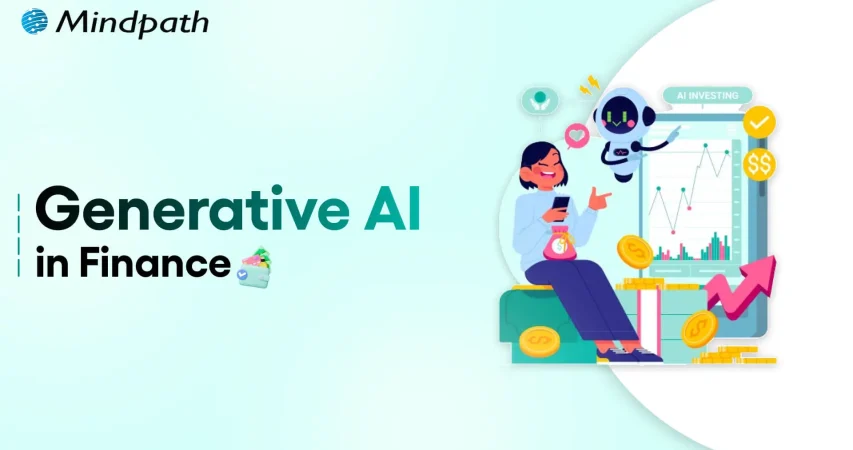
Generative AI in Finance: Unlocking New Opportunities and Innovations

Generative AI in Finance

Generative AI in Finance: Unlocking New Opportunities and Innovations

Have you ever wondered how technology is reshaping the world of finance? Imagine a future where financial decisions are driven by advanced algorithms, predictive insights, and automated solutions. What if you could tap into tools that not only enhance efficiency but also transform how businesses operate? In this blog, we’ll explore the fascinating world of generative AI and its incredible use cases in the finance sector. So, let’s dig in!  

What is Generative AI?

Generative artificial intelligence (generative AI) is a form of AI capable of producing new content and ideas, such as conversations, stories, images, videos, and music. AI technologies aim to replicate human intelligence in nontraditional computer tasks such as image identification, natural language processing (NLP), and translation. Generative AI represents the next phase in artificial intelligence. You can teach it to understand human language, programming languages, art, chemistry, biology, or any other complicated topic. It leverages previously trained data to tackle new issues. For example, it can acquire English vocabulary and compose a poem using the words it processes. Your organization can utilize generative AI for a variety of applications, including chatbots, media production, and product development and design. 

Generative AI is transforming the banking industry by utilizing cutting-edge technology to rapidly analyze massive volumes of data. It enables banks and financial organizations to provide personalized solutions for consumers, such as individualized investment strategies. This system can also detect fraud by identifying unique patterns in transactions, which protects our money. Businesses can employ generative AI to make more informed choices, save time, and improve customer service. 

Use Cases of Generative AI in Finance

1. Automating Accounting Tasks

Generative AI is making a significant impact on finance and accounting by assisting with daily activities. It can automatically gather and enter data, verify and match amounts in records, and organize various financial activities. Businesses can reduce manual effort and calculation errors by implementing automation. This implies that bookkeeping becomes faster and more precise, resulting in improved financial management overall. Companies that use generative AI can utilize less time on repetitive chores and instead focus on crucial decisions. 

2. Creating Financial Reports Easily

Generative AI makes it considerably easier to prepare financial reports by combining information from several sources and organizing it in an understandable manner. It can gather data from a variety of systems, including accounting software, sales databases, and market analysis tools, and compile it into a single complete report. This eliminates the need for firms to spend hours manually gathering and organizing data. 

This technology enables businesses to swiftly provide reliable reports for stakeholders, banks, regulators, and investors. Generative AI not only saves time, but it also decreases the possibility of mistakes that can happen when performing tasks manually. This guarantees that the information is trustworthy and provided in an organized, understandable style. 

3. Using Chatbots for Customer Help

Generative AI-powered chatbots and virtual assistants are transforming how organizations deliver customer service by providing personalized assistance tailored to each client’s individual demands. These chatbots can swiftly answer questions, give information, and walk users through procedures, making it simpler for consumers to receive the help they require. 

The primary function of chatbots in financial institutions is to enhance the user experience. They enable simple and effective interactions between the bank or financial provider and the consumer. For example, if a client has a concern about their account balance or needs assistance with a transaction, the chatbot may give immediate responses, eliminating the need for users to wait for a human representative. 

4. Assessing Credit Risk

Credit risk analysis is one area where generative AI is having a substantial influence. These clever algorithms can look at a variety of criteria, including a person’s credit history, financial documents, and key economic indices. By digesting this data, generative AI helps banks and financial institutions better determine borrowers’ creditworthiness. 

AI insights enable creditors to make better educated loan approval choices, establish acceptable interest rates, and calculate appropriate credit limits. For example, if a person has a good credit history and a steady income, the AI may propose that their loan application be approved at a reduced interest rate. In contrast, if the research identifies possible risk factors, it may advise greater prudence, such as increased interest rates or reduced loan limits. 

5. Spotting Fraud and Protecting Data

Fraud detection is one of generative AI’s most effective applications in finance and banking. These powerful algorithms can identify patterns of fraudulent activity in financial transactions, therefore reducing cybersecurity risks and improving overall data security. Suppose a transaction appears unexpected or does not reflect a customer’s regular spending patterns. AI can highlight it for additional research, allowing banks to respond rapidly to possible fraud. 

In addition to detecting fraud, generative AI is crucial for securing sensitive data. It employs powerful encryption techniques to protect financial information and continually analyses financial transactions for any suspicious activity. This implies that financial institutions can better secure their clients’ data and keep them safe from identity theft and other cyber threats. 

6. Personalized Financial Advice

Generative AI is changing the way individuals receive financial advice by providing personalized analysis and suggestions based on user data and behavior. By analyzing current data, such as spending patterns and financial objectives, AI can deliver insights tailored to everyone’s requirements. 

 For example, if a person wants to invest but has limited expertise, the AI can recommend the best investment possibilities depending on their risk tolerance and financial goals. Similarly, if a user wants to save for a certain purpose, the AI can suggest budgeting ways to assist them achieve that objective more effectively. This tailored approach not only improves customer happiness but also enables people to become more knowledgeable about their money. By receiving relevant advice on investments, savings, budgeting, and financial planning, customers can make better decisions that lead to improved financial health.  

Also Read: Generative AI for Business: Unlocking the Key to Unstoppable Success

Generative AI Services at Mindpath

At Mindpath, we provide a variety of generative AI services to help organizations’ succeed. Our team uses cutting-edge AI technology to provide personalized solutions that address your individual requirements. We can help you automate activities, provide meaningful reports, and improve customer service.  Our Artificial Intelligence services can assist businesses in streamlining processes, enhancing decision-making, and creating better client experiences. We recognize that each firm is unique, therefore we collaborate closely with you to understand your objectives and obstacles. Our goal is to create bespoke solutions that drive success and enable you to stay ahead in a competitive market. At Mindpath, we are dedicated to using generative AI to create new possibilities and drive development for your company. 

Final Thought!

In the rapidly evolving world of finance, generative AI is opening doors to efficiency, security, and personalized services that were previously out of reach. From automating complex tasks to providing targeted financial advice, the potential applications are transforming the industry in ways that benefit both businesses and customers. At Mindpath, we’re excited to support organizations as they harness these innovations. With our generative AI solutions, financial institutions can not only enhance their operations and service quality but also drive growth and innovation in a competitive landscape. Embracing generative AI with a trusted partner like Mindpath paves the way for a future where finance is smarter, more secure, and entirely customer focused. 

Ready to elevate your financial solutions with generative AI?

Partner with Mindpath to drive innovation, efficiency, and security.

Related Post

Discover the top Node.js trends shaping digital technology in 2024, from AI and TypeScript to IoT and cloud computing. Explore how Node.js drives innovation!
AI drives hyperpersonalization with smarter recommendations, chatbots, and tailored marketing to boost customer experience and growth.

Related Post

The cost of hiring a ReactJS developer in New Jersey varies based on several factors, including experience level, project complexity, and location. Developers charge different rates depending on their expertise, with junior developers costing less than senior professionals. Additionally, project costs can range from a few thousand dollars for simple applications to tens of thousands for complex enterprise solutions. Understanding these costs can help you budget effectively and find the right developer for your needs. Below is a breakdown of ReactJS developer costs in New Jersey.

1. Hourly Rates by Experience Level

Hourly rates for ReactJS developers depend on their expertise. Junior developers charge between $12 and $40 per hour, making them ideal for basic projects. Mid-level developers charge $40 to $80 per hour and are suitable for more complex applications and API integrations. Senior developers with extensive experience in large-scale projects can cost $80 to $150+ per hour. The higher the experience level, the higher the rate, but also the greater the efficiency and quality of work.

2. Cost for Simple ReactJS Projects

For small-scale applications, prototypes, or basic websites, hiring a ReactJS developer in New Jersey can cost between $5,000 and $15,000. These projects often involve standard UI development, minimal backend integration, and basic features. If you need a simple yet effective React-based solution, hiring a junior or mid-level developer may be the most cost-effective approach. However, ensuring quality requires choosing a developer with at least some hands-on experience.

3. Cost for Complex ReactJS Applications

If your project requires advanced functionalities, API integrations, database management, and optimized performance, expect to pay anywhere from $20,000 to $60,000 or more. These applications often need mid-level to senior developers who can write scalable, maintainable code and handle challenging development tasks. Costs also increase if you require additional services like UX/UI design, third-party tool integrations, or real-time features.

4. Factors That Affect the Cost

The total cost of hiring a ReactJS developer isn’t just about hourly rates; it also depends on factors like project timeline, required skill set, and location. Developers in major cities may charge higher rates, and if your project demands full-stack development, additional frameworks, or post-launch support, the cost will rise. To optimize your budget, clearly define project needs and hire the right developer with the necessary expertise.

Looking for skilled ReactJS developers in New Jersey? Mindpath offers expert ReactJS development services tailored to your project needs. Whether you need a simple web app or a complex enterprise solution, our experienced developers deliver high-quality, scalable, and cost-effective solutions. Hire top ReactJS talent today and bring your vision to life with Mindpath’s expertise.
Contact us now to get started!

Discover the ultimate guide to hiring Node.js developers in London. Learn about the skills, benefits, and cost factors involved in finding the right talent for your project.
The cost of hiring a ReactJS developer in Canada varies based on several factors, including experience level, location, project complexity, and hiring model. Developers with advanced skills command higher rates, while junior developers are more budget friendly. Additionally, hiring models like freelancers, agencies, or full-time employees can influence pricing. Understanding these cost variations helps businesses plan their budget effectively. Below is a breakdown of the hourly rates for ReactJS developers in Canada and the key factors that affect pricing.

1. Cost of Junior ReactJS Developers

Junior ReactJS developers in Canada typically charge $55 – $75 per hour. These developers have basic knowledge of React fundamentals, JavaScript, and frontend technologies but may lack hands-on experience with complex projects. They are ideal for small-scale applications, maintenance tasks, and assisting senior developers. While cost-effective, hiring junior developers may require additional training and guidance to ensure quality output. They are best suited for businesses looking for affordable development resources without the need for deep technical expertise.

2. Cost of Mid-Level ReactJS Developers

Mid-level ReactJS developers charge $80 – $120 per hour in Canada. They possess strong expertise in React, state management (Redux), API integration, and front-end best practices. These developers can handle end-to-end development, optimize performance, and manage application scalability. They are suitable for medium to complex projects where independent problem-solving is required. Businesses hiring mid-level developers can expect efficient coding, reduced development time, and well-structured applications while maintaining a balance between cost and expertise.

3. Cost of Senior ReactJS Developers

Hiring senior ReactJS developers in Canada costs $120+ per hour, depending on expertise and project scope. They have extensive experience with React, advanced state management, performance optimization, and architecture design. Senior developers are ideal for large-scale applications, enterprise solutions, and complex integrations. They provide technical leadership, mentoring, and strategic planning to ensure high-quality development. While expensive, their expertise significantly reduces project risks and ensures long-term success by delivering optimized, scalable, and maintainable applications.

4. Factors Affecting ReactJS Developer Costs

Several factors influence ReactJS developer rates in Canada:

Experience level: Senior developers demand higher rates due to their expertise.

Location: Cities like Toronto and Vancouver may have higher costs than smaller regions.

Project complexity: Advanced features, AI integration, or real-time capabilities increase pricing.

Hiring model: Freelancers may charge lower hourly rates, while agencies offer full-service teams at a premium. Full-time employees require salaries, benefits, and overhead costs. Businesses should assess these factors when planning their development budget.

Need skilled ReactJS developers in Canada at the right price? Mindpath, connects you with top-tier talent, from junior to senior developers, tailored to your budget and project needs. Whether you’re building a scalable web app or optimizing an existing one, our experts ensure high-quality, cost-effective development. Let’s bring your project to life with the best ReactJS professionals in Canada. Contact Mindpath today and hire expert developers for your business!

Get in Touch Now!

Discover the key factors influencing software development costs and how to optimize your budget. Learn how Mindpath can help.
what is cloud security

In the digital world, cloud computing technology has transformed how business entities store, manage, and process data. The cloud has certainly become the backbone of the modern infrastructure of startups and large enterprises. It not only offers flexibility to business undertakings, but it also offers scalability along with cost efficiency. The rising popularity of cloud has undoubtedly increased the significance of cloud security.

Cloud security involves a series of practices and technologies that can address internal and external threats relating to business security. Businesses operating today must realize the importance of cloud security and be aware of cloud security risks so that they can effectively leverage cloud-based tools. It is time to address the question of ‘what is cloud security’ at a holistic level.

Want to strengthen cloud security without increasing operational overhead? At Mindpath, managed cloud services handle security, monitoring, and optimization so your team can focus on growth.

An Insight into Cloud Computing

Cloud computing refers to the business model that delivers on-demand cloud-computing services to users. The services are of diverse types, including storage, servers, databases, and many more. Over the internet, all these services are available. Through the proper leveraging of cloud solutions, businesses have the opportunity to scale quickly while reducing their IT costs.

Several business entities across diverse industries have been adopting cloud technology lately. However, this also means that organizations need to understand what is cloud security and the potential cloud computing attacks that could compromise their systems. Addressing this key question allows businesses to safely and successfully leverage cloud technology while mitigating risks.

What is Cloud Security?

Cloud security encompasses cybersecurity policies, controls, and best practices that are used for the purpose of securing data, applications, and infrastructure. The elements that make up cloud security have been engineered in order to prevent as well as mitigate threats that may affect the cybersecurity of an organization. Some of the key goals of cloud computing security include:

1. Ensure that the security of sensitive and confidential data of organizations is maintained. Moreover, the security of the data has to be maintained when the data is at rest and in transit.

2. Effectively manage multi-cloud challenges that arise when the services of multiple cloud service providers are used by business enterprises.

3. Make sure that only authorized users and devices are able to gain access to the cloud environment.

Wondering how emerging trends are shaping cloud security? Check out the latest cloud computing trends to learn what’s driving secure cloud adoption.

Risks and Challenges Relating to Cloud Security

Poor cloud computing security has the potential to give rise to a broad range of risks as well as challenges. Now that you know what is cloud computing security it is time to look at some of the associated challenges and risks, such as:

1. Data Breach and the Possibility of Fines

Poor quality of cloud cybersecurity has the potential to lead to data breach incidents. When organizations operate in the cloud and security is neglected, it may lead to serious consequences as their sensitive data may be exposed to malicious actors. It means that organizations may fail to comply with the relevant laws and policies. Thus, they may have to pay huge fines.

2. Compliance-Related Violations

In the absence of a cloud security strategy, organizations may end up violating the applicable regulations. With the passage of time, it may affect the credibility of businesses in the operational industry. Violation in this area may give rise to financial and non-financial effects for businesses.

3. Poor Visibility and Monitoring

The lack of security in cloud computing may lead to a lack of centralized visibility. Organizations may also fail to get real-time insight relating to the threat that they may be facing in the cloud environment. With the absence of robust cloud security solutions, organizations may feel crippled and they may not be Able to leverage cloud computing technology to the fullest.

4. Data Losses

Poor practices relating to cloud computing and cybersecurity involve not frequently maintaining backups of your data. Organizations that adopt such practices face the risk of data loss. It may ultimately have an adverse impact on their information integrity. Moreover, systems of the organization may fail because of poor data security practices. As a result, business continuity may be at the receiving end in the long run.

Looking to improve cloud security as environments become more complex? Learn more about cloud-native development and how it supports secure, scalable apps.

Key Benefits of Cloud Security

Organizations need to prioritize both cloud and cybersecurity. Robust cloud security can give rise to a broad range of benefits for businesses operating in diverse industries. Some of the key benefits of cloud security include:

1. Solid Data Protection

Cloud security can play a catalytic role and help safeguard your sensitive business data. It can even employ advanced encryption practices to make sure that unauthorized parties cannot gain access to your data. Along with robust data protection, it can minimize the downtime of businesses and give rise to other advantages, such as the automation of backups and faster disaster recovery.

2. Regulatory Compliance

Proper cloud security can enable organizations to meet different types of compliance standards. They can even help organizations adhere to relevant frameworks such as CIS Benchmark, NIST, and many more. By prioritizing regulatory compliance, the chances of fines and penalties can be reduced considerably.

3. Real-Time Threat Detection

Cloud server security solutions can help in the detection of threats on a real-time basis. The insight can certainly empower organizations to respond to such threats in a timely manner. In current times, when the risks from malicious actors in the cyber setting are immense, real-time threat detection has become non-negotiable for businesses.

4. Scalability and Cost-Efficiency

Cloud security is the ultimate answer to scalability and cost-efficiency for businesses that wish to leverage the cloud to the fullest. Moreover, robust cloud security can certainly help business entities to become more agile, and they do not have to worry about their scalability concerns. Since cloud security is scalable in nature, it can easily adapt to the changing needs of businesses. Thus, organizations can modify their cloud security posture in order to accommodate new users, data, or applications.

Planning to upgrade your cloud security strategy for the future? Check out cloud security tools in 2026 to discover the technologies shaping next-generation protection.

Importance of Cloud Computing Security

In the prevailing times, a greater number of businesses are migrating to the cloud. In order to make the most of cloud technology, it is essential for businesses to understand the importance of cloud security. The role of cloud security is indispensable to ensure that the data and applications of businesses remain safe and secure in the cloud setting.

It is true that third-party cloud computing service providers are responsible for managing the infrastructure. However, businesses have the responsibility to take care of data asset security. Although cloud service providers may adopt best practices, organizations must be vigilant about potential cloud computing vulnerabilities on their side.

As security threats have become more advanced and sophisticated in nature, the importance of cloud computing security has automatically grown significantly. Organizations operating in diverse industries need to take active steps to strengthen their cloud security so that they can function in the cloud setting while maintaining a solid security posture that minimizes the threats from malicious third parties.

Must Read: Multi-Cloud vs. Hybrid Cloud

Common Types of Cloud Security Solutions

In the prevailing times, there exists a diverse range of cloud security solutions. You need to familiarize yourself with some of the most popular solutions so that you can deploy them in a real-life setting. Some of the key cloud security solutions that exist today are:

1. Identity and Access Management

Identity and Access Management (IAM) services and tools assist enterprises in the deployment of policy-driven enforcement protocols. They are for the users who attempt to access on-premise as well as cloud-based services. The chief functionality of Identity and Access Management is to develop digital identities for every user so that they can be actively monitored.

2. Data Loss Prevention

Data Loss Prevention (DLP) can help organizations gain visibility into the data that they store and process. This is possible by providing them with the capabilities for automatically discovering, classifying, and de-identifying regulated cloud data.

3. Security Information and Event Management

Security Information and Event Management (SIEM) combines security information along with security event management in order to offer automated monitoring, detection, and incident response to threats that arise in the cloud environment. SIEM leverages AI and ML technologies for examining and analyzing log data generated across applications and network devices.

4. Public Key Infrastructure

Public Key Infrastructure (PKI) refers to a framework that is used for managing secure and encrypted information by using digital certificates. These solutions provide authentication services for apps and verify that the data is not compromised and remains confidential throughout transportation.

Planning to build scalable applications without managing servers? Check out our blog on serverless architecture in cloud computing to learn how it simplifies deployment while supporting secure and efficient workloads.

Final Words

The significance of cloud security has been gaining momentum in the past few years. As more organizations across diverse industries and sectors are moving to the cloud, the need for robust cloud security is growing like never before. Some of the main benefits of cloud security include solid data protection, regulatory compliance, and many more.

Mindpath’s top-grade cloud managed services can ensure that your business can effectively leverage cloud computing technology. With our solutions, you can optimally manage, migrate, and optimize your workload with our excellent cloud infrastructure solutions. Moreover, you can rest assured about cloud security aspects, as our experts will take care of everything.