Top GenAI Tools Driving the Future of AI Development

Join our Newsletter!

Featured Posts

Support Is One Click Away

Home

Top GenAI Tools Driving the Future of AI Development

top genAI tools

Top GenAI Tools Driving the Future of AI Development

If you’ve been paying attention to the tech world lately, you must have seen how the best GenAI tools are revolutionizing the way we can accomplish our jobs. Whether it is writing content in seconds or smartly developing sophisticated apps without heavy layers of coding, innumerable examples exist of how these tools are helping people do more with less effort. These AI tools are quickly becoming the new solution for developers, creators, and organizations who want to increase their speed and get better results.

The evolution of GenAI is transforming how industries approach work and innovation. Work that could take hours, and manual efforts are now being dramatically reduced to minutes through intelligent tools. Developers and organizations are employing GenAI tools in many everyday tasks. They provide efficiency, less effort, and improved outcomes. In this blog, we will showcase the most powerful GenAI tools carving the future of AI development. You’ll get a quick look at what they do and why they matter.

Looking to transform your ideas into intelligent, future-ready solutions with Generative AI? Our expert AI development services help you build scalable, smart systems that drive real business impact.

What is Generative AI?

Generative AI is an intelligent technology that creates new things using AI, like text, images, video, and even code. Generative AI can move beyond simply answering questions or completing simple tasks; it is able to generate something new. This allows businesses to operate more quickly and continually come up with new ideas.

Countless organizations are now taking advantage of generative AI to save time and operational efficiencies. Businesses apply it to write emails, design graphics, make advertisements as well as create chatbots. By leveraging generative AI, businesses can reduce manual labor, have fewer errors, and provide customers with their services in a more personalized and timely manner.

Here are some advantages of generative AI for businesses:

  • Creativity and Innovation – Generative AI allows businesses to develop more ideas and make new content.
  • Productivity – It saves time by taking responsibility for boring, menial tasks.
  • Efficiency – It allows work to be completed more quickly and with fewer errors.
  • Personalized Customer Experience – Business can create more personalized and relevant content for the customer.
  • Product Development – It can develop new products faster through automated coding, idea generation, and design enhancements.
  • Support Service/AI chatbots – It supports customer service chatbots that are capable of answering customer questions.
  • Better Decision-making – It provides some basic recommendations to businesses using data so they can make better decisions.
  • Reduction in Costs – It results in cost savings through automation of tasks and improved operations.

Curious about where Generative AI is headed next? Explore the top Generative AI Trends for 2025 and stay ahead of the innovation curve.

Best Generative AI Tools Driving the Future

Generative AI tools are making a big impact by helping businesses create content, improve services, and speed up their workflows. These tools are easy to use and offer smart solutions for many daily tasks. Below is a generative AI tools list that showcases the top tools shaping the future of work and technology.

1. Gemini 

Gemini is one of the best AI tools for students who need help with research, writing, and learning new topics. It works like a smart assistant that gives clear answers, supports multiple languages, and connects well with Google’s tools. It’s great for organizing ideas and understanding complex information more easily.

2. ChatGPT

ChatGPT is a helpful AI tool for writing, support, and idea generation. It can answer questions, create content, and help you think through new ideas. Whether you’re stuck on a project or need help with writing, it’s like having a smart assistant that’s ready to guide you anytime.

3. Cohere

Cohere is one of the useful generative AI tools for developers who want to build smart apps with language features. It helps create text for chatbots, search tools, and marketing content. Developers can use its API to train custom models and add natural language understanding to different types of projects.

4. GitHub Copilot

This tool is a great example of generative AI for coding, helping developers write code faster with real-time suggestions. It works smoothly with popular editors like Visual Studio Code and supports many languages. It also learns your coding style to give more personalized tips, making your development process easier and quicker.

5. AlphaCode

AlphaCode is a helpful generative AI coding tool that supports developers with tasks like writing code, fixing bugs, and learning new programming languages. It can save time by handling repetitive work and giving smart suggestions. It also helps improve code quality and makes team coding easier with shared ideas and solutions.

6. Microsoft Copilot

Microsoft Copilot is a smart assistant that helps with both coding and office work. It gives helpful code suggestions, writes documentation, and works well with tools like Visual Studio and Microsoft 365. It’s a great support tool for developers and teams who want to work faster and more efficiently.

7. Canva AI

Canva AI makes graphic design simple and fast, even if you’re not a designer. With its easy drag-and-drop setup and ready-made templates, you can create eye-catching visuals in minutes. It also gives smart design suggestions and helps keep your brand style consistent across all your projects.

8. DALL-E 2

This is one of the most creative generative AI applications, turning simple text into detailed images. You just describe what you want, and it creates visuals in different styles. It’s great for bringing ideas to life, whether you’re designing something new or showing a concept in a fun, visual way.

9. Microsoft Power Apps

This tool makes building apps easier by letting you use simple chat-like prompts instead of writing a lot of code. It helps create database layouts and app designs quickly. It’s great for teams working together and speeds up the whole process, though it works best within the Microsoft environment.

10. Turing’s CodeGen Copilot

This tool is one of the useful generative AI tools for programmers who want to save time and avoid repeating the same coding tasks. It fits well with tools like GitHub and Jira, making the workflow smoother. It helps boost productivity and lets developers focus more on creative and important work.

To explore how Generative AI is reshaping mobile and web experiences, check out our in-depth article on the Role of Generative AI in App Development. It dives into real-world applications and how this technology accelerates innovation in app design and functionality.

Want to Boost Your Workflows with the Best GenAI Tools?

GenAI tools are changing how we work, learn, and innovate. From faster coding to better customer service and content creation, these tools help users do more in less time. They are now essential for staying efficient, creative, and competitive in today’s fast-moving digital world.

Mindpath offers GenAI powered solutions to help businesses automate tasks, build smarter apps, and improve customer experience. Our expert team delivers AI tools that fit your goals, helping you reduce time, cut costs, and grow faster. Let us help you transform your business with our world-class, customised AI development services.

Related Post

Discover the top 8 benefits of Node.js for web development, from seamless scalability to cost reduction. Elevate your web app performance with Node.js today!
Discover the ultimate guide to hiring Node.js developers in London. Learn about the skills, benefits, and cost factors involved in finding the right talent for your project.

Related Post

AI and ML innovations in Fintech
Imagine if your bank could know fraud before it happens, or your financial decisions were made faster and smarter. What if customer service was so attuned to your needs that speaking with them feels more like a chat with a friend? AI and Machine Learning are making these possibilities a reality today in the Fintech industry. Interesting, right? In this blog we are going to explore the key benefits as well as some use cases of AI and ML in the FinTech industry.  Artificial intelligence and machine learning are changing the way in which the FinTech industry works. This technology is being used to make financial services provided by FinTech companies smarter, faster, and more personalized. By using AI and ML, Fintech can analyze heaps of data in seconds and come up with proper decision-making, easy following of rules, and smoother customer experience. For instance, AI can be used to power chatbots that answer customer queries or build systems that tell whether a person is a good candidate for a loan.   In other words, AI and ML help Fintech companies provide better services that are much more inclined to individual needs. AI and ML play a huge role in making financial services better and more efficient. Through AI, Fintech companies can offer their services in a personalized way, like providing their clients with customized financial recommendations or using chatbots to answer their questions. Such technologies also lead to cost reduction because they replace repetitive functions with more important work. AI will enhance fraud protection by detecting and preventing threats, ensuring security for both customers and companies.   Let us dig deep to explore the benefits and use cases of AI and ML in the FinTech industry! 

Benefits of AI and ML for Fintech Companies

1. Advanced Fraud Detection

Artificial intelligence and machine learning make it much simpler to detect and prevent financial fraud. Traditional security systems, like firewalls, might overlook suspicious activity, but AI can analyze large amounts of data from many sources, including records of transactions, client profiles, and even social media.  

This aids in the detection of concealed symptoms of fraud, which would otherwise go undiscovered. AI allows systems to swiftly recognize unusual patterns, such as huge transactions or weird locations, that may suggest fraud. This means that financial institutions can decrease fraud losses while also improving the security of their payment and transaction systems. 

2. Streamlined and Automated Business Operations

AI and ML-powered operations are revolutionizing how financial duties are managed, making procedures more efficient and timesaving. AI can automate repetitive operations such as data input, verification, and reconciliation, saving time by extracting information from bank accounts, invoices, tax forms, and contracts. AI systems excel at analyzing vast volumes of unorganized text data, allowing reports to be generated fast. Furthermore, AI may use market data, economic indicators, and previous performance to anticipate investment possibilities and prepare for future cash flows. It improves financial planning accuracy by analyzing previous cash flow data and current market situations.  

3. Elevated Customer Service

Improved customer service powered by AI and ML greatly enhances how you connect with your customers. These technologies use client data, transaction history, and behavior to better understand specific requirements. This insight enables you to provide personalized product suggestions, financial advice, and focused marketing initiatives. Using AI for customer service allows you to swiftly answer commonly asked questions, assist with simple enquiries such as verifying account balances or recent transactions, and improve response times. AI also allows you to provide personalized suggestions based on consumer preferences, offer 24-hour live chat assistance, and communicate in many languages. 

4. Smart Financial Decisions Making

AI significantly enhances financial decision-making by detecting hidden patterns in data and evaluating their influence on your company. It enables you to simulate numerous scenarios, such as different investment, loan, or credit conditions, to understand how they may affect your results. By analyzing complicated financial data, AI aids in developing smart strategies that reduce risks and provide this knowledge in simple, understandable formats. AI also keeps you up to date on the newest data, allowing you to identify new ways to save money. It can immediately detect unexpected transactions or market swings, allowing you to alter your financial plans accordingly.  

5. Efficient and Strategic Resource Allocation

AI assists financial institutions in more effectively allocating resources by analyzing market data, previous performance, and risk indicators. This allows them to determine the best methods to invest assets, balance risk and return, diversify portfolios, and optimize resource utilization. AI may also categorize customers based on their behavior and preferences, allowing for more focused resource allocation. This translates to more successful marketing efforts, specialized product offers, and personalized customer service. Furthermore, AI assists in determining the optimum times to spend money on advertising for the greatest impact. 

Ready to elevate your financial technology?

Mindpath’s expert AI\ML solutions transform your operations with advanced analytics, automation, and tailored insights. 

Top Use Case of AI/ ML in Fintech

1. Algorithmic Trading

Algorithmic trading allows financial institutions to automate trading choices and manage large numbers of deals swiftly. Instead of manually handling each transaction, businesses utilize AI and ML algorithms to execute pre-set trading orders. TradeSmart, for example, uses AI and machine learning. They employ these technologies to automatically execute trades based on rules established by machine learning algorithms. By analyzing enormous volumes of historical data from multiple stock markets, TradeSmart assists investors in developing more successful trading methods. This enables for faster and more efficient trading than doing it by hand. 

2. Fraud Detection

Machine learning is critical in detecting and preventing fraud because it analyses enormous amounts of data to identify odd patterns and hidden links. Traditional fraud detection approaches may be restricted, but machine learning algorithms are more sophisticated and can detect abnormalities more efficiently. For example, Danske Bank in Denmark went from an outdated rule-based system to a machine learning technique for identifying fraud. This improvement dramatically enhanced their capacity to detect true fraud and minimize false warnings, demonstrating how powerful machine learning can be in combating financial crime. 

3. Regulatory Compliance

Machine learning is important in regulatory compliance because it helps financial firms manage complicated laws and regulations. ML algorithms can evaluate enormous quantities of regulatory papers and identify links between various norms, making it easier to stay current with changing regulationsFor example, cloud-based systems powered by machine learning may automatically track and update regulatory changes as they occur. Furthermore, ML can analyze transaction data to spot abnormalities, ensuring that all consumer transactions match legal requirements. Machine learning helps financial organizations stay compliant and manage regulatory needs more effectively. 

4. Stock Market Analysis

In the stock market, machine learning (ML) is used to make sense of the massive volumes of data generated by trading activity. While historical data serves as a basis, ML algorithms use real-time information such as news and trade outcomes to find patterns and trends. Traders utilize this information to make better judgements regarding their trading strategy. They select which ML algorithms to utilize based on their ability to forecast market moves and detect interesting patterns in data. This allows them to estimate stock market developments more precisely. 

5. Loan Automation

Machine learning is revolutionizing loan automation by analyzing more data than previous approaches, without being limited to FICO ratings and income information. Lenders may use machine learning to better assess risk by combining data from many sources. This includes information from social media accounts, phone records, energy bills, rent histories, and even health exams. Machine learning algorithms use this different data to provide exact risk assessments. If a borrower’s risk score matches the lender’s requirements, the loan may be immediately granted. Unlike human assessors, machine learning algorithms examine loan applications without bias or emotion. This promotes fair lending processes by decreasing the effect of racial, gender, and other prejudices, resulting in more equitable loan decisions. 

AI/ML Services at Mindpath

At Mindpath, learn how to provide AI and machine learning services that help your fintech business become smarter and more efficient. We work with the most advanced technologies to help you predict future trends, solve complex issues, and make informed decisions.  

Our advanced predictive analytics tools process financial data to predict market trends and customer behavior, to keep you ahead of every curve. On machine learning applications, we provide solutions that learn from financial data about how to manage your risks and make your trading strategies smarter over time.  

Utilizing our insights, fueled by your data, we derive useful information from you to help you make smarter investment decisions and optimize financial operations. In addition, our automation solutions save you lots of time and reduce errors by automating routine tasks, such as transaction processing and compliance management.  

Our AI and machine learning services are therefore aimed at boosting fintech operations by making them smarter and more innovative, so your business can be faster and more competitive in today’s financial industry. 

End Note

AI and machine learning are changing complex financial tasks into sleek, efficient processes within the vast FinTech space. It starts with detecting fraud accurately to loan approval and personalized customer services. Thus, this helps fintech businesses to make wiser financial decisions, manage their resources, and, in the long run, serve their clients in the most outstanding way. As these technologies continue to develop, so will innovation and efficiency in financial services, paving the way for a much more secure, intelligent, and customer centric future. 

At Mindpath, we are committed to making your fintech business to its full potential with AI and machine learning. Empowering the fintech landscape into the future will be based on predictive analytics and machine learning applications that our company specializes in, the outcomes and trends it brings to light, and automation solutions that drive operational efficiencies. We drive advanced technologies into your business for better decision-making, operational efficiency, and able to deliver hyper-personalized experiences. 

Looking to revolutionize your FinTech services?

Mindpath’s AI and ML solutions offer smarter fraud detection, streamlined operations, and personalized customer experiences. 

Need Expert Legal Software Solutions

Looking for that one legal software developer who will turn your idea into a real project? Choosing a partner may seem truly overwhelming, but it doesn’t have to be. In this blog we will know about the factors to consider while hiring legal software developers. 

The legal tech market is growing beyond walled gardens, with newly built tools fueled by demand from law firms, corporate legal departments, and individual practitioners. Legal software is specialized to be applied in managing specific legal tasks such as secure electronic signatures and contract reviews; it’s not quite like the general genre of technological tools illustrated by email systems or file-sharing services. This can take the form of tools for in-house legal departments that streamline internal processes, such as document management and compliance; law firm management software for keeping cases, billing, and client communications in check; and consumer applications to help them with personal legal problems, whether concerning bankruptcy or parking tickets. 

Hiring legal software developers becomes essential to ensure that your legal software development services runs effectively and does everything that you would want it to do. The developers working on this legal software specialize in creating and customizing solutions regarding case file management, deadline tracking, document management, and more. They help build tools that better law firms by handling tasks such as searching case files, running calendars, following tasks, even access to information on-the-go through their mobile features. By hiring skilled legal software developers, you get the assurance that your software will be well-designed and secure, coupled with features tailored to meet your specific requirements, making the task of managing legal cases and firm operations much smoother and efficient. 

Let us dive deep into this blog to know about the factors to consider before hiring legal software developers. 

Factors To Consider Before Hiring Legal Software Developers   

Factors To Consider Before Hiring Legal Software Developers

1. Define Needs  

Before you hire legal software developers, the needs must be clearly defined. It means determining what one wants the developers to be able to do. Consider the integration of the software with other systems in use like email and file storage for perfect workflow. This includes setting a budget, which will serve as a guideline regarding priorities and finding a developer or developers to deliver what you will need within your financial limits. Defining your needs will allow you to communicate your needs to the developers, hence bridging to a more successful, tailor-made software solution. 

2. Evaluating Developer Expertise   

Before hiring, critically evaluate the expertise of legal software developers. Are they technically competent? Do they have the skill sets and experience using their tools? Engage developers who have experience in working with legal software. After all, their better understanding of the unique needs of law firms and legal departments is good enough for saying so. Just look at all the client testimonials that app developers have gotten to understand that they do quality work. Make sure they are good at communication and that they are responsive, friendly developers. That way, by appraising their expertise, you can find developers who would be well equipped to build the software for you. 

3. Reviewing Past Projects and Client Testimonials 

Before you start hiring legal software developers, view their past projects; what kind of work they have done, how many projects they have handled. See if they have done any similar projects as you want. They can deliver qualitative software related to the legal field. Moreover, you can look over the client testimonials and reviews to know how the previous clients feel about their experience. It will provide you with positive feedback, thereby giving you confidence in their ability and reliability. This step helps in choosing a developer who has the potential to prove his results and satisfy your needs accordingly. 

4. Communication and Collaboration Skills   

When looking to hire legal software developers, try and pay attention to their communication and collaboration skills. Pick the ones you can talk with easily and hear you out. They should be responsive, updating you on the progress of their work. Good collaboration means they can work well with your team, share ideas, and solve problems together. Effective communication means everyone is on the same page, thus leading to a smoother development process toward a successful software solution. 

5. Cost and Budget Considerations   

The cost or budget for hiring a legal software developer should be considered. It will be important for you to decide just how much you are prepared to pay for your project and then compare legal software developers who can work within your budget. Different pricing models—like fixed price or hourly rate—might suit your needs better. Be sure to discuss extra costs that may arise. This will help you to understand better the financial aspects of the matter and find out the developers who offer maximum value for your money.

Looking for Expert Legal Software Development?

At Mindpath, we offer comprehensive legal software development services to meet your unique needs.

Legal software development services at Mindpath    

We have a variety of legal software development services designed to make your life simple and give you more time. Our solutions improve client service, streamline operations, and help remain compliant with regulations. 

legal software development services designed

1. Legal Website Development 

We provide law firms with professional websites that are attractive, user-friendly, and search engine friendly, so you will have an excellent online presence that really attracts potential clients. 

2. Legal Chatbot Development 

Our chatbots automate client interactions through answering questions, setting up appointments, and providing updates. They offer support 24/7 to help reduce the admin workload and increase client satisfaction. 

3. Legal Case Management Software 

Our software simplifies case management by providing real-time data and automated tasks so you will be able to have full control over your cases and gain valuable insights into their progress. 

4. Legal App Development 

We create user-friendly apps on iOS and Android to handle client interactions and case information from anywhere, creating a better experience for the client. 

5. Compliance Management Software 

This software takes extra care to keep you compliant with the legal framework and provides automated tracking of risk management to keep your practice updated. 

6. Cloud Migration 

We ensure the safe transfer of your data to the cloud so that flexibility and security are enhanced with easy access anywhere, along with system performance during cloud optimization. 

Conclusion 

The fast-changing legal technology landscape dictates that law firms and legal departments should catch up. In the modern world, technology is the way to achieve efficiency, better customer service, and compliance. While hiring a legal software developer, due consideration of things such as defining your needs, evaluating experience, and good communication can result in successful partnering and effective software solutions. 

At Mindpath, we look to simply your process and introduce you to innovation that will automate your legal practice. By choosing Mindpath, you’re putting your money into innovation and expertise to drive your success against competition in the legal arena. Stay ahead with Mindpath and focus on what you do best by providing exceptional legal services.  

Looking to Revolutionize Your Legal Practice?

At Mindpath, we build custom legal software websites, chatbots, and case management systems just for you.

Discover essential factors for hiring legal software developers and see how Mindpath’s custom solutions like websites and chatbots can transform your practice.
top AI trends

AI trends are growing at an accelerated rate, creating new opportunities and challenges for leaders in today’s workforce. From intelligent automation to advanced data analysis, AI is delivering smarter and leaner business processes, and playing a critical role in AI in decision-making. Fascinating, isn’t it? AI now permeates companies of all sizes for improving decision-making and performance. These transitions are already contributing to how businesses will operate and compete across every industry in 2025!

It is vital to keep up with the trends in AI because they are directly relevant to how businesses grow, change, and ultimately fulfill growing expectations. The faster leaders recognize trends, the smarter they can invest and prepare their teams, in order to gain an advantage over their competitors. If you do not pay attention to these trends, you may run the risk of missing advancements in tools, significant improvements in workflows, and smart strategies.

Want to know what are the top AI trends for 2025? This blog will provide you with all the AI trends business leaders will want to be aware of and should pay particular attention to in 2025.

Wondering how to get started with AI development the right way? Our AI Development Services can help you build impactful solutions from concept to deployment.

What is Artificial Intelligence (AI)?

Artificial Intelligence (AI) is a type of technology that helps computers in thinking, learning, and making choices like people. It allows machines to use language, read information, and analyze data to give helpful responses. In business, AI is primarily being utilized to make workflow quicker and smarter.

For example, AI allows an organization to better appreciate the needs of its customers, and provide its products or services to them, when they need them, in a timelier manner. AI functions for businesses efficiently by helping cut down the time taken for a task that people typically take a lot longer to do. AI can minimize errors, take care of repeated and tedious work, and it can operate indefinitely without breaks.

It means that an organization can receive a product quicker, save time to increase productivity, and use their time to pursue other important goals. AI can also help organizations improve the quality of their products and services by being able to produce and share insights derived from their data, helping ensure smarter, and more informed decisions.

Let us know about some AI statistics that highlight how organizations are adopting and managing AI technologies in 2025:

  • According to Statista, the AI market is expected to reach US$244.22 billion in 2025 and grow to US$1.01 trillion by 2031, with a CAGR of 26.60%.
  • As per McKinsey AI report, more than three-quarters of organizations now use AI in at least one business function.
  • An artificial intelligence survey from Forbes reveals that 25% of enterprises will deploy AI agents in 2025 to handle complex, multi-step tasks.
  • Analytics Insight states that 80% of retail executives plan to accelerate AI adoption through automation by the end of 2025.

Is your business missing out on the advantages AI can offer? Explore the benefits of AI from increasing efficiency and cutting costs to making smarter, data-driven decisions that drive growth.

Top AI Trends for 2025

Trends in artificial intelligence are shaping how businesses operate, innovate, and grow in 2025. As more companies start using AI to improve workflows and decision-making, these key developments are driving real impact across industries.

1. AI Reasoning Gets Smarter

Among the latest developments in AI, one major shift is its growing ability to reason and make sense of complex situations. In 2025, large language models can think more like humans, helping businesses go beyond basic insights. They now support smarter planning and stronger decision-making. This means companies are using AI not just to understand data, but to act on it more confidently.

2. Generative AI Reshaping Content Strategy

The best artificial intelligence trend in 2025 is the rise of generative AI in content creation. It allows businesses to create text, visuals, and videos instantly from basic prompts. This helps teams produce more personalized content at scale without extra effort. It’s making content strategies faster, smarter, and more effective across industries.

Also Read: Top GenAI Trends 

3. AI Agents Redefining Business Efficiency

One exciting use of AI in business is the rise of intelligent AI agents that act like real team members. These smart tools handle tasks like finding new leads, managing admin work, and analyzing data in real time. By doing this, they help teams work faster and focus on bigger goals. Companies are now seeing lower costs and fewer errors due to these advanced AI systems.

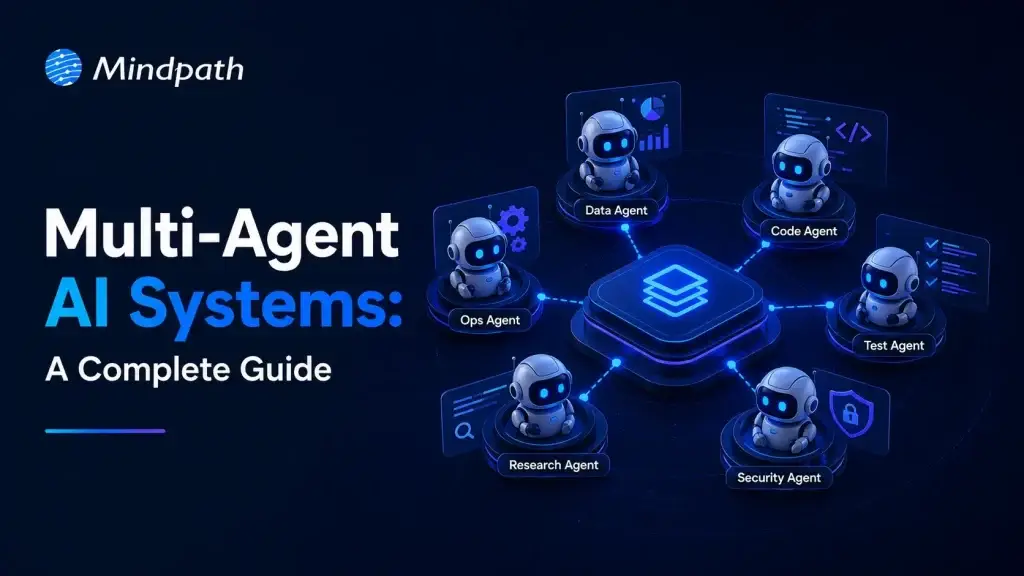
4. Multi-Agent Systems Streamlining Workflows

A new shift in AI is the use of multiple agents working as a team to handle complex business tasks. Each AI agent focuses on a specific job, like customer service or finance, and they all work together smoothly. This makes it easier to automate detailed processes that once needed people to manage them. The result is faster work, better accuracy, and stronger connections between business systems.

5. Industry-Driven AI in Action

Different industries are now using AI in ways that fit their unique needs. Sectors like finance, healthcare, insurance, and manufacturing are leading the way because they already follow strong rules around data and systems. These fields need custom AI tools for tasks like managing claims, tracking supply chains, or handling appointments. Tailored AI solutions are helping these industries work faster, meet rules, and serve people better.

How is AI reshaping the way websites are built and optimized? Explore our detailed article on AI in Web Development to see how it’s driving smarter design, faster deployment, and better user experiences.

6. GPUs Powering the Future of AI

A key new technology in AI is the growing use of GPUs to run advanced models. These powerful chips help process large amounts of data quickly, which is essential for AI tasks. As AI adoption grows, the demand for GPUs is rising across both cloud and on-premise systems. They now play a central role in building fast, efficient, and scalable AI infrastructure.

7. A Shift Towards Small Language Models (SLMs)

One trend catching the eye of artificial intelligence companies to invest in is the move from large to small language models. These smaller models, called SLMs, can do many of the same tasks as LLMs but use fewer resources. They are faster, cheaper to run, and easier to manage, making them a smart choice for everyday use. With techniques like pruning and knowledge sharing, SLMs are becoming more efficient without losing quality.

8. Businesses Turn to Open-Source AI

Open-source AI is becoming a strong choice for businesses that want more freedom and flexibility. Unlike closed systems, open-source models let companies build and manage AI tools on their own, keeping data private and costs lower. They can also fine-tune models using their own data to get better results. This shift is helping more businesses create powerful AI solutions without relying on big tech providers.

9. RAG Brings More Accuracy

One growing method to reduce wrong answers from AI is called Retrieval-Augmented Generation, or RAG. It helps AI pull information from reliable and current sources, making responses more accurate. While it improves relevance, it doesn’t always provide personalized answers without added context. Still, RAG is becoming a valuable tool for businesses looking to make AI more useful and trustworthy.

10. Swarm Learning Driving AI Progress

Swarm learning is a new way for AI systems to grow by sharing what they learn with each other. Instead of learning alone, connected AIs exchange knowledge in real time. This helps them improve faster and solve problems more efficiently. It’s a smart way to build stronger AI by working as a team.

Looking for smarter ways to handle customer queries and optimize workflows? Explore our blog to see how conversational AI chatbots can transform your business.

Is Your Business Aligned with the Top AI Trends?

AI trends are reshaping how businesses grow, compete, and deliver value across every industry. From reasoning models to open-source tools and AI agents, these trends are helping companies simplify operations, improve decision-making, and stay ahead. By understanding what’s emerging in 2025, leaders can better prepare for new opportunities and future success.

At Mindpath, we offer AI development services that align with the latest AI trends and business goals. We create intelligent tools, automation systems, and custom AI models that improve decision-making and increase efficiency. Our solutions are built to fit your operations, boost productivity, and support long-term growth. With Mindpath, businesses gain reliable and future-focused AI support.