Home

Multi-Agent AI Systems: Use Cases, Architecture, and Benefits

Multi-Agent AI Systems: Use Cases, Architecture, and Benefits

Lorem ipsum dolor sit amet, consectetur adipiscing elit. Ut elit tellus, luctus nec ullamcorper mattis, pulvinar dapibus leo.

Join our Newsletter!

multiagent ai systems

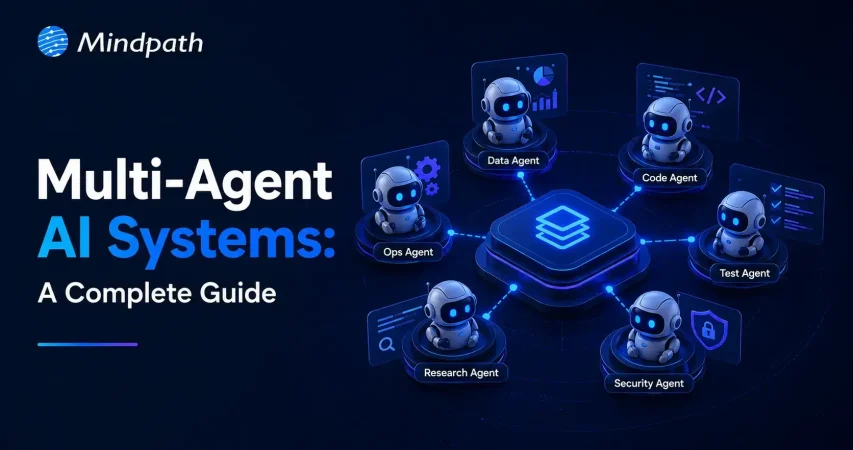
Businesses are entering a new phase where intelligent software handles complex decisions instead of completing isolated tasks. Multi-Agent AI Systems are leading this transformation by allowing multiple AI agents to collaborate, communicate, and solve business challenges with greater speed and accuracy. This shift is helping organizations automate entire workflows while improving operational efficiency across different departments.

Key Takeaways

  • 01
    Multi-agent AI systems simplify complex business workflows through intelligent collaboration.
  • 02
    Specialized AI agents improve speed, accuracy, and operational efficiency.
  • 03
    Businesses gain scalable automation with coordinated AI decision making.
  • 04
    Strong architecture ensures reliable communication between multiple AI agents.
  • 05
    Careful implementation maximizes long-term business value and performance.

As organizations expand their AI capabilities, they require solutions that can coordinate multiple tasks without constant human intervention. That is where intelligent collaboration between AI agents becomes valuable for modern enterprises. In this blog, we are going to explore what multi-agent AI systems are, their benefits, architecture, working process, use cases, implementation approach, and why businesses are adopting them in 2026.

Looking to deploy intelligent AI agents that collaborate seamlessly across your business? Explore our multi-agent AI system development services to build scalable, secure, and high-performing AI solutions tailored to your needs.

What are Multi-Agent AI Systems?

A multi-agent AI system is an artificial intelligence environment where several independent AI agents work together toward shared or individual objectives. Each agent performs specialized responsibilities while exchanging information and coordinating decisions to achieve efficient business outcomes.

Instead of relying on one intelligent model for every responsibility, these systems distribute tasks across multiple specialized agents. This collaborative approach improves decision quality, reduces processing delays, and enables businesses to automate increasingly complex operational processes.

How Do Multi-Agent AI Systems Work?

Multi-agent AI systems follow a structured workflow where specialized agents collaborate to complete complex business tasks efficiently.

1. Task Distribution: The system divides a business request into smaller tasks and assigns them to specialized AI agents.

2. Independent Processing: Each agent performs its assigned task using its own knowledge, tools, and reasoning capabilities.

3. Agent Communication: Agents exchange updates through AI agent orchestration to stay aligned throughout the workflow.

4. Decision Coordination: The system combines outputs from multiple agents to generate a unified and accurate response.

5. Continuous Learning: Feedback and performance data help agents improve accuracy and efficiency over time.

Benefits of Multi-Agent AI Systems

Organizations are increasingly investing in this approach because it delivers measurable improvements across business operations.

1. Improved Task Specialization

Each AI agent focuses on a specific responsibility instead of managing every business function simultaneously. This specialization improves response quality while reducing errors during complex business processes.

2. Better Scalability

Additional agents can be introduced whenever business requirements continue expanding across departments or operational functions. Organizations can therefore increase automation without rebuilding existing AI infrastructure.

3. Faster Decision Making

Multiple agents process different tasks simultaneously while continuously sharing relevant information with one another. Parallel execution significantly reduces delays across time-sensitive business workflows.

4. Greater Operational Reliability

If one agent experiences temporary issues, other agents continue performing their assigned responsibilities without interruption. This distributed structure minimizes operational downtime while improving business continuity.

5. Flexible Business Automation

Organizations can customize different agents for finance, customer service, logistics, sales, or internal operations independently. This flexibility allows businesses to automate diverse workflows using the same intelligent ecosystem.

Multi-Agent AI System Architecture

A well-designed architecture enables multiple AI agents to communicate, collaborate, and complete business objectives efficiently.

1. User Interface

The user interface acts as the entry point where users submit requests or business queries. It collects inputs and forwards them to the system for further processing.

2. Orchestrator

The orchestrator manages task allocation and coordinates communication between different AI agents throughout the workflow. It ensures every agent receives appropriate responsibilities and works toward the desired outcome.

3. Specialized AI Agents

Each agent is designed for a specific responsibility, such as research, planning, data analysis, customer support, or content generation. This specialization improves both efficiency and response quality across business operations.

4. Shared Knowledge Base

A centralized knowledge base stores documents, business rules, databases, and historical information for all agents. Access to shared information helps maintain consistency and supports better decision-making.

5. Communication Layer

The communication layer enables agents to exchange updates, share results, and coordinate their activities efficiently. This multi-agent AI framework ensures smooth collaboration without creating duplicated efforts.

6. Monitoring and Feedback System

The monitoring layer tracks agent performance, workflow progress, and system health in real time. Business feedback is also collected to improve future accuracy and overall system performance.

Real-World Use Cases of Multi-Agent AI Systems

Businesses across industries are adopting intelligent agent collaboration to automate complex workflows and improve operational efficiency.

1. Customer Support Automation

Different agents handle customer identification, issue analysis, response generation, and ticket resolution simultaneously. This approach delivers faster responses while improving customer satisfaction across multiple communication channels.

2. Supply Chain Management

Multiple agents monitor inventory levels, forecast demand, optimize transportation, and identify potential supply disruptions. Businesses gain better visibility while reducing operational delays and unnecessary costs.

3. Healthcare Operations

AI agents coordinate appointment scheduling, patient record management, clinical documentation, and insurance verification together. Medical professionals spend less time on administrative work and more time providing patient care.

4. Financial Services

Agents analyze transactions, detect fraudulent activities, generate compliance reports, and assess financial risks continuously. Financial institutions improve security while making faster and more informed business decisions.

5. Software Development

Different agents assist with requirement analysis, coding, testing, documentation, and deployment activities during software development. These collaborative AI agents accelerate development cycles while improving software quality.

6. Business Intelligence

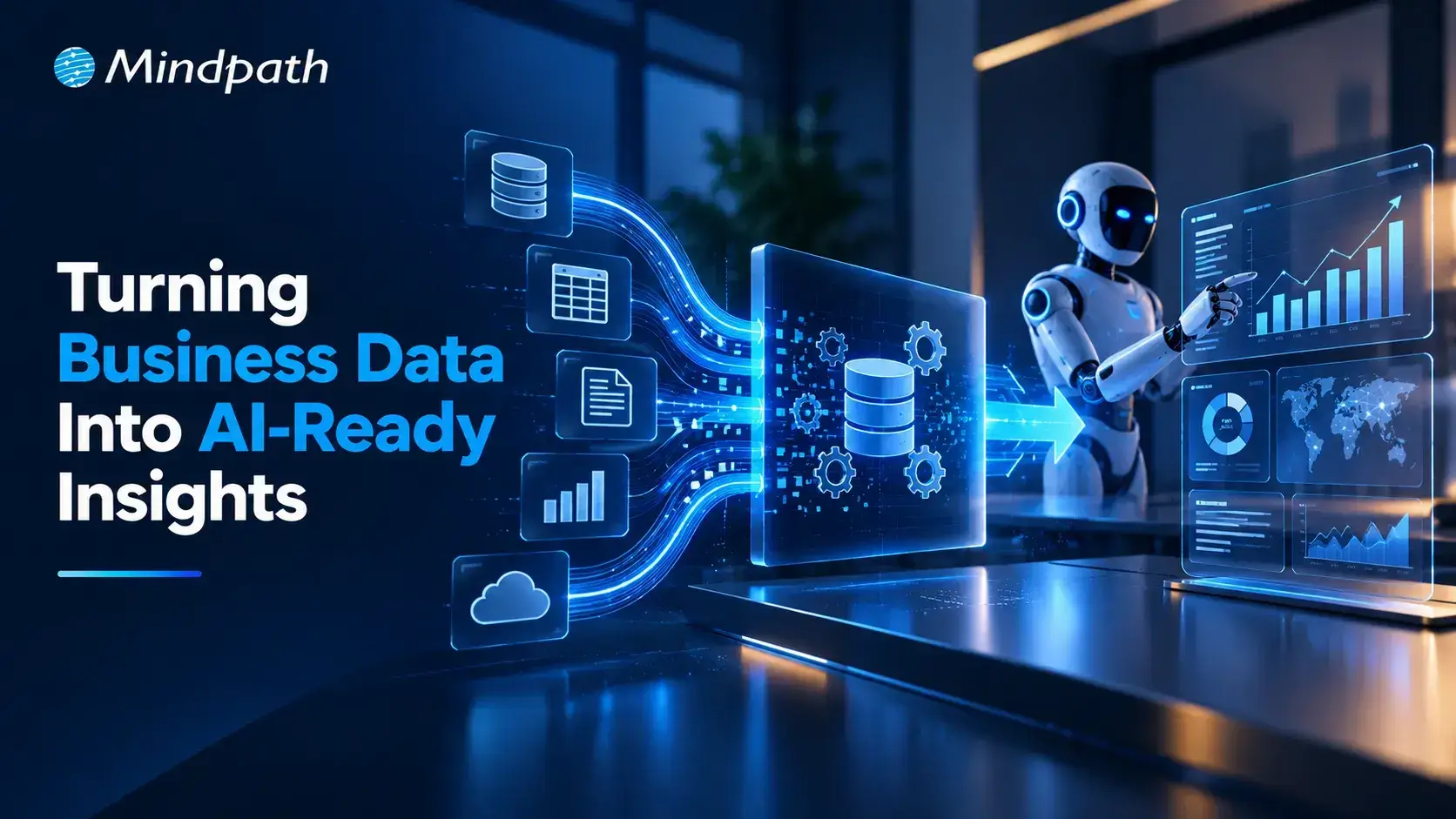
AI agents collect information from different business systems before generating dashboards and strategic insights. Decision makers receive accurate recommendations without manually combining information from multiple sources.

How to Build a Multi-Agent AI System?

Organizations should follow a structured approach when planning how to build a multi agent AI system for business automation.

1. Identify Business Objectives

Begin by defining the workflows that require automation and measurable business improvements. Clear objectives help determine the required agent capabilities.

2. Design Agent Responsibilities

Assign specific responsibilities to every agent instead of expecting one model to perform every task. Specialized roles improve efficiency and simplify future maintenance.

3. Select the Right Technology Stack

Choose appropriate AI models, databases, APIs, cloud infrastructure, and development frameworks before implementation begins. Technology decisions directly influence scalability and long-term performance.

4. Develop Communication Workflows

Create standardized communication methods that allow agents to exchange information accurately and efficiently. Well-defined workflows improve collaboration across the complete system.

5. Test and Optimize

Validate system performance using real business scenarios before deploying it into production environments. Continuous testing improves reliability and supports successful multi-agent AI implementation.

Challenges of Multi-Agent AI Systems

Businesses should understand these common challenges before implementing multi-agent AI systems across critical operations.

1. Communication Complexity: Poor coordination between agents can reduce efficiency and create inconsistent outcomes.

2. Data Security: Protecting sensitive business data remains essential when multiple agents access shared information.

3. Integration Challenges: Connecting AI agents with existing legacy systems may require careful planning and development.

4. Performance Monitoring: Continuous monitoring helps maintain accuracy, reliability, and overall system performance.

5. Higher Implementation Costs: Initial development and deployment can require significant investment in technology and expertise.

6. Scalability Management: Managing a growing network of AI agents becomes more complex as business operations expand.

Ready to Build Smarter AI Systems for Your Business?

Businesses are rapidly moving toward intelligent automation that manages complete workflows instead of isolated tasks. Multi-Agent AI Systems provide the flexibility, scalability, and intelligence needed to improve operational efficiency, accelerate decision making, and support long-term digital transformation across industries.

At Mindpath, we help organizations design, develop, and deploy custom AI Development Services that solve real business challenges and support long-term growth. Our team builds secure, scalable, and future-ready AI agent solutions that integrate seamlessly with your existing systems while delivering measurable business value.
Frequently Asked Questions

Multi-Agent AI Systems improve business operations by enabling specialized AI agents to work together on different tasks simultaneously. This approach increases efficiency, speeds up decision making, reduces manual effort, and helps organizations automate complex workflows with greater accuracy.
Yes. They can integrate with existing business applications, databases, and enterprise platforms. Proper planning and system design help ensure smooth integration while minimizing disruptions to daily business operations.
Industries such as healthcare, finance, manufacturing, retail, logistics, and customer service benefit significantly. These systems improve workflow automation, enhance decision making, and streamline operations across multiple business functions.
Success depends on defining clear business goals, assigning specialized agent roles, selecting the right technology, and continuously monitoring system performance. Regular optimization also helps improve long-term efficiency and business outcomes.
Yes. Small and medium-sized businesses can adopt these systems to automate repetitive tasks, improve productivity, and scale operations gradually without making major changes to their existing business processes.

Support Is One Click Away

Featured Posts

Related Post

Hiring NodeJS Developers
When hiring a NodeJS developer it’s essential to ensure they possess key technical skills that are fundamental to the role. Here are the core skills to look for:

1. Proficiency in JavaScript

A strong grasp of JavaScript fundamentals is crucial. This includes understanding core concepts like syntax, functions, and event handling, along with modern JavaScript features such as ES6+ (e.g., arrow functions, promises) that improve code readability and efficiency.

2. Asynchronous Programming Knowledge

NodeJS excels in handling multiple tasks concurrently, so developers need to be skilled in asynchronous programming. They should be comfortable using techniques like callbacks, promises, and async/await to perform non-blocking tasks, improving app performance.

3. Understanding of RESTful APIs

NodeJS excels in handling multiple tasks concurrently, so developers need to be skilled in asynchronous programming. They should be comfortable using techniques like callbacks, promises, and async/await to perform non-blocking tasks, improving app performance.

4. Database Handling Expertise

NodeJS developers must be familiar with various database technologies such as MongoDB, PostgreSQL, and MySQL. They should be capable of designing efficient data structures and querying the database effectively to meet the project’s data requirements.

5. Experience with Node.js Frameworks

Experience with NodeJS frameworks, like Express.js, NestJS, or Koa, is valuable. These frameworks streamline development by offering built-in solutions for routing, middleware, and handling HTTP requests, making it easier to build scalable applications.

6. Knowledge of NPM (Node Package Manager)

NPM is essential for managing third-party packages in NodeJS projects. A proficient developer should be familiar with using NPM to install and manage dependencies, ensuring the project remains organized and up-to-date with necessary tools.

7. Effective Error Handling

Proper error handling is essential for maintaining app stability. Developers should know how to catch and manage errors effectively, using techniques like try/catch blocks and logging, ensuring that the application remains reliable and easy to troubleshoot.
At Mindpath we offer a team of expert Node.js developers ready to take on your most challenging projects. With years of experience in building fast, scalable, and efficient applications, our developers specialize in leveraging Node.js to deliver top-tier web solutions. Whether it’s creating real-time applications, managing APIs, or integrating with various databases, we ensure your project is completed on time and within budget. Looking for skilled Node.js developers who can bring your ideas to life? Mindpath offers top-tier Node.js development services, ensuring high-performance, scalable, and reliable applications. Ready out now  to discuss your project needs and see how we can help you succeed!
How much does hiring a ReactJS developer cost? Learn about factors affecting rates, and how to find the best talent within your budget.
Hire nodeJS developers in London

In the current digital landscape the demand for swift, efficient applications that can scale is relentless. This pressure is felt by businesses of all sizes, from fledgling startups to established enterprises refreshing legacy systems. Among the many backend technologies available, Node.js is one of the most popular and powerful backend technologies that people use these days.

If you want to hire NodeJS developers in London, you’re already going after one of the most competitive and talent-rich tech markets in the world. But to hire the right developer, you need to know a lot about their skills, how much they cost, how hiring works, and how the market works.

This complete guide tells you everything you need to know about hiring NodeJS developers in London, including why Node.js is so popular, what skills to look for, how to hire them, and how much it costs in the UK.

Planning to build something powerful but not sure where to start? Mindpath is a NodeJS Development Company in London that helps you launch faster and scale smarter.

Why Hire NodeJS Developers?

Many people believe that London is one of the best cities in the world for technology. Node.js and similar modern backend technologies are proving invaluable for a wide range of enterprises. From startups to established financial institutions and multinational corporations, these tools are becoming increasingly essential.

1. Access to Top Talent

London draws in some of the most skilled developers around, pulling in talent from all over the UK and further afield. The city boasts a wealth of Node.js developers, many of whom have a track record of building intricate systems. These include fintech platforms, SaaS products, and applications designed for large enterprises.

2. Strong Tech Ecosystem

The UK tech industry is worth billions of dollars to the economy and is still growing. London has a strong ecosystem that helps new ideas grow. This makes it easier to find developers who are familiar with the latest tools.

3. High Demand for Node.js

Many people use Node.js to make chat apps, streaming services, APIs, and other apps that can grow and work in real time. People are using it more and more because it works well and is easy to change.

4. Business Advantage

When you hire Node.js developers in London, you can be sure that the work will be done well, that the team will get along, and that you’ll be able to talk to experts who know the best ways to do things and what the world expects.

Key Skills to Look for When Hiring NodeJS Developers

You need to make sure that the Node.js developer you hire in London has the right skills for the job.

1. Technical Skills

A professional Node.js developer should have these things:

  • Strong expertise in JavaScript (ES6 and beyond)
  • Deep understanding of asynchronous programming and event loops
  • Experience with frameworks like Express.js or NestJS
  • Proficiency in API development (REST and GraphQL)
  • Knowledge of databases (MongoDB, MySQL, PostgreSQL)
  • Familiarity with version control systems like Git
  • Understanding of microservices architecture
  • Experience with cloud platforms such as AWS, Azure, or Google Cloud

Developers should also know how to make systems that can grow, fix security holes, and speed things up.

2. Soft Skills

Technical knowledge alone is not enough. The best Node.js developers also possess:

  • Strong problem-solving skills
  • Effective communication
  • Ability to work in teams
  • Time management and adaptability

In London’s fast-paced and collaborative tech scene, these soft skills are very important.

Types of NodeJS Developers You Can Hire

Choosing the right hiring model is a critical decision that directly impacts your project’s success, scalability, and overall cost. Each type of Node.js developer offers unique benefits depending on your business needs, project complexity, and budget.

1. Dedicated NodeJS Developers in London

Dedicated developers work exclusively on your project and function as an extension of your internal team.

2. Remote NodeJS Developers (UK or Global)

Remote developers work from different locations and collaborate using online tools and communication platforms.

3. Freelance NodeJS Developers

Freelancers are independent professionals hired on an hourly or project basis.

4. In-House NodeJS Developers

In-house developers are full-time employees working within your organization.

There is no one-size-fits-all approach when you hire NodeJS developers in London. The right choice depends on your project complexity, budget, and long-term strategy. By aligning your hiring model with your business goals, you can maximize efficiency, reduce costs, and build a high-performing development team that drives real growth. 

Step-by-Step Process to Hire NodeJS Developers

Hiring the right Node.js developers in London requires a structured and strategic approach. There is a lot of competition and a high demand for skilled workers. A clear hiring process will help you find developers who can meet your technical needs, business goals, and long-term vision.

Step 1: Define Your Project Requirements

Before you start your project, make sure you know what you want to do, how big it will be, and what you hope to get out of it. Choose the type of app you want to make, like a SaaS product, an API, a platform that works in real time, or a business solution. Make a list of the technologies you need, the level of experience you need (junior, mid-level, or senior), the deadline, and the amount of money you have. It’s easier to hire the right people from the start if you have clear job requirements.

Step 2: Choose the Right Hiring Model

Picking the right way to hire is very important for the project’s success. You can hire dedicated Node.js developers for long-term projects, freelancers for short-term tasks, remote developers to save money, or build an in-house team to have full control, depending on what you need. Make sure that the choice you make is the best one for your project in terms of cost, complexity, and ability to grow.

Step 3: Create a High-Quality Job Description

Write a clear and detailed job description that lists the technical skills needed, such as knowing how to make APIs, how to manage databases, and how to use JavaScript and Node.js frameworks like Express.js and NestJS. Include tasks, roles, deliverables, and expectations. A good job description helps you find good candidates by getting rid of people who don’t fit the job.

Step 4: Source Candidates Strategically

Leverage multiple channels to find top Node.js talent in London. Utilize platforms like LinkedIn and Indeed, explore developer communities, seek referrals, and partner with specialized development agencies. A multi-channel sourcing strategy increases your chances of finding experienced developers in a competitive market.

Step 5: Conduct In-Depth Technical Evaluation

Assess candidates through structured technical interviews, coding tests, and real-world assignments. Evaluate their understanding of asynchronous programming, backend architecture, API development, database integration, and performance optimization. Practical assessments provide deeper insight into their problem-solving skills and real-world capabilities.

Step 6: Evaluate Soft Skills and Cultural Fit

Beyond technical expertise, assess communication skills, teamwork, adaptability, and time management. In a collaborative environment like London’s tech ecosystem, developers who can communicate effectively and align with your company culture contribute significantly to long-term success.

Step 7: Finalize Hiring and Ensure Smooth Onboarding

Once you’ve found the right person, finish the hiring process by making sure they have the right training, contracts, and paperwork. Make sure everyone knows what to do, what tools to use, and where to find the information they need. A well-planned onboarding process helps new hires get to know each other, do their jobs better, and get your project off to a good start.

Cost of Hiring NodeJS Developers in London

When hiring developers, one of the most important things to think about is cost.

1. Hourly Rates

  • Junior developers: £30 – £70/hour
  • Mid-level developers: £50 – £100/hour
  • Senior developers: £70 – £150/hour

2. Annual Salaries

  • Entry-level: £40,000 – £50,000/year
  • Mid-level: £50,000 – £65,000/year
  • Senior-level: £65,000 – £90,000+/year

These estimates are based on data from platforms such as DevITJobs, ITJobsWatch, and Indeed, which analyze thousands of job listings and salary reports across the UK tech market.

Challenges in Hiring NodeJS Developers in London

Hiring Node.js developers in London can be challenging due to a competitive market, higher costs, and limited availability of experienced talent. Understanding these issues can help businesses plan better and make smarter hiring decisions.

1. High Competition

It’s hard to find top talent quickly in London’s tech market because so many people are looking for jobs.

2. Higher Costs

It costs less to hire developers who work from home than it does to hire developers who work in London.

3. Talent Shortage

While the demand for developers is high, locating those with extensive experience can be a challenge.

Looking to Hire the Right Node.js Developers for Long-Term Success?

If you want to make apps that can grow and work well, you should hire NodeJS developers in London. London is a great place to work because it has a strong tech ecosystem, high-quality development standards, and access to top-tier talent, even though it might cost more than other places.

Businesses can make smart choices and put together successful development teams if they know how the hiring process works, what skills are needed, and how much it will cost.

FAQs

1. How much does it cost to hire NodeJS developers in London?

The cost usually ranges from £30 to £150 per hour, depending on how experienced the person is and how hard the project is.

2. What skills do you need to be a NodeJS programmer?

They should know a lot about JavaScript, APIs, databases, asynchronous programming, and backend systems that can grow.

3. Do we still need NodeJS?

Yes, Node.js is still one of the most popular backend technologies for making apps that can grow and work in real time.

4. Should you hire remote NodeJS developers?

Yes, hiring people who work from home gives you more options, saves you money, and helps you find better workers.

5. Why should you hire NodeJS developers in London?

There are a lot of tech companies in London, and the people who work there are very good at what they do.

ai ethics guide

AI ethics is the multidisciplinary field that governs the responsible design, deployment, and regulation of artificial intelligence systems in alignment with human values. It plays a key role in making sure that AI systems create measurable value for society while protecting human rights and preventing harm. It involves a broad range of considerations such as fairness, transparency, privacy, security, accountability, and the prevention of bias and discriminatory outcomes in automated decision-making.

While talking about the topic relating to artificial intelligence, one cannot ignore the importance of AI ethics. As AI is growing at an exponential rate, it is essential to understand the role of AI ethics in the prevailing AI realm. As AI is impacting the lives of people in diverse ways today, it is the right time to broaden the insight into AI ethics. The AI Ethics guide will help you explore AI Ethics at an in-depth level and understand why it matters so much today. 

Ready to adopt AI in a way that it operates ethically and protects your business from risks as you scale? Mindpath offers trusted AI development services that help you build transparent, responsible, and future-ready AI solutions.

Key Areas of AI Ethics

The definitions of AI may vary considerably. However, AI ethics combines a number of elements, including security, safety, and human concerns. It also involves the responsible use of AI by taking into consideration the environmental concerns. The chief areas of the AI ethics framework include:

1. Avoiding AI Bias 

AI systems learn from data. The systems with poor design are likely to demonstrate biased behavior. You must remember that AI models with poor training may showcase bias against minorities. This is when AI ethics principles come into the picture. AI ethics principles relating to fairness and justice can make sure that the possibility of bias can be curbed effectively. 

2. Artificial Intelligence and Privacy 

Artificial intelligence relies on information in order to learn. A considerable amount of this information comes from users. Thus, it automatically gives rise to privacy concerns for users. This is because not all users are well-aware of the information that has been gathered about them and how it is being used. An AI ethics framework can make sure that there is no compromise when it comes to the privacy of users. It even ensures that their information is used in a responsible manner.

3. Avoiding AI Mistakes 

It is essential to bear in mind that poorly constructed AI systems are prone to making mistakes. Such mistakes may lead to diverse consequences, such as the loss of revenue or accidents. This is why the AI Ethics guide stresses the importance of adequate and proper testing so that AI will not pose a risk to humans. 

4. Management of AI Environmental Impact 

With each passing day, AI models are getting larger and bigger. These large models consume a high volume of energy for the purpose of training. Thus, AI has become a large consumer of resources in the prevailing times. Ensuring the ethicality of AI is essential so that researchers can design energy-efficient AI systems that can strike a balance between energy efficiency and performance. 

Planning to align innovation with responsible governance? Discover the types of AI to learn how each category impacts compliance and ethical standards.

Understanding AI Ethical Principles

The AI Ethics guide sheds light on the five Ethical principles of AI that you need to bear in mind. You need to familiarize yourself with the AI ethics principles so that you can understand their relevance in the real-world setting.

1. Transparency

One of the fundamental ethical principles relating to AI revolves around transparency. AI systems and tools need to be transparent in nature so that people can understand how they work. The role of transparency is cardinal to understanding how AI systems make decisions. It will help disclose the overall functionality of AI systems to humans. 

2. Fairness

In case you are wondering, what are the 5 ethics of AI? You need to remember that one of the key principles is related to fairness. AI systems need to be fair and just in nature so that the possibility of biased behavior can be eliminated. While creating AI models and systems, developers need to adopt a fair approach so that these systems will not generate discriminatory outcomes. The AI systems need to treat all individuals and groups in an equitable manner. One of the key AI ethics examples involves addressing biased behavior in hiring algorithms.

3. Accountability 

While talking about – What are the 5 ethics of AI? You cannot ignore the importance of accountability. In fact, accountability is a critical component of AI ethics. A chain of accountability should be in place so that appropriate individuals and organizations can be held responsible while using AI systems. There needs to be a clear line of responsibility so that systems can operate in a trustworthy way. When it comes to accountability in the context of AI teams, they need to understand the importance of prevention as a cure. 

4. Reliability

In order to be ethical in nature, AI systems need to function in a reliable manner. It can ensure that the outcomes that have been achieved by the particular system are consistent and reproducible. Reliability is especially important when AI is being used in important areas such as healthcare and finance. It is fundamental to monitor AI systems to ensure that they are reliable and dependable in nature. 

5. Privacy and Security

AI systems need to respect the privacy as well as the security of users. It is essential to have in place proper security measures so that sensitive data can be stored in a secure and safe manner. Some of the measures organizations can adopt include data encryption, identifying system vulnerabilities, and safeguarding against malicious attacks. It is fundamental to adopt responsible data collection practices along with the deployment of robust data governance practices. One of the common AI ethics examples involves protecting user data privacy in the healthcare setting. 

Want to implement artificial intelligence responsibly without risking compliance or trust? Discover an AI roadmap to learn how a structured approach ensures ethical and sustainable adoption.

Technical Requirements for Creating Ethical AI Systems

In order to make sure that AI systems are ethical in nature, it is essential to focus on the technical aspects. Organizations need to fulfill a number of technical requirements so that AI systems can function in an ethical and responsible manner.   

1. Focus on Bias Detection

There is a need to use diverse data sets in order to detect as well as correct bias in AI models. It is a key step that has to be taken in order to ensure that AI systems can operate in a fair manner. 

2. Focus on Explainability

The role of explainability and transparency is high while talking about AI ethics. The developed AI systems should function transparently for users. Methods such as decision trees and feature importance scores can be adopted to boost transparency. 

3. Data Privacy

The safe management of data used by AI systems is a must. Moreover, proper compliance with relevant privacy laws is essential so that the privacy of users will not be compromised at any stage. Practices such as anonymization and data encryption need to be adopted while using AI systems. 

Curious why some organizations struggle with responsible AI rollout? Check out challenegs of AI adoption and discover how the right approach balances innovation with ethical oversight.

Ready to Build Ethical AI That Drives Real Business Value?

In the era of artificial intelligence, the role of AI ethics is extremely important. It helps ensure that this powerful technology is used in a responsible and trustworthy way. As AI continues to evolve rapidly, understanding and applying ethical principles becomes essential for businesses, developers, and organizations. By prioritizing ethical practices, organizations can adopt AI with greater confidence while creating long-term value for society. 

At Mindpath, we provide expert AI development services which help organizations build responsible and future-ready AI solutions with strong ethical foundations. Our experts focus on transparency, data security, and fairness so businesses can innovate confidently while protecting trust and compliance. Partner with Mindpath to turn AI innovation into responsible and sustainable growth.

Frequently Asked Questions