Real-World Node.js Use Cases: Transforming Modern Businesses

Join our Newsletter!

Featured Posts

Support Is One Click Away

Home

Real-World Node.js Use Cases: Transforming Modern Businesses

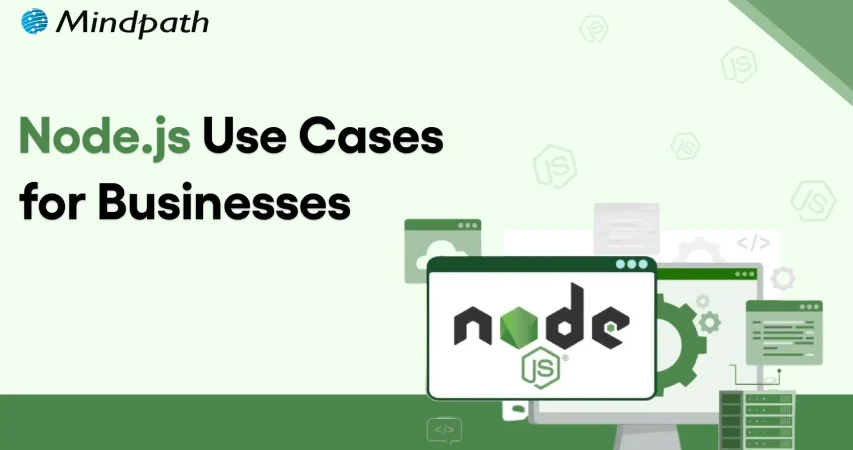
Node.js Use Cases for Businesses

Real-World Node.js Use Cases: Transforming Modern Businesses

The fast-paced digital landscape has pushed businesses to think of all possible ways to build fast and reliable apps that can manage heavy traffic. You should learn about Node.js use cases in web app development and discover examples of how it is transforming modern businesses. Node.js is the driving force behind 6.3 million websites worldwide, indicating that it is a trusted web framework (Source).

The most interesting thing about Node.js is that it is still the top favorite of developers. Why is Node.js standing strong amidst the arrival of new frameworks, languages and runtimes? The biggest reason underlying the popularity of Node.js is that it is still relevant, versatile and more optimized. You should unravel some of the top use cases of Node.js and examples of real-world apps driven by Node.js to understand its true potential.

Want to speed up development while ensuring high performance and security for your Node.js app? At Mindpath, we offer expert Node.js development services who deliver fast, secure, and scalable solutions.

What Makes Node.js Special?

Node.js is the most popular open-source JavaScript runtime that serves as the top pick for creating highly scalable applications. Every example of Node.js used by companies for digital transformation sheds light on its non-blocking, event-driven architecture. It also uses the Google V8 JavaScript engine that helps with compiling JavaScript directly in machine code, thereby facilitating faster execution. Most important of all, Node.js can cater to the full spectrum of development needs for modern applications.

Is Node.js really the top favorite of developers in 2026? According to the Stack Overflow 2025 Developer Survey, 48.7% developers claimed Node.js as their first choice among web frameworks (Source). Developers choose Node.js to create real-time apps with serverless architecture and microservices-based ecosystems. You can find a better idea of why Node.js is the leading backend development framework with insights on its capabilities.

  • Node.js supports the use of JavaScript as the single language throughout the stack to enable easier code sharing and collaboration between teams.
  • The Node Package Manager or npm powers the Node.js ecosystem with more than 2 million packages offering solutions for every need.
  • Node.js can manage simultaneous connections along with faster I/O operations, making it clear why Node.js real-time applications are growing in numbers.
  • The high versatility and low learning curve of Node.js makes it a trusted choice for startups while its performance and scalability attracts big enterprises.
  • The compatibility of Node.js with popular cloud platforms like AWS Lambda helps in achieving cost-effective deployments.

Looking to boost your website’s performance using Node.js? Explore our detailed guide on boosting web performance with Node.js development services to optimize performance and deliver a faster, more efficient user experience.

Unraveling the Key Business Advantages of Node.js

The technical features of Node.js provide a clear impression of how it is one of the top web frameworks. You should also know about the notable benefits that Node.js has to offer for businesses to achieve measurable results.

1. Faster Development Lifecycles

The flexibility to use JavaScript throughout the stack offers the opportunity to accelerate development. Node.js is lightweight and offers a NPM ecosystem, both of which help in developing proof-of-concept quickly. Therefore, Node.js enables faster validation of new ideas before beginning full development. On top of it, faster feature delivery also allows developers to respond quickly to market feedback.

2. Performance that Elevates User Experiences

The outline of Node.js benefits will remain incomplete without discussions about how to delivers high performance. The combination of the V8 engine and non-blocking I/O architecture helps in achieving faster response times aligned with user expectations. Node.js is the top choice to create applications that demand frequent database queries, API calls and file operations. The capability of Node.js to handle multiple concurrent requests makes it the best framework for applications that experience high traffic.

Must Read: Web Scraping with Node.js

3. Scalability to Grow as Your Business Grows

The support for horizontal and vertical scaling is one of the crucial features of Node.js that developers cannot ignore. It supports the addition of more servers or increasing server resources without designing the application architecture from scratch. Therefore, Node.js has become the ideal framework to create applications that can deal with sudden variations in traffic without reducing responsiveness. Node.js also offers WebSocket support and combined with its event-driven architecture, it helps in building applications that require live updates.

4. Reducing Costs throughout the Development Lifecycle

The next reason you can find a Node.js use case for business is the assurance of cost efficiency. With a single language stack, Node.js requires fewer specialists, thereby reducing costs. In addition, Node.js also supports efficient resource usage as applications run with lesser server capacity than apps created with other frameworks. The lower infrastructure requirements play a vital role in reducing hosting costs. Furthermore, faster development ensures competitive positioning and accelerates revenue generation.

Wondering why Node.js has become a preferred choice for high-performance web applications? Explore the full breakdown in our guide on the advantages of Node.js web development and see how it empowers modern businesses.

Which Companies Have Successfully Used Node.js?

The core features and benefits of Node.js showcase why it is still one of the most popular web frameworks in the market. Many readers would want to discover the real-world use cases of Node.js where the framework helped businesses achieve measurable value. You will come across many notable businesses in the world that have successfully used Node.js to address critical challenges.

1. Netflix

Netflix has achieved the status of a global streaming giant with its massive user base spread across different continents. The streaming platform aimed to accelerate its application startup and improve user experiences. It serves as one of the most notable Node.js usage examples as Netflix reduced startup time by 70%. Netflix showed that Node.js is the ideal framework to have a simpler debugging process and improve developer productivity.

2. LinkedIn

LinkedIn is also a frontrunner among renowned companies that have leveraged Node.js to solve real business problems. As a leading professional networking platform with a growing mobile presence, LinkedIn wanted its mobile backend to become more scalable. Node.js helped LinkedIn rebuild the mobile backend, which led to major growth in performance while reducing infrastructure costs. The Node.js mobile backend helped in achieving ten times better performance with significantly fewer servers.

3. NASA

Node.js also served as the ideal tool for streamlining access to mission-critical data for NASA. The traditional approach involved navigating multiple different steps, thereby leading to delays in retrieving mission-critical information. Node.js helped in reducing the number of steps required to access data and enhanced mission efficiency. The way in which NASA uses Node.js proves that the framework is a suitable choice for high-stakes environments.

4. Uber

The search for “what is Node.js with example” also draws the limelight towards the example of Uber. The Uber platform has to deal with millions of ride requests, driver locations and price calculations, all in real-time. With Node.js, Uber could capitalize on core API services that manage the requirements of real-time data processing. The use case of Node.js for Uber reveals that the framework is the best pick for real-time applications with heavy traffic.

5. PayPal

The biggest problem for PayPal revolved around using separate frontend and backend teams, which slowed down development and created communication overhead. PayPal used Node.js to remove all barriers and unified the development stack. The improvement helped in reducing development time by 50% alongside enhancing response times by 35%. The success of PayPal with Node.js proved that the framework can improve developer efficiency and manage large transaction volumes.

The success of companies using Node.js serves as a testament to its effectiveness and showcases how it has transformed modern businesses.

Ready to turn these Node.js use cases into real business results? Discover how to choose the right Node.js development company that truly understands modern business needs.

Final Thoughts

Node.js is no longer another addition to the long list of web development frameworks that you can try for your next hands-on project during training. On the contrary, you will find many big companies using Node.js to resolve critical business challenges. Netflix, Uber, PayPal and even NASA are using Node.js to redefine their digital presence and address pressing backend issues. Node.js is undoubtedly the trusted choice to craft high-performance, scalable and real-time applications.

Mindpath is your trusted destination for Node.js development services, delivered by top experts with years of professional experience. We have excelled in Node.js development with our proprietary workflow that allows us to incorporate the best traits of Node.js in business applications. Our experts create new examples of Node.js applications with special attention to your client requirements and their business goals. Consult with our experts and find the ideal roadmap to create your next big business application now.
FAQs

1. Which applications can you develop with Node.js?

You can make the best use of Node.js in developing real-time applications that require large numbers of I/O operations. The common types of applications that you can develop with Node.js include gaming applications, social media apps, IoT apps and instant messaging apps.

2. What is NPM in Node.js?

NPM or Node Package Manager for the Node.js environment helps with installation, sharing and management of dependencies in applications. The dependencies can be libraries, packages or tools used in JavaScript applications. It leverages a package.json file for tracking project dependencies, scripts, metadata and versions.

3. How does Node.js deliver better results than other backend technologies?

Node.js is preferred over other backend technologies as it guarantees faster performance in tasks that require heavy I/O operations. The NPM creates an extensive ecosystem that helps developers accelerate the development process. Node.js is reliable choice for real-time applications and web developers can easily integrate it into their existing projects.

4. How can you manage large files with Node.js?

The ideal approach to manage large files efficiently with Node.js involves the use of ‘streams’. Developers can use ‘streams’ to process data in small chunks instead of loading the entire file into memory. As a result, developers can achieve better memory efficiency for applications that use large datasets for video files and large data imports.

5. What is the difference between JavaScript and Node.js?

JavaScript serves as a programming language used primarily to develop frontend of web applications. It helps in creating interactive user interfaces. On the other hand, Node.js is a runtime environment that helps developers in using JavaScript on the frontend and backend to develop scalable, real-time applications.

Related Post

Related Post

emerging technologies for small businesses

Did you notice how quickly the business environment is shifting for small enterprises? Business owners are seeking better ways to operate their business, acquire customers, and outpace the competition. That is where the role of emerging technology for small businesses becomes crucial. These technologies are no longer considered unattainable, but they are important considerations in your daily routine. If you’re trying to understand how to keep up with the pace, you’re already on the right path.

This transition isn’t merely an upgrade of tools. It’s a change in how small businesses think, plan, and grow. Through artificial intelligence, automation, and cloud services, these technologies are evolving the way companies can more efficiently make the moves toward enhanced workflows, laterally engage new markets, and leverage a better use of resources. What once seemed complex or expensive is now easier to adopt and use. In this blog, we’ll look at how these emerging technologies are shaping a stronger and smarter future for small businesses.

Adopting the right technologies can be challenging for small businesses. At Mindpath, we help small and growing businesses harness emerging technologies, from AI and automation to custom web and app development, to drive sustainable growth.

Importance of Emerging Technologies for Small Businesses

Emerging technologies in business are becoming very important for small businesses that want to grow and stay competitive. These tools help small teams work faster, reduce costs, and serve customers better. These technologies make everyday tasks easier and help businesses manage more with less effort. For small businesses, this means saving time, avoiding manual errors, and focusing more on customer needs and business goals.

As the market keeps changing, small businesses must keep up with new trends and tools. Using the right technology helps improve service, increase profits, and make smarter decisions. It also helps small businesses compete with larger companies by giving them the same tools to operate smoothly and efficiently. In today’s fast-moving world, using the right technologies is a good idea and important for growing and staying successful.

Want to stay ahead in a rapidly evolving business landscape? Discover how digital transformation for businesses enables small businesses to adopt emerging technologies and unlock new growth opportunities.

Impact of Emerging Technologies on Small Businesses

The future of small businesses is being shaped by constant changes in technology. As digital tools become more advanced, the impact of emerging tech on local businesses is becoming harder to ignore. Here are some key areas where this shift is starting to make a difference.

Impact of emerging technologies on small business

1. Enhanced Customer Engagement

Emerging technologies for small businesses are changing how they talk to their customers. Tools like live chat, easy websites, and chatbots help give quick answers. These tools also help businesses know what their customers like or need. This builds stronger trust and long-term relationships.

2. Seamless Remote Collaboration

Digital transformation for small businesses makes it simple for teams to work from different places. Online tools help people talk, share work, and stay connected. This solves the problem of working across locations. It keeps everyone on the same page and helps the business run better.

3. Efficient Operations

New technology helps small businesses work better every day. Tools like AI and cloud systems reduce the time spent on manual tasks. This means fewer errors and quicker results. Emerging technologies for small businesses help manage operations smoothly and save time.

4. Higher Productivity

How technology is changing small businesses can be seen in faster and more efficient work. New tools help track inventory, manage customers, and understand buying habits. This improves decision-making and cuts down on mistakes. Businesses save time and get better results.

5. Lower Operational Costs

New tech helps small businesses save money and stay efficient. Automation tools reduce extra work and help finish tasks quickly. Online platforms for sales and support are more affordable now. This helps businesses grow while using fewer resources.

6. Stronger Data Security

Small businesses worry about keeping customer data safe. With new tech tools like secure cloud storage, that’s easier to do. These tools help prevent online threats and protect payment details and private information. This keeps the business and its customers safe and confident.

Curious how AI can give your small business a competitive edge? Learn about the Future of AI and how emerging technologies are reshaping growth, efficiency, and innovation for businesses like yours.

Top Emerging Technologies for Small Businesses

Emerging technologies in business are opening new opportunities for small companies to grow, compete, and serve their customers better. Here are some of the top technologies that are helping small businesses work smarter and achieve more:

Top Emerging Technologies for Small Businesses

1. Growing Use of AI

AI for small businesses is becoming easier to use and more helpful. It’s already improving customer service, reducing errors, and saving time in industries like retail and insurance. Businesses are seeing a quick return on their AI investments through features like chatbots and fraud detection. This highlights how AI for customer services and other emerging technologies are making small business operations more affordable and practical.

2. Big Data in Decision Making

Big data is helping small businesses understand their market and make better decisions. Many companies are already seeing increased profits through the use of data tools. This shows that data is not just for large enterprises anymore. Small businesses can now use insights to improve planning and stay ahead.

3. Faster Connectivity with 5G

5G brings faster data, less delay, and better connections for devices. It helps small businesses use more smart tools and supports the growing number of IoT devices. As 5G becomes more available, small businesses can expect smoother communication and faster service. This will push emerging technologies for small businesses into more areas of daily work.

4. Rise in Employee Monitoring

As hybrid work grows, more companies are using employee monitoring software. It helps track productivity and improve communication between remote teams. With higher demand since the pandemic, businesses now rely on these tools to manage their teams better. These systems are becoming a core part of small business technology trends.

Must Read: Top App Ideas 

5. Power of Superapps

Superapps combine many tools into one, helping businesses manage tasks more easily. They solve problems like software not syncing and reduce wasted time. Small businesses can benefit from apps that handle messaging, scheduling, and customer data all in one place. This kind of smart unification improves efficiency and teamwork.

6. Focus on Cybersecurity

Many small businesses still believe they won’t face cyberattacks, but the risk is growing fast. New threats require better protection for data and systems. By leveraging AI in cybersecurity, businesses can detect threats faster, respond more effectively, and strengthen their overall security posture. More businesses are now focusing on backup plans and stronger security tools. Acting early helps avoid major problems later.

7. Automation in Daily Tasks

More businesses are turning to automation to reduce workload and save money. It helps with tasks like pricing, inventory, and customer service. Even with fewer workers, companies can still run smoothly and meet their goals. Automation is becoming a must-have for efficiency and smart growth.

8. Smarter Remote Onboarding

Remote onboarding is now a key step for hiring and welcoming new team members. Businesses are using technology to make new hires feel connected and supported. Software helps introduce the company culture and build the right relationships. This helps companies keep talent and improve their team experience from day one.

Looking to scale your tech capabilities without breaking the budget? Learn about the key benefits of hiring remote developers and how they can help small businesses adopt emerging technologies faster and smarter.

Power Your Business Growth with Smart Tech

The future belongs to small businesses that move with change. By adopting emerging technologies for small businesses, you work smarter, cut waste, and serve customers better. These tools help you compete, make faster decisions, and grow with confidence. What once felt out of reach is now practical, scalable, and ready for you to use as you plan the next step.

Mindpath helps you turn tech goals into real progress. Our team guides your choices, sets up the right tools, and trains your people to use them well. We focus on clear steps, measurable results, and support that grows with you. Let’s map your priorities and launch changes that deliver value fast for lasting growth and stronger customer results in practice.

Discover how emerging technologies like AI, social media, and data analytics are transforming small businesses, helping them grow, innovate, and stay competitive.
AGI vs ASI 

AI is advancing quickly, and the installation of the debate around AGI vs. ASI is picking up steam in tech circles. These phrases might seem similar but have very different meanings for the technology and the future. While we discuss this landscape, it is good to think about how this evolution will affect industries, decision-making, and everyday life. The difference between intelligent systems and possibly superintelligent systems is interesting, as there are many factors and questions that will stimulate conversation among the expert community.

To comprehend the differences between AGI and ASI, it is necessary to examine their features and possible influence. AGI will try and mimic human-like building understanding across tasks, and ASI expands into areas beyond ourselves, with conjectures that we may not be able to comprehend. By tracking the advancement of these systems, we may be able to better prepare ourselves for potential opportunities and challenges. In this blog, we will explore AGI vs. ASI in greater detail and what separates them.

Want to implement this rise of AGI and ASI into your business operations? At Mindpath, our AI Development Services empower you to integrate this next-generation intelligence into real-world applications today.

What is AGI AI?

AGI stands for artificial general intelligence. The goal of AGI artificial intelligence is to develop systems that are able to think and learn like a human being. As it stands, current artificial intelligence only operates within a defined boundary, while AGI will have the ability to undertake new tasks or challenges that have not been specifically programmed. AGI research needs to increase intelligence beyond narrow application and focus on understanding, reasoning, and problem solving over a wide variety of situations.

Regarding AGI vs. ASI, AGI describes the point in time at which a machine has human-like cognitive properties. It can learn on its own, improve its own skills, and perform tasks that were never taught to perform specifically. This level of advanced intelligence is the step researchers see as important toward more advanced systems. AGI also helps understand what the future of intelligence will look like within the technical framework.

Want to know which AI breakthroughs are driving the gap between AGI and ASI? Explore the most recent developments in generative AI trends and their impact on advanced intelligence.

Key Benefits of AGI Artificial Intelligence in Business

Artificial general intelligence is changing the way enterprises deal with problems and prospect the future. Its ability to learn and adjust like a human being is paving the way for the options that change the companies’ concept of getting bigger and ‍‌innovating.

1. Better Decisions

AGI studies large amounts of data to identify patterns and trends that generate wiser decisions. It also offers predictive analytics, which enables businesses to plan in terms of strategy, demonstrating one of the differences between AGI vs. ASI capabilities.

2. Boosted Innovation

AGI also allows for new products, services, and business models that never existed before. It can also spark the creative process for businesses to remain competitive.

3. Enhanced Customer Care

AGI tailors their interaction based on anticipated customers’ behavior and preferences. AGI is also able to offer customer care in real time, which leads to improved retention and satisfaction.

4. Increased Efficiency

AGI is capable of taking over monotonous tasks, granting employees more time for strategic activities. It facilitates workflows and improves productivity overall.

5. Reduced Costs

AGI streamlines processes and lowers required labor, minimizing operational costs. It performs tasks correctly, thus decreasing errors that lead to wasteful expenditures.

Struggling to implement AI effectively despite understanding the differences between AGI and ASI? Discover practical insights on overcoming these challenges of AI adoption.

What is ASI AI?

ASI stands for artificial superintelligence. ASI artificial intelligence signifies a phase in which machines excel human intellect in all areas. ASI doesn’t simply copy human-like thinking, as is the case with AGI, but ASI can process complex abstractions and resolve problems beyond a human level of operations. The ability to reason, learn, and adapt will happen much faster than any human could.

In the conversation of AGI vs. ASI, ASI is unique and purely hypothetical in that people are generally not aware of it yet, but it could very well usher in a mega-change. It proposes an ideal of self-aware systems that understand and interpret behavior in ways that humans cannot. Researchers are working on ASI to prepare for what technology, society, and decision-making look like in the future when intelligence is not limited to humans.

Key Benefits of ASI Artificial Intelligence in Business

ASI AI stands for a new tier of intelligence, one that reveals the outer limits of what machines might be able to accomplish. Its capability is changing how enterprises reflect on technology, strategy, and the future.

1. Advanced Problem-Solving

ASI has the ability to analyze a massive quantity of data at extraordinary levels of speed to solve problems that are impossible for humans. Companies interested in AGI vs. ASI can leverage this ability to develop new opportunities and discover new markets.

2. Hyper-Personalized Service

ASI can analyze customer data in order to gain insights into their individual preferences and behaviors and offer highly personalized experiences. ASI can offer personalized marketing, recommendations, and customer service that predict customer needs before they express them.

Must Read: Generative AI for Business

3. Predictive Insights

ASI is capable of making market predictions, predictions about consumer behavior, and disruptions with a high degree of accuracy. By having this ability, organizations can make better decisions and reduce risk.

4. Operational Efficiency

ASI can oversee complex processes and streamline industries with almost no human supervision. It can improve workflows, minimize inefficiencies, and reduce operating costs significantly.

5. Enhanced Cybersecurity

ASI can identify and mitigate cyber threats in real-time, keeping ahead of possible attacks. It enhances security for critical infrastructures and proprietary business information.

Wondering how AGI and ASI compare to other stages in the AI evolution journey? Discover the various types of Artificial Intelligence and how they shape modern innovation.

ASI vs. AGI: A Comparison Table

The table below highlights the key differences between ASI and AGI, showing how their capabilities and potential impacts vary.

Feature AGI ASI
Intelligence Level Human-level cognitive abilities across tasks. Surpasses human intelligence in all domains.
Learning Ability Learns and adapts like humans across multiple areas. Learns exponentially and self-improves beyond human understanding.
Problem-Solving Can handle complex tasks humans can manage. Solves problems beyond human capacity, including abstract and novel challenges.
Existence Currently under research, possible in the future. Hypothetical, not yet achieved.
Decision-Making Makes informed, human-like decisions. Makes near-perfect predictions and strategic choices using vast data.
Impact Supports humans, automates tasks, and improves productivity. Can transform industries, create technologies, and potentially surpass human control.
Examples Personal assistants, research AI. Hypothetical global optimization or fully autonomous research systems.

Are You Ready to Unlock the Future of AI?

Artificial intelligence is evolving rapidly, and understanding AGI vs ASI helps businesses prepare for future opportunities and challenges. Both systems offer unique capabilities, from human-like decision-making to superintelligent problem-solving. Staying informed allows organizations to leverage these technologies responsibly and strategically, ensuring they remain competitive and innovative as AI continues to reshape industries and daily operations.

At Mindpath, we offer expert AI development services to help businesses implement advanced AGI and ASI solutions. Our team builds scalable, intelligent systems tailored to your goals, from automating workflows to creating predictive and personalized experiences. Partnering with Mindpath ensures your organization can stay ahead in innovation, efficiency, and growth while navigating the evolving AI landscape with confidence.

AI Redefining Job Roles in Tech

Artificial intelligence is rapidly transforming how the tech world operates, bringing a wave of changes that are reshaping the ways in which professionals work and innovate. The influence of AI redefining job roles in tech can be seen across every corner of the tech industry, where automation and human creativity are coming together to drive smarter, faster, and more efficient ways of building the future. This isn’t about replacing talent; it’s about enabling talent to reach new heights of access and productivity.

Organizations are changing rapidly, and traditional job roles are being redefined. Developers have become strategists, data analysts have become decision-makers, and engineers are collaborating more closely with advanced intelligent systems, leveraging AI in decision-making to drive smarter business outcomes. The pace of change will accelerate, and those who can adapt will lead the next generation of digital expansion. Let’s dive in and examine the impact of AI on the future of work and how it is changing the technology landscape like never before.

As AI transforms the tech workforce, businesses have more ways than ever to scale and innovate. Want to know how? Explore our AI development services to elevate productivity and stay competitive.

The Growing Influence of AI in Today’s Tech Industry

Artificial Intelligence is evolving into a transformational force in the contemporary technology sector. It will alter the ways businesses design products, optimize resource allocation for applications, and provide digital experiences. Companies are utilizing AI to not only automate tasks but also to make informed decisions and create new innovation opportunities. With the rise of AI in business strategy, organizations are now integrating intelligent systems to strengthen planning, improve efficiency, and gain a competitive edge. AI’s influence is extending into every dimension of technology.

A report published by McKinsey stated that the adoption of AI in IT functions increased from 27% to 36% in six months. The report also showed that 71% of organizations that use AI employ generative AI for at least one business function. Additionally, 38% of companies that use AI anticipate their overall workforce to remain the same over the next three years, while IT and product development teams are expected to see growth. This demonstrates the benefits of AI not just in operational efficiency but also in creating new skill-based jobs and redefining job roles in the tech sector, helping humans work more intelligently and strategically.

Must Read: Is Your Business Ready for AI?

How is AI Changing Job Roles?

The impact of artificial intelligence on employment is changing how people do their jobs and how organizations staff their teams. It’s creating new types of opportunities, and it is changing the types of skills that matter the most in today’s tech world. Here are the differences AI is making in job roles across the industry.

1. New Opportunities in AI-Driven Careers

As artificial intelligence expands, the emergence of new specialized careers in technology is beginning to take shape. People are now working as AI trainers, data scientists, and ethics officers, among other roles. These new job roles will be open for a workforce to be smarter and more resourceful going forward.

2. Smarter Work with Automation

AI is taking over repetitive work like data entry, research, and customer support. That frees up professionals to spend more time in the day on creativity, innovation, and decision-making. The trend of AI redefining job roles in tech captures the reshaping of work toward strategic and value-added work.

3. Shifting Skills and Smarter Roles

As AI tools are getting integrated into daily operations, workers are now the ones who supervise, analyze, and enhance the results provided by AI. They are acquiring skills in data interpretation, problem-solving, and collaboration. Their changing duties, thus, emphasize the impact of technology on the restructuring of the old job models.

4. Boosting Productivity Across Teams

AI tools increase both accuracy and speed with tasks like analysis of data and performance management of systems. Teams are now able to work more successfully and with higher levels of accuracy and speed. AI redefining job roles in tech is making the workplace more task efficient and performance focused, a sign of AI transforming the future of work.

5. Growing Value of Human Skills

With AI, handling most of the technical and monotonous tasks, the qualities of creativeness and emotional intelligence have become very important. Essentially, traits such as empathy, communication, and leadership have become the main factors in one’s professional development. These proficiencies are what make it possible for people to be leaders of innovation; thus, they are‌ indispensable.

6. A Changing Job Market Landscape

Artificial ‍intelligence is changing the way companies hire employees and how the workforce is managed. With the help of AI, recruiters can find the right candidates in less time and then focus on valuable interaction with the candidates. The AI redefining job roles in tech trend is an indication that the two, people and technology, are evolving hand in hand to build up the future workforce that will be more ‌‍ ‍‌powerful.

Wondering how your business can actually implement these AI capabilities without overwhelming your team? Explore our detailed guide on AI consulting services explains how expert support can simplify adoption and accelerate results.

AI Job Roles in Tech

The increase of AI job opportunities in technology is changing how workers build careers and how innovation will occur. AI continues to expand and is also creating jobs that integrate technology, creativity, and human thinking.

1. Building Smarter Systems

Artificial intelligence (AI) engineers develop smart systems that enable businesses to become more efficient and intelligent in their processes. They build responsive solutions using machine learning and automation that will evolve and get better with time.

2. Turning Data into Decisions

Researchers and analysts work on research and analyze information gathered through AI tools. They provide companies with better decisions by leading them from complex data to business insights. Their work is essential across sectors, from finance to AI for customer services, where data-driven insights improve customer interactions.

3. Training the Machines

AI teachers and trainers help create guidelines for learning for AI systems. Their work guarantees that every algorithm works perfectly and aids actual applications.

4. Designing Better Algorithms

Algorithm engineers develop and improve algorithms that power features such as recommendations and predictions. They partner with software engineers and data scientists to implement efficient and precise models.

5. Leading AI Product Development

AI product managers handle the end-to-end development of AI solutions. They ensure those solutions support user needs, can scale across an organization’s technology stack, and support business objectives, demonstrating how AI is redefining job roles in tech and advancing growth across fields. Their contributions help drive advancements in multiple industries, including AI in e-commerce, where product managers shape smarter and more personalized shopping experiences.

Want to see how AI is reshaping not just tech jobs but also the way websites are built? Our blog on AI in Web Development breaks down how intelligent automation is transforming the entire development workflow.

Ready to Embrace the Future of AI in Tech?

Artificial intelligence has a vital role in changing the way we work, learn, and develop in the technology space. The trend of AI redefining job roles in technology shows how human creativity and machine intelligence can work together to build a smarter future. The individuals who adapt and retrain today will confidently participate in tomorrow’s digital transformation.

At Mindpath, we develop cutting-edge AI development solutions that help businesses grow faster and work smarter. Our skilled team focuses on developing intelligent systems that automate processes, apply data analysis, and improve decision-making. We help our clients leverage AI technology, allowing them to remain competitive in an ever-evolving technology-based world while achieving digital success that will last for a long time.