Benefits of Modernizing Legacy Systems in Revolutionizing Operations

Join our Newsletter!

Featured Posts

Support Is One Click Away

Home

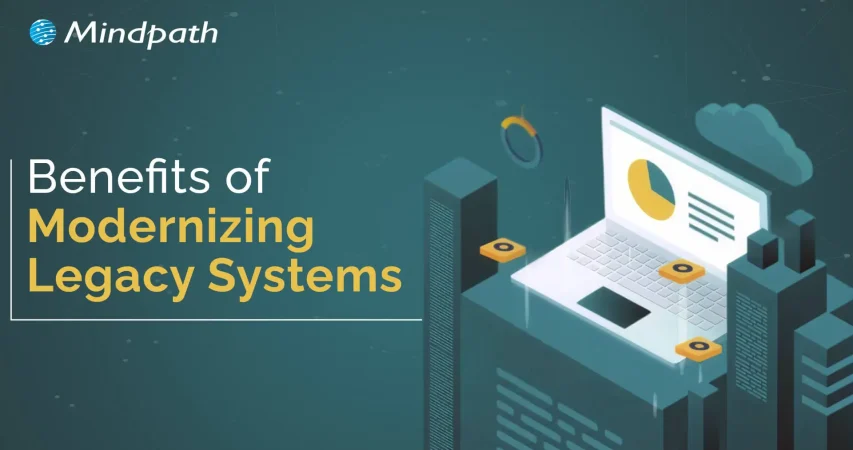
Benefits of Modernizing Legacy Systems in Revolutionizing Operations

Modernizing legacy systems

Benefits of Modernizing Legacy Systems in Revolutionizing Operations

In the prevailing digital economy, business entities cannot rely on outdated or obsolete systems. In fact, such systems can act as major handicaps in their path and impede their ability to achieve their business goals and objectives. This is why it is crucial for contemporary businesses to prioritize legacy system modernization.

In the prevailing business world, the practice relating to modernizing legacy systems has been gaining high momentum. About 72% business executives state that their legacy systems hold them back, leading to lower business productivity. Let us explore how legacy system modernization can create value for modern businesses. 

Are you looking to update your outdated systems but unsure how to start? Contact us, and we will help you modernize with the right strategy according to your business needs.

What are Legacy Systems?

Before looking at the benefits of modernizing legacy systems to revolutionize their operations, it is essential to get familiar with legacy systems. So it is crucial to know the answer to the question: What are legacy systems? In the computing realm, legacy systems refer to old technologies, methods, or computer systems. So they are basically outdated systems that are still in use regardless of their obsolete nature. 

In the fast-paced digital world, the use of such systems gives rise to a host of challenges and bottlenecks for business entities, such as the hindrance of innovation, a rise in costs, and restricted growth of the business. In order to address these challenges, it is a must for businesses to focus on the modernization of legacy systems.

Need to Modernize Legacy Systems

Modernizing legacy systems matters for business organizations since it serves as a catalyst and minimizes inefficiencies. The prioritization of legacy modernization is critical for modern organizations. It can serve as the ultimate pathway that can facilitate the scaling and integration of new digital technologies. 

In the competitive business landscape, embracing modernization of legacy systems is of high strategic importance. This practice can lead to cost savings for firms. Moreover, it can also improve the operational efficiency of entities and give them an edge over their competitors and rivals. Thus, by modernizing obsolete and old systems, business entities have the opportunity to grow and flourish in the dynamic and competitive business landscape. 

Top Benefits of Modernizing Legacy Systems

Organizations need to familiarize themselves with the top benefits that can arise on their path by modernizing their legacy systems. This strategic move has the potential to equip businesses across diverse industries to sustainably carry out their operations and excel in their respective domains. If you are wondering, what are the benefits of modernization? The answer is presented below. Some of the key benefits of modernization include: 

1. Better Productivity

All businesses intend to operate in a productive and efficient manner. The use of legacy systems may act as a major hurdle in their path, as it may restrict their productivity and efficiency. This is where modernization comes into the picture. Through modernization of legacy systems, businesses have the opportunity to improve their efficiency and effectiveness and streamline their operations. Furthermore, this decision can also enable businesses to optimally use their valuable time and gain a competitive edge in the market.

2. Reduced Cost in the Long-Term

Modernization of legacy systems can help firms reduce their costs in the long run. Regular updating of legacy systems may require a lot of money, and thus, the financial stability of businesses may be adversely affected. A smarter decision that your business can make involves transitioning to new systems through modernization. It can act as a pathway that can help your business save costs. You must remember that modern systems, especially the ones that run on the cloud, are much cheaper for businesses to run. 

3. Minimization of IT Complexity

One of the main challenges that arises from using legacy systems revolves around complex IT aspects. As technology or systems become obsolete, it becomes a daunting task to patch loopholes and errors. Every single update may require extra time and additional effort. If businesses replace legacy systems through modernization, they can definitely eliminate such complexity. Moreover, IT teams will be empowered to manage their operations by leveraging new and efficient systems, methods, or technologies.  

4. Improved User Experience

Legacy systems not only create challenges for business teams, but they also have a negative impact on the experience of users. Thus, in order to improve the overall experience of users, businesses must focus on modernizing legacy systems. It can certainly have a positive impact on user experience and improve their loyalty towards a business. On the other hand, poor quality of experience can drive users away from businesses. 

5. Better Quality of Security

In the digital world.  Security is undoubtedly one of the main priorities of a majority of businesses. The use of legacy systems can increase the vulnerability of businesses in the volatile cyberspace. Malicious actors such as online hackers or cybercriminals may be able to breach the cybersecurity layer in legacy systems due to their obsolete nature. 

Thus, it is essential for businesses to focus on modernizing their legacy systems. By doing so, there is an opportunity for businesses to strengthen their cybersecurity resilience as well as their cybersecurity posture. The use of modern and updated systems has the potential to minimize the cybersecurity risks that arise in the path of businesses.  

6. Better Integration with Modern Tools and Technology

The modernization of legacy systems enables businesses to adopt new digital technologies in a seamless manner. Legacy systems may give rise to several challenges and obstructions. However, that is not the case when it comes to modern systems. Therefore, there is a possibility to integrate a diverse range of tools such as customer relationship management software, enterprise resource planning systems, payment systems, and many more by modernising the legacy system of your business.  

7. Better Flexibility

The modernization of legacy systems promotes flexibility as well as scalability for businesses. As your business expands in the future, you can easily expand modern systems without any trouble. On the other hand, the businesses that rely on legacy systems may face numerous obstacles in their path when their business grows. Due to the obsolete or outdated nature of their systems, they may not be able to handle a larger dataset or a larger number of users. As a result, their efficiency may be affected, and they may not be able to flexibly carry out their business operations.

8. Improved Workflow

Businesses operating in diverse industries and sectors can improve their workflows by modernizing their legacy systems. This practice can allow them to leverage the latest digital technologies and smooth their processes and operations. Moreover, they can be in a position to reduce their costs associated with downtime. Thus, you can surely see the positive change in the processes, practices, and operations of your business. 

Final Words

It is a fundamental necessity for contemporary business entities to prioritize the modernization of their legacy systems. This decision can certainly empower your business to thrive in the competitive business arena. Some of the top benefits that may arise in the path of your business include better productivity, lower cost, minimization of IT complexity, improved user experience, and a higher level of security. The other benefits that may also arise for your business include improved integration with modern tools and technology, better flexibility, and improved workflow. 

We at Mindpath intend to replace your legacy systems with updated ones through modernization. The experts will ensure that your business can derive optimum value from this transition, and it can reach new heights. 

Related Post

Discover the ultimate guide to hiring Node.js developers in London. Learn about the skills, benefits, and cost factors involved in finding the right talent for your project.
Explore top projects built with ReactJS, from personal websites to SaaS apps. Learn why ReactJS is ideal for scalable, high-performance web solutions.

Related Post

The cost of hiring a ReactJS developer in New Jersey varies based on several factors, including experience level, project complexity, and location. Developers charge different rates depending on their expertise, with junior developers costing less than senior professionals. Additionally, project costs can range from a few thousand dollars for simple applications to tens of thousands for complex enterprise solutions. Understanding these costs can help you budget effectively and find the right developer for your needs. Below is a breakdown of ReactJS developer costs in New Jersey.

1. Hourly Rates by Experience Level

Hourly rates for ReactJS developers depend on their expertise. Junior developers charge between $12 and $40 per hour, making them ideal for basic projects. Mid-level developers charge $40 to $80 per hour and are suitable for more complex applications and API integrations. Senior developers with extensive experience in large-scale projects can cost $80 to $150+ per hour. The higher the experience level, the higher the rate, but also the greater the efficiency and quality of work.

2. Cost for Simple ReactJS Projects

For small-scale applications, prototypes, or basic websites, hiring a ReactJS developer in New Jersey can cost between $5,000 and $15,000. These projects often involve standard UI development, minimal backend integration, and basic features. If you need a simple yet effective React-based solution, hiring a junior or mid-level developer may be the most cost-effective approach. However, ensuring quality requires choosing a developer with at least some hands-on experience.

3. Cost for Complex ReactJS Applications

If your project requires advanced functionalities, API integrations, database management, and optimized performance, expect to pay anywhere from $20,000 to $60,000 or more. These applications often need mid-level to senior developers who can write scalable, maintainable code and handle challenging development tasks. Costs also increase if you require additional services like UX/UI design, third-party tool integrations, or real-time features.

4. Factors That Affect the Cost

The total cost of hiring a ReactJS developer isn’t just about hourly rates; it also depends on factors like project timeline, required skill set, and location. Developers in major cities may charge higher rates, and if your project demands full-stack development, additional frameworks, or post-launch support, the cost will rise. To optimize your budget, clearly define project needs and hire the right developer with the necessary expertise.

Looking for skilled ReactJS developers in New Jersey? Mindpath offers expert ReactJS development services tailored to your project needs. Whether you need a simple web app or a complex enterprise solution, our experienced developers deliver high-quality, scalable, and cost-effective solutions. Hire top ReactJS talent today and bring your vision to life with Mindpath’s expertise.
Contact us now to get started!

Discover the ultimate guide to hiring Node.js developers in London. Learn about the skills, benefits, and cost factors involved in finding the right talent for your project.
Retail IT Outsourcing

Have you ever wondered how top retailers keep up with rapidly changing technology while still focusing on growing their business? The answer lies in Retail IT Outsourcing. But what makes it so effective, and why are so many retailers adopting this approach? In this blog, we will explore how outsourcing IT can help retailers stay ahead in today’s fast-paced digital landscape. So, let’s dig in! 

What is Retail IT Outsourcing?

Retail IT outsourcing is when a retailer contracts third-party organizations to manage its technological needs. These suppliers are in charge of website maintenance, payment processing, and data security. Retailers can save money, streamline processes, and focus on their core business activities, such as sales and customer service, by outsourcing these functions. It enables companies to benefit from experienced IT services without having to manage the intricacies in-house, hence increasing productivity and performance. 

Why is Retail IT Outsourcing Important?

Retail IT outsourcing is crucial because it enables retailers to enhance customer service, reduce expenses, and increase overall efficiency. Customers benefit from speedier, competent help when technical duties are outsourced, which results in a better shopping experience and more satisfaction. It also allows internal IT teams to focus on crucial initiatives, such as enhancing online platforms or building new technology, which contributes to innovation and corporate success. Outsourcing is cost-effective, allowing merchants to depend on experienced IT services without experiencing the significant costs associated with keeping big internal staff. This method provides merchants with access to cutting-edge technology, making it an effective way to remain competitive in today’s fast-paced industry. 

Benefits of Retail IT Outsourcing

1. Cost Reduction

Retail IT outsourcing provides significant cost reductions for retailers. Businesses that outsource IT activities can save money on recruiting, training, and providing benefits for in-house employees. This is especially useful when outsourcing to locations with lower labor costs, allowing merchants to obtain competent services without breaking the bank. 

Furthermore, outsourcing improves operational efficiency. Retailers can reduce operating expenses by reallocating staff to focus on key business areas and outsourcing specialized IT services for specific needs. This means they can simplify their processes and use their resources more efficiently, resulting in increased production and profitability. 

2. Risk Management

Retail IT outsourcing greatly improves risk management for firms. Retailers benefit from cooperating with seasoned outsourcing businesses, which have access to a wealth of knowledge and established methods for properly managing IT operations. These companies have established robust security policies and compliance measures to secure sensitive information and limit the likelihood of data breaches or other dangers. 

Outsourcing also offers organizations crucial disaster recovery solutions. This implies that if anything unexpected occurs, such as a system crash or a natural disaster, merchants can swiftly recover their data and restore their systems to operation. Furthermore, these outsourcing partners frequently provide proactive monitoring, which means they maintain a close check on systems and detect possible problems before they become serious difficulties. 

3. Access to Expertise

Retail IT outsourcing provides retailers with vital access to specialized skills and knowledge that they might lack within the organization. Retailers can make use of advanced technologies such as cloud computing, data analytics, and cybersecurity by collaborating with third-party suppliers. This means companies can keep up with the newest technologies and trends without having to do substantial internal training or hire new employees. 

Furthermore, outsourcing provides scalability, allowing merchants to swiftly modify their IT resources based on their requirements. For example, during peak shopping seasons or when launching new projects, businesses can simply increase support and services without entering into long-term commitments. This adaptability guarantees that merchants can successfully accommodate changing client expectations while maintaining seamless operations.  

4. Focus on Core Competencies

Retail IT outsourcing enables merchants to concentrate on what they do best. By outsourcing non-core IT responsibilities such as technical assistance and software development, merchants can focus on their primary objectives, such as improving customer service and producing new items. This strategic focus allows them to devote more time and resources to initiatives that promote corporate growth and overall success. When merchants are not constrained by typical IT challenges, they are able to innovate and respond more swiftly to customer requirements. This results in better products, more enjoyable shopping experiences, and, ultimately, greater consumer happiness. Retailers can streamline their operations and ensure that the activities that are most important to their business are prioritised by outsourcing IT tasks. 

5. Enhanced Agility and Innovation

Retail IT outsourcing increases a retailer’s agility and capacity to innovate. By collaborating with external service providers, merchants can respond rapidly to market changes and technological improvements. This adaptability is essential in the fast-paced retail sector, where staying ahead of trends and customer preferences may make a big difference to success. 

Furthermore, outsourcing allows merchants to have access to cutting-edge technology and solutions through their partnerships. This not only maintains businesses competitive, but also helps them to put new ideas and processes into action more efficiently. Retailers can stay relevant in a continuously changing industry by exploiting outsourcing businesses’ experience and resources.  

Retail IT Outsourcing Services at Mindpath

Mindpath offers a variety of Retail IT Outsourcing Services to help your business. Our team of professionals assists you in managing essential IT duties, allowing you to focus on running your retail operations efficiently. We provide dependable technical assistance to promptly fix any difficulties, ensuring that your systems run properly, and your customers enjoy a pleasant shopping experience. Our professional developers produce unique software solutions suited to your exact requirements, allowing you to increase productivity and remain competitive.   In addition, we help you manage and analyze your data, giving you vital insights for making informed choices. Security is a primary priority; therefore, we take significant precautions to secure your company and client data from damage. We also provide cloud solutions that allow for safe data storage and access from anywhere, offering you greater flexibility and scalability in your operations. With Mindpath’s Retail IT Outsourcing Services, you can be confident that your IT needs will be handled properly, enabling you to focus on expanding your business and enhancing customer service. 

End Thoughts!

Retail IT outsourcing is an excellent solution for today’s merchants that wish to flourish in a rapidly changing industry. Working with outside specialists allows retailers to save money, handle risks more effectively, and focus on their strengths. This allows them to manage their operations more smoothly and be prepared to respond to customer demands. With Mindpath’s Retail IT Outsourcing Services, you can be confident that your IT needs will be met, enabling you to focus on developing your business and creating excellent client experiences. Embrace outsourcing to stay competitive in the retail industry! 

Ready to elevate your retail operations?

Partner with Mindpath for expert IT outsourcing services that drive innovation and enhance customer satisfaction.

Discover how Retail IT Outsourcing helps retailers save costs, enhance customer service, and stay competitive in today’s fast-paced market.
Machine Learning Applications

Have you ever wondered how businesses are staying ahead in the ever-evolving world of technology? As we step into 2025, machine learning is no longer just a buzzword—it’s a driving force behind smarter decisions, personalized experiences, and streamlined operations. But what are the top applications of machine learning that can truly transform your business? In this blog, we will dive into the possibilities and explore how this cutting-edge technology is reshaping industries worldwide.  

Machine learning is a form of technology that enables computers to learn and make choices independently without explicit instructions. It employs data to identify trends, forecast outcomes, and enhance over time. For instance, it operates features such as recommendation engines on e-commerce sites or virtual assistants like Siri and Alexa. Machine learning is increasingly integrated into our lives and enterprises. It enables businesses to operate more swiftly, enhance customer service, and potentially reduce costs. Understanding the application of machine learning can provide companies with an advantage in addressing challenges and maintaining a lead over their rivals. For individuals, it’s useful to grasp how this technology influences the tools and services we utilize daily.  

Let’s dive into the machine learning applications 2025! 

Top Machine Learning Applications in 2025

1. PyTorch

PyTorch is a robust framework for machine learning that has gained significant popularity in the last few years. It was constructed on a previous library named Torch, but as Torch is no longer maintained, PyTorch has become the preferred library for developers. A major advantage is TorchScript, which enables developers to transition smoothly between testing and production settings with minimal effort. It additionally facilitates distributed training, enabling machine learning models to be trained more quickly and on larger datasets, making it perfect for companies that require high performance.  

In 2025, PyTorch remains distinguished by providing extra tools such as Captum for comprehending how models arrive at decisions and PyTorch Geometric for developing intelligent systems that operate with interconnected data like networks or graphs. For users of scikit-learn, skorch guarantees compatibility, facilitating seamless integration. Programmers and enthusiasts have the option to participate in communities such as PyTorchDiscuss to exchange ideas and explore more complex machine learning subjects. As machine learning influences the future, PyTorch is essential in making these developments reachable and efficient.  

2. Accord.NET

Accord.NET is a machine learning library specifically created for C# programmers. Developed by César Roberto de Souza and initially released in 2010, it has gained popularity among users of the .NET platform. Accord.NET offers an extensive array of capabilities, such as tools for statistics, machine learning, and neural networks. It additionally provides a range of algorithms including classification, regression, and clustering, which are crucial for creating intelligent systems. In addition to machine learning, Accord.NET offers libraries for audio and image processing, enhancing its versatility for media analysis and recognition applications. Developers can obtain Accord.NET as source code, pre-built installers, or through NuGet packages, which serve as a package manager tailored for Microsoft’s development tools. As the significance of machine learning expands, frameworks such as Accord.NET simplify the process for developers to build creative applications while operating within known environments.  

3. Caffe

Caffe, which stands for Convolutional Architecture for Fast Feature Embedding, is a deep learning framework created by the Berkeley Vision and Learning Center in 2017. Crafted in C++, it aims for superior performance and adaptability, facilitating smooth transitions between CPU and GPU processing. It additionally offers interfaces for Python and MATLAB, enhancing its versatility for developers. Caffe is famous for its speed, handling more than 60 million images daily using only one NVIDIA K40 GPU. This makes it a perfect option for activities such as image classification and segmentation. It seamlessly works with GPU and CPU libraries such as NVIDIA cuDNN and Intel MKL, guaranteeing effective performance on different platforms. Caffe is commonly utilized in computer vision, speech processing, and multimedia applications because of its speed and dependability. It’s popular with startups, academic scholars, and global corporations.  

4. Scikit-learn

Scikit-learn is a popular library for machine learning in Python, providing an easy and effective approach to create predictive models. Initially launched in 2007 as a Google Summer of Code initiative by David Cournapeau, it has developed into one of the most widely used tools for machine learning. Scikit-learn is constructed on libraries such as NumPy, SciPy, Matplotlib, and Pandas, allowing for smooth integration with these tools, which makes it an ideal option for data scientists and developersAlthough mainly written in Python, certain core algorithms are implemented in Cython to improve speed and performance. Scikit-learn offers various supervised and unsupervised learning techniques, such as classification, regression, clustering, support vector machines, decision trees, and random forests. Its adaptability and intuitive interface render it perfect for both novices and experts aiming to develop robust machine learning models effectively.  

5. TensorFlow

TensorFlow is an open-source framework created by the Google Brain team in 2015 for machine learning purposes. It provides a variety of tools and libraries for creating, training, and deploying machine learning models. TensorFlow simplifies model creation for beginners through high-level APIs such as Keras. The platform offers great flexibility, delivering various levels of abstraction to meet your requirements. TensorFlow enables the deployment of models in diverse environments such as the cloud, web browsers, or on devices. For mobile applications, TensorFlow Lite is accessible, whereas TensorFlow.js is intended for training and deploying models within JavaScript settings. TensorFlow is compatible with several programming languages, including Python, C++, Java, and JavaScript. It additionally provides third-party packages for languages such as MATLAB, R, and Julia. TensorFlow is a great option for developers due to its flexible tools and wide-ranging compatibility, making it suitable for both small projects and extensive machine learning systems. 

6. Apache Spark

Apache Spark is a free, open-source framework for cluster computing that enables developers to efficiently process vast quantities of data. Created at UC Berkeley’s AMPLab and launched in 2014, Spark is centered on Spark Core, which emphasizes the Resilient Distributed Datasets (RDD) model for managing data across clusters. Spark SQL is a robust element that accommodates structured and semi-structured data through DataFrames. It’s very adaptable and can operate in various settings such as standalone clusters, Hadoop YARN, EC2, Mesos, or Kubernetes. This flexibility makes it a favored option for companies dealing with big data. Moreover, Apache Spark is capable of retrieving data from various sources, including the Hadoop Distributed File System (HDFS), as well as non-relational databases like Apache Cassandra, HBase, and Hive. The agility and versatility of Spark make it perfect for managing intricate data processing operations on multiple platforms. 

Also Read: Agentic AI: Empowering Machines with Decision-Making Abilities

Machine Learning Services at Mindpath

At Mindpath, we offer machine learning solutions to assist companies in making more informed decisions using data. Our team develops tailored solutions enabling you to examine data, forecast trends, and automate procedures. From creating algorithms to incorporating models into your systems, we guarantee that your machine learning tools function effortlessly to meet your requirements. Whether you’re enhancing customer experiences or streamlining operations, Mindpath’s knowledge in machine learning can assist you in uncovering valuable insights and fostering business growth. Allow us to assist you in maximizing your data and staying ahead of your rivals. 

Wrapping Note!

In 2025, machine learning will certainly transform the business landscape, presenting countless chances to innovate, improve efficiency, and maintain competitiveness in a world that relies heavily on data. The use of machine learning is revolutionizing industries worldwide, enhancing customer experiences, streamlining processes, and providing actionable insights. By utilizing robust frameworks such as PyTorch, TensorFlow, Caffe, and more, companies can unleash new possibilities and address intricate challenges effortlessly. At Mindpath, we recognize the significance of leveraging this advanced technology to enhance growth and efficiency. Utilizing our machine learning solutions, you can achieve a competitive advantage by making more informed decisions and optimizing your operations.  

Ready to unlock the power of machine learning for your business? 

Partner with Mindpath today to explore tailored solutions that drive growth and innovation.

Discover top machine learning applications in 2025 and how businesses can leverage them to innovate and stay ahead in a data-driven world.