Have you been hearing a lot more about the idea of Agentic AI? It is really becoming one of the most talked about ideas in tech, right? Well, it is a new way of thinking about AI, and it takes action on its own, not just reactively waiting for a command. It can make decisions, plan, and act independently as if it possesses its own autonomous cognition. This is what makes it feel less like a tool and more like a genuinely smart collaborator who is helpfully performing the task at hand.
Even more exciting is how easily it’s intertwining with real-world activities, showcasing how AI is transforming future innovations is becoming a reality. But what does agentic AI mean, and why is it being so widely talked about right now? If you’re in tech, in business, or simply curious about the future of AI, spanning these definitions will be vital. So, in this blog, we’re going to guide you through what Agentic AI is, why it’s gaining traction, and how it may soon bring intelligence into our everyday lives. To begin with, let us know what is the concept of agentic AI.
Looking to integrate smarter, goal-driven AI into your business? At Mindpath, we offer end-to-end Agentic AI Development Services to design, train, and deploy advanced agentic solutions.
What is Agentic AI?
Agentic AI is a more sophisticated and advanced kind of artificial intelligence agent that can make its own decisions and perform actions once it is initially instructed. It is not limited to just following commands; it can understand what to do, outline a plan, execute it, and optimize the process during execution. Agentic AI is well suited for numerous, complex tasks in business and other fields, where fast thinking and independent action are often required.
Agentic AI’s potential extends far beyond automation, as it is already on track to considerably change many industries. A report from MarketsandMarkets estimates that the global market size of Agentic AI will increase from USD 13.81 billion in 2025 to USD 140.80 billion by 2032, growing at a CAGR of 39.3%. Rapid AI growth can be traced to its ability to perform tasks and activities associated with marketing, sales, and operations. In customer service, Gartner predicts that by 2029, Agentic AI will resolve 80% of support issues independently, which would lead to an estimated 30% reduction in operational costs. These numbers reflect just how transformative Agentic AI is becoming, especially in areas that demand fast, intelligent decision-making.
Benefits of Agentic AI
As businesses look for smarter ways to work, Agentic AI offers powerful advantages that go beyond traditional automation. Its ability to think, act, and improve independently is unlocking new levels of efficiency and innovation across industries.
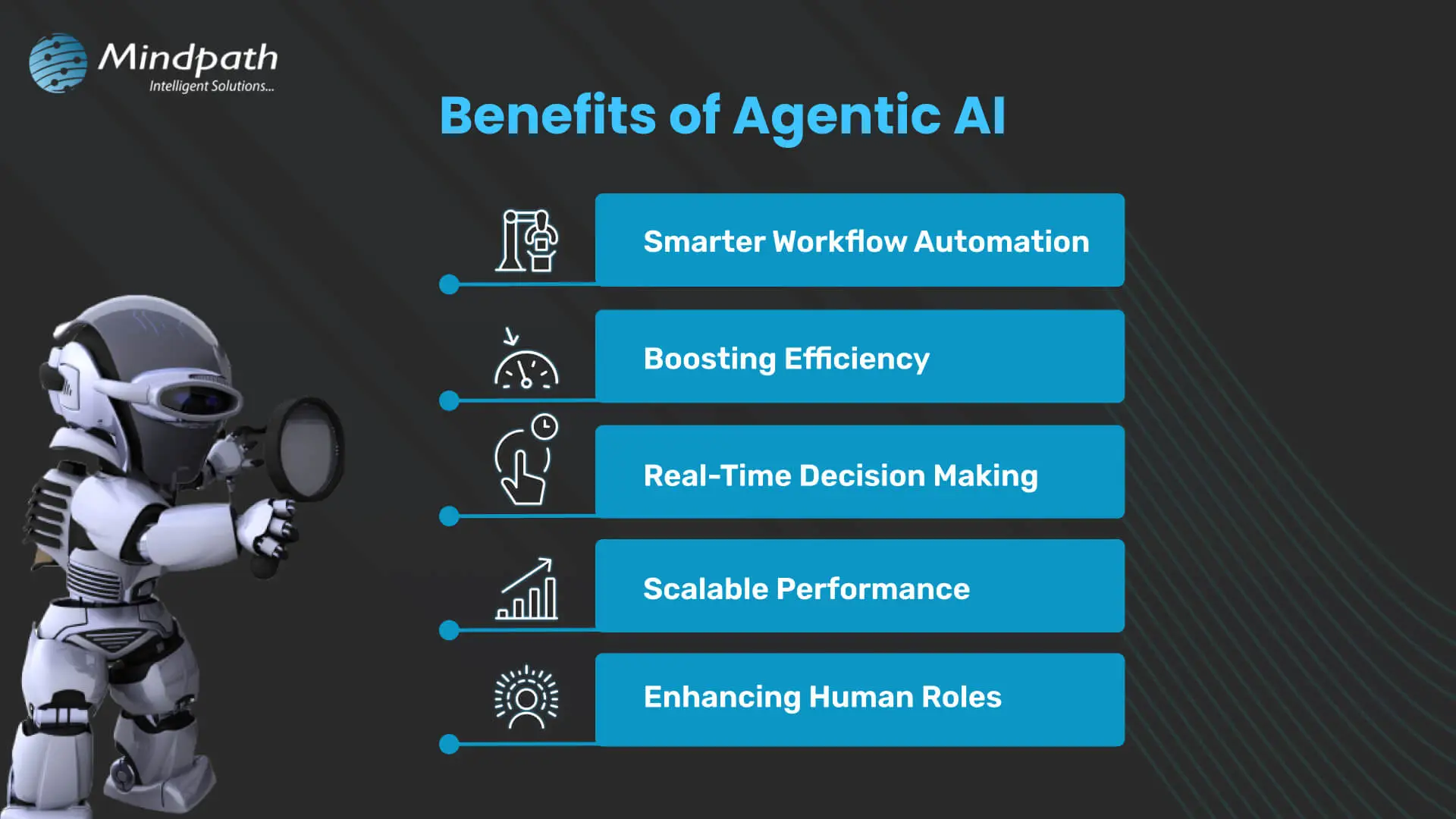
1. Smarter Workflow Automation
Agentic AI makes it easier to manage complex workflows without needing constant human input. In supply chain operations, it can analyze data, spot issues early, and suggest the best solutions. It also tracks inventory levels and connects with suppliers to restock items on time, keeping everything efficient and well-organized.
2. Boosting Efficiency
Agentic AI helps businesses run faster and smoother by managing and improving processes on its own. It learns from results, adjusts its actions, and keeps getting better without needing to be reprogrammed. This leads to fewer delays, higher efficiency, and makes it easier to scale operations as the business grows.
3. Real-Time Decision Making
One of the key strengths of agentic AI is its ability to quickly make decisions and adapt to changing situations. Agent AI tools can process real-time data, respond to unexpected events like shipping delays, and adjust plans without human help. This makes AI in decision-making faster, more flexible, and better suited for today’s fast-moving business needs.
4. Scalable Performance
Agentic AI models help businesses grow by handling more tasks without losing speed or efficiency. They use cloud platforms, APIs, and large language models to manage increasing workloads smoothly. In setups with multiple agents working together, such as in healthcare, they share tasks like data analysis and scheduling to reduce manual work.
5. Enhancing Human Roles
Agentic AI helps people work better by taking over repetitive tasks, improving communication, and offering smart assistance. This allows employees to focus on creative thinking, problem-solving, and other work that needs human judgment. While the AI works independently, human guidance is still important to keep everything aligned with company goals and values supported by valuable insights from AI in business strategy.
Wondering how AI-powered chatbots fit into the growing shift toward agentic AI? Read our blog on how conversational AI chatbots help businesses to explore how these systems learn, adapt, and deliver human-like interactions.
Agentic AI Use Cases
Agentic AI is already being used across many industries to improve efficiency, decision-making, and customer experience. Here are some real-world agentic AI examples that show how this technology is making a meaningful impact in different areas.
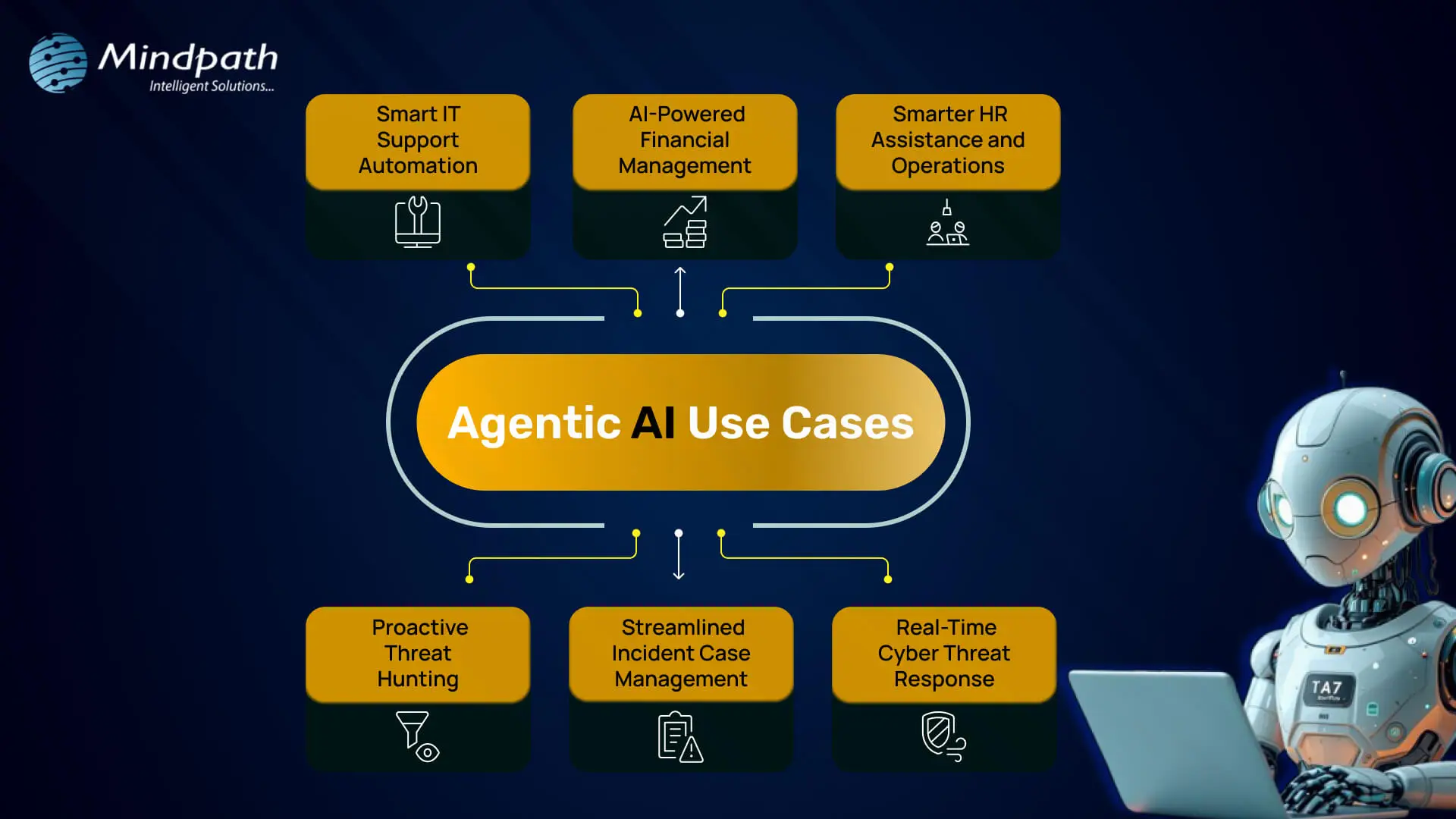
1. Smart IT Support Automation
Agentic AI is changing IT support by spotting and fixing problems on its own before they grow. It handles common tasks like password resets and software updates, while also solving complex issues by learning from past data. This shift aligns with emerging AI trends that focus on self-repairing systems and intelligent automation.
2. AI-Powered Financial Management
Agentic AI in finance can handle tasks like fraud detection, compliance checks, and forecasting by quickly analyzing large amounts of data. It also offers personalized advice by tracking spending and improving money management.
3. Smarter HR Assistance and Operations
In HR, agentic AI helps by answering employee questions, managing onboarding, and screening candidates during hiring. It gives quick, personalized support while allowing HR teams to focus on bigger goals.
4. Proactive Threat Hunting
Agentic AI actively searches for hidden threats by scanning security data for unusual patterns. It keeps learning to catch new types of attacks that older systems might miss.
5. Streamlined Incident Case Management
Agentic AI organizes and tracks cybersecurity incidents by logging details and assigning them to the right teams. It also learns from past cases to suggest better ways to handle future issues and ensures all records stay up to date. Companies often use AI consulting services to optimize these workflows and strengthen overall security operations.
6. Real-Time Cyber Threat Response
In cybersecurity, agentic AI watches for threats around the clock and reacts instantly by blocking risks or alerting teams. It learns from new attacks, so it gets better at spotting danger over time.
Curious how agentic AI is revolutionizing personalized shopping experiences and automation in online retail? Explore our blog AI in ecommerce to see how intelligent systems are reshaping customer journeys and boosting business performance.
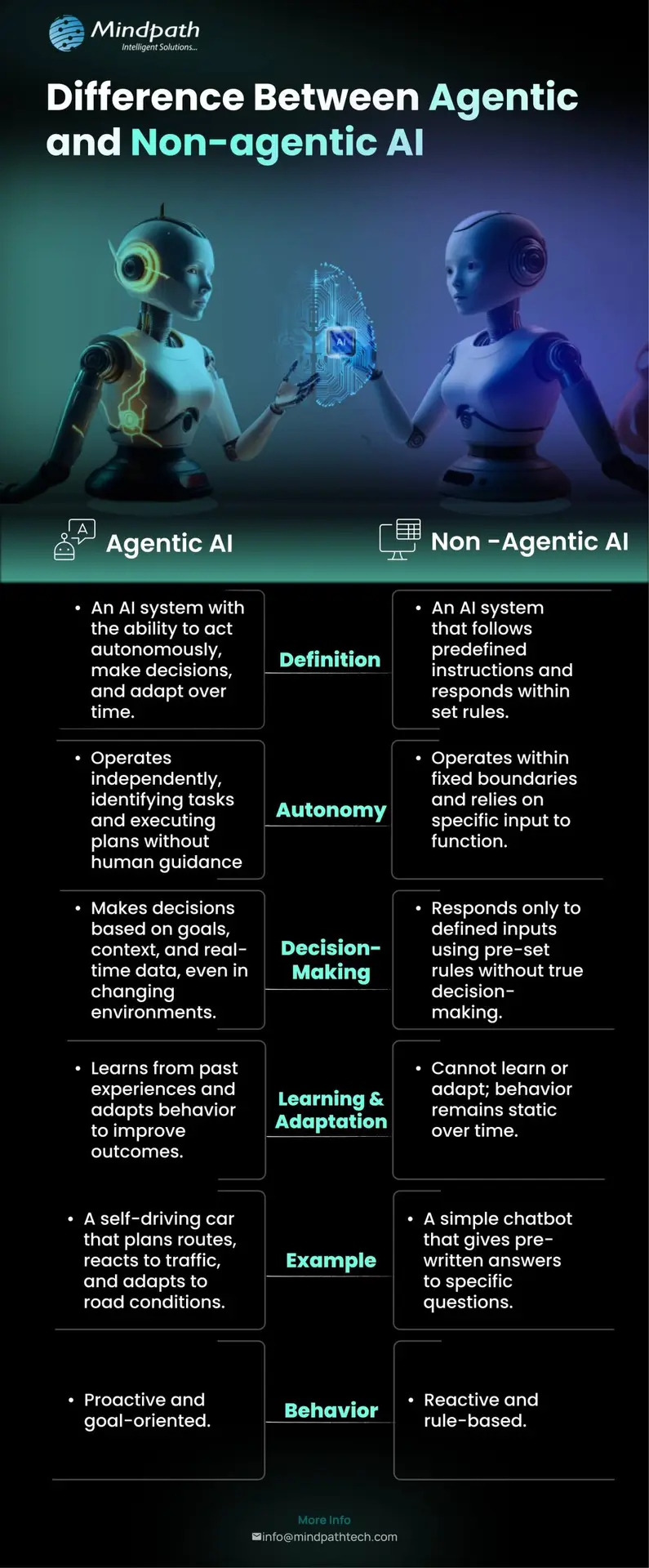
What Is the Difference Between Agentic and Non-agentic AI?
Understanding the difference between agentic and non-agentic AI is key to recognizing how advanced AI systems are evolving. While both types serve important roles, they differ greatly in how they operate, make decisions, and adapt to new situations. The following difference table will help you clear your understanding of agentic and non-agentic AI.
How Far Can Agentic AI Take Your Business?
Agentic AI is creating a major shift in how systems work, making them more independent, responsive, and useful across real-world situations. It’s no longer just about automation but about building intelligent support that acts on its own, learns from outcomes, and keeps improving. As industries adopt this new approach, the ability to understand and apply Agentic AI will be a clear advantage for any forward-thinking team.
At Mindpath, we help businesses bring this future to life with tailored AI development services. Our team builds intelligent, scalable, and adaptive AI solutions that align with your goals and workflows. If you’re ready to explore the power of Agentic AI in your operations, let’s connect and shape your next intelligent move.