Factors to Consider While Hiring Expert ReactJS Developers in New Jersey

Join our Newsletter!

Featured Posts

Support Is One Click Away

Home

Factors to Consider While Hiring Expert ReactJS Developers in New Jersey

Factors to Consider While Hiring Expert ReactJS Developers in New Jersey

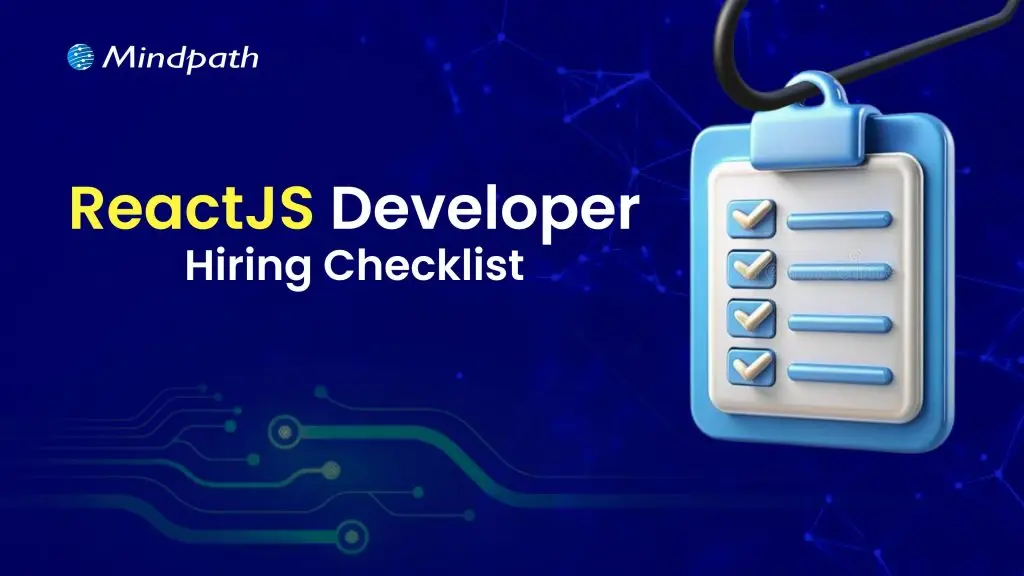
Hiring the proper ReactJS developer in New Jersey can significantly enhance the success of your project. Whether you’re creating a new web application or updating an existing one, you’ll need a developer with the perfect combination of technical knowledge, experience, and problem-solving abilities. A good ReactJS developer should be proficient in JavaScript, front-end programming, and state management, in addition to React. Their professional knowledge and communication skills are also important in ensuring that projects go well. The following are the most important aspects to consider while hiring skilled ReactJS developers in New Jersey.

1. Strong ReactJS and JavaScript Knowledge

When hiring a ReactJS developer in New Jersey, make sure they understand React principles including components, props, state management, lifecycle functions, and hooks. They should also be familiar with contemporary JavaScript (ES6+) capabilities such as arrow functions, promises, and async/await. A developer with strong JavaScript skills can build efficient, clean code and handle problems successfully. Check their familiarity with state management technologies like Redux or Context API, which are critical for managing data in large projects. A strong foundation in these technologies guarantees that your project runs smoothly and performs well.

2. Expertise in Front-End Development

A skilled ReactJS developer should be familiar with HTML, CSS, and responsive design. They should understand how to employ semantic HTML tags, CSS Flexbox, and Grid to build well-structured, mobile-friendly web pages. Understanding CSS frameworks such as Tailwind or Bootstrap is beneficial. Developers should be familiar with UI libraries like Material-UI or Ant Design, which help to speed up development. They must also be familiar with version control tools such as Git, which assist in managing code effectively. These front-end abilities enable the developer to create visually appealing and user-friendly applications.

3. Relevant Experience and Industry Knowledge

Check a developer’s previous projects to determine whether they’ve worked on apps comparable to yours. If your company is in healthcare, banking, or e-commerce, hiring a ReactJS developer with relevant industry experience can be useful. Their understanding of industry-specific difficulties and best practices helps boost development efficiency. Also, evaluate their degree of experience—junior developers are ideal for smaller projects, but mid-level or senior developers are better suited for more complicated applications. Hiring a developer with suitable expertise means that they can swiftly adapt to your project’s requirements and produce high-quality outcomes.

4. Communication and Problem-Solving Skills

Soft skills are crucial in addition to technical skills. A ReactJS developer should be able to accurately convey technical ideas to non-technical team members and collaborate well with designers and product managers. Strong problem-solving abilities are essential for diagnosing problems and improving performance. Choose someone who is versatile and willing to learn new technology. A strong cultural fit promotes efficient teamwork and increases overall productivity. Hiring a developer with strong communication, teamwork, and problem-solving abilities results in improved project execution and a more efficient development process.

Finding the right ReactJS developer doesn’t have to be difficult. At Mindpath we connect you with highly skilled developers who have expertise in React, JavaScript, front-end development, and industry-specific experience. Whether you need a junior, mid-level, or senior developer, we ensure you get the best talent to match your project needs. Let’s build a high-performance, user-friendly web application together!
Get in touch with Mindpath today and hire top ReactJS developers in New Jersey!

Related Post

Optimize your React app for better speed and scalability. Explore advanced performance techniques, including virtualization and useMemo.

Related Post

conversational AI chatbots

Ever thought about how firms can respond to thousands of customer requests every day? Or how can they give customers 24/7 support without interruption? The answer is conversational AI chatbots. These smart virtual assistants change how organizations handle customer inquiries, as well as starting a new trend to assist with sales, without downtime or human effort. The way vendor chatbots can integrate with pre-existing systems is quickly making Chatbots an efficient driver for the future of business. 

These AI chatbots are fast becoming a staple in today’s business toolset. Many organizations are beginning to use them, supplementing their customer interaction and task management processes. Chatbots can fit conveniently into many different areas of an organization. As usage continues to expand, understanding their value is important. This blog will detail how these AI chatbots are increasing the effectiveness of business operations in simple ways. 

Looking to enhance customer engagement with a personalized AI solution? Our custom chatbot development services specialize in building conversational AI chatbots tailored to your business needs and goals.

What is a Conversational AI Chatbot?

A conversational AI chatbot is an intelligent computer program that interacts with individuals using natural language. It understands an accurate interpretation of what its users are saying/writing, processes that input, and responds accordingly in the way a real human would.

Conversational bots are found in websites, applications, and messaging interfaces to assist users who have questions, information, support, or simple tasks and processes. They can exist on a 24/7 basis with no waiting and provide instant and consistent information without the need for the user experience to include human staff.

Conversational chatbots use advanced technologies like natural language processing (NLP), machine learning (ML), and large language models (LLM) to understand and improve conversations. They don’t just follow pre-written scripts but can learn and adapt based on new information.

From helping customers with online shopping to guiding employees through internal systems, these chatbots are becoming a useful part of modern business communication. 

Curious to know how AI can enhance your e-commerce strategy and give your business a competitive edge? Read our detailed blog on how AI in e-commerce is transforming the future.

Types of Conversational AI Chatbots

Conversational chatbots come in different types, each designed to handle specific kinds of interactions. Understanding these types helps in choosing the right chatbot for your business needs.

1. NLP Chatbots

Natural Language Processing (NLP) chatbots can understand user intent and context, making them capable of handling complex or varied language inputs. Unlike rule-based bots, they interpret full sentences to deliver more relevant and precise answers.

2. Menu-Based Chatbots

Menu-based chatbots use decision tree-type logic and offer users a set of predefined buttons or options to choose from, guiding them through a structured conversation. These bots are ideal for handling simple FAQs like tracking orders or checking pricing but can be limited in handling complex queries.

3. Machine Learning Bots

Machine learning chatbots learn from past user interactions and improve over time, allowing for highly personalized and context-aware conversations. They can remember user preferences and reuse information in future chats, enhancing the customer experience.

4. Hybrid Chatbots

Hybrid chatbots combine rule-based systems with AI capabilities to deliver both structured and intelligent responses. They can escalate complex issues to human agents, allowing seamless integration between automation and live support.

5. Rule-Based Chatbots

Rule-based chatbots operate using if-then logic and keyword recognition, providing answers based on specific triggers set by the developer. They work best when queries are predictable and can be mapped to predefined responses using keywords or phrases.

All these chatbot types can be integrated into a powerful conversational AI platform to provide comprehensive and intelligent customer support solutions.

According to a study by Tidio, the conversation rate of chatbots in some industries has been observed to reach up to 70%.

Also Read: Benefits of AI

Benefits of Conversational AI Chatbots For Business Growth

Conversational AI chatbots are becoming a powerful tool for businesses looking to improve how they work and grow faster. Here are some of the key benefits they offer for driving business growth:

1. Get Useful Customer Feedback Easily

Chatbots can ask for feedback right after a chat session by sending a quick question or rating option. To encourage responses, they can offer discounts or small rewards. Businesses can then check feedback and chat logs to discover common issues and improve services. It’s a smart way to collect insights without bothering the customer.

2. Understand Customer Needs

AI chatbots can figure out what the customer wants and how they feel by reading their words and tone. They understand if a message is urgent or if a customer is upset. When needed, they pass this helpful info to an agent. This gives the agent better context to respond more personally and calmly. 

3. Support Your Sales Team with Smart Help

AI chatbots help with sales by chatting with website visitors, gathering lead details, and booking demos. They answer common product questions and encourage customers to stay longer and learn more. This reduces cart abandonment, increases conversion rates, and supports upselling, all with minimal effort. 

4. Handle Repetitive Questions Automatically

One of the best AI chatbot features is the ability to answer common questions instantly. They manage simple tasks like order tracking, returns, and payment issues without needing a support agent. This saves time for both the customer and your team. It also reduces the number of tickets and keeps agents free from more serious problems.

If you’re exploring smarter ways to deliver customer support. Read our blog on AI for Customer Service, where we highlight how chatbots and virtual assistants can improve customer satisfaction and drive measurable business growth.

5. Increase Lead Generation

Instead of filling out forms, customers can chat naturally with AI bots to share their needs. Chatbots collect useful data like preferred products, location, and language. This data is shared with the marketing team, helping them create personalized campaigns and understand customer behavior better.

6. Keep Customers Engaged with Timely Updates

Chatbots can send helpful messages like order updates, appointment reminders, or payment alerts. They also follow up with feedback requests and help continue conversations across different platforms. With custom branding and fun elements like emojis or images, they make every interaction feel friendly and engaging. 

7. Lower Business Costs

Every business wants to reduce costs while improving service quality. Chatbots help by managing simple tasks, answering frequent questions, and routing chats to the right place. This reduces the need to hire additional agents. Some chatbot platforms are easy to set up without coding, saving time and helping businesses see value faster.

8. Scaling Customer Support Efficiently

Chatbots act like additional support agents by handling many customer questions at once. They manage simple requests efficiently, which helps your team focus on more complex issues. This makes it easier to serve a growing number of customers without increasing staff size, saving time, and reducing pressure on your support team. 

Wondering how to turn AI concepts into actionable business solutions? Check out our AI Consulting Services guide for insights on planning, deploying, and scaling AI effectively.

Want to Transform Your Business with Conversational AI Chatbots?

Conversational AI chatbots are changing how businesses talk to customers, manage support, and grow. From smart replies to handling repetitive tasks, these chatbots are now a valuable part of any modern business setup. They simplify operations, improve customer experience, and help teams work more efficiently without adding extra load. 

We at Mindpath are custom chatbot development company, we help businesses build custom conversational chatbots that fit their goals. Whether it’s for customer support, lead generation, or sales, our expert solutions make chatbot integration easy and impactful. Let us help you scale faster and connect better with your customers using the best AI chatbot tools.  

Frequently Asked Questions

1. How do conversational AI chatbots improve customer response time?

Conversational AI chatbots respond instantly to customer queries without any waiting time. They can handle multiple conversations at once, ensuring users get quick answers. This helps reduce delays, improves satisfaction, and keeps customers engaged without depending on human availability.

2. Are conversational AI chatbots difficult to integrate with existing systems?

Conversational AI chatbots are designed to work smoothly with existing business tools like CRM systems, websites, and mobile apps. With proper setup and planning, integration is usually simple, allowing businesses to automate workflows and improve operations without major technical disruptions.

3. Can chatbots handle complex customer queries effectively?

Modern chatbots powered by AI can understand context and intent, making them capable of handling more than just basic questions. For complex issues, they can gather details and pass the conversation to a human agent, ensuring customers still receive accurate and helpful support.

4. Can AI chatbots support both customer service and sales activities at the same time?

Yes, AI chatbots can handle both support and sales tasks together. They can answer questions, guide users through products or services, collect lead information, and even suggest relevant options, helping businesses improve engagement while supporting conversions in a seamless and efficient way.

5. How do chatbots help businesses maintain consistent customer communication?

Chatbots provide consistent responses by following defined logic and learning from interactions. They ensure that every customer receives accurate information regardless of time or volume. This consistency builds trust, improves brand experience, and helps businesses maintain clear and reliable communication.

Discover the transformative power of conversational AI chatbots. From cost savings to increased sales, learn how chatbots can drive growth.
Multi Cloud vs Hybrid Cloud

Deciding between multi-cloud vs. hybrid cloud strategies is becoming an important choice for organizations that want to remain agile and scalable. Every organization needs to find a way to balance flexibility, security, and performance, and this holds true with cloud architecture as well. The more complex challenge is determining which model can optimize operations while allowing the teams in the organization to innovate unhindered. As technology progresses to new heights, a strong cloud architecture can be a differentiating element within an organization’s growth.

It is essential to be certain of how both cloud models serve your business objectives and technical goals to make the better decision. It is not just an issue about infrastructure, but positioning your organization for the future and digital resilience. Understanding their differences helps organizations make confident and data-driven decisions in a world where technology changes rapidly. In this blog, we will explain some of the fundamental principles of multi-cloud and hybrid cloud so that the decision on which is best for you will be less difficult.

Want to determine which cloud strategy will be ideal for your organization? Contact us to get deeper insights and make smart business decisions that lead to future growth.

Understanding the Fundamentals of Hybrid Cloud and Multi-Cloud

A hybrid cloud combines both private and public cloud services in order to provide an adaptable and secure environment for computing. Organizations can house sensitive data in a private cloud to protect it, while still utilizing the on-demand, scalable, and cost-effective computing of the public cloud. Hybrid clouds offer enhanced control, resource utilization, and performance. Utilizing a hybrid cloud allows organizations to efficiently manage workloads across the types of cloud while enjoying the benefits of both cloud types.

A multi-cloud strategy uses multiple cloud service providers to achieve specific corporate objectives. In the multi-cloud vs. hybrid cloud debate, companies will tend to prefer multi-cloud solutions for flexibility, avoiding being locked into a single vendor platform, and minimizing operational risks such as downtime or loss of data. Each application in a multi-cloud environment can run on a public cloud platform or private cloud platform based on relative performance or cost needs.

Wondering how application architecture impacts multi-cloud and hybrid cloud success? Explore cloud-native development to learn how cloud-native apps improve scalability and flexibility.

Advantages of Hybrid Cloud

A hybrid cloud gives companies the right combination of flexibility and control, helping companies manage data securely and securely provide scalability and efficiency for operations.

1. Strong Security and Data Control

Hybrid cloud allows companies to maintain improved control of sensitive data and mission-critical systems. Companies can use private servers to store private information and public clouds for everyday tasks, allowing for a balance between security and freedom.

2. Smarter Cost Management

Businesses can reduce their costs by maintaining constant workloads on private systems, while variable workloads can move to the public cloud. This model allows for a pay-as-you-go system that reduces risk of overspending and improves cost optimization.

3. Faster Performance and Low Latency

Hybrid cloud enhances performance by positioning time-sensitive jobs, such as analytics or IoT applications, nearer to the end user. The configuration call for helps to reduce latency and increase response times for the users.

4. Reliable Disaster Recovery

Businesses are able to store crucial data in the public cloud while ensuring that a main version is also preserved on their premises and if there is a systems failure, they can quickly restore and resume business as usual with minor interruptions.

5. Greater Scalability on Demand

Organizations can easily scale their capacity up or down via the public cloud when they find themselves in busy periods or running promotional activities that bring in high traffic. After the busy period ends, they can scale down their capacity, so they aren’t wasting money and resources.

6. Better Compliance and Data Governance

Hybrid cloud helps companies follow data protection rules by keeping customer data on local servers. At the same time, they are still able to carry out non-sensitive work in a public cloud, thus making an informed decision on multi-cloud vs hybrid cloud.

7. Boosted Innovation and Flexibility

Teams can experiment with fresh tools and services in the public cloud without interfering with core systems. This illustrates that the difference between multi-cloud vs hybrid cloud can drive business innovation and flexibility within the digital age.

Is your cloud strategy aligned with long-term digital growth goals? Discover digital transformation for businesses to understand how the right cloud approach accelerates innovation.

Examples of Hybrid Cloud

These are some real-world hybrid cloud examples and how organizations use this approach to improve business flexibility, security, and efficiency.

1. Digital Transformation

A hybrid cloud modernizes IT systems with a remote workforce and protects data in a secure environment.

2. Disaster Recovery

Hybrid clouds help your business continue operating normally by recovering data at a fast speed in the event of outages.

3. Development and Testing

Developers develop and test apps in their public clouds, then port to private clouds.

4. Cloud Bursting

During peak traffic, additional workloads move from private clouds to public clouds without impacting performance.

5. Edge Computing

Delivers and processes data near the user, resulting in faster and lower latency experiences.

6. AI & Machine Learning

A hybrid cloud supports AI workloads with the best scalability and the security of their data.

Looking for ways to optimize costs and scale applications seamlessly in complex cloud setups? Discover serverless architecture in cloud computing to explore how serverless solutions support modern cloud architectures.

Advantages of Multi-Cloud

The following are the main benefits of a multi-cloud strategy that will help to improve business performance and facilitate better operations.

1. Business Continuity Edge

In comparing multi-cloud vs. hybrid cloud, one advantage of multi-cloud is that it allows operations to continue even if one of the providers has an outage. By spreading workloads across a combination of platforms, businesses provide continued performance and reliability.

2. Flexible Cost Management

In the hybrid cloud vs. multi-cloud comparison, another of the advantages of multi-cloud is improved cost control. This allows companies to choose the cheapest cloud provider for each workload and optimize resources effectively.

3. Customized Security Approach

Multi-cloud allows organizations to engage with providers that best suit their compliance and security requirements. This helps to ensure improved data security and better alignment with regulatory standards.

4. Independent Provider Choice

Using a multi-cloud strategy, organizations will have less reliance on one vendor. They will have the flexibility to move workloads, negotiate terms, and meet changing demand in the market.

5. Optimized Technology Access

Each cloud provider has a service that they do best, e.g., AI, analytics, or integration. Multi-cloud allows organizations to select the cream of the crop and combine them together to get the best performance and innovation.

6. Enhanced Global Reach

Multi-cloud allows applications to be deployed across multiple locations to minimize latency and enhance speed. This is especially useful for global companies that need to provide consistent, reliable speeds globally.

7. Ongoing Innovation Power

By utilizing countless ecosystems in the cloud, firms are able to engage with new, emerging technologies that give them flexibility and even a competitive advantage regarding innovation and continued growth.

Curious about where cloud adoption is heading next? Explore cloud computing trends to discover emerging technologies shaping multi-cloud and hybrid strategies.

Examples of Multi-Cloud

Here are real-world examples of multi-cloud that demonstrate how businesses use multiple providers to enhance their performance, flexibility, and reliability.

1. Specialized Services

A business may use Google Cloud for analytics and AWS or Azure for AI tools to get the best of each platform.

2. Disaster Recovery & Continuity

A financial firm can rely on OCI for core apps and IBM Cloud as a backup to ensure uninterrupted operations.

3. Cost & Performance Balance

A retailer may host its e-commerce site on one cloud and run analytics on another to save costs and improve speed.

4. Diverse SaaS Usage

An organization can follow a multi-cloud approach by using Salesforce for CRM and Workday for HR management.

5. Compliance & Data Security

A healthcare provider may store patient data in a private cloud while using a public cloud for general operations.

Looking to build healthcare software that meets strict compliance and data security standards? Explore our blog on healthcare software to discover how secure cloud-based solutions protect sensitive patient data.

Multi-Cloud vs. Hybrid Cloud: A Comparison Table

Below is a brief comparison table showcasing the primary differences between hybrid cloud and multi-cloud, so you can gauge which model may work better for your business requirements.

Aspect Hybrid Cloud Multi Cloud
Definition Combines private and public clouds to work as one integrated environment. Uses multiple public cloud providers for different workloads.
Primary Goal Balance security with scalability by keeping sensitive data on private clouds. Maximize flexibility and performance by choosing the best services from each provider.
Architecture Integrates on-premise infrastructure with one or more cloud services. Operates across multiple independent cloud platforms without tight integration.
Data Management Data moves between private and public clouds based on need. Data is distributed across several cloud platforms for specific tasks.
Security Control Offers stronger control and compliance for sensitive workloads. Security depends on each provider’s standards and your management strategy.
Cost Efficiency Reduces cost by keeping predictable workloads in private environments. Optimizes cost by comparing pricing and using best-fit providers.
Use Case Ideal for regulated industries needing data privacy and scalability. Perfect for businesses aiming for high availability and vendor flexibility.
Example A bank using private cloud for transactions and public cloud for analytics. A retailer using AWS for e-commerce, Google Cloud for data, and Azure for AI.

Ready to Choose the Right Cloud Strategy for Your Business?

Deciding between multi-cloud vs. hybrid cloud depends on your organization’s needs for flexibility, performance, and security. Both approaches empower businesses to innovate and scale effectively. Understanding their core differences helps you design a cloud strategy that aligns with your goals and builds a strong foundation for long-term digital success.

At Mindpath, we deliver expert cloud computing services to help businesses design secure and scalable environments. Our team builds tailored multi-cloud vs. hybrid cloud solutions that enhance performance, reduce costs, and boost efficiency. Partner with us to create a future-ready infrastructure that keeps your business innovative, adaptable, and competitive in a fast-changing digital world.

Learn the key differences between multi-cloud and hybrid cloud strategies and discover how Mindpath’s cloud services can help.
top AI models

The world is experiencing a huge technological transition, driven by emerging AI trends. This shift is justified by the active development of Artificial Intelligence and powerful AI models. They are high-end neural networks that have the capability to generate code, pictures, videos, and text. The selection of the top AI models can be a breakthrough for a company.

Whether you are launching new products or developing your strategy of content, the best AI models can make all the difference. However, which is the most appropriate one to meet your business requirements? Well, there is no need to fret about it, as this best AI models list contains the top 10 options that are dominating the AI arena. Let’s have a look.

Ready to implement advanced AI models but unsure which ones can truly move your business forward? Mindpath offers expert AI development services that help you build customised, high-performance AI solutions tailored to your goals.

AI Models – Understand the Basics

Before we dive deep into the list of most popular AI models, let’s understand what AI models actually are. 

AI models refer to complex computer programs that are used to interpret different patterns and provide results depending on the data. These models power modern tools that code, comprehend languages, and create images.

While certain top AI models are built to perform simple tasks, others focus on domain-specific tasks. The use of AI tools and models is growing with time. In fact, more than 88% of businesses are now using AI tools, and in 2004, it was 78% (Source: McKinsey). 

Another report for Gartner informs that total spending on generative AI is projected to cross USD 644 billion in 2026, around a 76% increase from 2025. These numbers clearly prove the rising importance of AI for today’s business. 

Want to understand the different kinds of artificial intelligence? Explore types of AI to learn about ANI, AGI, and ASI, and how each is applied in real-world scenarios.

Now, let’s talk about the top AI models you can opt for in 2026 that can support your workflows and business growth.

Top 10 AI Models for Modern Businesses

The best AI models are not just designed to process data. In fact, they have the ability to think and create. Some models can interact like humans, and some can easily explain complex logic. Here are the 10 most popular AI models that define innovation and power. 

1. GPT-5

When talking about which AI models are the most popular right now, we can’t ignore GPT-5. Developed by OpenAI, this is the most powerful AI model available to all. It can handle multiple tasks, including code generation, audio, images and text creation. GPT-5 is now powering tools like ChatGPT and Microsoft Copilot. 

This model helps users plan, write and solve issues with ease. Besides, it supports ultra-long conversations. That means when you use it, you will feel like interacting with an intelligent assistant. GPT-5 is a versatile model and can be used for personal productivity apps or enterprise tools. 

Want to customise AI models for your specific needs? Check out our OpenAI Fine-Tuning API tutorial to learn step-by-step how to fine-tune models for better performance and accuracy.

2. Claude Sonnet 4.5

It is one of the most advanced AI models by Anthropic. Claude Sonnet is developed for power users looking for deep reasoning, speed and precision. This model offers impressive results on maths, long-running tasks and coding.  

It is an excellent option for businesses that prioritize ethical AI, reliable automation and compliance. With a 200K token input and powerful tools like content editing, it can handle various complex workflows easily. 

3. Gemini 3

Searching for top AI models that can help you bring your ideas to life? Gemini 3 can be a top choice. Developed by Google DeepMind, this model supports sophisticated reasoning and helps users learn and create anything they want. 

People like to use Gemini, as it is smart and feels intuitive. Whether you want to analyze complex data, summarize documents, or brainstorm new ideas, Gemini can be your reliable assistant. 

4. DeepL

Another popular AI model you can consider is DeepL. It offers quick and accurate translation services. It is popular for its amazing human-like output and impressive accuracy. The model supports multiple languages, more than 30 languages. 

Content creators, businesses, and professionals use it for translating documents, emails, and websites. Recently, the company introduced DeepL Write, which helps users with spelling, grammar, and more.

5. Grok 4.1

It is xAI’s most powerful and intelligent AI model and is integrated into X. The model is designed for collaborative, creative, and emotionally intelligent interactions. As a result, all conversations feel more engaging and natural. 

The model is generally trained on social media data and can be easily adapted to evolving internet culture. Built on a large-scale reinforcement learning infrastructure, it offers a more compelling and perceptive experience. 

Also Read: Benefits of AI

6. Mistral AI’s Mistral Large 2

Mistral Large is an advanced and high-performance language model introduced by Mistral AI. The model is capable enough to handle advanced reasoning and multilingual tasks. It is optimized for accuracy and speed. If you are developing chatbots or want to optimize technical workflows, you can give it a try.

Different from other Mistral models, it activates all parameters and offers consistent results. It can achieve an accuracy rate of 84 percent for code generation (Source: Mistral AI). 

7. DeepSeek VL

The AI models list will remain incomplete without covering this particular AI model. This open-source Vision Language model is quite efficient for real-world language and vision applications. It can understand logical diagrams, scientific literature, charts, diagrams, web pages, and more. 

Educators and researchers utilize it to analyze scientific papers and make complex concepts easy to understand. The company is now working on a new model that can perform multi-step and complex actions with less human input. 

8. Llama

Introduced by Meta, Llama models are developed based on an open-source approach. The latest model released by the company is Llama 4, and it includes two multimodal models, such as Llama 4 Maverick and Llama 4 Scout. 

All these models can process short videos, images, and text. As these are based on a MoE- Mixture-of-Experts architecture, they demonstrate increased efficiency. Its open-source nature provides developers with better control and flexibility. You can fine-tune it as per your requirements. 

9. Stable Diffusion

It is an open-source AI image creation model based on the Stable Diffusion XL model. The model is popular for generating high-quality images using various text inputs such as frame, presets or style. 

Besides, it can also replace or add parts of any images through “outpainting”. Whether you need help for digital storytelling, concept art or marketing, Stable Diffusion can offer you a perfect kickstart. Its speed, community-driven ecosystem and flexibility make it one of the top AI models among designers, artists and content creators. 

Wondering how AI can understand and generate human-like text? Check out our Large Language Model (LLM) blog to learn how LLMs power smarter applications and chatbots.

10. Cohere Command R+

This powerful large-language model is built for accuracy, speed and smooth private deployment. It is developed for enterprise-grade search and document analysis. By combining real-time document processing with large language models, it offers accurate question answering and summarization. 

Thanks to its API-first design, you can easily integrate it into your existing system. Most businesses are using it for customer support, legal discovery and knowledge management. In an environment where context and accuracy are vital, this model offers reliable performance. 

Tips to Choose the Right AI Models

Well, it is common to feel overwhelmed as the options are more. However, by considering these simple tips, you can come up with an informed decision. 

1. Understand how you want to use an AI model, for content creation or other purposes.

2. Now, consider your budget as well as your technical skills. If you are using a model for the first time, you can go for GPT 5 or Gemini. Mistral and Llama require technical skills.

3. Don’t forget to check context length. Longer context windows are good for performing multi-step tasks.

4. Go for the free web version and test models properly. Compare the results before making your final decision. 

Want to know how AI models focus on important information? Read our attention mechanism explained blog to understand this key concept behind modern AI and LLMs.

Let the Experts Help You Choose the Best AI Models

The AI model arena is evolving rapidly. Some top AI models such as GPT-5 and Gemini, are establishing a new level of accuracy and performance. Specialised models, such as Cohere and Stable Diffusion, on the other hand, are dominating their niches.

Still don’t know which top AI models to use for your business? Allow Mindpath to help to make the right decision. Our team can help you identify, deploy, and fine-tune AI models best suited for you. We also help businesses with AI development services, which guarantee scalability and performance.