Reshaping the Tech Industry with IT Staff Augmentation Trends: A Look into the Future

Join our Newsletter!

Featured Posts

Support Is One Click Away

Home

Reshaping the Tech Industry with IT Staff Augmentation Trends: A Look into the Future

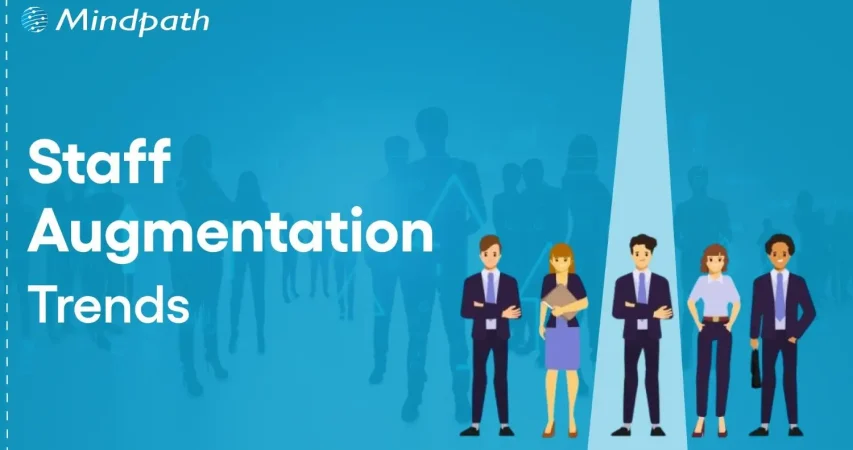
IT Staff Augmentation Trends

Reshaping the Tech Industry with IT Staff Augmentation Trends: A Look into the Future

What if you could instantly tap into top-tier tech talent whenever your project demands it? IT staff augmentation is quickly becoming the go-to solution. But what trends are driving this change? Could these trends be reshaping the future of work as we know it? Let’s explore how IT staff augmentation is revolutionizing the tech industry and why it’s becoming essential for companies aiming to stay ahead. 

 Staff augmentation refers to the process by which companies hire highly skilled workers on a temporary basis to complement their workforce on information technology-based projects. This model gives businesses an avenue through which to outsource extra talents as and when necessary while still staying in control of the team and the projects. Compared to project outsourcing, whereby a company hires another business to handle an entire project, staff augmentation involves the hiring of individual experts to work with the in-house team on projects. This approach is particularly helpful for businesses with projects that change frequently, thus enabling them to adapt quickly to various needs by hiring temporary experts. Staff augmentation provides flexibility in that a business can manage its temporary workers directly while meeting the demands of the projects efficiently. 

So, now let’s look after the IT Staff Augmentation trends reshaping the future! 

IT Staff Augmentation Trends Reshaping the Tech Industry

1. Demand for Cybersecurity Experts

As cyber risks grow, businesses are under growing pressure to safeguard their most valuable information and systems. From huge organizations to small businesses, the demand for cybersecurity expertise is greater than ever. These professionals have vital roles in network security, data breach prevention, and preventing cyberattacks before they occur. Without adequate protection, businesses risk losing consumer data, harming their brand, and incurring legal consequences. 

To meet these issues, organizations are turning to staff augmentation to bring in cybersecurity professionals with up-to-date skills and expertise. These specialists work to safeguard the security of all digital platforms, including websites and internal systems. Hiring cybersecurity specialists allows businesses to focus on development and innovation without worrying about the protection of their data. As cyber dangers evolve, the requirement for this expertise will only grow. 

2. Growth of Agile and DevOps

Agile and DevOps approaches are becoming more common in the computer industry, making these skills increasingly valuable. Many IT organizations are increasingly adopting these strategies in order to operate more effectively and adapt faster to market developments. Teams can apply Agile to break down projects into smaller, more manageable tasks, allowing them to give updates more often and alter their plans in response to feedback. 

Meanwhile, DevOps focusses on enhancing cooperation between development and operations teams, hence reducing inefficiencies and boosting communication. Organizations can improve workflows and accelerate project delivery by hiring Agile and DevOps specialists. This approach not only improves team collaboration, but it also helps them to deploy goods and features more quickly, resulting in speedier responsiveness to customer preferences and market demand. 

3. Need for AI and ML Experts

AI and machine learning are transforming industries, resulting in a high need for specialized knowledge in these domains. As more organizations see the value of AI in improving their operations, they are searching for expertise to adopt and manage these technologies. Businesses that integrate AI capabilities into their operations can boost efficiency, generate innovation, and gain a competitive advantage. 

To address this increased need, many businesses are resorting to staff augmentation, recruiting trained experts to help them realise the benefits of AI and machine learning. These experts not only understand technology, but also know how to use it successfully to address real-world challenges. As firms attempt to keep up with AI breakthroughs, investing in talented workers becomes increasingly important for staying competitive. The emphasis on AI and machine learning is expected to transform numerous sectors, making it essential for organizations to adapt and react to this trend. 

4. Rise of Blockchain Developers

Blockchain technology is becoming increasingly relevant outside cryptocurrencies, with applications spanning several sectors. As organizations understand the benefits of blockchain, such as increased security and transparency, the need for qualified blockchain engineers grows. 

Many businesses are increasingly turning to staff augmentation to gain the skills required to properly use blockchain technology. By hiring specialized developers, businesses can develop secure systems that increase data integrity and streamline procedures. This transition not only helps firms remain competitive, but it also creates new chances for creativity. As the interest in blockchain grows, investing in talented developers will be crucial to effectively navigate this changing terrain. 

5. Expanding AR and VR Skills

AR and VR technology are rapidly evolving, opening up fascinating new opportunities for enterprises. Companies are rapidly recognizing the importance of these technologies for improving customer experiences and building immersive apps. To keep up with this expansion, there is an increasing demand for qualified people who understand how to design and deploy AR and VR solutions. 

Many organizations are resorting to staff augmentation to identify professionals who can put these skills into action. Companies can improve customer engagement and product innovation by recruiting exceptional personnel with AR and VR skills. This development reflects the changing demands of the IT sector, where specialized skills are required to stay competitive. 

Also Read: IT Staff Augmentation Transforming Project Scalability

IT Staff Augmentation Services at Mindpath

At Mindpath, we deliver the best IT staff augmentation solutions in the USA, allowing companies to scale and succeed. It is indeed our mission to integrate skilled professionals seamlessly into your team in ways that increase your capability and ensure that you can effectively deliver your project goals. Be it lending a helping hand for a specific project, having the right expertise on modernizing your technology, or being on the lookout for ways to design robust software systems, Mindpath has the right solutions for you. Here are some of our services:     

1. Dedicated Development Teams

We can provide you with experienced developers, integral parts of your team, to help with supplementary expertise and faster projects’ timeframes. Our developers blend in perfectly, ensuring smooth collaboration and delivery of results.     

2. Legacy Modernization

We can upgrade and modernize your old technology so that it can work with the best standards of today. We provide services such as an assessment of your existing systems, technology upgrade, data migration, and performance enhancements.    

3. Architectural Consultation

We consult on the design of robust and scalable software systems. Whether you are kicking off a new project or looking to better existing systems, we will help you build a solid ground and choose the best-suited technology for your needs.    

Final Thought!

As the technology sector evolves, IT staff augmentation is proven to be an important strategy for businesses seeking to remain competitive. Businesses can react quickly and efficiently to changing project demands by embracing the newest trends, such as increased need for cybersecurity expertise, the expansion of Agile and DevOps processes, and the growing relevance of AI, machine learning, and blockchain capabilities. At Mindpath, we are committed to offering high-quality IT staff augmentation services that enable businesses to grow and innovate. Whether you require specialized development teams, legacy modernization, or architectural consultancy, we have the competence to guide you through the future of your work. 

Ready to harness the power of IT staff augmentation? 

Let Mindpath connect you with top talent to elevate your projects and drive success.

Related Post

Discover how to hire a freelance software developer with our easy guide. Learn steps to define needs, evaluate talent, and set clear terms for success.
Unlock the secrets to hiring top full-stack developers. Explore key factors like experience, project fit, problem-solving skills, and communication for success.

Related Post

digital transformation for businesses

Do you think about your company’s future and ask yourself what digital transformation for businesses means? If so, you’re not alone! Many business owners and leaders are trying to figure out how they will continue to be relevant and competitive in a world that is constantly changing. Digital transformation is changing how you work, how you serve and support customers, and how your team grows. So why is it so important?

Digital transformation for businesses impacts every area of a business, from routine activities to strategic targets. It allows you to work smarter, make better decisions, and respond rapidly to changing customer demands. Adopting digital tools and an alternative mindset can help businesses maximise productivity and create new opportunities. Understanding the process is a prerequisite to helping your business flourish in today’s environment. In this blog, you’ll discover how.

Implementing digital transformation in your business can be challenging; you need expert guidance. Partnering with Mindpath will help you in exploring personalized strategies that will reshape your business. Contact us to start your transformation journey.

What is Digital Transformation?

Digital transformation is the use of modern technology across all areas of a business to change how it works inside and how it connects with customers. It can involve updating old systems, adding new tools, and finding better ways to get work done. Companies take this step to keep up with industry changes and market trends. It is a serious shift in how work is planned and delivered every day.

The digital transformation process requires the involvement of people at every level, from leaders to staff. It is not a single project but an ongoing effort, as technology and business needs keep evolving. Companies must stay open to new ideas and improvements to remain competitive. Digital transformation helps an organization stay prepared and flexible in a fast-changing world. It is a commitment to keep moving forward.

Why Digital Transformation is Important?

Digital transformation is important because it helps companies keep up with changes in their industry and meet customer needs in new ways. It improves how businesses work by using smarter tools and systems, which makes daily tasks more organized and efficient. Focusing on digital transformation for small businesses can help smaller companies compete with bigger ones and stay prepared for what’s next.

One big reason companies choose digital transformation is to replace outdated manual work with better technology. This makes daily tasks easier and helps the whole company run more smoothly. According to digital transformation McKinsey research, 68% of people said they transform their operations mainly to modernize how they work. A clear plan helps every company adapt and stay ready for what comes next.

What are the 4 Types of Digital Transformation?

There are different ways a company can approach digital transformation depending on its goals and needs. Here are four main types of digital transformation every business should know about:

4 types of digital transformation

1. Domain Transformation

Domain transformation happens when a company enters a new market beyond its usual industry. This is often made possible by advanced digital transformation technologies.

2. Cloud Transformation

Cloud transformation moves data and systems to the cloud for better access and storage. Companies can choose public, private, or hybrid models for flexibility.

3. Business Model Transformation

Business model transformation means changing how a product or service is delivered by using modern digital tools. It’s a smart move within any digital transformation framework.

4. Business Process Transformation

Business process transformation improves how work gets done inside the company. It’s a big step in digital transformation for business success.

Benefits of Digital Transformation for Businesses

Digital transformation helps companies improve how they work and respond to changing demands. Below are some of the main benefits it can offer:

1. Cost Savings

One of the biggest advantages of digital transformation for businesses is saving money by removing outdated processes. With better systems in place, companies can spot problems sooner and use resources more wisely.

2. Better Customer Experiences

When processes run smoothly and technology is up to date, customers enjoy faster service and better support. Digital transformation for businesses also makes it easier to adapt based on customer feedback.

3. Support for Sustainability

Modern tools help companies design products and processes that use less energy and fewer materials. This cuts down waste and supports long-term environmental goals.

4. Faster Processes and Higher Productivity

When companies use smart tools and automation, everyday tasks become quicker and more accurate. This gives employees more time to focus on work that adds real value instead of getting stuck on repetitive jobs.

5. Valuable Data Insights

Digital transformation for businesses makes it easier to collect useful data and turn it into insights that help leaders make better choices. This way, different departments can understand trends and work together with clear, reliable information.

6. New Business Models

Following a clear digital transformation roadmap lets companies create fresh ways to reach customers and stay ahead in the market. New ideas and flexible services open the door to growth and higher revenue.

7. Strong Profit and Growth Potential

Companies that have a solid digital transformation strategy often see steady profit growth because they work more efficiently and serve more people. It also helps them expand into new areas over time.

8. Strong Competitive Edge

Digital transformation for businesses helps them stand out with fresh ideas and unique services. Companies that keep innovating stay ahead of the competition and handle change more easily.

9. Quick Adaptation to Change

Digital transformation for businesses gives them the tools to adjust plans when the market changes suddenly. This helps keep things running smoothly and protects the company’s future.

10. Simple Compliance and Regulations

Smart systems help track the right data to meet industry rules and quality standards. This makes it easier to share reports and pass audits without extra stress.

What are the 5 main areas of digital transformation?

Every successful digital transformation covers key parts of a business to make sure changes bring real value. Here are the five main areas of digital transformation that companies focus on:

5 main areas of digital transformation

1. Business Model

Digital transformation often means rethinking how a business makes and delivers its products or services. Companies may find new ways to earn revenue using online platforms or new technologies. This helps them stay competitive and reach more people.

2. Customer Experience

Customer experience means using technology to make every interaction better for your customers. This could be through faster service, easier online tools, or more personal communication. The goal is to keep customers happy and loyal to your business.

3. Operations

Improving operations means making everyday work run more smoothly with digital tools. Automation and better systems help teams save time and avoid mistakes. This keeps the business running efficiently and ready for growth.

4. Technology

Every digital transformation depends on using the right technology, like cloud services, AI, or smart data tools. These tools help companies collect information, solve problems, and create new ideas. Staying updated with technology is key to long-term success.

5. Workforce

Employees need the skills to work well with new digital systems. Companies should train their teams and encourage learning new things regularly. This builds a flexible workforce that can handle changes and keep the business moving forward.

Real-world Examples of Digital Transformation

Knowing about real Digital transformation examples makes it easier to understand how technology can truly change a business. Here are some real-world cases that show what’s possible when companies embrace digital transformation.

Real World exmaples of Digital Transformation

1. Tailored Customer Rewards

Starbucks uses AI in its app to create rewards and suggestions that feel personal to each customer. This digital approach keeps customers happy and loyal to the brand.

2. Personalized Product Fit

Nike’s SNKRS app and foot scan tool help customers find shoes that fit perfectly. This smart use of technology makes shopping easier and gives Nike useful data for better designs.

3. On-Demand Entertainment

Netflix changed how people enjoy movies by moving from renting DVDs to streaming online. This gave people freedom to watch what they want, when they want, without late fees.

4. Cloud-Based Service Models

Adobe transformed from selling boxed software to offering cloud subscriptions like Creative Cloud and Document Cloud. This makes their tools easier to use and keeps customers updated with the latest features.

5. Interactive Buying Experience

Audi introduced Audi City, a digital showroom where people explore cars using large screens and virtual tools. This makes the car-buying process modern, fun, and more convenient in small spaces.

Ready to Future-Proof Your Business?

Digital transformation for business helps you stay competitive, meet customer needs, and grow in a fast-changing world. Using AI and business technology together lets you work smarter, adapt quickly, and make better choices every day. Embracing this change now opens the door for fresh ideas and keeps your company strong in any market.

At Mindpath, we empower you to develop a clear approach to digital transformation by bridging people, processes, and technology. Our experts will guide you through every step of the journey and will ensure your team is employing the best tools to drive ongoing digital transformation. Let’s make your organization agile, productive, and ready for growth using intelligent digital solutions tailored specifically to you.

Explore how digital transformation reshapes businesses, boosts efficiency, enhances customer experiences, and drives sustainable growth for success.
AI in Hyperpersonalization

Have you ever noticed how some brands seem to know exactly what you need, sometimes before you do? Imagine opening a shopping app and seeing recommendations that feel almost handpicked just for you. This level of personalization is no coincidence—it’s powered by AI and is known as hyperpersonalization. But how exactly does AI make this happen? And what does it mean for the future of customer experiences? Let’s dive into how AI is redefining what it means to truly know your customer.  

What is Hyperpersonalization?

Hyper-personalization leverages Artificial Intelligence and real-time data to provide highly personalized experiences, showcasing items and information that are specific to each customer’s tastes. By analyzing individual purchasing behaviors, prior purchases, and browsing habits, AI allows companies to give suggestions that are tailored to each customer’s distinct interests and preferences. 

This high degree of personalization enables organizations to go beyond generic ideas, resulting in a more seamless and engaging client experience. It’s an effective strategy that improves convenience and strengthens brand loyalty by making each customer feel understood and cherished. Hyper-personalization allows marketers to constantly offer relevant, customized information that engages with each client on a personal level. 

The Role of AI in Hyperpersonalization

1. Smarter Product Recommendations

AI’s ability to comprehend user preferences and behaviors is crucial in revolutionizing the way product suggestions are generated. AI can forecast what you will be interested in next based on data such as previous purchases, browsing history, and even time spent on certain things. This goes beyond mere ideas; it tailors each recommendation to your own preferences and needs. 

For example, if you’ve been looking for shoes, AI can recommend a pair that matches your style or even forecast the type of shoes you’d like based on recent searches or seasonal patterns. These recommendations sometimes appear to be “reading your mind,” displaying goods you never considered, but once you see them, they feel like a great fit. This degree of personalization improves the whole buying experience. You spend less time looking for what you want because the AI finds it for you, making each interaction seem more relevant and easier. With hyperpersonalization, AI guarantees that the goods you view are constantly relevant to your tastes, improving your entire shopping experience. 

2. Friendlier Chatbots

AI-powered chatbots have gone a long way towards providing more lifelike, human-like conversations. Instead of robotic, one-size-fits-all replies, these chatbots can now tailor their tone, vocabulary, and behavior to the context of the interaction and the user’s specific demands. They employ powerful AI algorithms to comprehend not just what you’re saying, but also the emotions and meaning behind it. 

These AI chatbots can also personalize replies by recalling prior encounters, recognizing your preferences, and offering relevant solutions. Whether you need help with a product, troubleshooting, or completing a purchase, the chatbot customizes its replies to your individual needs, exactly like a real agent would. AI chatbots boost customer service by making conversations feel more personal and human, resulting in a more engaging and fulfilling experience for customers, allowing businesses to provide 24/7 help without losing quality or empathy.    

3. Better Campaign Strategies

AI-powered solutions have transformed the way businesses approach marketing campaigns, allowing them to analyze massive volumes of data and forecast campaign outcomes more accurately. These technologies look at customer behavior, market trends, and previous campaign performance to spot patterns that might not be visible. Understanding these trends allows AI to assist businesses fine-tune their strategy, ensuring they are targeting the appropriate audience with the right message at the right time. 

Furthermore, AI can enhance processes by automating repetitive operations like segmenting audiences, providing personalized content, and managing digital marketing. This automation minimizes human work and improves marketing teams’ efficiency, allowing them to focus on higher-level strategy and creativity.  AI analyzing data in real time makes marketing campaigns more fluid and responsive. Brands can swiftly alter campaigns based on performance analytics, increasing their ability to remain relevant and adapt to changing client requirements. This increased efficiency not only enhances campaign efficiency, but also enables a more personalized marketing strategy, offering bespoke content and experiences that engage with specific customers. 

4. Tailored Marketing Materials

AI allows organizations to go beyond basic marketing messages by providing highly personalized content that addresses individual tastes and behaviors. AI can generate marketing materials that are specifically tailored to you by analyzing data such as your previous purchases, browsing habits, social media activity, and even real-time elements such as location or current trends. 

Furthermore, AI can adapt the tone, structure, and timing of the material to the individual’s preferences. It can provide a product recommendation at the ideal time, such as when you’re planning a trip or getting ready for a vacation, ensuring that the offer feels timely and relevant. By combining various data points and external variables, AI enables companies to generate targeted, relevant marketing that improves the customer experience and drives stronger connections with their audience.  

Also Read: Top 10 Benefits of Artificial Intelligence in 2024 

AI Development Services at Mindpath

Mindpath specializes in AI development services that help organizations grow and prosper by leveraging smart technologies. Our AI solutions are intended to increase efficiency, improve customer experiences, and make more informed business decisions. We develop specialized AI systems that can analyze vast volumes of data, forecast future trends, and automate repetitive operations, allowing your processes to run quicker and more accurately.  Our AI services may be customized to meet your specific company needs, from creating pleasant chatbots to providing personalized product suggestions. Whether you want to optimize operations or engage customers with intelligent, automated solutions, Mindpath has the AI technologies you need. Our team collaborates closely with you to guarantee that the AI technology we build helps you succeed and stay ahead. 

Final Thoughts!

AI is truly transforming the way businesses connect with their customers, creating a future where experiences are not only personalized but also highly intuitive. Through smarter product recommendations, friendlier chatbots, optimized campaign strategies, and tailored marketing materials, AI is helping brands build stronger, more meaningful relationships with their audiences. At Mindpath, we are dedicated to bringing these advancements to life with our custom AI development services, ensuring that your business stays ahead of the curve and delivers exceptional, personalized experiences. By harnessing the power of AI, you can enhance customer engagement, streamline operations, and create more impactful marketing strategies that drive long-term success. 

Ready to elevate your customer experiences with AI?

Partner with Mindpath today to explore our custom AI development solutions and stay ahead in your industry!

AI drives hyperpersonalization with smarter recommendations, chatbots, and tailored marketing to boost customer experience and growth.
Advantages And Disadvantages Of Educational Software
Education software enables the organization of content, progress monitoring of students, and a corresponding decrease in associated costs. It also facilitates interactive lessons, inclusivity, with tools such as graphics and special needs software. Embrace all these developments to have dynamic, personalized learning and teaching experiences that simplify both activities.  Imagine a classroom where every child gets individual attention, lessons that are drawn and taught according to the pace of each learner, and administrative tasks are smoothly automated. This isn’t a dream but rather it is made possible with the use of education software development services. In this blog, we will get know the top benefits of education software services which can be an advance solution to revolutionize your educational approach.  The education software refers to a device designed for teaching and learning in a computer-aided environment. They are devices such as drills, tutorials, simulations, educational games, and reference tools, among others. These programs provide interactive and customized learning that makes education more captivating. They work on different devices and platforms; thus, this makes learning flexible and accessible. The global market size of education software stood at $35.14 billion in 2020 and is projected to reach $61.45 billion by 2026. This growth could be due to the increasing demands for online and virtual learning, growth in cloud computing, and, most importantly, affordable software availability. Governments of many countries also tend to support this by investing in school technology. Thus, more and more schools and students are using educational software to make learning interactive and easy to access.  Let us explore the top benefits of using education software development services.   So, let’s dig in! 

Benefits of Education Software Development Services  

1. Content Organization and Access 

You can keep all your teaching material and course structures in one secure place. Doing this, all the crucial information will be easy to manage, create different courses. Using a cloud-based LMS allows everybody on your team to reach these materials from any device. This becomes useful when groups of people in the same school or other educational settings are working together. Since the team member can log in anytime, the collaboration is time-zone agnostic.  

2. Monitoring Student Progress 

Another feature of educational software is student progress and behavior tracking and reporting. This kind of software provides ample useful information about a student’s performance, achievements, and behavior and thus can personalize information and support to the needs of every student. This information can be used in modifying course content to suit the abilities of students and improve the general learning outcomes. Moreover, the fact that these reports will be sent to students at regular intervals keeps them informed and improves the level of professionalism taken toward your online school.  

3. Reducing Education Costs 

One major benefit of school management ERP systems is that they make learning more effective. Online learning is a great way to reduce costs. By using digital tools, schools can cut down on expenses like rent, taxes, and educational supplies. This method not only saves money but also offers flexibility, allowing students to study at their own pace and from anywhere. Plus, it ensures that learning continues without the need for physical classroom space, making education more accessible and adaptable to individual needs. 

4. Lower Teacher Workload 

The educational software development services reduce the teachers’ workload by automating routine tasks. It simplifies areas like student information, assigning grades to students, checking homework, and other administrative duties. This helps save much time and manual effort for the teachers. It helps one manage parental communications, track student progress, and get materials for classes in order. Then, teachers will be able to make the learning process more dynamic and interactive, thus increasing the quality of education. 

5. Boost Student Engagement and Performance 

Educational software provides more engaging learning experiences for students, thus catering to their diversified interests and needs. Studies of younger classes like preschool and primary school can be followed by the addition of gamification and interactive activities to their curriculum to make them more enthusiastic and motivated. Such is the case with designing activities that include game like features and creative projects in the learning process, which will enhance student engagement and motivation to learn. This new approach will not only capture attention but also enhance performance by making learning a fun and effective experience. 

Types of Education Software    

1. Authoring System 

The authoring system is a powerful tool that aids the teacher or designer in creating customized educational software programs and multimedia titles without coding. They make the construction of customized lessons and quizzes very easy. Through an authoring system, the educator can exercise creativity in designing appropriate interactive and engaging learning experiences.  

2. Graphic Software   

Graphic software is a tool that aids you in creating, then editing visual content—diagrams, illustrations, charts. This will be useful in making infographics and presentations for clarifying complex ideas. The tool can be used by teachers and students alike to create engaging materials that grab one’s attention, hence changing learning into something more interesting. 

3. Reference Software 

Reference software helps a teacher and student by giving quick references for the resources like thesauruses, encyclopedias, atlases, and dictionaries required to complete projects. This software helps students in sourcing and applying a whole lot of information such that they can understand topics well and study accordingly. 

4. Tutorial Software 

Tutorial software is a computer-based tool that helps one learn through customized lessons. It provides the teacher with a chance to introduce new topics to the learners while allowing the students to learn through the whole process at their pace. It provides learners with new information accompanied by a lot of practice and quizzes that ensure learners have grasped the concept accordingly. 

5. Special Needs Software 

Special needs software is designed to give students with various learning needs the appropriate tools and features. It often interoperates with assistive technologies such as speech synthesizers and text-to-speech, which make lessons more accessible and easier to understand. This software creates an enabling learning environment where all students are given equal opportunities for success. 

How Mindpath Can Help You Build E-Learning Solutions   

Mindpath excels in developing customized e-learning solutions for your needs. From designing and developing online courses, creating engaging interactive learning materials, and user-friendly platforms, our crew will work with you on the content to ensure its engaging and effective. We use only the latest technology to do so, making learning accessible and fun. Be it developing from scratch or upgrading existing courses, Mindpath will help you at every step through experts to make your e-learning project a success. We emphasize course usability and ease of understanding, with loads of features that make learning fun and interesting. We provide ongoing support and updates to keep your e-Learning solutions up-to-date and effective.  

Curious about how we can transform your e-learning vision into reality?  

Discover the possibilities with Mindpath and bring your educational goals to life. 

Conclusion 

Educational software development services are creating an impact in changing the learning-teaching process of students and educators in today’s digital world. Such solutions help make the learning environment more dynamic and approachable by adding to these software features such as content organization, progress tracking of the students, and cost reduction. Additional tools, including authoring systems, graphic software, and special needs software, make education inclusive and interactive for every kind of student. Using advanced technologies and individual learning experiences, it aids the school or teacher in the effective management of the diversified needs of its students while reducing administrative burdens. 

Whether you’re just getting started or seeking ways to enhance existing content for success, Mindpath offers the expertise and technology for any e-learning project. Our team can help guide you through each level of the process—from initial design to ongoing support and updates.  

What are you waiting for? Contact Mindpath today and let’s revolutionize your educational approach!

Looking for an Education Software Developer for your next project?

Discover how education software transforms learning with benefits like content management, student tracking, and cost savings. Revolutionize education with Mindpath!