Generative AI in Human Resources: Transforming Hiring Practices for the Future

Join our Newsletter!

Featured Posts

Support Is One Click Away

Home

Generative AI in Human Resources: Transforming Hiring Practices for the Future

Generative AI in Human Resources

Generative AI in Human Resources: Transforming Hiring Practices for the Future

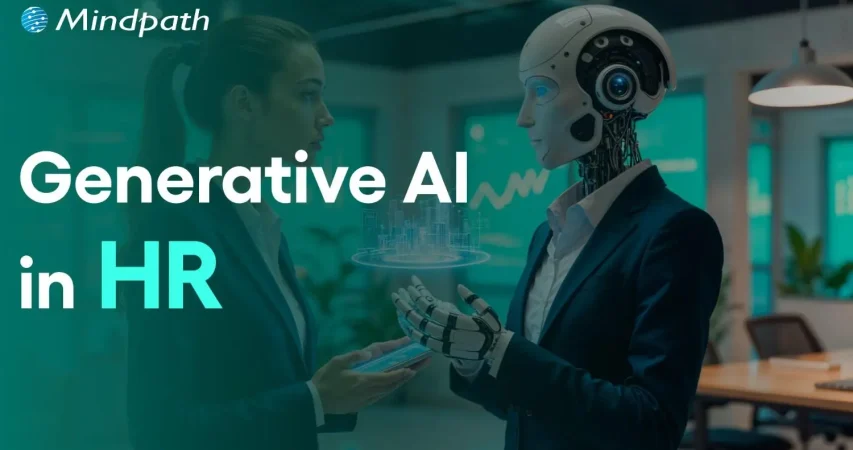
Imagine a world where hiring the perfect candidate feels effortless, employee engagement is at an all-time high, and HR processes run like a well-oiled machine. Sounds like a dream, right? What if I told you that Generative AI could be the key to making this vision a reality? Have you ever wondered how technology could enhance talent acquisition, streamline onboarding, or even foster a more inclusive workplace? In this blog, we’ll explore the transformative role of Generative AI in HR. So, let’s dive in! 

What is Generative AI?

Generative artificial intelligence (generative AI) is a form of AI capable of producing new content and ideas, such as conversations, stories, images, videos, and music. AI technologies aim to replicate human intelligence in nontraditional computer tasks such as image identification, natural language processing (NLP), and translation. Generative AI represents the next phase in artificial intelligence. You can teach it to understand human language, programming languages, art, chemistry, biology, or any other complicated topic. It leverages previously trained data to tackle new issues. For example, it can acquire English vocabulary and compose a poem using the words it processes. Your organization can utilize generative AI for a variety of applications, including chatbots, media production, and product development and design.  Generative AI is important in HR because it alters old procedures and improves decision-making. HR personnel can focus on strategic efforts that encourage development by automating tedious duties like resume screening. Furthermore, Generative AI does data analysis to find insights that enhance employee engagement and talent acquisition. Integrating Generative AI in HR facilitates operations and creates a more responsive workforce, which boosts overall performance as firms look for efficiency and creativity. 

Role of Generative AI in HR

1. Smarter Recruiting

Generative AI can greatly simplify the employment and recruitment process. For instance, employment posts can be made visually appealing and with clarity using ChatGPT. In order to focus and improve the effectiveness of interviews, they can also create unique screening questions according to the position. 

AI can be used by HR departments and recruiters to save time and effort while writing various email correspondence throughout the employment process, such as outreach emails and rejection letters. 

Certain platforms now allow you to look for candidates by posing straightforward queries as an alternative to laborious search techniques. To identify the greatest fit for your vacant roles, these AI technologies may also compare the profiles of candidates with job descriptions. 

2. Streamlined Onboarding

AI chatbots can act as virtual assistants during the onboarding process, providing new hires with real-time help. The process runs more smoothly since they can respond to enquiries regarding corporate regulations, perks, salary, and how to obtain time off swiftly. These chatbots also offer assistance with utilizing the company’s systems, finding vital assets, and finishing required documentation. This not only makes the onboarding process better, but it also makes new recruits feel more at ease and established into their jobs faster. By simplifying duties, AI helps HR professionals to focus more on personal connection and assistance 

3. Training Transformation

The training and development of employees can be substantially enhanced by combining generative AI with HR. AI, for example, can evaluate a worker’s abilities, output, and career objectives to provide tailored learning programs that best suit their requirements. Additionally, AI-based training solutions are emerging. These technologies replicate the advantages of in-person coaching by giving advise, responding to queries, and providing real-time feedback. 

By automatically updating content to match industry standards, AI can maintain training materials current and guarantee that staff members are constantly learning the most recent knowledge. AI is also capable of producing realistic training simulations that adjust to the decisions made by staff members, giving them experience making decisions in actual situations. Employee confidence is increased, and practical skills are developed via this experiential learning. 

4. Enhancing Engagement

HR managers can utilize generative AI to create thoughtful survey questions for employee engagement. These questionnaires can provide insightful information on how to raise productivity, enhance workplace happiness, and resolve any issues inside the company. 

The previously discussed AI chatbots can also help to keep current employees engaged by routinely responding to enquiries about corporate perks, policies, and other important details. This enables workers to easily obtain what they want through self-service, freeing up HR personnel to concentrate on more crucial in-person contacts that enhance the working environment as a whole. 

5. Data-Driven HR Insights

Generative AI can help HR departments in analyzing enormous volumes of data and identifying relevant trends. It can also convert complicated information into simple visualizations, making data insights more understandable and appealing. 

For example, AI can analyze compensation data to identify trends or unexpected patterns, such as gaps in pay or attendance, which can indicate concerns such as employee unhappiness or management issues. AI can even construct scripts for deeper data analysis, allowing HR teams to explore more sophisticated insights and take quick action to address possible issues. 

6. Faster Task Automation

Generative AI can speed up numerous mundane operations for HR workers, such as arranging interviews, going through applicants, and creating reports. This enhanced efficiency enables HR teams to focus on higher-impact tasks such as strengthening business culture, implementing talent initiatives, and generating personalized employee development plans. 

By automating repeated operations, AI decreases the chance of human mistake while simultaneously ensuring process consistency. This not only increases HR efficiency, but it also enhances accuracy and decision-making. As a result, HR departments become increasingly important to the company’s performance, influencing its development and long-term strategy. 

7. Improving Internal Communications

Generative AI can assist in the development of internal communications that are suited to the needs of both the organization and its personnel. It can swiftly create material with the appropriate tone and voice to reflect the company’s ideals, as well as personalize messaging to better connect with each employee. AI ensures that messages within the organization are consistent, engaging, and accessible to everybody. 

AI can also personalize communications depending on an employee’s function, hobbies, geography, or career stage. Whether you’re communicating with recruits or current workers, generative AI ensures that your messages are smart, targeted, and successful at all levels. 

Generative AI Solutions at Mindpath

At Mindpath, we provide Artificial Intelligence solutions that make HR activities easier and faster. Our AI products assist HR teams in streamlining their operations by automating chores such as generating job posts, screening candidates, and drafting emails. We also utilize AI to analyze massive quantities of HR data, identifying patterns in employee performance, attendance, and pay.  HR teams can apply generative AI to develop personalized training materials, deliver targeted messages to staff, and improve internal communications. Our products allow HR professionals to devote more time to vital tasks such as employee development, talent management, and workplace culture improvement. Mindpath enables HR teams to work smarter and contribute more to company development. 

Wrapping Up!

Generative AI is revolutionizing the future of human resources by making procedures more efficient, personalized, and data driven. From smarter recruiting to increased employee engagement, AI enables HR professionals to focus on what is most important to people. As technology advances, adding AI into HR procedures will save time and effort while also creating a more inclusive, responsive, and effective workplace. At Mindpath, we help HR teams realize the full potential of generative AI, resulting in increased growth and innovation in your organization. The future of human resources is here, and it is powered by AI. 

Ready to transform your HR processes with Generative AI?

Partner with Mindpath to streamline recruitment, boost engagement, and drive business growth.

Related Post

How much does hiring a ReactJS developer cost? Learn about factors affecting rates, and how to find the best talent within your budget.

Related Post

ai trends - mindpath tech

Ever wondered how AI is redefining the world? From driverless cars to smart assistants, AI finds its way into every living aspect of our life. But what are the most recent trends you must know about? In this blog, we’ll explore some of the most exciting AI trends and how they can solve real-world challenges. 

Artificial intelligence is what makes computers and other machines do what human beings can do. Essentially, it enables computers to perform tasks such as understanding and processing human language, making decisions, and recognizing patterns. AI uses a wide range of technologies, from machine learning—through which systems learn from data and improve the performance of their tasks—to natural language processing, whereby machines understand and interact with human language. AI has a significant place in today’s world because it is changing most aspects of our lives. It also provides the computing power behind smart speakers like Siri and Alexa, helping us organize tasks and get information more easily. AI helps doctors make better decisions in treatment by facilitating correct diagnosis among various diseases from image processing and analysis of patients’ data in health fields. It’s an integral part of industry automation of repetitive tasks, increasing efficiency, and minimizing errors. 

AI will rule the business world soon, and companies are at different stages of its adoption. Recent statistics have revealed that 22% of firms are implementing AI fully into their products and workflows, whereas 33% do so in a few areas, and 45% are still exploring the potential. Challenges such as high costs and data requirements contribute to slower adoption. Despite that, AI is applied quite massively: 56% of companies apply it to optimize operations, 51% for cybersecurity and fraud prevention, 47% for digital assistants, 46% for customer relationship management, and 40% for inventory management. Artificial intelligence also helps in creating content, making product recommendations, accounting, recruitment, audience segmentation—all of them help a business in task automation, service enhancements, and gaining competitive advantages. 

Let us dive deep into the latest AI trends and how they help in transforming the world! 

Important AI Trends 2024    

1. Easier Model Optimization 

Model optimization could be within reach due to several key technological developments: Low Rank Adaptation (LoRA), which appends smaller trainable layers to pre-trained models for improved efficiency in speeding up fine-tuning and reducing memory use; Quantization, which reduces the precision of model data to reduce memory and boost processing speed; QLoRA, which combines all this for still better results. DPO—direct preference optimization—greatly simplifies the process of aligning a model with human preferences, compared with more onerous methods like RLHF. These innovations, coupled with the progress in open-source models, have started to increase the availability of advanced AI tools for small businesses and developers, ultimately changing the face of AI. 

2. Multimodal AI 

Generative AI is heading toward multimodal models that handle several forms of information concurrently. Unlike the older models that were designed for a specific task, the new ones, including OpenAI’s GPT-4V and Google’s Gemini, as well as open-source ones such as LLaVa, have the capacity to incorporate natural language processing and computer vision in one place. Recent innovations, like Google’s Lumiere—a text-to-video model—open up interactions around video creation and image-based style referencing. This trend towards multimodal AI brings a raft of applications closer to the vision: more intuitive virtual assistants could respond to an image with natural language answers or provide instructions through imagery. It is also likely to process diverse data types like video that enriches the training data, hence leading to more effective and versatile AI models. 

3. GPU Shortages and Cloud Costs 

With a raging GPU shortage and rising cloud costs, the business world is increasingly eyeballing smaller AI models. According to James Landay of Stanford, since companies are racing to use the few available GPUs, that really means there is a drive for cheaper, simpler hardware solutions. A 2023 O’Reilly report shows most of the companies leveraging cloud services for AI, as setting up servers in a company is expensive and time-consuming. As demand continues to increase, cloud costs could grow. To make this a reality, businesses will need flexible models that are either small and efficient or large for tasks that call for more power.  

4. Small(er) Language Models and Open-source Advancements   

The AI industry is getting over the fad of extremely large models because of the cost and energy awareness around their training. According to Sam Altman from OpenAI, the era of large models such as the 1.76 trillion parameters in GPT-4 might be ending. These models require tremendous amounts of electricity—training one that’s similar in size to GPT-3 uses as much energy as over 1,000 households in a year. Smaller models bring multiple advantages: They are less expensive, thus democratizing artificial intelligence technology across users and organizations. They also can be deployed on smaller devices, providing more privacy and enabling usability in edge computing and the internet of things applications. Moreover, such models prove to be easy to understand and explain, thereby enhancing transparency and trust in AI systems. All this trend of moving to smaller models makes AI practical, available, and efficient. 

5. Shadow AI (and Corporate AI Policies)   

As generative AI tools become more popular and accessible, businesses face risks from both official and unofficial use of AI. Employees sometimes use AI tools on their own, bypassing company IT policies—a practice known as “shadow AI” or “BYOAI.” While this can speed up innovation, it also raises significant risks. Employees might unintentionally expose sensitive information or use copyrighted material without permission, leading to security, privacy, and legal issues. For businesses, it’s crucial to have clear AI policies and to manage both official and unofficial use of these tools to avoid potential problems. 

6. Customized Local Models and Data Pipelines   

By the end of 2024, one will be able to outcompete the business by developing tailor-made AI models to suit needs, rather than counting on major AI providers that give generic services. Open-source AI models will be helpful in creating companies with mighty and specialized tools without incurring large infrastructure costs, which will be very useful in areas of law, medicine, and finance where specific knowledge is required. They can be trained on a company’s own data, and fine-tuned for any number of tasks that range from customer support to supply chain management to the analysis of complex documents. In these cases, smaller models that can run on regular hardware may have advantages. They can keep sensitive data safe because they don’t involve third-party processing and save money by taking less storage space and processing power. 

Ready to elevate your business with AI?

Mindpath delivers tailored AI solutions that drive innovation and efficiency.

AI development Services at Mindpath   

At Mindpath, we are exceptionally well placed to offer the best AI solutions to any business. Through our Predictive Analytics service, we analyze the data to enable you to project what’s coming and act before time. Machine Learning Applications can make systems learn and improve over time for ever more accurate tools and insights. Discover the 10 benefits of artificial intelligence that can transform your business operations and decision-making processes with our advanced AI solutions.

With Data-driven Insights, we turn your raw data into information that truly empowers you to drive informed decisions. Our Automation Solutions free more time, automating tasks within a cycle of repetition and increasing overall efficiency. 

In the domain of Business Intelligence, we bring you Data Visualization, hence simplifying complex information. We also host Reporting and Dashboards, to get a full view of performance; Performance Analytics, to assess and hence improve operations, and finally, Decision Support, guiding strategic choices. 

For Conversational AI, we develop Chatbots and Virtual Assistants that make interaction between the user and the app easier to guide through, support, or lead more effectively. Natural Language Processing ensures effective communication between humans and AI, while Customer Interaction Automation increases the efficiency of delivery for service. 

Conclusion 

The AI world is changing rapidly, with trends toward smaller models, more efficiency, and emerging ways to improve versatility and accessibility. As these developments continue to shape the future, the best way to stay ahead will be to embrace these changes by learning to adapt to new technologies. At Mindpath, we stand at the forefront of this change, offering cutting-edge AI solutions customized to suit your business needs. We provide tailor-made AI development services that enable innovation and efficiency. From powering Predictive Analytics to developing custom Machine Learning Applications to providing Business Intelligence, our expertise will ensure your business will never be obsolete. 

Interested in how AI can transform your business?

At Mindpath, we specialize in custom-made AI solutions that foster growth and improve performance.

Discover AI 2024 trends shaping our world—from multimodal models to optimized solutions. Explore how AI can revolutionize your business with Mindpath’s cutting-edge services.
Mobile app development technologies

Mobile app development technologies are important in the fast-paced environment of technology because they define how companies engage with users and keep them engaged. Each swipe, tap, and click is based on technology that is getting faster, smarter, and more interactive. If you’ve ever noticed, some apps feel effortlessly smooth, and others do not. The difference is usually related to the frameworks and platforms chosen for the business objectives and user expectations, and understanding these technologies provides a big advantage over others.

Delving into the newest trends in mobile application development often presents a plethora of choices that can seem confusing. However, choosing the appropriate technology can improve app performance, security, and the overall user experience. Developers routinely test technologies, frameworks, languages, and software solutions to create apps that can more easily rise above the fray. In this blog, we will explore the latest trends and the specific technologies that power the successful mobile app today.

Want to use top mobile app development technologies into a functional app? Mindpath offers mobile app development services, which will turn your imagination into a fully working, high-quality app.

What are Mobile App Development Technologies?

Mobile app development technologies refer to the programming languages, frameworks, and tools used to develop applications for mobile devices. These technologies provide developers with the means to develop compatible applications that would run across devices on platforms such as Android and iOS.

The landscape of mobile development technologies consists of native development tools, cross-platform frameworks, and backend services. The combination of these tools enables the development of applications that provide rich user experiences, work with cloud services, and utilize the native features provided by the device. Choosing the appropriate technology allows developers to build all of these easily, efficiently, and in a scalable way.

Also Read: AI in Mobile Apps

Top Mobile App Development Technologies in 2025

In order to remain competitive as an app developer, it is important to stay informed about the best technology for mobile app development in 2025. The choice of development tools can positively affect the performance, usability, and scalability of modern applications.

1. Flutter 3.22

Flutter 3.22 is a highly favored mobile app development platform to help developers develop applications for mobile devices, the web, desktop, and embedded devices. It provides high-performance and smooth animations that allow applications to run quickly and feel responsive. Developers also appreciate its professionally designed UI components, making it easy for developers to create stunning and consistent user interfaces.

2. Kotlin Multiplatform Mobile (KMM)

Kotlin Multiplatform Mobile (KMM) is a mobile app development framework that allows developers to share code for Android and iOS apps. It utilizes the modern, efficient programming language Kotlin to simplify the process of creating a mobile app for two platforms at once. This translates into a significant time saving, might help to reduce errors, and assure consistent behavior across your Android and iOS devices.

3. C++

C++ is among the most robust mobile app development technologies currently available for building high-performance applications. It enables developers to take direct control of system resources, which is often favored for complex applications or graphics-intensive applications. Also, by using C++, you can rest assured your apps are running as efficiently as possible, even as they traverse between different platforms.

4. Swift

Swift, a mobile application technology developed by Apple, is for building native iOS applications. It is fast, safe, and reliable, while also allowing seamless integration into AI and machine learning. With Swift, developers can build iPhone and iPad apps that are fast, safe, and modern.

5. AR/VR Integration Tools

AR/VR integration tools are tools for mobile app development that help developers add augmented reality and virtual reality features to an app. Integrating augmented and virtual reality features into apps is a valuable way to engage users while making an experience much more entertaining or immersive. These integrations are extremely popular in gaming and even found in some education and retail apps to enhance user experiences.

Ready to build smart mobile apps, but still wondering how AI can transform your development approach? Discover our blog on the benefits of AI in mobile app development to understand how AI can reshape modern app development.

6. AI-Assisted Development Tools

AI-Assisted Development Tools refer to tools such as GitHub Copilot and Amazon CodeWhisperer that support the automation of coding tasks. They streamline developers’ efforts in application development through code suggestions, error detection, and execution of tests. The upshot is that developers can create apps faster and also more efficiently.

7. React Native

React Native is another top mobile app development technology that enables developers to create apps for both iOS and Android using JavaScript. It provides a native look and feels with one complete codebase, reducing development time and duplication of effort. Companies are drawn to React Native because of its quick development period and strong support from the community.

8. Ionic

Ionic is a hybrid app framework and is a popular option among mobile app development technologies, allowing developers to write cross-platform apps using HTML, CSS, and JavaScript. It allows developers to write one codebase to operate on multiple devices. Ionic is very much favored by developers to create efficient and visually striking apps.

9. NativeScript

NativeScript is a flexible framework that matches the up-to-date trends in mobile application development with the ability to create fully native apps using JavaScript, TypeScript, Angular, or Vue.js. With NativeScript, you have full access to the native APIs offered by the OS, meaning that your application will work and perform like a truly native solution. NativeScript enables developers to build highly efficient and rich-featured mobile applications.

10. Xamarin (.NET MAUI)

Xamarin (.NET MAUI) is a framework aligned with mobile app development trends through the creation of native apps for Android, iOS, Windows, and macOS. While using C# and the .NET ecosystem, developers can share code and have a consistent experience across all platforms. Overall, this reduces development time, and provides high-quality apps.

Want to understand where custom mobile applications are creating real competitive advantages across the market? Discover our blog on the Custom Mobile Application Development Services to uncover high-impact opportunities and emerging trends.

Ready to Build the Next Successful Mobile App?

Mobile app development technologies continue to evolve, offering smarter tools and faster frameworks to help developers create better apps. Choosing the appropriate technology guarantees improved performance, security, and scalability. With the growth of innovation, staying up to date with current tools is critical for a company to provide seamless and engaging mobile experiences.

At Mindpath, we provide expert mobile app development services intended to turn your ideas into strong digital solutions.  Our experienced developers create secure, high-performing, and easy-to-use applications by applying modern tools and proven approaches. Partner with us to build an app that empowers your brand and creates long-lasting value for your users.

digital transformation for businesses

Do you think about your company’s future and ask yourself what digital transformation for businesses means? If so, you’re not alone! Many business owners and leaders are trying to figure out how they will continue to be relevant and competitive in a world that is constantly changing. Digital transformation is changing how you work, how you serve and support customers, and how your team grows. So why is it so important?

Digital transformation for businesses impacts every area of a business, from routine activities to strategic targets. It allows you to work smarter, make better decisions, and respond rapidly to changing customer demands. Adopting digital tools and an alternative mindset can help businesses maximise productivity and create new opportunities. Understanding the process is a prerequisite to helping your business flourish in today’s environment. In this blog, you’ll discover how.

Implementing digital transformation in your business can be challenging; you need expert guidance. Partnering with Mindpath will help you in exploring personalized strategies that will reshape your business. Contact us to start your transformation journey.

What is Digital Transformation?

Digital transformation is the use of modern technology across all areas of a business to change how it works inside and how it connects with customers. It can involve updating old systems, adding new tools, and finding better ways to get work done. Companies take this step to keep up with industry changes and market trends. It is a serious shift in how work is planned and delivered every day.

The digital transformation process requires the involvement of people at every level, from leaders to staff. It is not a single project but an ongoing effort, as technology and business needs keep evolving. Companies must stay open to new ideas and improvements to remain competitive. Digital transformation helps an organization stay prepared and flexible in a fast-changing world. It is a commitment to keep moving forward.

Curious which technologies can give small businesses a competitive edge? Explore emerging technologies for small businesses to see the innovations driving digital transformation.

Why is Digital Transformation Important?

Digital transformation is important because it helps companies keep up with changes in their industry and meet customer needs in new ways. It improves how businesses work by using smarter tools and systems, which makes daily tasks more organized and efficient. Focusing on digital transformation for small businesses can help smaller companies compete with bigger ones and stay prepared for what’s next.

One big reason companies choose digital transformation is to replace outdated manual work with better technology. This makes daily tasks easier and helps the whole company run more smoothly. According to digital transformation McKinsey research, 68% of people said they transform their operations mainly to modernize how they work. A clear plan helps every company adapt and stay ready for what comes next.

What are the 4 Types of Digital Transformation?

There are different ways a company can approach digital transformation depending on its goals and needs. Here are four main types of digital transformation every business should know about:

4 types of digital transformation

1. Domain Transformation

Domain transformation happens when a company enters a new market beyond its usual industry. This is often made possible by advanced digital transformation technologies.

2. Cloud Transformation

Cloud transformation moves data and systems to the cloud for better access and storage. Companies can choose public, private, or hybrid models for flexibility.

3. Business Model Transformation

Business model transformation means changing how a product or service is delivered by using modern digital tools. It’s a smart move within any digital transformation framework.

4. Business Process Transformation

Business process transformation improves how work gets done inside the company. It’s a big step in digital transformation for business success.

Benefits of Digital Transformation for Businesses

Digital transformation helps companies improve how they work and respond to changing demands. Below are some of the main benefits it can offer:

1. Cost Savings

One of the biggest advantages of digital transformation for businesses is saving money by removing outdated processes. With better systems in place, companies can spot problems sooner and use resources more wisely.

2. Better Customer Experiences

When processes run smoothly and technology is up to date, customers enjoy faster service and better support. Digital transformation for businesses also makes it easier to adapt based on customer feedback.

3. Support for Sustainability

Modern tools help companies design products and processes that use less energy and fewer materials. This cuts down waste and supports long-term environmental goals.

4. Faster Processes and Higher Productivity

When companies use smart tools and automation, everyday tasks become quicker and more accurate. This gives employees more time to focus on work that adds real value instead of getting stuck on repetitive jobs.

5. Valuable Data Insights

Digital transformation for businesses makes it easier to collect useful data and turn it into insights that help leaders make better choices. This way, different departments can understand trends and work together with clear, reliable information.

6. New Business Models

Following a clear digital transformation roadmap lets companies create fresh ways to reach customers and stay ahead in the market. New ideas and flexible services open the door to growth and higher revenue.

7. Strong Profit and Growth Potential

Companies that have a solid digital transformation strategy often see steady profit growth because they work more efficiently and serve more people. It also helps them expand into new areas over time.

8. Strong Competitive Edge

Digital transformation for businesses helps them stand out with fresh ideas and unique services. Companies that keep innovating stay ahead of the competition and handle change more easily.

9. Quick Adaptation to Change

Digital transformation for businesses gives them the tools to adjust plans when the market changes suddenly. This helps keep things running smoothly and protects the company’s future.

10. Simple Compliance and Regulations

Smart systems help track the right data to meet industry rules and quality standards. This makes it easier to share reports and pass audits without extra stress.

What are the 5 main areas of digital transformation?

Every successful digital transformation covers key parts of a business to make sure changes bring real value. Here are the five main areas of digital transformation that companies focus on:

5 main areas of digital transformation

1. Business Model

Digital transformation often means rethinking how a business makes and delivers its products or services. Companies may find new ways to earn revenue using online platforms or new technologies. This helps them stay competitive and reach more people.

2. Customer Experience

Customer experience means using technology to make every interaction better for your customers. This could be through faster service, easier online tools, or more personal communication. The goal is to keep customers happy and loyal to your business.

3. Operations

Improving operations means making everyday work run more smoothly with digital tools. Automation and better systems help teams save time and avoid mistakes. This keeps the business running efficiently and ready for growth.

4. Technology

Every digital transformation depends on using the right technology, like cloud services, AI, or smart data tools. These tools help companies collect information, solve problems, and create new ideas. Staying updated with technology is key to long-term success.

5. Workforce

Employees need the skills to work well with new digital systems. Companies should train their teams and encourage learning new things regularly. This builds a flexible workforce that can handle changes and keep the business moving forward.

Real-world Examples of Digital Transformation

Knowing about real Digital transformation examples makes it easier to understand how technology can truly change a business. Here are some real-world cases that show what’s possible when companies embrace digital transformation.

Real World exmaples of Digital Transformation

1. Tailored Customer Rewards

Starbucks uses AI in its app to create rewards and suggestions that feel personal to each customer. This digital approach keeps customers happy and loyal to the brand.

2. Personalized Product Fit

Nike’s SNKRS app and foot scan tool help customers find shoes that fit perfectly. This smart use of technology makes shopping easier and gives Nike useful data for better designs.

3. On-Demand Entertainment

Netflix changed how people enjoy movies by moving from renting DVDs to streaming online. This gave people freedom to watch what they want, when they want, without late fees.

4. Cloud-Based Service Models

Adobe transformed from selling boxed software to offering cloud subscriptions like Creative Cloud and Document Cloud. This makes their tools easier to use and keeps customers updated with the latest features.

5. Interactive Buying Experience

Audi introduced Audi City, a digital showroom where people explore cars using large screens and virtual tools. This makes the car-buying process modern, fun, and more convenient in small spaces.

Ready to Future-Proof Your Business?

Digital transformation for business helps you stay competitive, meet customer needs, and grow in a fast-changing world. Using AI and business technology together lets you work smarter, adapt quickly, and make better choices every day. Embracing this change now opens the door for fresh ideas and keeps your company strong in any market.

At Mindpath, we empower you to develop a clear approach to digital transformation by bridging people, processes, and technology. Our experts will guide you through every step of the journey and will ensure your team is employing the best tools to drive ongoing digital transformation. Let’s make your organization agile, productive, and ready for growth using intelligent digital solutions tailored specifically to you.

Explore how digital transformation reshapes businesses, boosts efficiency, enhances customer experiences, and drives sustainable growth for success.