Applications of AI in Education: Real-world Use Cases and Examples 

Join our Newsletter!

Featured Posts

Support Is One Click Away

Home

Applications of AI in Education: Real-world Use Cases and Examples 

applications of AI in education

Applications of AI in Education: Real-world Use Cases and Examples 

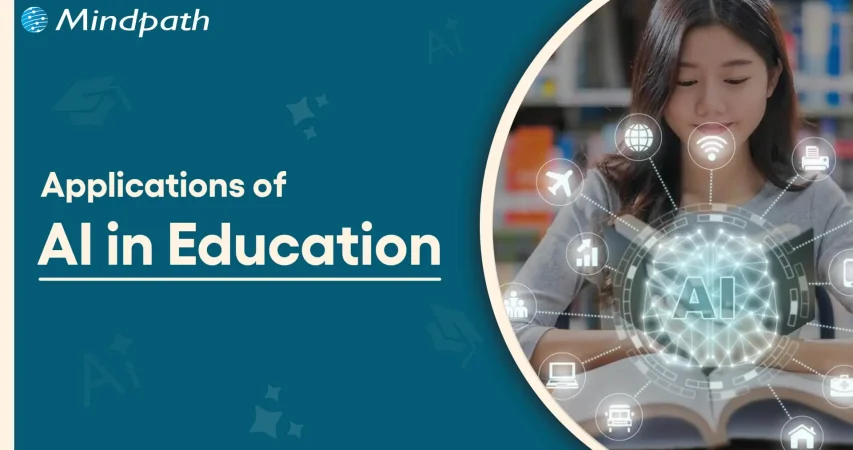
The traditional classroom is rapidly evolving into digital learning spaces, where technologies like AI play a major role in transforming education. Artificial intelligence is changing how educators teach and how students learn in schools, colleges and universities. On top of it, the applications of AI in education have also revolutionized the conventional approaches for managing educational institutions.

Artificial intelligence will not only serve as an invaluable partner for students and educators but also change the traditional perspectives on education. AI can provide opportunities for personalized learning alongside enhancing administrative efficiency. Let us discover some of the top use cases of AI in education with real-world examples.

Planning to use AI to make learning more personalized and efficient? At Mindpath, our AI development services can help you design and deploy smart tools tailored to your educational needs.

Significance of AI for Education

The importance of education for the progress of our society can never be undermined in any circumstance. However, the formidable challenges faced by the education industry create roadblocks for growth. The prominent challenges that call for adoption of artificial intelligence in education include rising administrative burden, shortage of teachers and decline in student performance. Artificial intelligence offers innovative solutions to these problems and serves promising benefits to the education industry.

The uses of artificial intelligence for education can revolutionize the industry while empowering learners and educators. For instance, AI can improve learning outcomes for each student through comprehensive analysis of their strengths, weaknesses and learning styles. AI can help in creating adaptive learning systems that ensure real-time modification of learning resources with the right difficulty level.

AI is also important for education from the perspective of teachers as artificial intelligence can enable automation of administrative tasks such as grading, lesson planning and attendance tracking. The uses of AI in education also focus on the capabilities of AI to analyze large volumes of student data. As a result, AI can enable effective decision making and draw valid conclusions about student performance.

Want to understand the broader education trends driving digital transformation and AI integration? Discover the top emerging trends in education and technology. 

Unraveling the Notable Use Cases of AI for Education

The blend of artificial intelligence and education can indicate the beginning of a new phase for the industry. You can notice different use cases of AI in hospitality, finance or transportation establishing new benchmarks in various areas. Similarly, you can also expect AI to create a revolutionary impact in the education sector. The following use cases of AI along with some real-world examples can help you understand how AI will transform education.

1. Personalized Learning

One of the foremost additions among the use cases of AI in the domain of education focuses on personalized learning. As a matter of fact, it is the most common use of AI in education all over the world. Artificial intelligence can help educators in delivering customized lessons and learning resources to students. On the other hand, students can enjoy the benefits of adaptive learning where educational content adapts to their needs while fostering better understanding and retention of content.

The most prominent example of AI use cases in personalized learning is Knewton. The platform uses AI for personalizing education alongside helping students learn at their own pace and addressing individual learning gaps. Knewton has successfully delivered almost 15 billion personalized recommendations for learners in more than 300 institutions.

2. Intelligent Tutoring Systems

The next notable application of artificial intelligence in the education industry points at intelligent tutoring systems. The primary functionality of these tutoring systems revolves around offering real-time guidance, practice exercises and feedback. Most of the intelligent tutoring systems showcase the convergence between AI and education in innovative ways. Intelligent tutoring systems work by simulating the behavior of a human tutor, offering step-by-step lessons and tracking the performance of learners.

One of the notable examples of intelligent tutoring systems is MATHia by Carnegie Learning. It is an intelligent tutoring system that teaches mathematics to middle and high school students. With the power of AI, the intelligent tutoring platform adapts to different learning paths and offers real-time feedback alongside adjusting lessons to the skill level of learners.

Must Read: Generative AI Tools for Content Creation

3. Breaking the Language Barrier

If you want to know about the broader implications of artificial intelligence for education, then you must know how AI breaks language barriers. Among the multiple examples of AI used in education, you will find platforms like Duolingo changing global education. You don’t have to struggle for months to learn a new language when you have AI to personalize the learning process.

AI systems can measure your proficiency, learning pace and pronunciation in a specific language. Based on the data obtained for every learner, AI systems can recommend customized lessons, grammar explanation and vocabulary practice. The facility of immediate feedback on grammar and pronunciation can help learners correct their mistakes immediately and learn faster.

4. Automation of the Admission Process

Generative AI systems can use natural language processing to extract accurate insights from application data in seconds. The systems can automate the decision-making processes for admission of new students based on academic performance and past data. The automated admission process is one of the prominent artificial intelligence applications in education as it can help educational institutions find the top talent. AI plays a major role in removing human biases from the admission process thereby ensuring an impartial screening procedure.

The best example of using AI to improve admission processes is Hampshire College, which achieved a 61% increase in enrollment. The college used generative AI tools to predict admission trends and optimized recruitment methods based on meaningful insights. Educational institutions can build more trust with an efficient and transparent admissions process that reduces administrative burden alongside elevating the standards of student selection.

Struggling to understand the real impact of AI in educational decisions? Explore this detailed guide on AI decision-making use cases to see practical examples and insights.

5. Managing Scholarships and Financial Aid

Educational institutions can also rely on artificial intelligence to ensure effective management and distribution of financial aid and scholarships. AI can help in achieving systemic equity and efficiency in the management of financial aid and scholarships. AI systems can ensure faster assessment of financial aid applications with special attention to factors like income level, family history, demographic information, and academic performance.

Machine learning algorithms can ensure significant reduction in human bias and processing time. The automated analysis of scholarship applications through AI systems offers a data-driven approach to the verification process. AI can also handle other tasks, such as discovering qualifying students by comparing their profiles with available funds. Accurate forecasts for financial aid requirements also provide the ideal foundation for proactive budget management.

6. Education Supply Chain Optimization

Most of the discussions about using AI in schools focus on the advantages of personalized learning and reducing administrative burden on educators. On the other hand, you must also know how artificial intelligence has been transforming supply chain management for educational institutions. Generative AI tools can help in automation of the procurement process and streamlining supply chain management.

Proactive AI systems can place orders in advance by forecasting future demand for resources such as textbooks, digital tools and lab equipment. The predictive capabilities of generative AI allow it to ensure accurate adjustments in supply levels. AI systems can also leverage real-time tracking to detect supply chain bottlenecks. The University of Michigan is one of the notable examples of educational institutions embracing AI to improve supply chain management.

Wondering which AI breakthroughs are driving change in education today? Read about emerging generative AI trends and how they are being applied across industries.

7. Smarter Feedback and Assessment

The traditional approaches for assessment might consume more time of educators and students experience delays in receiving feedback. Artificial intelligence can create possibilities for faster and smarter assessment. One of the notable additions among examples of using AI for smarter feedback is Cognii. The virtual learning assistant of Cognii offers real-time feedback for open-ended answers alongside ensuring 96% accuracy in grading essays.

Tools like Cognii utilize natural language processing and machine learning for assessment of grammar, syntax, concept hierarchy and semantics. As a result, teachers don’t have to worry about effectiveness of student performance assessment in different academic tasks. Educators can use the additional time to provide more qualitative feedback to students and address systemic issues to address weaknesses.

8. Enhancing Accessibility of Education

You cannot think of the advantages and disadvantages of AI in education without learning about the impact of AI on accessibility of education. Artificial intelligence can serve as a valuable tool for driving different assistive technologies that can help students. For instance, AI systems can convert written text into voice notes for visually impaired learners. Similarly, AI can also ensure transcription of lecture videos into text thereby helping learners with hearing difficulties.

Microsoft Live is one of the top examples of using AI to remove accessibility barriers in education. It can help with real-time translation of classroom instructions and lectures in the native languages of learners on their devices. As a result, non-native speakers will not face troubles during learning thereby ensuring an inclusive learning environment.

Curious how AI-powered tools are making classrooms more interactive and personalized? Read our in-depth guide on Chatbots in Education to see real-world use cases.

Ready to Transform Education with AI-Driven Innovation?

Artificial intelligence is reshaping education by enabling personalized learning, improving accessibility, and automating administrative tasks. From smarter assessments to adaptive systems, AI empowers educators and students alike, creating efficient, engaging, and data-driven learning experiences that support long-term academic success.

At Mindpath, we offer AI development services designed for the education sector. Our experts build intelligent, scalable solutions that enhance learning experiences, streamline operations, and improve outcomes. Partner with us to implement customized AI tools that drive innovation and deliver measurable educational impact.

Related Post

Related Post

AI in mobile app development

Artificial intelligence is rapidly transforming from a buzzword to a necessity for businesses in all industries. You must have noticed the impact of AI in mobile app development with examples of voice assistants like Google Assistant and Siri. Why is artificial intelligence useful for mobile app development? Mobile app developers can use AI to capitalize on a broad range of capabilities, including smart automation and better efficiency.

AI is no longer just about science fiction as businesses leverage it for different operations. The adoption of AI for developing mobile apps creates a new perspective on how companies pursue growth. Artificial intelligence not only simplifies the work of developers but also ensures seamless experiences for users. An overview of the benefits of AI in developing mobile apps can help you understand its significance. 

Using AI in mobile applications can be beneficial, but many businesses struggle to implement it. Mindpath’s mobile app development services will deliver full-proof planning and execution, ensuring innovation and efficiency in every project.

Understanding the Fundamentals of AI in Mobile App Development

Artificial intelligence changed many traditional assumptions about it once the world witnessed real-world use cases in everyday lives. AI can empower machines to think, learn, adapt and take decisions like humans by training on huge datasets. The scope for improving app development with AI revolves around the potential implications of different AI technologies. With the help of AI technologies like machine learning, computer vision and natural language processing, developers can enhance mobile apps.

You can create smarter and more intuitive mobile apps with artificial intelligence. Mobile apps with AI can use predefined instructions to analyze data and make intelligent decisions, thereby delivering exactly what users want. The best thing is that mobile apps can achieve all this without human intervention. 

The utility of different technologies in mobile apps can help you understand how AI revolutionizes mobile app development. AI mobile apps can leverage machine learning to learn from user interactions and improve their services according to user expectations. 

Developers can capitalize on the benefits of AI in mobile apps to deliver a broad range of functionalities to users. For instance, natural language processing can help chatbots in mobile apps understand user queries and deliver natural responses. AI mobile applications deliver more than just automation as you can rely on artificial intelligence to create next-gen apps that can adapt to the future. 

Also Read: Benefits of Mobile App Development

How Have Developers Used AI for Mobile Apps?

The distinct functionalities of AI technologies for mobile app development reveal crucial insights about growing popularity of AI-powered mobile apps. You can come across many new AI features in mobile applications used by millions worldwide. The functionalities of artificial intelligence in modern mobile apps can help you understand why AI-powered mobile apps are a necessity now.

1. Chatbots and Virtual Assistants

You must have seen or used chatbots on many mobile apps that make intelligent conversations with users. Chatbots and virtual assistants use AI for customer service without the involvement of humans. For instance, healthcare apps can rely on AI chatbots to provide accurate medical diagnosis on the basis of symptoms. Voice assistants like Siri and Alexa can interact with users and help them with different tasks, like searching information and setting reminders. 

2. Personalization of User Experiences

Developers have discovered that AI can play a major role in personalizing user experiences according to each user’s preferences. The use of AI tools for mobile app development ensures that artificial intelligence can analyze user behavior, past interactions and preferences to find personalized content and recommendations. As a result, your mobile app can be more engaging for users by delivering the relevant services. Netflix is one of the biggest examples of using AI for personalizing user experiences as it recommends content on the basis of your watch history.

3. Facial Recognition

Computer vision is one of the formidable AI technologies that have gained recognition in mobile app development workflows. An overview of new mobile app development trends reveals how facial recognition has become a necessity in modern apps. Developers can use computer vision in their mobile apps to recognize faces and patterns. AI-powered mobile apps can leverage facial recognition to offer better security. The best example of using AI for facial recognition in mobile apps is Instagram, which offers AR filters with computer vision.

4. Power of AI Automation

Developers cannot think about using artificial intelligence for developing mobile apps without incorporating automation. As a matter of fact, automation is the biggest strength of AI that helps in streamlining repetitive tasks. With AI taking care of manually intensive tasks, mobile apps can offer better efficiency and productive user experiences. You can notice the best example of AI automation in mobile apps in Gmail, which automatically classifies emails into different categories.

Want to streamline your operations and build smarter workflows using the latest tools? Explore our blog on mobile app development tools for a better understanding.

Why Should Developers Trust AI for Mobile App Development?

Artificial intelligence contributes to diverse aspects of mobile app development and offers numerous benefits. Businesses can rely on AI mobile app development experts to capitalize on these advantages and create cutting-edge apps. An overview of the advantages of AI in developing mobile apps can help you understand why AI-powered mobile apps are gaining traction.

1. Seamless Automation in Mobile Apps

Automation is one of the biggest advantages you can get from using artificial intelligence to create mobile apps. Your mobile app works on many background tasks, including data entry and content moderation, while delivering what the users want. Artificial intelligence can do the heavy lifting for your mobile apps by automating these tasks, thereby achieving better efficiency. At the same time, users can also get faster access to the app’s functionalities and services.

2. Creating Custom Experiences for Each User

Custom user experiences are the next big thing in mobile app development as user behavior trends favor personalization. Every mobile app user needs services and content personalized according to their behavior and preferences. The utility of AI in application development primarily revolves around creating apps that can adapt to each user and their needs. Artificial intelligence can empower your mobile app to provide personalized content and product recommendations to users.  

3. Smarter Decision Making

Mobile apps are not autonomous agents who can take decisions independently on behalf of customers. AI in decision-making can empower mobile apps with the capability to analyze patterns and detect trends or anomalies. The growing popularity of AI app ideas depends significantly on how artificial intelligence provides actionable insights. Mobile apps can use the insights to optimize strategies for customer engagement and pricing with the ability to make better decisions. 

4. Breaking the Language Barriers

Artificial intelligence also contributes significantly to expanding the global reach of mobile apps. Language is one of the biggest obstacles for the expansion of mobile apps in international markets. However, a reliable AI app development company can help you overcome these barriers as AI technology offers real-time language translation features in mobile apps. Artificial intelligence in mobile apps will emerge as a prominent trend to make mobile apps usable across all countries.

5. Enhanced Accessibility and Inclusivity

AI breaks the language barrier and also makes your mobile apps more accessible to different users. Users with disabilities can capitalize on voice recognition features to access all the functionalities in a mobile app. For instance, visually challenged users can access different features on your mobile app with speech-to-text typing and voice-controlled navigation. Artificial intelligence ensures that literally everyone can become a user of your mobile apps.

6. Improvements in Operational Efficiency

Artificial intelligence also helps in enhancing the operational efficiency of your mobile apps. You can rely on AI for boosting app performance with efficient resource allocation, performance monitoring and predictive maintenance tasks. It plays a crucial role in reducing downtime, optimizing backend processes and ensuring smooth functionality of your app. 

Most of the guides on how to develop an AI mobile app also emphasize how AI can optimize app performance. Artificial intelligence can help in optimizing battery consumption, reducing unnecessary background processes and managing memory usage. The enhanced operational efficiency translates directly into a more responsive and faster user experience.

Want to build high-performance digital products and stay updated on the latest mobile app development technologies shaping modern businesses? Check out our guide on mobile app development technologies to explore the best tools and frameworks for creating scalable, future-ready applications.

What are the Challenges of Adopting AI for Mobile App Development?

The benefits of AI for developing mobile apps create a strong case for developers to embrace artificial intelligence. However, developing efficient and powerful mobile apps with AI brings some formidable challenges. First of all, the development costs will be higher as developers will need expensive AI tools. Developers will also have to think about issues with data quality and privacy. On top of it, mobile processing power is limited and using AI can lead to problems with performance and battery life.

Final Thoughts

The uses of AI in mobile app development will introduce a new perspective on mobile app user experiences. Artificial intelligence not only contributes to automation but also enhances scalability and performance of mobile apps in different scenarios. You can notice how AI makes mobile apps more accessible to users by removing language barriers and introducing facial recognition and speech-to-text typing features.

Mindpath is your trusted destination for mobile app development services with the AI advantage. We have been creating mobile apps for clients from different industry verticals with the assurance of efficiency and enhanced productivity. You can rely on our experts to develop mobile apps that reflect your brand identity and achieve excellence on all benchmarks. Consult with our experts and find the best services for AI-powered mobile app development now.

What if you could manage your IT infrastructure with the same ease and precision as writing code? Imagine deploying servers, configuring networks, and managing resources through a few lines of code instead of manual processes. Sounds revolutionary, right? This is exactly what Infrastructure as Code (IaC) brings to the table. But how does it work? Why is it transforming the way we handle IT operations? In this blog, let’s explore the fundamentals of IaC, its benefits, and why it’s becoming a cornerstone of modern DevOps practices. So, let’s dive in! 

What is Infrastructure as Code (IaC)?

Infrastructure as Code (IaC) is a method of configuring and managing your IT infrastructure, such as servers, databases, and storage, using code rather than doing everything manually. It’s similar to sending directions to a computer so it can complete the setup for you. When creating and running applications, developers use a variety of tools and mechanisms to collaborate. This encompasses operating systems, databases, and storage. Normally, putting things up manually takes a long time and can lead to errors, especially when working on large projects. With IaC, you just create a code file that explains how your system should appear and function. The tools will then create and manage everything for you. This saves time, reduces mistakes, and facilitates rapid updates or fixes. Businesses utilize IaC to save money, prevent risks, and respond quickly to new possibilities.  

Advantages of Infrastructure as Code (IaC)

1. Speedy Deployments

Infrastructure as Code (IaC) makes deployment quicker and easier. Instead of manually configuring systems, you can use a single command to create the full environment in a few minutes. This is especially useful for startups and small enterprises that need to move quickly while staying under budget. 

Fast deployment is also vital for testing and development. Developers can rapidly construct test environments that seem identical to the real system. This allows them to devote more time to essential responsibilities such as detecting and fixing problems, evaluating how the system manages high traffic, and enhancing security. By reducing time and effort, IaC allows teams to focus on developing better apps and delivering them faster. It keeps projects on track, increases productivity, and allows firms to adapt swiftly to changes or new possibilities. Whether you’re creating a small app or managing a massive system, IaC makes it easier and faster to complete tasks.  

2. Reduced Risks

Manually configuring and administering systems can give rise to errors since it depends primarily on human labor. Repeating the same procedure increases the likelihood of mistakes and adds additional workload to engineering teams. It can also make addressing or debugging problems more difficult and time-consuming. 

Infrastructure as Code (IaC) reduces these risks by automating the process and ensuring consistency. Instead of depending on a single person’s knowledge to handle crucial systems, IaC keeps all of the relevant facts in code that is accessible to the whole team. This makes infrastructure easier to understand, share, and administer, even if team members leave the organization. Companies can use IaC to reduce mistakes, boost cooperation, and guarantee their systems are always dependable and secure. This not only saves time and effort, but also instills trust in the infrastructure, making it easier to adapt and develop as needed.  

3. Enhanced Security and Quick Recovery

Infrastructure as Code (IaC) improves system security and recoverability. Security measures can be included directly into the system setup process when utilizing code. This guarantees that every deployment is protected without requiring additional evaluations or permissions. If a company’s security standards are updated, the changes can be immediately deployed across all systems via code, ensuring that everything remains consistent and secure. IaC also helps with recovery planning by making it easier to reconstruct systems in the event of a failure. While this strategy may take somewhat longer than other ways, it assures that systems are rebuilt safely and correctly. Businesses can apply IaC to build a solid security foundation and prepare for situations of crisis, all while lowering risks and saving time. 

4. Boosted Operational Efficiency

Infrastructure as Code (IaC) increases the efficiency and productivity of developers, architects, and administrators. Complex cloud systems can be deployed significantly faster using pre-configured IaC components, reducing total development time. One of the primary advantages of IaC is that it provides uniform conditions across several teams. Multiple teams, including development, security, QA, and user testing, can collaborate in synchronized environments using a simple script. This allows everyone to make progress simultaneously, rather than waiting for one phase to finish before going on to the next.  

IaC also promotes continuous integration and continuous delivery (CI/CD) processes, which enable teams to deploy new features or upgrades more rapidly and efficiently. Additionally, IaC makes it simple to automatically shut down environments that are no longer in use, lowering wasteful expenditures and keeping the cloud infrastructure lean. This enables firms to expand and manage their systems more efficiently, while preserving efficiency and lowering operating costs. Ultimately, IaC simplifies procedures, lowers human mistakes, and allows teams to operate more quickly, intelligently, and cooperatively. 

5. Greater Accountability

In the past, engineering teams had to manually record their work for a long period in order to guarantee seamless communication, prevent delays, and handle issues like errors and staff turnover. With Infrastructure as Code (IaC), this is no longer required. Instead of depending on elaborate documentation, all changes are recorded immediately in the source code repository. 

Every modification is explicitly tracked using version control, which shows who made the change and when. This makes it simple to track changes, identify issues, and comprehend the context around them. If an issue emerges, it is straightforward to identify the cause of the problem and who should be approached for clarification. IaC enhances accountability by making all activities public and traceable, ensuring that everyone on the team is on the same page, and enabling teams to collaborate more effectively. 

How Can Mindpath Help in Infrastructure as Code (IaC)?

At Mindpath, we can assist you with leveraging Infrastructure as Code (IaC) to streamline and protect your IT processes. We use IaC to automate system setup and administration, resulting in a more consistent, dependable, and manageable infrastructure. Our staff can create and manage the code that specifies your infrastructure, eliminating the need for time-consuming manual configurations. With IaC, we ensure that your systems are swiftly installed, updated, and fully protected, while minimizing risks and human error. We help you design environments that are simple to reproduce and scale, allowing your development, security, and testing teams to collaborate effortlessly. 

Wrapping Note!

Infrastructure as Code (IaC) is revolutionizing the way IT infrastructure is managed by automating processes, reducing human errors, and enabling faster, more secure deployments. By adopting IaC, organizations can achieve greater operational efficiency, boost security, and ensure better collaboration among teams, all while minimizing risks. As businesses continue to scale and adapt to new challenges, IaC is becoming an essential practice in modern DevOps strategies. At Mindpath, we are dedicated to helping you implement IaC effectively, making your infrastructure more streamlined, reliable, and scalable. 

Ready to streamline your IT infrastructure with Infrastructure as Code?

Let Mindpath help you optimize efficiency, security, and scalability.

Discover how Infrastructure as Code (IaC) improves IT operations with faster deployments, enhanced security, and increased efficiency.
Chatbot examples

AI chatbots are molding the future of customer engagement in 2026 by providing accuracy and efficacy. The real-life chatbot examples demonstrate how intelligent systems analyze user interactions, offer relevant and timely recommendations, and aid in decision-making as it unfolds. Organizations that are leveraging these types of solutions notice concrete results in user satisfaction and conversions. This clearly shows that AI chatbot assistants can convert complex customer journeys into simple, actionable experiences.

These examples of chatbots have also shown us the benefits of predictive insights and targeted communication. When brands effectively leverage AI chatbots, they minimize friction in their customer journey, maximize retention, and achieve measurable growth. By looking at these real-life use cases, we can evaluate the strategies we can adopt to improve digital experiences and obtain better data-driven results. So, keep reading this blog as we are going to showcase real-life examples of AI chatbots that have aided businesses in increasing conversion.

Want to engage your audience, provide instant support, or personalize their experience? At Mindapth, our custom chatbot development services are designed to deliver solutions that match your business requirements.

Market Demand of AI Chatbots

According to Fortune Business Insights, the global AI chatbot market is growing rapidly, from USD 9.90 billion in 2026 to USD 65.94 billion by 2032, a CAGR of 31.1%. Customer demand for instant service, cost savings through automation, advances in NLP, wider industry adoption, and the rise of generative AI with human-like conversations are driving this growth.

These important figures illustrate the strong market demand: Outgrow says that sales through chatbots are up 67%, Tidio states that 62% of users prefer to chat rather than wait for a human agent, Master of Code says 26% of sales transactions begin with a bot, and 35% of leaders said that they closed sales because of digital assistants. Outgrow also states that 57% of businesses have seen better ROI, and that 45% of businesses have seen reduced response time through chatbots. Looking at these numbers, it shows that AI chatbot examples are demonstrating how businesses can become more efficient, collaborative, and create greater sales.

Also Read: Benefits of Chatbots

How AI Chatbots Increase Conversions?

Do chatbots really increase conversions? Businesses worldwide are beginning to embrace AI chatbots to transform customer experiences and make them smoother, faster, and more personalized. Here are the insights that demonstrate that chatbots are very much influencing conversions.

Benefits of AI Chatbots in Increasing Conversions

1. 24/7 Availability

AI chatbots are always-on and provide 24/7 access for customers to quickly find answers for whoever, whenever they want assistance. Being constantly available keeps customers engaged and increases the likelihood of execution of a purchase.

2. Personalized Interactions

Real-world Chatbot examples illustrate how AI reads customer engagement data to provide personalized recommendations, product suggestions, etc. This personalization creates more meaningful conversations and promotes higher conversion rates.

3. Reduced Cart Abandonment

AI chatbots minimize cart abandonment by helping consumers through checkout and by answering last-minute questions. This kind of assistance is simple, but improves selling and makes customers feel good about purchasing.

Also Read: AI for Customer Service

4. Automated Lead Qualification

Chatbot applications can qualify leads with the right questions and key details. The sales team will not have to waste time with any unqualified prospects.

5. Faster Sales Cycles

Utilizing conversational AI for business growth by speeding up the sales process, provides immediate support and follow-ups to customers. The quickness is what allows businesses to turn a lead into a customer quickly and effectively.

6. Increased Sales Volume

Successful chatbot examples illustrate how AI recommends products, engages customers, and inspires repeat purchases. These real-world examples show businesses can also drive revenues while lower acquisition costs.

Want to reduce operational costs while improving customer engagement? Discover how conversational AI chatbots streamline business operations and drive efficiency across teams.

10 Real-life Examples of AI Chatbots

Real-life examples of artificial intelligence chatbots highlight how companies are using artificial intelligence (AI) to innovate the way that organizations interact with potential and current customers. More and more companies are turning to chatbots for lead generation and conversions, thus effectively proving their worth as tools for enhancing sales and ultimately customer experience.

10 Real-life Examples of AI Chatbots

1. Sephora – Personalized Shopping Assistant

Sephora utilizes an AI chatbot to assist customers in selecting makeup and skincare products, to support customers based on their preferences. This chatbot example assists shoppers in finding the right products, much quicker than a human, resulting in higher conversions overall. This video definitely ranks as one of the best chatbot examples in the retail world.

2. Domino’s – Easy Food Ordering

Domino’s has incorporated a chatbot that allows the customers to order pizza directly through a messaging app. This practical application of chatbot makes ordering easy while also cutting down on wait time and increases customer satisfaction. It is one of the most effective AI chatbots that increased sales in the food industry.

3. H&M – Style Recommendations

H&M has a chatbot that suggests clothing based on user style preferences. These website-chatbot examples improve the shopping experience by making it more personal. It shows how real-life examples of AI chatbots in business can drive higher engagement.

4. Flipkart – Seamless E-commerce Recommendations

Flipkart’s chatbot provides personalized product suggestions based on browsing history and preferences. This example of chatbots enhances shopping experiences, boosts conversions, and increases customer satisfaction. It is among the best AI chatbot examples in online retail.

5. Amtrak – Julie Virtual Assistant

Amtrak’s virtual assistant Julie answers millions of passengers queries every year. These examples of chatbots on websites save time for both customers and staff. The company reported significant cost savings and better chatbot ROI examples.

Must Read: AI in E-Commerce

6. Lyft – Ride Booking Made Easy

Lyft allows users to book rides via its chatbot on Messenger or Slack. This real-life example of AI chatbots in business shows how brands can remove friction in customer journeys. It directly improves bookings and conversions.

7. KLM Airlines – Travel Assistant

KLM Airlines uses a chatbot to provide booking confirmations, flight updates, and boarding passes. This website chatbot example streamlines travel support. It is one of the AI chatbots that increased sales through seamless customer care.

8. PVR Cinemas – Movie Booking Assistant

PVR Cinemas uses a chatbot to help customers check movie schedules, book tickets, and view offers instantly. This chatbot example simplifies the booking process, improves customer engagement, and drives higher ticket sales. It is one of the best AI chatbot examples in the entertainment and cinema industry.

9. Starbucks – Coffee Ordering Chatbot

Starbucks has a chatbot that lets customers place their orders ahead via mobile. This application of chatbot reduces wait time and encourages repeat purchases. It’s among the strongest chatbot ROI examples in food service.

10. L’Oréal – Beauty Genius for Personalized Shopping

L’Oréal launched ‘Beauty Genius’, an AI chatbot that gives personalized beauty tips and product recommendations. It uses AI and AR to analyze selfies and suggest the best skincare and makeup from over 750 products. This chatbot improves customer engagement and drives more conversions for the brand.

Looking for AI systems that can plan and act independently for your business? Discover Agentic AI to learn how intelligent agents are transforming decision-making and workflow automation.

Want to Transform Your Business with Chatbot Solutions?

AI chatbots play a vital role in boosting sales, improving efficiency, and creating better customer experiences. These chatbot examples highlight how leading brands use AI to personalize interactions, reduce friction, and drive measurable growth. By learning from real-life cases, your business can adopt similar strategies to maximize ROI and conversions.

At Mindpath, we specialize in developing bespoke chatbot solutions designed to align with your unique business needs. Our tailored approach ensures your chatbot goes beyond generic automation and instead creates real value through seamless user journeys. With expertise in crafting solutions inspired by the best chatbot examples, we help you enhance engagement, streamline processes, and accelerate business growth.