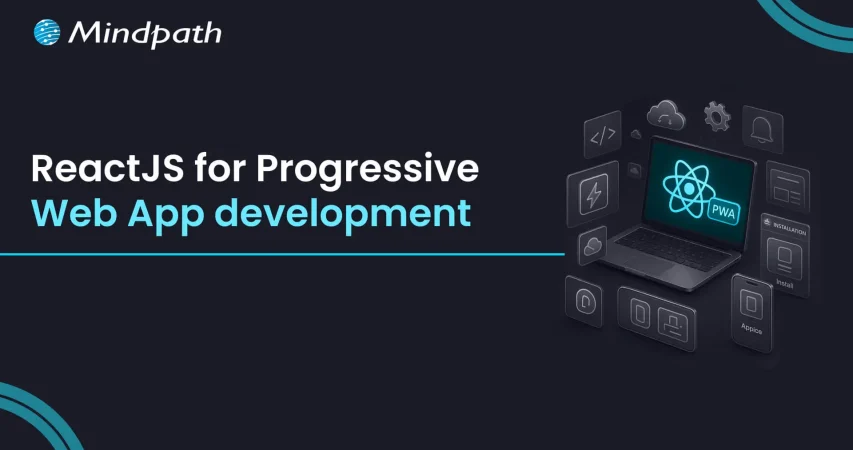
Top Reasons to Choose ReactJS for Progressive Web App development 

Join our Newsletter!

Featured Posts

Support Is One Click Away

Home

Top Reasons to Choose ReactJS for Progressive Web App development 

ReactJS for Progressive Web App development

Top Reasons to Choose ReactJS for Progressive Web App development 

Creating applications that are fast, dependable, and smooth on all devices is important for every company today, right? So, when you think of building something like that, ReactJS for Progressive Web App development may be a wise option for you. It allows you to create applications that give the experience of a native application without the cost or intricacy. There are many modern companies already using this approach to enhance performance and keep users invested with consistent user experiences.

ReactJS offers speed, flexibility, and user-centric features that are perfectly aligned with progressive web app goals. ReactJS has reusable components and fast rendering, making it easy for developers to build responsive and high-performance apps. PWAs built with ReactJS are responsive and load fast, work offline, and allow a smooth mobile experience that users will enjoy. In this blog, we will examine the top reasons why ReactJS is great for developing PWAs.

At Mindpath, we offer ReactJS development services where our experts help you create user-focused Progressive Web Apps that give users a smooth digital experience.

Understanding the Fundamentals of PWAs

Progressive Web Apps (PWAs) are modern web applications that function like mobile apps. With a PWA, you can open it in a web browser, but it behaves like a real app on your phone or computer. They are designed to function seamlessly across all devices (smartphones, tablets, or desktops), which is nicer than having separate mobile websites, apps, and desktop apps.

Progressive Web Apps are created using HTML, CSS, and JavaScript. They are fast to load; they work when users are offline and can send push notifications. They also allow access to certain phone functionality, such as the camera or location. PWAs can help businesses save time and money since they must build one app that can work everywhere.

Advantages of Using ReactJS for Progressive Web App development

Using ReactJS for PWA development is a great choice for creating secure and fast web applications. With the growing ReactJS trends, developers hope that they can deliver seamless and user-friendly experiences. Here is how ReactJS is perfect for your PWAs.
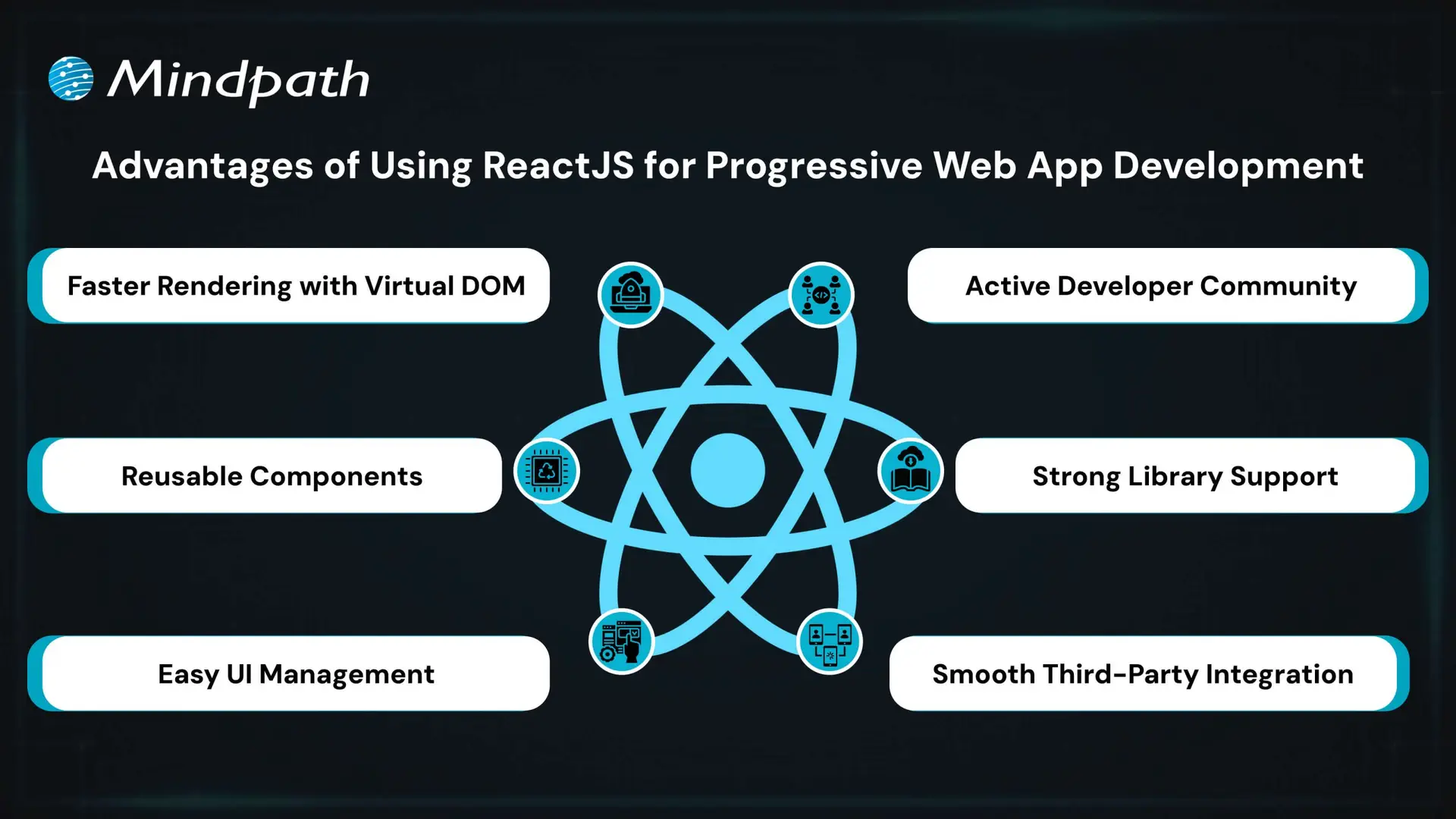
Advantages of Using ReactJS for Progressive Web App development

1. Faster Rendering with Virtual DOM

React uses a Virtual DOM to update only the parts of the page that change. This speeds up performance and ensures a smooth user experience. It’s ideal for building fast and responsive ReactJS PWA solutions.

2. Reusable Components

React’s component-based structure allows developers to reuse code across the app. This makes it easier to manage the app and scale it as it grows. It’s a key reason why teams choose ReactJS for progressive web app development.

3. Easy UI Management

React follows a declarative style for creating user interfaces. This makes it simple to manage and update interactive elements in the app. It helps deliver a smooth and engaging ReactJS progressive web app experience.

4. Active Developer Community

React has a strong global community that shares solutions, tools, and tutorials. This support helps developers solve problems faster and stay updated. It also contributes to the future of ReactJS in modern web development.

5. Strong Library Support

React has many libraries like React Router and Redux that simplify routing, data flow, and offline features. These tools help developers add advanced features to PWAs with less effort. They make building a PWA with React more efficient and reliable.

6. Smooth Third-Party Integration

React works well with tools needed for Progressive Web Apps, such as service workers and web app manifests. These tools help enable offline access, background syncing, and “Add to Home Screen” functionality. This makes it easier to implement full PWA capabilities when building with React.

Steps to Set Up a React PWA

Getting started with React is a smart move when building modern web apps that work offline and feel like native apps. If you’re planning to use React for progressive web app development, here are the key steps to set it up properly.
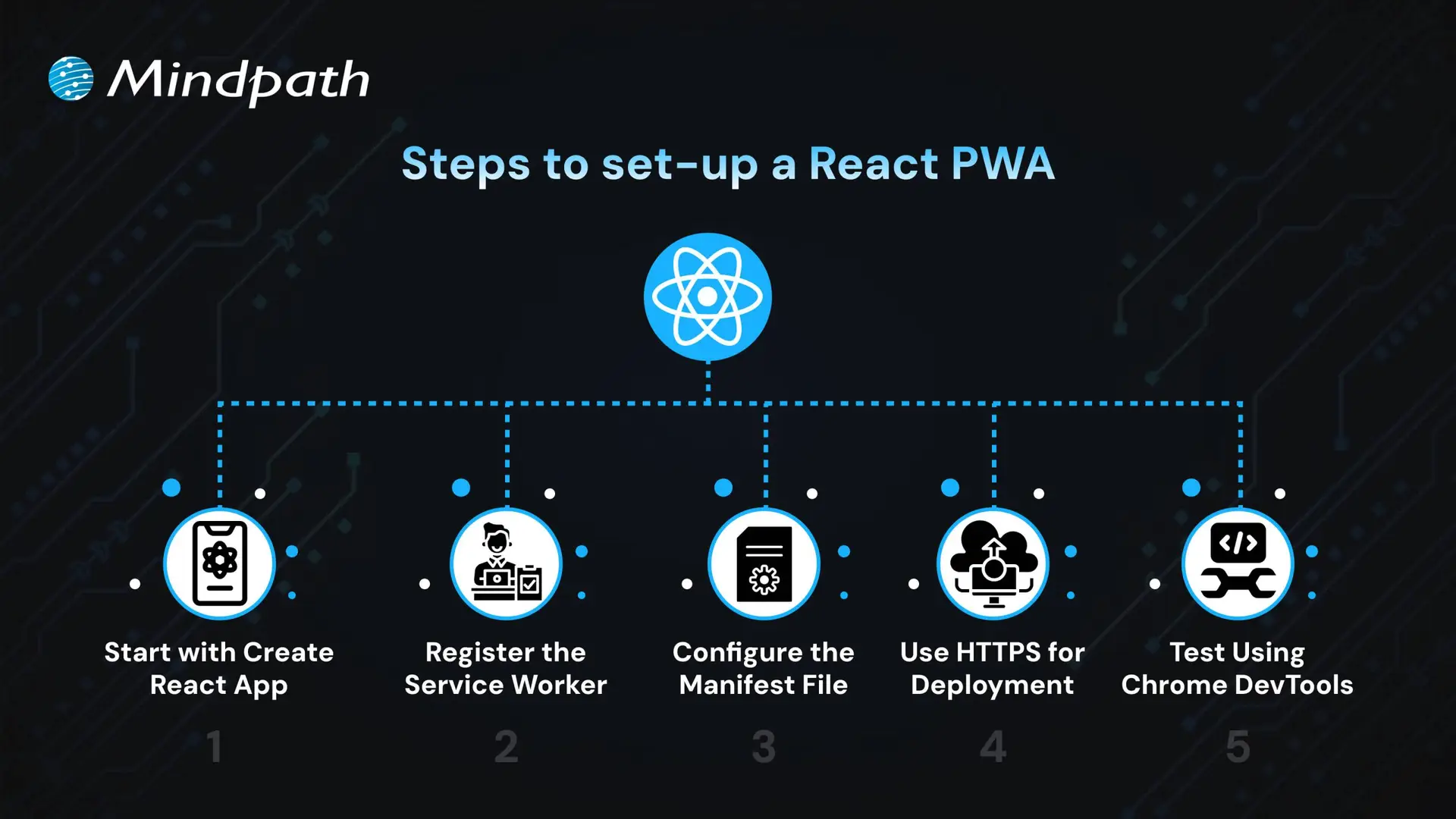
Steps to Set Up a React PWA

1. Start with Create React App

The easiest way to begin is by using Create React App, which includes built-in support for PWAs. It sets up a basic structure with everything needed for React JS PWA development, including service workers and a manifest file. CRA also optimizes the build process, making your app production-ready. This setup ensures you have a strong foundation to build a scalable and responsive PWA.

2. Register the Service Worker

To activate offline support, register the service worker by calling ‘serviceWorkerRegistration.register()’. This enables background caching, which is key to building a progressive web app with React that works without an internet connection. A registered service worker allows the app to cache assets and serve them even when the network is unavailable. It also helps improve performance by reducing server requests, ensuring a better user experience in the future of web development.

3. Configure the Manifest File

Update the manifest.json file in the public folder to define your app’s name, icons, theme color, start URL, and display mode. These settings control how your app appears when installed on a device. A properly configured manifest ensures your PWA looks and feels like a native app. This also helps in enabling features like splash screens and full-screen display, supporting the growth of progressive web apps with React development.

4. Use HTTPS for Deployment

For security, PWAs must be served over HTTPS. Local development through CRA handles this, but for live deployment, ensure your server uses a valid HTTPS setup. A secure context is required for service workers and features like push notifications. Using HTTPS also improves user trust and SEO performance.

5. Test Using Chrome DevTools

Use Chrome DevTools to inspect and test your PWA setup. You can verify service worker status, cached files, and manifest settings. Lighthouse audits can also help you improve your app based on best practices for React for progressive web app development. Testing ensures your PWA meets performance, accessibility, and usability standards.

Ready to Build a Powerful PWA with ReactJS?

ReactJS offers all the essential tools to build fast, reliable, and interactive web apps that feel like native experiences. Its reusable components, strong ecosystem, and smooth performance make it a top choice for modern applications. Choosing ReactJS for progressive web app development is a future-focused decision that brings real value to your business.

At Mindpath, we deliver expert ReactJS development services tailored to your goals. We build responsive, scalable, and feature-rich PWAs with smooth offline access and high performance. Our experienced team uses the latest tools and trends to create apps users love. Partner with Mindpath and bring your next ReactJS PWA to life with speed and quality.


Related Post

Explore the top ReactJS trends for 2025, including AI integration, performance optimization, and React Native growth.

Related Post

Hire NodeJS Developers in London
The cost of hiring Node.js developers in London varies according to expertise, project complexity, and firm size. Junior developers often charge £30-£70 per hour, but experienced developers charge between £70 and £150 per hour. It’s critical to assess your project’s requirements and budget appropriately. The following are significant factors that determine these expenses.

1. Experience Level

The experience of a Node.js developer significantly impacts the hourly rate. Junior developers with limited experience in Node.js typically charge lower rates, between £30 – £70 per hour. They can handle basic tasks but may need more guidance. In contrast, senior developers with extensive experience in complex Node.js projects and advanced skills may charge £70 – £150 per hour. Their expertise includes managing large-scale applications, leading teams, and solving intricate technical challenges, justifying their higher rates.

2. Project Complexity

The complexity of the project plays a crucial role in determining developer rates. Projects requiring expertise in advanced Node.js frameworks (such as NestJS or Express) or specialized areas like cloud integration and real-time services will demand developers with advanced skills. Such projects often require a deeper understanding of architecture and scalability, leading to higher rates. Developers with specialized knowledge will charge more to reflect the increased technical demands and the project’s overall complexity.

3. Company Size and Location

The size of the company and its location can also influence Node.js developer rates. Larger companies located in central London typically offer higher hourly rates, ranging from £70 to £150. These companies often have more significant resources, larger budgets, and complex projects. In contrast, smaller startups or businesses based in suburban areas may offer lower rates, typically between £30 to £70, as they often work with tighter budgets and smaller-scale projects. However, location does not always guarantee lower rates, as other factors such as the project type can still affect pricing.

At Mindpath. we offer expert Node.js developers with the right experience to meet your project’s needs, whether you’re looking for junior talent or senior developers with specialized skills. Our developers are proficient in advanced frameworks, real-time solutions, and complex cloud integrations, ensuring your project is in capable hands.

Start building your team with Mindpath today!

Discover the cost to hire Node.js developers in London: £30-£70/hour for juniors and £70-£150/hour for experienced, depending on expertise and project complexity.
Hiring Remote Software Developers

Are you looking to expand your team with talented remote software developers in New York? Hiring remotely can offer access to a wider pool of skilled professionals, but how do you find the right fit for your company? In this blog, we will explore the key steps to successfully hiring remote developers in New York and make sure your next hire is the perfect match! 

In today’s digital age, employing remote software engineers has become a strategic decision for firms seeking to remain competitive. New York, a worldwide center of innovation and technology, provides access to a large pool of highly talented workers. Companies that hire remote developers in New York can benefit from local experience while also embracing the freedom that remote labor provides. This method not only broadens your search for top talent, but it also reduces operating expenses and shortens project timeframes, making it an essential choice for forward-thinking firms. 

So, let’s explore the steps to hire remote software developers in New York! 

Guide to Hire Remote Software Developers In New York

1. Define Your Project Needs

The first step in hiring remote software developers in New York is to carefully define your project needs. Begin by outlining the project’s aim, the features you want to develop, and the projected completion date. Include all technical specifics, such as the programming languages, frameworks, or tools required for the project. Consider the project scope and degree of skill required for the function. This can involve anything from simple coding chores to more complicated problem solving and system design. Specify if the developer will work independently or as part of an existing team, as this can affect the sort of individual you employ. 

A well-defined project plan not only aids in the selection of a suitable developer, but it also provides clear communication and expectations. It helps potential applicants to better grasp your requirements and decide whether they are a suitable fit. This stage is essential in establishing a solid basis for the recruiting process, resulting in more efficient selection and better project outcomes. 

2. Focus on Critical Skills and Expertise

Hiring remote software developers in New York requires prioritizing the correct talents and expertise. Begin by determining the technical skills your project requires, such as experience in certain programming languages, frameworks, or tools. For example, if you’re developing a web application, you might want to know React, Node.js, or Angular. Beyond technical talent, evaluate the developer’s problem-solving skills and ability to deliver high-quality code on time. Strong communication skills are also required, since remote developers must cooperate successfully despite physical distances. Look for specialists who can properly communicate concepts, comprehend project specifications, and offer timely updates. Remote employment necessitates extra skills such as time management and the capacity to work autonomously.  

Developers with a track record of success in remote roles often excel in these areas, making them better suited for your project. By focusing on these critical skills, you ensure that your hired developer not only meets technical requirements but also integrates seamlessly into your team, contributing to project success. 

3. Choose the Right Recruitment Partner

When looking for remote software engineers in New York, partnering with a reputable recruiting firm is a wise decision. A reputable recruiting partner has access to a large network of competent individuals, which can make the hiring process easier for you. 

The proper partner will understand your project’s particular requirements and match you with people that possess the necessary technical skills, experience, and remote work capabilities. They undertake time-consuming procedures like resume screening, first interviews, and technical competence assessments, saving you important time and resources. Furthermore, a reputable recruiting firm provides a seamless onboarding process and assists with legal and contractual needs, particularly for distant positions. This reduces hazards while ensuring compliance with local rules. 

4. Conduct a Thorough Vetting Process

A comprehensive verification procedure is required when recruiting remote software engineers in New York. This stage ensures that you pick people that not only satisfy your technical criteria but also share your team’s values and work culture. Begin by assessing technical abilities using coding exams or practical tasks customized to your project’s requirements. These exams assess the candidate’s problem-solving skills, coding expertise, and familiarity with the tools and frameworks you need. 

Next, evaluate their communication abilities to verify they can clearly explain ideas, grasp directions, and cooperate successfully. Assess their ability to set reasonable expectations, offer timely updates, and resolve ambiguities in project requirements. Finally, assess their suitability for remote work by evaluating qualities such as time management, self-discipline, and dependability. Look for applicants that have experience working remotely, since they are more likely to adapt to your methods. A thorough vetting procedure not only assists in identifying the most talented developers, but it also promotes improved cooperation and project outcomes. This stage is crucial to developing a strong, efficient team that will drive your project’s success. 

5. Offer Competitive Benefits and Onboarding

To attract top remote software developers in New York, you must provide a competitive remuneration package as well as a simple onboarding experience. Begin by researching conventional industry salary and perks in the location to verify your offer meets market expectations. Include benefits like flexible work hours, professional development opportunities, and access to cutting-edge equipment, which are highly valued by remote workers. 

Once a developer accepts your offer, a disciplined onboarding procedure ensures that they seamlessly integrate into your company. Provide detailed documentation on the project, team operations, and corporate regulations. Introduce them to the tools and platforms you use for communication, work management, and collaboration so they feel supported and ready to participate. 

Regular check-ins throughout the first few weeks serve to develop a solid relationship and allow for the discussion of any issues that arise. By providing a competitive package and a friendly onboarding experience, you can foster an atmosphere in which developers feel appreciated and driven to do their best. 

Hire Remote Software Developers in New York at Mindpath

At Mindpath, we connect businesses with skilled remote software developers in New York who are ready to deliver high-quality results. Our streamlined hiring process ensures we match you with the right talent based on your specific project needs, technical skills, and remote work compatibility. With Mindpath, you gain access to top developers who integrate seamlessly into your team, providing expertise across various technologies. Let us help you scale your development team and achieve your project goals with the best talent available.   

Wrapping Note!

Hiring remote software developers in New York provides organizations with top-tier expertise, flexibility, and cost effectiveness. A successful recruitment process can be achieved by precisely outlining your project requirements, focusing on important talents, and selecting the correct recruitment partner. In addition, offering competitive perks and a pleasant onboarding experience aids in the retention of talented engineers. Mindpath connects organizations with competent remote developers that meet their individual project needs and collaborate smoothly with your team.  

Ready to build your dream team?

Partner with Mindpath today to hire skilled remote software developers in New York and take your project to the next level!

Learn how to hire remote software developers in New York with expert tips on defining needs, skills, and onboarding for project success.

Node.js developer in New York expenses vary depending on criteria such as expertise, project size, and hiring technique. Whether you’re a startup searching for a low-cost alternative or a major company looking for top-tier expertise, understanding these expenses will help you make an informed selection.

1. Hourly Rates for Node.js Developers

Hiring a Node.js developer in New York is based on experience. Junior developers (0-2 years) charge $12-$50 per hour for minor bug fixes, API connections, and application changes. Mid-level developers (3-5 years experience) charge $50-$100 per hour and specialize in full-stack development, performance optimization, and complicated backend operations. Senior developers (5+ years) charge $80-$150+ per hour and have extensive abilities in system architecture, database administration, and high-performance solutions. The more experienced the developer, the greater the cost because of their ability to manage complicated projects efficiently. If you’re seeking cost-effective alternatives, remote hiring from nations with reduced labor expenses can be a possibility. However, recruiting locally in New York allows for greater cooperation, real-time assistance, and easier project management. Deciding the right developer level depends on your project requirements, budget, and long-term goals.

2. Project-Based Costs

The overall cost of a Node.js project varies depending on its complexity, length, and team size. Small projects, such as rudimentary web apps with limited functionality, often cost between $12,000 and $25,000. Medium projects, which include bespoke apps with various connectors and real-time capabilities, cost between $25,000 and $45,000. Large-scale projects can cost more than $60,000. Examples include enterprise-level programs with high scalability, improved security, and cloud integration. A separate development team is frequently required for larger projects, which raises the cost even further. Businesses can collaborate with a Node.js development business, with yearly service rates ranging from $72,000 to $116,000. Choosing between freelancers, an in-house team, and an agency has a big influence on the overall cost. While freelancers are cost-effective for short-term work, agencies provide comprehensive development services with long-term support. Evaluating your project scope beforehand helps in budgeting and selecting the best hiring model.

3. Factors Affecting Hiring Costs

Several factors affect the cost of hiring a Node.js developer in New York. Project complexity is important—simple apps cost less, but complicated projects needing high scalability, AI integration, or data security raise costs. The hiring approach also influences price. Freelancers charge less but may not provide ongoing help. In-house developers provide consistency but incur additional overhead expenditures like salary and perks. Development agencies offer comprehensive solutions but are usually the most expensive. Another important consideration for developers is their location. Hiring in New York facilitates smoother cooperation and speedier communication, but it is more expensive than outsourcing to nations like as India or Eastern Europe, where hourly rates are much cheaper. When selecting a developer, you must consider experience, quality, and affordability. By carefully considering these factors, businesses can find a cost-effective yet skilled Node.js developer to match their project’s needs.

Need skilled Node.js developers in New York for your next project? At Mindpath, provides expert developers to build secure, scalable, and high-performance applications. Whether you need a dedicated team or a single developer, we offer flexible hiring models to fit your budget and project needs.

Partner with Mindpath today and bring your vision to life with top-tier Node.js development!

Discover the ultimate guide to hiring Node.js developers in London. Learn about the skills, benefits, and cost factors involved in finding the right talent for your project.