Top 10 Cloud Security Tools in 2026

Join our Newsletter!

Featured Posts

Support Is One Click Away

Home

Top 10 Cloud Security Tools in 2026

Cloud security tools

Top 10 Cloud Security Tools in 2026

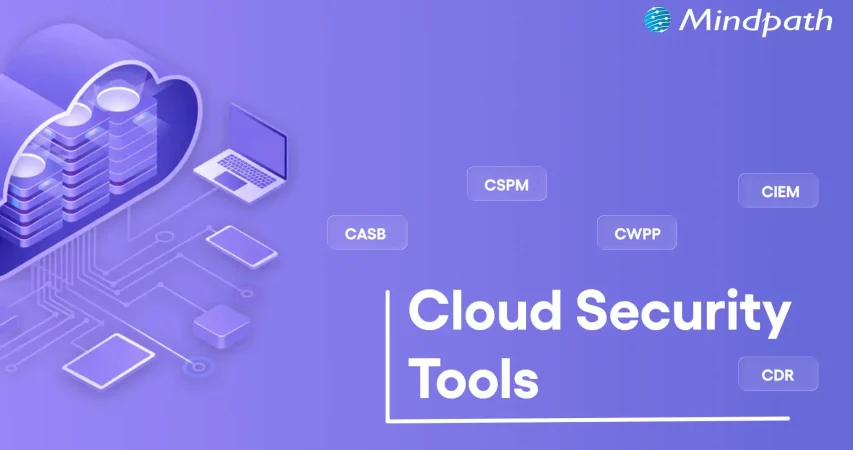
The rising popularity of cloud computing technology in the business world has automatically led to the popularity of cloud security tools. If you leverage cloud solutions in any manner, you need to be aware of the top cloud-based security tools that are available in the market right now. These tools can certainly make or break the cloud cybersecurity posture of your organization. 

Now is the best time to learn about the top 10 cloud security tools. The insight can definitely empower you to derive optimum benefits from these tools while leveraging cloud computing technology. It is time to dive into the world of the best cloud security tools.

Want to stay ahead of evolving cloud security threats with the right tools? Mindpath’s managed cloud services combine expert management with advanced security tools to keep your cloud safe and optimized.

What are Cloud Security Tools?

Cloud security tools include a diverse range of technologies, practices, and controls. They collaborate in order to protect data, the cloud infrastructure, along with all the applications within the cloud environment. The main objective of cloud computing security tools is to defend users against internal or external cybersecurity threats. They also play a catalytic role in mitigating business disruptions that may be caused by power outages, natural disasters, or other kinds of serious events. 

Business entities need to bear in mind that the need for cloud security solutions is multidimensional in nature. Encryptions as well as antimalware tools help shield applications and data from possible threats. Similarly, firewalls are responsible for regulating traffic flows to cloud resources for determining which data can pass through. Identity and Access Management (IAM) solutions make sure that only authorized individuals can be given access to resources on the cloud. The role of cloud security tools and solutions is of high strategic importance for organizations.

Wondering how emerging trends are shaping cloud security? Check out the latest cloud computing trends to learn what’s driving secure cloud adoption.

Top 10 Cloud Security Tools

Now that you have a basic understanding of cloud computing security solutions, it is essential to look at some of the top cloud security products that are available to you. You need to familiarize yourself with the most popular tools so that you can choose the best product that can meet all your needs perfectly.

1. Auth0

Auth0 is a well-known identity and access management solution that is available in the market today. It can enhance cloud security by offering secure authentication as well as authorization for applications, users, and APIs. It is a highly developer-friendly platform that offers flexible security solutions. 

It is highly adaptable in nature, which makes it extremely suitable for businesses of varying sizes. Its robust APIs, coupled with extensive integration options, make it simpler to embed identity and access management into the applications of organisations without compromising the experience of users.

2. Datadog

Datadog is a highly versatile and robust cloud monitoring platform. It integrates in a seamless manner with popular cloud service providers such as AWS, Google Cloud, and Microsoft Azure. The real-time analytics, as well as customizable dashboards, make it easy for businesses to not only track but also to secure their cloud environments. The tool offers the right kind of insights that businesses require in order to maintain security while scaling their operations in a flexible manner.

3. Microsoft Defender for Cloud

These cloud security products offer robust security solutions for Google Cloud, Azure, and AWS. The best thing about this tool is that it perfectly integrates with the Microsoft ecosystem of other security solutions. Some of its core offerings include vulnerability management, threat detection, and compliance monitoring. The built-in automation feature can even help business organizations to detect and mitigate different types of cybersecurity risks and threats.

Also Read: AI in Cybersecurity

4. Wiz

Wiz is a robust cloud security platform that offers complete visibility along with protection across diverse cloud environments. This tool is capable of continuously scanning the cloud infrastructure, containers, and virtual machines for the purpose of identifying misconfigurations. 

It also helps locate vulnerabilities as well as compliance risks.  It adopts an agentless approach, unlike conventional agents. It connects directly to cloud service providers for rapid deployment.  It not only correlates security findings to highlight the most critical risks, but it also helps teams prioritize the remedial solution.

5. Sysdig

Sysdig is among the popular cloud security tools that can monitor as well as safeguard cloud native applications and services. With the help of this tool, business entities can ensure real-time compliance. A unique feature of this cloud security tool is that it makes use of an open-source threat detection engine. This tool can scan container images prior to their deployment, thereby preventing vulnerabilities. Some of the other offerings of Sysdig include runtime protection, visibility, and cloud audit activities.

Planning to build scalable applications without managing servers? Check out our blog on serverless architecture in cloud computing to learn how it simplifies deployment while supporting secure and efficient workloads.

6. Tenable Cloud Security

Tenable Cloud Security is a popular tool in the market that can safeguard your cloud workloads. It can even monitor threats and assess vulnerabilities in an effective and efficient manner. It is considered to be an ideal solution for dynamic cloud environments. With Tenable, you can customize your security policies and streamline the compliance of your cloud infrastructure. You can leverage the continuous monitoring feature in order to keep a constant tab on cloud activities on a frequent basis.

7. Check Point Cloud Guard

Check Point Cloud Guard is a holistic cloud security platform. It has been designed to protect workloads, assets, and applications across private, public, and hybrid cloud environments. It serves as a useful tool since it offers advanced threat prevention along with posture management and network security. 

It offers proper visibility into configurations and helps in detecting misconfigurations as well as vulnerabilities on the cloud. Check Point Cloud Guard helps business entities maintain a solid cloud security thanks to its AI-driven threat intelligence coupled with unified management.

Must Read: Benefits of AI

8. Palo Alto Networks Prisma Cloud

Palo Alto Networks Prisma Cloud is a highly scalable cloud security tool that is available in the market today. It safeguards hybrid environments along with multi-cloud environments. This tool places high emphasis on proactive detection of cloud computing threats and their mitigation. You can leverage this tool to ensure there is seamless compliance as well as risk assessment management. This solution integrates advanced analytics along with AI insights to strengthen security on the cloud.

9. Trend Vision One Cloud Security

Trend Vision One Cloud Security is among the best cloud native security tools that you can find today. It is designed to secure cloud environments throughout their entire lifecycle. This tool offers visibility along with compliance management and threat detection. It effectively integrates cloud workload protection and cloud security posture management, which can help in the identification of vulnerabilities and misconfigurations on a real-time basis. It helps business entities detect, investigate, and respond to threats quickly since it is powered by AI-driven analytics and threat intelligence.

10. CrowdStrike Falcon Cloud Security

In order to address cloud security risks, you can choose CrowdStrike Falcon Cloud Security. It serves as a comprehensive platform that can secure your workloads, containers, and the entire cloud infrastructure. These cloud security solutions offer real-time visibility and threat detection. You can use the flexible tool in order to update or change your cloud security strategy. This tool can connect with the cloud ecosystems and identify and resolve cloud computing attacks and risks. You can also discover misconfigurations and ensure data security. 

There exists a diverse range of cloud computing security tools today. You need to know your needs well. The insight can certainly help you choose the right tools and solutions in order to deal with cloud computing vulnerabilities and risks.

Looking to improve cloud security as environments become more complex? Learn more about cloud-native development and how it supports secure and scalable apps.

Final Words

You need to familiarize yourself with the best cloud security tools that are available for users today. Your ideal choice depends on diverse factors such as your needs, the features of the tool, and many more. Some of the top tools that exist today include Auth0, Datadog, Microsoft Defender for Cloud, and many more. You need to know the strengths of each of these tools so that you can effectively identify the tool that perfectly aligns with your needs. 

Mindpath’s excellent managed cloud services can help businesses effectively identify and choose the best cloud computing security solutions. The experts will use their capabilities and experience to help businesses find the best security solution that perfectly aligns with their business needs and expectations. You can definitely rest assured by partnering with the trusted name.   

Related Post

Discover the ultimate guide to hiring Node.js developers in London. Learn about the skills, benefits, and cost factors involved in finding the right talent for your project.

Related Post

Staff Augmentation vs Managed Services

The employees of a company are no doubt the most essential assets. In the recent scenario, businesses have plenty of choices to keep their team more robust and result-oriented. With the rise of remote work and technology, you don’t need to limit your team to a certain geographic location. Further, you can leverage the excellence of the worldwide talent pool.

A number of companies are choosing to outsource their tasks and project development. In fact, the global outsourcing market size is USD 1.02 trillion, and it is going to double by 2031 (Source). In this blog, let us compare two of the most essential outsourcing approaches: staff augmentation vs managed services. This can help you pick the right service that goes well with your company’s structure.

Want a team that can help you to stay competitive with evolving project demands? At Mindpath, we offer staff augmentation services that enable you to scale your workforce efficiently and cost-effectively.

What is Staff Augmentation?

Staff augmentation is considered to be an outsourcing business model in which your company will hire outside professionals temporarily. Further, the process remains quick, and you can augment the capacity as per your current team’s needs. You can leverage near-shore, onshore, and offshore talent and can scale the team as per the demands.

  • When it comes to the IT industry, businesses can use staff augmentation for multiple stages of the development process. Additionally, this includes workflow optimisation, programming, quality assurance, etc.
  • This can help you overcome specific challenges while hiring key skills that your internal team may be missing.
  • Talking about staff augmentation vs managed services, staff augmentation is cost-effective and offers flexibility.
  • It is a temporary solution that accesses your existing team and resources, and gets the benefits of outside talent while reducing the operational charges.

What are Managed Services?

Managed services are an integral approach to software development that allows you to outsource your IT functions to a provider from another region. Moreover, your business can outsource the work virtually to managed IT services. This can include anything from data migration to cybersecurity, and much more.

  • Managed service providers don’t integrate with your internal team but operate on their own.
  • They can offer you a reliable quote and project timelines. After you approve them, they will start working on the designated task while maintaining continuous communication.
  • The managed services model is cost-efficient as it lessens the requirement for overhead and resource management.
  • Your company can prioritize other business tasks and can check on the progress instead of assessing the work on a daily basis.

Looking to stay ahead in your hiring strategy with evolving workforce models? Check out the latest staff augmentation trends to learn what’s shaping the future of talent.

What are Some Key Differences between Managed Services vs Staff Augmentation?

To get a detailed knowledge of managed services vs staff augmentation, let us go through some of its key aspects. Here is a table that highlights all the essential features that these models consist of.

Important Features Staff Augmentation Managed Services
Benefits Cost efficiency is one major staff augmentation benefits. This model leverages a fixed rate and can be your long-term partner.
You can have access to a wide range of talented professionals. Prevents you from the risk of managing in-house teams.
It enables you to scale the team as per project demands. Provides access to a team with expertise across multiple elements.
Bridges temporary skills gaps. Allows the internal team to prioritize core operations.
Disadvantages It is a bit risky to integrate a new team to your existing operations. Integrating external resources might require extreme knowledge.
Risk of dependency on external providers for critical works. You need to depend on the provider to drive process success.
It needs a strong internal management capacity to handle the external professionals. No control over your project, team, or the development process.
Flexibility Your teams can be scaled quickly as per the existing skills gaps. Flexibility remains limited, and changes might give rise to additional payments.
Expertise It offers access to specific skills or expertise for a required timeframe. Offers a wide range of expertise and a supportive environment.
Responsibility The client is responsible for your project’s success and workflows. This model provider owns the project and offers a product as per the agreed requirements.
Focus Area It is task-specific and viable for short-term projects. It leveraged end-to-end solutions.
Customization This model is fully customizable as per your team dynamics. Follows the terms that is written on the agreement.
Best For Quick scaling where your workload is heavy. Suitable for long-term project commitments.

When Should You Prefer Staff Augmentation Services?

After assessing the staff augmentation benefits and other critical factors, let us understand when you should leverage this outsourcing model.

1. Your Need is Project-Specific

If your requirement is temporary, staff augmentation can help you bring in the specialized talent for a specific time period. Further, you can easily access the services as per your project demands without seeking any long-term commitments.

2. You Need Direct Assessment

When your company has a strong team, staff augmentation allows the external team to work under your supervision. So, this ensures your priorities are fulfilled with quality. Additionally, your existing team’s capabilities will also increase with better insights.

3. You are Handling a Strict Deadline

If your project’s timeline is critical and hiring full-time employees would take too long, staff augmentation provides rapid onboarding of skilled professionals. Further, this can help you maintain your project speed.

Want to avoid common onboarding challenges with external talent? Learn through our augmented staff onboarding guide for a smoother transition.

When Should You Prefer Hiring Managed Services?

Here are the instances where managed IT services can be your utmost preference.

1. You Desire Strategic IT Management

If your organization doesn’t have the leadership to manage all its internal IT operations, managed services can access the experts to take complete responsibility. Moreover, this ensures professional oversight for better performance management. Your team gets the freedom to focus on core functionalities.

2. You Need Predictable Solutions

When your company depends on consistent system performance and reliability, managed services can deliver structured processes. So, it keeps your team balanced while lessening the operational charges. Moreover, your plans will have that strategic influence on your audience.

3. Your Company Needs Long-Term Commitments

Managed services can offer continuous expertise when it comes to fulfilling your ongoing requirements.  Instead of hiring an internal team, you can get dedicated support that can encourage your overall functions.

Curious about hiring the right talent for short-term and long-term projects? Check out our staff augmentation hiring guide to learn practical hiring insights.

Cost Considerations of Both IT Outsourcing Models

It is important for you to understand that saving money is not always the primary goal. You also need to value precise creation. Here, go through the cost approaches of both the IT outsourcing models.

1. Staff Augmentation Costs

In this model, you need to pay only for the expertise you need. You can control the resource allocation, and there is no overhead of benefits, training, and recruitment. However, the charges might increase if you demand some change in the middle of your project.

2. Managed Services Costs

This model can assure you of predictable or fixed charges. It sometimes includes service level agreements for performance. The essential providers can handle multiple clients effectively. But managed services sometimes come with longer contractual commitments.

Looking to improve project delivery with the right technical expertise? Check out our IT staff augmentation guide to learn how to bring in skilled professionals.

Final Words

Staff augmentation and managed services can assist your business in completing the development projects more efficiently. However, when it comes to staff augmentation vs managed services, you need to assess their elements prior. Staff augmentation can be a great solution for businesses that need flexibility and short-term goals. On the other hand, managed services are best suited for long-term assistance.

Our experts at Mindpath can help you with both aspects. Partnering with us can offer you the support that you desire while filling the gap needed for your IT foundation.

Decide between staff augmentation or managed services for your business. Explore their benefits and find out which is best for your IT needs.
Node.js eCommerce
Imagine a world where your eCommerce platform runs at extraordinary speed, performs thousands of transactions effortlessly, and delivers real-time updates to your customers. Sounds like a dream, right? In 2024, this dream can become a reality with Node.js. But is it truly the best choice for your eCommerce business? In this blog we are going to explore how Node.js can be the perfect choice for your e-commerce platforms.  In today’s world, having an eCommerce platform is essential for any business that wants to sell products online. These platforms aid in managing everything from customer orders to sales data, making the running of businesses easy. However, picking the right technology for your eCommerce platform can be challenging with so many options available. The choice of technology for any eCommerce platform is important because it has a direct implication on how well your online store will perform. The right kind of technology will ensure that your website works smoothly and results in quick loading time along with good customer experience. It will also help in inventory management, secure payment processing, and tracking your sales effectively.   Of all technologies, Node.js can turn into the best choice for an eCommerce platform. Its flexibility and modern approach make it the most fitting for such dynamic webstores to grow your business. Choosing Node.js creates a firm foundation for your eCommerce success.  So, let us dive deep to explore how Node.js can be the top choice for building your eCommerce platform in 2024! 

Benefits of Using Node.js for eCommerce  

1. Speed and Performance  

Node.js is fast due to the V8 engine it runs on. This engine turns JavaScript right into machine code, making it work way quicker than other languages that need to be interpreted. Node.js handles multiple requests simultaneously without any performance issues because it is an event-driven and non-blocking I/O model. This means that, even while your eCommerce site is very busy with a lot of traffic, Node.js manages to keep response times fast. 

2. Scalability  

Node.js can process many requests quickly because it has a non-blocking I/O model and a single-threaded event loop. Its modular architecture makes it simple to scale up by adding more servers or increasing server capacity. Because of its adaptability, you can increase the capacity of a Node.js server or add more servers to handle increased traffic, allowing your eCommerce platform to expand without interruption. 

3. Large Community  

Node.js has an incredible and active developer community that provides assistance, resources, and tools. A wide range of packages and modules are available in this active community to assist you in creating dependable and effective eCommerce solutions. It’s simpler to solve issues and stay up to date with the most recent advancements with such broad assistance and an expanding collection of materials. This implies that Node.js can help you create and manage your eCommerce platform more successfully. 

4. Modular Approach  

Ecommerce systems handle a large amount of data, which can make code management tough but Node.js’ modular approach simplifies this. This strategy allows developers to divide down code into smaller, more manageable chunks or modules. Node.js facilitates the efficient development, maintenance, and testing of your eCommerce application by organizing code into functional blocks. 

5. Integration with Other Technologies 

Node.js integrates effectively with a variety of technologies, making it a versatile option for developing eCommerce apps. It seamlessly interfaces with front-end frameworks, databases, and other programming languages. This compatibility enables you to link your eCommerce platform to important services such as payment systems and third-party integrations. You may use Node.js’ capabilities to build strong, efficient, and scalable eCommerce solutions that fit your company’s and customers’ demands. 

Curious about the power of Node.js for your next project?

At Mindpath, we deliver cutting-edge solutions that propel your business forward with precision and speed.

Best Practices for Building an Ecommerce Platform with Node.js  

1. Choose a Reliable Node.js Ecommerce Engine  

Choosing the best Node.js eCommerce engine is the first step towards creating a successful online business. An eCommerce engine is a toolset designed to offer the core functionality of an online store. It simplifies product and order administration, payment processing, client follow-up, and other features that a developer can use to create and edit an eCommerce website. A decent eCommerce engine will save time for developers because it already has the fundamental functions, allowing for the development of new features and customization based on the website’s specific demands. 

2. Consider a Modular Approach  

When developing eCommerce apps using Node.js, taking a modular approach is advantageous. Node.js offers modules, which are tiny, self-contained bits of code that handle certain tasks. This approach makes troubleshooting easier because problems with one module do not affect the entire application.  A modular approach also speeds up development by allowing numerous developers to work on various portions at the same time, as well as simplify maintenance by ensuring that modifications to one module do not affect others. To do this, identify essential features, split them down into smaller modules, create explicit interfaces between them, and utilize tools like npm to manage dependencies. Frameworks like Nest.js and Express.js may help you construct a more powerful and adaptable eCommerce platform by extending the modular design. 

3. Integrations  

When creating an eCommerce site using Node.js, contemporary integration technologies are essential for successful operation. APIs (Application Programming Interfaces) enable your platform to interact with other services like payment gateways, shipping suppliers, and CRM systems. For example, APIs can connect to payment processors such as Stripe to conduct transactions easily. Webhooks provide an additional integration technique by providing automatic updates across systems. A webhook, for example, can alert the delivery provider when an order is received, ensuring that it is fulfilled promptly. Stripe is a popular example of a webhook for payment events, whereas Twilio is used for SMS notifications. Using APIs and webhooks contributes to a more connected and efficient eCommerce platform, which improves the entire consumer experience. 

4. Frontend Development  

The frontend of an eCommerce application, including style, layout, and functionality, is critical for user engagement. Modern front-end technologies improve consumer satisfaction and engagement. Jamstack, an acronym for JavaScript, APIs, and Markup, is a prominent method. It focusses on pre-built HTML, serverless functions, and client-side JavaScript to provide speed, security, and reliability. Jamstack sites employ static site generators to improve load speeds and security, which is critical in eCommerce. It also allows for easy connection with services like payment gateways and shipping providers via APIs and webhooks. 

5. Implement Security Measures 

Strong security measures must be established on an eCommerce platform to safeguard private data, including payment and client information. Proper security protects your platform from dangers like hacking, phishing, and other cyberattacks, ensuring that your customers’ data is protected. To do this, first secure your server. Make sure it’s properly set up, all security updates are up to date, and firewalls and intrusion detection systems are in place to prevent unauthorized access. HTTPS encrypts data transactions between the server and users, protecting sensitive information such as login passwords and payment details. Implement user login and permission restrictions to guarantee that only authorized users have access to certain portions of the platform. This involves creating secure passwords and implementing role-based access limits. Validating input, utilizing prepared statements, and encoding output can help prevent common security risks like cross-site scripting (XSS) and SQL injection. To repair any security vulnerabilities, update all software and plugins on a regular basis to the current version. Perform frequent security audits and tests, including testing and code reviews, to detect and resolve any flaws. By adhering to these guidelines, you can be assured that your eCommerce platform is secure, develop confidence with your clients, and safeguard their sensitive information. 

Node.js Development Services at Mindpath 

  1. Node.js Web App Development: We create powerful, scalable web applications using Node.js. Our focus is on delivering a seamless digital experience that aligns with your business goals and makes a lasting impact.


  2. Node.js CMS Development: We design custom content management systems that make handling your content easy. Our CMS solutions provide a user-friendly interface for managing all your content effortlessly.


  3. Node.js API Development: We build robust APIs that enable smooth integration with other systems. Our APIs enhance functionality and ensure reliable communication between different applications.


  4. Node.js Consulting Services: We offer expert advice to help you maximize the potential of Node.js for your projects. Our consulting services include strategic guidance and technical insights to boost your application’s performance and innovation.


  5. Node.js Maintenance & Support: We provide ongoing maintenance and support to keep your applications running smoothly. Our team is always ready to resolve any issues and make continuous improvements.


  6. Node.js Migration Services: We assist in migrating your existing applications to Node.js, improving scalability and performance. Our migration services ensure a smooth transition with minimal disruption. 

Conclusion 

Node.js, in 2024, is the foremost technology in the development of high-performance eCommerce. It is an excellent base that delivers development with very great speed, high scalability, and integrability with other technologies in the development of dynamic and efficient online stores. Node.js can guarantee businesses that their eCommerce sites don’t have any difficulty handling high traffic, real-time updates, and superior user experience. Therefore, adopting Node.js will position an eCommerce platform for success within the competitive digital landscape today.  

At Mindpath, we happen to be the experts in unleashing the true potential of Node.js when it comes to the development of supreme eCommerce solutions. This ranges from full-cycle web app development and custom CMS solutions to robust API development, professional consulting, ongoing maintenance, and smooth migration support. We ensure that the Node.js applications developed for our clients are not just high-performance and scalable but also oriented to business needs.

Wondering how Node.js can transform your digital strategy?

At Mindpath, our expertise in Node.js ensures scalable and innovative applications tailored to your needs.

Discover the top Node.js trends shaping digital technology in 2024, from AI and TypeScript to IoT and cloud computing. Explore how Node.js drives innovation!
Build MVP

The success of every business revolves around the products and services they offer to their target customers. Do you know what it takes to build a product that your customers will love and recommend to others? This is where every business, especially startups, must build a MVP to create the best products for their target audience. Building a minimum viable product provides a lean and targeted solution to gain market validation.

Many people must not be familiar with the fact that only one out of ten startups survive beyond ten years. The primary reasons for failure of startups include lack of research, presence in the wrong market and shortage of funds. You can leverage a MVP to find the feasibility of your product idea and strategically transform it into sustainable business. An overview of a step-by-step framework to create a MVP will help you see how simple it is to build one. 

Planning to turn your product idea into a testable MVP? Mindpath offers MVP development services to help startup businesses design and develop MVPs that deliver real user insights.

Why Should You Build a Minimum Viable Product?

The biggest reason for which businesses fail to create a successful product revolves around diving directly into product development. If you invest almost all of your resources in creating a full-fledged product and your customers don’t like it, then you end up with a disaster. Most of the business owners who don’t know the answer to ‘what is an MVP?’ end up facing such situations. The MVP is a primary or the most basic version of the product you want to offer to your customers. It includes only the essential features and functionalities that will help you gain feedback from real users.

Businesses can use their MVP to identify the demand for their product in the target market. The minimum viable product also helps in identifying features that your customers love. As a result, you can ensure that the final product reaches the right market and aligns with your customer’s requirements. Every business owner should create a MVP or minimum viable product to reduce risks and establish the foundation for long-term growth. It not only helps you validate your product ideas but also facilitates efficient resource allocation and earns the trust of investors and stakeholders. 

Ready to launch your MVP without delays? Visit our blog on hiring full-stack developers for MVP to learn how to find developers who can handle both front-end and back-end tasks with ease.

Unraveling the Ideal Framework to Build Your MVP

Any business owner with a product idea must follow a strategic approach to create their minimum viable product. You may assume that developing a MVP might come with a lot of technical complexities that are difficult to navigate. On the contrary, you can use the following steps to find the perfect roadmap to develop a minimum viable product for your business.

1. Identify Your Target Audience and Their Problems

The first step in building your MVP involves knowing your target audience and their requirements. It is important to remember that you are creating an MVP to identify whether your customers will like your product. Therefore, you should start with an understanding of the demographics and pain points of your target customers. 

The insights from market and user research can provide the foundation for developing a product that meets the needs and preferences of your customers. Once you have identified the problems of your target audience, you can decide how you want to solve them with your product. Understanding the requirements of your target customers will help you create a product that provides real value.

2. Leverage the Benefits of Market Research

You can successfully complete the first step of building a MVP by using the most effective approaches for market research. Businesses cannot just guess the problems their target customers might have and build a product based on assumptions. A review of the different examples of minimum viable product will show you that market research is a critical tool in MVP development. Comprehensive market research offers a granular view of the demographics and problems of your target audience. 

The more information you gain from market research, the more accurate your product idea will be. Market research not only helps you come up with the most effective product idea but also shows you what your competitors are offering. As a result, you can find different ways to make your product stand out from the crowd. Business owners should also know that having a strong product idea will help in attracting investors for their product.

3. Establish an Outline of Core Features of Your Product

After finalizing a product idea, you should start defining the core features and functionalities you need in your MVP. All the minimum viable product examples show how you should begin with an outline of basic features that your target market needs. The definition of core features for your MVP provides the ideal start to the process of creating a minimum viable product.

Once you have decided on the core features you want in the MVP, you should think about additional features. At this point of time in MVP development, you must also prioritize the features that you want to include immediately and the ones you can add later. Feature prioritization helps in enhancing the flexibility to define the optimal scope for your MVP development project. 

Must Read: MVP for Startups

4. Develop the Prototype and Your MVP

Many of you might be thinking about the necessity of building a prototype when you can build the MVP directly. The prototype serves as an early version of the minimum viable product and offers a clear impression of how it would work. The basic prototype will help you find how the user interface will look and how users will experience your product. You can also leverage the prototype for early testing and feedback, thereby allowing room for refining the design and functionality of the MVP before full-scale development. 

The successful testing and improvement of the prototype will lead you to your MVP. It is important to ensure that your MVP does not have any bugs and offers the best quality of customer experience. You should know that you have to introduce the MVP to your target users so that they can perceive the core value your product has to offer. During the development of the MVP, you must also specify the timeline and distinct milestones for the project.

5. Introducing Your MVP to Early Adopters

The most crucial step in the process of developing a MVP revolves around introducing it to the target users. Early users of the product can be regular customers or industry experts who represent your target audience and know your target market. Any guide on how to build a minimum viable product emphasizes the need for feedback from early adopters. The feedback from real users helps you determine whether your product is an ideal fit in the target market.

The best approach to ensure that your MVP reaches early adopters is through identifying communities of users. Professional networks, niche forums or social media communities are the top places where you can find the first users for your MVP. You should create open channels, such as dedicated forums or in-app surveys to gain feedback for your minimum viable product.

6. Collecting and Evaluating the Early Feedback

The feedback from early adopters for your MVP serves as a crucial resource to ensure that your product meets the expectations of users. You should use different types of feedback collection methods for your MVP product to obtain qualitative and quantitative data. The notable methods to collect feedback for your minimum viable product include surveys, usability tests and user interviews. 

Once you have collected the feedback, you should categorize it into different aspects of your product. You can use the feedback to learn about usability, performance and functionality of the MVP and identify areas for improvement. Your development team should analyze feedback data comprehensively to understand user preferences and challenges. The insights gained from feedback analysis will guide you through the process of iterative product development.

7. Continuous Iteration and Improvement

Understanding the feedback from early users provides the ideal ground to start refining your MVP according to user expectations. You cannot learn how to build an MVP without focusing on iteration or repeating the development process again. It involves planning, development, testing and reviewing the product repetitively by using feedback from real users. 

Developers can rely on user feedback to address the notable issues in the MVP and enhance its functionality. As a result, iteration serves as a valuable component in the MVP development process to improve the user experience. You should remember that engaging regularly with your target audience and using their feedback can help you achieve the right product-market fit.

Looking to bring your software idea to life without unnecessary delays or costs? Read our blog on MVP in software development to learn how to build, test, and refine your product efficiently.

Final Thoughts

The process to create a minimum viable product for your next big product idea follows a common set of steps. Irrespective of the industry, you can rely on professional MVP development services to translate your ideas into sustainable products. You can start by identifying your target audience and their problems, followed by comprehensive market research, to define the core features of the MVP. Subsequently, your development team can create the MVP and leverage feedback from early users to introduce necessary improvements.

Mindpath is one of the most popular platforms for providing MVP development services, with a successful record in helping various businesses. As a reliable MVP development company, we have helped startups and large corporations test their product ideas before full-scale development. Reach out to us for a free consultation and build your minimum viable product now.