Cloud Computing Trends 2026: What’s Coming Next?

Join our Newsletter!

Featured Posts

Support Is One Click Away

Home

Cloud Computing Trends 2026: What’s Coming Next?

cloud computing trends

Cloud Computing Trends 2026: What’s Coming Next?

Have you been following the newest cloud computing trends? It seems that every day, there is something new to change how we store, share, and secure data. Perhaps you’ve been wondering if your business is missing out on smarter ways of working, or worried about staying ahead of the game in this digital world. Whatever your thoughts are, there is one thing for sure: cloud technology is not just for tech giants anymore; it is shaping the way we all connect, create, and grow.

As we move to 2026, these cloud trends will continue to open bigger opportunities for businesses, no matter how big or small. With faster, many times AI-driven services, greener cloud solutions, a flexible and secure future is more promising than ever. Being aware of what is next will enable you to make an informed decision about the future and give you a competitive edge. If you’re wanting to find out more about where the cloud is headed, continue reading. In this blog, you will learn what’s coming next.

Looking to build scalable, secure cloud applications that drive business growth? Mindpath offers expert cloud development services to help you design and optimize cloud solutions tailored to your needs

Understanding Cloud Computing

Cloud computing is simply the storing and accessing of data and programs over the internet instead of your computer’s hard drive. It is considered internet-based computing, allowing businesses and individuals to use servers, storage, and software that is also provided by cloud providers. One of the benefits is that maintenance is limited, which means there are lower costs associated with users storing files, documents, images, etc. Cloud computing offers flexibility in keeping important data secure and available.

It works through remote servers hosted online that store, manage, and process data rather than relying on local hardware. Users can access these resources whenever they need and scale them up or down as their needs change. This makes it easy to save money on physical infrastructure, increase efficiency, and keep operations running smoothly with more reliability and speed.

The market for this technology keeps expanding rapidly as more businesses adopt cloud solutions. According to Grand View Research, the global cloud computing market size was around USD 752.44 billion in 2024 and is projected to reach USD 2,390.18 billion by 2030. This growth is mainly driven by the rise of big data, artificial intelligence, and machine learning, which all depend on powerful and scalable cloud infrastructure.

Curious how modern cloud apps run without servers? Explore our blog on Serverless Architecture in Cloud Computing to see how serverless solutions are shaping the future of cloud trends.

What are the Latest Trends in Cloud Computing?

Staying updated with cloud computing trends 2026 can help your business stay competitive and ready for what’s next. Companies everywhere are paying close attention to the current trends in cloud computing to boost efficiency and security. Here are some key developments you should watch for in the coming year.
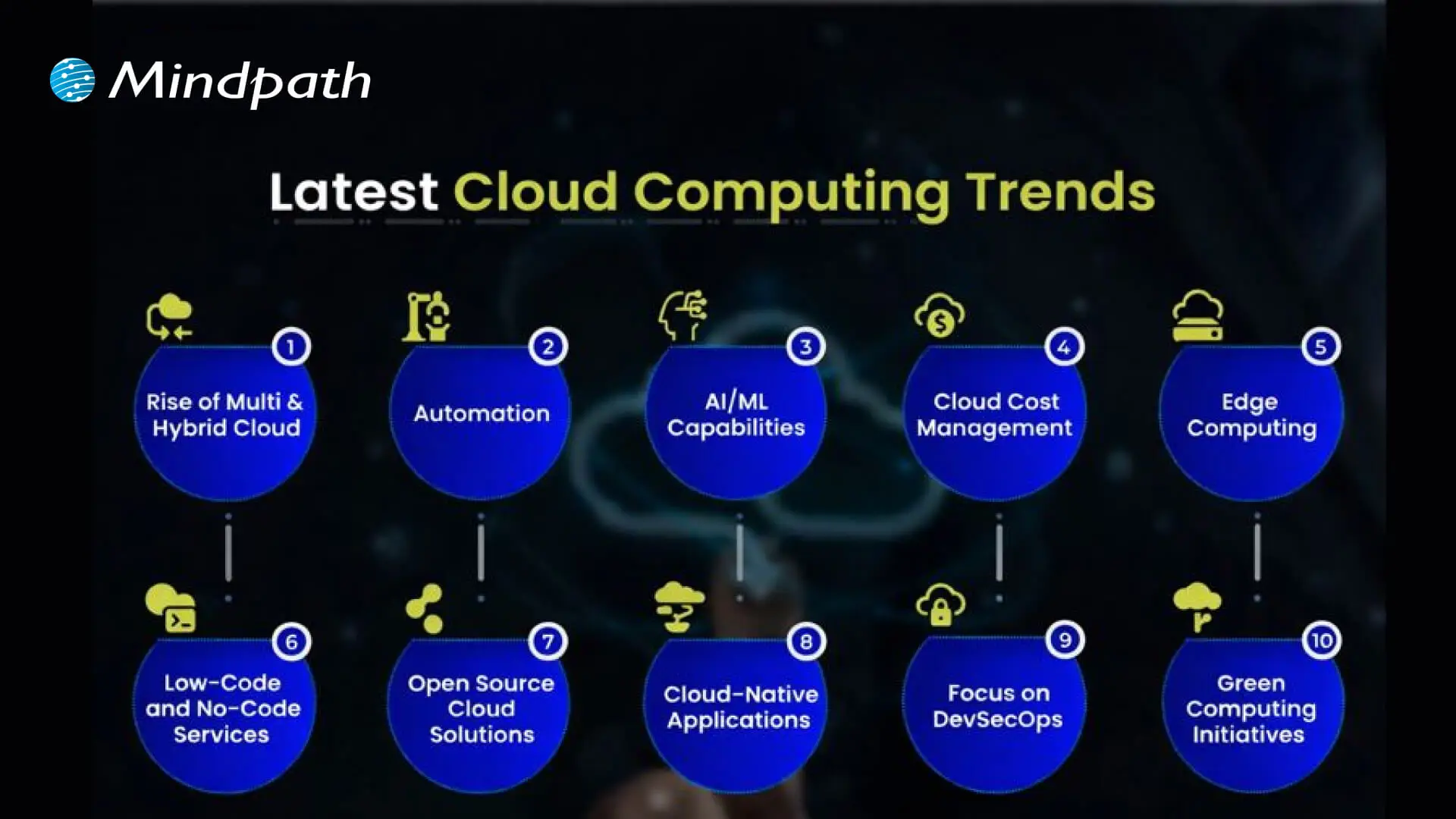
Cloud computing trends

1. Rise of Multi & Hybrid Cloud

Many companies now use a multi-cloud strategy and hybrid cloud approach to run workloads across different cloud providers and their own data centers. This setup lets them combine the strengths of public and private clouds while keeping sensitive data secure. Using multi and hybrid cloud solutions also gives businesses more flexibility and better control over risks.

2. Automation

One of the latest trends in cloud computing is using automation to make systems work faster and more efficiently. Good automation helps teams deliver better results, reduce downtime, and improve overall quality. With better AI tools and user-friendly platforms, cloud providers are making automation easier for everyone to use.

3. AI/ML Capabilities

Better AI and machine learning are becoming the next big thing in cloud computing. Many providers now offer smart tools that help businesses use advanced analytics and automation. These cloud computing trends make it easier to build intelligent applications and boost efficiency without needing deep technical skills.

4. Cloud Cost Management

Managing expenses is a big part of the future of cloud computing as more businesses move to the cloud. New tools and services help companies track and control their spending more easily. These cost management features make it simple to budget, monitor usage, and find ways to save money.

5. Edge Computing

Edge computing is one of the cloud latest trends bringing data processing closer to where it’s created. This helps reduce delays and cuts down on the amount of data that needs to travel long distances. By doing this, businesses can work faster and use their networks more efficiently.

6. Low-Code and No-Code Services

One of the growing cloud services trends is using low-code and no-code tools to build apps faster. These solutions help people create software without needing advanced programming skills. Such cloud computing trends save time and lower development costs for businesses.

7. Open-Source Cloud Solutions

One of the growing cloud computing trends is the move toward open-source cloud solutions. These solutions give businesses more control and flexibility to adjust their cloud setup as needed. Open-source options can also help companies save money compared to traditional cloud providers.

8. Cloud-Native Applications

Building cloud-native applications is an important part of the future of cloud computing. These apps are made to run smoothly on cloud systems and use all the benefits the cloud offers. More tools are now available to help businesses create and launch these apps quickly and easily.

9. Focus on DevSecOps

DevSecOps brings security into every step of software development instead of adding it later. This approach helps teams find and fix issues early, keeping systems safe. Many cloud providers now offer tools that make it easier for businesses to build secure applications from the start.

10. Green Computing Initiatives

One of the important cloud computing trends is the push for greener solutions. Providers are using renewable energy and building energy-efficient systems to cut down on carbon emissions. These efforts help businesses meet their sustainability goals while using cloud services.

Struggling with speed, collaboration, or automation in DevOps? Our DevOps Challenges and Solutions blog explains how modern businesses address these issues.

Which Industries are Adopting Cloud the Fastest?

Many industries are moving to the cloud to work faster and serve their customers better. Companies see cloud solutions as a way to cut costs and stay flexible in a changing market. Let’s look at which sectors are adopting cloud the fastest right now.
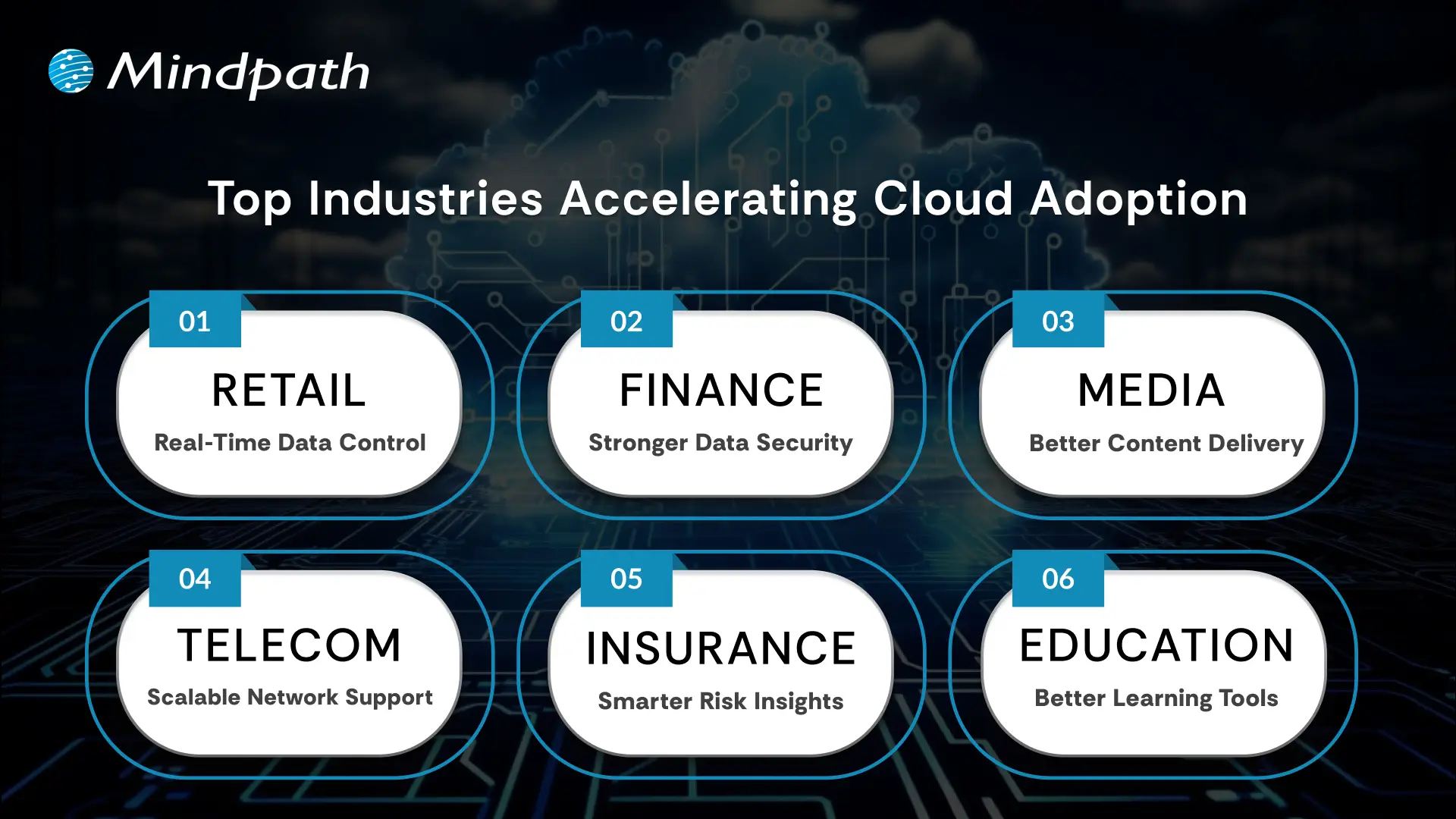
Top Industries Accelerating Cloud Adoption

1. Retail: Real-Time Data Control

Retailers use the cloud to manage sales, stock, and customer data in one system. Real-time updates improve supply chains and marketing campaigns. This boosts profits and keeps work going smoothly.

2. Financial: Stronger Data Security

Banks and financial firms trust the cloud for secure data storage and better protection. They can handle tasks like billing and client help more easily. Better security helps them grow safely.

3. Media: Better Content Delivery

Media companies use the cloud to create, store, and share content worldwide. Teams can work together from different places and finish faster. They handle big audiences without spending more.

4. Telecom: Scalable Network Support

Telecom companies use cloud solutions to manage networks and huge data. This helps them handle changing demands and roll out 5G and IoT services. Cloud computing trends keep people connected and ready for new tech.

5. Insurance: Smarter Risk Insights

Insurance companies use the cloud for flexible data and cost savings. They analyze big data to predict risks and detect fraud early. This helps them stay competitive with better customer service.

6. Education: Better Learning Tools

Schools adopt the cloud to manage tight budgets and get new technology. Teachers and students can share lessons and resources in one secure place. This makes learning flexible and improves teamwork.

Looking for ways to optimize your cloud strategy? Explore our Multi-Cloud Strategy blog to see why businesses are spreading workloads across multiple clouds.

Is Your Business Cloud Ready for 2026?

Staying on top of cloud computing trends can help any business unlock new opportunities, save money, and stay secure. As you’ve seen, trends like automation, AI, green computing, and smart cost management are shaping the way companies grow and compete. Keeping an eye on what’s next means you’re always ready to adapt and make smarter technology decisions.

At Mindpath, we help you stay ahead with trusted cloud computing services designed to match your goals. Our team can support your move to the cloud, help manage costs, and keep your data secure. We focus on delivering solutions that fit your business needs today and tomorrow. Connect with us and see how we can make your cloud journey easier.

Frequently Asked Questions

1. How can a business choose the right cloud model for its needs?

Choosing the right cloud model depends on factors like data sensitivity, budget, and scalability needs. Businesses should evaluate whether public, private, or hybrid cloud fits their operations best. A clear understanding of workloads and long-term goals helps in making a practical and cost-effective decision.

2. What are the biggest risks businesses should consider when moving to the cloud?

Common risks include data security concerns, vendor dependency, and unexpected costs. Without proper planning, businesses may face compliance issues or performance challenges. Implementing strong security practices, monitoring usage, and choosing reliable providers can help reduce these risks effectively.

3. How does cloud computing support business growth in competitive markets?

Cloud computing allows businesses to scale resources quickly, launch services faster, and respond to market changes efficiently. It supports innovation by enabling access to advanced tools like analytics and AI, helping companies stay competitive and deliver better customer experiences.

4. Is it expensive to maintain cloud infrastructure over time?

Cloud costs vary based on usage and management. While it reduces upfront investment in hardware, ongoing costs can increase without proper monitoring. Using cost management tools and optimizing resources ensures businesses maintain efficiency while keeping expenses under control over time.

5. How can businesses ensure data security in cloud environments?

Data security requires a combination of strong encryption, access controls, and regular monitoring. Businesses should follow best practices like multi-factor authentication and compliance standards. Working with trusted cloud providers and maintaining clear security policies helps protect sensitive information effectively.

Related Post

Discover how AI is transforming the world. Explore the top 10 benefits of artificial intelligence, from solving complex problems to enhancing customer experiences.
Discover how Augmented Reality (AR) is transforming e-commerce with immersive shopping experiences, boosting engagement, and improving sales.

Related Post

Understanding Causal AI

Ever wondered how some businesses make decisions that seem almost too good to be true? What if there was a way to predict outcomes with greater accuracy and solve problems more effectively? Welcome to the world of Causal AI! In this blog, we’ll explore how Causal AI is not just a buzzword but a powerful tool transforming industries. So, let’s dig in! 

What is Causal AI?

Causal AI is a type of artificial intelligence that focusses on understanding the causes behind events. Unlike other AI systems, that only look at patterns and trends, Causal AI investigates deeper to determine cause-and-effect connections. This implies that Causal AI doesn’t only predict what will happen next based on previous data; it also explains why something happened in the first place. By determining these causes, people can gain greater insights and make more intelligent decisions. In short, Causal AI is about discovering the “why” behind the “what,” making it a valuable tool for analyzing difficult circumstances and enhancing decision-making. 

Why is Causal AI Essential?

Causal AI is significant because it helps us understand the root cause of events rather than simply predicting what will happen next. Most AI systems utilize past information to estimate future results, but they frequently ignore the real reasons for these outcomes, which can lead to errors. For example, if a corporation utilizes AI to anticipate sales but looks at previous sales data, it could overlook why particular goods performed better during specific times of year. Causal AI can determine if greater sales were due to holiday advertising or changes in customer behavior. This greater insight enables the organization to make more accurate projections and better judgments regarding future promotions and inventories. 

Benefits of Causal AI

1. Cost Efficiency

Causal AI is cost-effective as it enables businesses to learn vital information from data without requiring costly and time-consuming experiments. Traditional approaches can include conducting complex and expensive experiments to determine what causes certain outcomes, which can prove both time-consuming and highly resource intensive. Businesses can employ Causal AI to analyze data and determine the causes of events without the need for these complex setups. This method saves both money and time, enabling businesses to get useful insights and make intelligent decisions swiftly.  

2. Risk Assessment

Causal AI enables businesses to identify the true causes of potential problems, making it easier to develop risk reduction methods. Instead of just forecasting that something would go wrong, Causal AI examines the elements that contribute to failures, providing businesses with an improved understanding of what may occur. This allows firms to figure out how many factors may create problems and take preventative measures before they arise. For example, if a corporation is concerned about possible supply chain concerns, Causal AI may help identify the root causes of these risks. With this knowledge, the organization can plan and implement actions to minimize the effects of these issues, allowing them to remain ahead and reduce unforeseen unexpected events. 

3. Durability and Flexibility

Causal AI provides durability and flexibility by focusing on understanding relationships that remain the same even when their surroundings change. This means that AI models established on causal knowledge are durable and adaptive. For organizations, this implies that their AI systems will continue to function well even if external variables change, such as market trends or fresh challenges. Instead of dealing with faulty predictions when things change, Causal AI helps to keep systems functional and accurate. This way, businesses can rely on their AI technologies to work consistently, regardless of how everything changes around them. 

4. Better Decision Making

Causal AI improves decision-making by assisting organizations in understanding how various actions will affect their outcomes. It demonstrates how various adjustments or decisions may affect results, allowing businesses to foresee what may occur and plan appropriately. This implies that firms can prepare for potential future events rather than simply reacting to issues as they arise. For example, if a corporation plans to launch a new product, Causal AI can help them understand how many circumstances can influence the product’s performance. With this knowledge, businesses can make better judgments and manage their plans more efficiently, ensuring they are prepared for many scenarios rather than merely coping with unexpected. 

5. Root Cause Analysis (RCA)

Causal AI excels in identifying the actual causes of issues or failures in business operations. Instead of just knowing that something went wrong, Causal AI investigates further to determine the root reasons of the problems. This thorough insight enables organizations to target particular areas that require improvement. For example, if a production line is constantly suffering delays, Causal AI can figure out if the cause is equipment failure, staffing issues, or something else completely. By identifying the root causes, businesses can implement targeted remedies to avoid future problems. This technique helps avoid continuous problems and reduces downtime and increases operational reliability, resulting in smoother and more efficient company performance. 

6. Clear Explainability

Causal AI models make it easier to figure out how and why decisions are made by highlighting the cause-and-effect relationships within the data. This implies that organizations can understand exactly how different elements contribute to certain outcomes, making the findings more transparent and reliable. For businesses, this level of transparency is essential. It enables people to comprehend how AI systems arrive at conclusions, which is essential for winning stakeholder trust. When the rationale behind AI-driven judgements is transparent, everyone involved may have more confidence in their accuracy and fairness. This transparency promotes confidence and ensures that decisions are made based on trustworthy and clear information. 

Want to stay ahead with cutting-edge technology?

Discover the benefits of Causal AI with Mindpath and drive your business forward.

Implement Causal AI for your Business with Mindpath

Implementing Causal AI for your company with Mindpath may drastically improve the way you utilize data to make decisions.  

Mindpath helps you make smarter decisions using Causal AI by delivering explicit insights into cause-and-effect relationships. Whether you want to improve your products, simplify your operations, or alter your tactics, our expertise guarantees that you receive reliable and useful data. This understanding enables you to address problems more effectively and keep them from being repeated, resulting in smoother and more efficient business operations. 

By choosing Mindpath, you are not only implementing new technology; you are also redefining how you comprehend and act on data, making your company smarter and more efficient.  

Final Thought!

Causal AI represents a significant shift in how organizations comprehend and use data. Causal AI enables organizations to make better decisions, foresee possible hazards, and increase operational efficiency by uncovering the underlying causes of events and outcomes. It provides not just a clearer picture of what transpired, but also a plan for handling future obstacles with greater certainty and accuracy.  

Implementing Causal AI with Mindpath calls for embracing a new way of thinking about data and decision-making. We are here to assist you navigate this new strategy and unleash its full potential to create success and achieve your company objectives. 

Ready to elevate your business with Causal AI?

Partner with Mindpath to unlock powerful insights and make smarter decisions.

custom software development

In the digital-first world, businesses are leaning more towards custom software development to meet their own goals and support customer expectations. Whether automating a process, improving user experience, or improving team productivity, the right software makes all the difference. While custom software gives flexibility and power, the way they are built is not always a straightforward process. Small errors during the development can lead to large setbacks, and it is important to understand the best way to go about the process.

A successful custom software project starts with good direction and good decision-making, up front. Every step, from planning to production, is a critical one in the process. In this article, we will look into some fundamental dos and don’ts of custom software development to help you avoid mistakes and navigate confidently for the purpose of building software that works for you. 

Before we dive in, let’s have an idea of what is custom software development. 

Want software that actually solves your challenges instead of adding more? At Mindpath, we offer custom software development services that build tailored tools to improve efficiency and drive real results.

What is Custom Software Development?

Custom software development means creating software that is specially designed for a specific business or group. Unlike off-the-shelf software that’s made for everyone, custom software is built from the ground up to meet unique needs, solve particular problems, and support specific goals. It includes the planning, construction, testing, launch, and maintenance of the software to ensure it maintains its performance over time.

If you are asking, what is an example of customized software? A great example can be a custom search engine. It enables developers to modify how search results appear based on what the user is searching for. It is not just searching broadly; it is displaying whatever they are looking for using smart algorithms, so it helps them find and quickly display the most relevant information. 

Must Read: Custom Software Development Guide 2025

Benefits of Custom Software

1. Personalization

Custom apps are made just for your business, so they fit your needs perfectly. This helps your project stand out and gives you a strong edge over others.  

2. Long-Term Cost Savings

Custom software may cost more at the start, but it saves money over time. You can build it part by part to fit your budget and save yourself later with unforeseen costs.  

3. Enhanced Security & Reliability

The security features of custom solutions follow the best security procedures to protect your data. Usually, all custom solutions are thoroughly tested, so your software will be more functional and safer to use.  

4. Built-In Flexibility & Growth

Your business can grow or change over time, and your custom software can too. You can add features or updates whenever the business needs it.  

5. Smooth System Integration

The custom tools can connect seamlessly with the systems you use today so you can do your job faster and your team make better decisions. 

Curious how custom solutions can support your growing business? Explore the key benefits of custom software development and see how it helps companies scale with confidence.

Dos of Custom Software Development

To achieve the best results from software development tailored specifically for your business needs, you want to make sure you follow the right steps from the beginning. These best practices will help to ensure your project stays on track and is a success. 

1. Be Clear on Goals

Before building custom software, you should be clear about your business objectives. Consider what issue you are trying to solve or what task you want to simplify. Speak to the people who are doing that work now and evaluate how existing tools are being used. It is equally useful to define existing software solutions and to evaluate what features you like or dislike. 

2. Define Requirements

It’s really important to provide clear software requirements, and it can be challenging to do this without appropriate support. If you don’t have the time or the team to devote to this type of analysis, then consider engaging the services of a professional, such as a solution architect or business analyst. They will help you articulate your requirements in a manner that the development team can understand and build.  

3. Choose the Right Software Development Company

Choosing the right custom software development company is a big step toward your project’s success. Look for a team that understands your industry, has done similar work before, and offers the skills your project needs. A good company will communicate clearly, follow a strong process, and take data security seriously. 

4. Utilize Existing Tools and Platforms

Using existing software tools and platforms can save time and money when building custom solutions. By combining off-the-shelf software with custom features, businesses get reliable systems without starting from scratch. This approach helps growing businesses cut costs while still getting great value from custom software development. 

5. Estimating Your Project’s Return on Investment (ROI)

When planning your project, it’s important to estimate the return on investment or ROI for different options. You might compare building custom software, integrate existing tools, or buying off-the-shelf solutions. ROI measures the benefits your business gains from using new software, like higher revenue or better productivity.  

Want to know the method behind building scalable and maintainable software? Learn how the software development life cycle helps you streamline development by providing a structured approach that improves efficiency and overall project outcomes.

Don’ts of Custom Software Development

Avoiding common mistakes is just as important as following the right steps when developing custom software. Here are some key things you should avoid during the custom software development process. 

1. Neglect Data Management

Never overlook data security when building custom software. A small mistake can lead to a data breach, which can hurt your business, cost money, and damage customer trust. Always use secure development practices and make sure your software partner handles your data carefully. 

2. Complex UX Design

Making the design too complex can confuse users and slow down development. A simple and clear user experience helps people use the software easily and keeps the project on track. Always focus on what your users really need and design with simplicity in mind. 

3. Overlook Integration Needs

It’s important to plan how your new software will connect with your existing tools. Ignoring integration can lead to extra work, errors, or missing features later. Make sure all needed integrations are listed early and tested properly before launching. 

4. Ignore Scope Change Impacts

Changing your software project’s scope during development can lead to more time, higher costs, and confusion. Even small changes may require big updates in design, development, and planning. It’s best to plan everything clearly from the start and avoid adding new features unless absolutely needed. 

5. Delay User Testing

Don’t wait until the end of your project to test the software. It’s important to test features and gather feedback while the software is still being built. This helps fix issues early and makes sure everything works well for your users. 

Concerned about risks that could slow down your custom software build? Explore the major custom software development mistakes that can disrupt progress and find out how to avoid them.

Ready to Build Custom Software that Truly Works for Your Business?

A successful software project depends on clear goals, careful planning, and avoiding common pitfalls like data mismanagement and scope changes. By following best practices and testing early, businesses can create powerful solutions that boost productivity and growth while meeting unique needs. 

At Mindpath, we provide custom software development services designed to meet your unique business needs. Our solutions are built to enhance efficiency and growth. We also offer business intelligence services that deliver valuable insights. These insights help you make informed decisions and drive long-term success. Partner with us to build software that truly supports your goals. 

Frequently Asked Questions

1. How to decide if custom software development is the right choice for a business?

Choosing custom software development makes sense when existing tools do not fully meet business needs. It is ideal for companies that want better control, flexibility, and scalability. Evaluating long-term goals, workflows, and expected returns helps in making a confident and practical decision.

2. What should be prioritized first in custom software development projects?

The first priority in custom software development should always be clarity. Clear goals, defined user needs, and proper planning create a strong foundation. Without this, teams may face confusion, delays, and rework, which can impact both timelines and overall project success.

3. How can businesses ensure smooth collaboration with development teams?

Strong communication plays a key role in successful collaboration. Regular updates, clear documentation, and shared expectations help both sides stay aligned. Using simple workflows and feedback cycles also ensures that issues are addressed early and progress remains consistent throughout the project.

4. What are the early signs that a software project may face challenges?

Delays in planning, unclear requirements, and frequent unexpected changes are common warning signs. Poor communication and lack of testing can also create issues. Identifying these early allows teams to take corrective steps before they affect the overall quality and delivery timeline.

5. How can user feedback improve the final software outcome?

User feedback helps teams understand what works well and what needs improvement. Gathering input during development allows quick fixes and better feature alignment. This leads to software that is more user-friendly, efficient, and closely matched to real business needs and expectations.

Learn the essential dos and don’ts of custom software development to ensure project success and create tailored solutions.
AI in Personalized Banking Experiences

Artificial Intelligence is redefining how individuals will interact with their banks in the future. By leveraging AI in personalized banking experiences, financial institutions can better understand their customers and serve them with both precision and care. Picture receiving financial advice that is based on your lifestyle or alerts that predict your spending needs, even before you notice them. This is no longer a dream, but rather a progressive reality that is evolving our customer relationships with the banking experience.

As technology continues to grow smarter, banks are leveraging AI to enable a more seamless, rapid, and meaningful experience at each and every interaction with customers. Technology provides opportunities to design experiences that feel human, not automated, so clients feel understood at every step. With this growing innovation, personalization is now emerging as a key competitive advantage. In this blog, we’ll explore how AI is revolutionizing the banking experience into one that is less intuitive and more focused on the customer.

Ready to revolutionize the customer experience in their banking journey with the use of AI? Mindpath offers AI development services that help you put together tools that give you personalized financial experiences.

What is AI in Personalized Banking Experiences?

AI in personalized banking experiences is when artificial intelligence is used to create more purposeful banking for all customers, using information to identify spending, saving, and investing patterns to establish services that meet needs. This provides a thoughtful and engaging experience, ultimately increasing customer satisfaction and trust with the bank.

The use of AI in banking enables banks to provide certain services beyond basic transactional exchanges. With AI, banks are able to predict and suggest to the consumer the most likely need, for instance, recommending budgeting plans or how to spend money more wisely. The smart utilization of data and technology is a way to transform and personalize a traditionally impersonal banking experience into something humanized and connected to the customer.

Personalized banking is becoming a strategic advantage for business owners managing finances at scale. Explore AI in business strategy to understand how AI-driven banking solutions support long-term growth.

How Does AI Provide Personalized Banking Experiences?

AI is redefining banking by transforming data to drive understanding and inform the experience customers will have with a bank. Below are the roles of AI in delivering personal and valued banking experiences. This makes every interaction more meaningful, predictive and customer-centric.

1. Smarter Customer Insights

The use of AI in personalized banking experiences enables banks to know their customers more deeply. It analyzes various aspects of the customers’ lives, such as their spending habits, income patterns, and financial goals to be able to provide them with what they may require next. Based on these findings, banks are empowered to give the right advice at the right time and thus enhance customer experience.

2. Personalized Product Recommendations

Artificial Intelligence in finance gives banks the ability to create money management tools that go hand in hand with the everyday life and objectives of each client. After analyzing data like saving habits or risk tolerance, AI comes up with a credit card, a loan, or an investment that is an ideal match. Such customer experience retains customers’ faith and increases their confidence in the company, making them feel recognized and appreciated.

3. Enhanced Fraud Detection and Security

AI in personalized banking experience is a great tool for making customers feel safe when handling their money. It keeps an eye on transactions in real-time, and thus, any strange activities, which are possibly fraudulent, can be easily detected. Besides an increase in safety, this reactive security system also helps to establish trust in each digital interaction made by the customer.

4. Intelligent Virtual Assistance

AI-based virtual assistants and chatbots in banking are revolutionizing the way customer service is delivered. These AI assistants are available 24/7, so customers can always rely on them to get help. These empathetic interactions help to democratize banking.

5. Targeted Marketing with a Personal Touch

One of the conveniences of AI in banking is illustrated in customized marketing strategies as well. Banks are employing insights derived from data-driven decision making to deliver communications and to extend offers that are an authentic fit for the requirements of each customer. This targeted tactic heightens the interaction and facilitates customers in discovering services which really advantage them.

6. Smarter Credit Risk Assessment

AI-powered personalized banking experiences change the way that financial institutions determine a customer’s creditworthiness. Banks using AI check quite a few different aspects of a person’s life, such as income, payment behaviors, and even spending trends, to make a more just decision about who gets the loans. This precision opens the doors to better financial products for customers, while it is a relief to the banks that the risks are minimized.

Want to know how business owners can gain better control over cash flow and financial decisions? Explore AI in decision-making to see how personalized banking insights help businesses make faster choices.

Real-World Examples of AI in Personalized Banking Experience

Throughout the finance sector, AI is developing new methods of communicating with clients and assisting them with everyday banking. Presented below are some examples of AI in banking to illustrate how financial institutions are leveraging intelligent technology to provide clients with more personalized and valuable experiences.

1. Smart Virtual Assistants

AI in personalized banking experiences uses virtual assistants to simplify daily banking tasks. They help customers manage accounts, pay bills, and get instant updates anytime.

2. Personalized Financial Guidance

AI studies customer behavior to offer tailored budgeting tips and spending insights. It helps people make smarter financial decisions that match their goals.

3. Smarter Investment Support

AI analyzes market data and customer preferences to suggest better investment options. It helps both investors and advisors plan strategies more effectively.

4. Stronger Fraud Protection

AI tracks transactions in real time to detect unusual activity quickly. This smart monitoring keeps customers’ accounts secure and builds greater trust.

Wondering what type of AI actually powers personalized banking for businesses? Explore the types of Artificial Intelligence (ANI, AGI, and ASI) to learn how banks apply intelligent systems to serve business owners better.

Ready to Transform Banking with AI Innovation?

The application of AI in customized banking experiences is transforming the way people handle their finances and interact with their bank. Through the intelligent use of data to understand the needs of each customer, AI helps making financial services more accessible, secure, and meaningful to consumers. As technology continues to evolve, AI will continue to offer everyday consumers greater personal, intelligent, and seamless experiences in modern banking.

At Mindpath, we assist financial institutions in developing intelligent and customer-centric AI solutions that redefine banking. Our AI development services allow banks to provide predictive insights, personalized products, and improved security. We leverage our expertise to help you build smart systems that convert customer interactions into trusted and lasting relationships.