Multi Cloud vs. Hybrid Cloud – Choosing Right Model for Your Business

Join our Newsletter!

Featured Posts

Support Is One Click Away

Home

Multi Cloud vs. Hybrid Cloud – Choosing Right Model for Your Business

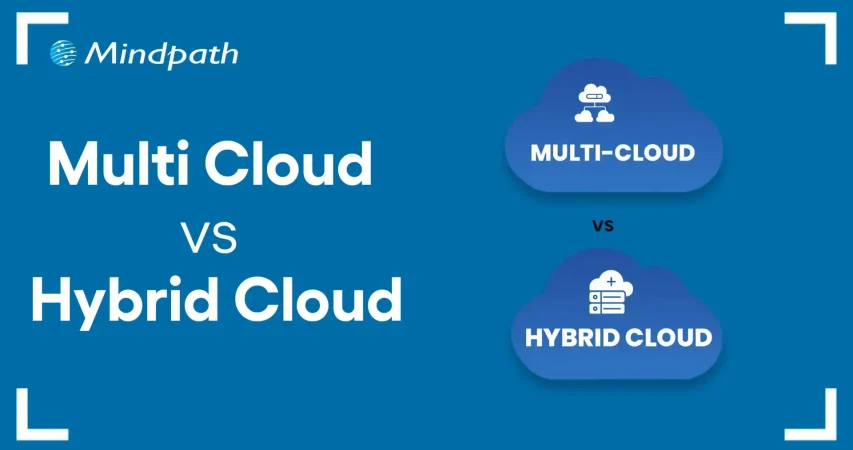
Multi Cloud vs Hybrid Cloud

Multi Cloud vs. Hybrid Cloud – Choosing Right Model for Your Business

Deciding between multi-cloud vs. hybrid cloud strategies is becoming an important choice for organizations that want to remain agile and scalable. Every organization needs to find a way to balance flexibility, security, and performance, and this holds true with cloud architecture as well. The more complex challenge is determining which model can optimize operations while allowing the teams in the organization to innovate unhindered. As technology progresses to new heights, a strong cloud architecture can be a differentiating element within an organization’s growth.

It is essential to be certain of how both cloud models serve your business objectives and technical goals to make the better decision. It is not just an issue about infrastructure, but positioning your organization for the future and digital resilience. Understanding their differences helps organizations make confident and data-driven decisions in a world where technology changes rapidly. In this blog, we will explain some of the fundamental principles of multi-cloud and hybrid cloud so that the decision on which is best for you will be less difficult.

Want to determine which cloud strategy will be ideal for your organization? Contact us to get deeper insights and make smart business decisions that lead to future growth.

Understanding the Fundamentals of Hybrid Cloud and Multi-Cloud

A hybrid cloud combines both private and public cloud services in order to provide an adaptable and secure environment for computing. Organizations can house sensitive data in a private cloud to protect it, while still utilizing the on-demand, scalable, and cost-effective computing of the public cloud. Hybrid clouds offer enhanced control, resource utilization, and performance. Utilizing a hybrid cloud allows organizations to efficiently manage workloads across the types of cloud while enjoying the benefits of both cloud types.

A multi-cloud strategy uses multiple cloud service providers to achieve specific corporate objectives. In the multi-cloud vs. hybrid cloud debate, companies will tend to prefer multi-cloud solutions for flexibility, avoiding being locked into a single vendor platform, and minimizing operational risks such as downtime or loss of data. Each application in a multi-cloud environment can run on a public cloud platform or private cloud platform based on relative performance or cost needs.

Wondering how application architecture impacts multi-cloud and hybrid cloud success? Explore cloud-native development to learn how cloud-native apps improve scalability and flexibility.

Advantages of Hybrid Cloud

A hybrid cloud gives companies the right combination of flexibility and control, helping companies manage data securely and securely provide scalability and efficiency for operations.

1. Strong Security and Data Control

Hybrid cloud allows companies to maintain improved control of sensitive data and mission-critical systems. Companies can use private servers to store private information and public clouds for everyday tasks, allowing for a balance between security and freedom.

2. Smarter Cost Management

Businesses can reduce their costs by maintaining constant workloads on private systems, while variable workloads can move to the public cloud. This model allows for a pay-as-you-go system that reduces risk of overspending and improves cost optimization.

3. Faster Performance and Low Latency

Hybrid cloud enhances performance by positioning time-sensitive jobs, such as analytics or IoT applications, nearer to the end user. The configuration call for helps to reduce latency and increase response times for the users.

4. Reliable Disaster Recovery

Businesses are able to store crucial data in the public cloud while ensuring that a main version is also preserved on their premises and if there is a systems failure, they can quickly restore and resume business as usual with minor interruptions.

5. Greater Scalability on Demand

Organizations can easily scale their capacity up or down via the public cloud when they find themselves in busy periods or running promotional activities that bring in high traffic. After the busy period ends, they can scale down their capacity, so they aren’t wasting money and resources.

6. Better Compliance and Data Governance

Hybrid cloud helps companies follow data protection rules by keeping customer data on local servers. At the same time, they are still able to carry out non-sensitive work in a public cloud, thus making an informed decision on multi-cloud vs hybrid cloud.

7. Boosted Innovation and Flexibility

Teams can experiment with fresh tools and services in the public cloud without interfering with core systems. This illustrates that the difference between multi-cloud vs hybrid cloud can drive business innovation and flexibility within the digital age.

Is your cloud strategy aligned with long-term digital growth goals? Discover digital transformation for businesses to understand how the right cloud approach accelerates innovation.

Examples of Hybrid Cloud

These are some real-world hybrid cloud examples and how organizations use this approach to improve business flexibility, security, and efficiency.

1. Digital Transformation

A hybrid cloud modernizes IT systems with a remote workforce and protects data in a secure environment.

2. Disaster Recovery

Hybrid clouds help your business continue operating normally by recovering data at a fast speed in the event of outages.

3. Development and Testing

Developers develop and test apps in their public clouds, then port to private clouds.

4. Cloud Bursting

During peak traffic, additional workloads move from private clouds to public clouds without impacting performance.

5. Edge Computing

Delivers and processes data near the user, resulting in faster and lower latency experiences.

6. AI & Machine Learning

A hybrid cloud supports AI workloads with the best scalability and the security of their data.

Looking for ways to optimize costs and scale applications seamlessly in complex cloud setups? Discover serverless architecture in cloud computing to explore how serverless solutions support modern cloud architectures.

Advantages of Multi-Cloud

The following are the main benefits of a multi-cloud strategy that will help to improve business performance and facilitate better operations.

1. Business Continuity Edge

In comparing multi-cloud vs. hybrid cloud, one advantage of multi-cloud is that it allows operations to continue even if one of the providers has an outage. By spreading workloads across a combination of platforms, businesses provide continued performance and reliability.

2. Flexible Cost Management

In the hybrid cloud vs. multi-cloud comparison, another of the advantages of multi-cloud is improved cost control. This allows companies to choose the cheapest cloud provider for each workload and optimize resources effectively.

3. Customized Security Approach

Multi-cloud allows organizations to engage with providers that best suit their compliance and security requirements. This helps to ensure improved data security and better alignment with regulatory standards.

4. Independent Provider Choice

Using a multi-cloud strategy, organizations will have less reliance on one vendor. They will have the flexibility to move workloads, negotiate terms, and meet changing demand in the market.

5. Optimized Technology Access

Each cloud provider has a service that they do best, e.g., AI, analytics, or integration. Multi-cloud allows organizations to select the cream of the crop and combine them together to get the best performance and innovation.

6. Enhanced Global Reach

Multi-cloud allows applications to be deployed across multiple locations to minimize latency and enhance speed. This is especially useful for global companies that need to provide consistent, reliable speeds globally.

7. Ongoing Innovation Power

By utilizing countless ecosystems in the cloud, firms are able to engage with new, emerging technologies that give them flexibility and even a competitive advantage regarding innovation and continued growth.

Curious about where cloud adoption is heading next? Explore cloud computing trends to discover emerging technologies shaping multi-cloud and hybrid strategies.

Examples of Multi-Cloud

Here are real-world examples of multi-cloud that demonstrate how businesses use multiple providers to enhance their performance, flexibility, and reliability.

1. Specialized Services

A business may use Google Cloud for analytics and AWS or Azure for AI tools to get the best of each platform.

2. Disaster Recovery & Continuity

A financial firm can rely on OCI for core apps and IBM Cloud as a backup to ensure uninterrupted operations.

3. Cost & Performance Balance

A retailer may host its e-commerce site on one cloud and run analytics on another to save costs and improve speed.

4. Diverse SaaS Usage

An organization can follow a multi-cloud approach by using Salesforce for CRM and Workday for HR management.

5. Compliance & Data Security

A healthcare provider may store patient data in a private cloud while using a public cloud for general operations.

Looking to build healthcare software that meets strict compliance and data security standards? Explore our blog on healthcare software to discover how secure cloud-based solutions protect sensitive patient data.

Multi-Cloud vs. Hybrid Cloud: A Comparison Table

Below is a brief comparison table showcasing the primary differences between hybrid cloud and multi-cloud, so you can gauge which model may work better for your business requirements.

Aspect Hybrid Cloud Multi Cloud
Definition Combines private and public clouds to work as one integrated environment. Uses multiple public cloud providers for different workloads.
Primary Goal Balance security with scalability by keeping sensitive data on private clouds. Maximize flexibility and performance by choosing the best services from each provider.
Architecture Integrates on-premise infrastructure with one or more cloud services. Operates across multiple independent cloud platforms without tight integration.
Data Management Data moves between private and public clouds based on need. Data is distributed across several cloud platforms for specific tasks.
Security Control Offers stronger control and compliance for sensitive workloads. Security depends on each provider’s standards and your management strategy.
Cost Efficiency Reduces cost by keeping predictable workloads in private environments. Optimizes cost by comparing pricing and using best-fit providers.
Use Case Ideal for regulated industries needing data privacy and scalability. Perfect for businesses aiming for high availability and vendor flexibility.
Example A bank using private cloud for transactions and public cloud for analytics. A retailer using AWS for e-commerce, Google Cloud for data, and Azure for AI.

Ready to Choose the Right Cloud Strategy for Your Business?

Deciding between multi-cloud vs. hybrid cloud depends on your organization’s needs for flexibility, performance, and security. Both approaches empower businesses to innovate and scale effectively. Understanding their core differences helps you design a cloud strategy that aligns with your goals and builds a strong foundation for long-term digital success.

At Mindpath, we deliver expert cloud computing services to help businesses design secure and scalable environments. Our team builds tailored multi-cloud vs. hybrid cloud solutions that enhance performance, reduce costs, and boost efficiency. Partner with us to create a future-ready infrastructure that keeps your business innovative, adaptable, and competitive in a fast-changing digital world.
Related Post

Related Post

energy efficient computing

In every digital action and decision we make, from storing information to running software, energy is consumed. The more companies leverage technology, the more they are transitioning to energy-efficient computing to lower their power usage, while reducing their environmental impact. This approach is looking at technology used in business from an energy usage standpoint but still achieving the same performance. This will help companies save money and become more responsible corporate citizens.

With pressure mounting for organizations to meet their sustainability commitments, companies are becoming greener within their technology strategies. Whether utilizing data center migrations to improve performance or selecting devices with lower energy usage, every decision counts toward a more sustainable future. This blog is going to detail how energy-efficient computing allows for long-term business success and creates technology solutions for both the environment and performance.

Ready to make your business more sustainable and cost-effective? Partner with Mindpath today to explore how our energy-efficient solutions can transform your operations!

What is Energy Efficiency in Computing?

Energy efficiency in computing is when technology is used in a way that lowers power consumption while continuing to offer good performance. Energy efficiency is often used interchangeably with the term green computing, which refers to the design and use of systems that can perform a task with less energy to lower overall electrical consumption.

In a way, energy efficiency improves the management and use of IT resources. Energy efficiency supports sustainable development through the mitigation of energy waste, reduced operating costs, and reduced environmental impact of digital systems. Green computing has a significant role in building more sustainable and responsible technology ecosystems for the future.

Principles of Energy-Efficient Computing

To build sustainable IT solutions, it’s important to follow key principles that reduce energy use without affecting performance. These principles guide the design and management of systems that are both powerful and smart.

1. Algorithm Optimization

Writing efficient code helps computers do tasks faster using less power. When algorithms are simple and well-structured, they reduce processing time and save energy naturally.

2. Efficient Hardware Design

Using devices that need less power but still work well is a big part of saving energy. This includes better-designed chips, improved memory, and smarter storage systems.

3. Power Management

Smart systems can lower energy use by adjusting power based on what the computer is doing. For example, they slow down the processor or turn off parts when they’re not needed.

4. Sustainable Practices

Using eco-friendly materials and cleaner processes helps reduce the impact of making devices. Recycling old equipment, working from home, and checking energy use regularly also support energy-efficient goals.

Curious how small businesses can leverage technology to boost efficiency and sustainability? Check out emerging technologies for small businesses to discover tools and strategies that can transform your IT operations.

Benefits of Energy-Efficient Computing

Energy efficiency in computing is becoming a key focus as digital systems continue to grow. It supports a smarter approach to technology by encouraging responsible energy use in everyday operations. Here are some of the key benefits it can offer:

1. Reduces Energy Use and Power Bills

Sustainable computing helps lower the amount of electricity used across devices and systems. By using energy-efficient computing systems and optimized processes, businesses can cut down on unnecessary energy waste. This directly leads to lower electricity bills over time. It also supports a more sustainable and cost-aware IT environment.

2. Supports a Healthier Environment

When technology uses less energy, it puts less pressure on natural resources. Responsible device use helps reduce carbon emissions and limit electronic waste. These practices also help conserve fuel and raw materials needed for power. As a result, green computing has become a key step toward protecting the planet.

3. Builds a Responsible Brand Image

Companies that follow green practices show their commitment to sustainability. Using energy-efficient computing systems sends a positive message to customers and employees. It shows the company cares about the environment and long-term impact. This can improve brand loyalty and attract people who value responsible businesses.

4. Saves Money with Smarter Solutions

Choosing energy-efficient solutions means spending less on electricity and cooling. Using energy-efficient algorithms and virtual systems helps reduce the need for extra hardware. Over time, this leads to fewer devices, lower maintenance costs, and less electronic waste. All of this adds up to significant long-term savings for companies.

5. Helps Meet Environmental Rules

Governments are putting strict rules in place to reduce energy waste and pollution. By using energy-efficient data centers and low-energy devices, companies stay in line with environmental laws. This helps them avoid fines and builds a more trustworthy business. Following energy efficiency practices also prepares companies for future regulations.

Want to stay ahead in optimizing IT infrastructure while reducing energy consumption? Explore cloud computing trends to learn how the latest cloud innovations are driving efficiency and sustainability in enterprise computing.

Want to Make Your Technology Smarter and Greener?

Energy-efficient computing is becoming essential for companies that want to grow responsibly. It helps reduce power use, cut costs, and lessen the environmental impact of digital systems. By improving how we design and manage technology, companies can still achieve high performance while using fewer resources. This shift supports long-term success and builds a stronger foundation for growth. As more organizations focus on sustainability, energy-efficient computing becomes a smart and necessary step toward a cleaner and more efficient future for everyone.

At Mindpath, we specialize in sustainable software development that helps businesses reduce energy use while keeping systems fast and reliable. We create sustainable IT solutions by using efficient coding practices, smart architecture choices, and scalable technologies that use fewer resources. Our approach helps clients lower operating costs, reduce their carbon footprint, and meet environmental goals with ease.

Whether you’re upgrading systems or starting from scratch, we design digital solutions that support both your business growth and the planet. Let us help you build software that’s future-ready and environmentally responsible.

Discover how energy-efficient computing can reduce costs, helping businesses create a sustainable, future-ready infrastructure.
Introduction to OpenAI o1

Curious about how artificial intelligence is transforming the world? Dive into the future with OpenAI’s o1 Model! What if I told you that this cutting-edge technology is setting new benchmarks for AI capabilities? How does it compare to its predecessors, and what groundbreaking advancements does it bring to the table? In this blog, we will explore the revolutionary features of OpenAI’s o1 Model and uncover how it’s reshaping the landscape of AI technology. So, let’s dive in! 

Overview of OpenAI o1 Model

OpenAI has now released a preview of their latest AI models, the o1 series, often known as Project Strawberry or Q*. These new models are meant to think more thoroughly before offering solutions, making them especially good at tackling complicated issues in science, math, and coding. 

The o1 series stands out because it exceeds the capabilities of previous AI models. For example, the o1-preview model excels at difficult arithmetic issues, answering 93% of AIME math questions and outperforming human specialists in several scientific assessments. Along with this, OpenAI has introduced the o1-mini, a more economical version that maintains good coding skills while costing 80% less, making it an excellent choice for developers. 

Key Features of OpenAI o1 Model

1. Better Safety Measures

OpenAI has considerably enhanced the safety of its o1 models by including new security measures. These models are made to efficiently perform delicate duties, stay away from potentially hazardous information, and resist efforts to bypass their safety protocols. As AI technology advances, jailbreaking—in which individuals attempt to mislead AI into creating harmful or immoral responses—becomes riskier. The o1 model, particularly the o1-preview version, has demonstrated extraordinary resilience to these types of attacks. It performs exceptionally well in security tests because of its sophisticated reasoning capabilities, which allow it to adhere more tightly to ethical rules. This makes it far more difficult for malicious users to control the system, resulting in safer and more consistent performance in important applications. 

2. Enhanced STEM Performance

The o1 models have shown outstanding performance in a variety of academic challenges. They succeed at programming competitions, demonstrating their strong coding and problem-solving talents. In maths competitions, the models have also demonstrated their abilities by achieving admirably on high-level exams. These results demonstrate the o1 models’ exceptional ability to tackle challenging STEM problems, making them very useful tools for both coding and mathematical problem solving. This impressive achievement demonstrates their capacity to deal with complex and intricate issues, establishing a new benchmark for AI in academic and technological fields. 

3. Diverse Data Training

The o1 models were trained using a wide range of data sources, including public information, private content, and carefully curated datasets. This diversified training guarantees that the models are well-versed in a wide range of general knowledge and specialized subjects. By combining diverse forms of data, the o1 models develop a thorough grasp of both popular and unique issues. This thorough and diverse training improves not only their conversational skills, but also their thinking abilities, allowing them to handle a wide range of enquiries and scenarios with more accurateness and relevancy. This method makes the o1 models extremely adaptable and capable of providing intelligent and contextually appropriate replies. 

4. Affordable and Cost-Effective

OpenAI’s o1-mini model is a cost-effective alternative to the more complex o1-preview, costing 80% less while still achieving excellent performance in domains like mathematics and coding. The o1-mini, designed exclusively for developers, delivers great precision and consistent results at a fraction of the cost, making it an excellent solution for applications that require cost control. This targeted pricing makes powerful AI technology available to a broader variety of customers, including educational institutions, startups, and small enterprises. OpenAI’s cheaper alternative enables these organizations to harness strong AI capabilities without considerable financial burden, boosting greater adoption and innovation in a variety of areas. 

5. Greater Fairness and Less Bias

The o1-preview model surpasses GPT-4 in terms of bias and fairness. It excels at reducing stereotyped responses, resulting in more balanced and unbiased answers. In fairness evaluations, the o1-preview model consistently picks the most suitable and impartial responses, demonstrating a significant increase in its ability to handle confusing or complicated queries. This achievement not only improves the model’s capacity to provide fair replies, but it also demonstrates OpenAI’s dedication to developing AI systems that are more aware of and responsive to ethical problems. The o1-preview approach contributes to more inclusive and polite AI interactions by reducing bias and boosting fairness, making it a desirable tool for applications that need impartiality. 

6. Monitoring Thought Processes and Detecting Deception

OpenAI incorporates experimental techniques into the o1 models to track their reasoning process, allowing the system to determine when it is presenting misleading or purposely incorrect data. This “chain-of-thought” monitoring aids in the detection and reduction of misleading behavior, hence increasing the model’s reliability and credibility. Early findings indicate encouraging progress in reducing the hazards associated with AI-generated misinformation. 

The o1 models represent a significant advancement in AI thinking, notably in STEM fields such as mathematics, computing, and scientific problem solving. These models, including the high-performing o1-preview and the low-cost o1-mini, are intended to successfully handle difficult jobs. They also include better safety and ethical safeguards, such as rigorous testing and red teaming, to ensure more responsible AI implementation. 

AI Developemnt Services at Mindpath

Mindpath provides top-tier AI development services, utilizing the most recent advances in artificial intelligence to help organizations remain ahead in an ever-changing digital world. Our team specializes in developing customized AI solutions that are geared to your unique requirements, such as automating procedures, boosting decision-making, or increasing consumer engagement.  With models like OpenAI’s o1, we can employ advanced AI reasoning to solve challenging problems in fields like mathematics, computing, and science. Mindpath’s AI development services combine this cutting-edge technology to create solutions that are not only unique, but also dependable and scalable. Our knowledge covers several industries, guaranteeing that we can satisfy the specific needs of each customer, from startups to huge corporations. 

Final Note

OpenAI’s o1 models are pushing the limits of artificial intelligence with improved problem-solving ability, fairness, and safety features. They symbolize a new age of AI in which ethical considerations and sophisticated thinking coexist to solve hard problems in STEM and beyond. Whether you’re searching for high performance or low-cost solutions, the o1 series delivers with accuracy and dependability. Mindpath uses the power of these ground-breaking models to provide bespoke AI solutions that help organizations innovate, automate, and grow. With our experience and OpenAI’s cutting-edge technology, your organization is well-positioned to prosper in the rapidly developing world of AI-driven solutions. 

Want to leverage advanced AI?

Unlock the potential of OpenAI’s o1 model with Mindpath’s expert AI development.

Explore OpenAI’s o1 models, revolutionizing AI and learn how Mindpath’s expert AI development services deliver innovative solutions.
nodejs trends
Ever wondered how the digital world is advancing with incredibly rapid speed? One of the central performers in that play will be Node.js. So, are you curious about the trends that are pushing the potential of Node.js to the very front of technology? In this blog, we will explore the Node.js trends that are shaping the future of digital technology.  Node.js is a very powerful tool that aids the running of fast and efficient web applications running outside of browsers. It is great for real-time updates and server-side programming because it does not get stuck waiting for one task to finish before moving on to the next. According to the V8 engine of Google Chrome, Node.js is open source—that is, free to use and constantly improved by developers all around the world. Unlike traditional frameworks or libraries, Node.js is a runtime environment. It enables a developer to get all the required things for writing code and running it as fast as possible in one place.   Knowing the trends of Node.js is important in using the latest tools and methodologies to construct better and faster web applications. Knowing what is new will help you create more efficient and modern projects, keeping ahead of your competitors and ensuring that your skills are relevant. Besides, application of the newest trends will help you to work more efficiently and save a lot of time.  So, let’s dive in as we explore the top Node.js trends that are shaping the tech landscape and redefining how we interact with the digital world! 

Top 10 Node.js Trends in 2024  

1. AI in Node.js Development  

AI is making a high impact in technology, and Node.js is no exception. Combining AI and Node.js empowers developers to build smart and efficient applications. For example, AI could help automate tasks to make your applications run smoothly and fast. You can use TensorFlow.js to bring AI capabilities natively into your Node.js applications. This could be a chat application where AI helps answer questions, or a website that uses AI to change content based on user behavior. In short, AI and Node.js are quite a powerful combination, and enable new use cases for more advanced, more highly automated applications. 

2. TypeScript Adoption  

TypeScript is an advanced version of JavaScript, extending it with some extra features to make coding easier. It features classes and optional type checking, which has made it excellent at managing complex code. Many Node.js developers love TypeScript because it enables them to develop more reliable applications that can scale easily. TypeScript works very well with Node.js, offering improvements in code quality while reducing mistakes. Thus, it makes building and maintaining a project easy for the developer. 

3. Real-time Applications  

Real-time applications are finding their way into many industries, from gaming to retail, due to the ability of their users to act in real time and be updated live. Node.js is an excellent choice for developing these apps since it enables a developer to handle several requests at a time with speed. As the global real-time communication market is projected to grow by 43.4% from 2020 to 2027, it is likely that more companies will turn their backs on Node.js to fulfill their real-time requirements. Real-time technologies, like social media and messaging applications, gain their importance from being so well accepted. For example, AI-powered chatbots can be integrated into websites and mobile applications for customized experiences and smoother interactions with users. Other typical Node.js uses in real-time applications include gaming online, video conferencing, instant messaging, e-commerce transactions, document sharing, and VoIP calls. A professional Node.js developer can help in the development of such complex applications, enhancing user experience, and meeting the growing demands for real-time features. 

4. Serverless Architecture Development  

Serverless architecture is the modern pattern for building and running applications that do not require server management or infrastructure. You only pay for the computing time used, and you are freed from handling scaling and managing servers on your own. Big business names like Amazon, Google, and Microsoft propose tools that make it easier for developers to use this architecture. Node.js helps to take the lead in this tendency because it enables developers to easily write anywhere-run codes without the hassle of maintaining a server. One of the major reasons for the popularity of serverless architecture is that it speeds up time to deploy and simplifies scaling. You can put up an application within minutes, and scale to surging demand without additional resources or complex configuration changes. Basically, it lets developers focus on enhancing applications rather than managing infrastructure. 

5. Microservices  

Microservices is a modern approach in designing software where it must be broken down into small, independent services, each handling a specific function. All these services are run independently and communicate through straightforward methods—for instance, HTTP APIs. Such design offers software development at a quicker and more flexible pace since each service is developed, tested, and updated independently. Node.js is very suitable for microservices, as it supports the creation of such small, efficient services. Nest and Express are tools for smoothing the handling of microservices with Node.js and thus help the developer to effectively construct and maintain applications. Other advantages of using microservices include faster development—which is now possible as different services can be developed by developers simultaneously, better reliability, and reduced costs by allowing to outsource complex features to the best experts. In general, combining microservices with Node.js yields an application which could be scalable, strong, and cheap. 

6. GraphQL Deployment in Node.js apps  

GraphQL is a query language developed by Facebook in 2012 and published in 2015. It gives clients a much greater ability to reach databases more effectively, using a single endpoint rather than several and returning data in a single format. Such an approach helps clients to request exactly the data they need, thereby reducing excessive data transfer. Node.js contributes an important role to the GraphQL ecosystem by providing great support for a fast and scalable runtime environment for running GraphQL servers. Most developers use Node.js to build GraphQL APIs because it handles concurrent requests pretty well and has flawless integration with different GraphQL libraries, such as Apollo Server. This makes setting up and managing GraphQL servers easier. 

7. MEAN and MERN Stack  

Due to the very ease of building powerful applications, MEAN and MERN stacks are very popular in web development.  The MEAN stack constitutes MongoDB, Node.js, Express.js, and AngularJS. It is one of the most used cross-platform development tools for many startups and large companies, since it bundles all server-side and client-side development into one package. The MERN stack is the same, with React instead of AngularJS. MERN stands for MongoDB, Express.js, React, and Node.js. Both are easy and clear to use, making them great for any complex app. Companies like Netflix use the MERN stack to make their websites fast and user-friendly. Either way, you will be given a full set of perfectly fitted tools for web development, hence making it easier and quicker. 

8. Internet of Things (IoT) 

The IoT is growing in terms of its deployment, with more devices connected to the internet, including home appliances, wearable technology, and health sensors. These devices can communicate and exchange data over the internet, making the system efficient and not necessarily in need of human intervention. IoT also includes innovations such as smart homes and smart cities, where devices endowed with sensors and actuators work together to provide unique functions and cooperate within the existing internet infrastructure. Node.js is suitable for IoT application development since it is light, speedy, and convenient. It’s equally popular among developers, so it will not be difficult to find professionals with experience in skillful operations.  

9. Cloud Computing  

Cloud computing simply means the use of computer resources and data over the Internet without a personal investment in hardware or software. A movement away from traditional mainframe computing toward cloud-based services provides cost savings and efficiency by allowing users to log on to applications and files from anywhere. As more and more businesses are turning to cloud computing because of its cost-effectiveness and efficiency, Node.js is rapidly becoming one of the most preferred options in cloud solutions, like AWS Lambda and Azure Functions. Its lightweight nature and speed in execution make scaling an application easy and hassle-free. If you are developing new products or services, considering Node.js for your cloud projects can keep you flexible and efficient. 

10. DevOps 

DevOps is a process aimed at increasing the level of interaction between software developers and IT operations teams. It concerns better communication, collaboration, and integration that makes the process of coding and deploying software faster and more efficient. By automating tasks like setting up infrastructure and deploying code, DevOps shortens the time from development to production. Node.js fits well in the DevOps environment since it supports scalable and cloud-based applications. Node.js has been developed in such a way that it would enable collaboration between different developers by allowing them to use the same JavaScript source code for server-side and client-side applications. This hence implies that using one language would allow developers to collaborate much more during the development process. 

 Curious about the power of Node.js for your next project?

At Mindpath, we deliver cutting-edge solutions that propel your business forward with precision and speed.

Node.js Development Services at Mindpath 

Mindpath designs powerful digital solutions using professional Node.js development services. With our vast experience, the team develops powerful, high-performance, scalable, and real-time applications that cater to your business. Here is the list of our services:  

  1. Node.js Web App Development: We design and develop fast, lightweight web applications using Node.js. 

  2. Node.js CMS Development: We create easy-to-use and manageable content management systems. 

  3. Node.js API Development: Develop APIs that make different software systems operate flawlessly together. 

  4. Node.js Consulting Services: Offer expert advice and aid you in maximizing the use of Node.js in your projects. 

  5. Node.js Maintenance & Support: We support your applications on an ongoing basis to keep them up and running. 

  6. Node.js Migration Services: We help migrate your existing applications over towards Node.js for enhanced performance. 

Conclusion 

Within the fast-moving digital world, Node.js is a force, a multi-purpose tool driving innovations in areas such as enhanced real-time communication, microservices that scale, and artificial intelligence integration. Remaining conversant with such trends will keep the developer at full power with Node.js in making state-of-the-art applications that can fulfill all requirements of the dynamic market today. Embracing them will not only ensure one is efficient in projects and ready for the future but also help stay ahead in a competitive tech environment. 

At Mindpath, we are keen on putting the best Node.js trends into practice when developing digital solutions for our customers’ needs. High-performance, scalable, and real-time applications enable your business. We have years of experience and expertise in delivering web app development, API integration, cloud solutions, and other solutions that assure you, as our client, that our team is deeply committed to offering innovative and effective services in Node.js. 

Wondering how Node.js can transform your digital strategy?

At Mindpath, our expertise in Node.js ensures scalable and innovative applications tailored to your needs.

Discover the top Node.js trends shaping digital technology in 2024, from AI and TypeScript to IoT and cloud computing. Explore how Node.js drives innovation!