Home

AI Document Processing: How Intelligent Document Processing Automates Data Extraction

AI Document Processing: How Intelligent Document Processing Automates Data Extraction

Join our Newsletter!

ai document processing

Businesses handle a constant flow of invoices, contracts, purchase orders, application forms, and reports. Processing these documents manually takes considerable time, particularly when employees must enter information, verify details, and manage files across different systems. These repetitive tasks can delay important decisions and increase the chances of data entry errors. AI document processing helps businesses manage this workload by automating how document information is captured and handled.

Key Takeaways

  • 01
    AI document processing converts unstructured documents into organized, usable business information.
  • 02
    Intelligent document processing combines OCR, machine learning, and NLP for accurate data extraction.
  • 03
    Automated extraction supports invoice processing, contract management, customer onboarding, and healthcare records.
  • 04
    Data validation and human oversight help identify errors and maintain reliable information.
  • 05
    Successful implementation depends on suitable AI technologies, system integration, and continuous monitoring.

By combining technologies such as OCR, machine learning, and natural language processing, businesses can extract relevant information, classify documents, and validate data with greater efficiency. In this blog, we will explore how intelligent document processing works, its business applications, key benefits, implementation challenges, and practical considerations.

Ready to reduce manual document handling and improve data accuracy? Mindpath offers AI development services to build intelligent document processing solutions for your business.

What is AI Document Processing?

AI document processing refers to the use of artificial intelligence to extract and organize information from documents in a structured format. It handles unstructured and semi-structured content, including invoices, contracts, emails, and application forms, making the information easier to access and use. It combines Optical Character Recognition (OCR), machine learning, natural language processing (NLP), and computer vision to recognize text, identify relevant details, and understand document layouts.

Digital PDFs and Word files can be processed directly, while scanned documents and images require text recognition before further analysis. The extracted information can then be transferred to databases, ERP systems, CRM platforms, or existing business workflows. Intelligent document processing (IDP) takes this further by combining document capture, classification, contextual understanding, data extraction, and validation into a connected process. Businesses can also use AI integration services to connect document processing workflows with their existing applications and systems.

How Intelligent Document Processing Automates Data Extraction

Intelligent document processing follows a series of connected steps to turn incoming documents into usable business information. Each stage prepares the data for the next, reducing the need for manual handling.

1. Document Ingestion and Capture

The process begins by collecting documents from emails, cloud storage, scanners, PDFs, and business applications. The system accepts different file formats and brings them into a common processing workflow.

2. Document Classification

Machine learning models identify document types, such as invoices, receipts, contracts, and application forms. Based on the category, each document is directed to the appropriate extraction process.

3. OCR and Text Recognition

Optical Character Recognition (OCR) converts text in scanned documents and images into machine-readable content. AI-powered recognition also helps interpret complex layouts, tables, and different text arrangements.

4. Contextual Data Extraction

NLP and machine learning identify important information, including names, dates, amounts, and reference numbers. They use the surrounding text and document context to locate relevant fields, even when their positions vary. Techniques such as context engineering can also help AI systems interpret information more effectively.

5. Data Validation and Verification

The extracted details are checked against predefined rules, reference databases, and existing business records. Missing information, inconsistencies, and low-confidence results are flagged for human review.

6. Data Integration and Workflow Automation

Once validated, the information moves into ERP, CRM, accounting, or other business systems. This can trigger further actions, such as invoice approvals, payment processing, and automatic record updates.

Key Technologies Behind AI-Powered Document Processing

AI-powered document processing relies on several technologies that help systems recognize, interpret, and organize information from different document formats.

1. Optical Character Recognition (OCR)

Converts printed and handwritten text from scanned documents and images into machine-readable content for further processing.

2. Machine Learning (ML)

Recognizes document patterns, identifies relevant fields, and improves extraction performance through training and feedback.

3. Natural Language Processing (NLP)

Identifies names, dates, relationships, and other meaningful details by analyzing the language used in documents.

4. Computer Vision

Examines document layouts, tables, images, and visual elements to understand how information is arranged.

5. Large Language Models (LLMs)

Interpret complex language, understand surrounding context, and support AI data extraction from documents with inconsistent formats. Businesses evaluating different model deployment approaches can also review self-hosted LLM vs API options.

These technologies work together to make document processing more adaptable. OCR and computer vision help recognize content and structure, while NLP, machine learning, and LLMs support contextual understanding and information extraction. This combination allows businesses to handle documents that vary in format, layout, and content without depending entirely on fixed templates.

For workflows that need to retrieve information from connected documents and knowledge sources, Retrieval-Augmented Generation (RAG) can provide an additional way to connect AI systems with relevant information.

Business Applications of Automated Document Processing

Businesses across industries handle documents that require accurate information extraction and timely processing. AI document processing helps manage these tasks across several operational areas. These applications are part of the wider range of AI use cases for businesses.

1. Invoice and Accounts Payable Processing

Businesses use AI to extract vendor names, invoice numbers, tax amounts, and payment details. The extracted information supports purchase order matching, invoice verification, and approval workflows, reducing repetitive accounting work.

2. Contract and Legal Document Analysis

Legal teams can identify important clauses, contractual obligations, renewal dates, and payment terms across large collections of agreements. This makes document review and contract management easier.

3. Customer Onboarding and KYC

Financial institutions can extract customer details from identity documents, application forms, and supporting records. This helps organize verification processes and reduces manual data entry.

4. Healthcare Records Management

Healthcare providers can extract relevant information from patient forms, medical records, and administrative documents. This helps organize records and supports authorized information retrieval.

5. Logistics and Supply Chain Documentation

Logistics teams process purchase orders, bills of lading, delivery receipts, and shipping documents. Automated extraction helps maintain accurate records and improves information flow across procurement, inventory, and delivery operations.

Business Benefits of AI Document Processing

AI document processing helps businesses improve document-heavy operations by reducing manual effort and making information easier to manage.

1. Reduced Manual Work

Automates repetitive data entry and document handling, allowing employees to focus on higher-value responsibilities.

2. Improved Data Accuracy

Uses validation rules and confidence checks to identify missing details and extraction errors.

3. Faster Processing Cycles

Speeds up document reviews, approvals, and information transfer across departments.

4. Better Operational Visibility

Makes extracted information easier to search, track, retrieve, and analyze.

5. Scalable Document Handling

Processes growing document volumes without requiring a proportional increase in manual effort.

6. Improved Compliance Support

Maintains structured records and audit trails, helping businesses meet documentation and recordkeeping requirements.

Challenges and Considerations When Implementing AI Document Processing

Despite its advantages, implementing AI document processing requires careful planning to ensure reliable results across business workflows.

1. Poor Document Quality

Blurred scans, damaged files, and handwritten content can affect text recognition and extraction accuracy.

2. Complex Document Layouts

Multiple columns, tables, and inconsistent formats can make information identification more difficult.

3. Data Privacy and Security

Sensitive financial and customer information requires encryption, access controls, and secure data-handling practices. Businesses should consider cybersecurity practices for business systems when designing their document processing architecture.

4. Integration Complexity

Connecting processing workflows with existing ERP, CRM, and legacy systems requires compatible architecture and proper data mapping.

5. Human Oversight

Low-confidence extractions and critical information should undergo human review to prevent errors from entering business systems.

Businesses should select an appropriate technical architecture, establish clear validation rules, and test the system using representative documents before expanding implementation across departments. They should also consider AI in cybersecurity when assessing the risks associated with sensitive business information.

How to Implement AI Document Processing in Your Business?

A successful implementation requires a clear understanding of existing document workflows, and the information businesses need to extract. The following steps provide a practical starting point:

1. Identify Document-Heavy Processes

Start with repetitive tasks such as invoice handling, customer onboarding, or claims processing where automation can reduce manual effort.

2. Assess Document Types and Quality

Examine file formats, document volumes, layouts, and the information each workflow needs.

3. Select the Right AI Technologies

Choose suitable combinations of OCR, NLP, machine learning, and LLMs based on extraction requirements.

4. Build Extraction and Validation Workflows

Define required fields, accuracy thresholds, validation rules, and human review points.

5. Integrate with Existing Systems

Connect the processing pipeline with relevant business applications, databases, and internal platforms.

6. Test, Monitor, and Improve

Track extraction accuracy, exception rates, processing time, and system performance to identify areas for improvement. Regular AI model monitoring can help businesses assess performance and identify issues as workflows evolve. An enterprise AI deployment checklist can also help organize implementation and deployment requirements.

Looking to Make Document Processing More Efficient?

AI document processing helps businesses manage large document volumes by converting scattered information into structured, actionable data. With the right combination of AI technologies, validation rules, system integration, and human oversight, businesses can reduce manual work, improve accuracy, and keep essential workflows moving efficiently.

At Mindpath, we help businesses build AI-powered solutions that address practical operational challenges. Our AI development services can help you design intelligent document processing workflows that fit your business requirements, integrate with existing systems, and support long-term growth. Partner with Mindpath to explore your AI development opportunities.
Ready to Automate Your Document Workflows?

Build intelligent document processing solutions for your business.

Frequently Asked Questions

It uses OCR, machine learning, and document classification to recognize information across PDFs, scanned files, images, and differently structured documents.
Yes, handwriting recognition can extract information from handwritten content, although accuracy depends on handwriting clarity, document quality, and the recognition model.
Businesses can track extraction accuracy, processing time, manual intervention, exception rates, and the reduction in repetitive document handling.
Yes, businesses can start with specific document-heavy tasks, such as invoice processing or customer onboarding, and expand automation as their requirements grow.
Validation rules, confidence scores, and human review help identify incorrect or incomplete information before it enters business systems.

Support Is One Click Away

Featured Posts

Related Post

Agile methodology in web development

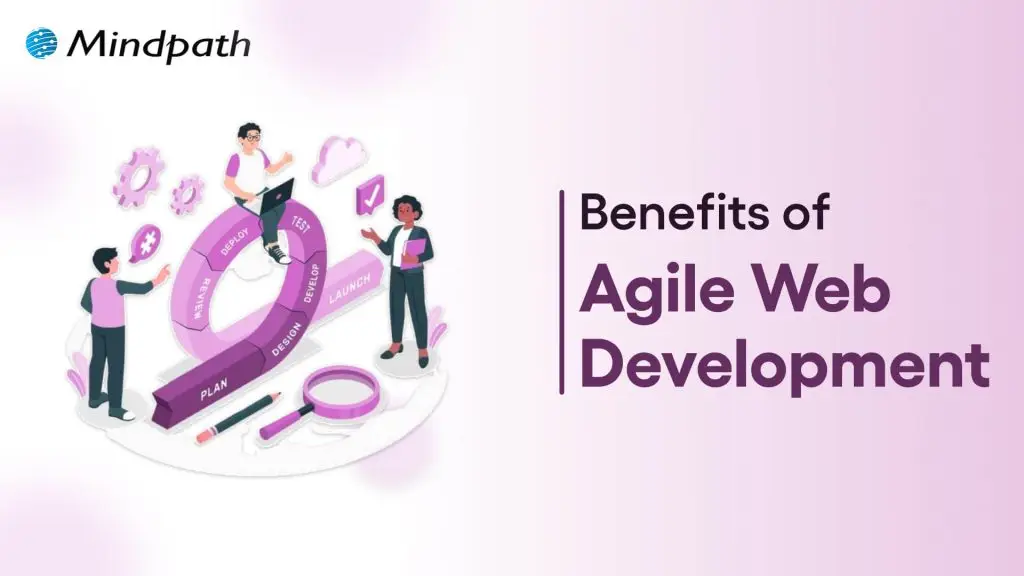
Web development is the priority of every business that wishes to have a strong digital presence. Your business must adapt to new trends and emerging user behavior patterns in diverse web development projects with ease. The utility of agile methodology in web development has been gaining a lot of traction due to the assurance of multiple benefits.

Key Takeaways

  • 01
    Agile methodology helps web development teams adapt to changing requirements, user feedback, and market conditions.
  • 02
    Sprint-based iterative development supports consistent progress and helps identify potential issues early.
  • 03
    Agile promotes stronger collaboration between development teams and stakeholders throughout the project.
  • 04
    Continuous feedback helps teams build web projects that align more closely with customer needs and expectations.
  • 05
    Agile can support better quality, faster launches, continuous improvement, and more effective resource allocation.

Do you think that thousands of software engineers praise the agile methodology just for fun? Agile approaches to web development not only bring adaptability but also the benefits of innovation and efficiency in the development process. You can stay ahead of the competition in the modern technological landscape with a dynamic approach to web development.

Do you want a website that adapts quickly to your business needs and drives growth? Mindpath’s web development services deliver custom agile solutions that enhance performance, user experience, and scalability.

Understanding the Agile Methodology

Many people think Agile methodology is a newly developed approach to web development. However, it is one of the most popular approaches in software and web development.

Agile focuses on delivering value to end users while improving the development process. One of its biggest advantages is that it encourages collaboration among different members of the development team.

Agile methodology works by dividing projects into smaller phases called **sprints**. These manageable iterations help teams track progress and deliver results consistently.

With Agile, development teams can quickly adapt to user feedback, changing business requirements, and market conditions. Cross-functional teams work closely together, improving collaboration and decision-making.

Another key feature of Agile web development is its focus on customer needs and expectations. Sprint reviews and daily updates help teams identify issues and make continuous improvements.

This iterative approach helps development teams refine the product at every stage, ensuring that the final web project meets user expectations and delivers high-quality results.

Planning to enhance your Agile strategy with cutting-edge tools and frameworks? Discover the latest insights in our web development trends blog to stay ahead of industry changes.

How is Agile Different from Traditional Web Development?

The popularity of the agile methodology has grown by huge margins as organizations embrace it in different domains, including project management. You might think about how the agile methodology for website development delivers better results than traditional development approaches. You can use the differences between the two approaches for web development to understand how the agile approach is better.

1. Scope for Adaptability

The biggest reason to choose agile over traditional web development approaches is the assurance of adaptability. Traditional development focuses more on prior planning with detailed specification of project requirements and needs at the beginning. On the other hand, agile methodology recognizes that a web development project’s requirements will change at different stages. Therefore, agile development emphasizes flexibility while supporting iterative modifications on the basis of continuous feedback.

2. Iterative Development Process

You can differentiate agile web development and traditional web development in terms of the facility of an iterative development process. Traditional web development follows the waterfall approach in which you complete one step after the other. Agile development relies on an iterative development process by breaking down a project into smaller iterations. The iterative approach offers continuous feedback loops and easier recognition of potential problems in the early stages.

3. Enhanced Collaboration

Traditional web development works with clear demarcation of roles and responsibilities of team members. It also restricts stakeholder involvement with formal review processes at different stages of the development project. You can notice the benefits of agile development in how it promotes cross-team collaboration and collaboration with stakeholders. Team members can work together and share their expertise with the objective of achieving shared goals. Agile development calls for regular meetings and feedback to encourage continuous collaboration with all stakeholders.

4. Emphasis on End User Requirements

Another crucial point of difference between agile and traditional development is how they focus on requirements of the end user. Traditional web development relies heavily on extensive documentation and can be susceptible to delays or failures. In addition, traditional development approaches cannot adapt to the emerging needs of end users. However, agile methodology boasts of adaptability and can respond faster to changes in customer needs or market trends. Most important of all, agile development aims to deliver value to the end user rather than creating comprehensive documentation.

Want to make your Agile web development process smarter and more data-driven? Check out our AI in web development blog to discover how intelligent automation enhances productivity and innovation.

How Does the Agile Methodology Enhance Web Development?

The biggest question that any business owner will have about agile development revolves around its advantages for their web project. Why should you ditch the traditional development approach for agile development? You must know the advantages of agile software development to give the best answer to this question. While it is better than traditional web development in many ways, agile development is an ideal choice for achieving more value with web development projects.

1. Assurance of Better Quality in the Final Product

Agile development follows an iterative approach, which involves testing each feature when it is developed. The continuous feedback and quality improvement in each sprint offers the assurance of creating a better final product. Development team members and stakeholders work in collaboration to fix the loopholes together in early stages of development. The flexibility to refine the product at different stages provides the assurance of high-quality final products.

2. Emphasis on Customer Needs

The discussions about agile development will be incomplete without mentioning how it focuses on customer needs. You can notice the advantages of agile methodology in how it keeps customers in the loop. Developers can make changes in the web project prototype on the basis of feedback from product owners. As a result, agile development helps in building products that align closely with customer expectations. Weekly meetings and feedback sessions with stakeholders ensures that agile methodology will deliver a customer-centric product.

Want better results from your Agile web projects? Discover our web apps features blog to learn the key features that drive success.

3. More Flexibility and Control over the Project

New web development teams have been looking up to agile methodology for the benefit of flexibility. Team members can make changes in the project for their respective sprints according to the feedback of customers. If a stakeholder needs a new feature in the product, the development team can repeat the process to make the required modifications. It helps in avoiding disruptions to the overall development process. At the same time, agile development ensures that all stakeholders enjoy better control. Each member in agile development teams is accountable for their actions while maintaining complete independence in their sprints.

4. Faster Launches and Continuous Improvement

Another notable addition among the advantages of agile development is the time to market for web projects. Web developers can launch websites or web apps quickly as the agile methodology always leaves room for continuous improvement. The collaboration between web developers and stakeholders offers the ideal ground for continuous improvement and timely project delivery. With the agile methodology, developers can deliver incremental changes in all iterations to deliver a better product.

5. Resource Optimization and Cost Reduction

Agile development empowers teams to verify assumptions and obtain feedback in the early stages of the development process. As a result, development teams can allocate resources according to the most critical features. The effective optimization of resource allocation ensures that you can achieve more savings in web projects with the agile methodology.

Wondering which tools can streamline your workflow and improve project delivery under Agile methodology? Learn more in our web development tools blog to explore platforms and technologies that boost productivity and performance.

Final Thoughts

The benefits of the agile methodology in web development showcase that it can facilitate a more efficient and seamless development process. You should understand that agile approaches to web projects involve breaking the larger project into smaller sprints. It promotes collaboration between teams working on the development project alongside ensuring the involvement of stakeholders. The scope for flexibility and continuous improvement ensures that developers can create a final product that aligns with customer expectations and needs.

Mindpath has been one of the leading platforms for web development with years of experience in this domain. Our web development services have always earned the appreciation of clients with the assurance of multiple benefits. We have specialized in the agile methodology with expertise in renowned agile development frameworks and tools. Reach out to us and build your next web project with the agile methodology now.

Html to Wordpress

Anyone who has a HTML website might feel left out in the era of websites that load within seconds. Did you know that HTML websites were a thing when there was not content management system in the market? The transition from HTML to WordPress is no longer an option in an extremely competitive digital market. With static HTML pages, you would have to struggle to get the top ranks in search engine results.

Key Takeaways

  • 01
    WordPress loads faster and ranks better than static HTML websites today.
  • 02
    Anyone can manage a WordPress site without needing advanced coding skills.
  • 03
    Regular security updates and plugins keep WordPress websites well protected.
  • 04
    Mobile responsive themes ensure websites perform well across all devices.
  • 05
    Plugins let businesses add new features without relying on developers.

The biggest problem with HTML websites is that they come with duplicate code on every page, thereby making them slow. On the other hand, WordPress is faster, more secure and offers more flexibility to build any type of website. As a matter of fact, more than 43% of websites in the world run on WordPress. Let us find out why you should ditch HTML and switch to WordPress now.

Want to convert your static HTML site into a fully functional WordPress site with enhanced features and performance? Mindpath offers WordPress development services to help you build a custom website according to your business demands.

The Rise of WordPress in Website Building

WordPress started off as a blogging platform and the open source nature empowered it to transform into a website builder. Before WordPress, you would need a technical team to create a website and manage it. The search for a HTML to WordPress converter tool has been growing because WordPress has made it easier to build websites. You can now install the WordPress software and use the desired themes or plugins to develop websites with sophisticated functionalities and updated designs.

If you have been wondering whether switching to WordPress is a good decision, then you must take a look at websites powered by WordPress. Big names in the world of business such as Disney, Times Magazine, Sony Music and many others use WordPress. The versatile mix of power and simplicity with WordPress has been one of the biggest reasons for its widespread adoption.      

Is WordPress a Reliable CMS for Website Building?

Giving up on HTML, which has been a trusted ally of website developers for a long time, can be difficult. However, the need to convert HTML to WordPress is growing as WordPress is the top content management system in the world right now. It works as an open-source ecosystem that offers benefits for beginners as well as experienced developers.

WordPress offers a user-friendly interface in its dashboard, which you can use to create websites from scratch. The best thing about the WordPress dashboard is that you don’t need advanced technical expertise to use it. In addition, you can also find thousands of themes and plugins in WordPress that help you customize your website the way you want.

Want to build a website that truly reflects your brand’s unique identity and goals? Explore our guide to custom WordPress development to discover how tailored solutions can enhance your site’s performance and impact.

Why Should You Choose WordPress Over HTML?

With so many powerful features, it is hard to ignore the urge to switch to WordPress right away. You should search for a HTML website to WordPress converter that makes it easier to embrace the benefits of WordPress. Don’t you know how WordPress will enhance your HTML website? An overview of the advantages of transitioning to WordPress can offer some help in finding the answer to such questions.

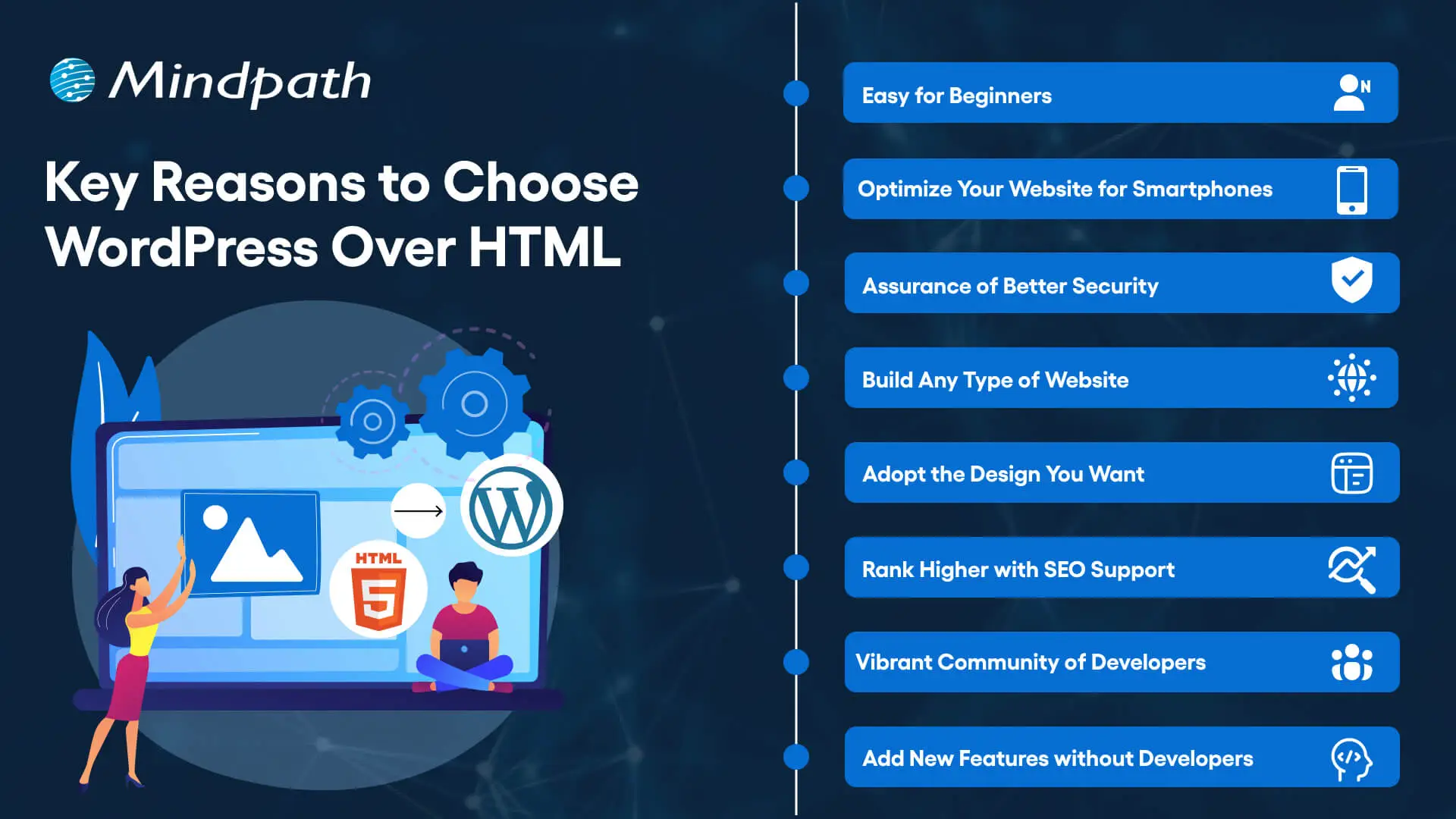
Key Reasons to Choose WordPress Over HTML

1. Easy for Beginners

The best thing about WordPress is that beginners will find it easy to use without any technical complexities. You don’t need coding skills to create your website and manage it on WordPress. The intuitive dashboard of WordPress allows you to create customized layouts, add more pages and update menus at one place. 

WordPress offers better flexibility than traditional website development approaches with more control over design, content management and functionality. Furthermore, the themes and plugins offered by WordPress help you add new features without waiting for developers. In other words, anyone can build a website without technical skills when they know how to use WordPress.   

2. Optimize Your Website for Smartphones

Do you know that most of the traffic to your business will come from mobile users? Many of you would need a HTML to WordPress converter online when you discover that WordPress offers mobile responsiveness. Most of the WordPress themes are tailored to function seamlessly on different screen sizes and device types. 

The interesting part of mobile responsiveness with WordPress is that your website will have the same aesthetic appeal on all devices. Apart from the consistent user experience on different devices, mobile responsiveness also makes your website rank higher on Google. With a few modifications to theme files and some new WordPress plugins, your static HTML website will run seamlessly on all mobile devices.

3. Assurance of Better Security

Businesses should also trust WordPress for its commitment to safeguarding any website hosted on the platform. You will get regular security updates on WordPress, which help in combating new security threats. On top of it, WordPress also offers additional security plugins and SSL certificates to enhance your website’s security. The biggest benefit of converting HTML to WordPress is visible in the efforts made by WordPress to address emerging vulnerabilities.

You must understand that modern approaches to website security need multiple layers of protection. For instance, you will need data encryption, backup systems and malware scanning to maintain the security of your website. WordPress offers the complete package to safeguard your website from hackers and unprecedented security breaches.

4. Build Any Type of Website

In its initial days, WordPress served as a useful tool for blogging alone. The transition of WordPress to a powerful driving force behind some of the biggest websites shows how it has evolved over the course of time. You should know how to add HTML to WordPress for switching from an outdated format to a versatile toolset. You can use WordPress for any type of website, whether it is for a small business or a large corporation.

WordPress is capable of hosting e-commerce websites, communities or social media networks. Businesses can always find WordPress plugins that will make their website better. Most important of all, you don’t have to worry about adaptability when your website needs to grow alongside your business. It is definitely a huge advantage for websites in an extremely competitive business landscape.

Unsure whether your WordPress project is following the right development standards and best practices? Check out our WordPress developer checklist to make sure every essential step is covered for a smooth and successful build.

5. Adopt the Design You Want

The problem with a static HTML website is that you don’t have any control over the design once it’s published. WordPress does not let you worry about changing the design of your website according to emerging trends. When you convert a website to WordPress, you get the advantage of capitalizing on its extensive theme library. You can have a business site, blog or an ecommerce site and still ensure that their design matches with your needs and style. 

The theme library of WordPress offers free and premium themes that you can choose for your website. You can also find additional themes from third-party developers and design marketplaces that bring unique features and layouts. The live previews of each theme help you check each design without affecting website functionality or content.  

6. Rank Higher with SEO Support

WordPress stands out as the most popular option to create websites now because of its SEO support. What will you gain from a website that never shows up on the first page of search results? You can download WordPress and capitalize on its strong SEO foundation to ensure a higher rank on search engines. The advantages of WordPress for SEO revolve around its strict coding guidelines that call for clean and structured code.

The code is not the only thing that makes WordPress websites easier to rank on Google and other search engines. You will also find user-friendly URLs, meta-descriptions and titles to gain more visibility in search engines. On top of it, the SEO plugins on WordPress will provide a lot of support in optimizing your website.

7. Vibrant Community of Developers

The biggest strength of WordPress is its large and active community of developers. As an open-source platform, WordPress continues growing with the contributions of multiple users and developers. The community not only introduces updates to the source files but also makes WordPress more secure and updated along the lines of latest trends. 

Another promising reason to convert HTML to WordPress theme for your website is the accessibility to website creation tools offered by the community. It ensures that developers alone don’t have the exclusive rights to use WordPress tools. Even a blogger or business owner can be a part of the WordPress community and capitalize on its diverse offerings.

8. Add New Features without Developers

Websites have to evolve and add new features to accommodate the emerging requirements of users. WordPress allows you to add new features to your website without the intervention of developers. The collection of powerful plugins available with WordPress can help you introduced advanced features without code changes. 

Plugins are the ideal tools for adding shopping carts, contact forms and other features on WordPress websites. You can also explore custom WordPress plugins by third-party developers to enhance their websites. On top of it, you can activate or deactivate plugins as required, which offers the flexibility for customizing a website to your needs. 

Final Thoughts

The decision to convert your website from HTML to WordPress should not be a difficult one, considering the benefits of WordPress. It allows anyone to create a website without technical knowledge alongside offering the flexibility to add new features. In addition, you cannot ignore the benefits of regular security updates, a supportive community and control over website design. 

Mindpath specializes in converting HTML websites to WordPress for any type of website. We have years of experience in WordPress development that brings more credibility to our services. Our services for switching your website to WordPress also offer the assurance of an easy conversion procedure. If you want a website that is easier to update and maintain, then Mindpath is here to help you.

ecommerce software development  

E-commerce is rapidly changing, and brands have to cope with it on a daily basis. Customer journeys need fast loading, effective information display, and dependable performance across all the devices. This compulsion makes e-commerce software development a fundamental business priority and not a peripheral activity. It influences product loading processes, payment processing, and growth of systems. We, as technology experts, are well aware of this change. It calls on teams to rebuild platforms in a purposeful, precise, and long-term growth perspective.

Key Takeaways

  • 01
    E-commerce software development helps businesses manage products, prices, orders, payments, and customer activities through connected digital systems.
  • 02
    Custom e-commerce software can improve flexibility, scalability, performance, security, and control over the customer experience.
  • 03
    Important features include simple navigation, product management, secure payments, order tracking, and mobile-ready experiences.
  • 04
    Emerging trends include mobile-first shopping, AI-powered recommendations, virtual product experiences, voice commerce, and subscription models.
  • 05
    When choosing a development company, businesses should consider experience, technology expertise, customization, scalability, communication, and ongoing support.

Based on this fact, attention turns to the planning and reinforcement of platforms. Intelligent e-commerce systems bridge the gap between business objectives and reality. They permit change and maintain performance. They also enhance brand confidence in an increasingly competitive environment. The connection between technology and strategy results in smarter decision-making. It initiates necessary debates in emerging businesses. So, this blog focuses on analyzing this field in detail and discussing what really makes e-commerce sites successful. Let’s dive in to know more!

Ready to transform your online store with a reliable and feature-rich platform? Mindpath’s software development services help businesses build innovative and scalable e-commerce solutions.

What Does E-commerce Software Development Mean?

To put it simply, e-commerce software development implies the development of digital systems that can assist businesses in selling online without any issues. These systems handle products, prices, orders, and activities of customers centrally. They assist e-stores in loading quickly and operating without failure. They are created by developers to suit the needs of customers and business objectives. Due to increasing online demand, powerful software assists brands to remain organized, responsive and engage in daily sales activity.

The process also facilitates growth and flexibility as business goes online. Through e-commerce development services, teams create a platform to facilitate payments, track orders, and manage users conveniently. Quality software links all the store’s functions intelligently. It makes teamwork easy and customers’ shopping straightforward. Such transparency enables businesses to win trust and provide a uniform online experience.

Key Benefits of E-commerce Software Development

In the contemporary world, online selling requires more than a simple web site. Brands seek speed, control and growing demand platforms. The e-commerce software development services facilitate this transition with smarter digital basics. The following are some of the main advantages which make this method worth considering.

1. Built for Your Business Needs

Each business operates in its unique way, and software must be aware of that fact. E-commerce software development assists teams to mould features in accordance with actual workflow and objectives.

2. Ready to Grow with Demand

E-commerce stores evolve with the growth of products, customers, and purchase orders. E-commerce software development helps it grow without slowing down systems and disrupting normal operations.

3. Better Control Over Design and Experience

Brands desire stores that are appealing and feel right to the customers. This method offers complete ownership over layout and flow as well as shopping experience.

4. Smooth Connection with Existing Tools

Several companies are already utilizing accounting, inventory, or CRM software. All these systems are linked through a well-planned software that maintains smooth operations of the system.

5. Faster Performance for Shoppers

Speed is important when the customers are browsing or paying over the internet. Powerful development pays attention to a rapid load and seamless action in each step.

6. Stronger Protection for Customer Data

E-commerce sites deal with personal customer information on daily basis. Dedicated systems implement protection rules which secure data and establish enduring customer confidence.

Curious how businesses build platforms aligned with their exact workflows? Check out custom software development and discover how it ensures better control and security.

Features of E-commerce Software Development

The demand of e-commerce software will keep increasing as the online firms continue to grow all over the world. Grand View Research estimated the market of e-commerce software in the world to be USD 7.12 billion in 2022. The market has the potential of reaching USD 20.90 billion in 2030 with a CAGR of 15.3 percent. This expansion is an indication that it requires functionality to handle inventory, taxation, and day-to-day operations.

1. Simple Navigation Flow

Good layouts enable the user to navigate through easily without wasting time. E-commerce software development makes categories and checkout user-friendly.

2. Smart Product Control

The stores update and sort listings effectively. This will enable customers to find products easier and also make shopping more enjoyable.

3. Secure Payment Handling

There are various payment methods, which enhances customer confidence. E-commerce software solution development assures that all dealings remain secure and intact.

4. Order Tracking System

Teams have a chance to track orders between placement and delivery. This enhances coordination, as well as minimizes errors in shipping.

5. Mobile-Ready Experience

Mobile users anticipate hassle-free browsing and purchase. Responsive design will ensure an easy experience across all gadgets.

Want to keep your online store competitive in a rapidly evolving market? Discover software development trends to learn how modern innovations are transforming e commerce platforms.

Emerging Trends in E-commerce Software Development

E-commerce environment continues to evolve along with technology and consumer demands. The trends in e-commerce software development are currently geared towards enhancing growth and user satisfaction.

1. Mobile-First Shopping

Smartphones are now taking over the online purchases. E-commerce software development achieves seamless and quick experiences across all mobile devices.

2. Smarter Recommendations

AI and ML can assist platforms in recommending the products that the users desire. This enhances interaction and marketing prospects successfully.

3. Virtual Product Experience

AR allows customers to have a virtual experience on the use of products and then purchase. It enhances confidence and decreases returns in online shopping.

4. Voice-Activated Buying

Voice commerce enables purchases by commands. It accelerates and simplifies the process of shopping among the tech-savvy customers.

5. Subscription Models

Subscription-based services provide customers with products at regular intervals. Recurring orders and automated billing are efficiently supported on platforms.

Want to plan your e commerce project without unexpected expenses? Discover software development cost to learn what factors influence budgeting and long term investment.

What to Consider While Choosing the Right E-commerce Software Development Company?

Choosing the appropriate partner determines the success of your online shop. E-commerce software development requires skills, trustworthiness and business insight.

1. Find a company that has high competence in e-commerce software development and a track record. Check on their previous works so that they could be able to cope with their business requirements.

2. Ensure that the technology stack that they are based on is reliable and up to date. Ensure that they are adept at such popular platforms such as Shopify, Magento or WooCommerce.

3. Check out their capabilities regarding the capacity to customize solutions to your business needs. A dynamic strategy assists in developing a platform that actually suits your operations.

4. Make sure that the firm is capable of developing scaled systems that increase with your business. With time, your platform is supposed to support increased traffic, products, and transactions.

5. Pay attention to effective communication and cooperation during the project. The development process is smooth and predictable due to regular updates and open discussions.

6. Consider their after-launch services such as support and maintenance. Constant support makes your online store efficient and modern.

Planning to upgrade your existing e commerce system for better performance? Discover how a skilled software development agency can modernize your platform with advanced technologies.

Ready to Take Your E-commerce to the Next Level?

E-commerce is changing at an alarming rate, and good software is one of the major factors to remain competitive. E-commerce software development assists companies to handle merchandise, finances and customer experiences effectively. It helps in growth, enhances performance, and establishes trust. Selecting suitable software and features is a guarantee of ease of operation, ease of use, and success over time. With intelligent planning and development, online stores become viable and scalable business platforms.

At Mindpath, we provide professional software development services that are specific to your business objectives. Our team is highly skilled in e-commerce software development and incorporates modern technologies in speed, security, and efficiency. They provide platforms that grow with your business, are easy to manage, and improve user experiences. Ongoing support and development means your online store will be competitive, receptive, and available to future possibilities.