Home

Future-Proof Your Business with the Right Software Development Agency

Future-Proof Your Business with the Right Software Development Agency

Join our Newsletter!

Software development agency

Almost every business wants to become “future-proof” or capable of adapting to new technologies and trends. What do you think helps the most in making your business ready for the future? The answer to such questions will point at a reliable software development agency that delivers “future-proof” solutions. As the competition in the modern business landscape continues growing, it is more important than ever to find effective software development companies.

Some business owners may assume that software development will not contribute anything to their bottom-line. However, it is important to acknowledge the fact that your competitors are building better software solutions to serve their customers. If you don’t choose the right software development company, then you are more likely to lose many opportunities.

Ready to adopt software that meets your unique business needs and future challenges? Mindpath’s software development services build cutting-edge and reliable solutions that enable businesses to thrive in a competitive market.

Why Should You Work with the Right Software Development Agency?

The need to adapt to emerging requirements in the technological landscape has forced almost every business to think about digital solutions. At the same time, it is important to know that multiple providers claim to offer the best software development services for your business. However, choosing the wrong development partner can lead to waste of time and money, ultimately landing you up with inefficient software. You should know the reasons to hire the right custom software development partner for your business. 

1. Preparedness for Future Growth

The most crucial factor that calls for hiring a software development partner is the advantage of preparing for the future. As your business grows, you will need software solutions that can scale up to meet the rising demand. With the right partner, you can ensure that your business is prepared for growing needs, maintaining system health and supporting version upgrades. The ideal software development partner will not only help you translate your ideas to real products but also make them adaptable to evolving requirements.

2. Safety from Delays and Budget Overheads

You can trust the right software development agencies for their capabilities to avoid missing deadlines. The best software development agency will always ensure that you don’t have to incur unexpected costs due to poor planning. Reliable agencies work with realistic milestones and follow a structured delivery approach to reduce budget overheads. In addition, the best agencies follow proactive approaches to software development for reducing unprecedented disruptions.

Ready to choose the right technology partner for long-term growth? Discover the different types of software development and explore our detailed guide to make your strategy future-ready.

Why Is It Difficult to Find the Right Software Development Agencies?

The benefits of working with reliable software development agencies may encourage you to think about hiring one right away. The problem is that most of the software development companies you will come across look the same on paper. Therefore, finding the right software development company is a daunting challenge for every business owner. Awareness of the common issues in choosing a software development partner can help you find your way to the most effective providers.

1. Growing Competition among Development Agencies

You will find thousands of software development agencies in the market with almost all of them claiming to be experts. The crowd in the market creates difficulties in finding the provider who can truly serve your software development needs. If you know how to choose the right agency for software development, then you can filter the noise and pick providers who actually deliver on their promises.

2. Software Development is Not about Coding Alone

The next important reason for which finding software development agencies is difficult now is the emphasis on expanding beyond coding. The primary goal of software development for business success calls for more than technical execution. You will need a team that handles the complete development lifecycle rather than just writing effective code. 

3. Stakes in Software Development Grow Bigger

Business owners must know that they have a lot at stake when they think about building new software. First of all, chances of failure are higher with possibility of discrepancies in product vision or technical inefficiencies. What would you do when you have a product that does not match your business goals? In addition, the costs involved in software development make it difficult to invest in any agency for software development.

Looking to avoid costly development mistakes? Discover the software development lifecycle and explore its role in building sustainable digital solutions.

Most Trusted Pointers to Find Software Development Agencies

After understanding how important software development is for your business and the difficulties in finding a reliable software development partner, you might think twice about your decision. The key to finding the top software development agency in UK or any other country is in a set of pointers recommended by experts. You should go with the tested and proven strategies to find software development agencies for better chances at success.

1. Use Trusted Referrals

The best way to begin your search for the best software development partner involves using trusted referrals. You should always trust companies that have always delivered the best results for their clients. It is important to understand that countless development companies claim that they can make the most of advanced technologies. However, a referral from any trusted friend or collaborator may help you a lot in finding reliable software development agencies.

2. Jump on the Low-Code Trend

Do you know how low-code became the latest trend in software development? The ideal software development agency working with traditional approaches will create software with a lot of code. While it ensures that your software and its interface do not falter, the heavy codebase creates challenges for users. You can find an effective solution to this problem by identifying providers who offer low-code development services. Low-code development not only ensures that you have the best coding quality but also optimizes resource consumption.

3. Check the Technical and Industry Expertise

You should choose a development agency that knows how to work with the technologies that your product needs. The right agency can work with the programming languages, platforms and frameworks you want in your software solutions. Any competent software development firm will adapt to your needs rather than forcing their tech stack on you. In addition, you must also check whether the development agency is familiar with your industry. Without domain knowledge, your development partner may end up making bad decisions that don’t align with your vision.

Looking to invest in software that truly fits your processes? Discover the custom software development benefits and explore why customization drives sustainable success.

4. Building Engaging User Interfaces and User Experiences

Software solutions that fail to meet user expectations will not give any value to your business. Users choose software on the basis of various factors, including the loading time, seamless navigation and user engagement. You must choose software development services that can create responsive software solutions with the prospects of best user experiences. It is important to know that agencies that can create interactive user interfaces and user experiences will help in boosting your brand recognition. 

5. Look for Accreditation and Certifications

Credentials offer one of the easiest ways to find out whether software development companies can actually deliver what they claim. With many unregistered companies in the market, you may find it difficult to choose a software development firm. You should look for credentials that prove the authenticity of the development company before you make the final decision.

6. Emphasize the Need for Transparent Communication

Does the software development firm maintain clear lines of communication with their clients? You need to work with a firm that maintains transparent communication with you at every stage of the development process. A reliable software development company can provide the assurance of efficient communication that helps in avoiding various issues. For example, you will not waste your time in revamping the code or the user interface with clear communication. 

7. Security, Support and Data Privacy

Above everything else, you need to focus on the critical factors like security, data privacy and post-deployment support while choosing software development agencies. The growing threat of cyberattacks has made it mandatory to think about the strongest safeguards for software solutions. You should work with agencies that specialize in data security and follow all the guidelines for maintaining data privacy. On top of it, you should also ask the development partner about the facility of post-deployment support. If they don’t agree to help you after deployment, then it might not be a good decision to hire them.

Struggling with project delays or budget overruns? Learn about common custom software development mistakes and explore how to build a more reliable development strategy.

Final Thoughts

The pointers for choosing the best software development agency reveal how a step-by-step approach can help you find the ideal development partner. You can stand out from the competition with your unique software solutions by working with the right partner. However, it is important to learn the difficulties in choosing the best software development firm and why you should choose one now. 

Mindpath has been serving the software development needs of thousands of clients across various industries for years. Our experience in software development services has made us a trusted name for creating software solutions that stay ahead of the curve. Contact us today for your first consultation and find out whether we are truly the best you can trust for your next software development project.           
Support Is One Click Away

Featured Posts

Related Post

web development services

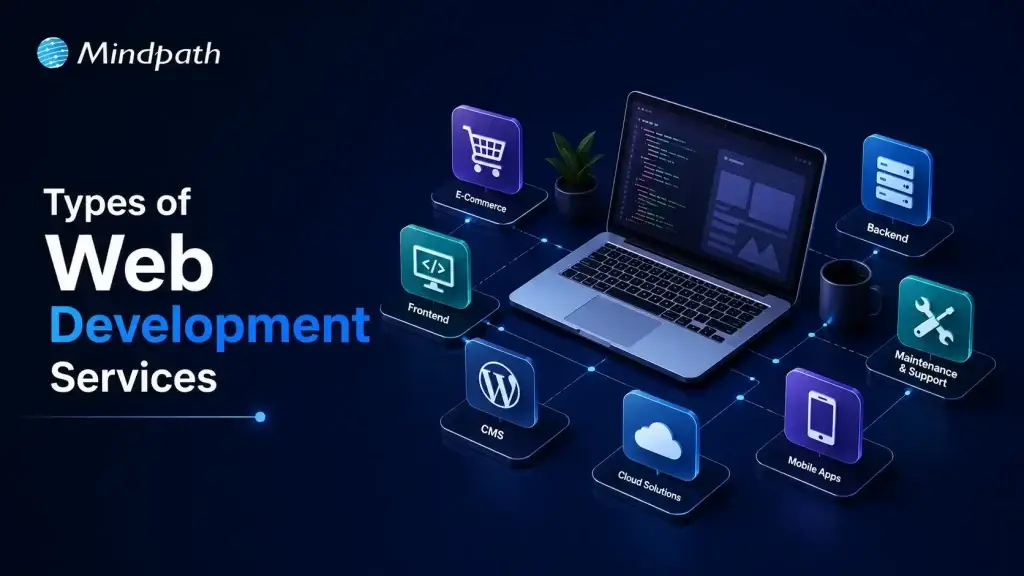
 It is undeniable that having a robust online presence is essential for any business these days. That presence can be created with the right web development services and it will yield real results. However, there are still many companies that are facing difficulties in selecting a suitable development type for their objectives. Having a good grasp of the options makes a huge difference.

Well, where do you start then? There are many specialties in the field of web development. All perform a different business function. Some emphasize on user experience and design. Others take care of complicated system architecture. Understanding the distinction will help you to invest smarter and grow faster. Let’s dive into this blog to understand 10 major types of web development and their implications for your business. So, keep reading further!

Ready to build a powerful online presence? Explore Mindpath’s web development services and turn your ideas into high-performing digital solutions.

What are Web Development Services? A Quick Glance

Web development services encompasses all aspects of creating a functional website or web app. The developers are responsible for the coding, database design, and bringing it all together. Good development is the process of converting a visual design into actual, working product. It drives all of your clicks, load and interaction online. These services are more than just website development.

These comprise performance tuning, security, updates, and continuous support services. A great web development partner will be able to cover the entire process, from planning to launch. That means your website is not just an online page; it’s a business asset.

What are the Types of Web Development Services?

Web development is a collection of many different specialized services. Each has its own function in making a successful product. Picking the right one brings great benefits: you can save your time, lower the expenses, and get better results at the same time.

However, it’s not that obvious which one to choose without a guide. So, let us show the major types of the website development services your business should be aware of.

1. Front-end Development

Frontend development is the making of the visual and interactive part of a website or a web app. It includes everything a user sees and interacts with, such as page designs, buttons, and even animations. Frontend developers rely on HTML, CSS, and JavaScript, plus frameworks like React and Vue to design interfaces that are not only fast and responsive but also user-friendly.

Key Features of Frontend Development

Let’s dive into the features of front end development that make a website visually compelling and user-friendly.

  • A good frontend loads quickly, and does not let folks bounce off the page.
  • It provides a pretty appearance that fosters trust on the first impression.
  • Users can move easily from one section to another, thanks to the smooth navigation.
  • All elements are consistent throughout Chrome, Safari, Firefox and other browsers.
  • Performance remains optimized with no lag, no freeze, no slowdowns.
  • User data is secured and the interface is protected against threats.

2. Back-end Development

All backend development work powers the processes that are invisible to users of a website. Users don’t see it; however, they can get to the business success that it facilitates practically each day. It deals with the management of servers, databases, and application logic. Python, PHP, and Node.js are the coding languages that are used to perform these activities. A website without a strong backend cannot really operate well.

Key Features of Back-end Development

Let’s look at the essential elements of back-end development that ensure reliable, secure, and efficient web development services.

  • Data is stored, managed, and accessed from structured databases in backend systems.
  • Core business rules are applied efficiently, by server-side logic.
  • APIs join frontend, backend and third-party tools together.
  • Data of user is always safe with strong authentication and encryption strength.
  • Architecture that can scale, so it won’t slow down with high traffic.
  • Payment gateways and other external integrations smoothly connect your platform.

3. Full-Stack Development

Full-stack development refers to working on both the frontend and backend sides of a website or application. They are capable of managing everything, both the user interface and the data processing backend. They represent the generalists among web development services. A single proficient developer or a developer team is often able to build, operate, and deliver a whole product without the help of others.

Key Features of Full-Stack Development

Let’s take a look at the features that make full-stack development a good business option.

  • Full stack developers take care of the entire development process all by themselves.
  • They have experience in both front end and back end technologies.
  • These popular stacks are used to create dynamic, fast web applications such as MERN.
  • The less team changeovers, the quicker the delivery, the smoother the flow.
  • Better performance and cleaner APIs through deep architectures knowledge.
  • Both sides of the app scale and adapt with ease.

4. CMS Development

CMS development involves creating websites based on platforms that allow you to handle content without the need to write any code at all. WordPress, Shopify, and Drupal are well-known instances. It’s among the most sensible web development services for companies who desire to have complete control over their content. Refresh your pages, include blogs, and modify the content whenever you want.

Key Features of CMS Development

Here are the main points that make CMS development efficient and business-friendly.

  • Intuitive editors make creating and formatting content quick and simple.
  • Everything is stored in one easy to access place.
  • Role Based permissions are used to maintain teamwork and smooth content flow.
  • Schedule and publish content on different websites and social platforms without hassle.
  • Inbuilt Analytics tools enable you to enhance content according to actual data.
  • CMS platforms have a seamless interface with CRM and marketing applications.

5. eCommerce Development

E-commerce development refers to the creation of online stores that are capable of managing product display as well as ensuring payment security. Great ecommerce development services are centered on not only quick loading times and hassle-free checkout procedures, but also on robust security measures. The smallest elements are aligned with the main objective converting visitors into buyers.

Key Features of eCommerce Development

Let’s take a look at the essential components that make any ecommerce development project successful.

  • Always, sensitive user data and payment information are guarded by robust security.
  • The payment gateway integration is seamless, ensuring smooth and reliable transactions.
  • Smart inventory tools are useful in keeping the product management organized and accurate.
  • Order management logic ensures efficient order fulfillment from click to delivery.
  • Scalable architecture helps control traffic surges without impacting performance.
  • In-built analytics makes informed business decisions every day.

6. Mobile App Development

Mobile app development means creating software for smartphones and tablets. It includes designing, programming, and testing for Android and iOS environments. Even though it is a bit different from the usual web development, nowadays mobile apps are mainly connected to web-based backends. A good mobile app delivers your business at the fingertips of the customer.

Key Features of Mobile App Development

These are some of the characteristics of a strong mobile application that will be regarded as the defining features of a well-built mobile app.

  • Smooth performance and speedy load time stop users from dropping off.
  • Offline support allows the app to function without an Internet connection.
  • Timely and personalized push notifications to re-engage users.
  • User trust comes easily with strong encryption and biometric authentication.
  • Every day, AI personalization provides more intelligent and relevant app experiences.
  • Real-time analytics monitor behavior and provide ongoing app enhancements.

7. Progressive App Web Development (PWA)

A Progressive Web App works like a native app but runs directly in a browser. It loads fast, works offline, and feels smooth on any device. PWA development is a smart choice within web development services because one codebase works across all platforms. No app store needed, just a great experience every time.

Key Features of PWA Development

Here are the core features that make PWA development a powerful modern choice.

  • Service workers enable smooth performance even on slow or no network.
  • PWAs deliver native app-like navigation and full-screen experiences seamlessly.
  • Users install PWAs directly from their browser onto any device.
  • Updates happen automatically without any app store downloads needed.
  • Push notifications keep users engaged with real-time personalized messages.
  • HTTPS hosting ensures every PWA stays secure and data stays protected.

8. Web Accessibility Development

Web accessibility development makes sure every user can navigate and use your website, including people with visual, auditory, or cognitive disabilities. It follows standards like WCAG to remove digital barriers. Within web development services, accessibility is not optional. It is a responsibility that also improves usability and expands your audience reach.

Key Features of Web Accessibility Development

Here are the key features that make a website truly accessible for every user.

  • Alt text helps screen readers describe images to visually impaired users.
  • Captions and transcripts make audio and video content fully inclusive.
  • High color contrast ratios improve readability for all users significantly.
  • Every function works smoothly using a keyboard alone.
  • Visible focus indicators show users exactly where they are navigating.
  • Skip navigation links let users jump straight to main content.

9. Web Security Development

Web security development builds protection directly into your website from day one. It covers secure coding, data encryption, and regular vulnerability checks. Cyber threats like SQL injection and data breaches are real risks every business faces. A secure website protects your users, your data, and your business reputation effectively.

Key Features of Web Security Development

Here are the core features that keep a website secure and trustworthy.

  • Multi-factor authentication ensures only authorized users access sensitive areas.
  • SSL/TLS encryption protects data during transit and storage always.
  • Secure coding practices block injection attacks and cross-site scripting effectively.
  • Content security policies prevent malicious scripts from running on your site.
  • Proper session management stops hackers from hijacking active user sessions.
  • Web application firewalls filter and monitor all incoming traffic constantly.

10. API Development and Integration

API development and integration connects your software applications so they talk to each other smoothly. It is a core part of modern web development services. Think of it as a digital bridge between your tools, systems, and platforms. Good API development saves time, reduces manual work, and keeps your entire tech ecosystem running together.

Key features of API Development and Integration

Here are the key features that make API development truly effective.

  • Multi-layer authentication keeps every API interaction fully secure.
  • Cloud-native infrastructure scales smoothly under high traffic.
  • Clear documentation makes third-party integration fast and simple.
  • Rate limiting protects servers from overload and attacks.
  • Versioning ensures updates never break existing integrations.
  • Connectors link payment gateways, CRMs, and platforms effortlessly.

Ready to Build a Website That Works for Your Business?

Web development is not one-size-fits-all. Every business has different goals, and the right web development services help you meet them. Whether you need a fast frontend, a secure backend, or a full e-commerce store, picking the right type makes all the difference.

At Mindpath, we are a web development agency that actually listens. We understand your goals and build solutions around them. Contact us; we offer solid, results-driven development that helps your business grow online and stand out from the crowd.

Frequently Asked Questions

1. Which web development service does a small business actually need?

Start with frontend and CMS development. They cover design, content, and basic functionality. As the business scales, backend and e-commerce development naturally follow.

2. How long does a web development project take?

A simple website takes two to four weeks. A full-scale web application with custom integrations can take three to six months depending on complexity.

3. What is the difference between web design and web development services?

Web design focuses on looks and feel. Web development focuses on functionality. Both work together. Great design without solid development delivers nothing, and vice versa.

4. Do businesses need both frontend and backend development?

Yes. Frontend handles what users see. Backend handles data, logic, and security. Skipping either creates gaps in performance and user experience.

5. How does web development impact business growth?

A well-built website attracts visitors, converts them into customers, and builds trust. Fast speed, mobile responsiveness, and security all contribute directly to revenue growth.

Monolith to microservices

Enterprise systems tend to have one unified architecture that facilitates early expansion. Gradually, construction gets heavy and hard to ascend. Releases slow down. Minor modifications require huge test cycles. Teams become under pressure to be more innovative. This is where monolith to microservices will be a strategic move towards enterprise legacy modernization. It is not a trend. It is a realistic reaction to actual operation constraints that influence operation, agility, and long-term development.

As businesses grow, they require systems that are flexible and capable of constant delivery and autonomous growth. Nevertheless, a monolithic building goes down only with solid architectural design and business focus. The technology leaders need to reconsider their deployment models, data management, and ownership of teams. Each step requires thorough consideration. In this blog, we will discuss how businesses may proceed in a practical manner to modernize architecture with clarity. So, keep reading!

Looking to simplify complex legacy systems for better agility? Mindpath’s legacy modernization services make it easier to break monoliths into microservices while keeping operations smooth.

What is Monolithic Architecture?

A monolithic architecture integrates all the application elements into a single piece of code. The database layer, business logic and user interface are a single system. Teams develop, test and deploy the application as a whole. It is a structure that promotes centralized control and easy management.

This model has been used by many enterprises to embark on their digital journey. Growth, however, makes the process more complex and causes the changes to slow down. Such a challenge tends to motivate the migration of monolith to microservices to enhance scalability and agility. Nevertheless, it is important to comprehend the monolithic basis before strategizing in terms of modernization.

Some of the advantages of monolithic architecture are listed here:

1. Quick initial development

2. Simple deployment process

3. Managing codes centrally

4. Reduced initial infrastructure price

5. Suitable for small teams

What is Microservice Architecture?

Microservice architecture forms an application of tiny, concentrated services. Every service deals with a certain business operation. They have teams that construct and operate. Services interact via APIs or messaging, which are lightweight. It is a structure that enables quicker releases and better ownership over teams.

Companies that switch from monolith to microservices have the goal of enhancing agility and scalability. Complex systems are broken down into services by teams. They enhance update control and performance control. This model facilitates constant delivery and the alignment of technology to evolving business needs.

Some of the advantages of microservice architecture are listed here:

1. An independent deployment of service.

2. Faster feature releases

3. Better fault isolation

4. Loosely planned technology options.

5. Targeted scalability

Want to ensure your move from monolith to microservices follows a clear direction? Explore legacy modernization strategy to build a structured and effective transformation plan.

Why do Organizations Switch from Monolith to Microservices?

As organizations become more and more application-driven, they become more complex. Monolith to microservices migration becomes a strategic decision when traditional architectures start limiting growth and flexibility.

benefits of switching from monolith to microservices

1. Independent Team Ownership

Microservices provide teams with a definite service scope. The teams are in charge of their updates and releases. This construction minimizes wasting of time and enhances concentration. Organizations that follow monolith-to-microservices patterns build stronger ownership models.

2. Flexible Technology Stack

The appropriate tools depend on the service selected by the teams. They do not rely on a common technology. This innovation and future development is supported by this flexibility. It makes architecture flexible to alterations.

3. Targeted Scalability

Monolithic systems need to scale the whole application. Microservices permit the scaling of particular services. This method enhances management of resources. This accuracy is why many enterprises are abandoning monolithic to microservices.

4. Better System Stability

Even a single problem within a monolith is capable of affecting all. Microservice provides isolation of failures in a single service. The teams address the issues without impacting the entire system. This improves reliability.

5. Faster Release Cycles

Teams create and implement services on their own. They make releases without necessarily having to recreate the system. This enhances the speed of delivery. Business enterprises migrate from monolithic to microservice to enhance momentum.

6. Easier Maintenance

The huge codebases become hard to handle. Microservices separate applications into smaller parts. Developers are able to maintain and update services with ease. This facilitates long-term clarity.

Planning to reduce system limitations while adopting modern architectures? Learn from the benefits of modernizing legacy systems to improve overall performance.

Key Steps for Migrating from Monolith to Microservices

Organizations need to strategize before they shred a monolithic system into smaller services. Successful migration to microservices is based on clear strategy and disciplined execution.

key steps for migrating from monolith to microservices

1. Assess the Current System

Begin by doing a line-by-line audit of your monolithic system. Check review services, dependencies, data flow, and performance gaps. This analysis forms the basis of successful monolithic to microservices migration.

2. Define a Clear Migration Strategy

Establish simple service boundaries on the capability of the business. Make decisions on the size of the service and the style of communication at the early stage. A strong monolithic to microservices migration strategy reduces confusion and prevents rework.

3. Build the Right Infrastructure

Finalize API gateway, service discovery and CI/CD pipelines. Insert containers and orchestration tools to introduce consistency. The powerful infrastructure promotes consistent monolithic to microservices conversion.

4. Extract a Low Risk Service First

Select a valuable module that is loosely coupled. Build it as a stand-alone service having its database. It is a risk-controlled step that is proving yourself.

5. Refactor and Validate Carefully

Refactor the chosen ones into a single service. Implement it and observe behavior closely. Logging and tracing helps to identify problems at an early stage.

6. Gradually Expand the Migration

Move other modules depending on the business priorities. Break-even monolith tasks gradually. This phased approach supports smooth monolithic application to microservices’ evolution.

7. Separate the Data Layer

Discontinue reliance on a corporate database. Allocate domain-owned datastores to each service. Synchronize the plan data keenly to ensure that it is consistent.

8. Align Teams with Services

Establish cross-functional teams for each microservice. Provide them with complete development and operations ownership. This is a structure that reinforces autonomy and long-term scalability.

Looking to enhance your modernization process with intelligent automation? Learn from AI-driven legacy system modernization to boost efficiency and performance.

Ready to Modernize Your Enterprise Architecture?

Contemporary business requires the ability to expand its systems as it grows and facilitate ongoing innovations. A clear shift from monolith to microservices improves agility, resilience, and operational control. The key to success lies in effective planning and implementation in phases and aligning a team. Through proper strategy, companies become simpler and create future ready digital platforms that underpin long-term business objectives.

At Mindpath, we provide legacy modernization services which help companies plan and implement legacy modernization with confidence and clarity. Our specialists evaluate architecture, establish migration roadmaps and deploy scalable microservices. We are performance-based, stability-centered and result-orientated. Collaborate with Mindpath to modify old systems into nimble, growth-motivated digital systems.

FAQs

1. Why should enterprises consider monolith to microservices today?

Enterprises face rapid market shifts and rising customer expectations. Monolith to microservices helps organizations build adaptable systems that support faster innovation. It also aligns technology with business domains, enabling better ownership, governance, and long-term digital growth without increasing structural complexity.

2. How do we know if our organization is ready for migration?

You should assess technical maturity, DevOps readiness, and team structure. Clear service boundaries and business alignment indicate strong readiness. Leadership commitment also plays a key role in successful transformation and sustainable architectural evolution.

3. Is monolith to microservices suitable for every business?

Not every system requires immediate migration. Smaller or stable applications may perform well as monoliths. However, enterprises planning aggressive scaling, multi-team collaboration, or global expansion often benefit from monolith to microservices as a long-term strategy.

4. What technical challenges arise during data separation?

Data decoupling often introduces consistency and transaction complexity. Teams must design domain owned databases and manage synchronization carefully. Event-driven patterns and API governance help maintain reliability during service level transitions.

5. How can Mindpath support our legacy transformation journey?

Mindpath’s legacy modernization services guide enterprises through assessment, planning, and execution. Our experts design scalable architectures and structured migration roadmaps. We help organizations transition confidently using proven monolith-to-microservices approaches aligned with measurable business outcomes.

ai app development playbook

Have you ever wondered how AI app development can take a basic idea and create something that is smart, user-friendly, and helpful? Imagine an app that learns, impacts your activities, and improves your life without cognitive load! By developing an appropriate strategy, businesses can build apps that make a difference. A well-thought-out strategy will position you to create something that adds real value to users every day.

That’s why an AI app development playbook is necessary. A good playbook maps out the process into actionable steps, so it doesn’t feel overwhelming. A playbook will guide you through the process of validating your idea, selecting the right tools, developing your app, testing it, and launching it. The playbook provides a roadmap to work from, which can save time, reduce risk, and set you apart from the competition. In this blog, you will learn more about how this playbook can help you succeed. So let’s dive in!

Looking for a way to adopt an AI-powered application? Our AI development services help businesses and teams to build intelligent apps that are secure, scalable, and relevant to the needs of the user.

What Does AI App Development Mean?

AI app development is the process of building software applications that integrate artificial intelligence to perform tasks that typically require human intelligence. Unlike traditional apps that follow fixed, pre-written rules, AI-powered applications use machine learning, data pipelines, and intelligent models to learn, adapt, and make decisions in real time. This includes understanding human language, recognizing images, making recommendations, or learning users’ preferences over time. By relying on sophisticated algorithms, machine learning models, and large data samples, developers can build applications that keep improving and deliver more relevant, valuable experiences the longer they’re used.

In contrast to traditional app development, which has fixed rules and stagnant workflows, AI app development allows apps to update, evolve, and respond in real time. AI development uses data processing, pattern recognition, and predictions to be presented in a flexible state and to solve more complex problems. With the right strategy, app development with AI can equip businesses with solutions that differentiate them from competitors and adapt to new user demands.

What is an AI App Development Playbook?

An AI app development playbook is a structured guide that helps teams and businesses create applications powered by artificial intelligence. It brings together proven methods, industry best practices, and practical tips to manage the unique challenges of building AI solutions.

Instead of approaching development without direction, a playbook provides clarity and keeps everyone aligned with the same vision and goals. It helps you make better decisions, avoid common mistakes, and use resources more effectively. Having an AI app development playbook means you have a clear plan to turn an innovative idea into an intelligent, successful application.

Looking to leverage artificial intelligence to make your mobile apps smarter and more user-friendly? Discover how AI in mobile apps can enhance functionality, personalization, and overall user experience.

Benefits of Building AI App Development Playbook

A well-crafted playbook does more than just outline steps; it brings clarity to every decision you make during AI app development. It helps you build with confidence and turn innovative ideas into real, valuable solutions. Let’s dive into some of its benefits:

Benefits of Building AI App Development Playbook

1. Faster Development and Better Efficiency

A well-structured playbook helps teams work smarter and avoid wastage of time. By following proven steps and using the right AI development tools, you can speed up tasks like coding and testing. This leads to faster delivery and more efficient use of resources.

2. Enhanced User Experience

A clear plan helps you build apps that feel more personal and easier to use. Smart features like chatbots and recommendations keep users engaged and satisfied. With the right approach, your app becomes something people enjoy using every day.

3. Smarter Decisions and More Innovation

A playbook supports better choices by using data and clear workflows. Teams can experiment and improve quickly, turning ideas into working features faster. This creates an environment where new ideas thrive.

4. Higher Quality and Fewer Mistakes

When you follow a playbook, your team knows when and how to test and debug. This helps catch issues early and maintain a higher standard. In the end, users get a stable app that works as expected.

5. Responsible and Safe AI Development

A strong guide ensures your team builds solutions that are fair, secure, and trustworthy. It helps address risks like bias or privacy concerns early on. This makes your AI software development more reliable and compliant with industry rules.

6. Clear Goals and Long-Term Growth

A playbook aligns your team with clear objectives that support your business goals. It helps you plan where AI fits best, including when to add features like AI chatbot development services that bring real value. This approach keeps you competitive and ready for steady growth.

Want to enhance user engagement and automate interactions in your AI applications? Discover how lead generation chatbot strategies can streamline customer interactions and boost conversions.

Steps to Build an AI App Development Playbook

Creating an AI app development Playbook gives your team a clear roadmap to build smarter, more reliable applications. It helps you plan each stage carefully, avoid common mistakes, and deliver real value to users. Use these practical steps to shape a playbook that keeps your AI projects focused and successful.

Steps to Build an AI App Development Playbook

1. Set a Clear Vision

Begin by defining exactly what your AI app should achieve and why it matters. Know the specific problem you’re solving and the audience it will help. Make sure your vision is realistic and tied to your broader business goals. A clear vision gives your team direction and purpose. It sets the tone for every decision you make during development.

2. Do Your Research

Spend time understanding your market, target users, and any competitors. Identify the data you’ll need and check if you can access it responsibly. Look into what AI features will add the most real value. Planning for data privacy and quality early helps you avoid problems later. Good research lays the groundwork for a stronger build.

3. Build a Strong Team

Bring together people with the right mix of skills in AI, design, development, and testing. Make sure everyone understands their role and how they’ll work together. Clear communication and teamwork keep the project on track. A well-prepared team can solve challenges faster. This creates a smoother workflow and better results.

4. Pick the Right Tools

Choose AI development tools, frameworks, and cloud platforms that fit your app’s goals and budget. Look for trusted solutions that make it easier to train, test, and update your AI models. Make sure your tech stack supports scaling as your app grows. Keep your tools flexible so you can adapt to new trends and needs. The right setup saves you time and keeps development efficient.

Want to stay ahead in the rapidly evolving world of artificial intelligence? Discover the latest AI trends that are shaping applications, development, and business strategies for the future.

5. Design for Real Users

Think about how people will actually use your app in daily life. Keep the design simple, clear, and focused on solving user problems. Test early designs with real users to spot areas that need improvement. A smooth experience builds trust in your AI features. The best AI apps feel helpful and natural, not confusing or intrusive.

6. Build, Train, and Test

Start with a minimum viable product that gets the basics right. Train your AI models using clean, reliable data to get accurate results. Test often to catch problems early, rather than fixing big issues later. Use real user feedback to improve your app’s performance. A strong cycle of training and testing keeps your app working well over time

7. Keep It Safe and Fair

Map out how you will securely and responsibly handle user data. You should address any possible biases in your AI models to ensure your app is fair to all users. Stay on top of current data protection practices and regulations. Establish guidelines for your team to follow for every engagement. Following these steps will help you establish trust and remain ethical with your AI solutions.

8. Launch and Improve

Prepare to launch by testing your app in a real-world environment. Observe the ways your app works and the way users will interact with it. Explore what aspects work well and what aspects need improvement. Record these notations for use very soon after launch. Consistent updates allow you to keep your AI app up to date and trustworthy.

9. Update Your Playbook Regularly

Treat your playbook as a living document that grows with every project. After each launch, review what went well and what you could do better. Add lessons learned, updated tools, and new best practices. This keeps your team ready for future AI projects. A well-maintained playbook is an investment in long-term success.

Looking to ensure that your AI applications are secure and reliable for users? Discover essential strategies for protecting your apps by exploring web application security guide.

Want to Turn Your Smart Ideas into a Powerful AI App?

Creating an AI app development playbook helps you move an idea forward with structure, focus, and confidence. It guides your team through clear steps that save time, reduce mistakes, and make the most of available resources. With a practical playbook, you can deliver apps that adapt, solve real problems, and keep users engaged. It’s the smartest way to stand out.

Mindpath is a renowned AI development company that helps businesses build solutions that work in the real world. Our AI development services cover everything you need to plan, develop, test, and grow your app responsibly. We bring trusted strategies and proven tools to your project. Let’s work together to turn your AI app vision into a successful story.