Unleashing the Power of Headless CMS in Content Management

Join our Newsletter!

Featured Posts

Support Is One Click Away

Home

Unleashing the Power of Headless CMS in Content Management

Headless CMS

Unleashing the Power of Headless CMS in Content Management

Have you ever wondered how websites deliver content so seamlessly across different platforms? What if there was a way to manage your content in one place and have it appear perfectly on websites, apps, and even smart devices? Welcome to the world of Headless CMS—a modern solution that’s redefining how businesses manage and deliver content. Curious to know why it’s a game-changer? 

Let’s explore! 

What Is Headless CMS?

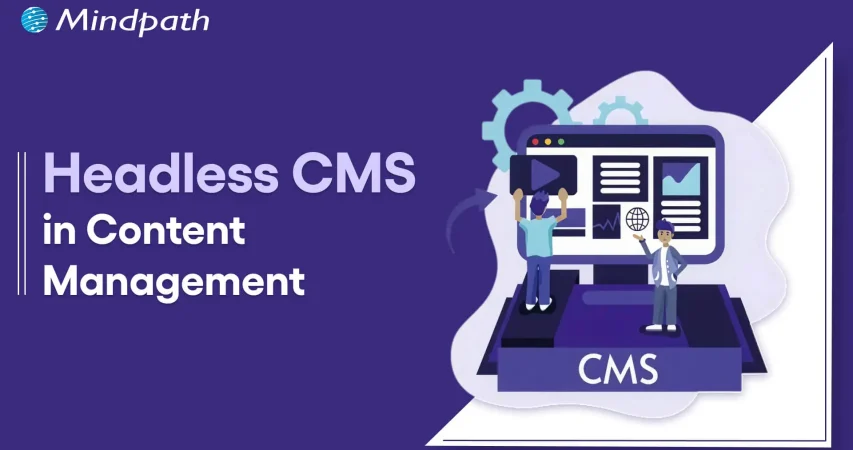
A headless CMS is a cutting-edge method of content management that simplifies and expands options. Unlike traditional CMS platforms, where content and design are inextricably linked, a headless CMS keeps both apart. A headless CMS allows you to produce and organize all of your content in one location. Then you can distribute that information across any platform, including websites, applications, smart devices, and even wearables. This separation enables marketers to update and maintain content without requiring assistance from developers. At the same time, developers can focus on creating rapid and inventive digital experiences without being constrained by predefined designs or structures. In contrast, traditional CMS systems combine content with design, making it more difficult to reuse content or build new digital experiences. A headless CMS maximizes your content’s potential by allowing you to scale and adapt as your needs change. 

Advantages of Headless CMS

1. Faster Launches

A headless CMS allows organizations to speed up content delivery by separating the front-end (what users see) from the back end. This implies that developers do not need to re-create user experiences for each platform; instead, they can construct effective solutions using their preferred tools and frameworks. The flexibility of a headless CMS enables teams to integrate new technologies, add features, and deploy changes without delay. Front-end developers can concentrate on creating contemporary, engaging interfaces using the most recent frameworks and technologies, while back-end developers handle content separately. This parallel workflow saves significant time. One of the most significant advantages is how rapidly material can be updated and circulated. Since modifications do not affect the underlying system, teams can quickly deploy upgrades or communicate information across platforms. This is particularly important for firms that must respond fast to market developments, client needs, or new possibilities. Businesses can utilize a headless CMS to significantly cut development time, keep ahead of competition, and guarantee their content reaches customers faster, therefore improving their whole digital strategy. 

2. Tailored User Experiences

A headless CMS allows you to easily personalize and share information across several platforms, including websites, applications, and even wearable devices. Businesses can employ atomic content design to offer personalized and dynamic information suited to each customer, improving their experience regardless of the platform they use. This personalized strategy not only increases engagement but also helps to strengthen client connections. Enterprises can offer personalized content at each stage of the buyer’s journey, resulting in a smooth and relevant experience. Furthermore, the ability to track user behavior enables organizations to better understand client preferences and modify their tactics for greater success. Personalized content delivered via a headless CMS not only increases customer happiness but also helps retain visitors, converting them into loyal, long-term clients. It’s a clever way to enhance user experiences while strengthening business growth. 

3. Better Speed and Performance

A headless CMS separates the front-end from the back end, allowing for faster and more efficient website development. This decoupling allows developers to create lightweight programs, while content is provided swiftly via APIs. This approach is especially beneficial to static sites and single-page applications since it allows for quicker content loading and smoother user experiences. Developers can enhance efficiency even further by using sophisticated techniques like code splitting, caching, and lazy loading. These strategies minimize load times, optimize resource utilization, and ensure that customers receive content promptly. Furthermore, the increased speed of headless CMS websites promotes better SEO performance. Faster-loading sites score higher on search engines such as Google, increasing exposure and visitors. With improved performance, organizations can give a better user experience and drive greater engagement and conversions. 

4. Seamless Tech Integration

A headless CMS’s API-first approach streamlines the integration of third-party systems like ERP, CRM, and marketing automation applications, hence improving your application’s overall capabilities. This adaptability enables firms to seamlessly adopt modern technology into their existing settings while minimizing interruptions. The decoupled design also allows for the usage of AI-powered tools for personalized content creation, automation, and predictive analytics. By integrating third-party APIs, organizations can create smarter solutions that adapt to changing demands and provide more value to customers. This technique enhances data analysis, simplifies operations, and greatly eliminates human error, resulting in faster and more informed decision-making. Additionally, it guarantees that your online apps are scalable, resilient, and available across all platforms, providing clients with a seamless experience. The ability to integrate modern technologies with existing systems not only future proofs your digital infrastructure but also empowers businesses to innovate and grow with confidence.  

5. Scalable and Future-Ready

A headless CMS allows organizations to easily develop and adapt to new technology. Its API-first architecture enables content distribution to a variety of platforms, including websites, mobile applications, and potentially future technologies like AR/VR and the metaverse. This means you don’t require several content systems, which reduces development time while guaranteeing your material reaches the intended audience. Businesses can utilize a modular content approach to build reusable blocks like product descriptions, testimonials, and call-to-actions. These blocks can be merged and customized to work with diverse platforms and situations, making content management more efficient and adaptable. Headless CMS also provides localization and multilingual options, making it simple to reach worldwide audiences while maintaining content consistency across platforms. This flexibility means that organizations can expand without sacrificing performance or brand identity. 

How Mindpath Can Help?

Mindpath understands the value of headless CMS and how it can revolutionize your digital presence. Our team specializes in developing customized solutions to help your business expand and remain ahead of the competition. We can assist you in integrating modern technologies such as AI tools, ERP, and CRM systems into your headless CMS to achieve smarter automation and more productivity. Whether you want to offer speedier content, increase website performance, or develop personalized user experiences, we have you covered. Our expertise make sure your headless CMS is scalable, safe, and future proof. We ensure that everything functions fluidly across platforms such as websites, mobile applications, AR/VR, and even emerging technologies, making your material available to all audiences. Mindpath allows you to fully embrace the flexibility and power of headless CMS while maintaining consistency and performance.  

Wrapping Up!

A headless CMS provides unparalleled flexibility, speed, and scalability, allowing organizations to provide personalized, high-performance content across various platforms. Whether you want to accelerate launches, improve user experiences, or incorporate innovative technology, a headless CMS is the future-proof option for your digital strategy. At Mindpath, we’re here to help you realise its full potential, ensuring that your company remains ahead of the competition and efficiently reaches customers across all channels. Let’s harness the potential of headless CMS together!  

Ready to leverage the power of headless CMS?

Partner with Mindpath today for custom solutions that drive performance and scalability!

Related Post

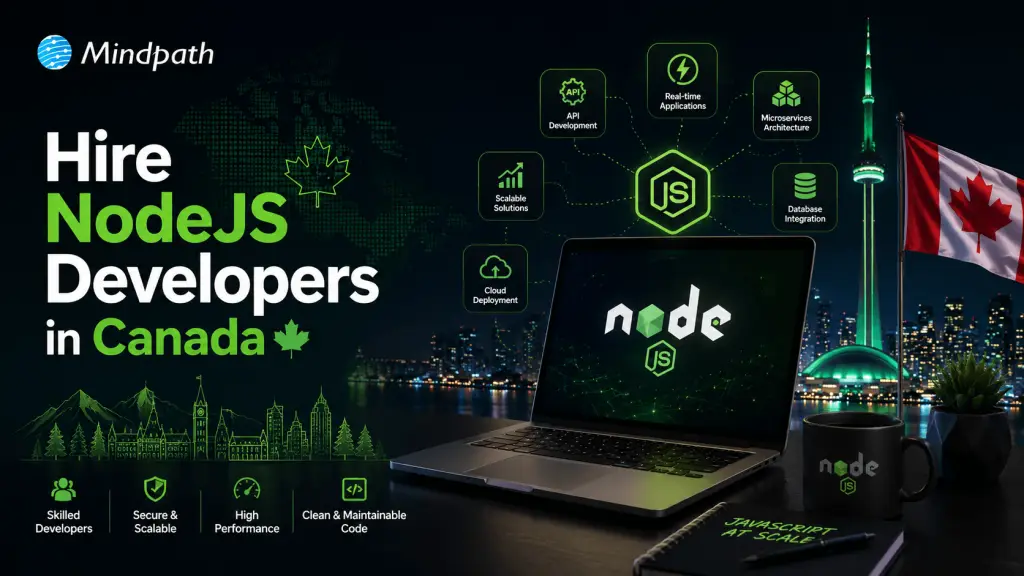
Discover the ultimate guide to hiring Node.js developers in London. Learn about the skills, benefits, and cost factors involved in finding the right talent for your project.

Related Post

full stack development trends

The full-stack development landscape is changing rapidly, and 2026 is already showing great possibilities for new ideas and better tools. Getting familiar with the newest full-stack development trends can help developers, startups, and businesses create smarter solutions. User needs are increasing, along with the requirement for flexible and efficient development solutions, which means teams are taking a fresh look at how they build, test, and scale applications. Knowing how to navigate these changes can have a significant impact next time whenever you develop a new item or launch a new product.

With speed, scalability, and seamless user experience as the new focus, developers are integrating advanced front-end technologies with back-end solutions to develop modern digital products. With cloud platforms available everywhere and low-code solutions evolving more rapidly, full-stack development is moving to a whole new level.  These solutions are transforming processes that not only save time but also improve quality and naturally foster greater teamwork. In this blog, we will provide further insight into the most important trends shaping full-stack development in 2026.

Want to stay ahead in this competitive market requires the right expertise. Mindpath’s Full Stack Development Services offer comprehensive solutions tailored to modern business needs.

Understanding Full-Stack Development

Full-stack development refers to building both the front-end and back-end of a software application. Let’s dive in to understand! Every application has two main sections. The front-end is what users see and interact with, like buttons, images, and forms. The backend encompasses all the activities that take place in the background – saving data, running logic, interacting with other systems, etc.

Each side requires different skill sets and tool sets. Full-stack development combines both sides into one process. Full-stack development enables developers to create complete applications and allows us to develop the application seamlessly from the user interface through the server and database. This means that the application includes both of those components as one shared system, which makes development more efficient and organized.

Ready to level up your development strategy? Explore this blog highlighting the major benefits of full-stack development in building robust and efficient applications.

Some advantages of full-stack development include:

1. A full-stack developer saves money by doing both front-end and back-end work, minimizing the need for multiple specialists.

2. They speed up the development process by working across the entire tech stack, ensuring faster delivery and smooth collaboration.

3. With strong knowledge of current tools and trends, they support modern full-stack development by integrating advanced features like AI and responsive design.

4. Full-stack developers take full ownership of the codebase, simplifying responsibility and streamlining debugging.

5. They deliver well-rounded, quality solutions by working across the UI, backend logic and business processes, database activities and data expansion, and testing.

6. They even provide ongoing support and maintenance, which ensures long-term stability, security, and enhancement.

Thinking about improving your web application strategy? Explore full stack-development for web projects and learn how integrated development drives efficiency.

Top Full-Stack Development Trends 2026

As technology continues to grow, developers are embracing smarter tools and faster methods to build complete applications. The emerging trends in full-stack development are shaping how teams work, improve performance, and deliver better user experiences in 2026. Here are the top trends to watch:

Full-Stack Development Trends 2025

1. Artificial Intelligence

Artificial Intelligence is one of the key full-stack development trends shaping how modern applications are built. It helps solve complex problems faster and allows systems to work without human interruption. Full-stack developers are well-suited for AI roles because they understand both design and logic, making it easier to build intelligent solutions. As the future of full-stack development evolves, AI will play a major role in improving performance and user experience.

2. Cloud Computing

Cloud computing is a fast-growing technology that allows access to data storage, processing power, and other resources over the internet. It supports the future tech stack for developers by offering flexibility, easy scaling, and pay-as-you-go pricing. Full-stack cloud developers are in demand to build and manage cloud-based applications that support collaboration and performance. To grow in this area, developers should understand IaaS, PaaS, SaaS and gain hands-on experience with platforms like AWS, Azure, and Google Cloud.

Also Read: Cloud Computing Trends

3. DevOps

DevOps is a practice that combines development and operations to improve how software is built, tested, and deployed. It helps teams work better together and use tools like continuous integration and delivery to release updates faster. DevOps plays an important role in improving application speed, quality, and reliability. As part of full-stack development trends, it supports the demand for efficient workflows and strong collaboration in building modern applications.

4. Progressive Web Apps

Progressive Web Apps (PWAs) are web applications that offer an app-like experience using modern browser features. They work offline, load quickly, send push notifications, and can be installed on devices without using much storage. As part of web development trends 2026, PWAs help businesses reach more users, especially on mobile, while keeping development simple and cost-effective. Their flexibility and performance make them a smart choice for companies looking to improve user experience.

5. Blockchain

Blockchain is a secure and transparent technology that stores data across a network of computers, making it difficult to change or hack. It is widely used in industries like finance and healthcare to protect transactions and manage decentralized systems. As part of full-stack development trends and the latest trends in web development, blockchain allows developers to build safer and more reliable applications. To work in this area, full-stack developers need skills in decentralized tools, enterprise systems, and Web3 architecture.

Must Read: AI in Cybersecurity

6. Cybersecurity

Cybersecurity is the practice of protecting systems, networks, and applications from online threats like malware, phishing, and DDoS attacks. It has become a key part of full stack development trends as developers need to build secure applications from the ground up. Companies are now including cybersecurity in their future tech stack for developers to keep data and systems safe. Full-stack developers aiming to work in this field should learn network security, web application security, cryptography, and secure coding practices.

7. Low-Code and No-Code Development

Low-code and no-code development platforms allow users to build websites and apps with minimal or no programming skills. These tools are growing as part of full stack development trends because they save time, reduce costs, and make development accessible to more people. While they are great for simple projects, they may not be suitable for complex or large-scale solutions. As part of the trends in software development, LCNC tools offer fast results and full-stack capabilities for quick product launches.

Curious about how development roles differ in modern projects? Explore Front End vs Back End vs Full Stack Developer to see how each contributes to building applications.

Ready to Leverage Full-Stack Development Trends for Your Next Project?

Full-stack development trends are shaping how modern applications are built, improved, and maintained. With advancements like AI, cloud, DevOps, and PWAs, developers and businesses can achieve faster, smarter, and more secure results. Staying updated with these trends will help you build stronger digital products that meet the growing demands of users in 2026 and beyond.

At Mindpath, we offer expert full-stack development services tailored to your business goals. Our skilled developers handle everything from front-end design to back-end logic, delivering complete, scalable solutions. If you’re looking to hire full-stack developers who understand the latest tools and technologies, our team is here to help you build your web and mobile applications with confidence and efficiency.

Node js libraries for AI

 As we know, with Node.js libraries, adding AI to your projects is becoming easier. These Node.js libraries for AI can offer you the ability to develop apps that can think, respond, and learn over time. If you enjoy working in JavaScript and you are curious about the new AI features like chatbots, smart predictive features (like those in Google Assistant), and apps that recognize voice input, then now is your chance. You don’t need to begin from scratch. If you use the right libraries, you can build smarter apps at less cost and more value.

These Node.js AI libraries come with beginner-friendly options that are powerful enough for advanced applications. You can add new features such as understanding language, detecting images, or performing machine learning without deep knowledge of AI. They are built to seamlessly integrate into your existing Node.js stack, enabling you to save time and effort in your development workflows. In this blog post, we’ll discuss some of the best libraries to quickly get started with AI in Node.js applications.

Are you looking to elevate your business’s web development with the use of Node.js? At Mindpath, we offer Node.js development services that aim to grow your business by providing reliable and AI-powered web solutions tailored to your unique needs.

Importance of Integrating AI into Node.js Applications

Node.js is increasingly becoming a leading option for creating smart, dynamic applications because it is lightweight and driven by events. Thus, can Node.js be used for AI? Yes, it can! Developers are already using Node.js as an API or tool for AI with tools like TensorFlow.js and Natural. In the 2024 Developer Survey by Stack Overflow, JavaScript continued to be the most popular programming language, which means that Node.js is a great starting ground for AI initiatives.

Integrating Node.js with AI applications allows developers to make applications that change and adapt in real-time. The asynchronous nature of Node.js allows developers to execute several operations simultaneously, making it a good platform for artificial intelligence features like chatbots and live prediction tools. More and more AI libraries support Node.js, as development can happen more quickly. As demand for AI using more efficient and adaptable models rises, Node.js is a new practical, scalable programming option for any developer who wants to create smart digital experiences.

Let us have a quick look at the benefits of integrating AI in Node.js applications:

Benefits of Integrating AI in Node.js Applications

1. Real-time Performance

AI integration with Node.js handles real-time tasks like chatbots and fraud detection efficiently with its non-blocking, event-driven architecture. It supports thousands of concurrent requests, delivering quick and responsive AI features.

2. Unified JavaScript Stack

With Node.js AI integration, developers can use JavaScript for both frontend and backend, including AI features. This reduces context switching and makes the development process faster and more efficient.

3. Fast AI Inference

Node.js runs on the V8 engine, which ensures high-speed execution for AI models. This is perfect for real-time predictions like dynamic pricing or personalized recommendations.

4. Smooth API Integration

Node.js makes it easy to connect with external AI services and pre-trained models through APIs. It works well with AI built in other languages like Python, enabling flexibility in integration.

6. Growing AI Library Support

The Node.js ecosystem offers a wide range of AI libraries via npm, such as TensorFlow.js and ONNX.js. These tools allow developers to implement machine learning directly in JavaScript.

7. Enhanced User Experience

AI features like intelligent chat, personalization, and predictions improve how users interact with your app. Node.js helps deliver these features in a fast and seamless way.

8. Automation and Insights

AI in Node.js apps can automate repetitive tasks and analyze data in real-time. This leads to smarter applications that save time and improve performance.

Looking to streamline your web development in 2025? Check out our blog on Top 25 NodeJS Libraries in 2025 to find the best tools that will help you build powerful and efficient applications.

What are the Top Node.js Libraries for AI Integration?

Building intelligent apps is now simpler with the rise of Node.js artificial intelligence libraries that support machine learning, NLP, and smart automation. These powerful AI Node.js libraries help developers create responsive and data-driven features without complex setups. Here are some of the best Node.js libraries for AI integration:

Top Node.js Libraries for AI Integration

1. TensorFlow.js

TensorFlow.js is one of the top Node.js libraries for machine learning, allowing developers to build, train, and run models entirely in JavaScript. It works both in the browser and with Node.js, making it versatile for a wide range of projects. The library is a good example of how Node.js libraries for AI can power real-world communication tools.

2. Brain.js

Brain.js is a simple neural network library that’s ideal for beginners working on small AI projects. It uses JavaScript to make machine learning accessible without complex configuration. Found in the list of useful npm libraries, it helps developers get started quickly with AI-powered features.

3. Synaptic

Synaptic offers a flexible system for creating different types of neural networks, including feedforward and recurrent ones. It supports supervised and unsupervised learning, giving developers options based on their use case. As one of the advanced Node.js libraries for AI, it works well for experimental and custom AI models.

4. Natural

Natural is a powerful Node.js natural language processing library that provides tools like stemming, classification, tokenization, and sentiment analysis. It’s great for applications that need to work with text data in real-time. This is one of the most complete Node.js libraries for AI when it comes to language-based features.

5. ML5.js

ML5.js is built on TensorFlow.js but focuses on simplicity and creative use, making it perfect for artists, designers, and beginners. It lets you easily create interactive AI experiences on the web. As part of the growing set of npm AI tools, it balances power with ease of use.

6. Neuro.js

Neuro.js focuses on building intelligent features for chatbots and virtual assistants using JavaScript. It’s tailored for tasks in NLP and conversational AI. The library is a good example of Node.js support for AI development in real-world communication tools.

7. Compromise

Compromise is a fast and lightweight library for real-time text processing. It’s designed for performance and currently supports only English, making it efficient for many use cases. As part of the JavaScript libraries used in NLP, it’s a useful choice for developers needing quick language insights.

8. KerasJS

KerasJS is a browser-based library that allows you to run deep learning models built with Keras using JavaScript. It supports several pre-trained models like Inception v3 and ResNet, useful for tasks such as image recognition and sentiment analysis. As one of the top Node.js libraries for machine learning, it offers flexibility for deploying models in web environments, with Node.js support in CPU mode.

9. OpenAI Node SDK

The OpenAI Node SDK helps developers connect easily with models like GPT and Codex for generating text, images, and code. It simplifies integration with OpenAI services using Node.js. Available among advanced npm libraries, it enables powerful generative AI in modern apps.

10. Face-api.js

Built on TensorFlow.js, face-api.js provides tools for face recognition, detection, and expression tracking. It runs on both browsers and Node.js, making it suitable for cross-platform apps. As part of modern Node.js libraries for AI, it brings computer vision capabilities to JavaScript projects.

Choosing the right libraries is just the start; you can also enhance Web Performance with Node.js Development Services, which are built to support advanced AI workflows.

Looking to Enhance Your App with Node.js and AI?

The growth of powerful Node.js libraries for AI integration is making it easier to build applications that think, learn, and adapt. AI libraries will help a developer create smarter, faster, and more sensible digital experiences, from real-time predictions, natural language processing, to so much more. With JavaScript at the core, the path to intelligent development is now more accessible.

At Mindpath, we provide professional Node.js development services for current and future applications that are powered by AI. We build intelligent backend systems, provide seamless API integrations, and build scalable features with Node.js, and when combined with AI, we are empowered to deliver increasingly smarter solutions. If you are looking to build an application soon, then we are ready to provide fast, reliable, and intelligent solutions focused on performance and innovation.

Discover top Node.js libraries for AI integrations and learn to enhance your applications with machine learning, NLP, and more.
GenAI in Retail & E-Commerce

Have you ever wondered how technology is changing the way we shop? Imagine walking into a store where the products seem to know your preferences or visiting an online shop that feels personalized just for you. With GenAI applications making waves in retail and e-commerce, these scenarios are becoming a reality. How are retailers harnessing the power of artificial intelligence to enhance customer experiences and streamline operations? In this blog, we will explore the exciting world of GenAI in retail and E-commerce. 

Generative artificial intelligence (generative AI) is a form of AI capable of producing new content and ideas, such as conversations, stories, images, videos, and music. AI technologies aim to replicate human intelligence in nontraditional computer tasks such as image identification, natural language processing (NLP), and translation. Generative AI represents the next phase in artificial intelligence. You can teach it to understand human language, programming languages, art, chemistry, biology, or any other complicated topic. It leverages previously trained data to tackle new issues. For example, it can acquire English vocabulary and compose a poem using the words it processes. Your organization can utilize generative AI for a variety of applications, including chatbots, media production, and product development and design. 

Now, let’s dive in to explore GenAI Applications in retail and E-commerce! 

GenAI Applications in Retail and E-commerce

1. Virtual Shopping Assistants

Chatbots are becoming increasingly important in retail as they use artificial intelligence to assist customers when shopping online. These virtual assistants can answer product-specific queries, such as pricing and availability. They also recommend things based on customer preferences, making the buying experience more personalized. 

Chatbots also answer basic customer care questions, such as how to return an item or handle product faults. They can help clients track their orders and understand the delivery timings. One of the benefits of chatbots is that they can gain from the content on your website and other resources. This means they can receive more education about your company, making it easier for them to answer enquiries. 

Chatbots are available 24 hours a day, seven days a week, so clients can look for assistance at any time. If a customer needs to speak with a person, the chatbot may collect their information and forward it to your sales or support staff for further action. This manner, you can ensure that clients get help whenever they need it, even outside of normal office hours. 

2. Real-Time Sales and Support Solutions

Generative AI benefits customers in retail, but it also improves the experience of support agents and sales colleagues. AI systems can simplify and improve consumer interactions by giving real-time help. For example, systems such as Talkative provide useful functionality for agents. One important element is the knowledge base, which enables rapid replies during live conversations. When configured, generative AI can get the knowledge base and provide suitable responses based on the context of the discussion. This enables agents to respond faster and provide more precise information.  Another useful feature is the AI Agent Copilot, which is intended to improve reaction time and quality. This features an internal chatbot called “Navi” that supports agents by answering queries depending on the current discussion and knowledge base. This can be especially useful during sales pitches, allowing agents to complete agreements more successfully. Furthermore, an AI Autocomplete tool anticipates and completes agent messages, saving typing time and speeding up answers. Furthermore, AI Agent Rephrases enhance the messages that agents send during conversations. Instead of manually revising each response, the AI proposes better language and may change the tone to meet the circumstance, whether that means making it more friendly, professional, or just fixing syntax and spelling. 

3. AI Training for Sales Teams

Training sales and support workers is essential for sustaining excellent service standards in the retail business. Generative AI can automate and improve this training process, ensuring that agents are well-equipped to help clients successfully. For example, you can use an AI training platform to provide realistic customer interaction scenarios for agents to practice. This allows agents to practice answering frequent product enquiries and managing returns, which helps them build confidence and enhance their abilities. 

AI training can boost your retail business in a variety of ways. For new employees, it can replicate common customer enquiries, allowing them to learn in a helpful atmosphere. Furthermore, the AI can give precise product knowledge, allowing agents to solve problems and properly reply to consumer enquiries. Agents can also improve their sales skills by dealing with virtual customers in low-pressure settings. This allows students to improve their pitching abilities and learn how to properly handle objections. Furthermore, AI can assist agents improve their communication and empathy by providing feedback on their encounters, resulting in greater customer connections. 

Finally, the training tool can help agents prepare for tough scenarios, such as dealing with difficult clients or receiving urgent complaints. Role-playing these scenarios allows agents to acquire effective dispute resolution tactics and preserve client happiness. 

4. AI-Driven Marketing Strategies

Generative AI in retail does more than simply automate customer service and improve the e-commerce experience; it also increases customer satisfaction through optimized marketing and advertising. 

One of the primary advantages of generative AI is its potential to simplify the creative process for marketing teams. By automating content generation, many marketing materials can be generated rapidly and efficiently. Retail businesses can develop online content such as blogs and landing pages, as well as compelling product descriptions. 

Furthermore, generative AI can help create engaging social media posts and targeted email campaigns, as well as educational infographics, eye-catching promotional movies, and thorough brochures. This technology enables retail businesses to generate a wide variety of marketing material while dramatically decreasing the time and expenses associated with traditional content generation techniques. Retail firms may use generative AI to improve their capacity to interact with customers and boost engagement. 

GenAI Services at Mindpath

Mindpath provides Generative AI services to assist retailers and e-commerce enterprises in improving their operations and customer service. Our clever chatbots offer 24-hour service, answering customer inquiries and aiding with orders, making shopping easier for everyone. We also help companies engage with their customers by swiftly creating interesting marketing material such as product descriptions, social media postings, and email campaigns. Furthermore, our AI-powered training programs prepare sales and support professionals by resembling client interactions. This allows them to enhance their abilities and offer better service. 

Wrapping Up!

The integration of Generative AI in retail and e-commerce is transforming the way businesses interact with customers and manage operations. By utilizing virtual shopping assistants, real-time support solutions, AI-driven training programs, and innovative marketing strategies, retailers can create a more personalized and efficient shopping experience. Mindpath’s Generative AI services empower businesses to enhance customer engagement, streamline processes, and ultimately drive sales growth. As technology continues to evolve, embracing Generative AI will be essential for retailers aiming to stay competitive in an ever-changing market. With these advanced tools at their disposal, businesses can better understand and meet customer needs, ensuring success in the dynamic world of retail and e-commerce. 

Want to transform your retail experience?

Partner with Mindpath to discover how our Generative AI solutions can elevate your business.

Explore the impact of Generative AI in retail and e-commerce, enhancing customer experiences, streamlining operations, and driving engagement.