Top Digital Transformation Trends in 2026

Join our Newsletter!

Featured Posts

Support Is One Click Away

Home

Top Digital Transformation Trends in 2026

top digital transformation trends

Top Digital Transformation Trends in 2026

In the digital world, new digital technologies are emerging at a rapid pace. It is imperative for business entities operating in diverse industries and sectors to familiarize themselves with the top digital transformation trends in 2026. The global spending on digital transformation is likely to touch USD 3.9 trillion by the year 2027. It highlights the bright future of digital transformation.

In order to stay ahead in the competitive business space, you need to keep a tab on the key trends that contribute to digital transformation for businesses. The insight into these trends can surely guide your business towards a path of innovation and creativity. Let us explore some of the chief trends that can influence the trajectory of your business in 2026.

Looking to use the digital transformation trends practically in your business operations to enhance performance? Contact us to get personalized advice on how to implement these trends successfully.

Major Digital Transformation Trends in 2026

Businesses need to familiarize themselves with major digital transformation trends that are dominating in 2026. Such trends can create new opportunities for businesses to stay ahead in their industries. The top digital transformation trends include:

1. Rapid Adoption of Generative AI

The emergence of generative AI has certainly broadened the boundaries of Artificial Intelligence. In fact, you cannot ignore AI and automation in digital transformation today. By leveraging generative AI for business, they have the amazing opportunity to redefine personalization. Moreover, by making use of generative AI capabilities, it has become possible for businesses to automate the content creation process.

It is undoubtedly among the top trends that are catching up among businesses. You can strategically integrate generative AI elements to showcase your commitment to innovation. In the future, as generative AI further matures, businesses can transform their existing workflows as well as processes.

2. Boosting Efficiency through Cloud Computing

Cloud computing is certainly among the top enablers of digital transformation for businesses at present. Businesses need to keep track of the latest cloud computing trends in 2026 so that they can improve their productivity. Moreover, it can also create an opportunity for businesses to minimize their overall costs.

Businesses can consider adopting a hybrid cloud infrastructure. It will enable them to ensure high portability, IT agility, and vendor-related flexibility. Businesses cannot ignore the strategic relevance of cloud computing technology in their digital transformation journey. It can play a catalytic role by fostering innovation for businesses.

3. Rising Adoption of Mobile Technologies

While discussing the topic of digital transformation, one cannot omit mobile technologies. Instead, it is among the top digital transformations in IT that one can come across. Today, the reliance on mobile is expanding among customers. This trend has automatically been driving digital transformation initiatives among businesses today.

Regardless of the industry in which businesses operate, it is essential for businesses to develop mobile apps. By doing so, the communication between businesses and their potential and existing customers can be simplified. It can certainly redefine the overall experiences of customers. It can even give rise to new opportunities for businesses to transform the customer journey.

4. Increased Focus on Cybersecurity

In the highly dynamic and volatile cyberspace, businesses have started refocusing on cybersecurity aspects. The rapid adoption of new types of technologies has automatically escalated cybersecurity concerns for businesses as well as customers. This is because malicious actors such as cybercriminals and online hackers have been using sophisticated techniques to compromise the security of legitimate users online.

To prepare themselves in the evolving cybersecurity space, businesses have started prioritizing their cybersecurity preparedness. Modern businesses are adopting new cybersecurity measures and interventions to strengthen their cybersecurity posture. This specific trend is likely to gain further prominence in the evolving digital landscape.

Wondering how artificial intelligence is reshaping security in the digital era? Check out AI in cybersecurity to learn how intelligent threat detection and automation are transforming protection strategies in 2026.

5. Shift Towards Data-Driven Business

In the contemporary business world, the role of emerging technologies in digital transformation is surely instrumental. It has also created an opportunity for businesses to shift towards a data-driven approach. Today, businesses are relying on concrete data and facts to make decisions. Such a shift has undoubtedly shown the high value of rich and insightful data for businesses.

By relying on real-time and accurate data, it has become possible to respond to the evolving needs of customers promptly. Furthermore, it has also empowered businesses to adapt to the dynamic business climate and make cautious and well-informed decisions. It is definitely a major source of competitive advantage for businesses in the current times. This particular trend certainly holds the promise to redefine the journey of businesses as well as their customers.

6. Growing Popularity of Agentic AI

Although the concept of Agentic AI is in its nascent stage, it has captured the attention of one and all. In fact, this novel technology holds the promise to become a cornerstone of digital transformation for modern businesses. By integrating agentic AI, businesses can automate repetitive tasks. Furthermore, this technology can enable businesses to optimize their overall decision-making process.

Even though Agentic AI is still evolving, it has started to impact several industries and businesses. As such systems have a high degree of autonomy, they can make important decisions with little human intervention. It is certainly among the top emerging technologies in digital transformation that businesses must focus on.

7. High Expansion of Edge Computing

Edge computing is a novel concept where data processing and data storage are brought closer to the source of data. This approach has been gaining considerable momentum in the business world today. This is because it can give rise to a host of benefits for businesses in the form of reduced latency, better real-time responsiveness, and reduced use of bandwidth.

In the competitive business landscape, edge computing certainly acts as a vital source of advantage for businesses today. By leveraging the novel technology, businesses can carry out their operations in a more reliable manner. Moreover, it also creates the opportunity for businesses to save costs by reducing the amount of data that is transmitted to the cloud.

Strategic Importance of Digital Transformation

In the prevailing business environment, it is imperative for businesses to familiarize themselves with the latest digital transformation trends for 2026. By being aware of the emerging technologies, you can strategically deploy appropriate digital technologies to advance towards your digital transformation journey.

Digital transformation is of high strategic importance for entities since it can boost efficiency, promote automation, and improve the experience of customers. Moreover, it can foster innovation, which is a must for contemporary businesses today. By leveraging digital transformation for business growth, you can ensure that your business can effectively adapt to the evolving business climate. It can serve as the ultimate pathway that can help businesses achieve sustainable growth in the digital age.

Wondering how digital trends drive real business impact? Discover digital transformation for businesses to see how companies are evolving in 2026.

Final Words

In the 21st century, digital technologies have been influencing how business entities operate. In order to adapt to the rapidly evolving business setting, it is a must for businesses to keep a tab on the top digital transformation trends. A broad range of trends has been identified, including the rapid adoption of Generative AI, leveraging cloud computing, rising use of mobile technologies, increased focus on cybersecurity, and a shift towards data-driven business. Similarly, businesses are also focusing on novel technologies like Agentic AI as well as edge computing to boost their capabilities.

As the strategic relevance of digital technologies is immense, businesses must choose a top service provider that can help them advance in their digital transformation journey. Businesses must consider the innovative solutions of Mindpath to stay ahead in the digital transformation race. The modernization and digitalization of solutions can surely help businesses thrive in the technology-driven business world.

Related Post

How much does hiring a ReactJS developer cost? Learn about factors affecting rates, and how to find the best talent within your budget.
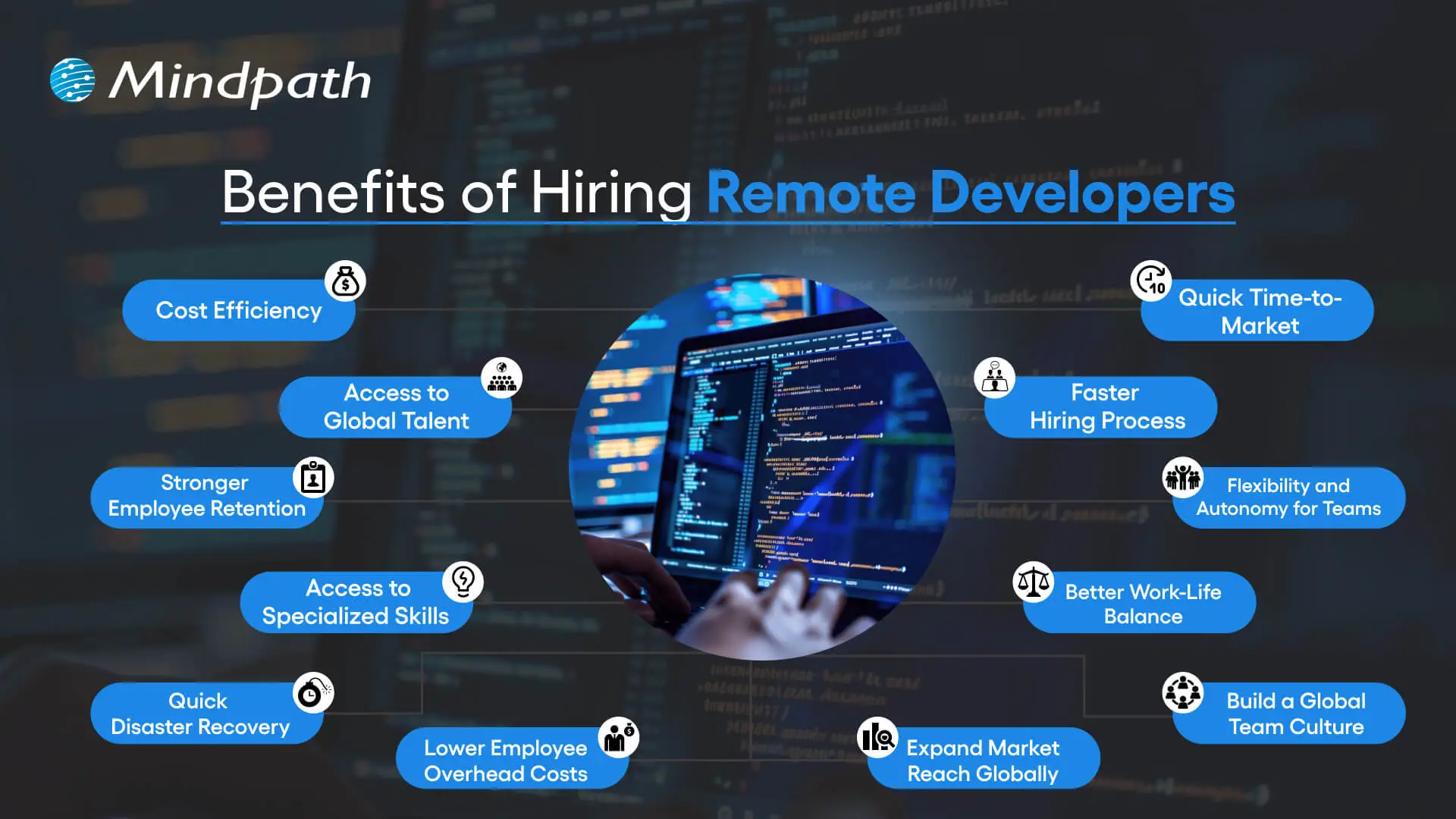
Discover how hiring remote developers can drive startup success by tapping into global talent, enhancing productivity, and reducing costs.
Conversational AI, a byproduct of AI is already popular in the form of voice assistants like Siri and Alexa, customer assistant chatbots, messenger bots, and more such solutions.  

Related Post

Most popular web programming languages

The realm of Web Programming Languages is full of dynamism. In the year 2026, it is most likely to undergo further evolution and change. In fact, the domain of web development languages is likely to blend innovation with stability. The most popular web programming languages that remain at the core of the software ecosystem are Python and JavaScript. 

Both individuals and businesses need to be aware of the most popular web programming languages. The insight is essential since these languages are key when it comes to developing applications and websites. If you wish to create your own app or site, choosing the best website programming languages is a must. It is the perfect time to explore the top Web Programming Languages in 2026.

Planning to use the latest web programming languages to get your website ready for better growth and performance? At Mindpath, we provide tailored web development services built with the technologies your business needs to succeed.

An Insight into Web Programming Languages

Web development involves a number of programming languages for both front-end and back-end development. You can use programming languages in order to give computer systems instructions that they can properly understand. A programming language refers to a human-readable programming code. 

Programming Languages can be in the form of general-purpose languages and domain-specific languages. You need to bear in mind that domain-specific languages function within specific programming environments. On the other hand, in the case of general-purpose languages, it is possible to interpret or compile them without having any knowledge of the platform. Developers make use of website programming languages in order to build dynamic web pages. You can choose the programming language for website development based on whether it can be used for front-end or back-end development.

Also Read: AI Programming Languages

Best Programming Languages for Web Development

In the rapidly evolving programming language setting, a wide variety of programming languages have come into existence. You need to have an insight into these languages so that you can choose the ideal language that can help develop apps and sites based on your needs and goals. The best programming languages for web development include:

1. HTML

When it comes to web development, HTML certainly serves as the ultimate cornerstone. This is because it offers a standardized approach to creating web pages. Thus, if you wish to have a career as a web developer, it is fundamental to master HTML. It is considered by many to be the best programming language for web development. The straightforward syntax of HTML makes it quite easy for beginners to understand. 

HTML not only dictates the visual presentation on a web page, but it also defines its overall structure. It offers semantic elements such as a header and a footer, which can give proper meaning to your content. As a result, it improves accessibility along with search engine optimization. HTML even enables the creation of hyperlinks for the purpose of linking different web pages together. It even supports responsive design through elements such as media queries and meta tags. 

Want to modernize your website using popular web technologies? Learn how to convert HTML to WordPress and keep your site aligned with current development trends.

2. JavaScript

When it comes to web development programming languages, one cannot miss out on JavaScript. JavaScript is a high-level interpreted language that is widely used. Developers use this specific language in order to create and manage dynamic content on sites.  It has gained massive popularity over the years since it works in conjunction with HTML as well as CSS.

JavaScript is mainly utilized for the creation of dynamic content that you find on web browsers. Since it is a high-level programming language, it is easy to write and understand code. This automatically simplifies the job of developers and programmers. It is known for its high versatility. You can use the specific website development programming language for developing mobile applications and working on server-side development. You also need to bear in mind that the rich library ecosystem streamlines the entire web development process. 

3. CSS

Cascading Style Sheets, commonly known as CSS, is among the top web development programming languages today. CSS is a stylesheet language that web developers can use for describing the presentation of a document that has been written in XML or HTML. This programming language is responsible for controlling how elements must be rendered on screen or other forms of media. 

CSS enables web developers to develop web pages that are highly visually engaging. You can develop web pages with diverse layouts, fonts, and colors. One of its unique features is related to visual styling. You can have control over a plethora of visual properties if you use CSS, such as alignment and spacing. Thus, developers can have proper control over the look as well as feel of web pages. You can also use CSS to add interactive elements in web pages, such as animations, which can enhance the experience of users. 

4. Python

Python is an immensely popular open-source programming language. It is mainly used for back-end web development. Many believe it to be the best language for website development because of its ease of learning. Moreover, the extensive libraries of Python support novel technologies such as Machine Learning and Artificial Intelligence. This makes Python a highly versatile language in the web programming context. 

As Python is a high-level language, it enables you to write complicated logic in fewer lines of code. If you use the language, the process of debugging can get easier. This is because Python is capable of executing code line by line. Within a short span of time, the programming language has gained massive popularity because of its versatility and usability. Individuals who wish to have a career in the IT domain must definitely consider mastering a specific programming language. 

Planning to build or maintain WordPress sites with confidence? Explore WordPress and PHP compatibility to understand how they work together to support modern web applications.

5. PHP

PHP is a general-purpose scripting language that has gained high popularity in the web development setting. You can utilize the open-source language in order to create dynamic types of websites. PHP does not require compilation because it is an interpreted language. As a result, developers can directly embed PHP within HTML. This language allows the streamlined integration of server-side logic with online web pages. 

One of the main advantages of the PHP programming language is related to the user-friendly syntax. This user-friendliness makes it relatively simpler for beginners who are into web development. Due to the open source feature of PHP, it acts as a cost-efficient option for modern firms. The elimination of licensing fees automatically reduces the development costs for users. 

Over the past few years, a diverse range of web programming languages has emerged. While some have strengthened their presence, there are others that are gradually fading. You need to always be aware of the most popular web development languages. This is because their popularity as well as demand keeps on fluctuating. The future of web programming languages is certainly full of high potential. 

Wondering how to build modern web applications in 2026? Discover how a web development company helps you use popular technologies effectively.

Final Words

The web programming language landscape is flourishing currently, and it is likely to do so in the future as well. In the year 2026, it is necessary for you to know the top languages so that you can make the right selection. Some of the most popular languages include HTML, JavaScript, Python, and many more. You need to bear in mind that the popularity of these programming languages may fluctuate in a dynamic environment.

Mindpath’s experts have high expertise in providing web development services. Businesses can reach out to our experts if they wish to leverage the most popular language to develop their web pages. Our highly skilled developers will leverage their skills and prowess so that you can have a highly interactive and engaging website.

AI in e-commerce

React, a JavaScript library originally created by Facebook, is extremely common for developing interactive and fast user interfaces. It has a component-based architecture and provides developers with flexibility to release smooth, scalable and high-performing web applications. It aims at developing interactive web app parts, specifically SPAs, in which content keeps changing dynamically without page reloads. Because of these advantages, numerous companies are counting on React to boost their online experience. 

But choosing a suitable React development company is as important as the technology itself. The ideal team can ensure that your business goals are achieved with accuracy and speed. This blog will take you through the benefits of opting for the correct partner for your React requirements and what to search for in a ReactJS development firm. So, let’s explore! 

Advantages of Partnering with a React Development Company

Partnering with an appropriate ReactJS development company can offer many benefits and it is very important to know what they bring to the table and how they work. Here are a few benefits you should know before making your choice: 

1. Customized ReactJS Solutions

A dependable ReactJS development company understands that every business has requirements. By offering customized solutions, they guarantee that the final product aligns with your goals. They can adjust features, improve functionality, and design a user-friendly interface to match your business requirements. With customizable ReactJS development services, the company guarantees your web application is not just practical but optimized to support your growth and success. This personalized attention can help in building a product that meets your exact requirements, fostering competence and improving user experience.  

2. Faster and Smarter Development

Utilizing ReactJS services can help to speed up the whole development process, so, an expert team follows a clear and organized method that improves how quickly and smoothly the work gets done. With automation and collaboration support tools, they can create your project faster without sacrificing quality. They usually follow agile practices, which include breaking the work into smaller pieces, getting feedback, and adjusting accordingly. This way, your application is delivered in a short time, with fewer bugs, and better results. 

3. Ongoing Support after Development 

Reliable ReactJS development companies do not consider their work finished once a project goes live; a good company provides continued assistance and support to ensure the website or application runs smoothly. This means troubleshooting and resolving bugs, implementing minor changes, and providing ongoing maintenance. With good ReactJS services, you receive regular maintenance to ensure your application is performing well and updated. If anything goes wrong, the team will be able to fix it with ease. This type of support fosters trust and ensures that your business remains stable in the long term by keeping your digital solution up to date and trouble-free.  

4. Strong Emphasis on Quality

Quality is also a priority for companies when developing web applications. A React development firm with experienced teams follows rigorous testing practices to ensure everything is in order. They test the code, design, and features throughout the project stages. This identifies errors early, corrects them prior to the final delivery and makes the final product smooth, dependable, and ready for actual users. By focusing on quality, ReactJS development agencies ensure that applications delivered are of high standards and work effectively. 

Now that you have an idea about the benefits, let us learn what factors to consider while choosing ReactJS development agency: 

Key Considerations While Choosing ReactJS Development Company

While choosing a ReactJS development agency, you must pay attention to a few things. Each company has its own way of working and it’s crucial to know what makes one stand out from the rest. Following are some of the important considerations you must look for: 

1. Skilled Team with Strong Background

When selecting a team for your ReactJS application development, it is essential to look at their previous records. A team with good experience and expertise will easily be able to deal with complex tasks. They must have developed various types of web or mobile applications for different companies which indicates that they know what fits best in a situation. Experienced teams can identify and fix problems in less time and develop better apps suitable for your needs. 

2. Wide Range of ReactJS Services

It is crucial to select a team that provides a complete spectrum of ReactJS development services. This includes custom ReactJS application development, UI/UX design, and React Native mobile app development. The team should also be able to take care of API integration, backend development, and performance optimization. Also look for those who provide migration services to bring your current system up to date and offer ongoing maintenance and support to make sure your app is running smoothly in the long run. 

3. Evaluate Portfolio and Reviews

Browsing through past experience and client feedback of a React development company speaks volumes about their potential and clients’ satisfaction. You can find feedback on pages such as Clutch, GoodFirms, and Trustpilot. Testimonials depict whether the team effectively communicates, overcomes challenges, and provides quality output. Good feedback along with a quality portfolio indicates that the team is competent and enjoys a good reputation, due to which you can trust them with your project to be done effectively. 

4. Understand Their Development Approach

One should always know the development process of the team to ensure it suits your business needs. The majority of the developers use agile practices, and these allow them to easily incorporate changes and remain flexible during the project. It means they are able to adapt to any problem that arises. A well-planned process guarantees that the final product is as per your goal and is aligned with your expectation, particularly for ReactJS development, where adaptability and productivity are the backbone to delivering high-quality output within time. 

Ready to Build Smarter with the Right ReactJS Partner?

Selecting the appropriate React development firm can literally make all the difference in the performance of your application and the success it brings to your business. From customization and speed to quality and maintenance support, every aspect is a crucial consideration for ensuring your success. Investing time to consider experience, services, and working methodologies will guide you to the best team.

At Mindpath, we provide professional ReactJS development services with years of experience and innovation underpinning our work. If you need to hire ReactJS developers who know your needs inside out and can provide you with efficient and scalable solutions, we’re here to assist you in growing. 

Get in touch with us! 

Need a reliable ReactJS development company? Work with Mindpath to create impactful and scalable applications that deliver concrete business outcomes.

generative AI for customer service

In the technology-driven era, the customer service landscape has undergone a transformational change.  A key technology that has been serving as a catalyst is generative AI. The rising popularity of generative AI for customer service is evident, as about 65 % of leaders in customer service intend to leverage the technology along with conversational AI to boost customer satisfaction (Source: IBM). 

The emergence of Gen AI has been nothing short of transformational for businesses. One of the main areas that has witnessed a remarkable change because of Gen AI is customer service. The novel technology has undoubtedly broadened the boundaries of customer support. Business entities across diverse industries can focus on enhancing customer experience with AI, especially generative AI. Let’s explore how modern businesses can capitalize on Generative AI in customer service.

If you are looking to leverage the user experience with the use of Gen AI. Contact us to unlock the full potential of Gen AI in enhancing your customer support and delivering personalized services.

An Insight into Generative AI

Before answering the question – How generative AI is improving customer service, it is crucial to have clarity on Gen AI. Generative AI refers to the specific branch of Artificial Intelligence that is capable of creating new content in the form of text, audio, video, and image formats. The output of Generative AI mainly depends on the type of data that it has been trained on.

In recent years, Generative AI has undoubtedly been considered a major breakthrough in the AI landscape. It has not only expanded the boundaries of Artificial Intelligence but also redefined how individuals and businesses interact with AI technology. The functionality of generative AI is not restricted to generating new content. It can also generate chat responses, create deepfakes, and personalize interactions.

Wondering how artists and creators are adapting to AI? Discover how Generative AI is changing the creative industry, and see how automation and imagination now work together.

Role of Generative AI in Customer Service

Customer service is the specific domain where companies offer support and assistance to their customers. The assistance could be offered prior to, during, or after the purchase of their offering. Regardless of the timing of such service, the role of customer service is indispensable since it can have a major influence on the overall experience and satisfaction of customers. At present, the customer service arena has undergone revolutionary change thanks to the adoption of Gen AI by businesses.

Generative AI for customer service has been a boon in the business world. It has certainly equipped businesses to automate their customer service function. As a result, the overall efficiency of business entities to promptly respond to the queries and concerns of their customers has increased significantly. Today, the role of GenAI customer service is of high strategic importance for businesses. By leveraging the core capabilities of Generative AI, businesses are able to redefine how they deliver support to their customers.

Curious about how generative AI is applied in real-world scenarios? Explore Generative AI Use Cases to discover how businesses leverage AI for content, design and innovation.

Key Benefits of Generative AI-based Customer Service

The strategic deployment of Generative AI technology in a customer service setting can give rise to a host of benefits for businesses.  In order to take advantage of the novel technology in an optimum manner, it is a must for businesses to understand its potential at an in-depth level. Some of the major benefits that can arise for businesses by integrating generative AI in customer service include:

1. Prompt Response

By integrating Gen AI-powered customer service, businesses are able to promptly respond to the concerns or queries of their customers. Customers do not have to wait for long hours to get support from businesses. Gen AI undoubtedly empowers businesses to respond to their customers instantly. Moreover, thanks to the use of Gen AI in customer support, businesses are able to offer 24/7 assistance to their customers. This automatically increases the overall convenience of customers and strengthens their association with businesses.  

2. Personalization of Interactions

One of the chief benefits of gen AI in customer support is that it facilitates personalization. As a result, business entities can tailor the interaction to meet the exact needs of their customers. Generative AI technology is basically capable of accessing customer data and past interactions, thereby personalizing the conversations. The integration of Generative AI for chatbots has been revolutionary since it has taken personalization to the next level. Thus, in the competitive business environment, businesses are able to have meaningful conversations as well as interactions with their customers.  

3. Better Productivity of Customer Service Agents

One of the benefits of AI in support teams revolves around the higher productivity of agents. Thanks to the automation of conversations with customers, the workload of customer service agents has significantly reduced. Therefore, they are able to focus on complex interactions and deliver value to customers. Moreover, the possibility of customer service agents suffering from burnout and fatigue can also be significantly reduced.

Must Read: Generative AI Trends 

4. Downside of Gen AI in Customer Service

Although Generative AI technology has been disrupting customer service like no other technology, it has also given rise to a few concerns. In order to get a holistic insight into the potential of Gen AI, it is crucial to take into consideration its shortcomings. By having a comprehensive insight into these next-gen customer service solutions, businesses can leverage the novel technology in an optimal manner.

5. Hallucinations 

One of the major shortcomings revolves around hallucinations. There may be a number of occasions when Gen AI may generate inaccurate or counterfeit responses that may seem plausible. However, due to their inaccuracy, the risk of misinformation may arise. Furthermore, customers may be on the receiving end because of this particular flaw. In sensitive industries such as healthcare or finance, it may act as a major hindrance for both businesses and customers.

6. Absence of domain knowledge

Another downside that businesses need to take into consideration is the lack of domain knowledge. Unless and until companies fine-tune Gen AI prior to its implementation, there may arise knowledge-related gaps. Due to such gaps, Gen AI may not be able to address complex queries that may be asked by customers. As a result, the results may not be relevant and useful for customers.  

7. High reliance on automation

The excessive reliance on automation has the potential to affect the personalization component of the interaction. When customers may expect to get empathetic and emotionally sensitive responses, generative AI may not be the ideal customer service solution to meet their needs. As a result, the issue relating to emotional disconnect may arise, diminishing customer satisfaction.  

It is imperative for businesses to take into account the positives as well as the negatives of Gen AI. It can certainly create an opportunity for businesses to capitalize on the core capabilities of Gen AI and redefine how they deliver customer service. As a result, they can strategically leverage Gen AI to strengthen their association with their target audience.

Trying to keep up with rapid AI advancements? Read Generative AI Revolution to learn how this transformation is redefining business and creativity.

Looking to Redefine Your Customer Experience with AI?

The customer service realm has undergone a dynamic change in recent years due to the adoption of Generative AI by businesses. Even though Gen AI is still in its nascent stage, it holds immense promise, especially in the customer service setting. It is essential to bear in mind the associated benefits as well as drawbacks of the generative AI technology.

The novel technology has given rise to a plethora of opportunities for firms to redefine how they interact and engage with their customers while extending customer support to them. In order to leverage Generative AI, you can choose Mindpath as your success partner. The novel digital solutions offered by the company can help businesses take advantage of Gen AI capabilities and enhance their customer service. Thus, businesses across diverse industries and sectors can strategically deploy Gen AI to reshape their customer interactions.

Frequently Asked Questions

1. How does generative AI handle complex or sensitive customer queries?

Generative AI can manage many queries effectively, but complex or sensitive issues often require human involvement. It works best when combined with human oversight, where AI handles routine interactions and escalates critical or nuanced cases to trained support professionals for accurate resolution.

2. What type of data is required to make generative AI effective in customer service?

Generative AI relies on high-quality, structured, and relevant data such as past customer interactions, FAQs, and product information. Well-prepared data ensures accurate responses, better personalization, and improved reliability, making it essential for delivering consistent and meaningful customer support experiences.

3. How can businesses maintain trust while using generative AI in customer interactions?

Trust can be maintained by ensuring transparency, accuracy, and clear communication. Informing users when they are interacting with AI, regularly monitoring responses, and providing easy access to human support helps build confidence and ensures a reliable customer experience.

4. What measures can reduce errors or hallucinations in generative AI responses?

Regular model monitoring, fine-tuning with domain-specific data, and implementing validation layers can significantly reduce errors. Combining AI outputs with predefined rules or human review ensures more accurate and dependable responses, especially in scenarios where precision is critical.

5. How does generative AI scale customer support operations effectively?

Generative AI can handle a large number of simultaneous interactions without delays, making it highly scalable. It allows businesses to manage increasing customer demands efficiently while maintaining response speed and consistency, without the need to proportionally increase support staff.

Discover how Generative AI is revolutionizing customer service with automation, efficiency, enhancing customer experience and more.