Emerging Technologies That Will Redefine the Digital World

Join our Newsletter!

Featured Posts

Support Is One Click Away

Home

Emerging Technologies That Will Redefine the Digital World

Emerging Technologies

Emerging Technologies That Will Redefine the Digital World

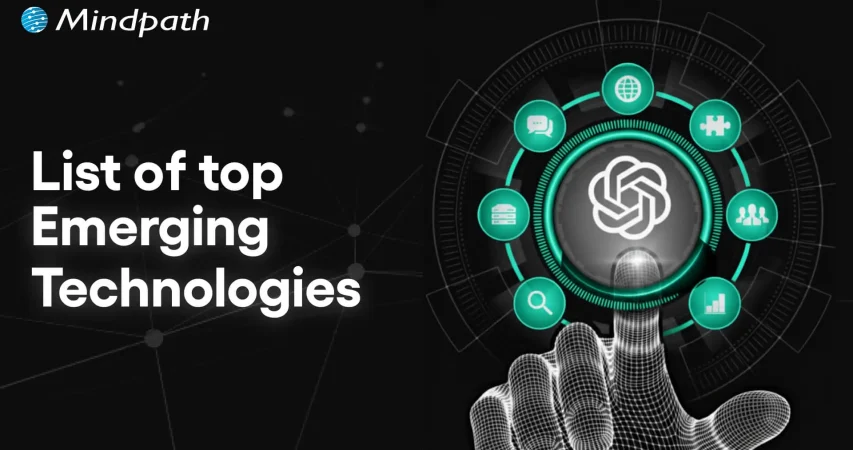
Have you ever wondered which technologies will shape the future of our digital world? With constant innovation, the digital landscape is evolving at a rapid pace. From artificial intelligence to blockchain, the possibilities are endless. So, what’s next? In this blog, we will explore the game-changing technologies that are set to transform the way we live, work, and interact online. 

Technologies have an important role in shaping our environment, propelling development, and opening up new opportunities. They have an impact on many aspects of our life, from increasing efficiency to developing creative solutions. As digital developments continue to expand, adopting the proper technology is crucial for remaining competitive, increasing productivity, and changing how we connect and engage. Understanding their relevance enables us to navigate the future with confidence and agility. 

So, let’s dig in to explore these technologies! 

Technologies That Will Redefine the Digital World

1. Robotics

Robotics is driving a new generation of automation, enabling organizations to operate more quickly, precisely, and efficiently. Companies like Toyota and Tesla utilize robots in factories to do activities such as assembly and welding, which increases production speed and quality. In healthcare, robots aid in operations and patient rehabilitation, making treatments safer and more exact. 

While robots offer several advantages, they come with certain obstacles. Robots can be costly, need educated operators, and may cause job losses. Ethical concerns concerning the function of robots in society are equally relevant. To maximize the benefits of robots, businesses should carefully analyze their requirements, engage in training, and develop a balanced approach that blends technology and human talents. 

2. Cybersecurity Innovations

Cybersecurity innovations are crucial for ensuring secure digital growth, allowing online businesses to prosper and new technology to advance safely. They defend against threats and decrease attacks on important IT systems, protecting important assets on several levels. Top organizations such as Microsoft and Google make huge investments in cybersecurity to protect their digital infrastructure. They have successfully countered hacking efforts from groups all around the world by taking preventive actions, averting significant financial losses and maintaining their reputations. Quantum cryptography, zero-trust architecture, and AI-driven intrusion detection systems are among the most recent cybersecurity developments. Artificial intelligence and blockchain technologies are rapidly being employed to boost cybersecurity, and this trend is projected to continue. 

3. Real-time Analytics

Real-time analytics provides firms with a competitive advantage since it allows them to handle and evaluate data in real time. This instant access to insights allows for immediate decision-making, which is critical in fast-paced industries such as banking, retail, and logistics. Real-time analytics, for example, helps detect fraud in banking, tailor shopping experiences in retail, and enhance supply chain management in logistics. 

Leading organizations such as Uber and Amazon use real-time data to improve customer happiness and optimize operations. However, implementing real-time analytics necessitates a robust infrastructure capable of handling enormous volumes of data with minimal latency. To succeed, firms should focus on areas where immediate insights have the most impact and invest in the necessary tools and talent. 

4. Secure Computation

Secure computation is essential as digital communication and data exchange increase. This technology helps enterprises to safely analyze and use sensitive data, respecting privacy while providing important insights. Despite its advantages, implementing secure computing is difficult due to high costs, specialized skills, and rigorous performance requirements. As data quantities grow, safe computation needs a strong infrastructure capable of effectively managing complicated encryption procedures. Emerging technologies, like optical accelerators, are helping to solve these challenges by increasing processing speed and lowering prices, making safe computation more accessible. Investing in secure computation allows firms to develop trust, satisfy regulatory standards, and harness data-driven insights while protecting privacy.  

5. Satellite Communications

Low Earth Orbit (LEO) satellite communications are gaining popularity as space becomes more accessible and economically practical. With reduced latency, LEO satellites enable businesses to redefine how they communicate with people and devices around the world. 

LEO technology promises to provide internet with global coverage, enabling applications requiring quick, dependable data transport. It also supports direct satellite connections for tiny IoT devices, providing economical worldwide coverage without the need for SIM cards or telecom companies. Furthermore, LEO satellites can eventually deliver voice and data services straight to unmodified 4G devices, extending connection to remote places. As LEO is still a developing sector with continual developments, firms should approach early adoption with caution, weighing the technology’s potential against its changing nature. 

6. Digital Humans

Digital people are AI-powered virtual or physical representations that mimic human traits such as personality, knowledge, and conduct. These include realistic robots, virtual avatars of pop singers, and even chatbots. Depending on the application, digital people can be completely AI-driven or supplemented with human contributions. 

While digital people have promised applications in customer service, entertainment, and healthcare, they also pose considerable obstacles. Risks include ethical considerations, the likelihood of perpetuating prejudices or preconceptions, abuse, a lack of rules, and cultural sensitivity. Businesses interested in digital people should carefully evaluate these social and ethical considerations in order to make appropriate and successful use of this developing technology. 

Lead the Way in Technology with Mindpath

In the fast-changing technological world today, one needs innovation, expertise, and strategic planning to be ahead. Mindpath empowers your business to lead in this by offering cutting-edge IT services that are tailor-made for you. Our team works hard to ensure you leverage new technologies, optimize your processes, and drive growth to be competitive and successful in a changing digital world. Here are the services we offer:  

1. Modernization

Bring your business up to speed with legacy system upgrades, process optimization, and state-of-the-art technologies. We provide modernization services to help you keep up with the ever-changing world of business.  

2. Digitization

Get proper visibility online through our all-rounded Web Development and App solutions. We give you the tools and strategies to help your business remain relevant and competitive across the digital space.  

3. Innovation Hub

Our Innovation Hub is where creativity meets implementation. We are an innovative, collaborative space for ideas, project development, and making things happen. From an initial concept to the final execution, we will guide you through your innovation journey.  

4. Custom Chatbot Development

Take user experience to another level with our bespoke chatbot solutions. Our intelligent, conversational chatbots will smooth interactions and great insights that improve customer engagement and support.  

5. Artificial Intelligence Development

Leverage AI to unlock new insights to do what really matters, automate processes, and predict trends. Tailored AI solutions will let you drive efficiency and foster innovation while lining them up with your business goals.  

6. Staff Augmentation

Make use of our skilled professionals in aiding you to achieve your project objectives—short- or long-term. Experts integrate into your team to raise your business to the next level with exceptional results. 

Wrapping Note!

The technologies highlighted in this blog are not just shaping the future—they are already transforming the present. From robotics driving automation to the promise of secure computation safeguarding privacy, these innovations are creating new possibilities across industries. As businesses continue to explore and implement these technologies, the key to success will be adopting them thoughtfully and strategically. 

By embracing advancements like real-time analytics, LEO satellite communications, and digital humans, organizations can enhance their operations, improve customer experiences, and stay ahead of the competition. At Mindpath, we understand the importance of staying at the forefront of these technological shifts. Our tailored solutions are designed to help you leverage these emerging technologies, optimize your processes, and drive growth. 

Ready to transform your business with cutting-edge technologies?

Partner with Mindpath today and leverage our expertise in emerging technologies to elevate your business.

Related Post

Learn how to prevent cloud computing attacks with practical tips on security, API protection, and IAM to safeguard your business and data.
Discover the top 8 emerging technologies set to revolutionize business decision-making in the near future, including Generative AI, Web3, Blockchain, and more.

Related Post

generative AI predictions

What does the future hold for generative AI in 2025? Do you think it will become smarter, more creative and give the best human-like responses? As technology continues to evolve at lightning speed, it is natural to wonder where we are headed next, isn’t it? So, if you are interested in generative AI predictions and how this advanced technology could influence industries, work and creativity, you are totally on the right page.

It is anticipated that by 2025, generative AI will be more integrated, accessible, and advanced, embedded in our daily lives. The abilities of AI are now growing rapidly, beginning with automating intricate tasks and transforming customer experiences to helping in creating content and driving personalized learning. Let’s understand what is the future outlook for generative AI and how it will be impacting the tech world.  Before we move further, let us first have an idea about the current state of GenAI market. 

Looking to stay ahead with generative AI innovations? At Mindpath, we provide AI Development Services that enhance business performance with advanced AI solutions.

Generative AI Market Overview

As per Grand View Research, the global generative AI market size was worth USD 16.87 billion in 2024 and will expand rapidly at a CAGR of 37.6% from 2025 to 2030. The increase is fueled by technologies such as text-to-image conversion, super-resolution and video generation. Companies are employing generative AI to transform processes and enhance creativity, and AI has become an integral aspect of day-to-day activity in sectors. 

generative ai market

Interestingly, software accounted for 64.2% of the generative AI market in 2024. Businesses are leveraging AI software to address fraud, data privacy concerns, and unpredictable outcomes. Sectors such as fashion and entertainment are embracing it rapidly. H&M and Adidas are some of the brands utilizing generative AI to design garments and create custom sneakers. These companies are expediting and streamlining the creative process for their staff. 

This expanding application definitely demonstrates how generative AI trends are influencing the future of work and creation. As additional sectors turn to AI-powered solutions, demand for more intelligent, quicker, and more agile solutions will continue to increase. 

Also Read: Generative AI Use Case

Generative AI Predictions for 2025 That will Reshape the Tech

As we enter 2025, generative AI will have an even larger impact on changing how we work, create, and interact with tech. These are some of the best generative AI predictions for 2025 that outline where this revolutionary technology is going next: 

1. Smaller Language Models Are Gaining Popularity

The language model market is expanding rapidly, and now there’s a movement towards utilizing smaller models rather than larger ones. These smaller language models (SLMs) are more affordable, easier to implement, and can be used on devices such as phones and tablets. They still provide intelligent AI capabilities but require less power and data. Microsoft, Google, Meta, and Apple are at the forefront of driving this change, making AI more convenient and accessible for use in everyday life. 

2. Performs Well with Real-Time Applications

Generative AI is beginning to perform really well with real-time applications. That is, it will be able to generate content, images, or answers instantly while things are unfolding. This development is a major example of generative AI changing the creative industry, as it allows for rapid creation and adaptation of content. During live chat, it will generate custom visuals on the spot, and adjust to changing circumstances in real-time. It will enhance customer support, e-learning, and entertainment by making them more interactive and seamless, allowing users to receive speedier, more customized results in real time. 

3. Generative AI Models Made for Specific Industries

A growing trend in generative AI is building models that focus on one specific industry, like healthcare, law, or marketing. These models understand the special terms and needs of that field, so they create more accurate and useful content. Instead of trying to do everything, they do one thing really well. For example, they can write medical reports or legal documents with more detail and clarity. This makes generative AI more helpful and reliable for professional use. 

4. Growing Power of Multimodal GenAI

Multimodal generative AI means AI that can understand and create different types of content like text, images, and voice all together. OpenAI’s GPT-4 started this trend, and now Google’s Gemini and Anthropic’s Claude 3 are joining in. Soon, users will expect these features as a standard, especially in paid AI tools. As the technology improves, AI will create better images, videos, and other media, making interactions more natural and helpful for everyday use. 

Want to stay ahead in the AI-driven market? Learn how AI programming languages power intelligent solutions, from data processing to smart apps tailored for modern business needs.

5. Businesses Using AI as a Service (AIaaS)

AI as a Service (AIaaS) is becoming popular in generative AI. Instead of building AI systems from scratch, many businesses will use outside experts to help them. These consulting firms guide companies on the best AI solutions without big upfront costs. AI Modeling as a Service (AIMaaS) will grow too, offering flexible models for different needs. These services also focus on security, rules, and easy setup, making it simpler and safer for companies to use AI without having experts on their own team. 

6. More Attention on Quality and Reducing AI Mistakes

As people notice wrong or misleading info from AI, companies are working harder to improve quality and reduce errors called hallucinations. OpenAI leads by making its models more accurate and sharing clear research to build trust. Google’s Gemini lets users give feedback and compare answers with real-time internet sources, helping improve results. More AI companies will follow this approach, using user feedback and being open to make AI safer, more reliable, and trustworthy for everyone. 

7. AI for Better Customer Experience

More companies are adding generative AI into their everyday work and customer tools to make things smoother and faster. Models like GPT-3.5 and GPT-4 are used in websites, apps, and chatbots to help customers with personalized answers and recommendations. Soon, AI-powered tools will be expected by users during shopping or research. Businesses that don’t use AI this way may fall behind, as customers prefer easier, smarter, and faster experiences powered by AI. 

8. Strong Focus on Security, Privacy and Rules

With new AI laws and growing public attention, businesses and AI companies must pay more attention to AI safety, privacy, and rules. Right now, few focus on AI governance, but this will change as concerns about AI risks grow. Soon, companies will use special tools and human checks to make sure AI works responsibly and safely. Clear AI policies will help protect businesses from problems. Keeping AI secure will be very important as it becomes part of everyday work.  

If you’re exploring smarter ways to deliver customer support. Read our blog on AI for Customer Service, where we highlight how chatbots and virtual assistants can improve customer satisfaction and drive measurable business growth

Preparing for the Generative AI Shift?

The future of generative AI in 2025 looks incredibly promising, with advancements making AI smarter, faster, and more tailored to specific industries and real-time needs. As AI becomes more integrated into everyday business and consumer experiences, the focus on quality, security, and ease of use will drive widespread adoption. These generative AI predictions highlight a transformative shift in how industries operate, innovate, and engage with technology, setting the stage for smarter, more creative, and efficient solutions. 

At Mindpath, we are committed to helping businesses harness the full potential of generative AI. Our cutting-edge generative AI solutions are designed to deliver customized, secure, and scalable AI-powered tools that boost productivity and enhance user experiences. With expertise in deploying industry-specific models, real-time applications, and AI governance, Mindpath ensures your business stays ahead in this rapidly evolving Gen AI landscape. 

Low-code No-code Development

The app development arena has been undergoing constant evolution. One of the major developments that has captured the attention of one and all is the Low-Code/ No-Code modular approach. It is a must for modern businesses as well as individual app developers to familiarize themselves with low-code no-code development. It certainly holds the potential to revolutionize the application development process. 

According to the recent report by Future Business Insights, the low-code development platform is expected to grow from $ 37.39 billion in 2025 to $ 264.40 billion by the year 2032. This major jump automatically highlights the growing popularity of low-code platforms. In order to leverage this application development model, it is imperative for businesses to have a clear understanding of what is low-code or no-code development.

Want to take your business to the next level with the use of low-code development services? Contact us and get full guidance and support on how you can implement low code/ no code innovation for your organization.

An Insight into Low-code or No-code Development

In the dynamic digital space, low-code no-code have certainly emerged as a transformative force. It can be defined as the app development process that involves minimal coding. It serves as a visual approach in the app development setting. By adopting such an approach, it is possible for businesses or individuals with minimal coding skills to develop applications. 

The key difference between low-code and no-code development lies in the degree of coding that is necessary.  Low-code platforms act as highly effective tools that can help in creating apps. However, one must possess knowledge relating to coding to a certain degree. No-code platforms act as drag-and-drop platforms that entirely eliminate the need for coding. By leveraging top low-code no-code development services, businesses can develop high-performing applications.

Mechanism of Low-Code No-Code Development

In the traditional app development process, app developers or programmers had to engage in highly complex coding processes. Such processes were essential to create the features as well as the functions of the intended apps. As a result, app developers were expected to possess solid skills and expertise relating to coding and computer programming languages. 

However, by using the Low-code No-code Development approach, it is possible to visually choose and connect reusable components. By doing so, app developers and businesses can identify the specific components that represent specific capabilities. Then they can link them together in order to develop the desired workflow. 

Low-code and No-code tools undoubtedly simplify how developers create apps. By using such tools, they can easily develop applications as if they were drafting a flowchart instead of writing code in a detailed manner. Moreover, such platforms come with several features that allow developers to experiment during the app development process. The simple drag-and-drop interfaces of low-code and no-code tools streamline the entire application development process. 

Benefits of Low-Code No-Code

In the past, the development of software applications was quite time-consuming. Businesses would have to deploy teams that would be responsible for app development. However, today the situation is very different as they have the option to use low-code/no-code tools.  These tools have the potential to simplify how applications are developed. Now that you know the low-code no-code meaning it is time to explore its benefits. 

1. Faster app development process

One of the fundamental benefits of low-code and no-code revolves around a faster development process. By using the best low-code no-code platforms, businesses can certainly speed up their app development process. Such tools create the opportunity for app developers to design apps efficiently without having to do complex coding from scratch. 

2. Lower app development cost

The cost relating to app development can give rise to financial constraints for businesses. In fact, conventional app development processes were quite costly. However, by adopting the low-code no-code model, businesses can develop top-performing apps in an affordable manner. By choosing top tools, the need for high-cost development resources can be reduced considerably.  

3. Ideal tool for non-developers

Non-developers who have limited insight into software development can capitalize on low-code and no-code tools to venture into the development space. These tools can act as the perfect partners that can aid in designing a diverse range of applications. Businesses can utilize the model to democratize app development. As a result, the reliance on IT teams for app development can be reduced considerably. 

4. Higher agility

In the prevailing digital context, the low-code no-code approach enables businesses to undertake diverse processes relating to prototyping and testing. By using low-code or no-code platforms, businesses can modify the workflow, data sources, and user interfaces. Moreover, such modifications can be done in a quick and agile way. 

Drawbacks of the Low-Code No-Code Model

To get a comprehensive insight into low-code and no-code development, it is essential to understand the associated drawbacks. Only by being aware of the shortcomings can businesses decide how they can optimally use low-code or no-code. Some of the major drawbacks of low-code and no-code include:

1. Restricted degree of flexibility

One of the main drawbacks of the low-code no-code approach is that it diminishes flexibility for app developers. This is because their ability to customize their app is reduced to a considerable extent. As low-code and no-code frameworks rely on pre-built components, businesses that wish to develop highly tailored apps may not be happy with the outcome. 

2. Issues relating to performance

Another major drawback of low-code and no-code that businesses need to be aware of revolves around performance concerns. Sometimes, the apps that are developed using low-code or no-code tools may struggle to handle a large volume of data. Similarly, concerns relating to scalability may also arise in case there is a surge in user load. Such concerns may have an adverse impact on the overall satisfaction and experience of users. It may even impact the reputation of businesses. 

3. Challenges relating to integration

A common concern that may arise for businesses centers around integration challenges. It might not be easy to integrate the apps that have been developed using low-code or no-code platforms with the existing systems. Thus, app developers and businesses may require extra time as well as resources to address these integration concerns. 

4. Security issues

The use of no-code platforms may give rise to serious security concerns for businesses. This is because such platforms typically have limited security features. In the highly unpredictable and uncertain digital environment, this drawback has the potential to compromise the quality of an app. Moreover, security-related concerns may give rise to severe consequences for not only businesses but also their customers.   

Final Words

In the technology-driven business world, app development is a must for most businesses. Thus, it is crucial for businesses to broaden their insight relating to low-code and no-code development. By capitalizing on this app development model, businesses can certainly develop top-quality apps in an efficient manner. Before applying the specific model, businesses can surely refer to some real-life low-code no-code development examples.

To make the most of the low-code and no-code approach, it is essential to consider the associated advantages and drawbacks as well. The comprehensive insight can definitely guide modern businesses to develop novel apps with the help of low-code and no-code tools. Mindpath‘s low-code development services help you make the strategic use of such tools can empower businesses and shape the experiences of their target audience.  

Discover how low-code/no-code tools are transforming digital development and enabling faster app creation for businesses.
web design and development services

In an increasingly competitive digital landscape, businesses cannot settle for mediocre or average online presences. This is where the need for web design and development services matters. A well-designed, well-conceived website not only invites new visitors and clients; it also establishes the credibility required to enhance brand and organizational value and to create real engagement. Each click and scroll is a reflection of how users view your business, so design and functionality are equally significant to ensure continuity.

As online behavior evolves, organizations must remain in alignment with user expectations and technology trends. Choosing experienced web designers and developers will allow your organization to create websites that are aesthetically pleasing, quick, and easy to use. Every aspect of the website, from visual to responsiveness, influences customer experience and brand trust. In this blog, let’s discuss and reveal the top benefits of choosing a professional web design and development service for your organization.

If you are looking to take full advantage of modern web designs, it’s important to work with professionals who understand both aesthetics and functionality. Mindpath offers web development services that will provide your brand with a distinctive digital presence.

What is Website Design and Development?

Website design and development refers to the design and the functioning of a website’s overall look and feel. Web design involves the visual aspects like layout, color, graphics, and user experience. Designers work to create a visually appealing, user-friendly website on every device while creating a seamless and engaging experience for users. However, website development is the process of taking those website designs and making them into reality, using coding and programming.

Developers can create and maintain the structure and function of the site. The developers can help to keep everything running smoothly, from loading speed to interactive aspects. Together, website design and website development services create a strong online presence that enhances business and user satisfaction.

Key Fundamentals of Web Design and Development Services

It’s important for businesses to understand the principles of web development and website design in order to develop digital experiences that resonate with users. Companies that are leading in web design and development tend to focus on the fusion of technology and creative thinking to develop beautiful, fast, and intuitive experiences for their users.

1. Interactive User Experience

Interactivity elements such as micro-interactions, gamification, and social sharing can make engagement increase, and users continue to discover your site. These characteristics bring user experience to the level of fun and unforgettable, which is a clear indication of the use of custom website design services for proper implementation.

2. Intuitive Layout and Navigation

An effective layout that is properly organized directs the users in an effortless manner to the different pages of your site, thus enabling them to locate the needed data in a short time span. Besides, the use of grids, wireframes, and adaptable menus guarantees the good and easy accessibility of your website, which is the main factor in the provision of successful custom website design services.

3. Engaging Content Design

Your brand story, which is interesting and informative, should be the main focus of the content. Incorporating visitor-specific settings, easy navigability, and the ability to interact with the site through the intuitive CTA of each page not only ensures customer engagement but also contributes to the achievement of professional web development services.

4. Visual Appeal and Consistency

The use of high-quality images, readable typography, and a clear visual hierarchy are what will make your website visually attractive and easy to navigate. Besides that, the consistent design systems and 3D elements not only evoke your brand on each page but also go with your professional web development services.

5. Seamless Functionality

Users expect a website to be fast, compatible with all devices, and meet their accessibility requirements. Embracing fast loading times, mobile-friendly websites, and standards-compliant accessibility are three ways to make easy navigation the major user experience, and here is where professional custom web design development services offerings become crucial.

Benefits of Professional Web Design and Development Services

A seasoned web design and development company specializes in helping organizations design a website that will leave an indelible impression on visitors. Thoughtful design meets optimal performance, with your site looking good and performing even better on behalf of your business goals.

1. Personalized User Experience

Customized websites allow users to have useful and significant interactions. The memorable experiences that users return to are created by the adaptive interfaces, custom content delivery, and easy navigation.

2. Scalable Digital Solutions

Custom web design and development services enable you to grow your business and have a website that supports this growth. The use of flexible architectures and adaptable features is one way to make sure that your investment continues to deliver value as your business evolves.

3. Optimized Performance

Fast and efficient websites are the ones which not only keep users interested but also make them take the desired action. These web design and development services guarantee that every user will have smooth working, quick loading, and effortless navigation.

4. Enhanced Security

Professional and creative web design and development services are equipped with security features that are tailored to the specific needs of your business. Through encryption, surveillance, and anticipatory security, there is no threat to your site and user data.

5. Seamless Integration

Custom solutions can enable your site to operate smoothly with other internal programs as well as with any external applications. Linking your enterprise with CRMs, APIs, payment gateways, etc., not only makes your activities more efficient but also saves your valuable time.

6. Improved Revenue Potential

Expertly designed and developed websites will positively influence the user experience and, as a result, business expansion. The easy-to-navigate designs, well-defined Calls-to-Action, and quick interactions lead to increased conversions and customer loyalty.

7. Unique Brand Identity

Implementing custom solutions will enable your company to stand out with a one-of-a-kind web presence that is not shared with anyone else. Every element, from visuals to interactions, can be tailored to reflect the personality and the values of your brand.

Looking to Boost Your Business with Custom Web Development Services?

Web design and development services of high-end quality will not only make your website look good but will also ensure that it is fast, secure, and easy to use. The use of tailored solutions for a website will increase interaction, promote your brand, and become the source for your business’s expansion. A properly designed website enables customer interaction, makes the transaction simple, and efficiently contributes to your business objectives.

Mindpath is where you can get website development services tailored to your business needs. We create stylish, functional, high-performance websites that can be scaled up or down as per the client’s needs. We aim to produce customer-centric digital experiences that not only draw, interact with and maintain users but also improve your virtual presence by blending art and technology.