Agentic AI Examples: Real-World Use Cases for Businesses

Join our Newsletter!

Featured Posts

Support Is One Click Away

Home

Agentic AI Examples: Real-World Use Cases for Businesses

agentic ai examples

Agentic AI Examples: Real-World Use Cases for Businesses

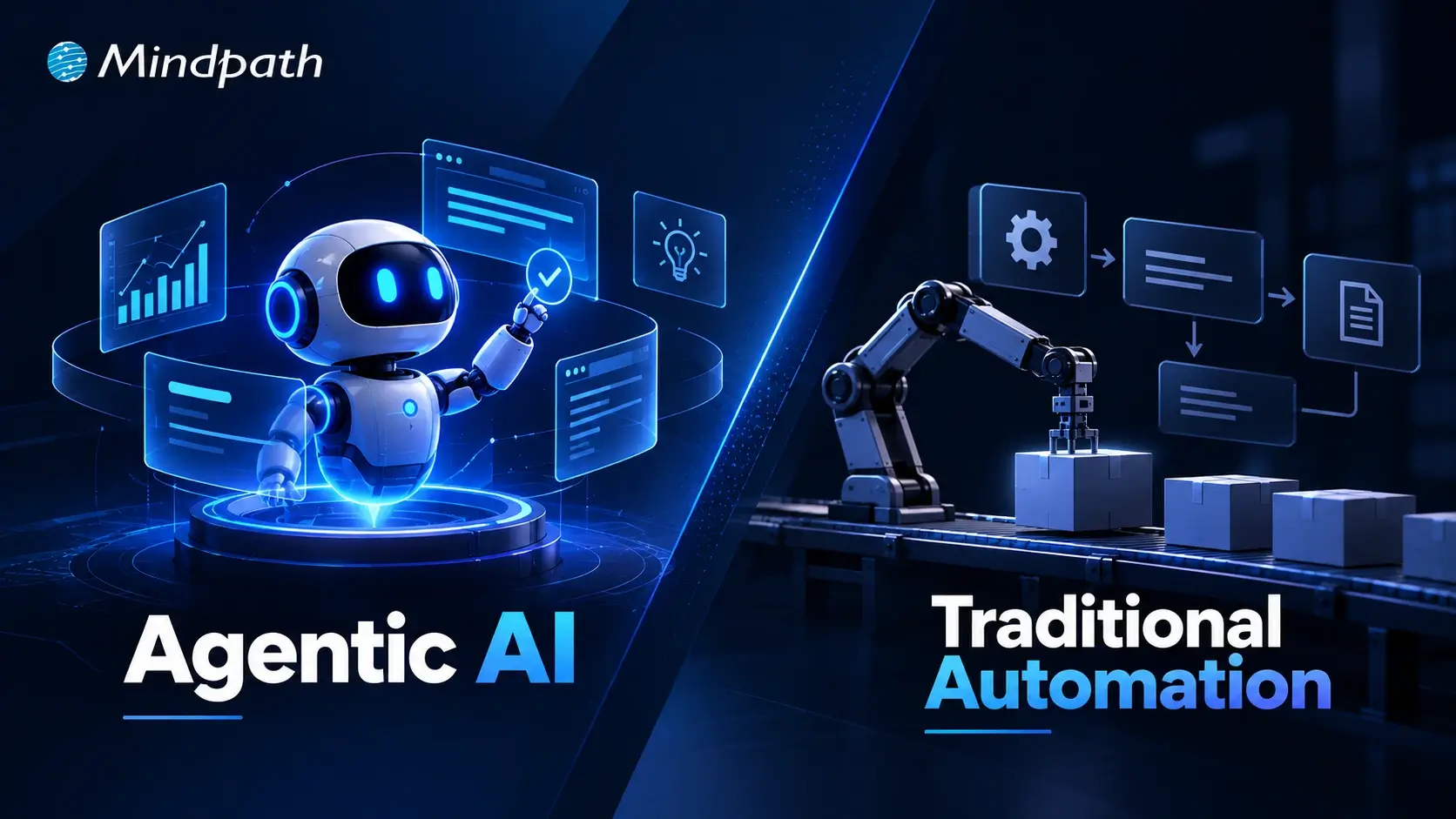
Generative AI represented a major milestone in the evolution of artificial intelligence. It played a crucial role in enhancing employee capabilities and brought AI closer to the average user. However, you should also look at agentic AI examples to discover how artificial intelligence has moved one step ahead. Agentic AI revolves around the use of agents that not only generate content but also have capabilities for autonomous decision-making.

You should know that big names, including NASA, NVIDIA and Microsoft, have been leading the race for adoption of AI agents. The growing use of AI agents in business is a testament to the fact that they are better than chatbots, which take thousands of prompts to generate remotely useful outputs. An overview of the business use cases of agentic AI can help you understand its true potential.

Ready to use the future-leading  AI solution in your operations? Mindpath offers AI development services that empower your businesses, help you automate processes, and drive innovation.

Understanding the Fundamentals of Agentic AI

LLMs empowered businesses with many capabilities, albeit with a reactive nature and the inability to retain context or memory. Therefore, the utility of LLMs and generative AI was restricted to improving individual productivity in different tasks. Agentic AI marked a shift towards autonomous decision-making and established the foundation of proactive artificial intelligence. 

The most popular agentic AI use cases showcase how agents have introduced a revolutionary transformation in the working of AI. Agentic AI encompasses autonomous AI systems that have capabilities like memory and reasoning and can solve complex problems. 

AI agents can understand the goals for multi-step problems and break them down into subtasks alongside interacting with humans and systems. The agents can also execute the subtasks and adapt to new changes with minimal human intervention. 

Also Read: Generative AI for Business

Why Should Your Business Choose AI Agents?

Many business owners will wonder why they should adopt AI agents. Is it just because big companies are using agentic AI? The examples of agents in AI have proved how agentic AI brings a new set of capabilities to the use cases of AI across different industries. 

Businesses can now have AI systems that not only learn from data but also process information in real-time and execute tasks with different levels of human oversight. Agentic AI delivers promising benefits for businesses such as

  • Enhanced productivity
  • Personalized workflows
  • Operational efficiency at scale
  • Better accuracy and faster decision-making
  • Cost optimization
  • Easier cross-team collaboration

Are you missing opportunities to make faster, smarter decisions because your business isn’t leveraging AI to its full potential? Learn from our blog AI decision-making use cases guide to discover practical ways AI can accelerate insights and give your business a competitive edge.

How Have Businesses Used AI Agents?

Agentic AI is capable of managing everyday tasks and can also enhance agility across enterprise operations. It has been reshaping the way businesses in different industries work with a proactive approach. The curiosity about agentic applications of artificial intelligence is gaining momentum among businesses as AI agents revolutionize workflows. Awareness of the use cases of AI agents in business can provide the ideal foundation to embrace them. 

1. Customer Support Automation

Chatbots and voice assistants have been the most prominent contributions of artificial intelligence in the domain of customer support. Businesses must recognize the limitations of chatbots and voice assistants as they require the right prompts to deliver useful responses. However, AI agents can achieve automation of customer service beyond answering few commonly asked questions.

AI-powered customer service agents don’t need human guidance to function and solve complex multi-step problems. AI agents can offer customer support in different industries for diverse functions without being limited to a specific number of questions. Their capabilities for autonomous decision-making help them in understanding the customer’s need and providing relevant answers.       

2. Proactive Threat Mitigation

Cybersecurity is one of the biggest concerns for businesses as most organizations have security systems that cannot keep up with emerging threats. The adaptability of agentic AI tools ensures that they can learn and respond to security risks in real time. Agents have smart capabilities for round-the-clock network monitoring to identify anomalies and respond to threats before they cause any damage. 

Agentic AI can add an intelligent and dynamic threat detection system that not only offers safeguards but also creates a more resilient security system. You can rely on AI agents for running simulations of attacks to identify vulnerabilities before malicious attackers. On top of it, agentic AI can also facilitate real-time scoring of user activity which helps your team focus on critical threats. 

3. Automation of Enterprise Workflows

Organizations have been experiencing different issues in managing their enterprise workflows with little to no improvement from using various tools. The search for answers to ‘what is agentic AI’ reveals how agents excel at automation without human intervention. Agents can help businesses in streamlining processes through automation of repetitive tasks. For example, AI agents can use meeting notes to issue project tickets without human inputs. 

Agentic AI can help businesses in pooling all their data to avoid information silos. Their ability to retain context helps them develop in-depth understanding of how your business works. As a result, AI agents can enhance productivity and efficiency in enterprise workflows without incurring additional overheads.

4. Faster and Streamlined Software Development

Businesses need smarter software development tools that enhance productivity and transform the traditional notions of customer experience. The rising adoption of AI development services is clearly visible in the use of AI coding assistants, also known as copilots. Agentic AI can help in creating a new generation of AI coding assistants that can write large segments of code. 

Even with mixed reviews, agentic AI has gained appreciation from experts who believe that smart agents will write most of the code in future. Coding assistants will not only help in writing code but also leverage special agents to review code and identify errors. Agents also have the capability to leverage reverse engineering for extracting specifications from code, which makes them a powerful catalyst for coding automation.

Curious how tailored solutions can accelerate growth? Check out the custom software development benefits to see how personalization drives efficiency and innovation.

5. Accelerated Lead Conversion

How many times have your sales teams struggled to convert leads into potential customers? You can find answers to ‘what is agentic AI example’ in the use of agents for lead conversion. Sales representatives can use AI agents to get the accurate insights for zeroing in on the right prospects. For example, agentic AI can help businesses by highlighting the prospects that are most likely to convert. As a result, your sales teams will focus specifically on leads that have real potential.

Another promising contribution of agentic AI to the sales department of your organization is the assurance of offering personalized content. Smart AI agents offer customized follow-up responses, thereby informing your sales representatives about how they can communicate with leads. Furthermore, agentic AI also helps in identifying high-risk deals that may lose momentum.

6. Creating Smarter Product Roadmaps

Business owners must also recognize the scope for improving the methods for developing product roadmaps with agentic AI. With every stakeholder demanding priority for their feature, it becomes difficult to know which aspect deserves your attention. The value of an agentic AI development company becomes clearly visible in such cases where your product team needs agentic AI. 

Professional development companies can help you avoid redundancies in product roadmap development with different functionalities. You can use agents for gathering qualitative data from user research, surveys and feedback to gain holistic understanding of customer requirements. The comprehensive user behavior analysis with agentic AI can create the path for developing smoother customer experiences.                    

7. Enhancing the Agility of Operations Teams

The real-world use cases of agentic AI in business also draw attention towards issues in operations teams. Manual processes not only lead to inefficiencies and delayed decisions but also the inability to dig deeper into data for identifying bottlenecks. The benefits evident in agentic AI examples across different business operations can be applied for operations teams of your organization.

AI agents can help businesses with demand forecasting by drawing accurate prediction of supply requirements. At the same time, the proactive nature of AI agents empowers them to adjust shipping and delivery routes in real time. Agentic AI also offers the advantage of tracking supplier performance and identifying risks which can slow down production. 

8. Establishing Intelligent HR Operations

HR is one of the prominent entries among the many business functions you can transform with AI agents. As a matter of fact, agentic AI use cases in HR operations are low-risk and high-value use cases. It is for this reason that most of the companies using agentic AI leverage it for human resource operations. 

AI agents can make many things easier for HR, including providing responses to simple questions of employees. In addition, smart AI agents can also help HR with internal knowledge retrieval, documentation and tagging alongside other business processes. Every agent in your HR system will be tailored for one specific task and will have the ability to interact with each other. 

Looking to stay ahead in the rapidly evolving world of artificial intelligence and understand how emerging technologies can impact your business? Check out our blog on the top AI trends to see how AI is transforming the industry and driving innovation.

Final Thoughts

The real use cases of agentic AI in businesses reveal many interesting insights on their actual potential. You can capitalize on AI agents to bring a certain degree of autonomy in various business operations while incorporating human oversight. Agentic AI marks another phase in the evolution of artificial intelligence by facilitating the creation of systems that are proactive and can take decisions on their own.

Mindpath is a pioneering agentic AI development company with a credible record in creating AI agents for different business functions. We have developed AI agents capable of integrating seamlessly into your enterprise workflows. Our team has the ability to ensure that your agentic AI systems align with your business needs and vision. Consult with our experts and discover the most efficient ways to embrace agentic AI now.

Related Post

Discover the ultimate guide to hiring Node.js developers in London. Learn about the skills, benefits, and cost factors involved in finding the right talent for your project.

Related Post

progressive web apps

Many companies are now looking into progressive web apps to improve their ways of communicating with people using mobile devices. This solution has the capability of being responsive and reliable, while providing users with an experience that reflects expectations in today’s world. Companies are wishing to provide users with something that has simplicity and speed. This change is not only about changing ideal trends, but rather the relationships that effectively span through the utilization of mobile devices and help establish long-term commitment to retention.

This shift to a modern approach is allowing organizations to rethink how they plan differently today for mobile-first users. It enables organizations to offer something new with a sense of reality and cost-effectiveness. Users benefit without even realizing what goes on behind the scenes, while businesses reap the benefits by providing an experience that works. This blog will ultimately help you understand why so many people are considering this path forward. Let’s dive in!

Want to develop a Progressive Web Application and increase your business growth four times? Contact us and talk to our experts, they will help you achieve your business objective with an unexceptional progressive web app. 

What is a Progressive Web App?

A Progressive Web App (PWA) is a modern type of web application that works like a regular app but runs through a web browser on any device. It combines the best parts of websites and mobile apps, allowing users to access it easily without needing to download anything. PWAs can work offline and continue running in the background, giving people a smooth and reliable experience wherever they are.

Businesses are turning to PWAs to offer better performance and engagement for their customers.  According to Gartner, more than 50% of consumer-facing apps will be PWAs by 2027, showing just how important this technology is becoming for the future of digital experiences. A survey by Grand View Research reveals that the global PWA (progressive web app) market is expected to reach $9,425.9 million by 2030, growing at a rate of 30.5% from 2024 to 2030.

Benefits of PWAs (Progress Web Apps)

Adopting PWA is genuinely beneficial for companies trying to remain competitive in a mobile-first environment. These solutions offer the advantages of both web and native apps features to provide users with a seamless experience. The following are some key benefits to consider:

Benefits of PWAs (Progress Web Apps (1)

1. Cost Efficiency

Developing a web app is often much more affordable than building a native app. Instead of creating separate versions for web, iOS, and Android, one project works across all major platforms. A progressive web app iOS solution uses a single codebase, which keeps development simple and costs less. Ongoing updates and maintenance are also easier and more budget-friendly than managing multiple native apps.

2. Responsive Design Across Devices

The responsive design makes PWA development valuable for reaching users on any device. A single PWA can adapt to mobile phones, desktops, laptops, or tablets without needing separate builds. For example, it works just as well on a Google Pixel phone as it does on a Windows computer. This approach helps businesses offer a consistent experience everywhere while keeping development simple.

3. Instant Updates for Users

A PWA stays current whenever it’s online, so users always see the latest version. There’s no need to download or install updates manually. New features and content appear automatically without extra steps. This makes the experience smooth and hassle-free for everyone.

4. Simple and Quick to Install

A progressive web app makes installation easy for users. There’s no need to visit an app store or follow long steps to get started. Everything happens right in the browser with just a few clicks. This gives users faster access to content without any extra hassle.

5. Effortless to Share and Access

PWA can be shared easily through a direct URL, just like any standard website. This means users can pass it along to others without any special steps or downloads. It works smoothly across devices, making access simple and convenient. This flexibility helps businesses reach a wider audience with minimal effort.

6. Native App Like Experience

A progressive web app offers many of the same features people love about native apps. It works even when there’s little or no internet connection, keeping access smooth and reliable. Push notifications help keep users engaged and informed on most devices. With home screen installation and familiar mobile navigation, it gives users a true app-like experience.

Real-World Examples of PWAs

Many leading brands are proving the value of this technology through real progressive web app examples. These practical cases show how businesses can offer faster, more reliable experiences that keep users engaged.

Real world use examples of pwas

1. Starbucks

Starbucks created a PWA to boost customer engagement with a smoother ordering process and rewards program. This solution replaced its old mobile site to offer a consistent experience on any device. Customers can easily customize drinks, check store details, and view nutrition information.

2. Flipkart

Flipkart’s PWA helps shoppers enjoy a smooth browsing experience, even with poor connections. Users can explore product categories, special deals, and bestsellers with ease. This approach keeps customers engaged longer and makes online shopping more accessible across India.

3. Walmart

Walmart uses a PWA to handle thousands of products while making ordering and delivery seamless. Geo-tracking shows top-selling items nearby to personalize recommendations. Push notifications to keep users updated on deals and new arrivals.

4. Pinterest

Pinterest launched a PWA to expand its global reach with a faster, lighter site. Compared to its old version, the new app loads quicker and uses less data. This led to more time spent, higher ad engagement, and improved click-through rates.

5. Twitter

Twitter Lite was one of the first big brands to adopt a PWA to boost daily user activity. It consumes less data, loads quickly on slower networks, and still feels like a native app. As a result, page views, tweets sent, and overall engagement increased significantly.

6. Uber

Uber is a strong example of progressive web app design focused on speed and convenience with minimal storage use. It loads quickly, even when the network is weak, so users can book rides without delays. Depending on the location, people can also order food or rent bikes and scooters.

Are You Looking to Elevate Your Digital Presence?

Progressive web apps prove that businesses can deliver fast, reliable, and engaging user experiences without the high costs of traditional apps. With examples like Starbucks, Flipkart, and Uber leading the way, it’s clear that investing in this approach helps brands stay competitive in a mobile-first world. Adopting the right strategy ensures you get the most out of modern application development services.

At Mindpath, we develop future-ready AI solutions that unlock the true value of progressive web apps. Our expert web application development services help you create mobile-first experiences that are cost-effective, secure, and easy to maintain. From planning to launch, we ensure your app stands out and keeps your customers engaged. Let’s shape your next success story together.

serverless architecture in cloud computing

Have you heard a lot about serverless architecture in cloud computing and are still unsure of what it is? If so, you’re not alone. Many developers, startups, and business owners wonder how this model works and how their approach to building and deploying apps will change with it. So, what is the hype about, and why is it catching everyone’s attention in 2025?

Serverless architecture in cloud computing is a smarter way of providing a scalable application without the hassle of server management. With serverless computing, you rely on the cloud provider to do all the provisioning, scaling, and maintenance, leaving you to deal with just the code and get features delivered faster. Since more companies are evolving into modern cloud solutions, serverless is becoming a common approach to delivering applications. In this blog, we will cover everything you need to know. So, let’s dig in!

Ready to transform your cloud infrastructure with serverless architecture? Connect with us, and our team will guide you from planning to deployment, ensuring maximum efficiency and scalability.

What is Serverless Architecture in Cloud Computing?

Serverless architecture in cloud computing is a modern way to bring software to market. Rather than having to manage a server’s infrastructure, developers develop and run applications without having to deal with the environment. The developer doesn’t need to worry about servers, updates, scaling, and instead just writes code and deploys. The cloud provider takes away all of the backend tasks, such as server provisioning, maintenance and scaling, making the teams development as a whole faster without focusing on technology-driven software engineering.

In a serverless model, application code is decomposed into independent functions, commonly known as Function as a Service (FaaS). Each function performs a specific function with the ability to respond to events such as HTTP requests or file uploads. Once the application is deployed, the cloud provider executes the function when required. If no servers are available, the provider spins one up for you automatically. Developers do not take part in this process; it is handled for them on their behalf without the developers noticing.

Fundamental Concepts in Serverless Computing Architecture

To understand how serverless computing truly works, it’s important to grasp its core principles. Here are the fundamental concepts that define serverless architecture and how they support modern application development:

1. Cold Start

If a function hasn’t run in a while, it might take longer to start up. This is called a cold start.

2. Warm Execution

When a function runs quickly because it was recently used, it’s called a warm execution.

3. Invocation

Every time a serverless function runs, it’s called an invocation.

4. Duration

This is the total time a function takes to run from start to finish.

5. Orchestration

Orchestration means managing how different serverless functions work together in a sequence.

6. Function-as-a-Service (FaaS)

FaaS lets developers write small functions that run automatically when certain events happen.

7. Event

An event is what triggers a function to run, like an HTTP request or file upload.

8. Stateless

Serverless functions don’t remember anything from one run to the next.

Advantages of Serverless Architecture

Serverless architecture helps businesses build and deploy apps faster with less infrastructure management. According to Grand View Research, the global serverless architecture market was valued at USD 9.42 billion in 2023 and is expected to grow at a 28.2% CAGR from 2024 to 2030. Here are some key advantages that make serverless a popular choice in cloud computing today:

1. Cost-Effective Usage Model

Serverless platforms charge only for actual function execution time. There are no costs for idle servers, making it highly economical, especially for applications that run on demand or infrequently.

2. Faster Time-to-Market

Cloud functions enable developers to build and deploy features quickly. This rapid development approach helps businesses stay agile and respond faster to market needs.

3. Auto Scaling Capabilities

Applications built on cloud functions can easily scale up or down based on real-time user demand. This automatic scaling ensures performance stays smooth during traffic spikes without any manual effort.

4. Simplified Backend Management

With serverless architecture in cloud computing, developers no longer need to manage servers, updates, or scaling. It allows teams to focus on development while the cloud provider handles operations behind the scenes.

5. Modular and Clean Code

Each function in a serverless setup performs a specific task, promoting modular design. This leads to easy maintenance, especially when working with components like a serverless database or microservices.

6. Ideal for Event-Based Solutions

Serverless architecture in cloud computing supports event-driven applications, making it perfect for real-time analytics, chatbots, IoT, and more. It allows seamless integration with tools that react instantly to user actions or data changes.

Serverless Architecture Use Cases

Serverless architecture in cloud computing is changing the way developers build and manage applications. It’s perfect for handling tasks that run occasionally or need to scale quickly without manual setup. Here are some common and practical use cases:

1. Automated CI/CD Workflows

Serverless tools help speed up software delivery by automating tasks. For example, pushing code can trigger a function to build the app or run tests right away.

2. Scalable APIs

You can use serverless Lambda with tools like Amazon API Gateway to build RESTful APIs. These APIs grow with your traffic, so you never have to worry about performance limits.

3. Event-Driven Actions

Serverless architecture in cloud computing is ideal for user actions that trigger automated tasks. For example, when someone signs up, it can update a serverless database and send a welcome email using cloud functions.

4. Background Processing

Serverless functions are great for behind-the-scenes work like video processing or updating product details. These tasks run in the background without slowing down the main app.

5. Flexible Growth

With serverless architecture in cloud computing, teams can move parts of an app one step at a time. It’s easy to expand later by adding more functions or connecting to a serverless database.

6. Smarter Security Tasks

Cloud functions can check new containers for security risks or support safer login methods. They’re also useful for things like two-factor authentication and SSH key validation.

What is the Difference Between Serverless Architecture and Cloud Architecture?

While both serverless architecture and cloud architecture use cloud environments to run applications, they differ in how infrastructure is managed and how applications are built. Here’s a quick comparison to help you understand the key differences between the two:

Aspect Cloud Architecture Serverless Architecture
Definition A broad model where computing resources are delivered over the internet. A model where apps run without managing servers directly.
Infrastructure Management Developers may manage virtual machines or containers or use managed services. All server management is handled by the cloud provider.
Scalability Manual or auto-scaling needs to be configured. Automatically scales based on demand.
Cost May include fixed costs for allocated resources, even if unused. Pay only for the time and resources your code actually uses.
Development Focus Requires DevOps involvement for setup, monitoring, and updates. Developers focus only on writing and deploying code.
Flexibility Offers a range of service models like IaaS, PaaS, and SaaS with customizable resources. Designed for small, modular functions that respond to specific events.
Examples AWS (EC2, S3), Microsoft Azure (VMs), Google Cloud (Compute Engine) AWS Lambda, Azure Functions, Google Cloud Functions

Is Your Business Ready to Go Serverless in the Cloud?

Serverless architecture in cloud computing offers a powerful way to build fast, scalable, and cost-efficient applications. With no server maintenance to worry about, developers can focus fully on innovation. As businesses aim for agility and flexibility in 2025, serverless becomes the smart choice for modern app development and digital transformation.

At Mindpath, we offer expert cloud computing services tailored to your business goals. From setting up serverless frameworks to managing cloud resources and infrastructure, we help you scale with ease. Partner with us to streamline your operations and deliver high-performing cloud-based solutions with confidence.

Discover the benefits of serverless architecture, from cost savings to faster development, and learn how Mindpath can help your business thrive.
AI readiness checklist

Artificial intelligence has heralded the beginning of a new era, the one of swift digital transformation with AI. The equation of AI and digital transformation has attracted the attention of businesses in almost every sector. As a matter of fact, adopting AI for digital transformation is no longer considered a luxury but a necessity. However, many business leaders feel that their organization is not ready for AI.

As artificial intelligence changes the course of digital transformation in the next few years, you cannot sit on the sidelines. Business leaders have to identify the best practices for integrating AI in their existing systems and workflows to solve real problems and create sustainable value. Let us discover a checklist to find out whether your business is “AI-ready”.

AI can revolutionize your business, but it requires the right guidance and support. Mindpath’s AI development services are designed to turn your challenges into opportunities and help you build future-ready solutions.

Why is AI Readiness Important in 2025?

No other technology trend has had a disruptive impact like artificial intelligence. The growth in demand for AI-driven digital transformation is not just an aftermath of the hype around AI. As a matter of fact, artificial intelligence has been responsible for inducing fundamental changes in the global business landscape. You can come across some of the common use cases of AI in every industry, such as automation of repetitive tasks and offering customer data analytics. 

Business owners must find the ideal solutions to harness the transformative power of AI unless they want to risk falling behind their competitors. On top of it, they must also understand that AI transformation is not just about adding new software to their workflow. It is important to acknowledge that adopting AI implies a paradigm shift in how an organization operates, competes in the market, and fosters innovation.  

Anyone cannot just introduce AI in their business and expect it to work like magic without preparing a strong foundation. The journey of AI-powered transformation of a business requires a holistic approach that blends technology with data, people, processes, governance, and strategy. When your business fulfills all the criteria of AI readiness, you can tap into the full potential of artificial intelligence.  

Why Do You Need an AI Checklist for Your Business?

The advantages of AI for businesses offer a credible set of reasons to embrace AI adoption right away. On the other hand, adopting AI directly without preparation can lead to poor implementation and wasted resources. At this point in time, you must know the answer to “What is an AI readiness checklist?” and how the checklist can help you with AI adoption. The readiness checklist can work as a manual for preparation to welcome AI into your organization. 

Business owners need the artificial intelligence readiness checklist to make smarter decisions for integrating AI in their operations and systems. Most importantly, the checklist can help in addressing most of the implementation challenges, such as resistance from teams. 

Important Points in Artificial Intelligence Readiness Checklist

The checklist to measure the AI readiness of your business might vary from source to source. However, the best AI readiness checklist is one that covers the essential facets that you must consider before embracing AI. You can use the following checklist for the critical evaluation of the preparedness of your business for artificial intelligence. 

1. Availability of Centralized and Clean Data

Data is the lifeblood of AI, and without quality data, artificial intelligence is helpless. You may have multiple artificial intelligence business ideas and still fail due to the lack of data. What is the significance of centralized and clean data? Centralization of data ensures that it is not scattered across different systems. Clean data is also essential for AI adoption as it ensures freedom from inconsistencies, duplicates, and errors in the data. 

Assume an example of an e-commerce company that wants to use AI for offering personalized product recommendations. With the browsing data, demographic information and purchase history of customers spread across different databases, the company cannot use AI to build accurate customer profiles. The same outcome is expected in cases where the data contains inaccuracies or errors. Therefore, you must check whether you have a centralized data warehouse and clean data before adopting AI.

2. Alignment of AI Use Cases and Business Goals

Businesses cannot just adopt AI without any purpose unless they want to waste resources. The AI readiness checklist for businesses also focuses on identifying clear AI use cases that directly address specific business problems. On top of it, the use cases should align with the broader strategic goals of your business. The use cases of AI in business may bring opportunities such as improving customer service, enhancing product recommendations, and automating internal communications. 

You can think of an example of a manufacturing plant that uses AI for predictive maintenance to reduce operational costs and machinery downtime. The manufacturing plant uses AI for a specific application to achieve its overall strategic goal of enhancing operational efficiency. 

3. Perception of AI by Teams in an Organization

One of the common misconceptions about AI is that it will replace humans from many jobs. On the contrary, businesses must show that AI will empower teams in an organization with diverse functionalities. Most of the guides on how to prepare for digital transformation with AI emphasize redesigning workflows where AI adds the most value for teams. If the teams in your organization perceive AI as a threat to their roles, then you might encounter trouble in AI adoption.

The best way to ensure that teams understand how AI fits into their workflows requires mapping the current process. Business leaders must recognize repetitive and data-intensive tasks that can be augmented or automated with AI. You have to make employees believe that AI is their partner to tap into the best of artificial intelligence.

4. Commitment of Leadership to AI-powered Innovation

Does your business leadership want to promote innovation with AI? The answer to such questions is crucial for business transformation using AI, as leadership plays a major role in successful AI adoption. Business leaders set the tone for AI integration initiatives and provide the strategic direction alongside access to essential resources.

Active participation of leaders in championing AI initiatives showcases the significance of AI to every member in the organization. For instance, if the CEO publicly endorses an AI-powered project and allocates a dedicated budget to the project, then they show their commitment to AI. As a result, more employees will buy into the projec,t and leaders can avoid potential roadblocks.       

5. Support for Cloud Solutions in the Technical Infrastructure

Business owners must also know that AI systems require significant amounts of computational power and data storage. Therefore, cloud-based solutions have emerged as the most beneficial components in the technical infrastructure of modern AI systems. The ideal checklist for AI-powered business transformation will ask you to prepare a robust technology infrastructure that supports cloud-based solutions.  

Let us assume that a business wants to use AI for analyzing large volumes of transaction data for fraud detection. The business owner must choose scalable cloud infrastructure like Google Cloud, Azure, or AWS that offers the flexibility and power to handle the humongous collection of transaction data. 

6. Attention to Data Privacy and Compliance Protocols

The dependency of AI on data calls for unconditional attention to the concerns of data privacy and compliance. You can guide your business through strategic AI adoption only with robust data privacy and compliance protocols. Some of the notable protocols that businesses should not ignore are GDPR and HIPAA. The primary purpose of these protocols is to ensure ethical data management and mitigation of legal risks. 

You can notice that healthcare providers using AI are the best examples of why data privacy and compliance protocols are important. For example, a healthcare institution using AI for patient diagnosis should follow strict patient data privacy rules. Protocols for secure data storage and data anonymization can safeguard sensitive information and earn the trust of users.

7. Accessibility of Ideal AI Tools and Technology Partners

The successful implementation of AI in your business operations and workflows depends a lot on the selection of the right AI tools and strategic partners. Businesses can improve their readiness for AI and automation with custom-built solutions or off-the-shelf AI platforms. Some leaders may also opt for collaborations with AI consulting firms or development services to integrate AI in their business.

What would a small e-commerce business do while implementing AI-powered personalized recommendations? A pre-built solution with AI features might be the best answer. On the other hand, a larger organization should collaborate with an AI development company to create custom solutions aligned with business requirements and goals.

8. Support for Experimentation and Agile Innovation

AI adoption is not a one-time process, as many business owners might have believed. Adopting AI in your processes and systems requires an iterative approach and calls for continuous learning and improvement. As a business leader, your digital transformation roadmap for AI must emphasize experimentation and agile methods. You must be comfortable with learning from failures and adapting your strategies according to emerging requirements.

Consider the example of a software development company that aims to use AI for optimizing code generation. The company can rely on experiments and agile approaches to test different AI models and collect feedback. Subsequently, the company can repeat the process to create more refined AI solutions.        

9. Clear Metrics to Evaluate AI Outcomes

Without the KPIs or Key Performance Indicators for your AI projects, you will be shooting in the dark. Business owners can measure the value of AI for their organization only with KPIs that will also guide improvements in their AI adoption strategy. The metrics for your AI projects must align with your business goals.

If you want to use an AI chatbot for customer service, then the KPIs will focus on the number of escalated tickets or an increase in customer satisfaction scores. A clear definition of KPIs helps businesses determine the effectiveness of AI and make data-driven decisions for improvement.

10. Willingness of Staff to Learn AI Skills

The success of your AI initiatives also depends significantly on the dedication of the workforce to learn AI skills. You cannot think about preparing your business for AI integration without resistance from employees. Therefore, you must foster a culture of continuous learning and upskilling to encourage employees to learn how to work with AI tools. 

Business owners must design special training programs to help their employees understand how to use AI-powered platforms and solutions. With a proactive approach to AI training and upskilling, your organization can harness the full power of the human element in your AI initiatives.

11. Realistic Expectations for AI Budget

The budget of a business for AI initiatives also plays a crucial role in determining the success of the initiatives. As a business owner, you must set some realistic expectations for the budget of AI projects. It will ensure that your AI project does not get derailed due to a lack of funds. 

The budget for AI adoption must include the initial development and licensing costs as well as the cost of ongoing maintenance, training, and data infrastructure. In addition, you should also pay attention to the costs of data acquisition and integration with existing systems.

12. Opportunities for Cross-Functional Collaboration

The scope of AI projects will include multiple departments, thereby calling for cross-functional collaboration. The best practices for future-proofing business with AI require business owners to understand how cross-functional collaboration can offer diverse perspectives on AI projects. 

You can promote cross-functional collaboration by developing a set of shared goals and creating open communication channels between relevant departments. Cross-functional collaboration offers a more holistic approach to AI integration while addressing the needs of every stakeholder.

13. Pilot or Prototype for AI Use Cases

Running a pilot project before full-scale deployment can help you save a lot of resources. The pilot use case or prototype for AI projects helps in testing and refining AI systems within controlled environments. For instance, you might use an AI-powered fraud detection system on a subset of transactions for the pilot use case.

The pilot use cases or prototype help in identifying potential issues, especially in the areas of model accuracy and data quality. On top of it, a successful pilot project will improve your confidence and offer valuable insights about AI systems before large-scale deployment.

14. Continuous Improvement with Feedback Loops

AI models have to go through dynamic changes as they learn from new data. Therefore, businesses must have frameworks for continuous monitoring and refining the models. Business leaders must implement feedback loops that allow AI systems to learn and evolve with time. 

The best example of continuous improvement with feedback loops is an AI-powered customer service chatbot. For instance, the chatbot can analyze user interactions, identify its weaknesses, and give that information to the model for retraining. As a result, the AI will not only provide effective answers but also adapt to new conditions and data.

15. Long-Term Roadmap for AI Adoption

The search for answers to “How can AI drive digital transformation in business?” will help you understand that AI adoption is a long-term journey. Businesses must have a long-term AI adoption roadmap to follow a strategic plan to expand their AI initiatives. The AI adoption roadmap will also guide business owners for deeper integration of AI in their business. 

The adoption roadmap must include an outline of future AI projects, planned updates, ongoing training requirements, and necessary infrastructure upgrades. With a clear roadmap, your business can follow the best strategic direction for AI investments and ensure sustained growth.

Final Thoughts

The AI readiness checklist shows the most important things you must keep in mind while embracing AI in your business. As the popularity of artificial intelligence gains momentum, every business wants to measure its preparedness for AI. Mindpath is one of the prominent emerging leaders in end-to-end AI solution development for businesses across all industries. 

We have become the best choice for end-to-end AI development services due to our ability to articulate client requirements into tangible solutions. Our experts pay attention to client requirements, such as scalability, data privacy, and cost transparency, to help them embrace AI seamlessly in all business processes. Consult with our experts to find out the best path for integrating AI in your business systems, processes, or workflows now.