Boost Your Web Performance with Expert Node.js Development Services

Join our Newsletter!

Featured Posts

Support Is One Click Away

Home

Boost Your Web Performance with Expert Node.js Development Services

Node.js Development Services

Boost Your Web Performance with Expert Node.js Development Services

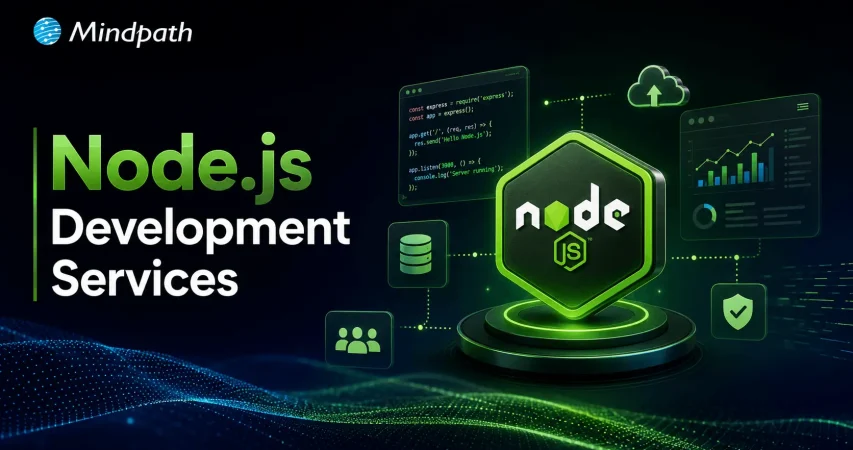
Have you ever wondered how some websites run so fast and handle thousands of users at once? The secret often lies in Node.js development services! Whether you need a high-performance web app, a real-time chat platform, or a scalable backend, Node.js can make it happen. But how exactly does it help? Let’s explore!

What is Node.js?

Node.js is a web development platform that is revolutionizing the way applications are developed and distributed on the internet. It is a standout force in the dynamic field of online development. Node.js, which leverages the widely used JavaScript language, enables developers to easily integrate the frontend and backend development processes. Node.js development services benefit from its lightweight, event-driven design, which is very useful in the modern digital environment. It makes it possible to develop scalable, highly responsive apps that can manage several connections at once. Because of its effectiveness, Node.js is the best option for real-time applications where responsiveness is crucial, such chat platforms, online games, and collaboration tools. Additionally, Node.js encourages creativity by streamlining the development process. Its robust package and library ecosystem, made possible by npm (Node Package Manager), speeds up development and enables programmers to take advantage of pre-existing tools for a range of features. This feature improves web applications’ scalability and maintainability while also saving time and resources.

Advantages of Using Node.js

1. High Performance

Node.js development services achieve great performance because of its non-blocking, event-driven architecture, which enables it to handle several requests concurrently without waiting for prior actions to finish. In real-time applications where responsiveness is essential, this efficiency is crucial. Node.js translates JavaScript straight into machine code by using the V8 JavaScript engine, which is well-known for its speed and optimization. This leads to quicker execution times.

The core of Node.js’s ability to provide great performance across a range of applications is this Google-developed engine. For example, Node.js is used by PayPal and LinkedIn because it can easily handle large amounts of traffic and provides real-time updates.

2. Scalability

Node.js excels in scalability because of its unique architecture and features designed for large-scale applications. Because of its event-driven, non-blocking architecture, Node.js servers can process several requests at once without experiencing I/O operation blocking. Applications that need to manage massive data streams in real-time or serve a high number of concurrent users must have this capacity. Node.js is lightweight and efficient, allowing it to scale horizontally across multiple cores or servers, enhancing its scalability. Because Node.js is an asynchronous programming language, developers may leverage its ease of deployment across distributed systems to maximize resource consumption and maintain excellent performance even under severe loads.

3. Efficient Development Process

By using JavaScript for both frontend and backend development, Node.js streamlines the development workflow and lowers the learning curve for developers who are already familiar with JavaScript, enabling an efficient development process.

By writing code for the complete stack using a single language, developers can increase code reuse and reduce the amount of time they spend moving between multiple programming languages.

The strong npm (Node Package Manager) module ecosystem of Node.js is another element that makes development easier. A sizable collection of reusable tools and libraries that make typical development tasks easier are provided by npm. Third-party modules are simple for developers to incorporate into their projects, which shortens development timeframes and eliminates the need to create essential features from scratch.

4. Rich Ecosystem

Node.js has a rich ecosystem, which increases its attractiveness and usability in modern web development. The largest open-source library ecosystem in the world, npm (Node Package Manager) is at the center of this ecosystem. With more than a million packages, modules, and tools covering almost every facet of application development, npm provides developers with an extensive repository.

With the help of this large library of npm packages, developers may speed up development processes by using pre-made solutions for typical tasks like database integration, testing frameworks, UI components, and authentication.

5. Strong Community Support

Strong community support is one of Node.js’s greatest assets and is essential to its expansion, uptake, and continuous improvement. This dynamic group of contributors, enthusiasts, and developers works together to enhance Node.js, exchange information, and offer helpful resources to other developers.

The accessibility and inclusion of the Node.js community is one of its main advantages. Developers of all skill levels, from beginners to seasoned professionals, are welcomed and encouraged to participate. A large number of people contribute to the ecosystem by making npm packages, frameworks, tools, and instructional materials. This collaborative effort ensures that Node.js remains innovative, responsive to industry trends, and capable of addressing evolving development challenges.

At Mindpath, we specialize in leveraging Node.js to drive transformative solutions for businesses of all sizes. Whether you’re looking to optimize performance, scale your applications, or innovate with new features, our expertise in Node.js development services can empower your digital journey. What are you waiting for? Contact us today to explore how we can help you harness the full potential of Node.js.  
Get in touch!

Next Up: Explore our blog on the Key Features of Node.js for Backend Development

Related Post

Discover the benefits of a multi-cloud strategy for modern enterprises, including improved security, flexibility, cost savings, and risk management.

Related Post

Your Guide to Hiring Skilled Node.js Developers in NYC – Key Factors
Finding theright Node.js developer in New York requires more than just technical skills. You need professionals who understand industry challenges, adapt to new technologies, and collaborate effectively with your team. With New York’s competitive tech market, selecting the right candidate involves evaluating both technical expertise and soft skills, along with an understanding of local industry demands. Here are the key factors to consider when hiring expert Node.js developers in New York.

1. Technical expertise

Hiring a qualified Node.js developer necessitates assessing their JavaScript competency, backend framework knowledge, and database integration abilities. Node.js uses a non-blocking I/O mechanism, hence a solid grasp of asynchronous programming is required. Developers should be familiar with popular frameworks such as Express, NestJS, and Koa, which assist construct scalable apps. Additionally, knowledge with MongoDB, PostgreSQL, or MySQL is required for data persistence. The ability to develop RESTful APIs guarantees that frontend-backend communication flows smoothly. Testing frameworks such as Jest and Mocha increase code quality while reducing defects. Ensuring that your developer is knowledgeable in these technical areas will aid in the creation of dependable and high-performance apps.

2. Industry Experience

New York is home to strong businesses such as banking, journalism, and e-commerce, all of which have specific technological needs. A financial developer may be familiar with stringent security and compliance standards, but a media developer may be skilled with large-scale data and streaming apps. E-commerce developers recognize the value of scalability, payment integration, and user experience optimization. Hiring developers with appropriate industry expertise shortens the learning curve, accelerates the application of best practices, and increases project productivity. They can also provide insights that are consistent with corporate objectives, resulting in improved decision-making and a stronger end product.

3. Market Competitiveness

The demand for Node.js developers in New York is high, making it essential to offer competitive salaries and benefits. A well-researched compensation package should align with current industry standards to attract and retain top-tier talent. Aside from salaries, offering flexible work arrangements, career growth opportunities, and skill development programs can make your company stand out. With the rise of remote work, many developers now prioritize work-life balance and flexible schedules. Additionally, a strong company culture and exciting projects can be key selling points. A well-structured hiring approach ensures you secure the best Node.js developers, helping your business build scalable, high-performance applications while maintaining a motivated workforce.

4. Soft Skills and Team Collaboration

Technical abilities are necessary, but soft skills are as important in guaranteeing a developer’s success in a team setting. Strong communication abilities allow for smooth cooperation with designers, product managers, and other engineers. A competent developer should also have a problem-solving attitude, which will help them to detect and resolve difficulties fast. Adaptability is another important attribute, as technology moves quickly, and developers must be willing to learn new frameworks and respond to project changes. A team-oriented approach also assures that the developer can work well in collaborative contexts, successfully exchange ideas, and contribute to the overall project’s success.
At Mindpath we connect you with top-tier talent to build high-performance, scalable applications tailored to your business needs. Whether you’re in finance, e-commerce, or media, our experts ensure seamless development with cutting-edge technology. Get in touch with Mindpath now!
Discover the ultimate guide to hiring Node.js developers in London. Learn about the skills, benefits, and cost factors involved in finding the right talent for your project.
Cloud Computing Attacks

Is your cloud data truly safe? As cloud computing becomes essential for businesses, the risk of cyberattacks grows. Are you aware of the vulnerabilities that hackers often exploit? How can you stay one step ahead and secure your cloud? In this blog, we will explore practical ways to protect your data and keep cyber threats at bay. 

Cloud computing refers to the ability to access a wide range of computer resources over the internet, such as data storage, virtual and physical servers, networking capabilities, software, and sophisticated technologies such as AI analytics. Instead of investing in and managing these resources themselves, customers can leverage cloud providers’ infrastructure on a pay-per-use basis, resulting in more flexibility, scalability, and cost-efficiency. This method enables firms to access high-performance tools and store on demand, reducing the need for substantial on-site equipment. 

Preventing threats to cloud computing is important because it helps keep your data, applications, and systems safe from cyberattacks. When threats aren’t controlled, hackers could access sensitive information, disrupt services, or cause data loss, which can harm a business’s reputation and lead to financial losses. By focusing on security, you can protect your information, build customer trust, and make sure that your business operations continue smoothly without unexpected interruptions. 

Let’s explore the steps on how to prevent cloud computing attacks! 

Guide to Prevent Cloud Computing Attacks

1. Use Cloud Security Posture Management (CSPM)

Cloud Security Posture Management (CSPM) tools are essential for defending against cloud computing attacks. These technologies assist you in keeping your cloud environment secure by continually scanning for security vulnerabilities and ensuring that everything adheres to the proper protocols. They can also give advice on how to resolve any issues that are discovered. One of the most effective uses of CSPM is to ensure that your cloud environment adheres to security standards at all times. These technologies can automatically assess whether your system complies with relevant laws and regulations. You can employ tools like AWS Security Hub, Google Cloud Security Command Centre, and Azure Security Centre to monitor and update your cloud security.  

2. Encrypt Data Stored and in Transit

To protect against cloud computing attacks, encrypt your data both at rest and in transit. Encryption protects your data from unauthorized access by making it unreadable to anybody without the right key. 

To protect data at rest, employ encryption tools provided by your cloud provider to safeguard information kept in databases, storage, or backups. To protect your data, AWS offers services such as AWS Key Management Service (KMS) and Amazon S3 Server-Side Encryption. Data in transit must be encrypted using secure protocols such as TLS/SSL as it flows between your systems and the cloud. This ensures that the data can’t be intercepted or altered by attackers while it’s being transmitted. By encrypting both at rest and in transit, you can greatly reduce the risk of data breaches and ensure your information stays secure. 

3. Monitor and Act on Threats

To defend your cloud from attacks, you must continually check for unexpected behavior and respond promptly to threats. Monitoring user requests and database updates can aid in identifying possible security threats before they cause damage. Start by monitoring user requests. Monitor API calls and user behaviors for signals of danger, such as a high number of unsuccessful login attempts, unusual traffic spikes, or unauthorized access attempts. Also, keep an eye on your database for any unauthorized modifications, such as efforts to steal data or edit sensitive information. 

To provide the greatest security, employ technologies like AWS CloudTrail, Azure Security Centre, or Google Cloud Security Command Centre to monitor your cloud environment in real time. These technologies allow you to view everything that is going on and immediately spot any risks. 

4. Protect Your APIs

Securing APIs is essential for securing cloud services and data. APIs serve as messengers, allowing various software programs to communicate and share information. They play a vital role in cloud computing and are frequently targeted by attackers because they can store sensitive data such as user credentials, financial information, or secret corporate information. If an API is hacked, it can pose major security concerns to the entire system. 

API gateways are an excellent solution for protecting your APIs. An API gateway manages and secures the traffic that flows to and from your APIs. It works as a filter, processing only authorized queries. You can enhance security by activating features like rate restriction, authentication and authorization checks, enforcing HTTPS, and detecting attacks patterns through the gateway. 

5. Establish Identity and Access Management (IAM)

Managing access to your cloud resources is essential for ensuring their security. Strong Identity and Access Management (IAM) procedures guarantee that only the appropriate individuals and services have access to your cloud data, and only to the level required. This helps to prevent unauthorized access and mitigates the harm if an account is hacked. 

Following the principle of least privilege is a great practice. This implies granting users and services just the rights they require to fulfil their responsibilities. By limiting access to only what is required, you lessen the likelihood of abuse if an account is hacked. It’s also important to conduct regular audits and reviews of your access policies. This ensures that access permissions are still relevant and aligned with the current roles and needs of your users. Regular checks help maintain a secure environment and quickly identify any unnecessary or outdated access. 

Also Read: DevSecOps in the Cloud: A Complete Implementation Guide

Cloud Computing at Mindpath

At Mindpath, we offer cloud computing services to help businesses manage their data, applications, and resources more easily and securely. With our cloud solutions, you can store your information safely, access powerful tools over the internet, and scale your resources as needed—all without having to manage complex hardware yourself.  Whether you’re looking to improve security, reduce costs, or increase efficiency, our cloud computing services are designed to meet your unique needs. We use the latest technologies to ensure your data is safe, accessible, and ready to support your business growth. Let us help you take advantage of the flexibility and power of the cloud. 

Final Thought!

Preventing cloud computing attacks is essential for protecting your data, apps, and company processes. Implementing strong security practices such as Cloud Security Posture Management (CSPM), encrypting data at rest and in transit, continuously monitoring for threats, securing your APIs, and managing access through Identity and Access Management (IAM) can significantly reduce the risk of cyberattacks. Mindpath is dedicated to offering safe, versatile, and scalable cloud solutions that fit your company’s requirements. With the proper cloud security measures in place, you can focus on development and innovation while ensuring your data is protected. Let us assist you in developing a robust, secure cloud infrastructure that will support business success in today’s digital environment. 

Ready to secure your cloud environment?

Partner with Mindpath for reliable, scalable cloud solutions that protect your data and drive business growth.

Learn how to prevent cloud computing attacks with practical tips on security, API protection, and IAM to safeguard your business and data.
cloud native development

Cloud-native development is redefining the way organizations are evolving in the digital-first world. It enables teams to develop applications that are resilient, can be easily updated, and allow sophisticated scaling without compromising development speed. An increasing number of organizations are gravitating towards a cloud-native approach to meet the modern-day demands for agility, innovation, and customer experience. If your organization values being competitive and evolving at the speed the digital world enables, but not constrained by legacy solutions, cloud-native development could be the evolution opportunity you are seeking.

This method of breaking up large applications into smaller constituents via microservices allows organizations the opportunity to manage and improve everything much easier. With new technologies enabling containers and automation, organizations with the right supporting tools are able to deliver, test, and fix features faster than ever. It is no longer just about trying to keep pace; it is about leading a system that embraces change. In this blog post, we will discuss how cloud-native development enables organizations to scale up their businesses with greater control, pace, and certainty. So, let’s explore!

Looking to elevate your business with Cloud-Native Development? Contact us, and our experts will turn your ideas into high-performing cloud-native solutions.

What Is Cloud Native?

Cloud-native computing is a way of building and running applications that are built for the cloud. Cloud-native development provides developers with a way to build software that is flexible, adaptable, and able to handle dramatic change without breaking the overall architecture. Instead of building one huge system or application, the developer builds the application in independent pieces called microservices that work together. This approach allows for building and testing in more manageable pieces over time.

According to MarketsandMarkets, the cloud native applications market is expected to grow from USD 5.9 billion in 2023 to USD 17.0 billion by 2028. This shows that more companies are choosing this method to stay competitive and meet user demands. Tools like containers and automation help developers launch updates quickly without stopping the service. Cloud native makes it possible to move faster, reduce costs, and build stronger, more reliable software.

Components of Cloud-Native Development

Cloud-native relies on a set of modern tools and practices that work together to build fast, flexible, and reliable applications. Here are the key components that make this approach effective:

1. Containers

Containers bundle code with everything it needs to run, making apps work smoothly across different environments. Tools like Kubernetes and Amazon ECS manage these containers to help with deployment, scaling, and maintenance. They are a key part of cloud native technologies, ensuring consistency and efficiency.

2. APIs

APIs, or Application Programming Interfaces, allow different software parts to communicate with each other. In cloud native development, microservices rely on APIs to share data and functions. This setup is lightweight and uses fewer resources compared to traditional systems.

3. Microservices

Microservices are small, independent parts of an application that work separately but communicate with each other using APIs. They are easy to update without affecting the whole system, which makes the app more stable. This structure supports cloud native development by making applications easier to build, test, and scale.

4. CI/CD Pipelines

CI/CD pipelines are used to automate the process of building, testing, and deploying code. They allow developers to work faster and reduce errors by using shared code repositories and automated workflows. This approach plays an important role in the cloud native landscape.

5. DevOps

DevOps brings together development and operations teams to automate and streamline the app development process. It helps in delivering software quickly and reliably with a focus on collaboration. DevOps practices are essential in the cloud native landscape to keep up with modern development needs.

Benefits of Cloud Native Development

Cloud-native approach offers clear advantages that go beyond just building applications differently. These benefits are helping businesses improve the way they deliver, manage, and scale digital solutions across industries.

1. Reduced Operational Costs

Using open-source tools and serverless models helps cut down infrastructure and licensing costs. Businesses only pay for what they use, saving money and resources.

2. Effortless Scaling and Deployment

Cloud-native workflows automate how apps and infrastructure are deployed. With container orchestration, apps scale easily based on real-time demand.

3. Modernized Legacy Applications

Older apps can be updated to work better with modern cloud systems. Cloud-native development makes it easier to improve and connect them with new projects.

4. Greater Development Flexibility

Containers package apps with everything they need to run across different setups. This gives developers the freedom to build without being tied to one system.

5. Efficient Microservice Management

Kubernetes helps manage and scale container-based apps more efficiently. It simplifies deploying microservices while ensuring better performance.

6. Improved Application Stability

Cloud systems stay available even when one part fails. Microservices architecture ensures the app keeps working smoothly without full downtime.

7. Aligned Tech and Business Goals

A product-based approach aligns tech efforts with business goals. It boosts teamwork and supports faster responses to changing needs.

8. Boosted DevOps Efficiency

Cloud-native practices help speed up development, testing, and deployment. This leads to quicker, more reliable updates with fewer manual steps.

9. Low-Code and No-Code

Low-code and no-code platforms allow more people to build apps with simple tools. This makes development faster and less dependent on technical teams.

10. Minimized Vendor Lock-In

Cloud-native applications can run across multiple cloud platforms. This gives businesses the freedom to switch providers and avoid getting locked in.

Best Practices for Cloud-Native Development

To get the most out of cloud-native development, it’s important to follow proven methods that support speed, reliability, and scalability. These best practices help teams build stronger applications while keeping systems flexible and efficient.

1. Use Containers Effectively

Containers package apps with their dependencies, making them easy to run across different environments. This boosts reliability and simplifies deployment, helping teams work faster and more efficiently.

2. Take Ownership of Products

Following a product-focused mindset gives teams control over development from start to finish. It encourages innovation and quality, aligning with the goals of the cloud native foundation.

3. Automate CI/CD Pipelines

Continuous Integration and Continuous Deployment (CI/CD) automate testing and delivery, reducing errors and saving time. This helps teams release updates faster with higher confidence.

4. Build with Microservices

Microservices divide the application into smaller, focused services that can be built, deployed, and managed independently. This structure improves fault tolerance, speeds up development, and supports scalable cloud native solutions.

5. Apply Infrastructure as Code (IaC)

IaC lets teams manage infrastructure with code, allowing easy updates, version control, and automation. It brings consistency and reduces the chances of manual errors during setup or changes.

6. Focus on Resilience and Fault Tolerance

Design apps to handle failure using retries, timeouts, and automated recovery. This ensures your cloud native applications stay stable and available during unexpected problems.

Unlocking the Power of Cloud-Native Development

Cloud-native development is helping businesses move faster, scale smarter, and build more resilient applications. From modernizing legacy systems to enabling flexible and efficient operations, it’s shaping the future of digital transformation. By adopting the right strategies and tools, organizations can respond to change with greater confidence and deliver value to customers more effectively.

At Mindpath, we help businesses transform their software approach with our expert cloud-native development services. From planning architecture to seamless deployment, our team supports every step. We simplify operations, modernize infrastructure, and create scalable applications that align with your goals. With Mindpath, you build software that’s fast, flexible, and ready for what’s next.

Discover the power of cloud-native development! Learn its benefits and how it helps businesses enhance security, efficiency, and performance.