Top Benefits of Using AI in Mobile App Development

Join our Newsletter!

Featured Posts

Support Is One Click Away

Home

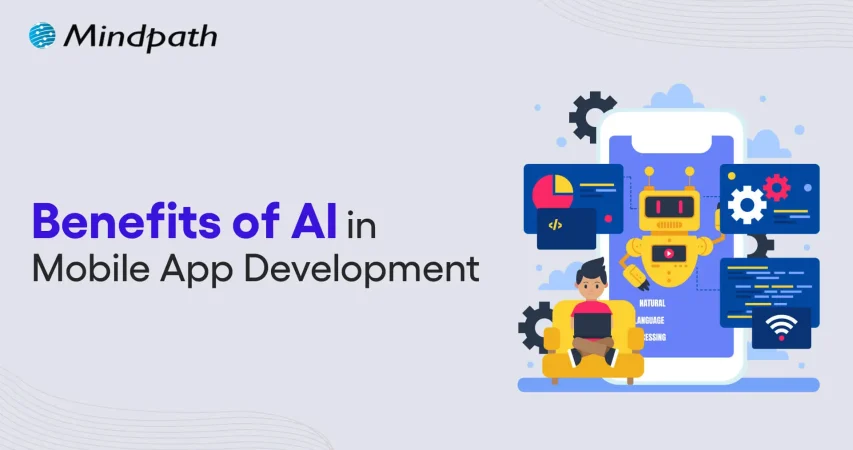
Top Benefits of Using AI in Mobile App Development

AI in mobile app development

Top Benefits of Using AI in Mobile App Development

Artificial intelligence is rapidly transforming from a buzzword to a necessity for businesses in all industries. You must have noticed the impact of AI in mobile app development with examples of voice assistants like Google Assistant and Siri. Why is artificial intelligence useful for mobile app development? Mobile app developers can use AI to capitalize on a broad range of capabilities, including smart automation and better efficiency.

AI is no longer just about science fiction as businesses leverage it for different operations. The adoption of AI for developing mobile apps creates a new perspective on how companies pursue growth. Artificial intelligence not only simplifies the work of developers but also ensures seamless experiences for users. An overview of the benefits of AI in developing mobile apps can help you understand its significance. 

Using AI in mobile applications can be beneficial, but many businesses struggle to implement it. Mindpath’s mobile app development services will deliver full-proof planning and execution, ensuring innovation and efficiency in every project.

Understanding the Fundamentals of AI in Mobile App Development

Artificial intelligence changed many traditional assumptions about it once the world witnessed real-world use cases in everyday lives. AI can empower machines to think, learn, adapt and take decisions like humans by training on huge datasets. The scope for improving app development with AI revolves around the potential implications of different AI technologies. With the help of AI technologies like machine learning, computer vision and natural language processing, developers can enhance mobile apps.

You can create smarter and more intuitive mobile apps with artificial intelligence. Mobile apps with AI can use predefined instructions to analyze data and make intelligent decisions, thereby delivering exactly what users want. The best thing is that mobile apps can achieve all this without human intervention. 

The utility of different technologies in mobile apps can help you understand how AI revolutionizes mobile app development. AI mobile apps can leverage machine learning to learn from user interactions and improve their services according to user expectations. 

Developers can capitalize on the benefits of AI in mobile apps to deliver a broad range of functionalities to users. For instance, natural language processing can help chatbots in mobile apps understand user queries and deliver natural responses. AI mobile applications deliver more than just automation as you can rely on artificial intelligence to create next-gen apps that can adapt to the future. 

How Have Developers Used AI for Mobile Apps?

The distinct functionalities of AI technologies for mobile app development reveal crucial insights about growing popularity of AI-powered mobile apps. You can come across many new AI features in mobile applications used by millions worldwide. The functionalities of artificial intelligence in modern mobile apps can help you understand why AI-powered mobile apps are a necessity now.

1. Chatbots and Virtual Assistants

You must have seen or used chatbots on many mobile apps that make intelligent conversations with users. Chatbots and virtual assistants use AI to offer customer support without the involvement of humans. For instance, healthcare apps can rely on AI chatbots to provide accurate medical diagnosis on the basis of symptoms. Voice assistants like Siri and Alexa can interact with users and help them with different tasks, like searching information and setting reminders. 

2. Personalization of User Experiences

Developers have discovered that AI can play a major role in personalizing user experiences according to each user’s preferences. The use of AI tools for mobile app development ensures that artificial intelligence can analyze user behavior, past interactions and preferences to find personalized content and recommendations. As a result, your mobile app can be more engaging for users by delivering the relevant services. Netflix is one of the biggest examples of using AI for personalizing user experiences as it recommends content on the basis of your watch history.

3. Facial Recognition

Computer vision is one of the formidable AI technologies that have gained recognition in mobile app development workflows. An overview of new mobile app development trends reveals how facial recognition has become a necessity in modern apps. Developers can use computer vision in their mobile apps to recognize faces and patterns. AI-powered mobile apps can leverage facial recognition to offer better security. The best example of using AI for facial recognition in mobile apps is Instagram, which offers AR filters with computer vision.

4. Power of AI Automation

Developers cannot think about using artificial intelligence for developing mobile apps without incorporating automation. As a matter of fact, automation is the biggest strength of AI that helps in streamlining repetitive tasks. With AI taking care of manually intensive tasks, mobile apps can offer better efficiency and productive user experiences. You can notice the best example of AI automation in mobile apps in Gmail, which automatically classifies emails into different categories.

Why Should Developers Trust AI for Mobile App Development?

Artificial intelligence contributes to diverse aspects of mobile app development and offers numerous benefits. Businesses can rely on AI mobile app development experts to capitalize on these advantages and create cutting-edge apps. An overview of the advantages of AI in developing mobile apps can help you understand why AI-powered mobile apps are gaining traction.

1. Seamless Automation in Mobile Apps

Automation is one of the biggest advantages you can get from using artificial intelligence to create mobile apps. Your mobile app works on many background tasks, including data entry and content moderation, while delivering what the users want. Artificial intelligence can do the heavy lifting for your mobile apps by automating these tasks, thereby achieving better efficiency. At the same time, users can also get faster access to the app’s functionalities and services.

2. Creating Custom Experiences for Each User

Custom user experiences are the next big thing in mobile app development as user behavior trends favor personalization. Every mobile app user needs services and content personalized according to their behavior and preferences. The utility of AI in application development primarily revolves around creating apps that can adapt to each user and their needs. Artificial intelligence can empower your mobile app to provide personalized content and product recommendations to users.  

3. Smarter Decision Making

Mobile apps are not autonomous agents who can take decisions independently on behalf of customers. AI can empower mobile apps with the capability to analyze patterns and detect trends or anomalies. The growing popularity of AI app ideas depends significantly on how artificial intelligence provides actionable insights. Mobile apps can use the insights to optimize strategies for customer engagement and pricing with the ability to make better decisions. 

4. Breaking the Language Barriers

Artificial intelligence also contributes significantly to expanding the global reach of mobile apps. Language is one of the biggest obstacles for the expansion of mobile apps in international markets. However, a reliable AI app development company can help you overcome these barriers as AI technology offers real-time language translation features in mobile apps. Artificial intelligence in mobile apps will emerge as a prominent trend to make mobile apps usable across all countries.

5. Enhanced Accessibility and Inclusivity

AI breaks the language barrier and also makes your mobile apps more accessible to different users. Users with disabilities can capitalize on voice recognition features to access all the functionalities in a mobile app. For instance, visually challenged users can access different features on your mobile app with speech-to-text typing and voice-controlled navigation. Artificial intelligence ensures that literally everyone can become a user of your mobile apps.

6. Improvements in Operational Efficiency

Artificial intelligence also helps in enhancing the operational efficiency of your mobile apps. You can rely on AI for boosting app performance with efficient resource allocation, performance monitoring and predictive maintenance tasks. It plays a crucial role in reducing downtime, optimizing backend processes and ensuring smooth functionality of your app. 

Most of the guides on how to develop an AI mobile app also emphasize how AI can optimize app performance. Artificial intelligence can help in optimizing battery consumption, reducing unnecessary background processes and managing memory usage. The enhanced operational efficiency translates directly into a more responsive and faster user experience.

What are the Challenges of Adopting AI for Mobile App Development?

The benefits of AI for developing mobile apps create a strong case for developers to embrace artificial intelligence. However, developing efficient and powerful mobile apps with AI brings some formidable challenges. First of all, the development costs will be higher as developers will need expensive AI tools. Developers will also have to think about issues with data quality and privacy. On top of it, mobile processing power is limited and using AI can lead to problems with performance and battery life.

Final Thoughts

The uses of AI in mobile app development will introduce a new perspective on mobile app user experiences. Artificial intelligence not only contributes to automation but also enhances scalability and performance of mobile apps in different scenarios. You can notice how AI makes mobile apps more accessible to users by removing language barriers and introducing facial recognition and speech-to-text typing features.

Mindpath is your trusted destination for mobile app development services with the AI advantage. We have been creating mobile apps for clients from different industry verticals with the assurance of efficiency and enhanced productivity. You can rely on our experts to develop mobile apps that reflect your brand identity and achieve excellence on all benchmarks. Consult with our experts and find the best services for AI-powered mobile app development now.


Related Post

Discover the ultimate guide to hiring Node.js developers in London. Learn about the skills, benefits, and cost factors involved in finding the right talent for your project.

Related Post

ReactJS Trends

Curious about what the future holds for ReactJS? Wondering how this powerful framework will evolve in the coming years? As we look ahead to 2025, there are exciting trends that every developer should know. What innovations will reshape web development, and how can you stay ahead of the curve? In this blog, we will dive into the ReactJS trends 2025 which will shape the future of development! 

ReactJS is a free tool developed by Facebook that makes it easier to create user interfaces for websites and apps. It makes it easier for developers to construct interactive and dynamic features by dividing them down into smaller, more manageable components. These components can be reused and changed individually, which makes the development process more efficient and organized. React.js is intended to simplify the creation and maintenance of user interfaces, hence boosting performance and user experience. 

Knowing the ReactJS trends for 2025 is vital since it keeps developers up to date on the newest improvements. Following these trends allows developers to create better, quicker, and more user-friendly websites. It also enables businesses to leverage cutting-edge technology to keep their websites and applications up-to-date and competitive. Staying informed about these trends allows you to enhance your abilities, solve challenges more quickly, and build projects that are ready for the future.  

So, want to know about the ReactJS trends for 2025? Let’s dive in! 

ReactJS Trends 2025

1. AI and Machine Learning in React

By 2025, AI and machine learning will play a far larger role in React development. Developers will begin to use AI technologies to help them create code quicker, rectify errors, and enhance website performance more quickly. This will make React development much faster and easier. 

React will also integrate with machine learning technologies, enabling developers to create smarter apps. These apps will be able to recognize photos, comprehend voice or text, and forecast user behavior. This will make websites and applications more dynamic, intelligent, and capable of providing superior user experience. 

2. Growing React Libraries

One of React’s greatest advantages is its ecosystem, which will continue to improve by 2025. We can anticipate additional frameworks and tools to make React even more powerful for tasks like data management, page navigation, information retrieval, and server-side website optimization. 

Popular technologies such as Next.js and Gatsby will continue to evolve, providing developers with new options to build fast websites that include static pages, server-side rendering, and smart routing. New libraries will also be released to assist developers in addressing new issues while working with React. This will make the React ecosystem even more diverse and useful, allowing developers to create even better websites and applications. 

3. Boosting React Performance

As apps expand in size and complexity, React developers will need to prioritize improving their performance. By 2025, we anticipate seeing new methods for making React apps quicker and more efficient. This will involve lowering code file size, enhancing lazy loading, and optimizing website rendering. 

One technique to improve speed is to use better code splitting, which involves just loading the necessary sections of the code and keeping programs lightweight. Another option is progressive hydration, which makes server-rendered components more interactive by loading them in phases. Furthermore, better caching strategies will assist in eliminating superfluous data loading, allowing websites to load faster and offering a more seamless user experience. 

4. React Native for More Mobile Apps

React Native, the mobile version of React.js, has gained popularity since its introduction. The language and components used for web development can be used to create mobile applications for both iOS and Android. With the increased need for mobile apps, we predict even more developers to choose React Native for their projects by 2025. 

One of the key advantages of React Native is that it allows developers to reuse code across both platforms, which speeds up and simplifies app development. It also features a growing number of native modules and third-party connections that provide more functionality. By 2025, we can anticipate advancements in the design of React Native, which will optimize speed and bring the experience even closer to that of native apps. 

5. Better Tools for Developers

By 2025, we can anticipate significant advancements in the tools that developers utilize for React. React DevTools, ESLint, and Prettier have already made it easier to develop applications. We can anticipate integrated development environments (IDEs) like VS Code to improve further, including greater support for React’s unique features like hooks and smart code suggestions. This will enable developers to create apps more quickly and precisely. 

In addition, we should expect increasingly powerful tools that employ AI to analyze code and discover flaws. These new tools will allow developers to produce more dependable code with less effort, speeding up and smoothing out the development process.  

6. React Server Components Rising

One of the most interesting recent developments in the React ecosystem is the release of React Server Components. These components enable developers to execute portions of their apps on the server while maintaining the familiar React API for client-side components. This implies that apps can render more effectively, lowering the amount of JavaScript transmitted to the client while improving overall speed. 

By 2025, we predict React Server Components will be required for developing high-performance, server-driven apps. They will assist developers in creating apps that load quicker and perform better, particularly in scenarios with sluggish internet connections or restricted bandwidth. This will improve the overall user experience. 

ReactJS Development Services at Mindpath

Mindpath specializes in high-quality ReactJS programming services suited to your specific requirements. Our professional developers keep up with the current trends, guaranteeing that we offer high-quality apps that function remarkably well.  We optimize speed using tactics such as code splitting and lazy loading to provide users with quick and smooth experiences. Our experience in integrating AI and machine learning improves functionality and interactivity. Furthermore, our React Native services allow us to develop cross-platform mobile apps for Android and iOS, maximizing reach and efficiency. Mindpath is committed to helping you realise your vision with unique ReactJS solutions, providing complete assistance from idea to implementation and beyond. 

End Thought!

As we look toward 2025, the trends shaping ReactJS development promise to revolutionize how we build applications. From the integration of AI and machine learning to the rise of React Server Components, these advancements will enhance performance, user experience, and developer efficiency. At Mindpath, we are dedicated to leveraging these trends to create innovative, high-quality applications that meet your unique needs. By staying ahead of the curve, we empower our clients to thrive in an ever-evolving digital landscape.  

Ready to elevate your project with cutting-edge ReactJS solutions?

Partner with Mindpath today to discuss how we can bring your vision to life!

Explore the top ReactJS trends for 2025, including AI integration, performance optimization, and React Native growth.
Hire ReactJS developers in California

California has emerged as the focal point of global innovation, alongside being the top destination for all the Hollywood glitz. Business owners in California want ReactJS developers to transform groundbreaking ideas into real-world solutions. If you want to hire ReactJS developers in California, you have found the right post. Let us learn the best way to recruit top-tier ReactJS developers for your next web project.

Are you looking to build modern and scalable web apps in California’s fast-moving, competitive market? Mindpath connects you with expert ReactJS developer in California  who turn your ideas into high-performance digital products.

Understanding the Tech Scene in California

California has become the hub of technological innovation in the world, with unparalleled advantages for different types of businesses. Big tech giants, as well as newly created startups, choose California as the ideal spot for growing their business. With Silicon Valley located in California, the Golden State attracts some of the brightest minds in tech. The job market in California offers promising opportunities to recruit skilled and experienced ReactJS developers.

Business owners want to hire React developer in California to capitalize on new technologies, best practices, and trends. Every business is competing to craft the most appealing user experiences, and there could be no better place than California for the competition. Another notable reason to focus on California is the easier access to various networking opportunities. Hiring managers can find a lot of companies and professionals to take references for finding ReactJS developers.

Unraveling the Relevance of ReactJS in 2025

Many critics have been advocating the use of new frameworks for frontend development to capitalize on new features. However, it is important to understand why ReactJS is still the top pick of web developers worldwide. How has a framework launched in 2013 managed to stay relevant till now? The distinctive features of ReactJS are the only reason why employers search for ReactJS developers’ hourly rates in California on different platforms. One of the most noticeable features of ReactJS is the component-based architecture, which allows the creation of reusable UI components.

The next prominent feature of ReactJS is the virtual DOM, which helps in optimizing updates, thereby offering a seamless user experience with faster rendering. Unlike other JavaScript frameworks, ReactJS supports optimization for search engines. As a result, your web projects become more visible to your target audience with ReactJS serving visually attractive interfaces and SEO appeal. 

React developers can also make the most of an extensive collection of resources in the globally accessible ecosystem, such as libraries, development tools, and support systems. Another notable reason for the ReactJS developer cost in California is the increasing popularity of React Native. ReactJS developers can use React Native to craft native mobile apps, thereby empowering businesses to have a digital presence on web and mobile platforms. 

Important Skills of ReactJS Developers

The primary theme of any guide on hiring React developers should revolve around identifying important skill requirements. Once you identify the essential ReactJS developer skills, you can measure the quality of candidates applying for React developer jobs. Awareness of the important React developer skills also helps hiring managers and employers determine the ideal compensation for developers. Every ReactJS developer must have a combination of the following technical and soft skills. 

1. Technical Skills of ReactJS Developers

The search for answers to “What skills should a ReactJS developer in California have?” will find the first stop at technical skills. React developers should have proficiency in React concepts as well as frontend web development. The core React concepts that a developer must know are props, React Hooks, and state management. ReactJS developers should be fluent in the use of popular state management libraries such as Context API and Redux. 

The list of technical skills of ReactJS developers also includes the fundamental web development technologies, such as HTML and CSS. On top of it, expertise in JavaScript ES6+ specifications is also a mandatory requirement for React developers. ReactJS developers should also know the best practices for using build tools and package managers.

The other important technical skills for ReactJS developers include knowledge of testing frameworks, routing libraries, and UI libraries. Version control with Git is also a mandatory skill of React developers that can promote easier collaboration with other teams. Business owners also look for additional skills like backend development expertise for full-stack roles and fluency in using cloud platforms. 

2. Soft Skills of ReactJS Developers

Employers need developers who are not only technically proficient but also capable of working in their organization. Every organization has a different set of beliefs, values, mission statements, and goals. Therefore, hiring ReactJS developers in California is not all about technical skills only. Hiring managers seek React developers who have soft skills like problem-solving, communication, adaptability, and attention to detail. 

Professional ReactJS developers have to work with a critical mindset and the ability to view problems from different perspectives. Communication skills can help developers capitalize on the support of experts from other teams while fostering collaboration. Adaptability ensures that React developers can cope with new changes while avoiding conflicts with emerging advancements and trends. Most important of all, developers should pay attention to detail to ensure efficient completion of projects. For instance, the ability to identify bottlenecks and errors before full deployment can help save a lot of money.

Which Hiring Model Should You Choose for ReactJS Developers?

The hiring model or engagement model of a business for ReactJS developers represents the way in which the business uses developer services. The cost of hiring developers in California depends directly on the hiring model you choose for your business. Hiring managers can choose in-house developers, freelancers, contract developers or outsource projects to professional development services. Take a look at the implications of each hiring model to understand its value for your web project.

1. In-house ReactJS Developers

An in-house ReactJS developer is one who becomes an integral part of your company culture. The best thing about hiring an in-house developer is the assurance of direct control and deeper integration with your business. However, business owners have to spend a lot on hiring in-house developers, and the recruitment process takes more time. 

2. Freelancers and Remote Developers

Another choice for business owners to make the most of ReactJS is through freelancers or remote developers. Business owners can pick freelancers from top platforms, based on their skills and experience, to work on short-term projects or fill specific skill gaps. On the other hand, remote ReactJS developers in California can fulfill the responsibilities of a dedicated ReactJS developer in your organization. The best thing about freelancing and hiring remote developers is the opportunity to work with experts from all over the world.

3. Professional ReactJS Development Services

The most trusted solution to make the most of ReactJS in web development projects is a professional development service agency. Professional development agencies build teams to serve end-to-end solutions for ReactJS development and nurture their teams for years. Business owners must know that professional agencies offer the assurance of working with the best developers in the business. On top of it, California-based ReactJS development services can help in ensuring the reduction of management overhead. With the help of professional developers, your web projects can be completed efficiently without spending a lot.

Strategic Roadmap to Hire ReactJS Developers

After learning about the essential prerequisites to hire React developers, business owners can follow a strategic roadmap for the hiring process. Some hiring managers might be worried about the special steps required for the strategic roadmap. Interestingly, you don’t have to think about any complex steps or requirements while hiring ReactJS developers. On the contrary, you can just follow the simple steps mentioned below to hire the best ReactJS developers.

1. Design the Job Description

The job description might seem like an outline of the job title, responsibilities, and skill requirements. However, many business owners don’t know that the top ReactJS talent in California or anywhere in the world will apply for jobs where the job description is appealing. Apart from thinking about the viewpoint of applicants, hiring managers must also consider the perspective of the business owner while creating the job description. 

While creating the job description, you should be specific about the project scope, complexity, and skills required for the job. The job description must clearly state which type of project you are hiring for, whether it is a single-page application or a complex SaaS platform. In addition, the job description must indicate the level of experience required for the job alongside the essential skills required. 

2. Choose the Ideal Platforms to Find Talent

The answers to “What skills should a ReactJS developer in California have?” can help you identify the type of React developer you need for your web project. However, there is no use in the answers if you don’t know where to look for the best talent. Where will you post the job listing? The foremost answer would obviously point to online job boards, such as Indeed and Glassdoor. Professional networking platforms like LinkedIn are also great places to begin your search for competent ReactJS developers.

Business owners can search for expert ReactJS developers through referrals as well as developer communities. Professional meetings of React developers, online forums, and conferences are also great places to interact with developers and identify ideal candidates. The easiest way to search for top-tier ReactJS developers is through professional development service agencies. You can find pre-vetted ReactJS developers with years of experience to work on your web project by choosing professional development services.

3. Effective Screening and Interview Process

The success of a hiring process depends a lot on the screening and interview process. Anyone who wants to know how to hire ReactJS developers must remember that the initial screening helps in filtering out a lot of undeserving candidates. The initial screening must involve a detailed review of the resume and portfolio of applicants. Some hiring managers also opt for a phone call to discuss the experience of candidates and their communication skills. The phone call might prove to be the best solution to measure the interest of candidates in the company and the job.

Once you are done with the screening process, the attention should shift towards the interview. Many business owners believe that the interview for ReactJS developers is all about asking technical questions. It is important to check the technical fluency of applicants through coding challenges and automated code reviews. Live coding sessions can offer the ideal platform to check the problem-solving skills of candidates. Interviewers should also dive deeper into technical topics while testing the understanding of React concepts, architecture, and JavaScript fundamentals.           

4. Check the Behavioral and Culture Fit

Candidates who can complete the technical interviews effectively are the best picks for your next web project. At the same time, you must know that the hiring process is complete only after checking the behavioral and cultural fit of a candidate. Business owners don’t want expert developers who are constantly at loggerheads with other teams or stakeholders. Therefore, behavioral fit is a crucial requirement for hiring ReactJS developers in any organization.

The interview process should also include comprehensive questions to test the soft skills of the candidate. Interviewers must evaluate the work style of applicants and the approaches they follow to manage feedback and challenges. Candidates who follow the company’s values and vision can be more useful picks for any business. 

5. Understand the Hiring Costs

The most prominent aspect of the hiring process that often goes unnoticed is the hiring cost. You might think that the answers to “What is the cost of hiring a ReactJS developer in California?” would focus primarily on the salary. The average annual salary of ReactJS developers in California varies from $60,000 to $113,000. Will your hiring costs be limited to the salary cost? The hiring costs will encompass other costs such as onboarding costs, cost of work equipment ,and recruitment costs.

Final Thoughts

The React developer hiring tips showcase that a few simple steps can help you find the ideal React developer for your next project. On the other hand, business owners might come across different challenges in the hiring process, such as a lack of clarity regarding job descriptions and hiring costs. 

Mindpath can help you hire the best ReactJS developers for your web projects with the assurance of transparent cost estimates and proven results. We have been one of the leading platforms for end-to-end IT solutions with specialization in ReactJS development. Our web projects have helped our clients achieve their business goals on their desired terms. Partner with us today and create the most effective top-tier web applications for your business now.

Discover the ultimate guide to hiring Node.js developers in London. Learn about the skills, benefits, and cost factors involved in finding the right talent for your project.
Hiring a full stack developer

Have you thought about how hiring a full-stack developer could impact the success of your digital initiative? In a fast-paced world like technology, companies seek the ability to manage both front-end and back-end development.  What characteristics will define the best developer for your business requirements?

That’s where careful thought comes into play. Every business has its own specific objectives. If you choose a full-stack developer without careful consideration and evaluation can lead to gaps in performance. Avoid making a rushed decision without thinking it through, and taking the time to know what is important will help you move in the right direction. So, while you start planning your next steps, let’s discuss the key things you keep in mind, so that your hiring choice actively supports growth and innovation.

Hiring full-stack developers brings end-to-end technical support to scale your business faster. Mindpath can help you get the best talent that fits your requirements.

Who is a Full-Stack Developer?

A full-stack developer is a person who can work on both the front end and back end of a website or application. The front end comprises everything that the user sees and interacts with, and the back end is part of the app that runs on the server in addition to managing the database and application logic. The combination of this front-end and back-end skill set helps to make full-stack developers more flexible and valuable in creating all types of digital experiences.

Hiring a full-stack developer means hiring a person who knows how to link the design of a site, functionality, and performance. Full-stack developers understand programming languages, frameworks, and server environments. They make sure the design runs smoothly during the entire development process. By being aware of multiple layers of development, full-stack development saves time and money while allowing businesses to deliver a more efficient product.

Responsibilities of a Full-Stack Developer

It’s important to recognize the broad spectrum of responsibility that comes with hiring a full-stack developer. The following responsibilities communicate how they join the layers of development into a smooth-flowing digital solution.

Responsibilities of a Full-Stack Developer

1. Designing User Interfaces

A freelance full-stack developer builds interfaces that have visual appeal and work on any device. They ensure that the website is responsive and works well for the user.

2. Building the Front End

Using HTML, CSS, and JavaScript, they build the experience that the user interacts with and engages with the visual. This allows for seamless movement through the site visually.

3. Collaborating with Teams

They collaborate with designers, managers, and stakeholders to achieve project outcomes. The benefits of collaboration can be easily seen, as it assures the application is built correctly.

4. Developing APIs

Full-stack developers are responsible for the build of APIs to interconnect systems and services. This allows the same data to move between the front end and back end.

5. Writing System Logic

They create a logic that drives the functions within an application. It responds to requests, processes data, and provides accurate results.

6. Managing Databases

A freelance full-stack developer sets up, maintains, and stores data in databases for user information. They secure data management, and they optimize the strategies for saving data.

7. Writing Clean Code

They write code that is maintainable and structured with performance in mind. Clean coding practices support a reduction in error and an increase in ease of modification.

8. Testing and Debugging

A full-stack developer tests an application to look for bugs. They debug the bugs to make sure it runs smoothly and reliably.

If you are planning to hire a full-stack developer, it is essential to understand the impact they can have on your product’s success. Explore our blog on Full Stack Developer Is Key to MVP Success to have a deeper understaning on how a full-stack developer can accelerate your MVP and give your product a competitive edge.

Essential Factors to Consider Before Hiring a Full-Stack Developer

Recruiting a full-stack developer isn’t just about evaluating technical skills. The following is a list of critical factors that will help you recruit a developer who aligns with your project needs and business objectives.

Essential Factors to Consider Before Hiring a Full-Stack Developer

1. Define Your Requirements

It’s important to create a clear document outlining your project needs prior to hiring a full-stack developer. This ensures the full-stack developer understands the features you need and the level of design you are expecting. Clarified requirements can aid in a quicker delivery to you and avoid any confusion.

2. Evaluate Candidate Potential

An experienced full-stack web developer has industry knowledge and experience. They can quickly adapt and move between projects as needed. Their ability to jump between projects can prove valuable when a deadline is around the corner.

3. Check Project Management Skills

When you hire a full-stack developer, you’re also getting a project manager with skills that go beyond simply coding. They have the ability to plan resources, lead teams, and manage the stages of development. Because of these proficiencies, they’re often the ones leading projects.

4. Review Technical Expertise

A good developer will know the languages behind building interfaces, HTML, CSS, and JavaScript. They will also know some back-end language, such as Python, PHP, or Ruby, and database experience with something like MySQL. It is a strong combination for full-stack development.

5. Look for Tech Versatility

Ensure that when hiring a full-stack developer, you validate their experience with multiple technologies. They should have knowledge of front-end frameworks, backend frameworks, and databases. You want real project experience that demonstrates their skills.

6. Check Their Portfolio

Request past work to evaluate their capabilities. A solid portfolio can illustrate how they overcome obstacles and provide solutions. Even newbies will be able to display some ability through sample work.

7. Focus on Soft Skills

A developer should recognize business requirements as well as perform technical tasks. A developer must be able to communicate without barriers to clients and teams. Good soft skills make it easy to comply with authority.

8. Make a Smart Hiring Decision

Finding the appropriate talent for full-stack web developer jobs can be a time-consuming process. Hiring a full-stack developer through a talent agency can help alleviate risk and guarantee that developers know what they are doing.

Want to transform your business inside out? Full-stack development makes it possible by optimizing operations and speeding up product launches. Explore the Benefits of Full-Stack Development every business needs to succeed.

How to Hire a Full-Stack Developer

Selecting a full-stack developer involves an intentional process based on the right talent and your desired project specifications. The following steps will help you make a careful and confident hiring decision.

Process of Hiring a Full-Stack Developer

1. Assess Business Requirements

Prior to hiring a full-stack developer, make sure to define the project’s scope, budget, and timeline. Decide whether you need to hire someone full-time or if your project would require a freelance expert.

2. Select Recruitment Channels

Source candidates from networking sites, freelance platforms, and job boards. You can also connect with a full-stack development company to get the right talent.

3. Craft a Job Description

A good full-stack developer job description is a detailed description of the hard skills and tools, and the responsibilities for the job. A good job description helps you find the right candidates at a much quicker pace.

4. Conduct Skill Assessments

You can assess coding and problem-solving by utilizing structured coding tests or tasks. This method is a better hiring practice for a full-stack developer.

5. Prepare Interview Questions

Assess their familiarity with frontend, backend, and databases. A good candidate will often follow the best full-stack developer practices through good full-stack developer courses.

6. Implement Smooth Onboarding

After hiring a full-stack developer, tell them about their roles and responsibilities, the tools they will use, and the culture of the company. Successful onboarding ensures we’re setting them up for success and justifies their full-stack developer salary.

If you’re unsure whether to hire a full-time developer or a freelancer. Explore our blog on Freelance Full-Stack Developer to determine the best fit for your project’s needs. 

Ready to Hire a Full-Stack Developer for Your Next Project?

Hiring a full-stack developer is a smart decision for businesses aiming to build strong digital solutions. By focusing on skills, experience, and project needs, companies can find the right professional who delivers efficient results. The right choice not only saves time and costs but also ensures long-term success in competitive markets.

At Mindpath, you can hire full-stack developers who combine technical expertise with business understanding. Our developers work on both frontend and backend with precision, helping you achieve faster and smoother project delivery. With a proven track record across industries, Mindpath offers reliable talent that aligns perfectly with your goals and drives real value.

Unlock the secrets to hiring top full-stack developers. Explore key factors like experience, project fit, problem-solving skills, and communication for success.