Key Features of Node.js for Backend Development

Join our Newsletter!

Featured Posts

Support Is One Click Away

Home

Key Features of Node.js for Backend Development

Top Node.js Features for Backend Development – A Complete Guide

Key Features of Node.js for Backend Development

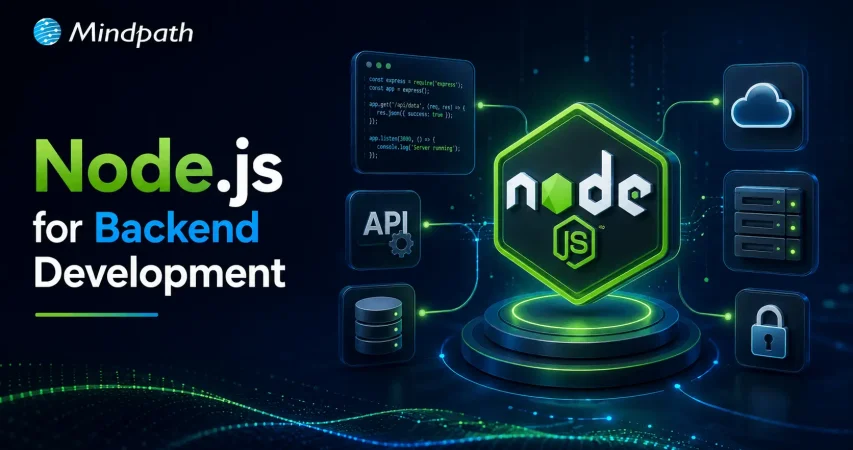
Is Node.js still the best choice for backend development in 2025? With technology evolving rapidly, developers need efficient, scalable, and high-performance solutions. Node.js continues to power modern applications, but what makes it so relevant today? Let’s dive into the latest trends and see why Node.js remains a top choice for backend development this year!

1. JavaScript familiarity

If a developer is familiar with JavaScript on the front end, transitioning to backend programming using Node.js becomes considerably easier. Since they both speak the same language, there is no need to learn anything entirely new. This enables developers to work quicker and construct apps more seamlessly. It also saves time during training and avoids errors. Node.js allows frontend professionals to swiftly improve their abilities and handle full-stack development without a high learning curve.

2. Real-time applications

Node.js is ideal for real-time applications, due to frameworks such as Socket.IO. It enables immediate connection between users and servers, making services such as live chat, notifications, and real-time updates effortless. Node.js guarantees seamless and quick interactions across chat applications, online games, and collaboration tools. Users do not need to refresh their displays to receive new updates; everything happens immediately. This makes programs more interesting and responsive, which enhances the entire user experience.

3. High concurrency

Node.js is built to accommodate a large number of users simultaneously without slowing down. Its non-blocking I/O mechanism allows for the efficient processing of many requests without the need for queues. This makes it perfect for apps that experience high traffic, such as online gaming, streaming services, and real-time chat. Instead of generating a new thread for each user, Node.js handles connections efficiently, allowing applications to remain quick and responsive even when under heavy demand.

4. Microservices architecture

Node.js is ideal for creating microservices, which split a program into separate, independent services. Each service performs a specific purpose and operates independently, making development and upgrades easy. Since these services interact rapidly, applications remain adaptable and scalable. This method is ideal for complicated applications because it allows teams to work on separate portions without impacting the overall system. Businesses can utilize Node.js to create quick, maintainable, and extendable apps.

5. Lightweight and efficient

Node.js is lightweight and efficient, allowing it to operate quicker with less resources. Its compact footprint enables applications to complete tasks rapidly, making it excellent for dealing with large traffic without overwhelming the system. Node.js ensures that your app operates effectively even when it is heavily loaded by consuming less memory and CPU. This efficiency results in faster response times and better user experiences, all while keeping operating expenses down.

Ready to build fast, scalable, and efficient applications with Node.js? At Mindpath, we specialize in creating high-performance solutions using the power of Node.js. Whether you’re looking for real-time features, microservices, or high-concurrency handling, our expert team is here to help.
Contact us today to discuss how we can take your application to the next level with Node.js!

Related Post

Discover how Agile methodology transforms web and app development with flexibility, collaboration, and faster delivery.
Learn how to prevent cloud computing attacks with practical tips on security, API protection, and IAM to safeguard your business and data.

Related Post

custom software development

Custom software development is becoming the primary driver for businesses to get ahead of the curve in 2026. Businesses no longer rely on ready-made tools as existing tools fall short of meeting unique requirements. More recently, there is a higher need for tailored solutions that incorporate an organization’s goals and can scale as the firm grows. So, how will businesses ensure their software not just helps with their operations, but ultimately provides a legitimate competitive advantage?

In today’s fast-paced digital landscape, the right software is not only technology but also a strategy in practice. With custom software, businesses foster solutions that face specific challenges and ignite innovation. This guide walks through the core aspects of custom software development, including its definition, different types, benefits, key factors, and process. With a successful approach, adequately designed custom-built systems will enable progress and lead to long-term success.

At Mindpath, our custom software development services deliver secure and scalable services that  meet your business goals and enhance your business performance.

What is Custom Software Development?

Custom software development builds software solutions designed for a business’s specific needs. Instead of using generic tools developed for all businesses, many companies are developing their own custom software applications to support their unique company goals, internal workflows, and their customers. The custom software process includes planning, designing, developing custom software, and then ongoing software updates. This proactive approach might help a business increase efficiency, allow the business to expand, and create a steady stream of revenue.

The basis of this method is personalization. Developers create each feature with intention, supporting groups like marketing or sales, and enhancing customer brand participation through apps and platforms. These tailored solutions align and integrate smoothly into existing processes, improving productivity. When businesses select the right design and functionality, they receive a competitive advantage and increase their ability to outgrow the competition in a rapidly evolving digital landscape.

Must Read: Software Development Cost

Types of Custom Software Solutions

Businesses face unique challenges, so they will need specific solutions to meet their goals. When used effectively, there are many kinds of custom software development solutions that can take advantage of that to drive efficiency and growth.

Types of Custom Software Solutions

1. E-commerce and Online Platforms

Online businesses require more than a basic website. Custom platforms take care of payment, inventory, and customers quickly and accurately.

2. Data Management and Analytics Tools

Companies generate a never-ending amount of data every day. Analytics tools provide actionable insights from that data, which decision-makers can invest in, as there is confidence in the analytics.

3. Compliance and Regulatory Tools

The industries with strict rules continue to change at a breakneck speed. Compliance software can help you track, report, and reduce risks.

4. Customer-Facing Applications

Customers expect a seamless digital experience, and mobile apps, portals, or self-service tools can provide a simple and engaging interaction.

5. Integration and Middleware Solutions

It’s not very common for systems to connect themselves. Middleware acts as a bridge between those systems and allows for the free flow of information across platforms.

6. Enterprise Grade Solutions

Large organizations need powerful systems to maintain efficiency. ERP, CRM, and BI software all gather data into one controllable system.

7. Internal Software Systems

Day-to-day operations require intelligent systems. HR management platforms, scheduling software, and inventory solutions help maintain workflow efficiency.

8. Business Process Automation (BPA)

Manual tasks challenge the organization as a whole. Custom software development will provide a BPA solution that reduces repetitive, verifiably redundant work and frees up time.

Want to know the method behind building scalable and maintainable software? Learn how the software development life cycle helps you streamline development by providing a structured approach that improves efficiency and overall project outcomes.

Benefits of Custom Software Development

Each organization operates differently, so that’s why software customizations are very important. When you choose custom solutions, companies will have the tools that meet their needs and bring value over the long term.

Benefits of Custom Software Development

1. Strong Security Measures

Every day, businesses deal with the threat of crime, and good protection is necessary. With custom solutions, businesses can create the security features that fit their unique needs.

2. Smarter Automation

Repetitive work that wastes time is unnecessary. Automated workflows make everything more efficient, giving teams more time to focus on innovative opportunities.

3. Future-Ready Upgrades

Technology will continue to change, and existing systems are often outdated. A custom solution is easy to upgrade, so businesses can stay up to date.

4. Cost Savings Over Time

It’s common to think of generic tools as the less costly option, but they come with hidden costs. A custom-built system can expand with the business and reduce your long-term costs.

5. Tailored to Your Business

Every company has its own workflows, and off-the-shelf, one-size-fits-all tools rarely truly fit. Custom software design considers workflows and goals to create solutions tailored to specific needs.

6. Full Control and Flexibility

Companies have the decision on how their software evolves. From additional feature requests to maintenance, a company is in control of all aspects of software.

7. Edge Over Competitors

To be different, you need unique solutions. Custom software development allows companies to create custom tools that enhance their efficiency and develop stronger customer relationships.

Curious how businesses are building world-class software teams without geographical limits? Explore how our offshore software development can deliver skilled talent and cost-effective solutions.

Step-by-Step Custom Software Development Process

Custom software development has a well-defined process to deliver the best quality product. Using the proper methodology, a custom software development process business makes certain that everything is completed to specific objectives for each project. Here is the process:

1. Requirements and Planning

The process begins with identifying and researching the client’s needs to lay the right framework. The team documents goals, scope, and technology decisions in order to have a clear foundation. During this clarity stage, teams quickly put together custom-made software with a common understanding.

2. UX/UI & System Design

Once they define the requirements, designers and architects start creating wireframes, prototypes, and system architecture for the solution. They start defining the database structure, user experience (UX), and technical workflow in order to ensure everything flows and goes according to plan. Designers create all custom software to be easy to use, scalable, and low-risk.

3. Development Execution

Developers write code based on the approved design and requirements. They develop using agile and best practices and build the functional modules incrementally. Organizations will receive reliable solutions designed to promote their long-term success.

4. Testing & Quality Assurance

Testing validates both functional and performance on devices, platforms, and use cases. Testers perform unit, integration, and regression tests to detect any issues as soon as possible. This step guarantees quality standards in custom software development solutions before delivery.

5. Deployment & Continuous Support

Once testing verifies quality, the team deploys the software on-premises or in cloud environments. The team will continually provide updates, fixes, and improvements to help maintain the effectiveness of the system. We will perform a continuous improvement process to generate value and to prolong the entire application lifecycle.

Concerned about risks that could slow down your custom software build? Explore the major custom software development mistakes that can disrupt progress and find out how to avoid them.

Key Factors to Consider When Building Custom Software

When it comes to building a custom piece of software, it’s more than just writing the code. It’s important to pay attention to the factors that drive the success and make sure your software aligns with your vision of the future in your business.

1. Build vs Buy Decision

Evaluate if building from scratch or buying ready-made solutions best supports your custom software development goals.

2. In-House Team or Outsourcing

Choose between in-house development and outsourcing based on expertise, resources, and project scope.

3. Right Development Methodology

Select the right approach, like Agile or Waterfall, to match your project’s complexity and goals.

4. Focus on User Experience

Design software with intuitive navigation, usability, and efficiency to boost adoption

5. Scalability and Future Growth

Plan for growth by ensuring the custom software development solution can scale easily as your business expands and technology evolves.

Trying to understand the common pitfalls in creating custom software? Check out our blog to learn the essential custom software development dos and don’ts that every business should follow for a smooth process.

Ready to Transform Your Business with Custom Software?

Custom software development continues to be the core driver of innovation, growth, and competitive advantage. By focusing on tailored solutions, businesses overcome unique challenges, streamline operations, and stay prepared for the future. With the right approach, companies build systems that scale seamlessly, improve efficiency, and deliver long-term results in today’s fast-moving digital world.

Partnering with a trusted custom software development company gives you access to expert guidance, advanced technologies, and proven strategies. At Mindpath, our custom software development services empower businesses to create secure, scalable, and future-ready solutions. From strategy to execution, we ensure every step adds measurable value, helping organizations achieve their vision with confidence and clarity.

hyperautomation technology

The rapid evolution of the business landscape has made organizations think about approaches to improve efficiency and customer satisfaction while reducing costs. The adoption of hyperautomation technology is a testament to the fact that businesses want more than traditional automation. Hyperautomation represents a huge paradigm shift that helps businesses achieve comprehensive automation in all their operations. 

Many people believe that automation is the sole answer to queries regarding the adaptability of businesses in competitive markets. However, the scope of automation is limited to specific tasks. Hyperautomation calls for using multiple technologies together to optimize their business operations with an integrated approach. Let us learn more about hyperautomation and how it is better than simple automation.  

Ready to take advantage of Hyperautomation for your business? Contact us to discover the customized solutions can bring to the table, which streamline your processes and boost efficiency.

Understanding the Fundamentals of Hyperautomation

The definition of hyper automation by Gartner describes it as a disciplined and business-centric approach used to recognize, refine, and ensure automation of different business and IT processes. The distinctive highlight of hyperautomation is the fact that it involves the coordinated use of different technologies, tools, and platforms. Some of the notable technologies that drive hyperautomation include robotic process automation or RPA, low-code/no-code tools, business process management, event-driven architectures, and machine learning. 

Upon diving deeper into answers to “what is hyperautomation,” you will also find how each technology helps with hyperautomation. The following technologies serve distinct advantages to every business that adopts hyperautomation.

Also Read: AI Trends

1. Robotic Process Automation

Robotic process automation serves as the foundation layer for automation of repetitive tasks in high volumes. The working of RPA systems is almost similar to how human users would interact with digital systems. 

2. Artificial Intelligence

You might come across queries like “what is the difference between AI and hyperautomation” when you learn about hyperautomation. The primary difference between AI and hyperautomation is that artificial intelligence is a technology that drives hyperautomation. AI technologies such as machine learning, computer vision, and natural language processing offer the cognitive capabilities required to understand, analyze, and draw predictions or decisions.

3. Low-code/No-code Platforms

The effectiveness of hyperautomation strategies also depends on how a business utilizes low-code or no-code platforms. These platforms can help developers craft and deploy applications with minimal coding. As a result, businesses can automate processes while enjoying the benefits of faster time to market and accelerated adoption.

4. Business Process Management Suites

Business process management tools and intelligent BPM suites also play a major role in fostering hyperautomation in 2026 through optimized workflows. The BPM tools and suites offer the ideal framework to design, execute, monitor, and optimize complex business workflows alongside managing different automation components. 

5. Process Mining, Task Mining, and Analytics

The effectiveness of hyperautomation strategies depends significantly on the identification of the right processes and tasks for automation. Process mining and task mining are crucial processes for the discovery, mapping, and analysis of existing processes. The two mining methods help in identifying opportunities for automation as well as the potential bottlenecks for the same. On top of it, real-time analytics and reporting can offer useful insights before, during, and after automation to ensure data-backed decisions and continuous improvement. 

The combined use of these technologies explains the hyperautomation vs. automation difference, as hyperautomation focuses on more than automating tasks. On the contrary, hyperautomation emphasizes adaptability and a cycle of continuous improvement in the automation process.      

Struggling to scale automation across your business without a clear strategy? Explore digital transformation for businesses to see how end-to-end automation and modern technologies work together to drive efficiency and growth.

How Does Hyperautomation Work?

Many of you might be wondering about the necessity of adopting hyperautomation when businesses can opt for automation of individual steps. The focus on end-to-end automation makes hyperautomation better than simple automation. Hyperautomation aims to ensure automation of all business processes from their beginning to completion. The scope of hyperautomation can include processes that span different systems and departments. You can rely on hyperautomation for automation of processes that rely on structured data and even the ones that use unstructured data.

You can use a simple example of a customer onboarding process to understand how hyperautomation works. If you use a traditional RPA system for the customer onboarding process, it will automate the data entry process. The RPA system will only facilitate automated entry of data from a structured form into CRM systems.

Hyperautomation delivers more than just automated data entry for the customer onboarding process. You can notice the end-to-end automation with hyperautomation in business processes with the customer onboarding process, where other technologies like NLP, AI, and ML come into play. For instance, NLP will help in extracting information from unstructured data, like customer emails. Subsequently, hyperautomation can leverage RPA for populating multiple systems with the data and use AI/ML for risk assessment and identity verification. The use of BPM tools can help in managing approvals, while analytics can support monitoring of the onboarding process to ensure compliance and efficiency.

Almost all answers to “what is an example of hyperautomation” will help you understand that hyperautomation is a holistic approach. It focuses on achieving seamless integration between different systems and processes, thereby reducing manual handoffs and errors. Hyperautomation breaks down departmental silos and supports a unified workflow for all business operations rather than relying on fragmented automation.

Looking to automate processes without increasing energy costs or resource usage? Discover how energy-efficient computing supports sustainable, high-performance automation across end-to-end business operations.

Unraveling the Advantages of Hyperautomation

The effectiveness of hyperautomation is clearly visible in the different ways in which it helps in transforming automation. The following benefits of hyperautomation will encourage more businesses to embrace it right away.

1. Reduced Costs

The most obvious benefit of hyperautomation is the assurance of cost reduction. Businesses can reduce operational costs across various processes by replacing manual efforts, reducing errors, and time invested in administrative tasks. The combination of hyperautomation tools and technologies with redefined operations and processes can reduce operational costs by a significant margin.        

2. Better Productivity

The automation of repetitive and time-intensive tasks with lower chances of human errors helps in reducing the workload of employees. As a result, employees can focus on more strategic activities that require critical thinking, empathy, and human creativity. Organizations can achieve improvements in overall productivity as hyperautomation empowers employees to add more value to the business.

3. Agility and Scalability

The widespread adoption of hyperautomation technology also empowers businesses to adapt quickly to fluctuating market conditions. Hyperautomation also helps in adapting to changing customer demands and regulatory requirements, thereby improving agility. On top of it, hyperautomation also enables easier scaling of processes to meet changing workloads and achieve competitive advantage.

4. Enhanced Customer and Team Experience

The benefits of hyperautomation, such as reduced manual errors and faster processing times, ensure that employees can have better experience. In addition, the customer experience also gets better with round-the-clock availability of automated services. The utility of intelligent tools in hyperautomation plays a vital role in ensuring job satisfaction and improving customer engagement.

5. Accurate and Timely Decisions

The keyword in any hyperautomation meaning is automation with an integrated approach. The innovative approach to automation ensures better precision and consistency with the use of technologies like AI and ML. Furthermore, the technologies for hyperautomation also help in drawing more insights from process data. As a result, the organization can take improved data-driven decisions and draw predictions for future trends with ease.

Wondering how to streamline automated workflows while maintaining speed and reliability? Explore devOps best practices to learn how optimized pipelines and continuous automation support scalable, end-to-end hyperautomation.

Ready to Unlock the Full Potential of Hyperautomation in Your Business?

As the world steps into a new age of digital transformation, automation becomes more important than ever. The benefits derived from hyperautomation use cases across different industries encourage more businesses to choose hyperautomation. It is an integrated approach to automation that focuses on automating all business processes from initiation to completion. 

At Mindpath, we aim to deliver the best end-to-end automation solutions tailored to your business requirements with different technologies. We believe in crafting our hyperautomation approach in alignment with the client’s business goals and vision to achieve the ideal results. Consult with us and discover the promising advantages of hyperautomation right now.

Frequently Asked Questions

While the introduction to hyperautomation may have helped you learn its fundamentals, there might be many other doubts on your mind. Let us take a look at some of the common FAQs to resolve the biggest doubts regarding hyperautomation.

1. What is the difference between RPA and hyperautomation?

The primary difference between RPA and hyperautomation is that RPA, or Robotic Process Automation, is one of the technologies used in automation. On the other hand, hyperautomation is a novel approach to automation that relies on the integrated use of different technologies, including RPA.

2. How does hyperautomation work?

Hyperautomation works by using different tools and technologies to recognize and vet organizational processes and tasks for automation. It involves coordinated use of technologies such as RPA, AI, machine learning, business process management tools, and low-code or no-code platforms. 

3. What are the benefits of hyperautomation?

The benefits of hyperautomation include reduced costs, limited chances of human error, and better overall productivity of an organization. Hyperautomation also empowers businesses with the essential tools to draw accurate insights from process data to make relevant and informed decisions.

4. How is hyperautomation different from traditional automation?

Hyperautomation is different from traditional automation in the fact that it does not focus on a single task or process. On the contrary, it aims to achieve comprehensive automation of all business processes and workflows while ensuring continuous improvement.

5. Which industries use hyperautomation?

Hyperautomation has found applications in various industries, such as finance, telecommunications, retail, healthcare and manufacturing. The use cases of hyperautomation in these industries help in reducing costs, enhancing decision-making, and improving efficiency in different tasks.

Discover how hyperautomation can transform your business by boosting efficiency, productivity, and ROI. Learn how Mindpath can help.
front-end development trends

Modern digital experiences desire something dynamic and out of the box. So, front-end development trends have been shaping this shift while making the process highly optimized. In 2026, businesses and developers must adapt to the rapid changes in front-end technologies. Due to the rapid pace of front-end development, the rising demand for developers has reached 28.7 million. 

The upcoming year is going to encounter a series of viable trends, starting from AI-assisted development to immersive interfaces. The future of web development is going to be extensively smarter and more user-centric. This article explores the most essential front-end trends of 2026 and why they matter. 

Looking to combine modern front-end trends with powerful backend performance? Mindpath offers expert full-stack development services to build scalable and future-ready web applications.

Most Essential Front-end Development Trends in 2026

The front-end ecosystem is continuously growing beyond static interfaces and traditional frameworks. Here, we have listed some of the most unique front-end technology trends you can experience in 2026. 

1. AI Coding Assistants will be Your True Partners

If your team is still prioritizing debugging the edge cases manually, you are choosing the longer path than you need. 70% of leading developers have already started using AI coding assistants for this task. Further, this is one of the dedicated JavaScript frameworks trends in 2026. 

2. React Compiler

This is another front-end development trend you can expect in 2026. React is adopting its own compiler. For several years, developers were manually adding useMemo and useCallback hooks. They were doing this to verify the ongoing performance. So, it’s a tedious task and hampers your flow while completely cluttering the codebase. 

But React Compiler is going to handle this automatically during the creation process only. This is one of the most dedicated front-end development trends that is going to act as a performance expert assessing your code behind the process. 

Must Read: Backend vs Frontend Developer

3. Dynamic Computing Paradigms that Reshape Infrastructure

Speed is one of the essential factors in web development. So, developers demand high limits when it comes to data travel. As per the recent Front-end news, more than 40% of valuable enterprises might have adopted hybrid computing with paradigm architectures. 

With edge computing being reliable in the front-end development, you can bring computation closer to users while enabling quick response times and better experiences. Instead of every request reaching a central data center, edge nodes can handle them locally. 

4. WebAssembly to Ensure High-Performing Interfaces

WebAssembly allows developers to run high-performing code directly in the browser. So, in the front-end development trends of 2026, it is expected to support more modern use cases like data visualization, complicated animations, and interactive tools. This appealing trend can strengthen the position of your website as a serious alternative to native apps. 

Curious how combining front end and back end skills can strengthen your projects? Check out full stack development benefits and discover why businesses prefer end to end development solutions.

5. Motion UI and Micro-Interactions

As per the recent front-end news, subtle animations and micro-interactions have become appealing rather than decorative features. Moreover, such simple design elements can guide your users and provide them with better usability without complicating the interfaces. If you implement them thoughtfully, the motion encourages clarity and makes digital experiences feel intuitive. 

6. Performance-Rich Development

In this diverse digital network, users are expecting quick load times and seamless interactions. This is why front-end developers prefer performance optimization techniques like lazy loading, code splitting, and edge delivery. So, web development in 2026 is going to be fast and user-oriented. As a result, your faster website can improve engagement and conversions while pushing itself in the search rankings. 

Must Read: Web Development Trends

7. Progressive Web Apps

Progressive web apps have recently become famous because of their offline features and fast performance. So, the future of web development will combine emerging technologies like WebXR to generate immersive and cross-platform experiences directly from the browser. 

However, to facilitate this trend, developers require a strong understanding of modern JavaScript frameworks. Further, they need expertise in performance optimization and UX awareness. 

8. The Influence of Core Web Vitals

Core Web Vitals of Google are turning out to be more important in how applications are created and ranked. So, smart developers are optimizing such metrics from the start rather than treating them as afterthoughts. The performance improvements can benefit the users while encouraging your discoverability. 

Looking for the best way to scale your digital growth? Discover why full stack development for web projects is becoming the smart choice for businesses.

How AI is Pushing the Limits of Front-end Development?

Artificial Intelligence is no longer a future promise. It has already stoned its foundation in the recent era while reshaping how developers work and create features. 

1. Code Generation and Suggestions

AI can simply automate your code while suggesting valuable components and refactorings. 

2. Error Detection and Bug Fixing

In the future front-end trends of 2026, intelligent analyzers can verify bugs and suggest corrections to get rid of future obstacles. 

3. Automated Design System

AI tools can seamlessly create UI components as per your required model. This makes your web development match your business requirements. 

Planning to validate your product idea quickly? Learn how hiring a full-stack developer for MVP accelerates development and increases success rates.

The Essentiality of Performance in Web Development

Speed and performance are necessary to uplift user engagement and conversion. So, if your interfaces slow down or lag, it might frustrate your users while making you lose conversions. So, to win the front-end trends, it is essential to extend your performance. It is necessary because your users expect instant feedback, and mobile experience dominates the usage stats.

Your team must be aware of doing edge computing that will serve assets closer to your users. Further, the developers must be aware of caching strategies to reduce load times. With the usage of smarter building tools, you can lessen the JavaScript and CSS sizes. Such patterns are featured regularly in Front-end news because high-performance experiences are becoming a necessity rather than optional enhancements. 

What Skills Front-End Developers Require in 2026 to Be at the Competitive Edge?

With the changing front-end ecosystems, the front-end developers must evolve their skills. 

1. Core Technical Knowledge

Talking about the technical skills, developers need to be experts in modern JavaScript and TypeScript. You need knowledge about component-based frameworks like React and Vue. Further, it is necessary to learn performance optimization techniques and responsive design knowledge. 

2. Complementary Skills

To complement your core skills, you can nurture your knowledge regarding basic UI/UX understanding. Moreover, you should learn about version control and accessibility standards. Most importantly, you need to familiarize yourself with WebAssembly basics. Developers who abide by both technical and complementary skills can lead the future of web development

Looking for a cost-effective way to build your next web project? Explore how hiring a freelance full-stack developer benefits your business and enhances your digital presence.

Why Collaboration is a Must in Front-end Development?

You can’t initiate front-end work alone. So, you must maintain a good collaboration between the backend teams, designers, and DevOps experts. Proper collaboration can align your design vision with good engineering. It improves deployment workflows while making the product viable for your business vision. It can also help you catch integration issues at an early phase while encouraging shared ownership. 

Modern front-end teams are generally adopting DevOps principles like automated testing and continuous deployment to include quality while making the product win the trends. With the collaborative measures, users in 2026 can expect instant performance and consistent experiences across devices. Further, it gives rise to interactive UI and accessible features. 

Ready to Turn Front-End Trends into High-Performing Web Experiences?

Front-end development trends for 2026 are not just about chasing every trendy framework. The focus is on choosing tools and approaches that effectively address real-world challenges while streamlining development. Teams and developers must embrace continuous, intentional learning to stay ahead and make the most of emerging opportunities. 

At Mindpath, our full-stack development services help businesses turn modern front-end trends into practical and high-performing digital solutions. Our experts combine advanced front-end technologies with strong backend development to build scalable and efficient web applications. With Mindpath, you can create fast, engaging, and future-ready digital experiences that support long-term growth.