How AI and Automation Accelerate Legacy System Modernization? 

Join our Newsletter!

Featured Posts

Support Is One Click Away

Home

How AI and Automation Accelerate Legacy System Modernization? 

AI-driven legacy system modernization

How AI and Automation Accelerate Legacy System Modernization? 

AI-driven legacy system modernization is transforming how businesses approach aging technology. Firms are under increasing pressure to remain competitive and deal with complicated and old systems. Is it possible to make this process smarter with the help of technology? The dilemma is how to balance innovation and stability, and how several are looking at the active reformation of legacy workflow by AI and automation.

The adoption of smart solutions enables organizations to be agile and fast in integrating main systems. They are able to detect bottlenecks, minimize mistakes and streamline processes to a much greater accuracy. This solution triggers the debate of efficiency and future-proofing. In this blog, we will explore how AI and automation can bring the legacy systems up to date. Keep reading further!

Looking to future-proof your legacy applications with AI-driven solutions? Mindpath’s legacy modernization services help organizations upgrade systems efficiently and stay ahead in the digital landscape.

What is AI-Driven Legacy System Modernization?

AI-driven legacy system modernization uses artificial intelligence to analyze and update outdated software efficiently. It automates activities such as refactoring of code, documentation and testing processes without interfering with business logic. The method speeds up access upgrades, minimizes mistakes, and decreases expenditures to assist the organizations to modify old systems to new agile systems that are cloud-capable.

The adoption of AI in legacy modernization will allow decisions to be made more intelligently when upgrading the system. Machine learning suggests trends, risks forecasts and provides best optimized solutions. Generative AI can help generate proper code and documentation and minimal disruption. Through AI, organizations can modernize in a shorter time, continue working with the existing systems, and optimize them to grow in the future.

Must Read: Benefits of Modernizing Legacy Systems

Why AI-Driven Legacy Modernization Matters?

Old systems have been known to slack innovation and amplify risks in operation. These are the advantages of AI and automation in legacy system modernization.

1. Faster Modernization Cycles

AI-driven legacy system modernization speeds up system upgrades by automating repetitive tasks. Organizations accomplish projects in lesser time, downtime is minimized and efficiency enhanced.

2. Cost Reduction

AI maximizes the investment of the resources and reduces errors that reduce the expenses of the modernization. The process of legacy application modernization is predictable and more cost-effective.

3. Improved Accuracy

AI is very accurate in analyzing code and data which minimizes human errors. This makes sure that the updates do not affect business logic and system stability.

Must Read: Monolith to Microservices

4. Enhanced Security

Artificial intelligence-based devices identify threats immediately and indicate vulnerabilities. Companies enhance protection and comply successfully.

5. Scalability and Flexibility

AI allows legacy systems to manage increasing data and traffic. They are unified with modernization based on cloud, IoT, and advanced platforms.

6. Future-Proofing Operations

AI-driven legacy system modernization supports incremental upgrades, extending system lifespan while adapting to evolving technologies. This makes systems up to date and capable of future expansion.

Wondering how to balance AI innovation with a strong modernization plan? Discover the legacy modernization strategy to achieve a more effective transformation.

Role of AI in Legacy System Modernization

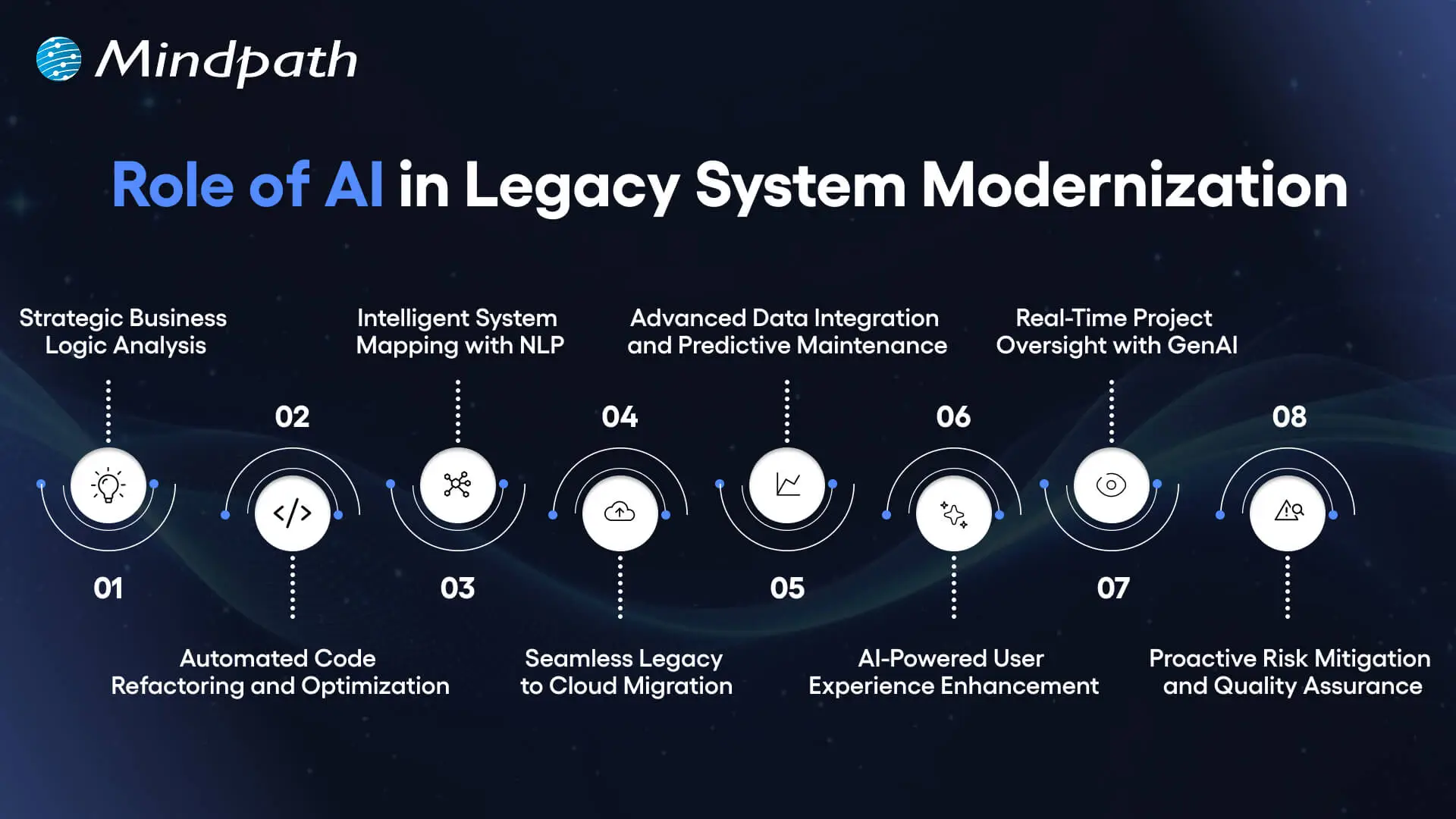
AI-driven legacy system modernization is reshaping how organizations update and optimize outdated systems. Here are the roles of AI-driven legacy system modernization in transforming legacy operations efficiently.
role of ai in legacy system modernization

1. Strategic Business Logic Analysis

AI-driven legacy system modernization starts by uncovering hidden business logic. It plots dependencies and decision rules. Modernization becomes smarter and data-driven, and teams are given a clear understanding.

2. Automated Code Refactoring and Optimization

AI rewrites the old code to new cloud-ready codes. Refactoring is faster, fewer errors in the system, and the system itself is much better with generative AI.

3. Intelligent System Mapping with NLP

Natural language processing transforms the complex old code into canned knowledge. Inefficiencies and bottlenecks are promptly found and assist in accelerating modernization.

4. Seamless Legacy-to-Cloud Migration

AI-driven legacy system modernization enables smooth cloud transitions. It also re-architectures code to reflect the current architectures and best practices.

Must Read: Benefits of Cloud Migration

5. Advanced Data Integration and Predictive Maintenance

AI integrates multiple sources of data to allow a smooth integration. Predictive analytics will identify possible problems before they happen and minimize downtime and operational problems.

6. AI-Powered User Experience Enhancement

AI interprets the user behavior in order to streamline interfaces. Chatbots and virtual assistants automate the repetitive field of work making it more engaging and efficient.

7. Real-Time Project Oversight with GenAI

AI offers invaluable real-time insight into the state of modernization. Predictive analytics and automated documentation keep the stakeholders updated and project on schedule.

8. Proactive Risk Mitigation and Quality Assurance

AI reduces the human factor and promotes uniformity. Modernization with structures and low risk can have safety nets that are provided through automated testing and monitoring.

Looking to create a clear path for modernization powered by AI and automation? Check out the legacy modernization roadmap to organize your approach effectively.

Ready to Transform Your Legacy Systems?

AI-driven legacy system modernization empowers businesses to update old systems quickly and accurately. It reduces errors, lowers costs, and improves performance. Companies gain clear insights into business logic and system dependencies, enabling smarter decisions. Modernization also ensures systems stay scalable, secure, and ready to support future growth efficiently.

Mindpath legacy modernization services help organizations implement AI-driven solutions smoothly. Our team analyzes existing systems, refactors code, and enables cloud integration. We provide predictive analytics, risk mitigation, and real-time monitoring. With our services, companies can modernize legacy systems efficiently while preserving core business logic and maintaining operational continuity.
FAQs

1. How does AI-driven legacy system modernization support business growth?

AI-driven legacy system modernization helps companies scale systems to handle more data and traffic. It ensures faster decision-making, improves performance, and keeps core business logic intact. Mindpath’s services guide businesses in adopting AI to modernize efficiently and support long-term growth.

2. Can my existing legacy system work with new technologies after modernization?

Yes. AI-driven legacy system modernization enables integration with cloud platforms, IoT, and modern applications. Mindpath’s legacy modernization services ensure your system becomes compatible with emerging technologies while maintaining stability and operational continuity.

3. How does modernization impact overall operational efficiency?

Modernization reduces manual work, shortens upgrade timelines, and minimizes errors. By applying AI-driven legacy system modernization, companies achieve faster operations, lower costs, and higher system reliability. Mindpath helps organizations implement these efficiency improvements effectively.

4. What technical steps are involved in AI-driven legacy system modernization?

AI maps business logic, automates code refactoring, analyzes dependencies, and predicts potential failures. Tools like generative AI and NLP convert complex legacy code into modern, cloud-ready formats. Mindpath applies these techniques to ensure smooth, accurate modernization.

5. How does AI help in risk reduction during modernization?

AI identifies vulnerabilities, monitors system performance, and flags potential failures early. AI-driven legacy system modernization reduces errors and ensures consistent updates. Mindpath’s services integrate these safeguards, creating structured, low-risk modernization projects.

Related Post

Discover the key factors influencing software development costs and how to optimize your budget. Learn how Mindpath can help.

Related Post

ReactJS Developer Hiring Costs in New York
Hiring a ReactJS developers in New York involves several pricing considerations, including expertise level, project complexity, and engagement approach. The cost of employing a freelancer, in-house developer, or outsourcing to an agency varies greatly. Understanding these aspects allows you to efficiently manage your budget and select the best staff for your project. Here’s an overview of the major factors that determine the cost of hiring ReactJS developers in New York.

1. Experience Level

The cost of hiring a ReactJS developer in New York varies according to their expertise level. Entry-level developers often charge between $60 and $80 per hour, making them an excellent alternative for modest tasks. Mid-level developers, with greater hands-on expertise, charge between $80 and $120 per hour. Senior developers, who have substantial experience with React and complicated application development, may charge between $120 and $180 an hour. While senior developers are paid more, they deliver high-quality, scalable, and optimized solutions that save time and money in the long term. Choosing the appropriate expertise level is determined by your project’s objectives and budget.

2. Engagement Model

The engagement model you choose affects the price of hiring a ReactJS developer in New York. Freelancers charge between $50 to $120 per hour, providing flexibility but less consistency for long-term work. In-house developers make $90,000 to $150,000 per year, offering specialized assistance but incurring additional expenses like perks and office space. Agencies charge $100 to $200 per hour and provide a team of professionals for end-to-end development. Each model has advantages and disadvantages, so firms should evaluate project duration, complexity, and money before making a selection.

3. Project Complexity

The complexity of your ReactJS project has a direct influence on development expenses. Simple applications, such as basic web pages, cost between $5,000 and $15,000. Medium-complexity projects, such as bespoke dashboards or eCommerce websites, cost between $20,000 and $50,000. Highly complicated programs, such as business software or AI-powered platforms, might cost more than $100,000 owing to additional functionality, API interfaces, and security needs. More sophisticated projects necessitate developers with greater skill, raising expenses. Identifying your project’s complexity allows you to budget more wisely while also hiring the proper ReactJS talent for a scalable and efficient solution.

4. Location and Market Demand

The location and market demand in New York have a substantial impact on recruiting expenses. As a tech hub, New York has a strong demand for ReactJS engineers, resulting in higher wage expectations. Local developers often make $90,000 to $150,000 per year in-house, or $100 to $200 per hour as top freelancers and agencies. To cut expenses, several organizations are exploring recruiting remote workers from Eastern Europe or Latin America, where competent engineers are more affordable. While local developers make cooperation simpler, employing experienced remote workers can be a cost-effective choice without sacrificing quality.

Looking for expert ReactJS developers in New York? Mindpath, offers top-tier talent for your project, whether you need freelancers, in-house experts, or a full development team. We deliver cost-effective, high-quality solutions tailored to your needs. Let’s build something great together!

Contact us today

Discover the ultimate guide to hiring Node.js developers in London. Learn about the skills, benefits, and cost factors involved in finding the right talent for your project.
top digital transformation trends

In the digital world, new digital technologies are emerging at a rapid pace. It is imperative for business entities operating in diverse industries and sectors to familiarize themselves with the top digital transformation trends in 2026. The global spending on digital transformation is likely to touch USD 3.9 trillion by the year 2027. It highlights the bright future of digital transformation.

In order to stay ahead in the competitive business space, you need to keep a tab on the key trends that contribute to digital transformation for businesses. The insight into these trends can surely guide your business towards a path of innovation and creativity. Let us explore some of the chief trends that can influence the trajectory of your business in 2026.

Looking to use the digital transformation trends practically in your business operations to enhance performance? Contact us to get personalized advice on how to implement these trends successfully.

Major Digital Transformation Trends in 2026

Businesses need to familiarize themselves with major digital transformation trends that are dominating in 2026. Such trends can create new opportunities for businesses to stay ahead in their industries. The top digital transformation trends include:

1. Rapid Adoption of Generative AI

The emergence of generative AI has certainly broadened the boundaries of Artificial Intelligence. In fact, you cannot ignore AI and automation in digital transformation today. By leveraging generative AI for business, they have the amazing opportunity to redefine personalization. Moreover, by making use of generative AI capabilities, it has become possible for businesses to automate the content creation process.

It is undoubtedly among the top trends that are catching up among businesses. You can strategically integrate generative AI elements to showcase your commitment to innovation. In the future, as generative AI further matures, businesses can transform their existing workflows as well as processes.

2. Boosting Efficiency through Cloud Computing

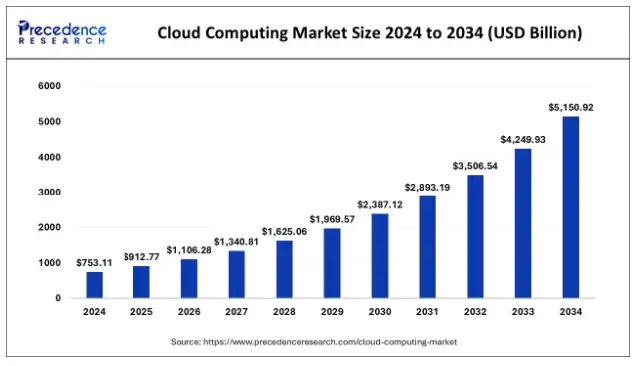
Cloud computing is certainly among the top enablers of digital transformation for businesses at present. Businesses need to keep track of the latest cloud computing trends in 2026 so that they can improve their productivity. Moreover, it can also create an opportunity for businesses to minimize their overall costs.

Businesses can consider adopting a hybrid cloud infrastructure. It will enable them to ensure high portability, IT agility, and vendor-related flexibility. Businesses cannot ignore the strategic relevance of cloud computing technology in their digital transformation journey. It can play a catalytic role by fostering innovation for businesses.

3. Rising Adoption of Mobile Technologies

While discussing the topic of digital transformation, one cannot omit mobile technologies. Instead, it is among the top digital transformations in IT that one can come across. Today, the reliance on mobile is expanding among customers. This trend has automatically been driving digital transformation initiatives among businesses today.

Regardless of the industry in which businesses operate, it is essential for businesses to develop mobile apps. By doing so, the communication between businesses and their potential and existing customers can be simplified. It can certainly redefine the overall experiences of customers. It can even give rise to new opportunities for businesses to transform the customer journey.

4. Increased Focus on Cybersecurity

In the highly dynamic and volatile cyberspace, businesses have started refocusing on cybersecurity aspects. The rapid adoption of new types of technologies has automatically escalated cybersecurity concerns for businesses as well as customers. This is because malicious actors such as cybercriminals and online hackers have been using sophisticated techniques to compromise the security of legitimate users online.

To prepare themselves in the evolving cybersecurity space, businesses have started prioritizing their cybersecurity preparedness. Modern businesses are adopting new cybersecurity measures and interventions to strengthen their cybersecurity posture. This specific trend is likely to gain further prominence in the evolving digital landscape.

Wondering how artificial intelligence is reshaping security in the digital era? Check out AI in cybersecurity to learn how intelligent threat detection and automation are transforming protection strategies in 2026.

5. Shift Towards Data-Driven Business

In the contemporary business world, the role of emerging technologies in digital transformation is surely instrumental. It has also created an opportunity for businesses to shift towards a data-driven approach. Today, businesses are relying on concrete data and facts to make decisions. Such a shift has undoubtedly shown the high value of rich and insightful data for businesses.

By relying on real-time and accurate data, it has become possible to respond to the evolving needs of customers promptly. Furthermore, it has also empowered businesses to adapt to the dynamic business climate and make cautious and well-informed decisions. It is definitely a major source of competitive advantage for businesses in the current times. This particular trend certainly holds the promise to redefine the journey of businesses as well as their customers.

6. Growing Popularity of Agentic AI

Although the concept of Agentic AI is in its nascent stage, it has captured the attention of one and all. In fact, this novel technology holds the promise to become a cornerstone of digital transformation for modern businesses. By integrating agentic AI, businesses can automate repetitive tasks. Furthermore, this technology can enable businesses to optimize their overall decision-making process.

Even though Agentic AI is still evolving, it has started to impact several industries and businesses. As such systems have a high degree of autonomy, they can make important decisions with little human intervention. It is certainly among the top emerging technologies in digital transformation that businesses must focus on.

7. High Expansion of Edge Computing

Edge computing is a novel concept where data processing and data storage are brought closer to the source of data. This approach has been gaining considerable momentum in the business world today. This is because it can give rise to a host of benefits for businesses in the form of reduced latency, better real-time responsiveness, and reduced use of bandwidth.

In the competitive business landscape, edge computing certainly acts as a vital source of advantage for businesses today. By leveraging the novel technology, businesses can carry out their operations in a more reliable manner. Moreover, it also creates the opportunity for businesses to save costs by reducing the amount of data that is transmitted to the cloud.

Strategic Importance of Digital Transformation

In the prevailing business environment, it is imperative for businesses to familiarize themselves with the latest digital transformation trends for 2026. By being aware of the emerging technologies, you can strategically deploy appropriate digital technologies to advance towards your digital transformation journey.

Digital transformation is of high strategic importance for entities since it can boost efficiency, promote automation, and improve the experience of customers. Moreover, it can foster innovation, which is a must for contemporary businesses today. By leveraging digital transformation for business growth, you can ensure that your business can effectively adapt to the evolving business climate. It can serve as the ultimate pathway that can help businesses achieve sustainable growth in the digital age.

Wondering how digital trends drive real business impact? Discover digital transformation for businesses to see how companies are evolving in 2026.

Final Words

In the 21st century, digital technologies have been influencing how business entities operate. In order to adapt to the rapidly evolving business setting, it is a must for businesses to keep a tab on the top digital transformation trends. A broad range of trends has been identified, including the rapid adoption of Generative AI, leveraging cloud computing, rising use of mobile technologies, increased focus on cybersecurity, and a shift towards data-driven business. Similarly, businesses are also focusing on novel technologies like Agentic AI as well as edge computing to boost their capabilities.

As the strategic relevance of digital technologies is immense, businesses must choose a top service provider that can help them advance in their digital transformation journey. Businesses must consider the innovative solutions of Mindpath to stay ahead in the digital transformation race. The modernization and digitalization of solutions can surely help businesses thrive in the technology-driven business world.

benefits of devops

While building software, just think that the developers and the operations teams are working like a well-coordinated crew, being fast, smooth and always on the same page. Isn’t it an interesting combination? Well, that’s the power behind embracing the benefits of DevOps. It is a new method to simplify your software process, in a way that will help teams work more effectively in an increasingly fast-paced digital world.

As we approach 2026, DevOps continues to evolve the way businesses build and run software. DevOps is not just a fast way to deliver software; it is a cultural approach that allows for speed, scale, agility, and reliability. This blog will look at how DevOps is rewriting the development process and why it is now essential for progressive teams. 

Are you looking to implement DevOps in your organization? Mindpath provides customized solutions to help teams speed up the development process and reach quantifiable goals.

What is DevOps?

DevOps refers to the collaboration of development and IT operations teams working together for the software development processes. It helps them to build, test as well as launch software faster and smoother. The major idea behind DevOps is better teamwork, faster delivery, and fewer problems during the software process. 

Even though it is not a tool or a product, it often includes using helpful technologies such as cloud platforms, containers and real-time communication tools. A big part of it is CI/CD, which stands for continuous integration and continuous delivery. This helps teams update software more often without slowing down. With DevOps, both developers and operations teams can share tasks, improve quality, and make sure the final product reaches users quickly and safely. 

How Does DevOps Work?

DevOps works by bringing development and operations teams together to make software faster and more reliable. The process follows a cycle that includes planning, coding, building, testing, releasing, deploying, operating, monitoring, and collecting feedback. Each step is connected to keep the work smooth and continuous. What is the main purpose of DevOps? It is to create software that meets user needs, runs well from the start, and is delivered without delays. 

To support this, teams use DevOps tools like automation platforms, monitoring systems, and CI/CD pipelines. These tools help developers work independently and speed up tasks that used to take longer. For example, with continuous integration, developers can update shared code several times a day and quickly catch bugs. Teams also follow shared rules for testing and quality, so everyone stays on the same page. 

Planning to modernize your DevOps approach using automation and stronger safeguards? Check out our blog on DevSecOps to learn why automated security integration is essential for speed, stability, and resilience.

What are the Key Benefits of DevOps?

Adopting DevOps brings real improvements to how teams build and deliver software. The DevOps benefits focus on making the development process more efficient, reliable, and easier to manage. Let’s have a look at some of it: 

top benefits of devops

1. Lower Costs

Combining updates and maintenance in one process helps teams work more efficiently. DevOps reduces the need for last-minute fixes and wasted effort. This saves money and helps teams do more with the same resources.  

2. Higher Team Productivity

Open communication and fewer repeated tasks let teams focus on real progress. Everyone knows what to do and can work on high-value goals. As a result, productivity rises, and team members feel more involved.  

3. A More Stable Work Environment

DevOps helps create a calmer and more organized workplace by reducing the pressure of constant changes. Teams can handle updates with ease, due to smoother processes and clear communication. This balance helps everyone stay focused and productive. 

4. Faster Delivery

With DevOps, updates and new features can be launched more quickly. DevOps for business helps in meeting customer needs faster and staying ahead of the competition. Streamlined deployment also helps with fewer delays and more consistent results. 

5. Better Product Quality

Frequent feedback and testing throughout development help improve the final product. DevOps uses automation to catch up on problems early, before they grow. This keeps the focus on delivering quality and reduces the need for rework. 

Must Read: DevOps Trends 

6. Fix Issues Quickly

DevOps makes it easier to detect and solve issues early. Smaller releases and constant monitoring help teams act fast when something goes wrong. This keeps systems running smoothly and reduces downtime. 

7. Greater Flexibility

DevOps supports teamwork across different departments, helping companies respond quickly to change. Breaking down barriers between teams encourages flexibility in how work gets done. This leads to quicker decisions and faster progress. 

8. Frees Up Space for Innovation

When tasks like testing and deployment are automated, teams have more time for creative thinking. Developers can focus on building new ideas instead of repeating the same steps. This makes work more exciting and leads to better solutions. 

9. Guarantees Continuous Updates

DevOps supports a smooth flow of updates and new features with every release. Automation and teamwork make sure each change is tested and delivered quickly. This gives users regular improvements while keeping everything stable. 

10. Minimal Mistakes

Frequent code releases and testing help teams catch up with problems early. This keeps software quality high and prevents bigger issues later on. It’s a key benefit of DevOps that helps teams move forward with confidence. 

Aiming to enhance operational efficiency and reduce development risks? Check out our blog on DevOps Challenges and Solutions to discover proven approaches that improve performance, stability, and cross-team cooperation.

DevOps Best Practices

Following the right approach is key to getting the most out of DevOps. It helps teams collaborate better, improve software quality, and speed up delivery. Here are some of the most effective DevOps best practices to consider: 

1. Build a Culture of Trust and Teamwork

To make DevOps work well, teams need to feel safe to share ideas and learn from mistakes. When there is trust and open communication, collaboration becomes much easier. Breaking down walls between departments helps everyone work toward a shared goal. A culture of trust and empathy makes it easier to adopt DevOps smoothly.

2. Continuous Integration and Delivery

CI/CD DevOps practices involve adding small code changes frequently to a shared space. This helps teams spot issues early and keep the code clean. Once the code is tested, it moves into production smoothly through continuous delivery. This process saves time and gives developers confidence when releasing updates.

3. Automate Testing Early On

Automated testing is a key part of a strong CI/CD pipeline. Instead of waiting for manual tests, automated tests run every time a change is made. These tests can include everything from unit to load testing, depending on your needs. This helps reduce bugs and makes sure the software stays reliable.

4. Track the Right Metrics

To keep improving, teams need to measure what matters. Metrics like deployment speed, failure rates, and time to fix issues give a clear picture of performance. Each team may focus on different metrics based on their goals. It’s also important to collect logs and monitor systems to quickly fix problems and improve how everything runs.

5. Automate Repetitive Tasks

Manual tasks can slow down development and lead to mistakes. Automating these tasks speeds things up and keeps results consistent. It also frees up teams to focus on more valuable work. A reliable automation process adds confidence and improves overall efficiency.

Planning to strengthen your software delivery lifecycle? Explore our blog on DevOps vs DevSecOps to understand how shifting from simple automation to integrated security can elevate speed, reliability, and protection.

Ready To See How DevOps Can Boost Your Business?

The benefits of DevOps include enhanced collaboration, faster software delivery, and improved product quality. It also reduces costs while fostering a stable and efficient work environment. Through automation and continuous feedback, teams can quickly adapt and respond to changes, making DevOps a vital approach for building reliable software in today’s dynamic digital landscape. 

At Mindpath, we specialize in helping organizations successfully implement DevOps practices. We focus on automating processes, strengthening team collaboration, and accelerating software delivery with quality and security. Our expert guidance ensures your DevOps transformation aligns with your business objectives, enabling smoother and more efficient software development. 

Frequently Asked Questions

1. How can DevOps help a business recover faster from unexpected failures?

DevOps practices, like automated testing, monitoring, and CI/CD pipelines, allow teams to detect and fix issues early. Quick rollback mechanisms and real-time alerts reduce downtime, ensuring the business can recover faster while maintaining service continuity for customers.

2. Can adopting DevOps change the way teams collaborate beyond development and operations?

Yes. DevOps fosters cross-functional collaboration, breaking silos between teams like QA, security, and product management. Shared responsibility, transparent workflows, and continuous feedback enhance coordination, resulting in faster decision-making and smoother project delivery across the organization.

3. How do the benefits of DevOps extend to customer experience?

DevOps accelerates release cycles, enabling frequent updates and faster bug fixes. Continuous monitoring ensures software stability, while automation reduces errors. Together, these practices deliver a reliable, responsive, and high-quality user experience that aligns with evolving customer expectations.

4. What is the role of automation in reducing operational risks within DevOps?

Automation handles repetitive and error-prone tasks such as deployments, configuration management, and testing. By minimizing human intervention, it lowers the risk of mistakes, ensures consistency across environments, and enhances overall system reliability, even under high-demand scenarios.

5. How can DevOps support businesses preparing for rapid growth or scaling?

DevOps enables scalable infrastructure through containerization, microservices, and cloud integration. Continuous monitoring and automated deployment pipelines allow applications to handle increasing traffic without performance degradation, making growth smoother and reducing technical bottlenecks as demand rises.