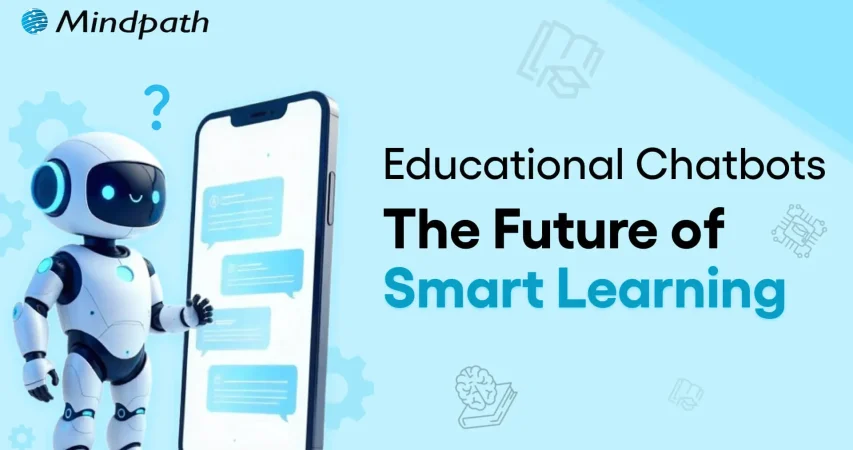
Educational Chatbots: How AI is Transforming the Learning Experience 

Join our Newsletter!

Featured Posts

Support Is One Click Away

Home

Educational Chatbots: How AI is Transforming the Learning Experience 

educational chatbots

Educational Chatbots: How AI is Transforming the Learning Experience 

The radical transformation of the education sector is clearly visible in how classrooms have changed along with the approaches for teaching. With the arrival of solutions like educational chatbots, the education landscape is shifting gradually towards innovative approaches. You can rely on the conversational AI tools to get a completely new perspective on education. Learners can get personalized and engaging experiences, while educators can use AI chatbots to reduce their administrative burden.

In addition, chatbots can assist in providing instant feedback, guiding students through complex concepts, and supporting collaborative learning even outside the classroom. They also help institutions manage routine queries and streamline processes, giving teachers more time to focus on teaching. Let us learn more about the impact of AI chatbots on the learning experience. Let us learn more about the impact of AI chatbots on the learning experience.

Looking to enhance customer engagement with a personalized AI solution? At Mindpath, we offer custom chatbot development services that combine advanced AI with seamless system integration.

Significance of Chatbots in Education

The primary design of chatbots in the domain of education focuses on conversational AI that can interact with students, educators and administrators. The most important highlight of such chatbots is that they learn from interactions with students and understand context better to provide relevant responses. Chatbots work as a learning bot which can answer your simple queries as well as complex questions from subjects in your curriculum. The integration of chatbots in different use cases in education has showcased proof of their transformative potential.

You can understand the importance of chatbots in education from the list of benefits they have to offer. The true capabilities of chatbots focus on personalizing the learning experience by providing personalized content and recommended resources for each student. Educators can also achieve better student engagement with chatbots alongside addressing the challenges in administrative processes. It is important to note that almost 75% of educators acknowledge the potential of AI to transform learning through chatbots and other solutions.

Unraveling the Utility of Chatbots for Education

The education industry faces multiple challenges ranging from overcrowded classrooms to shortages of teaching staff and changes in learning preferences. The combination of artificial intelligence and education can serve the most effective solutions to these challenges. Chatbots powered by artificial intelligence are the best examples of using AI to revolutionize education. You must know that chatbots are no longer the traditional bots that used a predefined set of rules to provide answers.

Chatbots have become sophisticated AI partners who can adapt to diverse learning styles, offer instant feedback, and stoke the curiosity of learners. The following sections can help you understand how chatbots are the next big thing for the education industry.

Wondering how chatbots create measurable value beyond just answering student queries? Discover the powerful advantages outlined in our guide on the benefits of chatbots and see how they drive engagement and efficiency.

1. No More One-Size-Fits-All Learning

The most noticeable advantage of any educational chatbot app or platform is the assurance of personalized learning. Traditional classrooms had to face the biggest problem in catering to the learning needs of each student. Teacher could not create lessons that could align with the learning style, pace and knowledge of all students. AI chatbots can serve as your personalized tutor and offer multiple benefits that build a new perspective on the learning experience of students.

Chatbots can adapt to every learner and make changes in the depth, difficulty and description of concepts in lesson content. If students experience troubles in understanding specific topics, then chatbots can provide additional explanations. Chatbots will ensure that no one in the classroom is left behind in the learning journey. AI chatbots analyze their interactions with learners to discover their strengths and weaknesses.

Another distinctive reason to trust the use of AI in education through chatbots is the ability to cater to diverse learning styles. For instance, some learners may learn better from diagrams and videos while others may benefit from speech synthesis or interactive simulations. Multilingual students can rely on chatbots with NLP capabilities to break down language barriers in education.

2. Learning outside the Classroom

The conventional viewpoint on education paints the classroom as the place where you do all the learning. Interestingly, no one ever bothered to emphasize the fact that most of the learning in the life of a person happens outside the classroom. Teachers have their limits and educational institutions cannot function beyond a specific time. The applications of AI in education make learning outside the classroom a more exciting experience.

Let us assume that a learner comes across an important question at midnight while studying for an exam. Chatbots can help in finding the most relevant answer to the question with detailed explanations. As a result, learners in different time zones or with other responsibilities can learn whenever they want. Learners can also rely on chatbots as smart assistants for help with their homework.

AI chatbot can not only help students with their homework but also streamline administrative processes. It plays a crucial role in empowering the administrative staff to focus on more complex issues. The impact of chatbots outside the classroom can open more prospects to improve the learning experience of every student.

Must Read: Conversational AI Chatbots

3. Fostering Student Engagement

The next prominent aspect that proves the utility of edbot AI solutions is their ability to encourage student engagement. Imagine the level of frustration students have to go through as they sit for endless hours through boring lectures. How far could a student go with the habit of rote memorization? Chatbots in the field of education can solve this problem by ensuring interactive and dynamic learning experiences.

You should know that most of the chatbots use gamification elements such as interactive quizzes, points, leaderboards and badges. It will ensure that learning will become an adventure for every student and encourage them to participate actively in the lessons. The interactive dialogue with chatbots will also encourage student to ask questions and think differently rather than just receiving information.

The impact of AI chatbots on student engagement is also visible in the advantages of simulations. Chatbots can create immersive simulations that boost student engagement in different disciplines. For instance, medicine students can practice diagnosis of virtual patients while engineering students can repair virtual machines. The risk-free environment not only fosters skill development but also promotes student engagement.

4. Serving as Teammates of Teachers

Educators have the biggest responsibility in the world as they nurture young minds who would build the world’s future. The consistent evolution of education trends has created significant challenges for educators in different educational contexts. Whether it is a school or a college, teachers have been experiencing various limitations that affect their efficiency and productivity. Chatbots can solve most of the challenges for educators through automation of routine tasks such as grading assignments.

Teachers can use AI chatbots for creating personalized lesson plans and content for learning materials. The most notable education chatbots examples such as Duolingo or Gradescope indicate how chatbots make the work of teachers a lot easier. As a matter of fact, educators can bookmark specific content on the internet with chatbots and save the valuable time of learners.

Educators can also use chatbots to obtain detailed insights on student performance through data on engagement patterns and difficulty. Teachers can rely on the insights to find out individual student needs and customize their teaching approaches accordingly.

Want to ensure your AI-powered learning tools also contribute directly to student acquisition? Explore the benefits of implementing a lead generation chatbot for better conversion results.

Ready to Transform Learning with AI Chatbots?

The adoption of a chatbot in education institutions can bring a wide range of benefits for students, educators and the institution itself. Chatbots are the most innovative solutions to the biggest challenges in education, such as lack of teaching staff, administrative overheads and student disengagement. While most people believe that chatbots could work only as an AI teaching assistant, they have diverse functionalities. You must know how AI chatbots personalize the learning experience of student and enable automated grading of student assignments.

At Mindpath, we provide AI development services to help institutions design and implement intelligent chatbots tailored to their unique educational needs. Our chatbot solution enable students to learn anytime, anywhere, with personalized support that adapts to each learner’s pace and style. They also help educators reduce administrative tasks, engage students more effectively, and focus on teaching. So, partner with Mindpath today to transform the learning experience for both students and teachers.
Related Post

Discover how emerging technologies like AI, social media, and data analytics are transforming small businesses, helping them grow, innovate, and stay competitive.

Related Post

top digital transformation trends

In the digital world, new digital technologies are emerging at a rapid pace. It is imperative for business entities operating in diverse industries and sectors to familiarize themselves with the top digital transformation trends in 2026. The global spending on digital transformation is likely to touch USD 3.9 trillion by the year 2027. It highlights the bright future of digital transformation.

In order to stay ahead in the competitive business space, you need to keep a tab on the key trends that contribute to digital transformation for businesses. The insight into these trends can surely guide your business towards a path of innovation and creativity. Let us explore some of the chief trends that can influence the trajectory of your business in 2026.

Looking to use the digital transformation trends practically in your business operations to enhance performance? Contact us to get personalized advice on how to implement these trends successfully.

Major Digital Transformation Trends in 2026

Businesses need to familiarize themselves with major digital transformation trends that are dominating in 2026. Such trends can create new opportunities for businesses to stay ahead in their industries. The top digital transformation trends include:

1. Rapid Adoption of Generative AI

The emergence of generative AI has certainly broadened the boundaries of Artificial Intelligence. In fact, you cannot ignore AI and automation in digital transformation today. By leveraging generative AI for business, they have the amazing opportunity to redefine personalization. Moreover, by making use of generative AI capabilities, it has become possible for businesses to automate the content creation process.

It is undoubtedly among the top trends that are catching up among businesses. You can strategically integrate generative AI elements to showcase your commitment to innovation. In the future, as generative AI further matures, businesses can transform their existing workflows as well as processes.

2. Boosting Efficiency through Cloud Computing

Cloud computing is certainly among the top enablers of digital transformation for businesses at present. Businesses need to keep track of the latest cloud computing trends in 2026 so that they can improve their productivity. Moreover, it can also create an opportunity for businesses to minimize their overall costs.

Businesses can consider adopting a hybrid cloud infrastructure. It will enable them to ensure high portability, IT agility, and vendor-related flexibility. Businesses cannot ignore the strategic relevance of cloud computing technology in their digital transformation journey. It can play a catalytic role by fostering innovation for businesses.

3. Rising Adoption of Mobile Technologies

While discussing the topic of digital transformation, one cannot omit mobile technologies. Instead, it is among the top digital transformations in IT that one can come across. Today, the reliance on mobile is expanding among customers. This trend has automatically been driving digital transformation initiatives among businesses today.

Regardless of the industry in which businesses operate, it is essential for businesses to develop mobile apps. By doing so, the communication between businesses and their potential and existing customers can be simplified. It can certainly redefine the overall experiences of customers. It can even give rise to new opportunities for businesses to transform the customer journey.

4. Increased Focus on Cybersecurity

In the highly dynamic and volatile cyberspace, businesses have started refocusing on cybersecurity aspects. The rapid adoption of new types of technologies has automatically escalated cybersecurity concerns for businesses as well as customers. This is because malicious actors such as cybercriminals and online hackers have been using sophisticated techniques to compromise the security of legitimate users online.

To prepare themselves in the evolving cybersecurity space, businesses have started prioritizing their cybersecurity preparedness. Modern businesses are adopting new cybersecurity measures and interventions to strengthen their cybersecurity posture. This specific trend is likely to gain further prominence in the evolving digital landscape.

Wondering how artificial intelligence is reshaping security in the digital era? Check out AI in cybersecurity to learn how intelligent threat detection and automation are transforming protection strategies in 2026.

5. Shift Towards Data-Driven Business

In the contemporary business world, the role of emerging technologies in digital transformation is surely instrumental. It has also created an opportunity for businesses to shift towards a data-driven approach. Today, businesses are relying on concrete data and facts to make decisions. Such a shift has undoubtedly shown the high value of rich and insightful data for businesses.

By relying on real-time and accurate data, it has become possible to respond to the evolving needs of customers promptly. Furthermore, it has also empowered businesses to adapt to the dynamic business climate and make cautious and well-informed decisions. It is definitely a major source of competitive advantage for businesses in the current times. This particular trend certainly holds the promise to redefine the journey of businesses as well as their customers.

6. Growing Popularity of Agentic AI

Although the concept of Agentic AI is in its nascent stage, it has captured the attention of one and all. In fact, this novel technology holds the promise to become a cornerstone of digital transformation for modern businesses. By integrating agentic AI, businesses can automate repetitive tasks. Furthermore, this technology can enable businesses to optimize their overall decision-making process.

Even though Agentic AI is still evolving, it has started to impact several industries and businesses. As such systems have a high degree of autonomy, they can make important decisions with little human intervention. It is certainly among the top emerging technologies in digital transformation that businesses must focus on.

7. High Expansion of Edge Computing

Edge computing is a novel concept where data processing and data storage are brought closer to the source of data. This approach has been gaining considerable momentum in the business world today. This is because it can give rise to a host of benefits for businesses in the form of reduced latency, better real-time responsiveness, and reduced use of bandwidth.

In the competitive business landscape, edge computing certainly acts as a vital source of advantage for businesses today. By leveraging the novel technology, businesses can carry out their operations in a more reliable manner. Moreover, it also creates the opportunity for businesses to save costs by reducing the amount of data that is transmitted to the cloud.

Strategic Importance of Digital Transformation

In the prevailing business environment, it is imperative for businesses to familiarize themselves with the latest digital transformation trends for 2026. By being aware of the emerging technologies, you can strategically deploy appropriate digital technologies to advance towards your digital transformation journey.

Digital transformation is of high strategic importance for entities since it can boost efficiency, promote automation, and improve the experience of customers. Moreover, it can foster innovation, which is a must for contemporary businesses today. By leveraging digital transformation for business growth, you can ensure that your business can effectively adapt to the evolving business climate. It can serve as the ultimate pathway that can help businesses achieve sustainable growth in the digital age.

Wondering how digital trends drive real business impact? Discover digital transformation for businesses to see how companies are evolving in 2026.

Final Words

In the 21st century, digital technologies have been influencing how business entities operate. In order to adapt to the rapidly evolving business setting, it is a must for businesses to keep a tab on the top digital transformation trends. A broad range of trends has been identified, including the rapid adoption of Generative AI, leveraging cloud computing, rising use of mobile technologies, increased focus on cybersecurity, and a shift towards data-driven business. Similarly, businesses are also focusing on novel technologies like Agentic AI as well as edge computing to boost their capabilities.

As the strategic relevance of digital technologies is immense, businesses must choose a top service provider that can help them advance in their digital transformation journey. Businesses must consider the innovative solutions of Mindpath to stay ahead in the digital transformation race. The modernization and digitalization of solutions can surely help businesses thrive in the technology-driven business world.

importance of AI Security

Artificial intelligence has grown beyond a specific technology and is working as a massive force that is reshaping our everyday lives. Among all the essential developments, generative AI has been winning the trends that can write text, create images, and simulate human communication. The market size of Gen AI is going to reach 967.65 billion by 2032 (Source). So, while generative AI unlocks a series of possibilities with automation and innovations, it comes with its own security risks as well.

Here, in this blog, we will explore the importance of AI security and address all of its essential characteristics. Through this, you can easily get clarity about the user’s fears and how to implement the techniques in real-world scenarios.

Struggling to balance innovation with AI security in the age of generative AI? Our AI development services help businesses deploy advanced AI while keeping data and systems protected.

How Generative AI has been Setting Its Strong Presence in the Market?

Generative AI defines a system that is capable of producing content. Starting from natural language text to multimedia optimization, it can do everything. Further, these systems empower a business by automating the whole process while generating insights at scale. In order to do this, it assures you of custom customer experiences like never before.

However, with great power comes great responsibility. As many organizations just rush to adopt generative AI tools, some of them might underestimate the security risks behind this adoption. Traditional AI systems were already under high pressure from cyber threats. So, adding generative AI to the list can encourage benefits as well as vulnerabilities.

Why is AI Security Important?

Many users might wonder Why is AI security important. So, AI security assures that the generative AI that powers the modern tools is protected against misuse. Further, it also keeps your system away from breaches, manipulation, and operational defects. So, AI and cybersecurity are considered to be the foundational requirements that ensure safety, reliability, and trustworthy tech adoption.

If you overlook security considerations, your organization might face risks like data leaks and unauthorized access to sensitive data. This might lead to intellectual property loss while causing you to go through severe financial and reputational damage. Moreover, poorly secured AI systems can behave unpredictably or can be easily manipulated to make the outcomes harmful.

Wondering which generative AI trends could directly impact your organization’s security strategy? Explore our insights on generative AI trends to better understand what’s driving the next wave of AI transformation.

What is the Importance of AI Security in the Age of Generative AI?

Generative AI systems are not experimental tools anymore. They precisely process sensitive data, generate content, and automate decisions while interacting with users massively. So, with the growth of their influence, the risks of security failures also increase. This is why the consequences of ignoring AI security solutions can worsen the situation.

1. AI Models Can Be Manipulated

One of the highly seen risks of generative AI is model manipulation. Attackers can feed misleading data into your systems intentionally. This causes your system to produce inaccurate and false results. In other terms, it is known as data poisoning. So, without the use of AI in security, your organization might compromise with the results unintentionally. AI security solutions can easily safeguard your customer trust while maintaining compliance.

2. Generative AI Maintains Highly Sensitive Data

Generative AI models majorly rely on huge sets of data that include internal documents, customer information, and business intelligence. In order to do this, if the following systems are not effectively secured, there is a serious risk of data leakage. Unlike traditional software, AI can easily expose patterns or fragments in the sensitive data. This makes security a critical concern from the start.

3. Cybercriminals are Using AI to Initiate Smarter Attacks

You can’t consider AI to be a defensive tool only. Cybercriminals are using generative AI to generate realistic phishing emails and bypass traditional security systems. So, your organization might face faster and more convincing attacks more than ever. However, the use of AI in security can help you detect and assess these AI-driven threats before they turn into massive attacks.

4. Unsecured AI Systems Might Offer Inefficient Decisions

Gen AI is capable of supporting major business functions like customer service, content moderation, and fraud detection. So, if such systems are not properly protected, anyone can easily manipulate them to initiate harmful decisions. AI and cybersecurity ensure the integrity of the models. Further, your organization can trust the outputs that they prioritize for strategic decision-making.

5. AI Increases the Attack Surfaces

Every AI model or dataset introduces a new potential entry for attackers. As companies deploy several AI tools across departments, the attack surface also increases rapidly. So, without strong AI security solutions, these expanded access points become challenging to monitor and prevent. Further, it leads to critical data breaches.

Must Read: Generative AI Tools for Content Creation

The Importance of AI Security in Strengthening Defense

The recent digital age has given rise to a series of risks. However, AI security has been leveraging a series of tools to fight against such cyber threats. In order to do this, the valuable combination of AI and cybersecurity has become one of the essential areas for modern IT protection.

1. Adaptive Learning

AI systems continuously improve by learning from both historic and emerging patterns. This ensures security defenses have become more proactive while identifying threats before they become significant.

2. Smarter Threat Analysis

Traditional cybersecurity tools generally struggle with the speed of today’s threats. On the other hand, the use of AI in security can increase threat detection by analyzing massive datasets in real time. This can also help you in spotting abnormal behavior that could indicate an attack.

3. Automated Response

AI has the capability to automate incident response. This reduces the chances of vulnerability and allows your security teams to prioritize strategic planning instead of regular or routine monitoring.

4. Fraud Detection and Identity Protection

AI plays a crucial role in detecting fraud and misuse. So, by continuously monitoring user behavior, access attempts, and transaction patterns, AI systems can easily detect suspicious activities. Further, it can prevent unauthorized actions.

Curious about how generative AI is reshaping modern enterprises beyond just automation? Read our in-depth Generative AI for Business guide to see how organizations are successfully integrating AI solutions. 

Key Benefits of AI Security Solutions

Sticking to AI security solutions can leverage measurable advantages beyond basic threat prevention.

1. Use of AI in security can handle growing networks and data volumes without proportionally increasing the demand for manpower and cost.

2. It gives rise to accuracy while making your team spend less time chasing issues.

3. AI maintains the same level of surveillance 24/7 and doesn’t require any human intervention or monitoring.

4. Most importantly, continuous learning allows AI to diversify alongside the emerging new types of threats.

While focusing on AI security, are you overlooking critical vulnerabilities within your core applications? Explore proven Application Security Best Practices to build a stronger, more resilient security foundation

What are Some Essential Steps to Implement AI Security Solutions?

To fully discover the benefits of AI in security, organizations need to be thoughtful about their implementation strategies. Integrating AI without a proper strategy can confuse you instead of eliminating the risks. So, follow these practices to be assured of AI strengthening your security while maintaining transparency and control.

1. Gather Efficient Data

AI systems can perform well if the data they learn from serves a purpose. On the other hand, poor or biased data might lead you towards more threat detection and false alerts. 

So, your organization must prioritize gathering clean and relevant data along with security data from the applications and user activities. Regular data analysis and verification can help your AI models to be aligned with real-world threat patterns. 

2. Consider AI for Your Active Security Frameworks

AI should precisely understand your recent security infrastructure. Multiple teams already depend upon tools like firewalls and SIEM platforms. So, AI works best when integrated into such frameworks to enhance their intelligence and responsiveness.

With AI integration with existing tools, you can improve your threat detection accuracy without damaging the established workflows. Further, this approach reduces implementation risks.

3. Continuously Test and Refine

Cyber threats evolve rapidly, and AI models can’t remain static. So, without continuous testing and assessment, even modern AI systems will fail to offer reliable results when required. 

So, it is necessary for your team to regularly audit the AI models with different types of simulations. Further, they should gather real-time feedback to fix the issues as soon as possible. Continuous improvement can help the AI system to remain accurate while understanding the emerging threats. 

Are you aware of the most common security risks affecting modern web applications today? Read this insightful guide to understand how web application security protects your digital ecosystem.

The Future of AI Security

As generative AI is becoming more powerful in recent scenarios, cyber threats will become more automated and adaptive. So, organizations that completely depend on traditional security tools are more likely to struggle. Moreover, the future is all about intelligent security systems where AI can assess the risks and respond instantly while supporting human expertise. The following shift is not about replacing people but about empowering them with tools that can match the complexity level of modern risks.

Ready to Strengthen Your Business with AI Security?

No doubt, generative AI is making security challenges more dynamic than ever. So, the importance of AI security has emerged as a critical factor to counter such cyber threats with precision. Starting from detecting threats to automating responses, AI can help you stay secure in the digital environment.

At Mindpath, we provide expert AI development services focused on AI security. Our team helps businesses deploy intelligent, secure AI solutions, safeguard sensitive data, and proactively prevent cyber threats, empowering organizations to leverage generative AI safely and confidently across all operations.

Cost of Hiring Reactjs Developers

Without a robust and engaging web presence, your business is going nowhere, and this might be a perfect reason to hire ReactJS developers. Once you know the cost of hiring ReactJS developers, you can measure the value they will bring to your web projects. Let us discover why you must know the costs of hiring React developers and the factors that influence hiring costs.

Want to adopt ReactJS in your next project? Mindpath’s ReactJS development services will provide expertise that will help you in building interactive web applications according to your business requirements.

Reasons to Focus on ReactJS

ReactJS is a component-based, open-source JavaScript library that has been the favorite pick for frontend development since 2013. It is still one of the most powerful tools for creating visually appealing UIs. Any business that thinks of hiring frontend developers should focus on ReactJS for its distinctive features. Some of the notable features of React include component-based architecture, cross-platform development with React Native, virtual DOM, and a strong community. ReactJS not only facilitates faster development but also ensures that you get web applications that offer better performance and scalability.

While hiring guides can help you pick the right talent for your teams, it is important to learn about the costs of hiring React developers. Why? Many hiring managers will believe that the cost of hiring a ReactJS developer is all about their salary. Interestingly, employers must also consider other factors, such as location and experience, along with additional costs, to determine hiring costs.

Must Read: ReactJS Developer Skills

Cost of Hiring a ReactJS Developer

Professional ReactJS developers can help you craft the best user experiences in web applications. However, the expertise of ReactJS developers comes at a cost. The search for answers to “How much does it cost to hire a ReactJS developer?” might lead you directly to salary forecasts for React developers. On the other hand, the salary is not the only thing that you must consider in the cost of hiring a ReactJS developer. The following factors will help you understand how to determine the ideal compensation for React developers in your web projects.

1. Experience of the Developer

The foremost factor that influences the salary of ReactJS developers is their experience. Junior or entry-level developers have limited professional experience and can build basic components, work on simpler tasks, and support senior developers. Mid-level developers have a better understanding of React concepts and can work on complex features alongside contributing to architecture design.

Senior developers are the top-tier talent with more than five years of professional experience and can design the whole application architecture. Senior ReactJS developers can also guide junior developers, optimize performance, and scale up web applications with ease. The estimates for ReactJS developer cost in 2025 suggest that senior developers can earn more than $150,000 per year. Similarly, junior developers can earn almost $70,000 annually, while mid-level developers can ask for $100,000 to $120,000 per year.

2. Geographical Location

Hiring managers must also take the geographical location into account while calculating the costs of recruiting React developers. Location is an important factor in determining the hiring cost as it implies variations in market competitiveness, demand for talent, and cost of living. For instance, the cost of hiring a ReactJS developer in North America will be higher than the global average. Why? You can find tech hubs like Silicon Valley and New York, along with major Canadian cities that have a higher cost of living.

The average annual salary of a ReactJS developer in North America can vary from $90,000 to $120,000. The only other competitive market for ReactJS development is Western Europe, where countries like the UK, Germany, and France seek high-quality talent. One of the best choices for a cost-effective React development solution is the Asia-Pacific region, which includes India, China, and the Philippines. The annual salary for React developers in the Asia-Pacific region is considerably lower than in Western countries.

Want to scale your application seamlessly as your customer base grows? Learn how the benefits of ReactJS development services make large-scale, high-traffic apps easier to maintain and expand.

3. Scope and Complexity of the Project

Employers must also pay attention to the scope and complexity level of their web project while calculating the hiring costs for a ReactJS developer. You may want to build simple web apps, mid-sized applications, or large-scale enterprise applications with ReactJS. Each type of project will demand a specific level of expertise, which indirectly influences the cost of ReactJS developers. For instance, junior developers can create simple applications with basic UIs or static websites with minor features.

The estimates for ReactJS project development cost might be a little higher for medium-sized applications, which will require mid-level to senior developers. Such types of applications may need custom designs, dynamic features, or integrations with third-party APIs, which call for experts and more costs. Large enterprise applications that need complex architectures and intricate state management will require senior and lead developers, thereby increasing costs.

4. Hiring Model

One of the key factors that determines the cost of hiring a ReactJS developer is the hiring model. Do you want a full-time in-house developer or a freelancer? If you hire an in-house developer to work on a full-time basis, it will cost you the most. The recruitment costs for in-house developers in the USA can vary between $5000 and $20,000 for each hire. The primary reason to hire an in-house React developer is the assurance of maximum control.

Hiring managers can opt for freelance developers or hire developers on a contractual basis to reduce costs and ensure flexibility. You should hire freelancers only when you need access to specialized skills and faster onboarding. Some employers also choose cost-effective ReactJS development services through outsourcing or dedicated remote teams. Outsourcing offers access to a vast talent pool and better options for scalability with fewer administrative setbacks.

5. Other Additional Costs

The direct salary or hourly compensation for ReactJS developers is only the tip of the iceberg. Employers and hiring managers must also pay attention to the additional costs of hiring React developers. The notable additional costs include recruitment costs, training costs, infrastructure costs, and benefits for full-time developers.

Recruitment costs include the costs of job board posting, agency fee, and the time invested in screening and interviews. Infrastructure costs point to the cost of laptops, cloud services, testing tools, and software licenses for IDEs, developer tools, and communication. Training and onboarding costs, along with benefits and perks like health insurance, stock options, and bonuses, also determine the hiring costs of React developers.

Want to ensure your next digital product is built by a partner who truly understands your business goals? Discover what matters most when choosing the right React development company for your business.

Final Thoughts

The list of answers to “What factors affect ReactJS developer rates?” reveals that the salary is not the only cost. Hiring managers can determine the salary by considering different factors such as experience, geographical location, and hiring model. The additional costs of hiring a React developer include training and onboarding costs, recruitment costs, and infrastructure costs.

The cost of ReactJS projects at Mindpath also encompasses support and maintenance without imposing additional costs. On top of it, with reliable platforms like Mindpath, you will get transparent cost estimates for ReactJS development services. Explore the most cost-effective ReactJS development solutions for your projects with Mindpath.

How much does hiring a ReactJS developer cost? Learn about factors affecting rates, and how to find the best talent within your budget.