Home

What Skills to Look for while hiring a ReactJS Developer in Canada?

What Skills to Look for while hiring a ReactJS Developer in Canada?

Lorem ipsum dolor sit amet, consectetur adipiscing elit. Ut elit tellus, luctus nec ullamcorper mattis, pulvinar dapibus leo.

Join our Newsletter!

Important to Consider When Hiring a Canadian ReactJS Developer
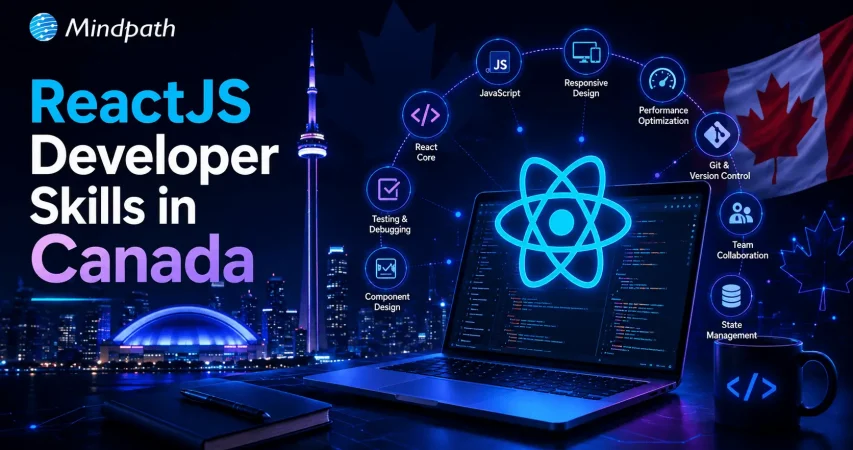
Hiring a ReactJS developer in Canada requires evaluating both technical expertise and problem-solving abilities. The ideal candidate should have a strong JavaScript foundation, in-depth React knowledge, experience with state management, and proficiency in front-end technologies. Additionally, expertise in version control, API integration, and performance optimization plays a crucial role in developing efficient applications. To ensure a successful hire, it’s essential to assess their ability to write clean, maintainable code and collaborate effectively. Below are four key factors to consider when hiring a ReactJS developer.

1. Strong JavaScript and React Fundamentals

A skilled ReactJS developer must have a deep understanding of JavaScript (ES6+), JSX, props, state, and component lifecycle methods. Proficiency in higher-order functions, closures, and asynchronous programming is crucial for building scalable applications. Additionally, a strong grasp of React hooks, context API, and functional components ensures efficient state management and UI rendering. This foundation allows developers to write optimized, reusable components and implement modern front-end development best practices, leading to faster and more maintainable web applications.

2. Proficiency in State Management and API Integration

Managing application state efficiently is crucial for complex React projects. Developers should be proficient in Redux, Context API, or other state management libraries to handle global state effectively. Experience in fetching, handling, and updating data from external APIs using Axios or Fetch API is equally important. Understanding RESTful APIs, GraphQL, and authentication mechanisms enhances their ability to build dynamic applications. These skills ensure smooth data handling and seamless communication between the frontend and backend, improving user experience and application performance.

3. Expertise in Frontend Technologies and Testing

A ReactJS developer should have a strong command of HTML, CSS, and responsive design principles to build user-friendly interfaces. Familiarity with CSS preprocessors like Sass or Less helps maintain scalable stylesheets. Additionally, experience with unit testing frameworks like Jest and React Testing Library ensures code reliability. Writing testable components minimizes bugs and enhances maintainability. Ensuring proficiency in these areas helps create visually appealing, robust applications that work seamlessly across different devices and browsers.

4. Version Control, Performance Optimization, and Tools

Version control is essential for collaborative development. A proficient ReactJS developer should have expertise in Git for managing code changes and maintaining project history. Knowledge of React performance optimization techniques like lazy loading, memoization, and efficient rendering improves application speed. Familiarity with React Router for navigation, Webpack for bundling, and accessibility best practices enhances overall development quality. These skills ensure that applications remain fast, scalable, and easy to maintain while following industry standards.

Looking for skilled ReactJS developers in Canada? Mindpath, connects you with top professionals to build high-performance web applications. Our experts specialize in React development, state management, API integration, performance optimization, and modern front-end technologies. Whether you need a dedicated team or individual talent, we have the right solution for your project. Partner with Mindpath today and hire expert ReactJS developers for your next big project!
Get in Touch Now!

Support Is One Click Away

Featured Posts

Related Post

energy efficient computing

In every digital action and decision we make, from storing information to running software, energy is consumed. The more companies leverage technology, the more they are transitioning to energy-efficient computing to lower their power usage, while reducing their environmental impact. This approach is looking at technology used in business from an energy usage standpoint but still achieving the same performance. This will help companies save money and become more responsible corporate citizens.

With pressure mounting for organizations to meet their sustainability commitments, companies are becoming greener within their technology strategies. Whether utilizing data center migrations to improve performance or selecting devices with lower energy usage, every decision counts toward a more sustainable future. This blog is going to detail how energy-efficient computing allows for long-term business success and creates technology solutions for both the environment and performance.

Ready to make your business more sustainable and cost-effective? Partner with Mindpath today to explore how our energy-efficient solutions can transform your operations!

What is Energy Efficiency in Computing?

Energy efficiency in computing is when technology is used in a way that lowers power consumption while continuing to offer good performance. Energy efficiency is often used interchangeably with the term green computing, which refers to the design and use of systems that can perform a task with less energy to lower overall electrical consumption.

In a way, energy efficiency improves the management and use of IT resources. Energy efficiency supports sustainable development through the mitigation of energy waste, reduced operating costs, and reduced environmental impact of digital systems. Green computing has a significant role in building more sustainable and responsible technology ecosystems for the future.

Principles of Energy-Efficient Computing

To build sustainable IT solutions, it’s important to follow key principles that reduce energy use without affecting performance. These principles guide the design and management of systems that are both powerful and smart.

1. Algorithm Optimization

Writing efficient code helps computers do tasks faster using less power. When algorithms are simple and well-structured, they reduce processing time and save energy naturally.

2. Efficient Hardware Design

Using devices that need less power but still work well is a big part of saving energy. This includes better-designed chips, improved memory, and smarter storage systems.

3. Power Management

Smart systems can lower energy use by adjusting power based on what the computer is doing. For example, they slow down the processor or turn off parts when they’re not needed.

4. Sustainable Practices

Using eco-friendly materials and cleaner processes helps reduce the impact of making devices. Recycling old equipment, working from home, and checking energy use regularly also support energy-efficient goals.

Curious how small businesses can leverage technology to boost efficiency and sustainability? Check out emerging technologies for small businesses to discover tools and strategies that can transform your IT operations.

Benefits of Energy-Efficient Computing

Energy efficiency in computing is becoming a key focus as digital systems continue to grow. It supports a smarter approach to technology by encouraging responsible energy use in everyday operations. Here are some of the key benefits it can offer:

1. Reduces Energy Use and Power Bills

Sustainable computing helps lower the amount of electricity used across devices and systems. By using energy-efficient computing systems and optimized processes, businesses can cut down on unnecessary energy waste. This directly leads to lower electricity bills over time. It also supports a more sustainable and cost-aware IT environment.

2. Supports a Healthier Environment

When technology uses less energy, it puts less pressure on natural resources. Responsible device use helps reduce carbon emissions and limit electronic waste. These practices also help conserve fuel and raw materials needed for power. As a result, green computing has become a key step toward protecting the planet.

3. Builds a Responsible Brand Image

Companies that follow green practices show their commitment to sustainability. Using energy-efficient computing systems sends a positive message to customers and employees. It shows the company cares about the environment and long-term impact. This can improve brand loyalty and attract people who value responsible businesses.

4. Saves Money with Smarter Solutions

Choosing energy-efficient solutions means spending less on electricity and cooling. Using energy-efficient algorithms and virtual systems helps reduce the need for extra hardware. Over time, this leads to fewer devices, lower maintenance costs, and less electronic waste. All of this adds up to significant long-term savings for companies.

5. Helps Meet Environmental Rules

Governments are putting strict rules in place to reduce energy waste and pollution. By using energy-efficient data centers and low-energy devices, companies stay in line with environmental laws. This helps them avoid fines and builds a more trustworthy business. Following energy efficiency practices also prepares companies for future regulations.

Want to stay ahead in optimizing IT infrastructure while reducing energy consumption? Explore cloud computing trends to learn how the latest cloud innovations are driving efficiency and sustainability in enterprise computing.

Want to Make Your Technology Smarter and Greener?

Energy-efficient computing is becoming essential for companies that want to grow responsibly. It helps reduce power use, cut costs, and lessen the environmental impact of digital systems. By improving how we design and manage technology, companies can still achieve high performance while using fewer resources. This shift supports long-term success and builds a stronger foundation for growth. As more organizations focus on sustainability, energy-efficient computing becomes a smart and necessary step toward a cleaner and more efficient future for everyone.

At Mindpath, we specialize in sustainable software development that helps businesses reduce energy use while keeping systems fast and reliable. We create sustainable IT solutions by using efficient coding practices, smart architecture choices, and scalable technologies that use fewer resources. Our approach helps clients lower operating costs, reduce their carbon footprint, and meet environmental goals with ease.

Whether you’re upgrading systems or starting from scratch, we design digital solutions that support both your business growth and the planet. Let us help you build software that’s future-ready and environmentally responsible.

Frequently Asked Questions

1. How can energy-efficient computing improve long-term business performance?

Energy-efficient computing helps businesses run systems smoothly while using less power. This leads to lower operating costs, better system performance, and reduced downtime. Over time, it supports consistent growth by making IT operations more reliable, cost-effective, and aligned with sustainability goals.

2. What are some simple ways to start energy-efficient computing in daily operations?

Energy-efficient computing can start with small steps like using energy-saving devices, optimizing software, and turning off unused systems. Moving to cloud-based solutions and monitoring power usage regularly also helps businesses gradually reduce energy consumption without affecting daily performance.

3. Does energy-efficient computing affect system speed or performance?

Energy-efficient computing is designed to maintain or even improve performance while reducing energy usage. Optimized algorithms, smart hardware, and better power management ensure systems run efficiently without slowing down, making it possible to achieve both sustainability and high performance together.

4. How can businesses measure the impact of energy-efficient computing?

Businesses can measure impact by tracking energy usage, system performance, and cost savings over time. Tools that monitor power consumption and efficiency levels provide clear insights. These metrics help companies understand improvements and make better decisions for future technology investments.

5. Why is energy-efficient computing important for future-ready businesses?

Energy-efficient computing supports long-term sustainability by reducing environmental impact and operational costs. As regulations and awareness grow, businesses that adopt efficient practices stay ahead. It helps build a responsible image while ensuring systems are prepared for future technological and environmental challenges.

Discover how energy-efficient computing can reduce costs, helping businesses create a sustainable, future-ready infrastructure.
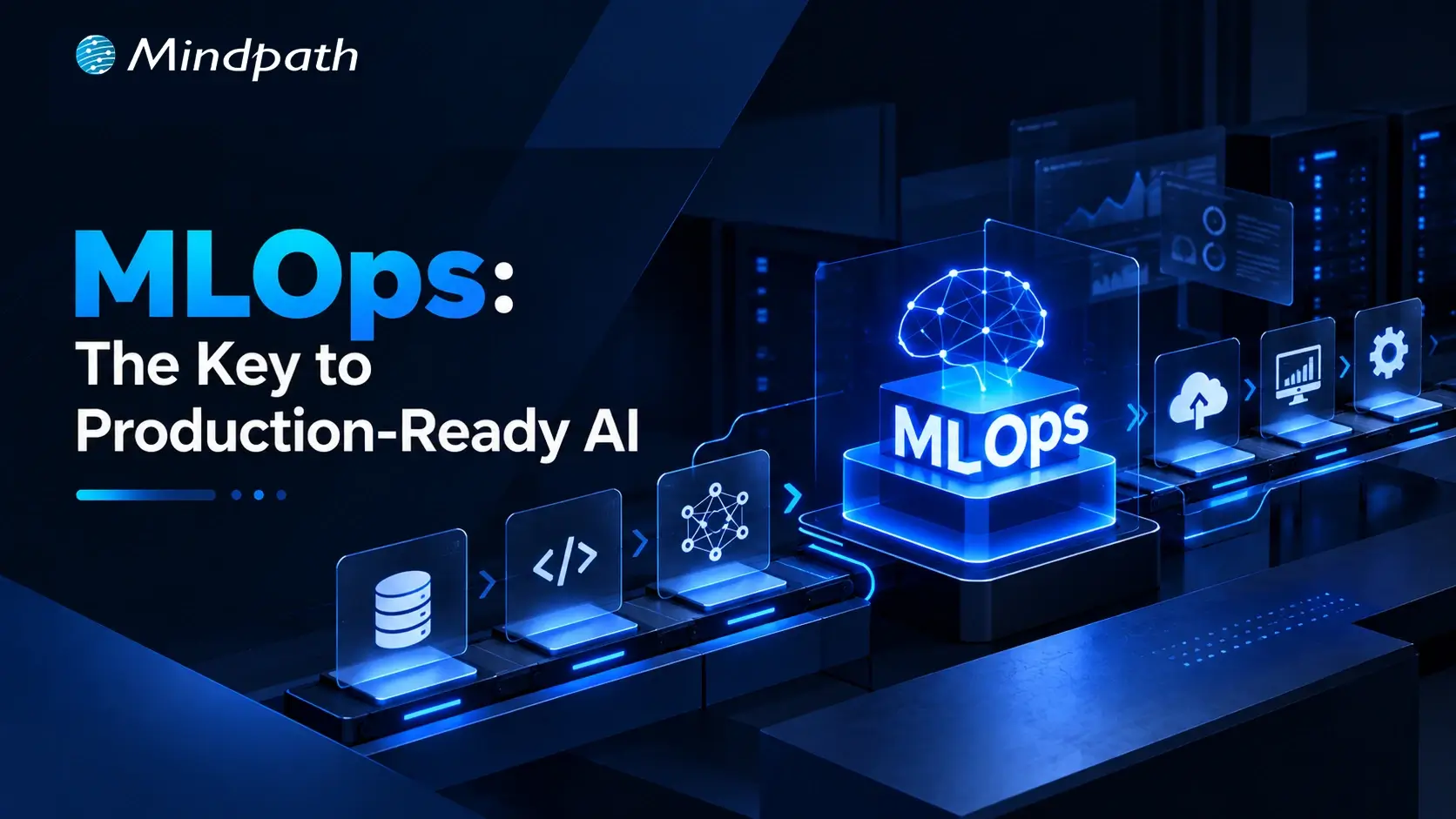
MLOps essentials

The global artificial intelligence market size is expected to reach USD 2480.05 billion by 2034. Yet many organisations fail to translate such huge investments in favour of their business values. Many generative AI projects are going to lose their efficiency recently due to challenges like poor data quality.

Further, inadequate risk controls have been increasing the costs. So, the major issue lies in filling the gap between predictive models and implementing them into your business workflows. This is where the relevance of MLOps essentials comes into the picture. MLOps have the capacity to align the life cycle of machine learning while incorporating continuous monitoring.

Looking to integrate AI into your existing systems without disrupting operations? At Mindpath, we offer AI development services that ensure smooth implementation and measurable results.

What is MLOps?

MLOps, or Machine Learning Operations, is a set of practices that unifies machine learning model development, deployment, and operations. By combining ML with standard software DevOps principles, it automates and streamlines the entire ML lifecycle, ensuring models remain accurate, scalable, and reliable in real-world production environments.

Unlike traditional ML development, where models were often operated in a single system, MLOps treats the complete lifecycle of ML as a software product lifecycle. This means you can be assured of better collaboration, reproducibility, scalability and automation.

  • MLOps can help your team take ML models from experimentation to production level safely and quickly.
  • It manages the models reliably over time and collaborates across engineering, data science and operations teams.

How MLOps Essentials Overpowers the Traditional DevOps while Solving Leading ML Challenges?

MLOps and DevOps take complete responsibility for automating processes while encouraging collaboration between teams. But MLOps is capable of tackling unique challenges of machine learning that DevOps can’t necessarily address.

  • In traditional software systems, once you deploy your app, it is mandatory to work within a stable environment with minimal challenges.
  • However, ML models heavily depend on data and need continuous updates and validation when new data enters.
  • DevOps prioritises managing the software code and the infrastructure. On the other hand, MLOps essentials include handling the lifecycle of models that can degrade over time.
  • This involves addressing many major issues like data drift, model degradation, and model performance. All of these risks need periodic retraining and real-time assessment.

Planning AI initiatives but unsure where to start? Explore the complete AI roadmap guide to understand how to structure, prioritize, and scale your AI initiatives effectively.

What are Some Core Components of an MLOps Architecture?

The MLOps architecture can differ as per your organisational requirements. Some of the major components are here in this section for a complete reference.

1. Data Layer

This involves storage, data ingestion, preprocessing and versioning. As your models completely depend on data, tracking and handling their quality is necessary.

2. Development Environment

This is where the data scientists create and train models using their notebooks or integrated development environments. So, your experiments must be reproducible. This means the data, code and the environment settings are versioned.

3. Model Registry

This works as the main repository where the trained models are stored along with the metadata like deployment status. This feature can ensure you of data governance.

4. Monitoring

Once you complete the deployment process, your models must offer you accurate predictions. Moreover, precise and continuous assessment can offer you better performance while predicting potential defects. So, your model can also be relevant in the real-world usage.

5. Data Regulations

The regulatory efforts have been broadening due to major AI usage. So, your organization must prioritize relevant rules. Following the relevant practices can help your model serve trustworthiness.

Facing challenges in optimizing large models for scalable deployment? Learn how Low-Rank Adaptation streamlines fine-tuning with minimal resource overhead. 

List of Top MLOps Tools You Should Adopt in 2026

Let us further highlight some of the best MLOps tools for your model development and monitoring. All these tools have the ability to simplify and streamline the ecosystem of your machine learning.

1. LangChain

It is a versatile and effective framework developers use to initiate apps powered by language models. It leverages several components that enable you to build, deploy and monitor context-rich applications. The following framework consists of some major components like libraries, templates, LangServe and LangSmith.

2. Qdrant

This is one of the best MLOps tools in 2026 that is taking the market by storm. It is an open-source search engine that offers a production-ready service with a viable API. Moreover, it allows you to store, manage and search the vector embeddings. As it is written by Rust, it remains extremely quick and efficient even you work with it under high load.

3. MLFlow

MLFlow is an open-source tool that enables you to handle the core parts of the ML lifecycle. Developers majorly use it for experiment tracking. However, you can also utilise it for deployment, reproducibility, and model registry.

4. Prefect

When talking about MLOps essentials, this tool leads the competitive edge. This is a modern data stack, people use for coordinating and monitoring the workflows across multiple applications. It is a light-weight and open-source tool created for an end-to-end MLOps pipeline.

Must Read: Low Code Developement 

What are Some Benefits of MLOps Service?

The MLOps market size is going to extend to USD 25.93 billion by 2034. So, the adoption of MLOps has been increasing efficiently while fueling model deployment and automating monitoring. Businesses now understand that adopting MLOps can bring them a series of benefits, as given below.

1. Better ROI

As per the reports from Deloitte, organisations using MLOps technology claim an average ROI of 28% with better returns. This remains consistent with the growing demand of the market trends, where AI and ML are going to drive business value.

2. Increases Efficiency

Around 94% of companies initiate time-consuming and repetitive tasks. So, MLOps service can automate such processes while boosting your job satisfaction level. Further, this allows your team to prioritise strategic activities while improving your operational efficiency.

3. Faster Delivery

MLOps essentials allow you to lessen the deployment times by automating your CI/CD pipelines. This enables your business to adapt quickly as per the market changes and use AI-driven insights without any delays.

4. Serves Cost-Effective Results

Automating the manual tasks through MLOps architecture, you can minimise the chances of human error and high operational charges. Additionally, it allows your business to simplify the workflows while allocating the resources in a better way.

Want to make your model deployment process more environmentally responsible? Explore how energy-efficient computing drives sustainable innovation.

How to Implement MLOps Seamlessly?

You need to value a structured approach when it comes to MLOps implementation. Here, you can go through some major steps that serve efficiency.

1. Get Your Data Prepared

Before anything else, you need to prioritise the quality of your data. Start by gathering, cleaning and organising data to make them ready for action.

2. Create Your ML Model

Now that you have the best shape for your data, it’s time for you to leverage a model. So, prefer your features, algorithms and fine-tune the hyperparameters to gather the best results.

3. Deploy Your Model

Deployment is all about leveraging your model in the real world for a service or business application.

4. Assess the Performance

ML models might differ in their performance when the conditions change. So, you need to continuously monitor its accuracy.

5. Retrain for the best Results

Retraining your model time to time can help you get accurate and relevant data that can fulfil your current customers ‘requirements.

Curious about which AI models can accelerate your machine learning workflows? Learn more about the top AI models and how they fit into effective MLOps practices.

Conclusion

Whether you are looking to automate the process or to enhance your model’s governance, MLOps essentials remain the major aspect to stay competitive in the current scenario. Further, MLOps can improve your time to market. However, you need to prefer the right approach and mindset to leverage the best of MLOps.

If you are looking for expert support that can optimise your MLOps strategy and implementation, Mindpath can be your perfect pick. This company can help your machine learning management turn into production-rich success.

Frequently Asked Questions

Learn how automating model deployment with MLOps strategies improves efficiency, security and performance for machine learning models.
hiring full stack developer for MVP

The scale of innovation in the modern business landscape is growing consistently, calling for more efficient approaches to create digital solutions. Businesses choose to build MVPs or Minimum Viable Products before investing a huge amount in production. The benefits of hiring full-stack developer for MVP development have been drawing the limelight towards full-stack development services. 

Some business owners think about the possible ways in which full-stack developers can help with MVP development. With full-stack developers, businesses don’t have to hire multiple developers or set up a perfect team to create their MVP. Let us learn about the different ways in which full-stack development services contribute to the success of MVP.

Are you looking to turn your MVP idea into a market-ready product? Mindpath’s Full Stack Development Services will give you access to versatile developers who can handle both front-end and back-end seamlessly.

The Rise of Full Stack Developers

Full-stack development has emerged as one of the prominent alternatives to traditional development approaches. Businesses that have to hire full-stack developer for MVP development must know what a full-stack developer brings to the table. You must notice the term “full-stack” to understand the role of full-stack developers. It represents the complete technology stack or collection of technologies used to create a functional application. Full-stack developers are professionals who have expertise in frontend and backend development.

The versatility of full-stack developers empowers them to bridge the gap between what users see in an application and the underlying infrastructure that powers the application. On top of it, full-stack development also requires knowledge of other aspects such as version control, API integration, and database management. Businesses can find different technology stacks for full-stack development, like MERN, MEAN, LAMP, and Python-based stacks. Every technology stack offers a combination of powerful technologies used to create intuitive applications. 

Advantages of Creating a Minimum Viable Product (MVP)

The Minimum Viable Product or MVP is a trending buzzword in the digital landscape and a strategic solution for efficient product development. Imagine a situation in which a business has invested thousands of dollars in developing an app without a MVP. What will the business do if the target customer base of the organization does not like the app? The business would end up losing the money it invested in the app. 

Let us assume another scenario in which companies hire full-stack developer to create an MVP before rolling an app into production. The MVP is a minimal version of the software or application with limited features for the early adopters. Businesses create MVPs to test their digital products in the early stages of development and learn from the feedback of users to create effective solutions. The following advantages of a MVP will help you understand its significance in the dynamic business landscape.

1. Faster and Cost-Effective Development

One of the prominent advantages of MVPs is the assurance of faster time to market for new digital products and services. MVP focuses on achieving rapid deployment with essential features to gain an early advantage in the target market. 

Businesses can create MVPs without spending a lot on developing a product with full features and gather user feedback. As a result, the MVP can help in testing concepts and identifying the strengths and weaknesses of the application without unwanted expenses.

2. Risk Mitigation from User Feedback

The most distinctive highlight of MVP app development is the opportunity to interact directly with early adopters. Their feedback can help a business find valuable insights into the preferences, pain points, and requirements of users. Developers can use the feedback to ensure that the final product meets user expectations. Interestingly, MVP development involves continuous testing, feedback, and refinement to create more user-friendly and robust applications.

Feedback from users with a minimalistic version of the final product helps in reducing risks for businesses. For instance, business owners don’t have to invest extensively in concepts that their target audience does not like. Early feedback from users helps in identifying potential issues and implementing necessary modifications to reduce risks. 

3. Competitive Edge in the Market

The Minimum Viable Product also helps a business measure market interest and demand for their digital product. It can validate innovative ideas, while negative feedback opens new possibilities for timely modifications before investing a lot in app development. 

The ability to introduce a unique product in the market with limited features allows a business to gain a competitive advantage. Businesses can leverage MVPs to showcase their presence and build brand awareness before competitors jump in. On top of it, the MVP also offers an easy way to generate initial revenue that can be used to support product enhancements and development costs.

Want to stay ahead of the competition and build a truly impactful MVP? Discover the latest Full Stack Development Trends to leverage cutting-edge technologies, streamline development, and maximize your product’s success

Why Should You Hire Full Stack Developers for MVPs?

If the MVP is an important concern for businesses, then they might need specialists for the same. Is MVP development with full-stack developers a feasible choice for your business? The following benefits of working with full-stack developers will help you understand why they are the ideal choices for MVP projects. 

1. Cost Reduction

The cost of a MVP project is significantly less than that of a full-fledged development project. Interestingly, full-stack developers can reduce the cost of MVP development further with their versatility in frontend and backend technologies. Businesses don’t have to hire multiple specialists, thereby reducing the overall development costs. Startups and small enterprises can make the most of this advantage to create impactful MVPs with limited resources.

2. Faster Development

Hiring a full-stack developer is also a proven solution for accelerating the development process. Full-stack developers can contribute to the MVP success strategy with their expertise in frontend and backend domains to ensure seamless integration of all essential components. The streamlined development process supports faster iterations and offers flexibility for refining the product on the basis of users’ feedback. The speed of MVP development helps companies in validating innovative ideas and approving them for production to gain a competitive advantage.

3. Versatile Skillset

Full-stack developers are the ideal picks for MVP development due to their ability to make informed decisions according to the complete development stack and business goals. You can rely on them for end-to-end implementation, starting from creating interactive user interfaces to designing robust server-side architectures. The versatility of full-stack developers also empowers them to switch roles in the MVP development project without conflicts.

4. Lesser Communication Overhead

The next prominent advantage of hiring a full-stack developer for MVP is the assurance of efficient communication. Businesses don’t have to invest a lot of time in communicating with multiple specialists for a MVP project. If a business hires specialists for frontend and backend development, then it will have to monitor their work. On the contrary, full-stack development requires communicating only with a single person. The straightforward communication helps in reducing the possibilities of errors and increases the chances of overall success of the MVP project.

5. Easier Maintenance

With full-stack developers, businesses can avoid all worries about maintenance of the MVP project. Full-stack developers can leverage their expertise in different technologies to address the maintenance requirements, such as bug fixes, updates, and enhancements. On top of it, full-stack developers can implement changes quickly while ensuring compatibility and consistency between different development phases. 

6. Quicker Prototyping

If you have an innovative idea for an app and fail to develop it before your competitor, then you might lose the competitive edge. The value of full-stack development for startups, especially in the case of MVP development, is visible in faster prototyping. Businesses could build working prototypes for their innovative ideas and allow stakeholders to interact with the product. Faster prototyping helps in making necessary changes in the early stages of development and gives opportunities to outsmart the competition.

If you’re not sure what skills to look for in a full-stack developer, start by understanding the key factors that make one successful. Discover Things to Consider Before Hiring a Full Stack Developer to see what expertise can help your MVP stand out.

Challenges of Hiring Full Stack Developers for MVP Projects

The advantages of working with full-stack developers on MVP projects showcase why you need one right now. At the same time, business owners must pay attention to the challenges of hiring full-stack developers. For instance, it is difficult to find full-stack developers with the exact skills required for your MVP development projects. 

Businesses can capitalize on all the benefits of full-stack development only if they hire developers with experience in handling frontend and backend development. It is also important to know that full-stack developers are better picks for small and medium-sized projects. However, hiring only one full-stack developer for large and complex projects may not be the best choice for a business owner.         

Ready to Build Your MVP with the Right Full-Stack Team?

The decision to bring a full-stack developer into your workforce for MVP development is right for many reasons. For starters, you can build the Minimum Viable Product quickly and obtain user feedback to implement relevant modifications in the early stages. On the other hand, choosing a full-stack developer may be one of the toughest challenges for business owners.

At Mindpath, we offer full-stack development services personalized to align with client requirements and vision. We have helped multiple clients bring their vision to reality in the form of intuitive, user-friendly, and robust applications. Our experience and commitment to serving the best results in MVP development make us the best pick for startups and big corporations. Find the ideal resources to create your next MVP project right now.

Frequently Asked Questions

1. When is the right time to hire a full-stack developer for an MVP project?

The ideal time is during the early planning or prototype stage. Bringing in a full-stack developer early helps shape the product architecture, avoid rework, and ensure smooth development from the start, leading to faster validation and more efficient use of resources.

2. How can a full-stack developer support better product decisions during MVP development?

A full-stack developer understands both user-facing features and backend logic, which helps in making balanced decisions. This ensures that features are not only functional but also scalable, improving the overall quality and usability of the MVP from the beginning.

3. What should be evaluated before selecting a full-stack developer for an MVP?

It is important to assess practical experience, familiarity with relevant technology stacks, and the ability to handle end-to-end development. Strong problem-solving skills and an understanding of business goals also play a key role in ensuring successful MVP delivery.

4. How does working with a full-stack developer impact long-term product growth?

A well-built MVP creates a strong foundation for future development. A full-stack developer ensures clean architecture and scalable code, making it easier to expand features, handle increased users, and adapt to changing business needs without major redevelopment.

5. Can a full-stack developer manage changes effectively during MVP iterations?

Yes, full-stack developers are well-equipped to handle frequent changes during MVP cycles. Their ability to work across different layers of the application allows quicker updates, smoother adjustments, and better alignment with user feedback throughout the development process.