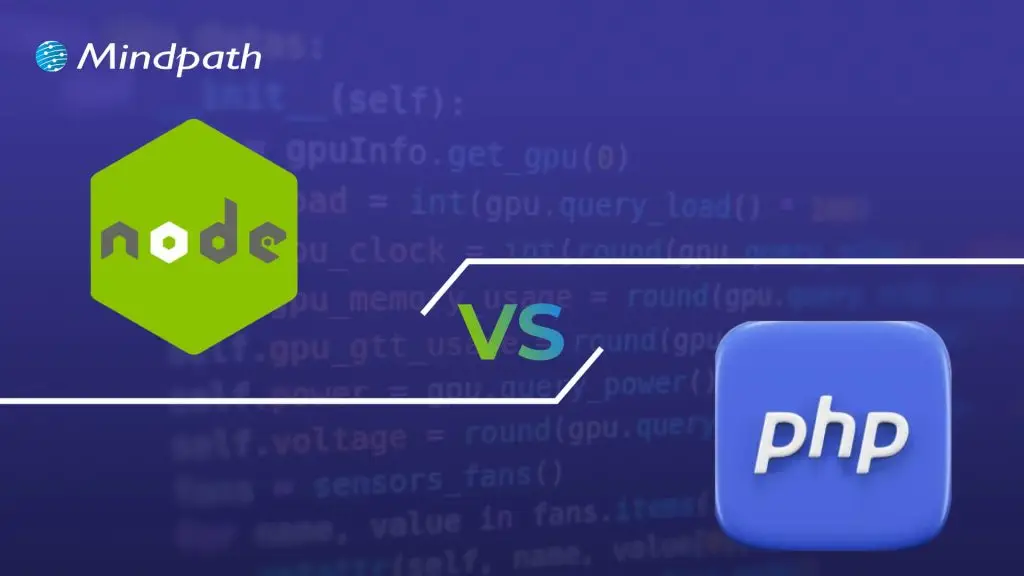
Why Should You Hire Node JS Developers for Your Business?

Join our Newsletter!

Featured Posts

Support Is One Click Away

Home

Why Should You Hire Node JS Developers for Your Business?

hire node js developers

Why Should You Hire Node JS Developers for Your Business?

In this new age of technology, speed and performance are more important than ever. If you are creating an enterprise chat application, an e-commerce site or a custom dashboard, the right technology and right people behind it can be a game-changer. It’s the time to think smart, if you are aiming to stay ahead in the competitive market. Well, choosing to hire Node.js developer can help you build fast, scalable and reliable web applications that can match your business goals perfectly. 

Node.js is relied on by some of the world’s largest brands due to its event-based architecture and non-blocking I/O model. Node.js enables developers to support numerous connections at the same time, leading to extremely efficient backend systems. When you recruit Node.js developers, you’re hiring professionals with experience in optimizing performance while maintaining minimal development expenses. In this blog, we will look at the primary reasons why you should hire Node.js developers to be a great business decision for your growth and success. 

Looking to turn your ideas into high-performance web applications? Mindpath offers expert Node.js development services that are intended to transform your ideas into applications. 

Overview of Node.js

Node.js is an open-source platform that allows developers to execute JavaScript on the server, rather than just in the browser. It’s built upon Google’s V8 engine, which is very fast, so it can execute tasks efficiently. Node.js allows developers to utilize the same language to code the front and back ends of a website, which means that building stuff is easier and quicker.

What is so special about Node.js is how efficiently it can deal with lots of users simultaneously without lagging. This is perfect for real-time applications such as chats platforms or live streaming. It’s also simple to scale up your business, so even if your users increase, Node.js can keep up with it. And there are thousands of pre-built tools available through npm that make it easier for developers to create better apps without having to build them from scratch. 

With the increased demand for Node.js, hiring Node.js developers has also become essential.

Let’s find out what benefits Node.js developers can offer:  

Why Hire Node.js Developers?

Node.js is becoming a top choice for businesses that need swift and responsive web solutions and seasoned developers can unlock its full potential to create glitch-free, real-time applications. These are the reasons to hire Node.js programmers for your next project: 
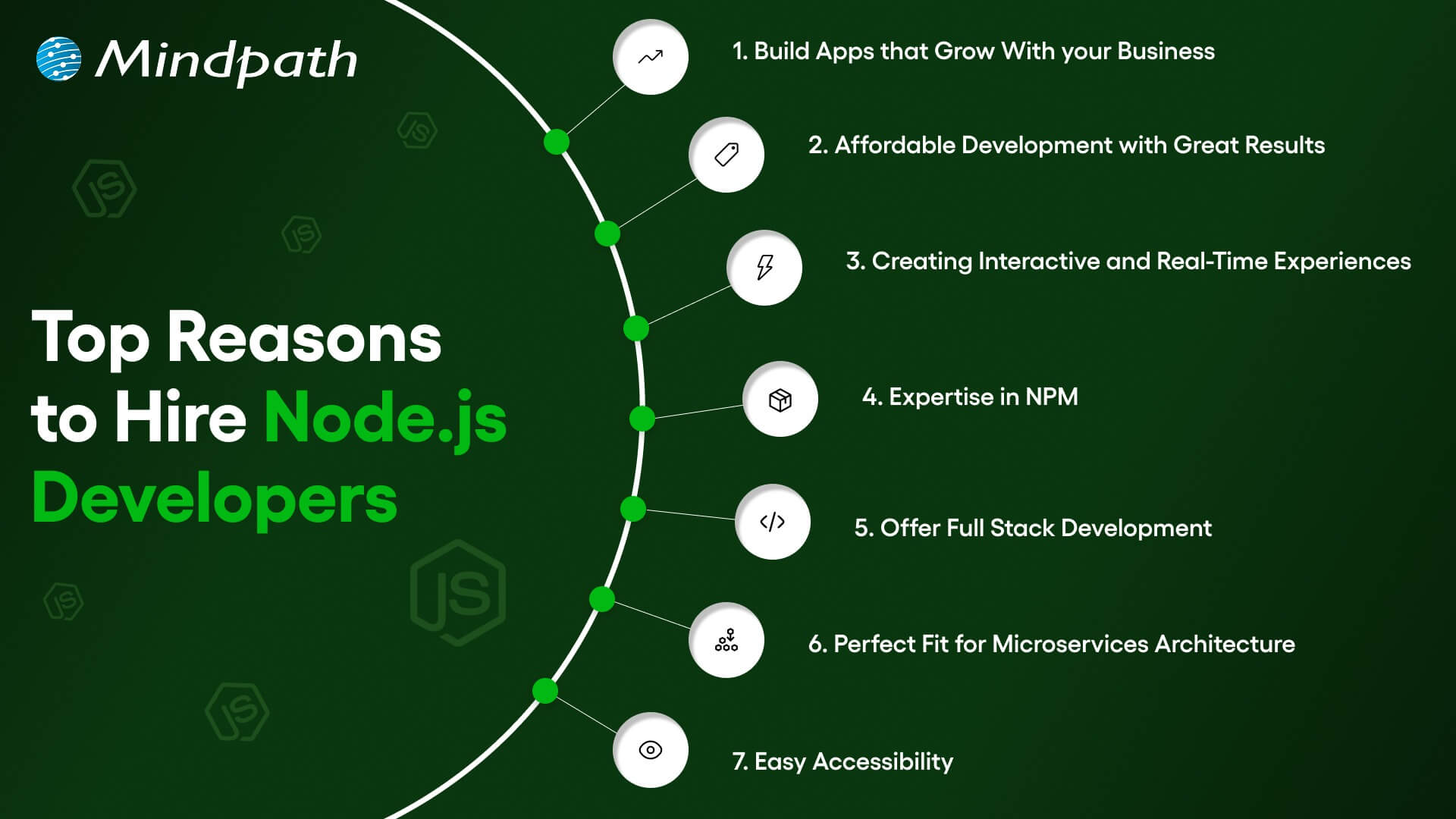
1. Build Apps that Grow With your Business

One big reason to bring in Node.js developers is their skill in building apps that grow with your business. As more people use your app, it needs to handle lots of users at the same time without slowing down. Node.js developers know how to make that happen. They use smart ways to manage traffic and keep everything running smoothly. Whether you’re starting small or expecting fast growth, they build your app ready for the future. If your app needs to respond quickly, handle real-time updates, or manage lots of users, these developers can handle that expertly. 

2. Affordable Development with Great Results

Using tools that don’t cost extra helps keep your project budget friendly. Developers skilled in Node.js know how to make the most of this free technology to build reliable and fast apps. Their experience means they can deliver quality work without unnecessary expenses. This balance of cost and performance makes a big difference for businesses looking to grow without overspending. With their help, you get a well-built application that won’t drain your resources but still meets your needs perfectly. 

3. Creating Interactive and Real-Time Experiences

When you want apps like chat, games, or teamwork tools that work instantly, developers with Node.js skills are the right choice. They understand how to build systems that don’t slow down, even when many users are active at once. Their work makes sure your app can handle lots of requests without waiting around, so everything feels fast and smooth. This means users can enjoy real-time updates and seamless interactions. Having these developers means your app will stay quick and responsive, giving your users a great experience every time they use it. 

Also Read: Advantages of NodeJS

4. Expertise in NPM

A good Node.js development company can offer you node.js developers who are experts in using NPM (Node Package Manager), the built-in tool that helps add new features quickly. Instead of building everything from scratch, these developers can easily find and use ready-made packages to speed up the process. This means your app can get new functions faster and updates happen smoothly. Their experience with NPM helps save time and effort, so your project moves ahead without delays. Hiring them means your app gets built efficiently while still being flexible for future changes.  

5. Offer Full Stack Development

With Node.js development, you get developers who can build both the front-end and the back end of your web app. They use the same language, JavaScript, for everything, which makes the process faster and more organized. These developers know how to create what users see and also set up the systems that keep your app working in the background. This means you don’t need two separate teams. It saves time, avoids confusion, and helps your app run smoothly from start to end. It’s a simple and smart way to get full-stack development done right. 

6. Perfect Fit for Microservices Architecture

Node.js developers are great at building apps using microservices Architecture. These are small parts of an app that can work on their own but also connect with other parts when needed. This makes the whole app easier to build, change, and grow. If one part needs an update, they can fix just that part without touching everything else. It keeps things flexible and clean. With Node.js developers, your app becomes easier to manage and ready to scale as your business grows. It’s a smart way to handle complex web apps without making things messy. 

7. Easy Accessibility

Node.js developers are easy to find because Node.js is based on JavaScript, a language most developers already know. This means that they don’t need much training to get started on your project. They can jump in quickly and begin working without long delays. This makes the whole process faster and smoother for you. Whether you’re starting something new or growing an existing app, having developers who already understand the tools saves time and effort. It’s a simple and smart choice when you want things done efficiently and without hassle. 

Looking to build fast and scalable NodeJS applications? Read our blog on hiring expert NodeJS Developers for High-Performance Apps to see how experienced developers can deliver robust, high-performing solutions for your business.

Ready to Build Powerful Applications with Node.js Developers?

Choosing to hire Node.js developers is one of the smartest choices for creating fast, real-time, and scalable web apps. These developers bring the right mix of front-end and back-end skills to keep your application running smoothly while handling more users as you grow. Their ability to work with modern tools and create user-friendly, high-performing apps makes them the right fit for businesses of all sizes. 

At Mindpath, our Node.js development services are designed to turn complex ideas into smooth, high-performing applications. Our developers are skilled in using the latest tools like NPM, real-time capabilities, and scalable systems to support your business needs. We bring both technical skill and practical experience to deliver solutions that are efficient, reliable, and easy to manage. 

Hire Node.js developers at Mindpath to give your business a strong edge in the digital space. Our team works closely with you to understand your goals, then builds powerful web solutions that meet them. Whether you’re starting small or planning big, we’ve got the skills to grow with you. 

Related Post

Discover how low-code/no-code tools are transforming digital development and enabling faster app creation for businesses.

Related Post

AI Governance Platforms

Have you ever wondered who’s keeping an eye on the rapid advancements in AI? As artificial intelligence grows more powerful, so does the need for systems that can ensure its responsible and ethical use. This is where AI governance platforms enter. But how exactly do these platforms work, and why are they becoming essential for businesses and societies alike? Let’s explore how AI governance platforms are shaping the future of trustworthy AI. 

What is AI Governance?

AI Governance ensures that artificial intelligence (AI) is utilized safely, responsibly, and equitably. It contains rules, processes, and tools that bring together professionals from many fields like data science, engineering, law, and business. The objective is to assist these teams in collaborating to guarantee that AI systems are developed and maintained in ways that are beneficial to humans and do not cause damage. 

AI Governance also assists firms in ensuring that their AI systems adhere to crucial guidelines and fulfill commercial and ethical standards. This implies that the system is verified and led at every point, from developing the AI model to using it in real-world scenarios, to ensure that it is appropriate, fair, and helpful to all parties involved. 

Why are AI Governance Platforms Important?

AI Governance platforms are essential tools for helping businesses employ artificial intelligence (AI) in a safe, fair, and ethical manner. By establishing rules and checks, these platforms avoid errors and defend against possible AI dangers, ensuring that AI systems are utilized responsibly. They assist businesses in adhering to crucial legal standards, preventing potential complications that can arise if AI is utilized improperly. 

These platforms help foster confidence among clients and the public by making AI more transparent, demonstrating how it works, and addressing any concerns about fairness or prejudice. They bring together specialists from many fields such as data science, engineering, and law to collaborate on ensuring AI matches ethical, business, and legal objectives. 

Features of AI Governance Platforms

1. Risk Assessment

Risk assessments are an important aspect of AI governance platforms, ensuring that AI systems function fairly, safely, and responsibly. These assessments are aimed at identifying possible issues early on, such as biases in how the AI makes judgments, threats to users’ privacy, or any negative effects on society. For example, an AI tool can accidentally favor one group over another, or it may gather and use sensitive data without consumers completely comprehending how it is utilized. 

By doing these risk assessments, AI governance systems assist businesses in avoiding situations that could lead to harm or unfair results. They examine the AI’s procedures and data to determine whether any hidden biases or unexpected consequences could arise. This proactive approach not only helps prevent misuse of AI but also builds trust by making sure the AI systems align with ethical standards. 

2. Accountability

Accountability in AI governance platforms establishes explicit accountability for governing and supervising AI systems. These platforms assist in identifying the essential tasks and teams responsible for ensuring that AI is created and deployed responsibly. They facilitate cooperation among many stakeholders, including engineers, data scientists, compliance specialists, and legal teams, who work together to create, test, and enhance AI systems. 

By establishing accountability, AI governance platforms guarantee that everyone participating in the development process understands their responsibility in maintaining ethical AI practices. This helps to avoid possible misuse, ensuring that ethical standards are followed, and fosters openness. The platform also analyzes and monitors AI systems over their entire career to ensure that they continue to operate fairly and ethically.  

3. Compliance Management

Compliance management in AI governance platforms includes tools for monitoring and ensuring that AI systems adhere to legal and ethical norms. These platforms monitor current legislation, such as GDPR (General Data Protection Regulation) and CCPA (California Consumer Privacy Act), and automatically update when laws change. The platform assists organizations in avoiding legal risks and penalties by ensuring that AI systems are in compliance with these standards. 

In addition to regulatory compliance, these technologies guarantee that AI systems are utilized responsibly, with data management and decision-making procedures that are transparent and fair. The platform continually analyzes AI systems to detect possible infractions, assisting enterprises in remaining compliant with both existing and upcoming legislation.  

4. Lifecycle Management

Lifecycle Management in AI governance platforms entails monitoring the development of AI models at each stage and implementing the appropriate checks and controls. These platforms guarantee that ethical issues are incorporated at every stage, from basic design to deployment and maintenance. Platforms use these restrictions to enable teams to build AI models that are fair, transparent, and ethical at scale. 

Furthermore, these tools guarantee that AI models follow engineering best practices, making them trustworthy, safe, and efficient. The objective is to maintain high standards throughout the model’s lifespan, ensuring that it not only performs well but also operates responsibly over time. This ongoing oversight helps prevent issues like bias or unethical decision-making, allowing businesses to scale their AI systems while staying aligned with ethical guidelines and industry standards. 

5. Responsible AI Methods

Responsible AI Methods in governance tools aim to ensure that AI systems are transparent, ethical, and reliable. These solutions incorporate responsible AI principles directly into the development and deployment processes, ensuring that AI models perform properly and without prejudice. By enabling transparency, these platforms enable enterprises to explicitly demonstrate how AI choices are made, fostering confidence among users and stakeholders. 

Transparency also promotes accountability by allowing organizations to track and audit AI choices. This guarantees that the AI system follows ethical norms and meets regulatory criteria. Furthermore, with a comprehensive understanding of how AI works, decision-makers may make educated decisions, ensuring that AI systems are employed responsibly and in the best interests of society.

Also Read: AI in Hyperpersonalization: A New Era of Tailored Customer Solutions  

AI Development Services at Mindpath

Mindpath provides high-quality AI Development Services to assist organizations in developing clever, efficient, and dependable artificial intelligence systems. Our team collaborates with you to develop AI solutions that match your unique requirements, whether you want to automate operations, improve decision-making, or enhance customer experiences.  Our services range from creating and constructing AI models to testing and deploying them. We employ cutting-edge AI technology and best practices to ensure that your AI system operates efficiently and responsibly. This involves ensuring that it is fair, transparent, and adheres to ethical standards. 

Final Thought!

AI governance platforms play a crucial role in ensuring that AI systems are developed and used responsibly, ethically, and transparently. By providing essential tools like risk assessments, compliance management, and lifecycle oversight, these platforms help businesses navigate AI complexities while maintaining trust and legal compliance. At Mindpath, we offer AI development services that focus on building efficient and ethical AI solutions tailored to your needs. Let us help you create reliable AI systems that align with both your business goals and ethical standards. 

Looking for a trusted partner in AI development?

Partner with Mindpath to create ethical, transparent, and innovative AI solutions tailored to your business needs.

Discover how AI governance platforms ensure responsible, and transparent AI development and learn how Mindpath’s AI services can help.

What if you could manage your IT infrastructure with the same ease and precision as writing code? Imagine deploying servers, configuring networks, and managing resources through a few lines of code instead of manual processes. Sounds revolutionary, right? This is exactly what Infrastructure as Code (IaC) brings to the table. But how does it work? Why is it transforming the way we handle IT operations? In this blog, let’s explore the fundamentals of IaC, its benefits, and why it’s becoming a cornerstone of modern DevOps practices. So, let’s dive in! 

What is Infrastructure as Code (IaC)?

Infrastructure as Code (IaC) is a method of configuring and managing your IT infrastructure, such as servers, databases, and storage, using code rather than doing everything manually. It’s similar to sending directions to a computer so it can complete the setup for you. When creating and running applications, developers use a variety of tools and mechanisms to collaborate. This encompasses operating systems, databases, and storage. Normally, putting things up manually takes a long time and can lead to errors, especially when working on large projects. With IaC, you just create a code file that explains how your system should appear and function. The tools will then create and manage everything for you. This saves time, reduces mistakes, and facilitates rapid updates or fixes. Businesses utilize IaC to save money, prevent risks, and respond quickly to new possibilities.  

Advantages of Infrastructure as Code (IaC)

1. Speedy Deployments

Infrastructure as Code (IaC) makes deployment quicker and easier. Instead of manually configuring systems, you can use a single command to create the full environment in a few minutes. This is especially useful for startups and small enterprises that need to move quickly while staying under budget. 

Fast deployment is also vital for testing and development. Developers can rapidly construct test environments that seem identical to the real system. This allows them to devote more time to essential responsibilities such as detecting and fixing problems, evaluating how the system manages high traffic, and enhancing security. By reducing time and effort, IaC allows teams to focus on developing better apps and delivering them faster. It keeps projects on track, increases productivity, and allows firms to adapt swiftly to changes or new possibilities. Whether you’re creating a small app or managing a massive system, IaC makes it easier and faster to complete tasks.  

2. Reduced Risks

Manually configuring and administering systems can give rise to errors since it depends primarily on human labor. Repeating the same procedure increases the likelihood of mistakes and adds additional workload to engineering teams. It can also make addressing or debugging problems more difficult and time-consuming. 

Infrastructure as Code (IaC) reduces these risks by automating the process and ensuring consistency. Instead of depending on a single person’s knowledge to handle crucial systems, IaC keeps all of the relevant facts in code that is accessible to the whole team. This makes infrastructure easier to understand, share, and administer, even if team members leave the organization. Companies can use IaC to reduce mistakes, boost cooperation, and guarantee their systems are always dependable and secure. This not only saves time and effort, but also instills trust in the infrastructure, making it easier to adapt and develop as needed.  

3. Enhanced Security and Quick Recovery

Infrastructure as Code (IaC) improves system security and recoverability. Security measures can be included directly into the system setup process when utilizing code. This guarantees that every deployment is protected without requiring additional evaluations or permissions. If a company’s security standards are updated, the changes can be immediately deployed across all systems via code, ensuring that everything remains consistent and secure. IaC also helps with recovery planning by making it easier to reconstruct systems in the event of a failure. While this strategy may take somewhat longer than other ways, it assures that systems are rebuilt safely and correctly. Businesses can apply IaC to build a solid security foundation and prepare for situations of crisis, all while lowering risks and saving time. 

4. Boosted Operational Efficiency

Infrastructure as Code (IaC) increases the efficiency and productivity of developers, architects, and administrators. Complex cloud systems can be deployed significantly faster using pre-configured IaC components, reducing total development time. One of the primary advantages of IaC is that it provides uniform conditions across several teams. Multiple teams, including development, security, QA, and user testing, can collaborate in synchronized environments using a simple script. This allows everyone to make progress simultaneously, rather than waiting for one phase to finish before going on to the next.  

IaC also promotes continuous integration and continuous delivery (CI/CD) processes, which enable teams to deploy new features or upgrades more rapidly and efficiently. Additionally, IaC makes it simple to automatically shut down environments that are no longer in use, lowering wasteful expenditures and keeping the cloud infrastructure lean. This enables firms to expand and manage their systems more efficiently, while preserving efficiency and lowering operating costs. Ultimately, IaC simplifies procedures, lowers human mistakes, and allows teams to operate more quickly, intelligently, and cooperatively. 

5. Greater Accountability

In the past, engineering teams had to manually record their work for a long period in order to guarantee seamless communication, prevent delays, and handle issues like errors and staff turnover. With Infrastructure as Code (IaC), this is no longer required. Instead of depending on elaborate documentation, all changes are recorded immediately in the source code repository. 

Every modification is explicitly tracked using version control, which shows who made the change and when. This makes it simple to track changes, identify issues, and comprehend the context around them. If an issue emerges, it is straightforward to identify the cause of the problem and who should be approached for clarification. IaC enhances accountability by making all activities public and traceable, ensuring that everyone on the team is on the same page, and enabling teams to collaborate more effectively. 

How Can Mindpath Help in Infrastructure as Code (IaC)?

At Mindpath, we can assist you with leveraging Infrastructure as Code (IaC) to streamline and protect your IT processes. We use IaC to automate system setup and administration, resulting in a more consistent, dependable, and manageable infrastructure. Our staff can create and manage the code that specifies your infrastructure, eliminating the need for time-consuming manual configurations. With IaC, we ensure that your systems are swiftly installed, updated, and fully protected, while minimizing risks and human error. We help you design environments that are simple to reproduce and scale, allowing your development, security, and testing teams to collaborate effortlessly. 

Wrapping Note!

Infrastructure as Code (IaC) is revolutionizing the way IT infrastructure is managed by automating processes, reducing human errors, and enabling faster, more secure deployments. By adopting IaC, organizations can achieve greater operational efficiency, boost security, and ensure better collaboration among teams, all while minimizing risks. As businesses continue to scale and adapt to new challenges, IaC is becoming an essential practice in modern DevOps strategies. At Mindpath, we are dedicated to helping you implement IaC effectively, making your infrastructure more streamlined, reliable, and scalable. 

Ready to streamline your IT infrastructure with Infrastructure as Code?

Let Mindpath help you optimize efficiency, security, and scalability.

Discover how Infrastructure as Code (IaC) improves IT operations with faster deployments, enhanced security, and increased efficiency.
Agentic ai vs generative ai

Artificial intelligence created the biggest ripples in the domain of technology in the last decade. Following the adoption of generative AI tools, there is a new type of AI that showcases how artificial intelligence continues evolving. The agentic AI vs generative AI comparison has become a hot topic of discussion for businesses worldwide. Which one do you think delivers the best of AI for your business?

Since the public release of ChatGPT, many businesses have gradually incorporated generative AI in their workflows. However, agentic AI emerged as a practical solution to address the unrealistic expectations users had from generative AI. Is agentic AI better than generative AI? You should know that each one of them has distinct strengths for optimizing professional business practices.

If you are looking to build innovative AI solutions that help enhance your business performance. Explore Mindpath AI development services to see how you can leverage the best through our expertise in agentic and generative AI.

Understanding the Definition of Generative AI

Many people would think of ChatGPT and other tools like Midjourney upon hearing generative AI. How can you define generative AI in the present context? You can assume that generative AI refers to the variant of artificial intelligence that focuses only on creation. Take a generative AI tool and imagine something that you want to create, such as an image or a letter to your friend. All you have to do is offer instructions and it can create your image or letter. 

How does generative AI create something new from your instructions? The core design of generative AI or gen AI revolves around models learning from existing data. Generative AI models use the knowledge gained from their training to create new output that features some elements of human creativity. 

You must have searched for ‘what is gen AI’ after learning about the mainstream adoption of ChatGPT, DALL-E and other generative AI tools. The effectiveness of these tools revolves around advanced machine learning models or neural networks to understand and recreate the patterns from their training dataset.

Even with the widespread adoption, generative AI does not come without limitations. The outputs by generative AI systems are as accurate and relevant as the data used for their training. On top of it, generative AI is not capable of making decisions on its own and just creates from the patterns it has learned.

Wondering how your business can leverage AI to stay competitive? Discover generative AI for business to learn how intelligent systems drive innovation, efficiency, and growth.

Emergence of Agentic AI

The quest to solve the limitations associated with gen AI led to the creation of agentic AI. With the use of smart agents, AI switched to proactive functionality from its traditional reactive nature. You can define agent AI as a new variant of artificial intelligence that focuses on specific tasks and autonomous operation. Smart AI agents will not only generate outputs based on your instructions but also learn in real time, make decisions, and implement actions required to achieve your goals. 

One of the most distinctive highlights of agentic AI, which makes it capable of autonomous decision-making, is adaptability. The best example of agentic AI is evident in agents used for customer support or in the infrastructure of autonomous vehicles. AI agents use sensors and algorithms to understand the environment and process information, followed by executing actions with different degrees of human oversight.

You can understand the answers to “what does agentic AI mean” in the fast-paced digital landscape by identifying how it acts with a purpose. Agentic AI is not only about responding to input like generative AI. On the contrary, AI agents understand the objectives and make informed choices to achieve the specific goals.     

Curious how Agentic AI and Generative AI fit into the broader AI landscape? Explore types of Artificial Intelligence to discover how ANI, AGI, and ASI provide the foundation for advanced AI systems.

Unraveling Key Differences in the Agentic AI vs Generative AI Debate

The arrival of agentic AI represents a major paradigm shift in the domain of artificial intelligence after generative AI. At the same time, you cannot ignore how generative AI is the most effective option for content creation. Therefore, an overview of the differences between agentic and generative AI is essential to pick the right option for your requirements.

1. Core Objectives

The foremost point in any generative AI vs agent AI comparison shall focus on the core purpose of the two types of artificial intelligence. Generative AI emphasizes creation and its core purpose is to create original content from user instructions. You can create images, draft emails or generate marketing materials with generative AI. The primary value proposition offered by generative AI revolves around augmenting the creativity of humans. Generative AI aims to achieve its purpose with the help of pattern matching and linguistic fluency.

Agentic AI works with the core purpose to achieve the goals assigned to it. The primary goal of agentic AI exceeds beyond content creation and aims to achieve a broader set of specific goals. The role of AI agents is to work autonomously without waiting for your prompts, which empowers them to identify opportunities and make relevant decisions. You can find answers to ‘what is agent AI vs generative AI’ in the fact that agentic AI can come up with different strategies and pick the right one to achieve the defined goals. For example, agentic AI use cases in software testing not only focus on writing test cases but also adopt a proactive approach to ensure software quality.

2. Dependence on Prompts

You wouldn’t get any prizes for guessing that generative AI is highly dependent on prompts. Generative AI has been designed to be reactive, which means that it responds only to user queries or prompts. You can have the most sophisticated LLMs in your generative AI systems and they won’t do a thing without human inputs. It clearly shows that generative AI is not capable of identifying problems or initiating conversations on its own. The reliance on prompts creates a significant roadblock for expanding the utility of generative AI. As a result, the most sophisticated generative AI models also need human oversight for every decision.

The difference between generative AI and agentic AI is evident in the fact that agentic AI has been designed for autonomy. AI agents operate within specific constraints to achieve defined goals albeit with complete autonomy. Agentic AI knows exactly when it must execute an action and determines the ideal strategy that can help in achieve the desired goal. You can notice the autonomy of agentic AI in how they leverage adaptive behavior and sophisticate decision trees in their architecture. Upon encountering problems, AI agents know how to solve them independently without human intervention.      

3. Use Cases in Real World

Another point of comparison between agentic AI and generative AI draws attention towards their utility. Generative AI has become the preferred choice for creative and analytical tasks that require human oversight. You can notice most of the use cases of generative AI in content creation and code generation. In addition, it also serves as a promising tool for design and visual creation by translating your ideas into real art. Businesses have also adopted generative AI as a promising solution for complex data analysis tasks to generate valuable insights.

The agentic AI vs generative AI comparison shall also showcase the growing use of AI agents in business functions. Agentic AI can streamline autonomous software testing with its capability to adapt to changes in the software application. Similarly, you can find successful examples of agentic AI applications in supply chain optimization. The other prominent use cases of agentic AI include algorithmic trading and robotic process automation.  

4. Workflow of Agentic and Generative AI

Most of the discussions on differences between agentic and generative AI also emphasize how the two variants of AI work. Generative AI works by providing unidirectional responses according to your input. For example, you provide instructions to generate an image and generative AI will create the image for you. Generative AI does not retain persistent memory or understand the objective you are pursuing as it focuses solely on the immediate instruction. It is one of the reasons for which using generative AI in multi-step processes involves human intervention at every stage.

Agentic AI stands out as the solution where generative AI poses problems. You can understand the difference between generative AI and agentic AI clearly in the various applications of agentic AI. Smart AI agents are capable of handling complex tasks that involve multiple steps and require memory retention. Agentic AI can maintain state across different interactions and track the progress made towards the defined objectives. Subsequently, it can adapt strategies on the basis of results in the intermediate steps to achieve the final goal.  

Looking to leverage the power of both autonomous and creative AI systems? Learn the benefits of AI to explore how Agentic and Generative AI together can transform strategy, operations, and customer engagement.

The following table showcases the notable differences between generative AI and agentic AI.

Criteria Generative AI Agentic AI
Core Objectives Generative AI aims to augment the creativity of humans by facilitating faster content creation. Agentic AI aims to achieve the defined goals with autonomous action.
Dependence on Prompts Generative AI is highly dependent on prompts. Agentic AI can take autonomous decisions without prompts.
Use Cases Generative AI is useful for content creation and data analysis tasks. Agentic AI is useful for autonomous software testing, algorithmic trading and robotic process automation.
Workflow Generative AI works by offering single-shot response to user instructions or queries. Agentic AI works with complex and multi-step workflows by adjusting strategies to achieve defined goals. 

Final Thoughts

The differences between generative and agentic AI reveal how artificial intelligence offers two distinct solutions to achieve different business goals. If you want to create content, generative AI is your best pick. On the other hand, you should choose agentic AI when you need your AI systems to work independently on specific tasks. The overview of the generative AI vs agent AI comparison can help you pick the ideal AI for your business.  

Mindpath is a leading platform to provide AI development services tailored to your business requirements. We also specialize in developing generative AI models to help you achieve promising improvements in productivity. Our ability to identify the pain points of the client and understand their vision helps us create the most relevant solutions. Reach out to us and give your business an additional edge in the AI revolution now.