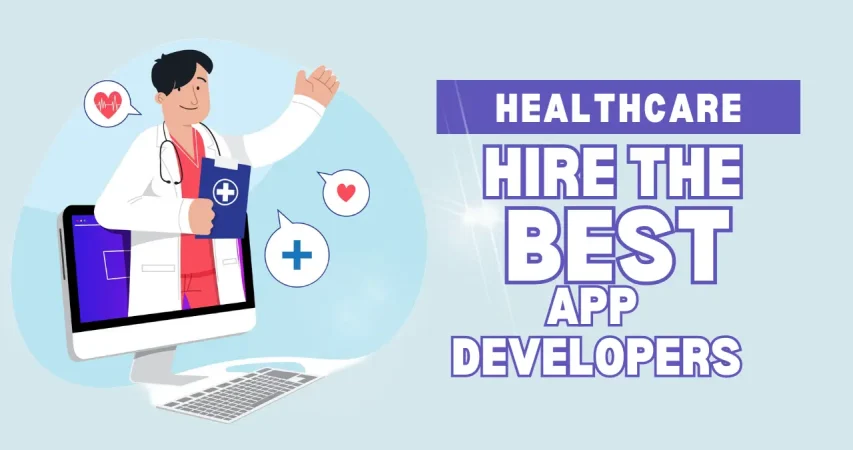
Key Steps to Hire the Best Developers for Your Healthcare App

Join our Newsletter!

Featured Posts

Support Is One Click Away

Home

Key Steps to Hire the Best Developers for Your Healthcare App

hire the best healthcare app developers

Key Steps to Hire the Best Developers for Your Healthcare App

Are you looking out for the perfect developer who can assist you in turning great healthcare app ideas into reality? With the changing scenery of health technology, finding the right kind of expertise can be quite a difficult process. In this blog, we will come across the steps to hire the perfect healthcare app developer for your project. 

Healthcare applications are mobile apps designed to make healthcare easier and more accessible. They perform duties like checking records, making appointments, and receiving medical advice from the comfort of one’s own home. These apps can be linked to wearable devices to monitor vital health parameters like steps taken or heart rate and help users monitor their health on a minute scale. Their main purpose is betterment in health and improving healthcare services. Some of these include healthcare apps used in billing, telehealth, or video consultation with doctors, practice management by arranging medical practices, and coding medical information. They will help the patients and doctors work together in the management of health and the diagnosis of conditions. According to a report, the global digital health market is projected to grow from USD 240.9 billion in 2023 to USD 946 billion by 2030. 

It is very important to hire healthcare app developers because they bring specialized experience and knowledge updated to help in developing complex healthcare apps. They ensure that your app complies with regulations such as HIPAA and GDPR and build it faster and more affordably compared to doing it yourself. These professionals also have continuous support to keep them updated. They also customize solutions for meeting any needs and seamlessly integrate with existing healthcare systems, making the app much more effective and efficient. 

So, let us dive deep into the steps to hire the perfect healthcare app developers which will be beneficial for you. 

Steps To Hire The Best Healthcare App Developers  

1. Define Your Requirements  

While looking to hire healthcare app developers, you must define your project objectives and requirements. Write down all the features that you want the app to have, like telemedicine capabilities for remote consultations, EHR integration to connect over electronic health records, and health monitoring tools that track different metrics. Identify your target audience and how the app will integrate with other already running systems, such as hospital management software. Giving an overview of the detail of needs helps identify the exact skill sets and expertise needed from the developers to ensure that they can adapt a solution catering to all your requirements and optimize the experience for the end-user. 

2. Shortlist Developers 

Deeply search for developers or companies having a successful history of health app development. Look for those who have effectively worked on similar apps and have experience with healthcare-specific features and regulations. Study their case studies, portfolios, and customer reviews to assess their expertise, past performance, and client satisfaction. Check the scale and complexity of previous projects to make sure that they fit your needs. Shortlist candidates who prove consistent in delivering healthcare apps with positive reviews from clients. Proper consideration will help you settle on developers who can carry out a project of your magnitude and finally come up with a high quality and effective solution. 

3. Evaluate Expertise and Technical Skills 

After you have shortlisted developers, you should assess their technical ability and experience. You should conduct technical interviews with them, discussing their experience and knowledge. You could even ask them to go for coding tests that would present them with real problems and then see how they solve them. Request samples of previous work done to determine the quality and relevance of projects completed before. They must know the programming languages and frameworks your app needs. One also needs to spot if they can solve any problem that might be caused by them during development. Such a rigorous process confirms whether the developers are well-endowed with the kind of skills relevant for the successful construction of a healthcare app. 

4. Review Past Experience 

Gather references from their past clients to know if they are work-oriented, reliable, and can meet deadlines.  Evaluate the past projects in which the developer was involved to understand the correctness of the delivered work. Determine whether they came up with top-of-the-line applications that could be said to be user-friendly yet solve their client’s needs if possible. This step is very important to substantiate their claims and ensure their work meets the standards that you have set for your work. A look at the track record will help you settle better on the right one through feedback from other customers. 

5. Check Communication and Cultural Fit 

This step is all about good communication and a proper cultural fit. While interviewing, review whether the developer can communicate his ideas clearly, is ready to listen, etc. Describe his attitude to working in a team, how he works, and evaluate whether it will align with the culture in your organization. This ensures high working relationships and effective results from the projects.

Is your healthcare app ready to meet the demands of the future?

With Mindpath’s expertise in advanced technology solutions, we can help you stay ahead in the evolving healthcare landscape.

How Can Mindpath Help In Healthcare Application Development Services 

Mindpath is dedicated to transforming the world of health care by providing state-of-the-art technology solutions. This is where we provide full-fledged health care software development services with a sole purpose: to enable health care providers to provide better patient care and smoothen operations while adhering to regulations and industry standards. It starts with strategic consulting for visibility and the exact requirement of your health care software project.  

We apply safe and scalable software into the development services under our care, such as Electronic Health Records, practice management systems, and patient portals, to make improvements in health care delivery on a larger scale and with greater efficiency within the organization. The design team is primed to create user-friendly, intuitive, self-explanatory screens with visuals that make the software functional and engaging. Further, we provide AI chatbots for managing their tasks to answer the queries of patients, manage appointments, and provide medical information to improve patient interaction and take some workload off the healthcare staff. 

Conclusion  

The future of healthcare has been very dynamic, especially due to technological innovation, making complex patient care more efficient, more accessible, and increasingly personalized. Trends such as telemedicine, AI-driven diagnostics, and wearable health technology are altering the nature of healthcare service delivery. Now is the time to get investments pumping into state-of-the-art healthcare applications catering to the modern patient and healthcare provider, with the global digital health market expected to grow soon. 

Mindpath leads from the frontline in this revolution with state-of-the-art healthcare application development services according to the newest industry trends. Our commitment to quality, compliance, and user-centered design assures effectiveness and engagement of the solutions we provide. Whether you want to enhance patient engagement through AI chatbots for healthcare, enhance operational processing through EHR integrations, or simply update legacy systems, Mindpath has rich experience in bringing any idea into life. 

Looking to take your healthcare services up a notch with state-of-the-art technology?

At Mindpath, we specialize in healthcare application development that can change the way patient care is operated.
Related Post

Learn essential cybersecurity practices for remote work and how Mindpath can help protect your business with expert solutions.
Elevate your brand with a custom WordPress website. Enjoy unique design, enhanced functionality, scalability, and top-notch security for your business.

Related Post

Digital Twin technology

Manufacturers all over the world have been under pressure to meet emerging challenges in an environment with limited resources. The prominent setbacks for the manufacturing industry include supply chain shortages and talent gaps. However, the advent of digital twin technology serves as the best example of how technological innovation can shape the future of manufacturing. Digital twins can not only enhance capacity but also ensure more efficiency and resiliency in manufacturing operations.

The growing demand for fast-paced and continuous operations in manufacturing creates various limitations. Digital twins offer virtual representations of production lines, equipment or the whole factory to help manufacturers with more effective decision-making. Manufacturers must know about the utility of digital twins and how they can unlock untapped value to prepare factories of the future.

Looking to harness digital twin technology to gain deeper insights and future-proof your business? Contact us for expert guidance and tailored solutions that help turn digital twin innovation into real-world impact.

Understanding the Digital Twin Technology

The foremost highlight in any introduction to digital twins will focus on their definition. The most common answers to ‘what is digital twin technology’ paint them as virtual representations of physical objects or systems. Digital twins use real-time data to imitate the behavior, conditions and performance of their physical counterparts. Digital twins help with continuous monitoring and analysis of objects, systems or products throughout their complete lifecycle. In addition, digital twins can also feature external processes and crucial variables that can influence the performance of real-world assets.

One of the significant highlights of digital twins is that they work with data flowing between the object and its virtual representation in real-time. The two-way flow of data ensures the most accurate simulations of the physical world. Businesses can also use multiple digital twins together to create models for more complex systems, aimed at a larger digital transformation strategy.

Digital twins provide a clear impression of how something works and predicts its behavior in future scenarios. As a result, they can help in accelerating innovation and improving efficiency along with making well informed decisions. You can come across use cases of digital twins in predictive maintenance, product development, supply chain optimization and process optimization.

Breaking Down the Architecture of Digital Twins

If you want to capitalize on the power of digital twins in diverse use cases, then it is important to know their architecture. You can find digital twin providers like IBM, Microsoft, General Electric and Siemens with solutions that provide a comprehensive suite of services. The digital twin examples may feature hardware layers, synchronization services, data processors and other tools to draw the most accurate simulations of real objects and processes. However, awareness of the architecture of digital twins can help you figure out exactly what you need to make the most of the innovative technology.

1. Physical Asset

The physical asset in digital twins can be any real-world object, process or system that you want to study or monitor within virtual environments.

2. Virtual Model

The virtual model in digital twins is the digital representation of the physical asset that you want to know more about.

3. Data Sources

One of the notable highlights in the answers to ‘what is a digital twin’ points at the two-way flow of data between the physical asset and the virtual model. Data sources are an integral component in digital twin architecture as they ensure accuracy in virtual representations. Internet of Things or IoT devices serve as data sources by recording relevant metrics for creating digital twins.

4. Data Pipelines

Data pipelines are used for transmitting sensor data to the virtual model in real time. They play a vital role in ensuring that the digital twin is synchronized with the physical asset.

5. Feedback Loop

The feedback loop helps in sending control signals or insights from the virtual model to the physical asset. It serves as a promising component for optimizing performance and efficiency alongside enhancing decision-making.

6. Analytics Engine

Digital twins needs an analytics engine running on AI or machine learning to detect patterns and facilitate predictive analytics. The functionalities of the analytics engine helps in drawing accurate simulations alongside offering support for effective asset tracking.

7. Visualization Dashboard

The visualization dashboard is another crucial component that completes the digital twin definition by providing access to the virtual representation. You can use the visualization dashboard to interact with the two-dimensional or 3D representation of the physical asset.

Breaking Down the Working Mechanism of Digital Twins

The uses of digital twins can vary by huge margins across different industries and applications. You must also know that digital twins follow some common steps that you will find in every example.

1. Data Collection

Organizations can start their digital twin projects by embedding sensors on a physical object to capture its performance, operating environment and condition. The digital twin meaning in case of IoT applications revolves around using smart objects that feature in-built sensors to collect and share data continuously. In the case of IT environments, teams can create digital representations of computers, applications and software with virtualization technologies. Subsequently, the teams can use software agents to collect data from the digital asset for supporting the digital twin.

2. Creation of the Virtual Model

The primary focus of digital twins aligns with the creation of digital replicas of certain objects or systems. Virtual modeling involves using the data collected from the physical asset to create a digital model. It is important to define digital twins with key attributes that help them offer realistic reactions to variables. The variables can refer to interactions with the physical asset or its environmental conditions. The attention to virtual modeling ensures that digital twins can offer reliable and accurate simulation of the responses of the physical assets in different conditions.

3. Real-Time Data Integration

You cannot think of a digital twin without live data integration as it ensures continuous communication between the digital twin and physical asset in real time. Live data integration offers a dynamic feedback loop that can help organizations with performance optimization and enhancements in system reliability. The two-way data exchange also helps in efficient predictive maintenance by anticipating issues ahead of time. Most of the organizations automate the real-time data exchange process to focus on more critical and strategic tasks.

4. Analysis and Decision-Making

Digital twins offer the most promising solutions to experiment safely within virtual environments. You find better answers to ‘how do digital twins work’ in manufacturing plants where digital twins can help in finding out how an upgrade may affect efficiency and performance. The best thing here is that manufacturers don’t have to implement the upgrade directly to measure its impact. On top of it, analytics engines used in digital twins can recommend operational changes to make the changes more cost-effective.

Variants of Digital Twins

Most of the discussions about digital twins don’t emphasize the fact that you can find different types of digital twins. Organizations can deploy different variants of digital twins in one production environment with the advantage of learning from different levels of physical assets.

1. Product Twins

Product twins refer to the virtual representations of products after the ideation stage or throughout the complete lifecycle. You can use product digital twins for design improvements, enhancing service satisfaction and manufacturing efficiency.

2. Process Twins

The variety of digital twin applications also draws attention towards the use of process twins that help in understanding how different systems work with each other. Process twins offer visualization of the interactions between systems and suggest actionable feedback to improve quality standard or process speed.

3. Part Twins

Part twins or component twins focus on the most granular level of larger systems. The primary goal of part twins revolves around measuring the insights from basic components of larger systems. Component twins serve a promising role in understanding the performance of certain components and identifying larger problems before they happen.

4. Place Twins

The largest deployment of digital twins can happen in the form of place twins. You can find examples of place twins in factory twins, which simulate a complete physical location or place. In some cases, you may assume similarities between process twins and place twins. However, place twins also include spatial data, such as climate, context and temperature of the physical location.

Unraveling the Use Cases of Digital Twins

Organizations in different industries leverage digital models to understand complex systems and promote innovation. Digital models have also proved as the most useful tools for efficient optimization and predictive equipment maintenance. You can find a digital twin use case in almost every major industry with widespread applications.

1. Construction of Physical Structures

Digital twins can prove to be the most useful tools for engineers to design durable and safe physical structures, such as buildings, bridges and dams. For example, digital twins can help engineers determine whether a specific design for a bridge can enhance its durability. As a result, engineers can identify any setbacks and make changes in the design before starting construction.

2. Healthcare

Another promising area where digital twins can offer significant advantages is in the domain of healthcare. Digital twins can come up with crucial insights from forecasts of disease progression to identify how patients will respond to different treatment options. Furthermore, healthcare professionals can use digital twins to enhance diagnosis through detailed modeling that helps in understanding how interactions between organs can affect health.

3. Urban Planning

You can also notice the benefits of digital twins in urban planning applications, especially for traffic supervision. City models use spatial data, IoT object data and AI analytics to determine how new transportation systems or infrastructure upgrades will affect the city’s environment and traffic. Digital twins serve a pivotal role in planning for smart cities and urban planning experts aim to tap into their power to enhance sustainability and quality of life.

Identifying the Advantages of Digital Twin Technology

The use cases of digital twins across different industries reveal their potential to revolutionize digital transformation. You can notice how digital twins offer more visibility into complex systems while opening doors for experimentation without real-world changes. An overview of their advantages can help you understand how they can unlock the future.

1. Faster Research and Development

How do you think a business can step into the future ahead of time? Without research and development, companies cannot experiment with new product designs, manufacturing processes or workflows. The advantages of digital twins make it easier to experiment within a virtual environment, thereby opening the doors for accelerated innovation. Digital twins offer a more cost-effective and safer approach to research and development without the need for real tests.

2. Scalability

Companies can stay competitive in the modern business landscape only by adapting to changes in product demand, customer priorities and economic conditions. Digital twins offer virtual environments where you can adjust parameters and test configurations safely before full-scale deployment. You can also connect digital twins to live systems and ensure that they can continuously transmit their scaling adjustments in real time to the physical asset.

3. Operational Efficiency

The next crucial outcome of digital twin technology is the assurance of enhanced operational efficiency. Digital twins can provide the insights required to achieve operational efficiencies throughout the value chain. Organizations can use different datasets to collect real-time data on physical asset and production performance. With more visibility into the asset or process bottlenecks, digital twins can help in crafting potential solutions.

Final Thoughts

The progressive use of digital twins is a perfect example of how the world is welcoming innovation and preparing for the future. Digital twins provide the easiest solution to multiple problems that affect efficiency, cost-effectiveness and productivity in different industries. With the help of virtual models that mimic real-world assets, companies can reinvent their manufacturing, services and internal management.

Mindpath is one of the leading destinations for digital twin app development with years of expertise in end-to-end IT solution development. We are proud to have team members who are eager to learn and specialize in new technologies, including digital twins. Our experts are familiar with the use of popular tech stacks for digital twin development in alignment with your business goals. Consult with our team and build your first digital twin right now.

Discover how digital twin technology boosts efficiency, enhances product quality, and supports sustainability. Learn its impact on modern businesses and industry sectors.
ai solutions for small businesses

Some business owners still think artificial intelligence, or AI, is only for big tech companies. Maybe it is true. But it has also become a crucial element for startups and small businesses. In fact, AI solutions for small businesses are helping them work faster, efficiently and smarter.

With this, you can easily use AI for customer service, simplify operations and scale faster. This blog will decode the AI solutions for business and answer the important question of how it can be used in startups. Besides, you will also get to know how to get started with this. 

Want to use AI more effectively but don’t know how to implement it affordably? Mindpath’s AI development services build practical, budget-friendly AI solutions that fit your business goals and accelerate your growth.

What are AI Solutions for Small Businesses?

Artificial intelligence may sound complex, but for startups and small businesses, it is surprisingly very practical. AI solutions for small businesses are truly a game-changer. These tools combine language processing and machine learning to help in business operations.  These tools can greatly streamline your workflows, improve communication with customers and offer detailed reports. Most importantly, they automate various tasks. Different from massive enterprise systems, AI tools for small businesses are generally affordable, accessible, and scalable. That’s why more small business owners are using AI tools to attain more with fewer resources. As per a study by Entrepreneur.com, nearly 68 per cent of small businesses have deployed AI to manage their daily business operations. 

Curious about the technology behind modern AI solutions? Explore top AI Models to understand which models power today’s most effective business applications.

Benefits of AI Solutions for Small Businesses and Startups

Small businesses generally experience a shortage of resources, such as insufficient personnel and a limited budget. The introduction of AI became an excellent solution. Read on to understand the benefits it offers. 

1. Increased productivity

AI tools reduce manual errors and streamline workflows. Besides, the support for smarter task management. This, in turn, helps a team to focus on other important tasks. 

2. Enhanced Engagement

With the help of responsive support, personalised marketing and smarter chatbots, you can create meaningful interactions. It will lead to higher satisfaction and increased loyalty. 

3. Task Automation

You can easily automate various repetitive tasks such as scheduling, invoicing, data entry and more. Your team can invest more time in customer relationships and strategy. 

4. Improved Decision Making

AI in decision-making helps provide you with predictive analytics and detailed insights. Based on these reports, you can come up with informed decisions with maximum clarity. 

By using modern AI solutions, small businesses can operate like a large business. And handling complex tasks would be easier for them. 

Wondering how AI can impact small business growth? Read detailed benefits of AI to discover how AI improves efficiency, productivity, and decision-making.

Best AI Solutions Small Businesses Can Use

No matter whether you have an e-commerce store or a small boutique, if you are using the right AI solutions or tools, you can scale faster. Let us guide you with this by suggesting some of the best tools you can opt for. 

1. ChatGPT

We are all well aware of this tool. It helps businesses generate content and automate customer service. You can deploy it to draft tailored emails and write blogs. Furthermore, it can be trained to answer common FAQs. By lowering workload and enhancing communication, this tool can help your team to offer consistent and quick support. 

Curious how tools like ChatGPT work? Discover our Large Language Models (LLMs) blog to learn how LLMs help automate content, communication, and workflows.

2. Microsoft 365 Copilot

It is designed to add the functionalities of generative AI into various Office applications. The tool supports MS Outlook, Word, Teams, etc. Using this, startups can efficiently automate various tasks, including data analysis, content generation and email drafting. When used with Excel, it can detect business trends by analysing data. This saves time and increases productivity. 

3. HubSpot AI

It is designed to help businesses streamline their marketing operations. For example, it can automate customer segmentation, email campaigns, and lead scoring. Furthermore, the tool can analyse the behaviour of customers and generate tailored content. On the other hand, its marketing and CRM platform can help small businesses simplify outreach and scale easily. 

4. Shopify Sidekick

Shopify Sidekick is a powerful AI assistant that can automate customer queries and store management. Besides, it can help in analytics reporting. By deploying this for your online store, you can answer common customer questions and detect popular products. 

5. Grammarly and Superhuman Go

Grammarly is a popular AI writing assistant that works well in checking style, clarity and grammar across documents, blogs, emails and more. Superhuman Go, a part of Grammarly, can suggest replies, summarise reports or threads and speed up email writing. Using these tools, small businesses can write professional business proposals, emails as well as marketing copy. 

Looking to go beyond writing assistance and create content? Explore generative AI tools for content creation to see how small businesses use AI to generate high-quality content.

6. Canva Magic Studio

This AI-powered solution can generate various marketing content based on your inputs. It helps in creating social media posts, videos, graphics and more. You can also use it to create logos, promotional flyers, invitations, etc. It’s simple to use, and you can create stunning graphics without the help of professional designers. 

7. Bookkeeping.ai

Managing invoicing and bookkeeping is a complex and time-consuming task. What if you can automate these tasks? Well, this is possible through Bookkeeping.ai. The tools can reconcile various accounts, categorise transactions and create detailed reports. With this tool, you can lower the risk of errors and avoid financial losses. Without hiring a dedicated accountant, you can make financial management easier for your small business. 

8. Zendesk AI

You all know that customer experience is vital for every business. If you are looking for an ideal AI solution for this, give Zendesk AI a try. It offers customer chatbots, automated ticketing and human-like responses. Apart from this, it can categorize as well as prioritize support tickets, detect trends and offer data-driven recommendations. All these things will lead to increased customer satisfaction. 

9. Tableau Pulse

Data-driven decision-making has become a new standard for every business. Small businesses can use Tableau Pulse to visualize key trends, and project demand. Besides, it helps interpret complex marketing and financial data. Your marketing team can use it to analyze multiple KPIs, driving growth and engagement. Tableau Pulse has simplified business intelligence for non-technical users. 

10. Buffer

Buffer has made social media management simple and efficient. It allows businesses to post on different social media platforms from a single dashboard. Buffer comes equipped with a built-in AI assistant that can produce engaging content and help your team brainstorm new ideas. It is an excellent option for lean teams that want to ensure a consistent online presence. 

Curious about the different forms of artificial intelligence behind such tools? Read types of AI to understand ANI, AGI, and ASI and how each powers modern business applications.

11. Lumen 5

AI solutions for small businesses like Lumen 5 have significantly reduced the obstacle to video creation. Video is an effective way to reach target customer, and small businesses can use it to promote their brands using engaging videos. It comes with a text-to-video tool, and you can generate a video from your scripts or blog posts. Besides, it has a huge media library as well as voiceover options. Within a few minutes, you can create a short professional video for your brand. 

With the right AI tools for small businesses, you will be able to automate, scale, and optimize workflows. In fact, these tools are your secret weapon for managing tasks smarter.

The Future of AI Solutions for Small Businesses

It can be said that AI solutions for small businesses are getting more accessible and powerful. The more advanced models are unlocking new opportunities for startups and businesses. With time, pre-trained models will become common in different industries. What’s more? Edge AI will facilitate offline functionalities. 

Experts have also predicted that chatbots and voice assistants will behave more naturally. That means users will enjoy human-like interactions. We may also see massive integration of artificial intelligence with low-code platforms. Small businesses that adopt AI solutions early will surely enjoy a competitive edge in innovation, as well as efficiency. 

Want to improve real-time customer interactions? Explore conversational AI to learn how AI-powered chat and voice assistants help businesses deliver faster and more personalised conversations.

AI Solutions- Supporting Small Businesses to Expand

AI solutions for small businesses and startups are truly reshaping how they compete, operate and grow. On the other hand, AI solutions startups are supporting innovation by offering intelligent and scalable tools that can help these businesses achieve their desired goals. 

Are you thinking about deploying these modern tools to support your business operations? Well, you have made an excellent decision. But to leverage the full power of AI tools, you need to choose a trusted partner like Mindpath. We are here to assist businesses in choosing the right tools. With our tailored AI development services, you can easily unlock new levels of efficiency and impact.  

hiring reactjs developers

The fast-paced growth of the digital landscape has not only empowered businesses but also made them think about their online presence. Companies have been hiring ReactJS developers to capitalize on the diverse capabilities of ReactJS for creating robust user interfaces. The notable features of ReactJS include the virtual DOM, a thriving ecosystem, and modular architecture. Let us find out the important factors you must keep in mind while hiring React developers.

Want to hire ReactJS expert for your next project? Discover how Mindpath’s ReactJS development services will help you achieve your specific business goals.

What Should You Keep in Mind While Hiring ReactJS Developers?

The search for expert ReactJS developers has gained momentum as a response to more businesses turning towards online platforms. However, business owners might experience some trouble in hiring React developer as they will find it difficult to understand coding nuances and technical jargon. At the same time, finding the best React developer who can also be a cultural fit is a huge challenge.

Hiring managers must also go through a massive talent pool of React developers to find the top expert for their next web project. On top of it, employers have to look for more than just technical skills in React developers to create successful web projects. The following checklist can help you hire the best ReactJS developers for your web projects.

Must Read: ReactJS Trends

1. Specify the Project Requirements

One of the foremost factors to consider when hiring ReactJS developers is the outline of project requirements. You should know your project scope and complexity level to identify the ideal React developer who would align with your project vision. The project requirements should not be limited to defining the type of project, but also the timeline, desired features, budget, and complexity.

With a clear impression of these aspects of your project, you can determine the skills and experience required from candidates. For instance, you will need a junior developer for smaller tasks and a senior developer for leading initiatives to scale up web projects.

2. Never Compromise with Technical Fluency

The easiest solution to challenges in hiring expert ReactJS developers involves focusing on the technical skills of applicants. You need developers who know more than the fundamental concepts of React and have various crucial technical skills. Candidates must have strong understanding of JavaScript features such as arrow functions, closures and destructuring.

Applicants for React developer jobs should also have in-depth understanding of the important concepts in ReactJS. Some of the important React concepts include React Hooks, component lifecycle methods, virtual DOM and reconciliation. People applying for ReactJS developer jobs must also know how to work with state management libraries such as Redux.

The other crucial technical skills in a checklist for hiring ReactJS developer include fluency in HTML and CSS, version control with Git and API integration. Aspiring React developer must also know how to work with testing frameworks, build tools and package managers like NPM. Another prominent technical skill that React developers must have is performance optimization.

Want to keep your large React app fast and responsive as it scales? Discover the best practices for optimizing React performance for large applications.

3. Optimizing the Interview Process

The effectiveness of your hiring process depends a lot on the quality of the interview. If the resume serves as an advertisement, then the interview helps you test the product. Employers should divide the interview process into different stages to evaluate the distinct competencies of applicants. The best practices for hiring ReactJS developers suggest that the interview must include technical assessment, portfolio review, live coding session and behavioral interview. Each stage in the interview process will help you measure the overall proficiency of candidates rather than focusing on specific areas of expertise.

The technical assessment should have coding challenges to test the problem-solving skills and coding style of applicants. You can find out whether they use efficient algorithms, data structures and React concepts in their code. Hiring managers should choose live coding sessions in interviews for senior React developer roles. The portfolio review involves checking for active contributions of candidates on GitHub and their past projects. Employers can use the portfolio review to find out whether the applicant has problem-solving skills.

The technical assessment and portfolio review must be accompanied with behavioral interview questions. The best react developer hiring tips point out that behavioral interview questions can help you learn more about the developer. For example, you can find out how they approach complex issues, their preferred development workflow and their preferences for collaboration. The behavioral interview will help you understand the capabilities of a React developer applicant on a more personal level.

4. Don’t Forget the Soft Skills

Among the many factors that you should keep in mind while hiring React developers, the list of soft skills will never lose its significance. As a matter of fact, soft skills like communication, adaptability, problem-solving and collaboration are essential requirements for almost every job. Why are soft skills important for ReactJS developers? Soft skills serve as the catalyst for transforming a group of individuals into a powerful team.

Most of the guides on how to hire ReactJS developers also focus on other soft skills such as attention to detail, proactivity and accountability. React developers need attention to every detail of the UI development process as it can help in crafting robust and engaging user experiences. On top of it, proactivity implies that the candidate will be always ready to take initiative. At the same time, accountability can ensure that the developers take responsibility for all their actions.

5. Determine Realistic Compensation

The most crucial highlight in the hiring process is the cost of hiring ReactJS developers. Hiring managers must offer a compensation package that fits perfectly with the role and responsibilities of the developer. For example, junior developers can earn between $70,000 and $90,000 while senior developers can earn more than $150,000.

The ideal way to make sure that the candidates feel that the compensation is right involves a clear job description and smooth onboarding process. Tell the developers what they have to do on the job to make them understand why they are being paid a specific amount. In addition, try to include programs for continuous learning and growth of developers.

Looking for specialists who can handle complex front-end challenges in your business? Learn why partnering with an expert React Development Company is a smart move.

Final Thoughts

The answers to “What are the key things to consider before hiring a ReactJS developer?” focus specifically on project requirements, technical skills, soft skills and the interview process. On top of it, determining the ideal compensation for ReactJS developers is also an important concern in the hiring process.

Do you need professional ReactJS development services for your next web application? At Mindpath Tech, we have the best developers who can handle all your frontend development needs. Our team of proficient ReactJS developers has the experience of working on multiple projects. We not only offer the assurance of efficient web development but also resourceful solutions to optimize your digital presence. Join us and work with top-tier ReactJS talent on your revolutionary web app right now.

Hiring ReactJS developers? Explore essential factors like experience, skills, and project requirements to ensure a successful collaboration.