Backend vs Frontend Developer – A Detailed Comparison

Join our Newsletter!

Featured Posts

Support Is One Click Away

Home

Backend vs Frontend Developer – A Detailed Comparison

backend vs frontend

Backend vs Frontend Developer – A Detailed Comparison

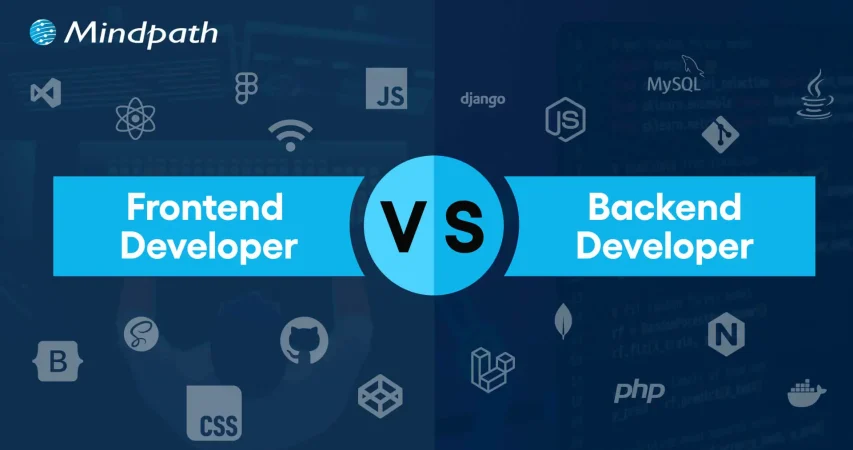
The most common words that you will find in any web development cheat sheet are frontend development and backend development. These are the two critical components that make up a web application and work in unison to deliver desired functionalities. The backend vs frontend comparison is one of the essential points every web development beginner must learn before diving into practice. 

With more than a million live websites running all over the world right now, learning about frontend and backend development can be a huge advantage. Frontend developers work on the visual aspects of a website, including its layout, design, styling, and buttons. On the other hand, backend developers work on the things that drive a website behind the scenes, including its database, logic, and security. With this post, let us dive deeper into the differences between frontend development and backend development.

Want to hire developers who can handle both front and backend development? At Mindpath, we provide full-stack development services where you get versatile solutions to accelerate your project success.

Understanding Frontend Development

Before exploring the differences between frontend and backend development, you must know their basic definition. Frontend development is all about creating the user interface and the user experience components. It helps in developing the elements of a website that users will interact with. Most of the work of frontend developers revolves around converting innovative design ideas into functional elements on web pages. Frontend developers rely on programming languages like JavaScript and HTML to create visually appealing user interfaces with elements that offer the best user experience. 

From the first look, one would imagine that frontend developers focus only on the aesthetics of web applications. However, the backend vs frontend comparison should also focus on the fact that frontend developers also implement the website’s architecture, pick the CSS styling option, set up build tools, and organize files and directories. Frontend development also involves the use of frameworks like React and Angular to optimize the performance of a website. 

Understanding Backend Development

The next player in the discussions on “What is frontend and backend development?” or backend development is about the elements that manage the functionalities of web apps in the background. Backend developers create the server-side logic that drives interactions with databases and helps in processing user requests. Backend development also includes bridging the gap between the backend and frontend of web applications to facilitate the seamless flow of data. 

You must know that backend developers work on scripting, website architecture, database management, server management, and API management. The search for answers to “What is front-end and back-end programming?” will show that backend developers use different frameworks like Django and Ruby on Rails. Backend developers capitalize on these frameworks to accelerate the development process with better efficiency. One of the overarching objectives of a backend developer is to create and implement an architecture that aligns with the project goals. 

Identifying the Differences in a Backend vs Frontend Comparison

The first thing that you should know while comparing frontend development with backend development is that they both are significant aspects of web development. Most of the discussions about “What is backend and frontend?” focus on how they help you make better web apps. However, an overview of the differences between them will offer valuable insights on how to use both effectively for your next web project.

1. Goal of the Development Process

The definitions of frontend development and backend development give a clear impression of their goals. Many people assume that frontend development emphasizes solely on creating the user interface. Frontend development focuses more on creating a positive user experience and optimizing web apps for better performance and accessibility. Frontend developers ensure that users can easily interact with an application that is accessible on different platforms and devices. 

The goal of backend developers is to create and maintain the server-side architecture of web applications. One of the notable aspects in a frontend vs backend developer comparison is the complexity of responsibilities that fall on backend developers. The responsibilities in backend development involve creating a reliable architecture that delivers efficiency and accuracy in its results. Backend developers must also accommodate all user requirements, alongside addressing the concerns in security and reducing costs.

2. Technologies Used in the Process

Another significant point of comparison between frontend development and backend development is the list of technologies used in them. The most common languages used in frontend programming are HTML, CSS and JavaScript. Frontend developers also work with frameworks like React, Vue, and Angular to make the apps more intuitive and responsive.

You can notice a stark difference between the programming languages used in frontend and backend development. The most popular additions in a backend language list include Java, Ruby and Python, which help in writing the server-side code. Backend developers use frameworks like Ruby on Rails and Django to capitalize on diverse tools for faster and efficient development. The list of technologies used in backend development also includes database management systems, API technologies, and storage technologies.

3. Security

The next prominent aspect that differentiates frontend development from backend development is the element of security. How do frontend and backend developers safeguard the components of a web application from threats? The backend vs frontend comparison must shed light on how frontend security focuses on client-side scripts, input forms, and user authentication. Some of the general strategies for frontend security include disabling the settings for typing code in the text boxes, multifactor authentication workflows, and input validation. On the other hand, users also share some responsibility for frontend security with password and device protection.

The primary target of backend security is the data in transit and storage. Backend developers have to manage everything from authentication to session control and access controls. Backend security encompasses all the backend programming languages, connected databases, and APIs. The notable best practices for backend security include secure systems for authorization and authentication, secure coding practices, and data encryption.

4. Concurrency

The differences between frontend development and backend development also bring the limelight towards the issue of concurrency. The difference between a backend and a frontend developer is that frontend development has nothing to do with concurrency. In the case of the frontend of an application, every user has a copy of the application on their mobile app or browser. Therefore, frontend developers don’t have to think about concurrency issues.

On the other side of the project, the backend has to deal with multiple requests at a time. How will the backend manage thousands of requests within seconds? The solutions to concurrency issues in backend programming include asynchronous programming, multi-threading, and event-driven programming.

Here is a brief summary of the backend vs frontend comparison. 

Criteria Frontend Development Backend Development
Goals of the Process Frontend development focuses on creating a positive user experience and optimizing web apps for better accessibility, visual appeal, and responsiveness. Backend development aims to develop and implement a reliable web application architecture that ensures enhanced efficiency and performance. 
Technologies Used Frontend developers use languages like JavaScript, HTML, and CSS, and frameworks like Angular and React. Backend developers use Ruby, Python, and Java to write server-side code and frameworks like Django and Ruby on Rails.
Security Frontend security emphasizes multifactor authentication workflows, input validation, and password protection. Backend security revolves around security coding, stronger authentication and authorization, and data encryption.
Concurrency Frontend developers don’t have to worry about concurrency. Backend developers use different strategies, such as multi-threading and asynchronous programming, to manage concurrency.


Final Thoughts

The comparison between frontend development and backend development revealed that both components must work cohesively to create better web applications. If you want to build a web app, then you must know how the backend frontend relationship helps you translate ideas into functioning web apps. Frontend development is different from backend development in terms of security strategies, concurrency issues, and technologies used in the process. 

We specialize in both frontend and backend development with years of experience in the industry. We have been delivering end-to-end IT solutions with our full-stack development services, which include both frontend and backend development. Our experts at Mindpath work with different frontend and backend languages and frameworks to create web apps that help you achieve your business goals. Consult with our experts to find the ideal solutions for your next web development project now.

Related Post

Discover the ultimate guide to hiring Node.js developers in London. Learn about the skills, benefits, and cost factors involved in finding the right talent for your project.

Related Post

reactjs app development

Are you considering developing a quick, responsive application for your next project? With so many technologies options which one are you thinking to prefer? This can be challenging, right? What if we say, ReactJS app development can be the ideal solution you are looking for?  

Developers around the world appreciate React for its component-based structure, which allows them to build complex interfaces with reusable code.  Whether for startups or enterprises, ReactJS ensures flexibility, smooth maintenance, and rapid development. Report says, React has been used on around 4.8% of all websites across the world, which is over 11 million sites. Many high-traffic websites also trust React, with about 6.2% of the top 10,000 websites utilizing it.

What is ReactJS?

Famed for its flexibility and performance, ReactJS is a well-known JavaScript library which is utilized to develop efficient and user-centric web and mobile applications. Created by Facebook and officially released in 2015, it was designed to simplify the process of building dynamic and engaging user interfaces. 

React is favorite among developers and organizations with a 5.9% share of the global market, cementing its position as a leading solution for ReactJS app development due to its versatility, speed, and resilience. Curious to know why is React used for application development? Let us learn more about its benefits for app development! 

Mindpath offers professional ReactJS development services to help companies to create reliable, effortless applications. ReactJS is a leading framework for modern app development for the following reasons.

Advantages of Choosing ReactJS for App Development

ReactJS continues to be a preferred tool for modern application development and its real value becomes clearer when you look at how it supports better performance and flexibility. Here are some reasons why it works so well for app development: 

Advantages of ReactJS for App Development

1. Fast and Safe Updates with Virtual DOM

ReactJS implements a Virtual DOM, which makes updates instantly without impacting the entire app. When any developer makes any updates, the Virtual DOM identifies what is the update and updates only that specific piece, thus making the app smoother and quicker. This is highly impactful in enterprise app development, where apps are enormous and intricate. Developers can safely test the updates within the Virtual DOM prior to updating it to the app if the change is safe. In this way, the app performs smoothly, and risks are minimized prior to release. 

2. Reusable Components

One of the greatest advantages of working with React app development is reusability of components. This implies that the developers don’t have to write the same code over and over again. They can create new features by reusing bits of the app which have already been created. These reusable pieces of the app are referred to as components. As every component remains independent, adjustments done to one will not impact others. This saves time and makes the app reliable. It also simplifies the maintenance and future update of the app.  

3. Ideal Framework for Flexible Development

ReactJS is widely regarded as a highly flexible framework. It is capable of adapting to what developers or projects require with ease. This ensures that the ReactJS development for applications is easy and less stressful. Its source code is easy and uncomplicated, allowing developers to make adjustments without stress. Thanks to this, companies can save time and money in developing their apps. Also, developers can rapidly inspect, edit, and maintain various segments of the application with the help of React developer tools. It is one of the primary reasons that several organizations prefer using ReactJS to create up-to-date and simple to maintain apps. 

4. Encourage Hybrid App Development

In the current competitive environment, it is important to reach a larger crowd, and ReactJS makes hybrid app development very easy. It enables developers to create React native apps with a single codebase, which means no need for a different code for Android and iOS. Not only does this save time, but also maintenance and updates are made easy because the same code works smoothly on both platforms. By using ReactJS for app development, the developers can provide a seamless and uniform user experience on devices, making it the perfect choice for companies that wish to increase their reach and provide high-quality apps with efficiency. 

5. Versatility in Enterprise App Development

For any business, building an app that can grow smoothly is very important. With ReactJS, it’s easier to develop apps that can handle more users, data, and new features without any problems. In enterprise app development, ReactJS helps manage the code and structure in a simple way. Developers can easily update or expand the app without affecting other parts. This means ReactJS apps stay strong and efficient even when the business grows. Because of its flexible and reliable nature, ReactJS is a great choice for creating scalable enterprise applications that are easy to maintain and improve. 

6. Seamless Learning Curve

ReactJS is famous for being easy to learn, particularly for developers who are already familiar with JavaScript. Its straightforward architecture and reusable components allow it to be easier to create and maintain applications. That’s why most teams use ReactJS for app development because it allows them to work faster with fewer hassles. Whether you’re just beginning or need to scale, it’s simple to create React apps that are flexible and efficient. This seamless learning curve saves time and is therefore an intelligent decision for companies that are eager to develop robust and easy-to-use applications without wasting any time. 

While choosing the right tool for front-end development, Angular vs. React is a common debate. Are you confused between Angular and React as well? Read our blog: Angular vs React: Choose the Best Frontend Development Platform.

Ready to Build a High-Performance App with ReactJS?

ReactJS has become a preferred choice for building fast, reliable, and scalable web and mobile applications. Its component-based architecture and Virtual DOM make updates seamless and improve app performance. Developers can easily manage large projects with reusable code, reducing time and cost. ReactJS also supports hybrid app development, allowing businesses to reach a wider audience across platforms. With its simple learning curve and strong community support, it remains a go-to solution for modern digital products. Choosing ReactJS means choosing efficiency, innovation, and long-term growth for your app development journey. 

Planning to use ReactJS for app development for your business? At Mindpath, we specialize in delivering powerful ReactJS development services tailored to your business goals. Our expert developers know how to build scalable apps that work smoothly across devices. Mindpath also offers expert support if you’re looking to hire ReactJS developers for your next project. Our team consists of skilled professionals who are well-versed in building responsive, scalable, and user-friendly ReactJS applications and can turn your app idea into a powerful digital product.  

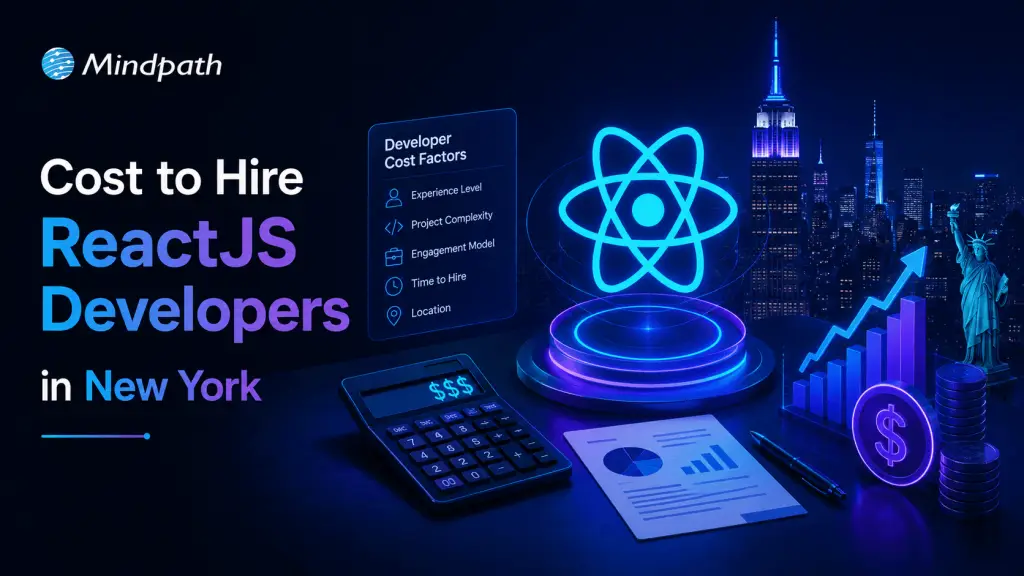
ReactJS Developer Hiring Costs in New York
Hiring a ReactJS developers in New York involves several pricing considerations, including expertise level, project complexity, and engagement approach. The cost of employing a freelancer, in-house developer, or outsourcing to an agency varies greatly. Understanding these aspects allows you to efficiently manage your budget and select the best staff for your project. Here’s an overview of the major factors that determine the cost of hiring ReactJS developers in New York.

1. Experience Level

The cost of hiring a ReactJS developer in New York varies according to their expertise level. Entry-level developers often charge between $60 and $80 per hour, making them an excellent alternative for modest tasks. Mid-level developers, with greater hands-on expertise, charge between $80 and $120 per hour. Senior developers, who have substantial experience with React and complicated application development, may charge between $120 and $180 an hour. While senior developers are paid more, they deliver high-quality, scalable, and optimized solutions that save time and money in the long term. Choosing the appropriate expertise level is determined by your project’s objectives and budget.

2. Engagement Model

The engagement model you choose affects the price of hiring a ReactJS developer in New York. Freelancers charge between $50 to $120 per hour, providing flexibility but less consistency for long-term work. In-house developers make $90,000 to $150,000 per year, offering specialized assistance but incurring additional expenses like perks and office space. Agencies charge $100 to $200 per hour and provide a team of professionals for end-to-end development. Each model has advantages and disadvantages, so firms should evaluate project duration, complexity, and money before making a selection.

3. Project Complexity

The complexity of your ReactJS project has a direct influence on development expenses. Simple applications, such as basic web pages, cost between $5,000 and $15,000. Medium-complexity projects, such as bespoke dashboards or eCommerce websites, cost between $20,000 and $50,000. Highly complicated programs, such as business software or AI-powered platforms, might cost more than $100,000 owing to additional functionality, API interfaces, and security needs. More sophisticated projects necessitate developers with greater skill, raising expenses. Identifying your project’s complexity allows you to budget more wisely while also hiring the proper ReactJS talent for a scalable and efficient solution.

4. Location and Market Demand

The location and market demand in New York have a substantial impact on recruiting expenses. As a tech hub, New York has a strong demand for ReactJS engineers, resulting in higher wage expectations. Local developers often make $90,000 to $150,000 per year in-house, or $100 to $200 per hour as top freelancers and agencies. To cut expenses, several organizations are exploring recruiting remote workers from Eastern Europe or Latin America, where competent engineers are more affordable. While local developers make cooperation simpler, employing experienced remote workers can be a cost-effective choice without sacrificing quality.

Looking for expert ReactJS developers in New York? Mindpath, offers top-tier talent for your project, whether you need freelancers, in-house experts, or a full development team. We deliver cost-effective, high-quality solutions tailored to your needs. Let’s build something great together!

Contact us today

Discover the ultimate guide to hiring Node.js developers in London. Learn about the skills, benefits, and cost factors involved in finding the right talent for your project.
Top App Ideas

Are you in search of top app ideas that can take your business to the next level? Confused about which app can be beneficial for your business? If so, you are not alone in this! Now-a-days most of the business owners are turning to smart, easy-to-use apps that can boost customer engagement, simplify daily tasks, and even gain better profits. When you are looking for an app idea that can help you develop your business in 2025, choosing the right app idea can make a huge difference.

In today’s technology-enabled world, new technologies like AI, machine learning, and cloud services make it easier than ever to construct transformational apps. These apps can keep you ahead in a fast-moving market and provide the best possible service to your customers. In this blog, we have compiled a list of the best app ideas to transform your business in 2025. Each idea is based on current trends, real needs, and new opportunities for the future. 

Great ideas grow with the right technical foundation. Discover how Mindpath’s services for web and application development may help your company create cutting-edge digital products.

30 Top App Ideas to Watch in 2025

Here are the 30 best apps to make in 2025, carefully selected to reflect future business trends and user needs. They all focus on real-world problems, user experience and how to help companies to accelerate their growth in a digital-first world. 

1. E-learning App

An e-learning application allows people to learn anything, anytime, directly from their phones. An e-learning app can provide video lessons, quizzes, and tracking progress over a few different topics, such as languages, coding, or business.  

2. Expense Management App

An expense management app helps users track spending, set budgets, and stay on top of their finances with ease. It replaces messy receipts and manual tracking with simple, automated tools. This is one of the best app ideas for startups looking to offer real value and solve everyday money problems. 

3. AI Prompts Generator

An advanced AI prompt generator helps users come up with smart, goal-based prompts for writing, content creation, and planning. It adjusts to user needs, whether it’s for business, education, or personal growth, and keeps getting better with use. It’s one of those mobile app ideas that can change the world by making creativity and productivity easier for everyone.  

4. AI Image Enhancer

An AI image enhancer lets users quickly improve photo quality without needing advanced editing skills. It can sharpen details, fix colors, and upscale low-res images with just a few taps. Perfect for anyone who wants clearer, better-looking photos in less time. 

5. AI Chatbots for HRMS

An AI chatbot for HRMS makes it easy for employees to handle tasks like leave requests and timesheet updates right from their chat workspace. It connects smoothly with tools like Microsoft Teams and works with different HR systems.  

6. Eco-Friendly Commute Planner

An eco-friendly commute planner helps users find routes that are both timesaving and better for the environment. It suggests options like biking, carpooling, or public transport based on real-time traffic and emissions data. Among practical business app ideas, this one encourages greener habits while supporting corporate sustainability goals. 

7. Language Learning App

A language learning app makes it fun and simple to pick up a new language, starting with basics like the alphabet and moving up to real conversations. It can include voice features to help with pronunciation and keep learners engaged. This is one of the best trending mobile app ideas for beginners who want to build language skills step by step. 

8. Food Delivery App

A food delivery app connects users with local restaurants and food vendors for quick, tasty meals at home. It can include features like user reviews, exclusive deals, and social sharing to create a lively food-loving community. It’s a simple way to enjoy great food while supporting neighborhood businesses. 

9. Vehicle Insurance App

A vehicle insurance app helps users compare plans, get instant quotes, and manage their policies all in one place. It makes tracking renewals and paying premiums quick and stress-free. With easy claim filing and real-time updates, it keeps the whole insurance process simple and smooth. 

10. UPI Payment App

A UPI payment app lets users send and receive money instantly using just their phone, without needing cash or cards. It links multiple bank accounts and supports payments through numbers, virtual addresses, or QR codes for easy transactions. This convenience makes it one of the million-dollar app ideas transforming how people handle money every day. 

11. Drone Service App

A drone service app connects users with professional drone operators for tasks like aerial photography, surveying, and fast deliveries. It makes using drone technology easy and accessible for various needs. This app opens up new possibilities by bringing the power of drones right to your fingertips. 

12. Restaurant Reservation App

A restaurant reservation app lets users quickly book tables at their favorite spots without waiting. It shows availability, menus, and special deals, making dining planning easy and personalized. For restaurants, it helps manage bookings smoothly, so everyone enjoys a better experience. 

13. Customer Support Chatbot App

A customer support chatbot app helps businesses respond instantly to common questions, cutting down wait times and improving user satisfaction. With features like natural language processing and 24/7 availability, it provides reliable help anytime and can hand off complex issues to human agents. 

14. Workflow Management App

A workflow management app streamlines team collaboration by automating tasks and organizing projects. It offers features tailored to fit specific team needs, making remote work easier. With shared access and PC-friendly tools, it’s a top choice for improving business operations. 

15. Container Tracking App

A container tracking app makes it easier to keep tabs on your shipments in real time. You can see exactly where your cargo is and when it’s expected to arrive. It’s a simple way to stay organized and keep your logistics running smoothly. 

16. Voice Translation App

A voice translation app can be a game-changer for anyone traveling to a country where they don’t speak the language. Just speak into your phone, and it instantly translates your words into the local language and the other way around too. It’s like having a personal translator in your pocket, making conversations abroad way less stressful. 

17. Video Editing App

With so many people posting videos on social media, a solid video editing app is a must. It helps users turn casual clips into clean, professional-looking content that actually grabs attention. Whether it’s for personal stories or product promos, this app makes polished videos super easy to create. 

18. Interior Design App

An interior design web app lets users visualize home changes with 3D tools and AR. They can place virtual furniture in real spaces for a personalized touch. It’s one of those new app ideas perfect for home makeover lovers. 

19. Fitness App

A fitness app like this makes staying healthy a lot easier by letting users track key habits and health stats in one place. With support from real experts and custom plans, it’s great for anyone looking to prevent lifestyle issues. Plus, built-in chat helps users connect with coaches and others on the same journey. 

20. AI Logo Maker

An AI logo maker allows users to generate unique and professional logos by inputting keywords, colours, and information about their industry. The AI logo maker will suggest designs quickly and to be easily customized. It is a good option for anyone looking for a sleek logo without paying a designer to create it

21. Railway Tracking App

A train tracker app would give commuters real-time alerts of where the trains are on track and when they are due to arrive at their station, alleviating stress related to planning commuting journeys. It removes the guesswork of if a train is late or having any other disruptions so they can avoid waiting at the station or running around for alternative methods of transportation. 

22. Virtual Art Curator

A Virtual Art Curator application uses AI technology to develop individualized virtual art exhibitions tailored to your preferences and chosen styles. It will recognize the types of art and artists you enjoy and actively auto focus on a gallery designed specifically for your tastes and interests. 

23. Car Sharing App

When users share their vehicles and intended destination in real-time, finding rides is easy for the passenger that will be heading the same way. Passengers can connect with their driver going in the same direction and share the ride. It is a simple way to save some money and cut down on congestion by taking a trip together.  

24. Disaster Management App

A disaster management app can alert people to disasters that are happening nearby, informing them of the type of disaster and its severity to keep them safe. It can help people understand what to do during an emergency, and it can help locate people that are stranded. The app will help rescue teams by providing real-time information on damage and people requiring assistance. 

25. Doctor’s Consulting App

A doctor’s consulting app lets you easily ask questions and get answers directly from doctors. You can also stay updated with the latest medical news and research. Plus, it makes booking appointments quick and simple, all in one place. 

26. Logistics App

A goods-transporter app connects people who require swift deliveries with any nearby available vehicles. It helps to coordinate shipments with trucks that might return to the shipper empty after deliveries. It helps save time and makes it easier for everyone to transport goods. 

27. Virtual Clothes Shopping App

A virtual clothes shopping application will show users what they look and fit like, without the need to try them on physically. This saves a considerable amount of time spent changing and waiting in dressing room lines. Virtual shopping with an app is faster and more entertaining from the comfort of your home. 

28. Restaurant POS App

Using a restaurant POS app makes reserving the ideal table so easy and quick. You simply choose your favorite table and time and reserve it directly within the app. It’s a simple way to figure out a nice evening out without the hassle. 

29. Grocery Delivery App

A grocery delivery app offers users the ability to shop at their local stores and have fresh groceries delivered to their doorstep, with fast delivery times. Grocery shopping is made easy with customized shopping lists, real time inventory updates to the app, and a streamlined payment process. Users can also monitor their delivery in real time, ensuring a simple experience every time.

30. Event Management App

An event management app alleviates the stress of planning! They take care of guest lists, ticket sales, and real-time updates, all in one app. Event management apps can sync seamlessly with payment systems and social media, enabling event promotion and engagement with attendees to be easier. 

Steal Top App Idea to Transform Your Business in 2025

These top app ideas for 2025 offer practical ways to improve customer experience and streamline business tasks. Whether it’s AI tools, delivery apps, or event planners, each idea focuses on real needs that can help your business grow and stay competitive in a fast-changing market. 

At Mindpath, we specialize in web and application development services that bring your top app ideas to life. Our expert team creates custom, scalable solutions designed to meet your business needs and future challenges. With Mindpath, you get reliable support and cutting-edge technology to grow your business confidently.