
Latest Insights On
GenAI, Tech, and Digital Transformation
Stay updated with expert insights, success stories, and real-world applications of cutting-edge technology.

Artificial intelligence is the biggest force of transformation in software development, with AI tools enhancing innovation and productivity. The applications of AI in software engineering also draw attention towards the utility of artificial intelligence in software maintenance. Artificial intelligence has been helping with automated code generation and optimizing the testing and deployment processes. Where does AI come into play in the maintenance of software applications?
AI technologies can contribute to software maintenance with automated debugging and testing to identify areas for improvement. Software engineers can also use advanced AI tools to avoid future issues with proactive maintenance strategies. Furthermore, artificial intelligence also expedites other maintenance tasks, such as resource allocation and real-time performance monitoring. As AI continues evolving, it may introduce fundamental changes in all aspects of software maintenance.
Planning to use AI to optimise your software engineering workflows? Mindpath’s software maintenance and support services provide smart solutions that simplify maintenance and support growth.
Unraveling the Role of AI in Maintaining Software Applications
How do you ensure that software applications work exactly as you intended after launching them? Many people don’t understand how important maintenance in software applications can be, especially for critical apps. Traditional software maintenance practices involve identifying and fixing bugs, introducing updates and implementing new improvements like security patches. The other responsibilities involved in software maintenance include troubleshooting issues, understanding legacy code, analyzing logs and resolving user complaints.
Most of the work in software maintenance required manual effort, which led to many other problems. The biggest problems in traditional software maintenance approaches include the possibilities of human error, intensive resource allocation and extended response times. Artificial intelligence revolutionizes software maintenance by automating different tasks and improving overall efficiency. With the power of automation and predictive analytics, AI can provide a strong foundation for proactive software maintenance.
Want to understand what makes engineers thrive in AI-powered development environments? Check out our qualities of a good software engineer blog to discover the traits that set top professionals apart.
Why Should AI Be Your First Choice for Software Maintenance?
You can notice one of the prominent reasons to use AI for software application maintenance in how AI tools can analyze code and identify vulnerabilities. The utility of AI in software development extends beyond automated code generation or creation of test cases. Developers and engineers can rely on AI for automated bug detection for better advantages than manual code testing. Artificial intelligence also empowers developers with the capability for identifying trends and patterns that would have been impossible with manual methods.
The primary reason to choose AI for more efficient software maintenance revolves around the assurance of multiple benefits. You can notice a significant reduction in time and effort required for software maintenance with artificial intelligence. AI-powered tools can help with automatic creation of code documentation, thereby saving the valuable time of maintenance teams.
The applications of AI in software maintenance also help developers in focusing on the critical issues. With AI handling automatic bug detection and creation of bug reports, developers can achieve more effective software maintenance. For example, AI tools can use past instances of bug fixes to come up with solutions for similar issues. As a result, you can enjoy faster resolution along with access to knowledge that can help with future maintenance activities.
Want to better plan your project budget and avoid unexpected expenses? Discover our software development cost blog to learn the key factors that influence overall development pricing.
Understanding the Use Cases of AI for Software Maintenance
Artificial intelligence might seem like the omniscient computer systems from science fiction movies and novels. Have you ever wondered how AI is used in software development and maintenance? The use cases of AI for maintenance of software applications involve the use of machine learning, large language models, natural language processing and other AI technologies. The integration of these technologies in software maintenance services can improve accuracy and ensure seamless functionality of software applications.
1. Predictive or Proactive Maintenance
One of the most noticeable applications of artificial intelligence in software maintenance points at predictive maintenance. It enables a proactive approach to software maintenance by identifying and resolving issues before they happen. AI tools can leverage machine learning to learn from historical data of bug repositories and version control systems.
Artificial intelligence can predict potential areas in the code where you can find bugs and vulnerabilities. As a result, developers can rely on a proactive approach to software maintenance with artificial intelligence. Predictive analytics with AI can help with assessment of system health, prior incidents and usage patterns. Software maintenance teams can take preemptive action in situations where manual maintenance approaches would have failed.
2. Bug Detection and Resolution
Another common way in which IT software support teams can enhance maintenance with artificial intelligence is bug detection. AI algorithms can facilitate easier detection and classification of bugs in software applications. Artificial intelligence offers the power for analyzing logs, code repositories and telemetry data for faster bug detection. Machine learning algorithms in AI tools can identify recurring patterns, create bug reports and identify vulnerable aspects of the code. On top of it, AI tools can also recommend ways to resolve the bugs efficiently.
3. Automatic Code Refactoring
Software developers and engineers can also leverage AI tools for automated code refactoring to achieve more efficient software maintenance. Automated code refactoring refers to the process of breaking down a code to discover potential areas for improvement. The significance of AI in software engineering is clearly evident in how AI algorithms can recommend improvements for performance, readability and ease of maintenance. As a result, developers can achieve easier code optimization alongside reducing technical complexity.
4. Resolving Support Tickets
Internal teams also raise support tickets along with users, thereby making ticket resolution an important priority in software maintenance. NLP algorithms can help with automatic classification and prioritization of new maintenance support tickets according to urgency. You can also find some platforms with AI tools that recommend suggestions to resolve the support tickets. The use of AI in resolving maintenance support tickets reduces the burden on human support teams.
Want to stay ahead of evolving development practices? Discover our software development trends blog to explore what’s shaping the future of software.
New Trends Expected in AI-Powered Software Maintenance
The evolution of artificial intelligence has brought many new enhancements across different industries. You can also expect the role of AI in software development and maintenance to grow bigger with the arrival of new AI capabilities. The latest developments in AI will play a major role in redefining software maintenance in the future.
1. Adoption of AI Agents in Software Maintenance
Agentic AI is one of the biggest trends that have been grabbing headlines everywhere in the domain of AI. Many businesses have embraced autonomous or semi-autonomous AI agents for software maintenance tasks, including software developers and technical support agents. AI agents can perform regular maintenance tasks, such as rolling out new updates, applying patches or restarting services without direct human intervention.
2. Using Generative AI to Improve Legacy Code
Legacy code is a formidable challenge in software maintenance as engineers have to check old codebases to identify errors and vulnerabilities. With the help of generative AI, software development teams can now analyze legacy codebases easily at a faster pace. On top of it, generative AI tools can help with detection of security issues and suggest patches. Some platforms also offer the advantage of rewriting old modules in new programming languages.
3. Reinforcement Learning in Software Maintenance
The next promising way in which AI can become a part of software maintenance involves the use of reinforcement learning. You can improve maintenance in software applications by using reinforcement learning algorithms to learn from feedback. The insights gained from feedback will help in improving performance, especially for complex software maintenance tasks.
Ready to invest in technology built specifically around your goals? Check out our custom software development blog to learn why customization matters.
Final Thoughts
The reasons to adopt artificial intelligence in software maintenance revolve primarily around enhancing speed and efficiency. You can notice how AI improves software maintenance by facilitating automated detection and resolution of bugs. Artificial intelligence can empower software maintenance companies to adopt new trends like AI agents and generative AI for effective maintenance.
Mindpath is a trusted name for software maintenance and support services with tangible proof of expertise in artificial intelligence. Our software engineering services have been delivering excellence to all our clients with capabilities to leverage AI technologies in software maintenance. We have earned the love of clients with software maintenance and support services that deliver exactly what they want. Consult with our experts now and find the best ways to integrate artificial intelligence into your software maintenance workflows.
Frequently Asked Questions
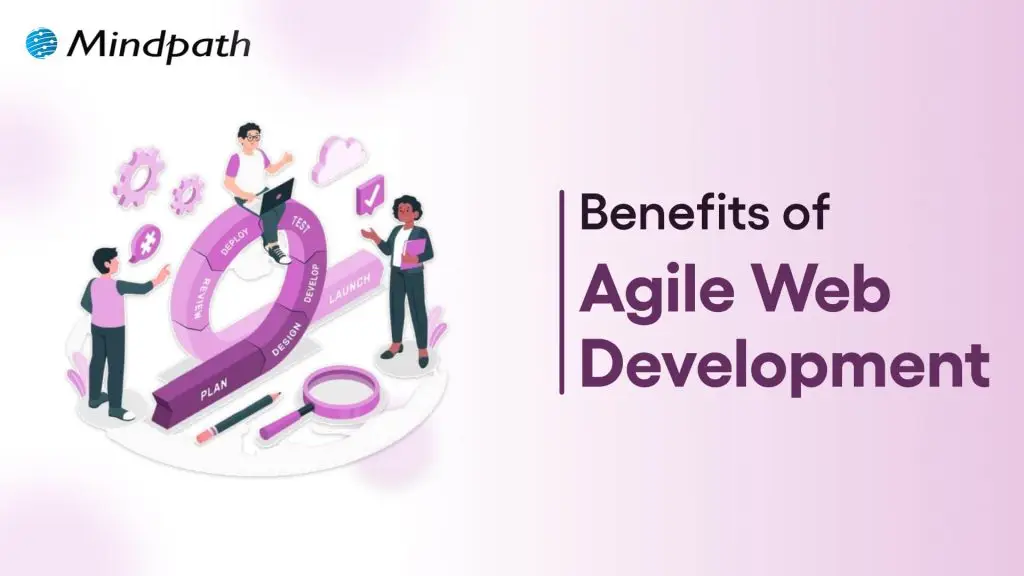
Web development is the priority of every business that wishes to have a strong digital presence. Your business must adapt to new trends and emerging user behavior patterns in diverse web development projects with ease. The utility of agile methodology in web development has been gaining a lot of traction due to the assurance of multiple benefits.
Do you think that thousands of software engineers praise the agile methodology just for fun? Agile approaches to web development not only bring adaptability but also the benefits of innovation and efficiency in the development process. You can stay ahead of the competition in the modern technological landscape with a dynamic approach to web development.
Do you want a website that adapts quickly to your business needs and drives growth? Mindpath’s web development services deliver custom agile solutions that enhance performance, user experience, and scalability.
Understanding the Agile Methodology
Many people may think that agile methodology is a newly formulated approach for web development. On the contrary, it is one of the most popular approaches in software and web development. The reason to choose agile for web development is the emphasis on delivering more value to the end users and developers. One of the biggest highlights of the agile methodology is how it facilitates collaboration between different members of development team.
The primary way in which agile methodology works for web development involves breaking projects into sprints. The sprints are manageable iterations and can help in ensuring consistent progress in web development projects. With the agile approach, development teams can adapt quickly to user feedback, new business requirements and market conditions. The flexibility for cross-functional teams to work closely improves collaboration and enhances decision-making.
The most prominent thing about the agile approach is the emphasis on customer expectations and needs. Agile development promotes a culture of continuous improvement with the use of sprint reviews and daily updates. The assurance of continuous improvement ensures that the final product delivers the value that end users want. The continuous refinement in different iterations helps in delivering high-quality web projects.
Planning to enhance your Agile strategy with cutting-edge tools and frameworks? Discover the latest insights in our web development trends blog to stay ahead of industry changes.
How is Agile Different from Traditional Web Development?
The popularity of the agile methodology has grown by huge margins as organizations embrace it in different domains, including project management. You might think about how the agile methodology for website development delivers better results than traditional development approaches. You can use the differences between the two approaches for web development to understand how the agile approach is better.
1. Scope for Adaptability
The biggest reason to choose agile over traditional web development approaches is the assurance of adaptability. Traditional development focuses more on prior planning with detailed specification of project requirements and needs at the beginning. On the other hand, agile methodology recognizes that a web development project’s requirements will change at different stages. Therefore, agile development emphasizes flexibility while supporting iterative modifications on the basis of continuous feedback.
2. Iterative Development Process
You can differentiate agile web development and traditional web development in terms of the facility of an iterative development process. Traditional web development follows the waterfall approach in which you complete one step after the other. Agile development relies on an iterative development process by breaking down a project into smaller iterations. The iterative approach offers continuous feedback loops and easier recognition of potential problems in the early stages.
3. Enhanced Collaboration
Traditional web development works with clear demarcation of roles and responsibilities of team members. It also restricts stakeholder involvement with formal review processes at different stages of the development project. You can notice the benefits of agile development in how it promotes cross-team collaboration and collaboration with stakeholders. Team members can work together and share their expertise with the objective of achieving shared goals. Agile development calls for regular meetings and feedback to encourage continuous collaboration with all stakeholders.
4. Emphasis on End User Requirements
Another crucial point of difference between agile and traditional development is how they focus on requirements of the end user. Traditional web development relies heavily on extensive documentation and can be susceptible to delays or failures. In addition, traditional development approaches cannot adapt to the emerging needs of end users. However, agile methodology boasts of adaptability and can respond faster to changes in customer needs or market trends. Most important of all, agile development aims to deliver value to the end user rather than creating comprehensive documentation.
Want to make your Agile web development process smarter and more data-driven? Check out our AI in web development blog to discover how intelligent automation enhances productivity and innovation.
How Does the Agile Methodology Enhance Web Development?
The biggest question that any business owner will have about agile development revolves around its advantages for their web project. Why should you ditch the traditional development approach for agile development? You must know the advantages of agile software development to give the best answer to this question. While it is better than traditional web development in many ways, agile development is an ideal choice for achieving more value with web development projects.
1. Assurance of Better Quality in the Final Product
Agile development follows an iterative approach, which involves testing each feature when it is developed. The continuous feedback and quality improvement in each sprint offers the assurance of creating a better final product. Development team members and stakeholders work in collaboration to fix the loopholes together in early stages of development. The flexibility to refine the product at different stages provides the assurance of high-quality final products.
2. Emphasis on Customer Needs
The discussions about agile development will be incomplete without mentioning how it focuses on customer needs. You can notice the advantages of agile methodology in how it keeps customers in the loop. Developers can make changes in the web project prototype on the basis of feedback from product owners. As a result, agile development helps in building products that align closely with customer expectations. Weekly meetings and feedback sessions with stakeholders ensures that agile methodology will deliver a customer-centric product.
Want better results from your Agile web projects? Discover our web apps features blog to learn the key features that drive success.
3. More Flexibility and Control over the Project
New web development teams have been looking up to agile methodology for the benefit of flexibility. Team members can make changes in the project for their respective sprints according to the feedback of customers. If a stakeholder needs a new feature in the product, the development team can repeat the process to make the required modifications. It helps in avoiding disruptions to the overall development process. At the same time, agile development ensures that all stakeholders enjoy better control. Each member in agile development teams is accountable for their actions while maintaining complete independence in their sprints.
4. Faster Launches and Continuous Improvement
Another notable addition among the advantages of agile development is the time to market for web projects. Web developers can launch websites or web apps quickly as the agile methodology always leaves room for continuous improvement. The collaboration between web developers and stakeholders offers the ideal ground for continuous improvement and timely project delivery. With the agile methodology, developers can deliver incremental changes in all iterations to deliver a better product.
5. Resource Optimization and Cost Reduction
Agile development empowers teams to verify assumptions and obtain feedback in the early stages of the development process. As a result, development teams can allocate resources according to the most critical features. The effective optimization of resource allocation ensures that you can achieve more savings in web projects with the agile methodology.
Wondering which tools can streamline your workflow and improve project delivery under Agile methodology? Learn more in our web development tools blog to explore platforms and technologies that boost productivity and performance.
Final Thoughts
The benefits of the agile methodology in web development showcase that it can facilitate a more efficient and seamless development process. You should understand that agile approaches to web projects involve breaking the larger project into smaller sprints. It promotes collaboration between teams working on the development project alongside ensuring the involvement of stakeholders. The scope for flexibility and continuous improvement ensures that developers can create a final product that aligns with customer expectations and needs.
Mindpath has been one of the leading platforms for web development with years of experience in this domain. Our web development services have always earned the appreciation of clients with the assurance of multiple benefits. We have specialized in the agile methodology with expertise in renowned agile development frameworks and tools. Reach out to us and build your next web project with the agile methodology now.
Almost every business wants to become “future-proof” or capable of adapting to new technologies and trends. What do you think helps the most in making your business ready for the future? The answer to such questions will point at a reliable software development agency that delivers “future-proof” solutions. As the competition in the modern business landscape continues growing, it is more important than ever to find effective software development companies.
Some business owners may assume that software development will not contribute anything to their bottom-line. However, it is important to acknowledge the fact that your competitors are building better software solutions to serve their customers. If you don’t choose the right software development company, then you are more likely to lose many opportunities.
Ready to adopt software that meets your unique business needs and future challenges? Mindpath’s software development services build cutting-edge and reliable solutions that enable businesses to thrive in a competitive market.
Why Should You Work with the Right Software Development Agency?
The need to adapt to emerging requirements in the technological landscape has forced almost every business to think about digital solutions. At the same time, it is important to know that multiple providers claim to offer the best software development services for your business. However, choosing the wrong development partner can lead to waste of time and money, ultimately landing you up with inefficient software. You should know the reasons to hire the right custom software development partner for your business.
1. Preparedness for Future Growth
The most crucial factor that calls for hiring a software development partner is the advantage of preparing for the future. As your business grows, you will need software solutions that can scale up to meet the rising demand. With the right partner, you can ensure that your business is prepared for growing needs, maintaining system health and supporting version upgrades. The ideal software development partner will not only help you translate your ideas to real products but also make them adaptable to evolving requirements.
2. Safety from Delays and Budget Overheads
You can trust the right software development agencies for their capabilities to avoid missing deadlines. The best software development agency will always ensure that you don’t have to incur unexpected costs due to poor planning. Reliable agencies work with realistic milestones and follow a structured delivery approach to reduce budget overheads. In addition, the best agencies follow proactive approaches to software development for reducing unprecedented disruptions.
Ready to choose the right technology partner for long-term growth? Discover the different types of software development and explore our detailed guide to make your strategy future-ready.
Why Is It Difficult to Find the Right Software Development Agencies?
The benefits of working with reliable software development agencies may encourage you to think about hiring one right away. The problem is that most of the software development companies you will come across look the same on paper. Therefore, finding the right software development company is a daunting challenge for every business owner. Awareness of the common issues in choosing a software development partner can help you find your way to the most effective providers.
1. Growing Competition among Development Agencies
You will find thousands of software development agencies in the market with almost all of them claiming to be experts. The crowd in the market creates difficulties in finding the provider who can truly serve your software development needs. If you know how to choose the right agency for software development, then you can filter the noise and pick providers who actually deliver on their promises.
2. Software Development is Not about Coding Alone
The next important reason for which finding software development agencies is difficult now is the emphasis on expanding beyond coding. The primary goal of software development for business success calls for more than technical execution. You will need a team that handles the complete development lifecycle rather than just writing effective code.
3. Stakes in Software Development Grow Bigger
Business owners must know that they have a lot at stake when they think about building new software. First of all, chances of failure are higher with possibility of discrepancies in product vision or technical inefficiencies. What would you do when you have a product that does not match your business goals? In addition, the costs involved in software development make it difficult to invest in any agency for software development.
Looking to avoid costly development mistakes? Discover the software development lifecycle and explore its role in building sustainable digital solutions.
Most Trusted Pointers to Find Software Development Agencies
After understanding how important software development is for your business and the difficulties in finding a reliable software development partner, you might think twice about your decision. The key to finding the top software development agency in UK or any other country is in a set of pointers recommended by experts. You should go with the tested and proven strategies to find software development agencies for better chances at success.
1. Use Trusted Referrals
The best way to begin your search for the best software development partner involves using trusted referrals. You should always trust companies that have always delivered the best results for their clients. It is important to understand that countless development companies claim that they can make the most of advanced technologies. However, a referral from any trusted friend or collaborator may help you a lot in finding reliable software development agencies.
2. Jump on the Low-Code Trend
Do you know how low-code became the latest trend in software development? The ideal software development agency working with traditional approaches will create software with a lot of code. While it ensures that your software and its interface do not falter, the heavy codebase creates challenges for users. You can find an effective solution to this problem by identifying providers who offer low-code development services. Low-code development not only ensures that you have the best coding quality but also optimizes resource consumption.
3. Check the Technical and Industry Expertise
You should choose a development agency that knows how to work with the technologies that your product needs. The right agency can work with the programming languages, platforms and frameworks you want in your software solutions. Any competent software development firm will adapt to your needs rather than forcing their tech stack on you. In addition, you must also check whether the development agency is familiar with your industry. Without domain knowledge, your development partner may end up making bad decisions that don’t align with your vision.
Looking to invest in software that truly fits your processes? Discover the custom software development benefits and explore why customization drives sustainable success.
4. Building Engaging User Interfaces and User Experiences
Software solutions that fail to meet user expectations will not give any value to your business. Users choose software on the basis of various factors, including the loading time, seamless navigation and user engagement. You must choose software development services that can create responsive software solutions with the prospects of best user experiences. It is important to know that agencies that can create interactive user interfaces and user experiences will help in boosting your brand recognition.
5. Look for Accreditation and Certifications
Credentials offer one of the easiest ways to find out whether software development companies can actually deliver what they claim. With many unregistered companies in the market, you may find it difficult to choose a software development firm. You should look for credentials that prove the authenticity of the development company before you make the final decision.
6. Emphasize the Need for Transparent Communication
Does the software development firm maintain clear lines of communication with their clients? You need to work with a firm that maintains transparent communication with you at every stage of the development process. A reliable software development company can provide the assurance of efficient communication that helps in avoiding various issues. For example, you will not waste your time in revamping the code or the user interface with clear communication.
7. Security, Support and Data Privacy
Above everything else, you need to focus on the critical factors like security, data privacy and post-deployment support while choosing software development agencies. The growing threat of cyberattacks has made it mandatory to think about the strongest safeguards for software solutions. You should work with agencies that specialize in data security and follow all the guidelines for maintaining data privacy. On top of it, you should also ask the development partner about the facility of post-deployment support. If they don’t agree to help you after deployment, then it might not be a good decision to hire them.
Struggling with project delays or budget overruns? Learn about common custom software development mistakes and explore how to build a more reliable development strategy.
Final Thoughts
The pointers for choosing the best software development agency reveal how a step-by-step approach can help you find the ideal development partner. You can stand out from the competition with your unique software solutions by working with the right partner. However, it is important to learn the difficulties in choosing the best software development firm and why you should choose one now.
Mindpath has been serving the software development needs of thousands of clients across various industries for years. Our experience in software development services has made us a trusted name for creating software solutions that stay ahead of the curve. Contact us today for your first consultation and find out whether we are truly the best you can trust for your next software development project.
Frequently Asked Questions
Artificial intelligence has come far beyond a futuristic concept for us. Recently, almost every industry has sought the expertise of AI. As per the statistics, the AI market size is going to reach USD 434.42 billion in 2026. Starting from powering personalized recommendations to adopting advanced diagnostics, nothing can beat the accuracy of AI. So, while pre-trained models can offer a strong foundation, fine-tuning is what fuels them to offer business-ready results.
However, fine-tuning is not as easy as a plug-and-play process. You might face unexpected outputs, performance decline, scalability issues due to fine-tuning AI mistakes, and much more. Such mistakes not only waste your time and resources but can also restrict the real potential of AI. This is why we are here to analyze some of the leading fine-tuning AI issues throughout the blog. Further, this guide is curated to answer your real concerns while making you confident about the fine-tuning process.
Want to make sure your AI models are fine-tuned for accuracy and effectiveness? Mindpath’s AI development services help you design, optimize, and deploy AI solutions that align with your business goals.
Importance of AI Models Fine-Tuning
Before we highlight the mistakes, it is necessary for you to understand what fine-tuning AI is. So, it is simply a process of adapting a pre-trained AI model to perform better on a specific industry, task, or dataset. Instead of training a model from scratch, fine-tuning allows you to modify your existing model’s parameters. This is how the model can align more closely with your usage scenario.
If you are asking why fine-tuning is essential for your project, it saves immense time while conserving your computational power. Further, training a large model from scratch can take months while draining your pockets intensively. So, fine-tuning becomes a cost-effective alternative.
While improving accuracy for specific tasks, it reduces the chances of generic or irrelevant responses. Fine-tuning AI can enhance the tone of the output while making it consistent. However, if you do it incorrectly, fine-tuning can introduce new issues that can have a negative impact.
Want to understand the foundations behind large AI models before fine-tuning? Discover Large Language Models (LLM) to learn how large language models work and why proper handling is key to avoiding mistakes.
What are Some Evident Tuning Mistakes that You Might Commit?
While fine-tuning leverages a series of advantages, it’s not without its challenges. As AI models evolve and your apps become more specific, you might face new challenges. So, it’s necessary to understand such complexities. This is your ultimate way to build high-performing and robust AI systems that never fail.
1. Fine-Tuning Without Proper Objectives
Many teams consider fine-tuning to be their next logical step that needs to be initiated for AI adoption. However, without a proper goal, you can’t expect the performance to improve and align with your business motives. Moreover, fine-tuning without clarity can keep your performance without any gains. Your models will start behaving inconsistently. This is one of the most overlooked fine-tuning AI mistakes many developers commit.
How to Avoid it?
To avoid such an issue, make sure to clearly define what problem the model must solve before you initiate fine-tuning. Further clarify what is better performance as per your point of view. In order to do this, you should also analyze whether fine-tuning is necessary or if prompt optimization will be enough. Fine-tuning should always be intentional without any experimental guesswork.
2. Overfitting the Model
Overfitting happens when a model becomes too specialized in the fine-tuning dataset and loses its ability to generalize. So, an overfitted model might perform well during the testing period but fails to showcase its prominence in real-world scenarios. It produces rigid outputs and struggles with unseen outputs.
How to Avoid it?
You must use validation and test datasets while applying early stopping techniques. Adjust your learning rates and include diverse examples to keep your dataset matched to every type of real scenario. Moreover, your ultimate goal is adaptability, not memorization. So, this fine-tuning AI approach can be your biggest effort.
Ready to streamline your fine-tuning process with the right technical approach? Discover the OpenAI Fine-Tuning API Tutorial to check out detailed implementation steps and optimization tips.
3. Using Low-Quality Training Data
Many organizations rush with their data collection aspect. They assume more data leads to better outcomes. But, in reality, quality matters more than quantity. Moreover, poor data gives rise to inaccurate data predictions and includes biases. It also increases the rate of hallucinations in language models. This is one of the most damaging fine-tuning AI issues because the model learns exactly what it sees.
How to Avoid it?
Make sure to normalize and clean datasets before initiating the training process. Remove outdated, duplicate, or conflicting samples. Ensure the examples are aligned directly to your target tasks. Quality being the most essential aspect of fine-tuning, you must balance the datasets to keep the outputs streamlined while restricting any unevenness.
4. Underfitting Due to Lack of Proper Training
Some developers lag behind in training or don’t use datasets that are small. This makes the model inefficient. Underfitted models generally showcase minimal improvements over the base models. It fails to capture task-specific orders and offers inconsistent outputs.
How to Avoid it?
It is essential to get a sufficient dataset size as per the complexity of the task. Moreover, monitor training loss and performance trends. Maximize your training potential and be assured of the outcomes. Here, you need to focus on balancing the training efforts to make the results more efficient.
5. Wrong Data Formatting
Many AI models can’t perform efficiently if the input format is not convenient. Formatting mistakes can lead to poor learning signals and incomplete or broken outputs. This is one of the concerning fine-tuning AI mistakes.
How to Avoid it?
It is essential to match tokenizers to the base level and maintain prompt-response structures consistently. Further, validate your data formats before training. Giving foremost attention to technical details can prevent hidden failures.
Facing unexpected roadblocks while implementing AI after fine-tuning? Identify the challenges of AI adoption and discover how to overcome barriers that impact scalability and ROI.
6. Neglecting Evaluation and Real-World Assessment
There are many developers who majorly prioritize training metrics and don’t care much about practical testing. So, without real-world evaluation, your models might fail in production. Your edge cases might remain undiscovered, and the business impact also remains unclear.
How to Avoid it?
It is important to initiate task-centric evaluation metrics. Further, test edge cases and unusual outputs. Most importantly, compare the results with alternative approaches for better results. Proper evaluation ensures fine-tuning AI encourages actual value.
7. Ignoring Safety and Alignment
Fine-tuning can unintentionally weaken safety mechanisms built into pre-trained models. Such issues can lead to biased outputs and unsafe responses. Further, this can put your organization at risk while ruining its reputational values.
How to Avoid it?
The evaluation pipelines must include safety checks, and you should initiate bias audits. If possible, maximize the model’s performance through human review. You must be assured of responsible fine-tuning that keeps the performance result-oriented.
Wondering why your fine-tuned AI model still lacks contextual accuracy? Check out the role of vector database in AI application to discover how semantic search enhances results.
What are Some Effective Strategies to Tackle Fine-Tuning AI Risks?
Your strategies and practices should be effective enough to prevent fine-tuning AI issues. Along with the best practices, you need to be aware of the tools that keep the process successful.
1. Invest in Quality Data and Assessment
Prioritize collecting high-quality data. Further, use intelligent augmentation techniques to expand your limited datasets and increase model generalization.
2. Adopt Parameter-Centric Tuning Approaches
Include methods like LoRA and Adapters to keep the process active. Such techniques can also reduce the computational risks while making the process accessible and cost-effective.
3. Consider Cloud Essentiality
For your scalable storage, cloud platforms can be the most essential factor. You can leverage the use of spot instances to analyze your cloud spend. Further, you can use serverless functions and reserved instances where necessary.
4. Include MLOps Practices
Consider your AI models like software products only. Initiate automated pipelines for development, deployment, testing, and rigorous monitoring. This stabilizes reliability while accessing rapid iteration.
5. Stick to Expert Guidance
Tuning AI issues sometimes requires special knowledge and suitable guidance. So, partnering with professional AI development teams can easily bridge the knowledge gaps. They can also help you accelerate your projects while helping you include cutting-edge solutions efficiently.
Planning to fine-tune models but unsure how they prioritize key data points? Learn about attention mechanism explained to discover how it strengthens language understanding and output quality.
How to Decide if Fine-Tuning AI is the Preferred Approach as Per Your Use Case?
Not every AI issue requires fine-tuning, and adopting it unnecessarily can give rise to complexities and cost. In cases like workflow management and prompt engineering, you can get authentic results without making any changes in the model. So, fine-tuning AI issues is necessary if you demand consistent output behavior at a large scale. You need to assess factors like data availability and performance gaps, and decide whether fine-tuning is necessary for you or not.
Final Words
Fine-tuning has the capability to present domain-centric results. However, it has to be done correctly for valuable outputs. Starting from clear objectives to evaluation gaps, the right strategies and expertise can help you avoid fine-tuning AI mistakes. Organizations that treat fine-tuning as a goal-driven process are more likely to get high-performing and quality AI systems. With data quality and evaluation, you can easily decrease the chances of fine-tuning while keeping the overall outcomes impactful.
This is where professional AI development partners like Mindpath play a crucial role. We can help your organizations design and fine-tune while deploying AI solutions that are practical. Further, we ensure sticking to ethical and future-ready approaches to make your fine-tuning efforts more effective and user-centric. We assist businesses in tackling fine-tuning challenges, whether it’s insufficient data or going through overfitting. Our customized AI development services are designed to align with your objectives while keeping your AI models’ performance consistent and efficient.
Student engagement is a critical factor when it comes to effective education. While curriculum and subjects might differ globally, engagement remains the cornerstone of learning. Today’s learners are valuing the essentiality of more interactive and practical experiences. This is where the relevance of AR and VR in education makes a real impact.
Starting from virtual science labs to 3D anatomy lessons and skill training, these technologies are changing how students learn. This also impacts the teaching methods of educators. As per the reports, the AR and VR education market is going to reach USD 28.70 billion by 2030. In fact, it is quickly turning into a powerful tool that can serve proper engagement.
Looking to enhance learning and boost student engagement in a digital world? Contact us to discover how we help deliver immersive experiences with AR and VR solutions.
What are AR and VR in Education?
Before you go through the impact of these technologies, it is necessary to understand the critical difference between the two.
- Augmented Reality adds digital elements like animation, 3D models, labels, and audio to the real world. It takes the help of devices like tablets, smartphones, or AR glasses. So, when it comes to a classroom setting, AR can turn your printed diagram into an interactive visual while putting life into the pages.
- On the other hand, virtual reality places learners inside a complete digital environment using a headset. So, students can easily conduct experiments or walk through historic civilizations.
Together, these AR and VR technologies can generate more active and student-specific learning environments for the best results.
Why are AR and VR important in Today’s Modern Education?
No doubt traditional learning methods have relevance in the market. But they often struggle to keep students completely engaged. This gap has become significant in this digital-first world. So, you need to understand that learners need to understand concepts better. So, this is possible when they see, explore, and interact with information instead of only reading and hearing about it.
- This is where the impact of augmented reality in education and the values of virtual reality come into the picture.
- These valuable tools can make your learning more effective.
- Further, they value multiple learning styles to help fill in the gap between theory and practical understanding.
- Whether it is a school classroom or a corporate training session, AR and the impact of virtual reality in education can make information easier to absorb.
What are the Essential Benefits of AR and VR in Education?
There is a series of benefits of AR and VR in education that you can go through in this section. However, these technologies need to be used strategically for the best results.
1. Improved Understanding
Core subjects like science, engineering, and medicine generally include complicated concepts. So, AR and VR can easily simplify such topics by visualizing them in ways that are easier to understand.
For example, instead of looking at a flat image of the human heart, you can assess the rotating model while observing the functions of each section. This is one of the major benefits of augmented reality in education.
2. Personalized Learning
Every student has their own learning capabilities. Some might be visual learners, and some might need repetition or practical examples. AR and VR can help you understand such differences by offering adaptable learning experiences.
3. Better Knowledge Retention
Students will be able to remember what they actively experience through these valuable technologies. Immersive learning can boost your memory by including a participatory approach.
So, when the learners can interact with the concept more effectively, their learning becomes more successful.
4. Safe Practice Environments
One of the most practical benefits of VR in education is that it allows you to practice without any real-world challenges and risks. As a medical student, you can easily simulate surgeries, and engineering students can easily interact with machinery.
Major Examples of AR and VR
To better value the core of immersive learning, here are some major examples of AR and VR in education.
- Virtual field trips can allow you to visit museums and historical sites right from the same location.
- You can easily perform experiments in virtual science labs.
- AR-enriched textbooks can easily turn printed pages into essential interactive learning tools.
- You can experience technical and vocational training modules for machinery, construction, and equipment handling.
These real-life applications show that AR and VR are not limited anymore. Moreover, they are already solving real educational challenges.
Challenges of Adopting AR and VR
No doubt the use of AR and VR in education offers a series of benefits. However, successful implementation needs proper planning. Some of the major ones have been listed in this section.
- Teacher training and onboarding process.
- The high cost of hardware and software.
- Technical maintenance and support.
These challenges are becoming easier to manage as the technologies have become more affordable. So, institutions that invest thoughtfully can seek long-term values.
Conclusion
The role of AR and VR in education has been drastically changing with a series of features. These technologies are helping educators generate more engaging lessons while enabling you to understand more complex topics. From better retention to higher engagement, the benefits of AR and VR remain effective.
So, if your business is looking forward to building future-ready learning experiences, the right technology partner can make all the difference. Mindpath can be your ultimate partner that can create and innovate impactful learning environments customized for your modern needs. We can offer you user-centric digital products that align with your needs.
FAQs
1. What is the Major Difference Between AR and VR in Education?
AR can add digital elements to the real-world environment, whereas VR generates a completely immersive digital space for better learning.
2. What are Some Essential Benefits of AR and VR in Education?
The major benefits include better engagement, improved understanding, and safe skill practice while helping you get more interactive learning experiences.
3. How to Use AR and VR in Classrooms?
You can use AR and VR for your virtual field trips, 3D visual learning, and even for lab practice. People also use it for language training and interactive lesson delivery.
4. Can AR and VR Improve My Learning Outcomes?
AR and VR can easily encourage your learning outcomes by making your lessons more interactive and visually practical.
5. Which Subjects Mainly Use AR and VR for Better Understanding?
AR and VR are majorly effective in subjects like science, medicine, engineering, and mathematics.

The transformative changes in the world of education have been fuelled by a wave of technological innovation. Just like other big sectors like finance, technology has had a formidable impact on the education industry. The emphasis on trends in education technology is gradually increasing as education has moved beyond the boundaries of classrooms. Education is becoming more personalized and dynamic with the help of different technologies, thereby establishing the foundations of EdTech. It is important to understand that EdTech is no longer another emerging trend. Educational technology, or EdTech, is now an integral element in the basic approach for acquiring knowledge. Let us find out the most notable trends that will dominate educational technology in 2026 and beyond.
Not sure how to move forward with education technology for your business? Contact us, we support organisations in building reliable and future-ready solutions.
Existing State of Education Technology
Before you learn more about the emerging education trends, you must understand the existing state of education technology or EdTech. The future of educational technology can revolutionize education on a global scale and create opportunities for students and educators. The EdTech industry is expected to become a $400 billion market by 2026 with new technologies redefining leaning experiences. Educational technology has the potential to address long-standing challenges in education alongside introducing the benefits of inclusivity, adaptability and accessibility.
As education gears up to become a $10 trillion industry by 2030, it is important to understand the scope of education technology. The integration of EdTech solutions has helped in creating ecosystems where learners can access knowledge anytime, anywhere. According to the World Economic Forum, the EdTech industry will serve more than 350 million post-secondary graduates and 800 million K-12 graduates worldwide in 2026. With such impressive numbers expected from the EdTech industry, you have strong reasons to believe that the industry will foster new trends.
Want to explore how AI can enhance teaching and learning experiences? Check out chatbots in education to discover how intelligent assistants provide real-time guidance and improve knowledge retention.
Unraveling the Big Trends for EdTech in 2026 and Beyond
The digital transformation of education with EdTech has been nothing short of a revolutionary experience for educators, learners and management. If you take a look at current educational trends, you will discover the significance of EdTech in transforming classrooms. Innovative technologies like artificial intelligence, virtual reality and other adaptive technologies have served as powerful tools for learners. The following sections will introduce you to some of the emerging trends in EdTech for 2026 and beyond.
1. Hyper-personalized Learning
The future of learning will rely a lot on artificial intelligence and there is no doubt in it. With the rising use of generative AI in education, learners and educators can capitalize on multiple advantages for better learning. Artificial intelligence plays a major role in adapting the learning experience to unique strengths, weaknesses and learning styles. Generative AI is shaping a new reality of education where personalized learning systems will ensure efficient learning experiences for every learner.
AI-powered learning systems can review the performance of learners, identify their knowledge gaps and also understand their individual learning styles. The systems can use the data to generate customized lessons, learning paths or adjust the difficulty of lessons. As a result, no student will be left behind in the learning journey and everyone will find equal opportunity to grow further.
2. New Role of Blockchain
Blockchain technology has been associated frequently with transformation of the education sector for its distinctive traits like cryptography or immutability. Blockchain is one of the biggest tech trends in education that can provide a completely new and efficient solution to verification of academic achievements. The concerns of fake certificates create troubles for deserving candidates who miss out on opportunities due to lack of verifiable credentials.
Blockchain can help in secure storage and verification of academic credentials like diplomas, degrees and certifications. As a result, learners will have more control over their academic records while enjoying the flexibility of distributing their credentials without the fear of copyright infringement. Blockchain can provide tamper-proof or immutable digital identities on a public ledger, thereby reducing the possibilities of fraud.
3. Adaptive Learning
Most of the discussions about the use of artificial intelligence in the education sector revolve around personalized learning. You can find many applications of AI in the field of education such as education chatbot apps that can solve learner queries at different stages. Adaptive learning through chatbot apps will emerge as one of the biggest trends in EdTech in 2026 and beyond. The primary goal of adaptive learning will focus on dynamic modification of lessons and content difficulty according to real-time assessment of student performance and engagement.
Adaptive learning systems will measure the progress of learners, identify their weaknesses and prepare learning paths that can guarantee success. The emphasis on lifelong learning along with growth of the online learning market creates more opportunities for adoption of adaptive learning systems. With the combination of predictive analytics, educators can use adaptive learning systems to create refined learning paths for truly personalized experiences.
4. Mix of Virtual and Augmented Reality
The list of top EdTech trends for 2026 and beyond will be incomplete without mentioning virtual and augmented reality. VR and AR have been implemented as solutions to create immersive learning experiences by transforming learners to places and situations that were previously unimaginable. For instance, VR can help learners visit historical sites in the classroom while AR displays overlay of digital information on the real-world objects.
The growing demand for immersive learning is one of the notable indicators of the rise of VR in education. At the same time, you must know that AR and VR encourage motivation, foster collaboration and improve comprehension. Virtual lessons have proved useful in enhancing the understanding of abstract concepts. Most important of all, VR and AR also present new opportunities for encouraging collaboration between learners and educators.
5. Bridging the Accessibility Gaps
As the world ushers in a new era of education, the primary use of IT in education will become more about making education accessible to everyone. The innovative use of technology in education with new EdTech solutions helps in achieving digital equity and accessibility. Learners can rely on EdTech to access education irrespective of their socio-economic background, physical abilities or geographic location.
Big organizations such as UNESCO recommend that local solutions will play a crucial role in transforming digital learning. One of the prominent emerging trends in educational technology will focus on creating infrastructure for digital literacy training, especially in low availability of resources. The only goal behind reducing the accessibility gaps will be about ensuring that every learner gets the opportunity to achieve their dreams.
Final Thoughts
The most noticeable trends for the domain of EdTech in 2026 and beyond include AI, blockchain and adaptive learning. VR and AR will also be the most prominent technology trends in education in future. You should know that these technologies will define future trends in education in 2026 and beyond with their transformative potential. For instance, AI can not only provide the foundation for hyper-personalized learning experiences but also create adaptive learning systems. You should also remember that data privacy and security will be prominent areas of concern in the future of EdTech. The challenges of potential biases in algorithms and the cost of implementing EdTech solutions will also create obstacles in future.
One of the crucial highlights that you should know about the higher education industry trends and EdTech focuses on opportunities. Educational technology will provide more productive and engaging learning experiences to every learner without any boundaries. At the same time, EdTech will also empower educators with resources that make them focus more on meaningful interactions. At Mindpath, we help organizations adapt to these evolving trends by building scalable and future-ready EdTech solutions.
Generative AI in finance transforms raw data into actionable insights, automates complex reporting, and models dynamic scenarios using large language models (LLMs). This revolution is the biggest force of transformation in the financial services industry right now, marking a significant leap for practical applications of AI across various sectors. You can find different examples of AI in finance that have been setting new benchmarks for innovation. Banking and financial services companies perceive generative AI as something more than a prevailing technology trend.
A report by McKinsey reveals that generative AI will have a significant impact on the banking and financial services sector. The report mentions that generative AI can deliver additional value of almost $240 billion to $340 billion every year in the banking industry. Companies in the financial services industry must know how generative AI can unlock new opportunities and prepare the foundation for innovation in finance.
Planning to integrate AI into your finance strategy to drive smarter decisions and growth? Mindpath’s AI Development Services provides customized AI solutions that turn data into actionable insights and innovation.
Is Generative AI Right for the Financial Services Sector?
Business leaders in the financial services industry know the challenges and complexities that come in the way of business growth. Starting from the intricacies of digital transformation to the continuous changes in customer habits, finance leaders have to deal with multiple responsibilities. You must know that the adoption of Generative AI for Business in finance creates new opportunities to achieve better efficiency.
You will find many examples of banking and finance companies that have adopted AI and transformed the way they work. Financial service providers have achieved faster budget cycle times and reduction in uncollectible balances with artificial intelligence. As the complexity of financial operations continues growing, companies look up to generative AI for various reasons. Companies in the banking and finance industry can use generative AI to find new opportunities for streamlining workflows with automation.
Planning to deliver highly customized financial services using AI? Learn about AI in personalized banking experiences to discover strategies that improve customer satisfaction and operational efficiency.
Key Benefits of Generative AI in Financial Services
The interplay between AI and finance has created the foundation to achieve many new benchmarks in the industry. With the help of AI, financial institutions can meet emerging expectations of customers and resolve inefficiencies across various financial operations. The applications of generative AI in the domain of financial services offer more than just automation.
1. Enhancing Accuracy
One of the prominent reasons to rely on AI revolves around the assurance of freedom from human errors. The use cases of AI in compliance checks, financial reporting and audits provide the advantage of reduced errors. Artificial intelligence takes care of such tasks where attention to detail is extremely crucial and helps in reducing inconsistencies that may manifest due to human error. AI models can analyze large datasets and find anomalies to ensure strict regulatory compliance. As a result, all stakeholders can fulfill compliance requirements while ensuring better performance.
2. Introducing Hyper-Personalization
Personalization of products and services is one of the crucial measures to improve customer engagement in any industry. Generative AI finance applications can provide hyper-personalized solutions that deliver exactly what customers want. Generative AI can help in obtaining valuable and relevant insights from the financial history, spending patterns and risk profiles of customers. With the help of those insights, financial institutions can offer highly personalized recommendations to customers. For example, AI systems can recommend the ideal investment strategy depending on the portfolio and risk appetite of customers.
Must Read: Generative AI for Customer Service
The biggest strength of artificial intelligence is the capability for real-time data analysis. Financial institutions can leverage this facility to make well informed decisions at a faster pace, using AI in decision making to guide strategy and reduce errors. The use of artificial intelligence for finance helps in navigating volatile markets with more efficiency, where companies have to respond to sudden changes and take decisions instantly. You can find the best example of using AI for improved decision-making in systems that identify early signals of market instability. The ability to identify flaws earlier helps financial institutions follow preventive measures without discrepancies.
3. Optimizing Operational Costs
Cost optimization is a major advantage of applying artificial intelligence in the financial services sector. By automating repetitive and time-consuming tasks, generative AI offers the ideal instrument for cutting operating costs. Generative AI can be used by financial institutions to generate documents, answers common customer service questions and process insurance claims. AI systems also help in reducing costs through automation of mundane tasks that can be completed without human intervention. One of the best examples of cost optimization with AI is visible in the use of AI chatbots for customer service.
Ready to upgrade customer interactions using AI in finance? Discover conversational AI chatbot to learn how intelligent assistants improve efficiency and deliver tailored support.
Unraveling the Use Cases of AI in Financial Services
Many organizations believe that adopting artificial intelligence in financial services is a daunting challenge. Generative AI is a game-changer for many functions in financial institutions with proven and tested use cases. Understanding the use cases of generative AI across different financial operations can help you get a better idea of how to make the most of the technology in practical scenarios.
1. Risk Management
Artificial intelligence delivers the power to create tools that can evaluate market volatility, operational threats and credit risks. The ability to simulate various scenarios with artificial intelligence can help in creating synthetic datasets which provide the foundation for robust risk management strategies.
2. Customer Experience
Generative AI is already playing a vital role in transforming customer experiences with the help of virtual assistants. These assistants leverage artificial intelligence to provide personalized financial advice and resolve the queries of customers. Artificial intelligence is capable of analyzing customer profiles in real-time and offering personalized solutions that guarantee seamless service delivery.
3. Portfolio Optimization
You can also notice the growing influence of AI in financial industry for the use cases in investment. Generative AI can help you created advanced predictive models that provide asset performance analysis and portfolio diversification. Financial advisors can use generative AI to draw simulations of investment outcomes, thereby offering better and more accurate recommendations.
4. Fraud Prevention
The financial services industry is plagued by cases of fraud that lead to losses worth billions of dollars annually. Financial institutions can leverage generative AI to learn from large datasets of transactions to identify anomalies in transaction patterns. It provides the ideal tool for real-time fraud detection, thereby providing a heads up before malicious agents make their move. Generative AI also helps in simulation of different fraud scenarios and fine-tuning algorithms to detect emerging threats.
Want to stay ahead of the curve in AI-driven finance? Discover Gen AI trends to learn how emerging technologies are shaping smarter strategies and innovative solutions.
Success Stories of Generative AI in the World of Finance
The best way to learn how artificial intelligence has revolutionized finance would involve a review of some success stories. The advantages of AI in financial services have garnered the attention of numerous top companies. Companies in the domain of banking and finance need to take inspiration from institutions that have successfully used generative AI to address critical concerns.
Quest IndexGPT, an innovative generative AI solution developed by JP Morgan, has revolutionized the creation of investment indices.
JP Morgan created Quest IndexGPT, a revolutionary tool for creating investment indices by using generative AI. On the other hand, MasterCard leveraged generative AI for creating a proactive fraud detection system. The fraud detection technology helped MasterCard reduce false positives, thereby ensuring seamless customer experiences.
Ready to adopt the latest AI technologies for finance innovation? Explore Generative AI tools to check out how these platforms are reshaping analytics, automation, and personalized services.
Final Thoughts
You can notice the transformative impact of artificial intelligence in the domain of financial services across various areas. The growing use of AI in banking and finance has created new opportunities for transforming the way financial institutions work. In addition, artificial intelligence revolutionizes customer experience and risk management in the finance industry.
Mindpath is one of the leading providers of AI solutions tailored to client expectations. We have been delivering end-to-end generative AI development services for different industries, including the financial services sector. Our experience speaks for itself in the success stories shared by our clients. Book your first consultation with us and achieve new levels of efficiency in the financial services industry.
Frequently Asked Questions

Growing a digital product in 2026 means having to think smarter and act sharper. Web application scaling is a permanent debate of teams that desire continuous growth without performance problems. The higher the user demand, the higher the expectations of speed, reliability, and experience. The pressure mounts up as the traffic increases, and systems become overstretched. This is a moment that is forcing businesses to reconsider the level of preparedness of their platforms.
As the growth escalates, all the technical decisions start to have an impact on stability and user trust. Thus, teams need to think ahead and at the same time, they need to be flexible to change. Scaling must help in momentum rather than decelerate the momentum. An effective strategy assists companies in managing growth with certainty and sanity. When properly done, growth becomes purposeful and manageable instead of being in a rush. The purpose of this blog is to explain how to tackle the idea of scaling websites in 2026 with importance and intent. Are you worried about scaling web applications? Keep reading further to know the best strategies!
Want to ensure your website can handle rapid growth without compromising performance? Mindpath’s web development services help you build scalable websites that grow with your business.
What is Web Application Scaling?
Web application scaling refers to developing an application that is capable of expanding without compromising its speed and performance. It assists apps to deal with additional users and operations without obstruction. Scaling web apps aims at maintaining consistency of performance as demand grows. Teams design systems which remain steady in the process of expanding. This will secure user experience and will help to grow the business in the long term.
With the increase in the number of users, apps need to adapt resources to prevent delays in loading or failure. In order to scale web application capacity, teams anticipate increased traffic and usage. An online service can increase to hundreds and thousands of users each day. This phase of growth ensures that pages remain fast and reliable with smooth interactions as a result of proper scaling.
The following are 2 main types of web application scaling:
1. Horizontal Scaling
Horizontal scaling involves the addition of additional servers to distribute the load. Traffic is distributed through a number of systems and this enhances stability and reliability. This approach increases scalability of web applications and it helps to grow without putting strain on individual server.
2. Vertical Scaling
Vertical scaling refers to the improvement of a single server to support additional work. Teams can be used to increase the CPU, memory, or storage in order to enhance performance. This is a method of maintaining scalability in web applications, but it ceases when the server gets saturated.
Planning to grow your website without compromising security? Discover application security best practices for web and mobile apps to check out strategies for safe and reliable scaling.
Effective Strategies for Web Application Scaling
Modern web application scaling needs proper planning and solid technical selection. In order to scale application growth without failure, teams should create scalable applications that remain fast, reliable and available to the growing demand of the user base. The right scaling strategy encourages long-term performance and contributes to the expansion of businesses.
1. Design for Flexibility First
A flexible structure facilitates growth and not confusion. Smaller services maintain system organization and are easy to manage. The teams make updates more quickly, without working on the entire product. This architecture will enable scalable web applications and alleviate technical pressure on a long-term basis.
2. Make Data Systems Growth-Ready
Powerful data processing maintains apps at high-speed in the case of expansion. Readable schemas assist systems to access information faster. Smart indexing also minimizes the unnecessary work of the database. The steps will create an effective base for web application scaling as the use of the application grows over time.
3. Balance Traffic Across Systems
Evenly distributed traffic maintains the stability of systems. There are several servers that distribute the workload. No individual server is overstrained. Such a balance enhances uptime and improves scalability in web application environments when it is at its peak.
4. Manage User Sessions with Care
Applications are usually executed on more than one server. State in one system should remain accessible in other systems. Interactions are consistent in external session storage. This would ensure that there is a reliable scalable web application experience among the users.
Must Read: Custom web application development
5. Reduce Load with Smart Caching
Caching keeps the repeated data nearer to the users. Reduced system effort is through faster access. Many repeated requests are not processed by the servers. The caching is more efficient in Web application scaling processes by enhancing speed and reliability.
6. Scale Resources Based on Demand
Traffic does not always remain at the same level all day long. Auto scaling will adjust the resources according to the change in usage. There is no lost capacity or performance loss within teams. This approach promotes a regulated expansion of any scalable application.
7. Speed Up Content Delivery
The speed of content delivery enhances customer satisfaction. CDNs will be used to serve files that are local. Smaller assets take shorter time to load in any device. Accelerated delivery enables platforms to scale to any part of the world without slowdown.
8. Watch Performance in Real Time
The growth requires constant visibility. Performance data illuminates the areas of weakness in an early stage. The notifications are directed at teams to take action when concerns extend. Real-time monitoring assists in making successful and predictable scaling choices.
Looking to scale your website smoothly without technical bottlenecks? Check out right tech stack for your web application to learn how the right stack ensures stability and speed.
Core Challenges of Web Application Scaling
Web application scaling is associated with distinct challenges that may influence the performance and user experience. The identification of the major issues assists the teams in planning more effectively and reaching the level of scalability in websites.
1. Limited Flexibility in Large Codebases
Monolithic systems are more difficult to upgrade and expand since each feature is closely interconnected. This restricts web application scalability and impedes the attempt to scale web sites effectively.
2. Slow Database Operations
Slow response is caused by inefficient queries and inefficient database structure. During the growth, teams find it difficult to preserve the performance, which influences the web application scaling.
3. Unequal Traffic Distribution
Excessive load balancing overloads certain servers but leaves others with nothing to do. This slows the web application scalability and also reduces reliability.
Must Read: High Performing Web Apps Features
4. Managing Sessions Across Multiple Servers
It becomes complicated in order to synchronize user sessions among numerous servers. Due to lack of planning, it restricts the ease of scaling of the web site.
5. Challenges in Caching and Data Updates
Incorrect cache management can serve outdated information to users. This disrupts web application scalability and reduces the effectiveness of scalable web applications.
6. Latency Issues for Distant Users
Applications with users spread across regions may experience slow response times. High latency can affect web application scaling and overall user satisfaction.
Want to plan your website’s growth with a clear development strategy? Explore web app development roadmap to learn how a structured plan ensures smooth scaling.
Ready to Scale Your Web Application Confidently?
Building a scalable web application requires careful planning, smart architecture, and efficient resource management. Teams must focus on performance, reliability, and growth readiness. By balancing traffic, managing sessions, optimizing databases, and implementing caching strategies, businesses can ensure smooth expansion. Following these strategies helps maintain speed, stability, and a strong user experience while scaling for increased demand.
At Mindpath, we help businesses develop scalable web applications through expert web development services tailored to growth and user needs. Our experts design flexible architectures, optimize databases, implement auto-scaling, and improve content delivery. We ensure your app remains fast, reliable, and ready for any increase in traffic. Partnering with us guarantees smooth growth, strong performance, and a consistent user experience.
The education industry is evolving and the dominance of AI in the sector will serve as a primary reason for inducing transformation on a large scale. One of the notable applications of AI in education that often goes unnoticed is the use of chatbots. The blend of artificial intelligence and education aims to make learning more productive and chatbots are the perfect example of the same. Students, educators and institutions can rely on modern educational chatbots for their adaptive nature and intelligent capabilities. Let us learn about the top ten real-world examples of chatbots that have been revolutionizing education.
Planning to transform student experiences with intelligent chatbots? With Mindpath’s AI development services, you can design and implement tailored tools that make learning smarter and more personalized.
Impact of Chatbots on Education
Conversational AI is responsible for changing the viewpoint of many people about accessibility of AI technologies. Imagine talking to an AI tool and finding solutions to a problem in your mathematics textbook. Conversational AI chatbots are the best example of tools which can interact with users in natural language. The use of chatbots in education involves the combination of machine learning and natural language processing to understand student queries and provide relevant answers. The core strength of chatbots revolves around offering instant assistance personalized at scale for each user.
Chatbots offer better results than human support, primarily due to their round-the-clock availability. Student can get support and relevant information whenever required from chatbots, thereby reducing delays. Chatbots analyze the data of individual students and adapt their content recommendations in a way that helps students with personalized learning. Educators can use chatbots to craft interactive quizzes and provide instant feedback to learners. At the same time, chatbots also reduce the administrative burden on teachers and allow them to focus on more complex tasks.
Want to understand how chatbots can improve learning experiences? Check out the benefits of chatbots to learn how they enhance engagement and efficiency.
Discovering the Top Ten AI Chatbots for the Education Sector
AI chatbots are the most innovative tools in the domain of education with a wide range of benefits. Chatbots can not only provide instant support and personalized learning experiences to students but also empowers teachers with resources to become more productive. The rising popularity of educational chatbot applications has drawn the limelight towards their transformative impact on classroom and online learning. The following AI chatbot examples being used in education will showcase their significance for the long-term growth of the industry.
1. Socratic
One of the most notable additions among AI chatbots used in the field of education is Socratic. Created by Google, Socratic is a chatbot that helps in breaking down complex academic questions and offers easily comprehensible explanations. The core strength of Socratic as an education chatbot is in the step-by-step solutions offered for problems in different subjects like mathematics, literature and science. It also adds visual aids and diagrams in its answers to provide easier explanation for abstract concepts alongside recommending online resources, articles and videos for better understanding of learners.
2. Zendesk Chat
Zendesk Chat is also a popular AI chatbot solution for higher education institutions. It is useful for managing queries, enhancing student engagement and providing responsive support. Zendesk Chat is one of the best examples of chatbots for higher educational institutions with its distinctive features. For instance, Zendesk Chat supports seamless integration with different CRM systems, thereby empowering educators to monitor conversations and evaluate engagement data. As a multilingual chatbot, Zendesk Chat can enhance student engagement even with presence of diverse groups.
3. IBM Watson
The IBM Watson Assistant is another example of using an AI chatbot for education, especially in higher education. The chatbot by one of the leading tech giants offers highly customizable tools to enhance student engagement and streamline communication. It also supports CRM integration to ensure cohesive support across different platforms. IBM Watson uses advanced natural language processing to provide nuanced answers to complex student queries. Furthermore, IBM Watson also uses an adaptive learning model that helps it evolve with student interactions.
4. Microsoft Copilot
The list of chatbots used in the field of education will be incomplete without including Microsoft Copilot. Learners and educators can access the functionalities of this intelligent assistant in the complete Microsoft suite of products. Copilot is one of the best chatbot examples that can help students in creating compelling presentations and essays alongside refining the content with insightful recommendations. Another notable application of Copilot in education focuses on quick summaries of web pages or documents.
5. Pounce
Another example of innovative chatbots in the domain of education is Pounce. It has been created by the Georgia State University to address the problems of declining enrollment. The chatbot helps in sending timely reminders and notifications about important deadlines, orientation details and steps to obtain financial aid. Pounce also offers personalized outreach by interacting with every student to ensure that they complete the enrolment process.
Want to understand how AI can enhance workflows and decision-making? Check out AI consulting to learn how expert guidance helps implement AI solutions effectively.
6. MATHiaU
Carnegie Learning has come up with MATHiaU, as a dedicated AI chatbot to teach mathematics. It leverages AI to create personalized learning paths for university students while adjusting the difficulty of content according to real-time student performance. MATHiaU serves step-by-step guidance that can help students overcome their doubts without feeling overwhelmed. Most important of all, the chatbot can recognize specific learning gaps and offer suggestions to address the setbacks.
7. Ivy.ai
Ivy.ai also deserves a place in this list of AI chatbots, especially for its emphasis on higher education institutions. As a matter of fact, it is one of the top education chatbot examples that have achieved promising results in enhancing student engagement. The chatbot can handle different types of queries, ranging from admission to the financial aid processes. Students can also rely on Ivy.ai for access to campus information, such as details about events and facilities.
8. Cara
Cara is another example of AI chatbots developed by educational institutions to address longstanding problems. It is a chatbot tailored for offering administrative support to the students of the University of Galway. Cara helps in addressing a wide range of administrative questions with quick and relevant answers. Cara reduces the administrative burden on the university staff by handling routine questions effectively. The introduction of Cara has led to enhancements in student satisfaction and engagement while allowing educators to focus on more complex tasks.
9. Duolingo
Duolingo is one of the top examples of “how are chatbots used in education” for its ability to help students gain fluency in new languages. It will serve as a huge catalyst for breaking down the language barriers in education. Duolingo offers a safe environment for students to learn how to speak and write in a new language with confidence. The instant feedback on pronunciation, vocabulary and grammar offers ideal prospects for immediate correction of mistakes.
10. Querium
The final addition among the top AI chatbots for enhancing education is Querium. It is an AI-powered platform created for promoting STEM education through comprehensive, step-by-step guidance to solve problems. The strength of Querium revolves around helping students find solutions to complex STEM problems with detailed explanations. Another special feature of Querium is concept reinforcement, in which it connects problems to the underlying theoretical concepts for better understanding.
Curious how AI-powered chatbots help generate more qualified leads? Discover lead generation chatbot to check out strategies for increasing conversions.
Final Thoughts
The advantages of chatbot in education can provide a completely new direction to the experience of students, educators and institutions. You can notice how each chatbot in this list offers diverse benefits such as personalized content creation, automated administration or student performance monitoring. As the AI landscape expands, you can expect more chatbots to make an impact on the education sector. Mindpath helps you leverage AI development services to create custom chatbots and intelligent learning tools tailored to your educational needs.

The software realm has been growing like never before. New software solutions have been emerging frequently. Customers need to bear in mind that the market is extremely fierce at the moment. However, there is a broad range of SaaS challenges that businesses have to struggle with.
It is time to look at some of the challenges of the Software as a Service solution that exist today. Businesses need to bear in mind that there exist countless obstacles that they have to encounter in their path. The insight into these challenges is the fundamental step to identifying effective solutions that can help to overcome the problems.
Ready to overcome the common challenges that slow business growth? Our SaaS Development Services help streamline development while improving reliability and scalability.
What is SaaS?
Software as a service, or SaaS, refers to the method of software delivery. In the SaaS model, applications are basically hosted by a provider and made available to users via the internet. This arrangement enables users to gain access to software solutions on a subscription basis, and they do not have to manage or install them on their own devices.
Some of the common examples of SaaS solutions for businesses include CRM software, online productivity tools, and many more. The emergence of SaaS is certainly a breath of fresh air for businesses. However, it is important to bear in mind that businesses may encounter a plethora of SaaS challenges in their path.
Planning to adapt your business strategy to emerging software trends? Discover SaaS trends to check out the innovations driving growth and efficiency.
Common SaaS Challenges That Businesses Encounter and Their Solutions
Using Saas comes with its own hurdles and challenges. If you use SaaS, you may be facing a number of these challenges. You need to be aware of the challenges of SaaS so that you can find the right solutions to address them.
1. Use of Similar Types of Products
One of the most common challenges is related to the use of overlapping products. A large firm is likely to have a large number of SaaS tools in its IT stack. It may give rise to visibility concerns. Without proper visibility, it may be very challenging to identify whether teams are using the same or different SaaS tools.
For example, different teams may be using varying cost management SaaS apps. Although the two tools may be different, they may have the same functionality. It implies that your company may be paying for similar features and functionalities twice.
Solution
A suitable solution to deal with these challenges of SaaS is to use a robust Software as a Service management tool. This tool can help you identify any kind of overlap between diverse software solutions. Once you have identified that there is a product or feature overlap, you can identify novel techniques to cut down unnecessary costs.
2. Shadowing Information Technology
A common challenge that business entities may face from a SaaS IT stack revolves around shadow Information Technology. It basically encompasses all the Information Technology systems and solutions that your business makes use of without the approval or knowledge of the Information Technology team. Shadow IT may also refer to the situation when a firm and its personnel have bought an app, implying the company has to pay for a similar kind of tool twice. These challenges come with their unique set of risks, such as a high possibility of data breach, etc.
Solution
You can partner with a company that can help your IT team uncover every tool or app that is used by the employees. Such a partner can help flag the applications that are not yet provisioned. This implies that your business will have proper visibility into shadow Information Technology prior to it becoming a major problem that is difficult to handle.
3. High Spending on Software
Overspending is a serious issue that business entities need to avoid at all costs, regardless of their size and nature. The companies that leverage SaaS solutions may spend too much money on software. This is a serious challenge that may give rise to complexities in the long run for the business. Businesses must be careful while choosing their SaaS solutions so that they can keep a tab on the money that they have.
Solution
It is essential for your business to plan an annual budget. It can give you an insight into the money that you need to spend on your software solutions or SaaS stack. You also need to broaden your knowledge into cost aspects relating to the contract, account use, and many more. You can take help from the biggest SaaS companies to gain insight into these aspects.
4. Lack of Understanding of SaaS Contracts
One of the common challenges of SaaS arises when companies have limited insight into SaaS contracts. With the growth of your SaaS solution, the total software contracts may also grow. After the contract has been signed and the application has been implemented, you need to have a solid understanding of the contract and its requirements. In the absence of a proper understanding, you may not be able to leverage the software solution to the fullest.
Solution
In order to address such challenges of SaaS, it is essential for you to keep the contract details and data in an organized manner. This approach will help you manage the details of the biggest SaaS companies with whom you partner in an organized fashion. You can use novel tools to manage software-related contract details in a well-organized and manageable manner. With the help of such tools, you can receive notifications on a real-time basis so that you can keep tabs on the contractual obligations. The organized information can certainly create value for your business in diverse ways.
5. Poor Data Security Measures
While talking about SaaS problems, one cannot ignore the issue relating to poor data security measures. It may increase the risk relating to data breaches, phishing scams, and many more. As Saas tools house tons of useful information about your company, SaaS problems may give rise to serious consequences for your business. The lack of a robust cybersecurity posture on the cloud can impact your business in diverse ways.
Solution
You can leverage cloud cybersecurity tools in order to derive optimum value from SaaS. You can also implement practices such as strong Identity and Access Management (IAM) and adopt the principle of least privilege. Moreover, it is essential to monitor the activities of users on a regular basis so that you can identify any suspicious activities that may exist.
A plethora of challenges and issues of SaaS may arise that business entities need to be aware of in the current times, as the use of Saas is gaining momentum like never before. So companies need to familiarize themselves with the top issues of SaaS. The insight can certainly empower you to effectively leverage Saas solutions in the business context.
Looking to overcome common SaaS challenges with the right development partner? Check out how to choose the right SaaS development services to learn how selecting the right team ensures success.
Final Words
Businesses that use SaaS need to keep track of their SaaS stack. It is a fundamental step that will empower you to be aware of the challenges that arise in your path. The insight will act as a stepping stone that can help you find appropriate solutions to address the identified challenges.
SaaS can give rise to both opportunities and challenges for businesses. In such situations, businesses must be aware of both these areas so that they can use these novel solutions optimally. Some of the common challenges that have been identified include the use of overlapping products, excessive shadow IT, etc. Mindpath’s excellent SaaS development services are designed to help businesses address the SaaS challenges and resolve them with expertise.
The future of data and analytics has been unfolding faster than ever. So, it has become an utmost responsibility of the organizations to keep pace with each changing trend. The global data analytics market size is also expanding and is expected to reach USD 402.70 billion by 2032. Today, organizations are relying on real-time insights to make smarter decisions and maintain a competitive advantage. So, as we move closer to the next phase of digital transformation, it is essential to analyze the present and future directions for better approaches.
A shift from descriptive reporting to predictive analytics has already reshaped businesses. Looking ahead, data and analytics trends are going to approach deeper automation and effective integrations. Let us explore such impactful developments that are going to make your organization futuristic in 2026 and beyond.
Looking to turn your business data into actionable insights with AI? Explore Mindpath’s AI Data Analytics Services to uncover trends, improve decision-making, and drive measurable business growth.
What are Some of the Empowering Data Analytics Trends 2026?
Data analytics has shifted from a support function to a strategic business driver. Previously, analytics efforts only prioritized traditional reporting. But today, modern systems are offering forward-looking insights. Let us get into some of the most diversifying data and analytics trends of the future.
1. The Growing Demand for Big Data Analytics
The efforts of exporting data for a month and analyzing it continuously have fallen out of the trend. In the near future, big data analytics will effectively prioritize data freshness with the ultimate goal of real-time analysis. This can help your business make better decisions while increasing its competitiveness.
As we move through data analytics trends of 2026, real-time analytics are becoming the default expectations for more industries. Further, organizations understand how to balance cost and latency with the usage of combined streaming and cached metrics layers. This helps in offering fresh enough data where it matters the most.
2. The Influential Demand of GenAI and RAG
We are going to enter into a transformative era in big data analytics, as three closely related abilities: GenAI, retrieval-augmented generation, and agents. They have gained massive traction in recent years. GenAI has already showcased its potential in data analytics trends 2025, and it is going to strengthen its pace in the upcoming years as well. GenAI pushes the boundaries of traditional data analysis and enables users to generate synthetic datasets and automate content building.
Further, this innovation opens up new capabilities for predictive analytics and data visualization, which were previously limited by the scope of datasets that were gathered manually.
RAG and AI agents, on the other hand, are going to leverage a unique set of opportunities and challenges as well. They can enhance AI models by augmenting them with real-time data retrieval or the ability to automate tasks with the use of tools.
As per the current trends in data analytics, we are going to watch GenAI and RAG shift from ad-hoc prototypes to standardized enterprise patterns.
Looking to see how data and analytics turn into practical AI-driven outcomes for enterprises? Explore generative AI applications to learn how organizations apply AI at scale.
3. Analytics Platforms will Handle Large Sets of Data
With the usage of cloud technology, elements like storage requirements and processing power can be infinite. Now, you don’t need to be tense about getting extra machines or physical storage, as you can use cloud storage to scale.
Further, with cloud data handling, many stakeholders can access the data simultaneously without facing any slowdowns or lags. So, unless you are adopting the right security elements, the data can be handled from anywhere and at any time.
4. The Rapid Usage of Real-time and Proactive Analytics
Nowadays, no one is appealing to the static and backward-looking reports. Latest trends in data analytics for business organizations are all about proactive alerts and real-time decision-making. Your systems should be able to detect the surface anomalies and predict outcomes. This can trigger better actions.
Organizations that can act on real-time insights are 1.6% more likely to gain double-digit annual revenue growth, as per McKinsey. So, predictive analytics is no longer optional; it should be your competitive necessity as per the data and analytics trends.
5. Democratization and Decentralization of the Data
For many years, business analysts had to leverage the efficiency of in-house data scientists when they wanted to extract and analyze data. But, things are going to be different as per data analytics trends 2026, with services and tools that enable non-technical audiences to assess data.
We are going to see more emphasis on analytics engineering. Plus, you can also experience the high demand for a visual approach. Modern business intelligence tools like Mode, Tableau, and Looker are all for visual exploration, dashboards, and best practices. In 2026, Gen-AI-enabled assistants are going to accelerate the shifts even faster.
Want to see how data-driven insights power smarter interactions in business? Discover about conversational AI to learn how analytics and AI combine to transform customer engagement.
6. The Transformation of Business Intelligence
Business intelligence is changing beyond traditional and tightly coupled dashboards towards headless analytics. So, in such a model, metrics are defined once in a governed semantic layer and can be served anywhere, like chatbots, dashboards, spreadsheets, etc.
Platforms like Looker, Power BI, and ThoughtSpot are going to magnify such a shift with natural language querying and AI-enabled analysis. The significant future of data analytics can enable quick enterprise adoption and fewer conflicting KPIs. Further, the analytics can seamlessly reach your users in the tools where they already work.
7. It will Be Easy to Process Data Variety
With a large volume of datasets, it might be challenging for you to manage all these in different formats. Moreover, you might lag behind in consistency, and manual work can give rise to a series of mistakes. This is where futuristic tools can be your ultimate savior.
Data and analytics trends are going to heighten the usage of tools like Fivetran that come with 160+ data connectors, from marketing analytics to ops analytics. So, you can gather data from hundreds of sources to generate reliable data pipelines.
Moreover, Snowflake has partnered with services like Qubole to create ML and AI capabilities in its data platform.
8. No-Code and Low-Code Implementation
As per the reports, around 77% of Asia Pacific employers are reported to find it difficult to hire reliable tech professionals. This has accelerated the adoption of no-code and low-code data integration tools. These are going to become a fundamental part of the data modernization strategy of 2026.
Modern platforms like Airbyte Cloud, Fivetran, and Microsoft Fabric enable business technologists to generate connectors and simple pipelines with less coding. As per Gartner, around 75% of new data integration flows will be generated by non-technical users in 2026.
Curious how predictive analytics and data trends influence executive decisions? Learn about data-driven decision making to learn how organizations leverage insights for growth.
9. An Incredible Shift in Responsible AI and Ethics
AI and machine learning have become integral aspects of big data analytics. So, it is critical for businesses to adopt responsible and ethical data practices. Several guidelines and risk-management frameworks have emerged globally for suitable AI usage. This can define accountability for models while monitoring performance and fairness metrics.
So, eminent companies are implementing AI governance frameworks that involve regular bias audits and diverse review boards. Further, as per data and analytic trends, organizations will invest more in training programs that can help their data teams understand the ethical implementations. Further, they can understand the clear guidelines for data gathering and usage while ensuring transparency.
10. Multi-Cloud and Hybrid Strategies
Most of the organizations are no longer betting on an individual cloud provider. Now, businesses need to adopt multi-cloud architectures and hybrid models for potential operations. As per the surveys, around four out of five companies use two or more IaaS/PaaS providers.
However, it is necessary to remember that multi-cloud environments might challenge you with architectural defaults. So, you must manage them properly. Leaders are now investing in cloud-agnostic architectures and data visualization.
Planning to choose the right cloud strategy for scalable data and analytics workloads? Check out multi-cloud vs. hybrid cloud to learn which approach supports future-ready analytics.
The Future of Data Analytics Beyond 2026
The future of data analytics trends 2026 extends beyond technology and tools. It showcases a diversifying shift in how organizations operate and compete.
1. Talking about long-term expectations, users are going to use analytics for continuous decision-making abilities.
2. Moreover, it is going to represent a better collaboration between humans and AI.
3. The whole ecosystem will be integrative while keeping your outcomes result-oriented.
Final Words
Data and analytics trends are reshaping how your business will operate and innovate in the future. As the data analytics trends of 2026 unfold, organizations must move beyond traditional aspects and adopt intelligent and automated capabilities. Latest trends in data analytics allow leaders to effectively prepare for the future and define their decision-making approaches.
At Mindpath, modern data and analytics solutions help organizations get the full potential of advanced analytics. This enables you to gain smarter strategies while improving performance and long-term digital values.

In the current digital landscape the demand for swift, efficient applications that can scale is relentless. This pressure is felt by businesses of all sizes, from fledgling startups to established enterprises refreshing legacy systems. Among the many backend technologies available, Node.js is one of the most popular and powerful backend technologies that people use these days.
If you want to hire NodeJS developers in London, you’re already going after one of the most competitive and talent-rich tech markets in the world. But to hire the right developer, you need to know a lot about their skills, how much they cost, how hiring works, and how the market works.
This complete guide tells you everything you need to know about hiring NodeJS developers in London, including why Node.js is so popular, what skills to look for, how to hire them, and how much it costs in the UK.
Planning to build something powerful but not sure where to start? Mindpath is a NodeJS Development Company in London that helps you launch faster and scale smarter.
Why Hire NodeJS Developers?
Many people believe that London is one of the best cities in the world for technology. Node.js and similar modern backend technologies are proving invaluable for a wide range of enterprises. From startups to established financial institutions and multinational corporations, these tools are becoming increasingly essential.
1. Access to Top Talent
London draws in some of the most skilled developers around, pulling in talent from all over the UK and further afield. The city boasts a wealth of Node.js developers, many of whom have a track record of building intricate systems. These include fintech platforms, SaaS products, and applications designed for large enterprises.
2. Strong Tech Ecosystem
The UK tech industry is worth billions of dollars to the economy and is still growing. London has a strong ecosystem that helps new ideas grow. This makes it easier to find developers who are familiar with the latest tools.
3. High Demand for Node.js
Many people use Node.js to make chat apps, streaming services, APIs, and other apps that can grow and work in real time. People are using it more and more because it works well and is easy to change.
4. Business Advantage
When you hire Node.js developers in London, you can be sure that the work will be done well, that the team will get along, and that you’ll be able to talk to experts who know the best ways to do things and what the world expects.
Key Skills to Look for When Hiring NodeJS Developers
You need to make sure that the Node.js developer you hire in London has the right skills for the job.
1. Technical Skills
A professional Node.js developer should have these things:
- Strong expertise in JavaScript (ES6 and beyond)
- Deep understanding of asynchronous programming and event loops
- Experience with frameworks like Express.js or NestJS
- Proficiency in API development (REST and GraphQL)
- Knowledge of databases (MongoDB, MySQL, PostgreSQL)
- Familiarity with version control systems like Git
- Understanding of microservices architecture
- Experience with cloud platforms such as AWS, Azure, or Google Cloud
Developers should also know how to make systems that can grow, fix security holes, and speed things up.
2. Soft Skills
Technical knowledge alone is not enough. The best Node.js developers also possess:
- Strong problem-solving skills
- Effective communication
- Ability to work in teams
- Time management and adaptability
In London’s fast-paced and collaborative tech scene, these soft skills are very important.
Types of NodeJS Developers You Can Hire
Choosing the right hiring model is a critical decision that directly impacts your project’s success, scalability, and overall cost. Each type of Node.js developer offers unique benefits depending on your business needs, project complexity, and budget.
1. Dedicated NodeJS Developers in London
Dedicated developers work exclusively on your project and function as an extension of your internal team.
2. Remote NodeJS Developers (UK or Global)
Remote developers work from different locations and collaborate using online tools and communication platforms.
3. Freelance NodeJS Developers
Freelancers are independent professionals hired on an hourly or project basis.
4. In-House NodeJS Developers
In-house developers are full-time employees working within your organization.
There is no one-size-fits-all approach when you hire NodeJS developers in London. The right choice depends on your project complexity, budget, and long-term strategy. By aligning your hiring model with your business goals, you can maximize efficiency, reduce costs, and build a high-performing development team that drives real growth.
Step-by-Step Process to Hire NodeJS Developers
Hiring the right Node.js developers in London requires a structured and strategic approach. There is a lot of competition and a high demand for skilled workers. A clear hiring process will help you find developers who can meet your technical needs, business goals, and long-term vision.
Step 1: Define Your Project Requirements
Before you start your project, make sure you know what you want to do, how big it will be, and what you hope to get out of it. Choose the type of app you want to make, like a SaaS product, an API, a platform that works in real time, or a business solution. Make a list of the technologies you need, the level of experience you need (junior, mid-level, or senior), the deadline, and the amount of money you have. It’s easier to hire the right people from the start if you have clear job requirements.
Step 2: Choose the Right Hiring Model
Picking the right way to hire is very important for the project’s success. You can hire dedicated Node.js developers for long-term projects, freelancers for short-term tasks, remote developers to save money, or build an in-house team to have full control, depending on what you need. Make sure that the choice you make is the best one for your project in terms of cost, complexity, and ability to grow.
Step 3: Create a High-Quality Job Description
Write a clear and detailed job description that lists the technical skills needed, such as knowing how to make APIs, how to manage databases, and how to use JavaScript and Node.js frameworks like Express.js and NestJS. Include tasks, roles, deliverables, and expectations. A good job description helps you find good candidates by getting rid of people who don’t fit the job.
Step 4: Source Candidates Strategically
Leverage multiple channels to find top Node.js talent in London. Utilize platforms like LinkedIn and Indeed, explore developer communities, seek referrals, and partner with specialized development agencies. A multi-channel sourcing strategy increases your chances of finding experienced developers in a competitive market.
Step 5: Conduct In-Depth Technical Evaluation
Assess candidates through structured technical interviews, coding tests, and real-world assignments. Evaluate their understanding of asynchronous programming, backend architecture, API development, database integration, and performance optimization. Practical assessments provide deeper insight into their problem-solving skills and real-world capabilities.
Step 6: Evaluate Soft Skills and Cultural Fit
Beyond technical expertise, assess communication skills, teamwork, adaptability, and time management. In a collaborative environment like London’s tech ecosystem, developers who can communicate effectively and align with your company culture contribute significantly to long-term success.
Step 7: Finalize Hiring and Ensure Smooth Onboarding
Once you’ve found the right person, finish the hiring process by making sure they have the right training, contracts, and paperwork. Make sure everyone knows what to do, what tools to use, and where to find the information they need. A well-planned onboarding process helps new hires get to know each other, do their jobs better, and get your project off to a good start.
Cost of Hiring NodeJS Developers in London
When hiring developers, one of the most important things to think about is cost.
1. Hourly Rates
- Junior developers: £30 – £70/hour
- Mid-level developers: £50 – £100/hour
- Senior developers: £70 – £150/hour
2. Annual Salaries
- Entry-level: £40,000 – £50,000/year
- Mid-level: £50,000 – £65,000/year
- Senior-level: £65,000 – £90,000+/year
These estimates are based on data from platforms such as DevITJobs, ITJobsWatch, and Indeed, which analyze thousands of job listings and salary reports across the UK tech market.
Challenges in Hiring NodeJS Developers in London
Hiring Node.js developers in London can be challenging due to a competitive market, higher costs, and limited availability of experienced talent. Understanding these issues can help businesses plan better and make smarter hiring decisions.
1. High Competition
It’s hard to find top talent quickly in London’s tech market because so many people are looking for jobs.
2. Higher Costs
It costs less to hire developers who work from home than it does to hire developers who work in London.
3. Talent Shortage
While the demand for developers is high, locating those with extensive experience can be a challenge.
Looking to Hire the Right Node.js Developers for Long-Term Success?
If you want to make apps that can grow and work well, you should hire NodeJS developers in London. London is a great place to work because it has a strong tech ecosystem, high-quality development standards, and access to top-tier talent, even though it might cost more than other places.
Businesses can make smart choices and put together successful development teams if they know how the hiring process works, what skills are needed, and how much it will cost.
FAQs
1. How much does it cost to hire NodeJS developers in London?
The cost usually ranges from £30 to £150 per hour, depending on how experienced the person is and how hard the project is.
2. What skills do you need to be a NodeJS programmer?
They should know a lot about JavaScript, APIs, databases, asynchronous programming, and backend systems that can grow.
3. Do we still need NodeJS?
Yes, Node.js is still one of the most popular backend technologies for making apps that can grow and work in real time.
4. Should you hire remote NodeJS developers?
Yes, hiring people who work from home gives you more options, saves you money, and helps you find better workers.
5. Why should you hire NodeJS developers in London?
There are a lot of tech companies in London, and the people who work there are very good at what they do.
Join our Newsletter!
categories
Join the world's largest training library and unlock new opportunities!
Turn Insights Into
Real Business Solutions
Exploring trends is only the beginning. Whether you’re planning AI adoption, modernizing legacy systems, or building scalable software, our experts help transform ideas into practical business outcomes.