
Latest Insights On
GenAI, Tech, and Digital Transformation
Stay updated with expert insights, success stories, and real-world applications of cutting-edge technology.
Businesses are adopting AI voice agent development to handle customer conversations, automate calls, and improve response times. Unlike traditional phone systems, AI voice agents can understand spoken language, respond naturally, and complete tasks during conversations. This makes voice automation a practical solution for businesses seeking faster service, lower operational workloads, and more consistent customer experiences.
Key Takeaways
- 01AI voice agents automate routine customer conversations efficiently.
- 02Custom solutions improve response times and customer experiences.
- 03Development costs depend on features, integrations, and complexity.
- 04Voice agents support sales, service, scheduling, and operations.
- 05Proper planning helps businesses build scalable voice automation.
Custom AI voice agents can support sales, customer service, appointment scheduling, lead qualification, and internal workflows. Their development cost and timeline depend on factors such as features, integrations, AI models, voice technology, and customization requirements. Businesses also need to consider scalability, security, and ongoing optimization when planning a voice AI solution. In this blog, we will explore the development process, key use cases, costs, timelines, and benefits of custom AI voice agents for businesses.
Ready to build a custom AI voice agent for your business? Mindpathtech offers AI development services to help you create intelligent, scalable voice agents tailored to your workflows and customer needs.
What is AI Voice Agent Development?
AI voice agents are software systems that use artificial intelligence to understand spoken language, process user requests, and respond through natural voice conversations. They can handle customer interactions, answer questions, collect information, and complete predefined tasks without requiring a human representative for every call.
Conversational AI development combines speech recognition, natural language processing, large language models, text to speech technology, and business system integrations. A custom solution can be designed around specific workflows, allowing businesses to automate conversations while maintaining context, accuracy, and a consistent customer experience.
Key Features of AI Voice Agents
Modern voice agents combine several technologies to deliver natural and efficient conversations. These capabilities allow businesses to automate routine calls while keeping interactions responsive and context aware.
- Speech recognition: Converts spoken language into text so the system can understand caller requests.
- Natural language understanding: Identifies the user’s intent and determines the appropriate response or action.
- Natural voice responses: Converts generated responses into realistic speech for smoother conversations.
- Context awareness: Maintains conversation context to provide relevant responses throughout a call.
- Business system integration: Connects with CRM, ERP, scheduling, and other business platforms to complete tasks.
- Call automation: Handles repetitive calls, customer queries, appointment scheduling, and follow ups automatically.
These capabilities make AI-powered voice assistants useful for businesses that want to improve customer communication while reducing repetitive manual work.
How to Build a Custom AI Voice Agent?
Building a custom voice agent requires careful planning to ensure the solution matches business requirements and customer expectations. The AI voice agent development process typically involves several stages, from defining the use case to deploying and improving the final solution.
1. Define the business requirements
Identify the calls, tasks, customer needs, and workflows the voice agent should handle.
2. Choose the technology stack
Select suitable AI models, speech recognition tools, text to speech technology, APIs, and cloud infrastructure while evaluating the best IT development approach for your team.
3. Design conversation flows
Create clear conversation paths that help the agent understand requests and respond appropriately.
4. Integrate business systems
Connect the agent with CRM, ERP, scheduling, payment, or other platforms required to complete tasks.
5. Train and test the agent
Test different conversations, accents, questions, and unexpected responses to improve accuracy and reliability.
6. Deploy and monitor
Launch the solution, utilize augmented analytics for performance insights, and continuously improve responses based on real user interactions.
With AI call automation, businesses can move beyond basic call handling and create voice agents that actively complete tasks and support business workflows.
How Much Does It Cost to Build a Custom AI Voice Agent?
The cost to build a custom AI voice agent depends on the complexity of the solution, required features, integrations, AI models, voice technology, and development effort. A basic voice agent handling simple queries will require less investment than an enterprise solution connected to multiple business systems and complex workflows.
| AI Voice Agent Type | Typical Features | Estimated Development Cost |
| Basic Voice Agent | FAQs, basic call handling, simple responses | $5,000–$15,000 |
| Business Voice Agent | Lead qualification, appointment booking, CRM integration | $15,000–$40,000 |
| Advanced Voice Agent | Multiple workflows, advanced integrations, context awareness | $40,000–$100,000 |
| Enterprise Voice Agent | Complex workflows, multiple integrations, analytics, security, scalability | $100,000–$250,000+ |
The final investment can vary based on the number of integrations, expected call volume, customization requirements, comprehensive security standards, and ongoing maintenance needs.
How Long Does It Take to Develop an AI Voice Agent?
The development timeline depends on the complexity of the voice agent, the number of features, integrations, and level of customization required. A simple agent can be launched relatively quickly, while an enterprise solution may require several months of development, testing, and optimization.
| Development Stage | Key Activities | Estimated Timeline |
| Planning & Discovery | Requirements, use cases, workflows, technology selection | 1–2 weeks |
| Prototype Development | Basic conversation flow, voice interface, initial AI setup | 2–4 weeks |
| Integration & Development | CRM, APIs, business systems, custom workflows | 3–8 weeks |
| Testing & Optimization | Accuracy, conversations, edge cases, performance testing | 2–4 weeks |
| Deployment | Production setup, monitoring, final configuration | 1–2 weeks |
For an AI voice agent for small business, the timeline can often be shorter because the solution may require fewer integrations and simpler workflows. However, advanced requirements such as multilingual support, complex call routing, custom business logic, or strict security requirements can extend the development timeline.
AI Voice Agent Use Cases Across Industries
Businesses across different industries are using voice AI to handle repetitive conversations, improve customer support, and streamline everyday operations. With AI voice agent development, organizations can create solutions tailored to their specific workflows, customer needs, and communication channels.
1. Customer Support
AI voice agents can answer common questions, provide information, and resolve routine customer requests without human intervention.
2. Sales and Lead Qualification
Voice agents can contact prospects, ask qualifying questions, capture details, and transfer promising leads to sales teams.
3. Appointment Scheduling
Businesses can automate appointment bookings, confirmations, cancellations, and reminders through natural voice conversations.
4. Healthcare Communication
Voice agents can assist with appointment reminders, basic patient queries, follow-ups, and administrative communication.
5. Banking and Financial Services
They can support routine account queries, transaction information, and customer service workflows while following defined security procedures.
6. E-commerce
Voice agents can help customers with order updates, product questions, delivery information, and post-purchase support.
7. Internal Business Operations
Organizations can use voice agents for employee queries, workflow requests, information retrieval, and routine administrative tasks.
Ready to Build a Custom AI Voice Agent for Your Business?
Custom AI voice agents help businesses automate conversations, improve response times, and handle repetitive calls efficiently. The right solution depends on business goals, required features, integrations, development complexity, and expected call volume. Careful planning can help businesses build scalable voice automation that delivers consistent and reliable customer experiences.
Mindpath helps businesses build AI solutions tailored to their workflows and operational needs. Our AI development expertise supports custom voice agents with intelligent conversations, system integrations, automation, and scalable architectures. From initial strategy to deployment, Mindpath can help businesses turn voice AI opportunities into practical, business-focused solutions.
Frequently Asked Questions
Artificial intelligence is becoming a strategic investment for businesses seeking better efficiency, faster decisions, and sustainable growth. However, understanding AI costing remains essential before committing resources to an AI initiative. A clear view of development, infrastructure, data, integration, and operational expenses help businesses create realistic budgets and avoid unexpected financial pressure.
Key Takeaways
- 01AI costing should include development, infrastructure, data, and maintenance.
- 02Clear objectives help businesses create realistic AI budgets.
- 03Hidden AI costs can affect long-term investment decisions.
- 04AI investments should align with measurable business outcomes.
- 05Regular budget reviews support sustainable AI growth.
Effective AI adoption requires more than allocating funds for technology development. Businesses must evaluate their objectives, expected returns, scalability needs, and ongoing operational requirements before investing. A structured budgeting approach helps decision makers prioritize valuable use cases while controlling unnecessary expenses. In this blog, we will explore the key costs, planning considerations, hidden expenses, and investment strategies businesses should understand before budgeting for AI.
Ready to turn your AI idea into a cost-effective solution? We offers custom AI development services to help businesses build scalable solutions aligned with your goals and budget.
What Does AI Costing Actually Include?
AI costing refers to the complete financial assessment required to plan, develop, deploy, and maintain an AI solution. It covers far more than the initial development expenses. Businesses need to consider technology, data, infrastructure, integrations, security, employee adoption, and ongoing maintenance when estimating their overall AI investment.
The total cost can vary significantly based on the business objective, solution complexity, data requirements, and expected scale. A simple AI automation may require limited resources, while an enterprise AI platform can involve extensive development and infrastructure. Understanding these factors helps businesses create realistic budgets and make informed investment decisions.
Key Factors That Influence AI Costing
- Business requirements: Complex business objectives usually require more planning and development resources.
- Data readiness: Poor quality or unstructured data can increase preparation and management costs.
- Solution complexity: Advanced AI applications often require specialized development and testing.
- System integration: Connecting AI with existing CRM, ERP, or business applications can add implementation costs.
- Infrastructure: Computing, storage, APIs, and cloud services contribute to ongoing expenses.
- Security and compliance: Businesses may need additional controls to protect sensitive information and meet regulatory requirements.
- Maintenance and scaling: AI systems require monitoring, updates, optimization, and additional resources as usage grows.
What Are the Main Costs of Implementing AI in Business?
The cost of implementing AI in business depends on the solution, technology, data, and resources required. Effective AI budget planning helps businesses account for these expenses before implementation begins.
1. AI Strategy and Planning
Businesses need to identify the right AI use case and define clear objectives. Strategy and feasibility planning help align the investment with business goals.
2. Data Preparation and Management
AI requires clean, structured, and relevant data to deliver reliable results. Data cleaning, labeling, storage, and governance can add to the overall investment, especially when leveraging augmented analytics for deeper insights.
3. AI Development and Customization
Development costs depend on the type and complexity of the AI solution. Custom applications, AI agents, and model customization generally require greater development resources, including hiring specialized developers.
4. Integration With Existing Systems
AI solutions often need to connect with existing business systems and applications. APIs, databases, CRM, ERP, and security integrations can increase implementation costs, particularly when aligning with modern IT infrastructure.
5. Infrastructure and Cloud Services
AI applications require computing power, storage, and other infrastructure resources. Cloud usage and API consumption can also create recurring operational expenses.
6. Maintenance and Optimization
AI systems require continuous monitoring, updates, testing, and performance improvements. Businesses should include these recurring expenses when calculating their overall AI budget.
How to Plan an AI Budget for Your Business?
Knowing how to plan an AI budget helps businesses control spending while keeping their AI initiatives aligned with measurable goals. A structured approach also makes AI investment planning easier by showing where resources are needed at each stage.
1. Define Your Business Objective
Start by identifying the specific business problem AI should solve. A clear objective helps determine the right technology and required investment.
2. Choose the Right AI Use Case
Prioritize use cases that offer measurable business value. Starting with a focused use case can help control initial spending and validate results.
3. Assess Your Data Readiness
Evaluate the quality, availability, and structure of your existing data. This helps identify additional data preparation costs before development begins.
4. Estimate Initial and Recurring Costs
Calculate development, integration, infrastructure, and deployment expenses. Also include recurring costs such as cloud usage, maintenance, and support.
5. Set a Realistic Contingency Budget
AI projects can encounter unexpected technical or operational requirements. Keeping a contingency amount helps manage these expenses without disrupting the project.
6. Define Expected ROI
Set measurable outcomes before approving the investment. These can include cost savings, productivity improvements, faster processes, or increased revenue.
7. Plan for Future Scaling
Consider how costs may change as users, data, and AI workloads increase. A scalable budget helps businesses expand their AI capabilities without major financial disruptions.
What Hidden Costs of AI Should Businesses Consider?
AI costing should account for expenses that may appear after implementation. Understanding the hidden costs of AI helps businesses create a more realistic budget.
1. Employee Training
Teams may need training to use new AI tools effectively. This can add training and productivity costs.
2. Data Improvement
Existing business data may require cleaning or restructuring. Additional data work can increase implementation expenses.
3. Security and Compliance
AI systems may require stronger security controls and compliance measures. These requirements can add development and operational costs.
4. Ongoing Maintenance
AI solutions need regular monitoring, updates, and optimization. These recurring expenses should remain part of the long-term budget.
5. Third-Party Services
AI applications may depend on external APIs, models, or cloud platforms. Usage-based charges can increase as adoption grows.
6. Change Management
Employees may need support when workflows change after AI adoption. Proper change management can improve adoption and reduce implementation challenges.
7. Scalability Costs
Growing usage can increase computing, storage, and infrastructure requirements. Businesses should account for these expenses when planning future AI expansion.
How Does AI Investment Planning Support Better Business Decisions?
AI investment planning helps businesses allocate resources based on expected value, business priorities, and long-term requirements. It allows decision makers to evaluate AI opportunities before committing significant resources.
1. Prioritize High Value Use Cases
Invest in AI initiatives that address important business challenges. This helps direct budgets toward measurable outcomes.
2. Start With a Focused Investment
Begin with a manageable AI initiative before expanding across the organization. Early results can guide future investment decisions.
3. Balance Initial and Recurring Costs
Consider development expenses alongside infrastructure, maintenance, and usage costs. This provides a more accurate view of the total investment.
4. Align Investment With Business Goals
AI spending should support clear organizational objectives. This keeps technology investments connected to business growth.
5. Evaluate Scalability
Consider future users, data volumes, and operational requirements before selecting a solution. A scalable approach can reduce the need for costly redevelopment later.
6. Review Investment Performance
Track business outcomes against the original investment goals. Regular reviews help identify where additional funding can create greater value.
AI Budget Planning Across Different Project Stages
AI budgets change as a project moves from initial planning to full-scale deployment. Businesses should review AI costing at every stage to maintain better control over their overall investment.
| Project Stage | Key Budget Areas | Business Focus |
| Discovery | Strategy, research, and feasibility | Identify the right AI opportunity |
| Proof of Concept | Development, data, and testing | Validate the solution and its potential |
| Development | AI development, integration, and security | Build a reliable business solution |
| Deployment | Infrastructure, training, and implementation | Introduce AI into daily operations |
| Scaling | Cloud usage, maintenance, and optimization | Support growing business requirements |
| Continuous Improvement | Monitoring, updates, and enhancements | Improve performance and long-term value |
Ready to Build a Smarter AI Budget?
Effective AI budget planning helps businesses understand total costs, prioritize valuable use cases, and prepare for ongoing expenses. A well-structured budget reduces financial uncertainty while keeping AI investments aligned with measurable business goals. Businesses that plan carefully can scale AI with greater confidence and achieve sustainable long-term value.
Mindpath helps businesses turn AI opportunities into practical, scalable solutions aligned with their goals and budgets. Our AI development expertise supports strategy, solution development, integration, deployment, and optimization. With the right technical guidance, businesses can invest in AI confidently while building solutions designed for measurable performance and sustainable growth.
Frequently Asked Questions
Every business leader today is asking the same question in some form: how do we bring AI agents into our workflows without breaking what already works? This is exactly where LangChain AI agent development enters the conversation. As companies move past simple chatbots and into agents that can plan, reason, and take action, choosing the right framework becomes a decision that shapes the entire product roadmap.
Key Takeaways
- 01 LangChain simplifies complex agent workflows. It reduces the need to build custom logic for memory, tools, and multi-step reasoning from scratch.
- 02 It fits best when tasks involve multiple steps. Simple single-response bots rarely need it, but workflows involving tools, memory, and data retrieval benefit significantly.
- 03 Multi agent architecture supports scalability. Splitting tasks across specialized agents improves accuracy and makes systems easier to manage as they grow.
- 04 Use cases span far beyond customer support. Businesses are applying it to document processing, internal knowledge assistants, and workflow automation across departments.
- 05 The right framework depends on your actual needs. LangChain works well for teams that want faster development without sacrificing flexibility or control.
Not every project needs the same tools, and not every AI initiative should default to the most popular option on the market. Some businesses need speed; others need control, and many need both at once. In this blog, we are going to explore when LangChain genuinely makes sense for your business and when it might not be the right fit.
Looking to build scalable AI agents with LangChain? At Mindpath, we provide AI agent development services that integrate seamlessly with your existing business systems.
How AI Agents are Shaping Business in 2026?
AI agents have moved far beyond scripted responses. In 2026, they are expected to understand context, call external tools, retrieve live data, and make decisions with minimal human input. A customer support agent today might check order history, apply a refund policy, and email a confirmation, all without a human touching the process. A research agent might pull data from five different sources, compare them, and summarize findings in a format a manager can actually use.
This shift has pushed businesses to look for frameworks that can orchestrate these complex, multi-step behaviors reliably. That is where LangChain has built its reputation. It gives development teams a structured way to connect large language models with memory, tools, APIs, and decision logic, rather than gluing everything together from scratch. Understanding how LangChain works helps explain why so many teams reach for it first when a project moves beyond a single prompt and response.
What is the LangChain Framework and How Does It Work?
The langchain framework is essentially a toolkit that helps developers chain together prompts, models, memory, and external data sources into a working pipeline. Instead of writing custom logic for every single interaction an AI agent needs to have, LangChain provides pre-built components that handle the repetitive parts, so teams can focus on the actual business logic.
At its core, it works by breaking a task into smaller steps. A user query comes in, the agent decides which tool or data source is needed, it retrieves the relevant information, and then it generates a response based on everything it has gathered. This modular approach is a big part of why LangChain AI agent development has become a preferred choice for teams building anything more advanced than a basic chatbot.
1. Chains Connect Logic in Sequence
A chain links one action to the next, so the output of a search step can feed directly into a summarization step without manual handoffs.
2. Memory Keeps Context Alive
The framework can retain earlier parts of a conversation, which means the agent does not lose track of what a user already said.
3. Tool Integration Extends Capability
LangChain lets an agent call APIs, databases, or search engines, turning it from a text generator into something that can actually perform tasks.
4. Prompt Templates Standardize Behavior
Teams can define reusable prompt structures, which keeps agent responses consistent across different use cases.
Key LangChain Use Cases Businesses Are Adopting
Once a team understands the basics, the next question is usually where it actually fits into daily operations. There are several langchain use cases that have become common across industries, and most of them share one thing in common: they involve multiple steps that would be difficult to manage with a single prompt alone.
1. Customer Support Automation
Agents can pull order details, check policies, and respond with accurate, personalized answers instead of generic scripted replies.
2. Internal Knowledge Assistants
Employees can ask questions and get answers pulled directly from internal documents, wikis, or databases, cutting down time spent searching.
3. Document Processing and Summarization
Long contracts, reports, or research papers can be broken down, analyzed, and summarized in a fraction of the time it would take a person.
4. Data Retrieval and Analysis Agents
Businesses use LangChain to connect language models with structured data sources, allowing agents to answer questions that require real-time information.
5. Workflow Automation Across Tools
Agents can trigger actions in other software, such as updating a CRM record or sending a notification, based on a single instruction.
When to Use LangChain for AI Agent Development?
Deciding when to use LangChain really comes down to the complexity of what you are trying to build. A simple FAQ bot does not need this level of infrastructure. But once a project involves multiple tools, ongoing context, or decision-making across several steps, LangChain starts to make a lot more sense.
1. Your Project Needs Multiple Tools
If your agent has to search, calculate, and then write a response, LangChain manages that coordination cleanly.
2. You Need Memory Across Interactions
Businesses building assistants that remember previous conversations benefit from LangChain’s built-in memory handling.
3. You Are Integrating With Several Data Sources
When an agent needs to pull from a database, an API, and a document store in one flow, LangChain simplifies that connection.
4. You Expect the System to Scale
As agent complexity grows, LangChain’s modular structure makes it easier to add new capabilities without rewriting everything.
5. Your Team Wants Faster Development Cycles
Because so many components already exist, teams often build and test working prototypes much faster than building everything from the ground up.
Understanding LangChain Multi-Agent Architecture
As businesses take on more ambitious projects, a single agent handling everything often becomes a bottleneck. This is where langchain multi agent architecture becomes relevant. Instead of one agent trying to do research, analysis, and writing all at once, the work gets split across specialized agents that each handle a specific part of the task and then hand off their results to the next one.
1. Specialized Roles Improve Accuracy
A research agent focused only on gathering data tends to perform better than one agent trying to do everything at once.
2. Parallel Processing Saves Time
Multiple agents can work on different parts of a task simultaneously instead of waiting in a single sequence.
3. Easier Debugging and Monitoring
When something goes wrong, it is far easier to trace the issue back to one specific agent rather than digging through a single massive workflow.
4. Better Scalability for Complex Systems
As business needs grow, new agents can be added to the architecture without disrupting the ones already working well.
This kind of setup is becoming increasingly common for businesses that are serious about long-term LangChain AI agent development, especially when the use case involves research, reporting, or any workflow with distinct stages.
Is LangChain the Right Choice for Your Business?
Choosing a framework is never just about following what is popular. It comes down to what your business actually needs to accomplish, how complex your workflows are, and how much your team wants to build versus manage. LangChain has earned its place as one of the strongest options for teams building agents that need to reason, remember, and act across multiple steps. For businesses working on genuine LangChain AI agent development rather than a simple one-off script, it offers a level of structure and flexibility that is hard to match with a lighter tool.
At Mindpath, we work closely with businesses to design and build AI agents that fit their actual operations, not a generic template. Whether you need a single well-trained assistant or a full multi-agent system handling different parts of your workflow, our team brings the technical depth to build it right. We provide AI agent solutions that are tailored to your data, your tools, and your goals, so the technology actually solves the problem you started with.
Frequently Asked Questions
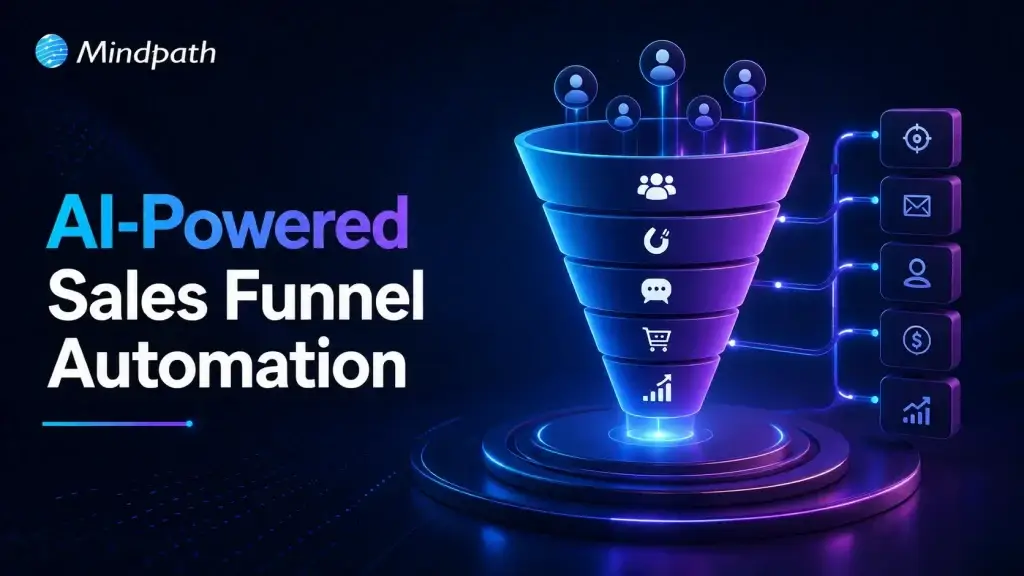
Sales teams today are under constant pressure to move faster, respond quicker, and convert more leads without burning out their staff. This is where AI sales automation comes in, helping businesses handle repetitive tasks, qualify leads, and guide prospects through the funnel without needing constant manual input.
Key Takeaways
- 01
AI agents automate lead scoring, follow-ups, and meeting scheduling, allowing sales teams to focus on closing more deals. - 02
AI for sales prospecting identifies high-quality leads faster by analyzing large volumes of customer data. - 03
Automated sales workflows improve response times and reduce missed follow-ups throughout the sales funnel. - 04
AI-powered sales funnels engage prospects 24/7, keeping leads active and improving conversion opportunities. - 05
Continuous AI learning helps optimize sales performance and improve funnel efficiency over time.
From automated follow-ups to smarter lead scoring, AI is changing how sales funnels operate at every single stage. In this blog, we are going to explore how AI can automate your sales funnel and what that actually means for your business in 2026.
Want to automate your sales funnel and close more deals with less manual effort? At Mindpath, we offer AI agent development services that streamline lead generation, automate follow-ups, and help businesses increase conversions with intelligent AI agents.
What are AI Agents and How are They Helping Sales Teams in 2026?
AI agents are software programs built to carry out tasks on their own, based on rules, data, and learning patterns, without needing a person to guide every step. In 2026, these agents have moved well beyond simple chatbots. They now sit inside CRMs, email platforms, and scheduling tools, working quietly in the background to move deals forward.
For sales teams, this means an AI agent can read incoming leads, understand their intent, respond with relevant information, and even schedule a call, all while a sales representative is busy elsewhere. This shift is a big part of why AI sales automation has become such a common term in boardrooms this year. Businesses are no longer asking whether they should adopt it; they are asking how fast they can roll it out.
How Does AI Sales Automation Streamline Lead Generation and Prospecting?
Finding the right leads used to take hours of manual research and cold outreach. AI has changed that by doing the heavy lifting in the background, so sales representatives can focus on actual conversations instead of searching for names.
1. Smarter Lead Scoring
AI tools rank leads based on their likelihood to convert. This helps sales teams spend their time on prospects who are actually ready to buy.
2. AI for Sales Prospecting at Scale
AI can scan thousands of profiles, websites, and public data points in minutes. This gives reps a steady stream of qualified prospects without the manual grind.
3. Predictive Intent Tracking
AI studies browsing behavior, email opens, and website visits to flag buying signals. Reps get notified the moment a lead shows real interest.
4. AI Based Lead Generation From Multiple Channels
AI pulls leads from social media, forms, and third-party databases into one place. This removes the need to manually check five different tools every morning.
Automating Sales Workflows With AI
Once a lead enters the funnel, there is a lot that needs to happen correctly and on time. Missed follow ups and slow responses are two of the biggest reasons deals fall through, and this is exactly where automation earns its keep.
1. Automated Qualification Questions
AI chatbots ask the right questions upfront to filter serious buyers from casual browsers. This saves reps from wasting time on leads that were never going to convert.
2. Sales Process Automation for Follow Ups
AI sends timely, personalized follow-up emails based on where a lead is in the funnel. No prospect slips through the cracks because someone forgot to check in.
3. Smart Meeting Scheduling
AI agents coordinate calendars and book meetings without the usual back and forth emails. This alone saves reps several hours every single week.
4. Deal Stage Tracking
AI updates CRM records automatically as a deal moves forward. Sales managers get a real time, accurate view of the pipeline at all times.
Building an Automated Sales Funnel That Works Round the Clock
A funnel that only works during business hours is a funnel that is leaving money on the table. AI removes that limitation by keeping every stage of the funnel active, even when the sales team has logged off for the day.
1. 24/7 Lead Engagement
Chatbots and AI agents respond to inquiries instantly, no matter the time zone or hour. Prospects get answers immediately instead of waiting until the next morning.
2. Automated Sales Funnel Nurturing
AI sends the right content to the right lead at the right stage, without a human triggering it manually. This keeps prospects warm until they are ready to talk.
3. Sales Workflow Management Software Integration
AI connects with existing tools, so data flows smoothly between marketing, sales, and support teams. Nothing gets lost between departments anymore.
4. Continuous Learning and Optimization
AI studies what worked and what did not, then adjusts messaging and timing automatically. The funnel keeps getting sharper the longer it runs.
Ready to Automate Your Sales Funnel With AI?
AI is no longer a nice to have for sales teams; it is quickly becoming the backbone of how modern funnels operate. From the first touchpoint with a lead to the final signed deal, AI sales automation is helping businesses respond faster, work smarter, and close more deals with fewer resources stretched thin. Companies that adopt this early are already seeing shorter sales cycles and happier sales teams who spend less time on admin work.
At Mindpath, we build AI development services designed around how your sales team actually works, not a generic template pulled off a shelf. Whether you need help with lead scoring, automated follow-ups, or a fully connected sales workflow, our team can design and deploy an AI agent that fits directly into your existing systems. If you are ready to see what a smarter, automated funnel looks like for your business, we would love to show you.
Frequently Asked Questions
Rising operational expenses are pushing companies of every size to rethink how they run their day-to-day processes. More organizations are now turning to AI agents for cost reduction, using intelligent automation to cut down manual effort, reduce errors, and get more done with the resources they already have.
Key Takeaways
- 01
AI agents go beyond basic automation. They make context aware decisions and adapt over time, which gives them an edge over traditional rule-based systems. - 02
Savings come from more than one place. Reduced labor hours, fewer errors, round the clock availability, and smarter use of people all add up to lower operational costs. - 03
Process automation creates department wide impact. From customer support to supply chain, AI agents streamline entire workflows instead of just isolated tasks. - 04
Cost optimization is not a one-time fix. AI agents keep learning from operations and tend to surface new efficiency gains as time goes on. - 05
Choosing the right implementation approach makes a real difference. Businesses that plan carefully and start with their biggest cost centers tend to see faster, more lasting results.
From customer support to supply chain management, these digital workers are quietly reshaping how businesses spend and save. In this blog, we are going to explore how AI agents are helping companies reduce costs, improve efficiency, and stay competitive in 2026.
Are rising operational costs slowing your business growth? At Mindpath, we provide AI agent development services that help organizations automate business processes, reduce operational expenses, and improve long-term efficiency with customized AI development solutions.
Why Businesses are Adopting AI Agents for Cost Reduction in 2026?
AI agents are software programs built to perform tasks on their own, make decisions, and interact with systems or people without constant supervision. Unlike traditional automation tools that follow rigid, preset rules, AI agents can understand context, learn from data, and adjust their actions as conditions change.
In 2026, businesses are no longer treating AI agents as experimental tools. They are being deployed across finance, HR, IT support, sales, and operations to handle repetitive, time consuming work. This shift is a major driver of AI for operational efficiency, freeing up teams to focus on strategic work while agents manage the routine execution. As adoption grows, companies are realizing that the savings go well beyond simple task automation. They extend into smarter decision-making, faster turnaround times, and leaner day-to-day operations.
What makes this moment different from earlier waves of automation is how accessible it has become. Cloud infrastructure, affordable computing power, and more capable AI models have made it possible for mid-sized and even small businesses to deploy agents that were once out of reach for anyone but large enterprises. As a result, most leadership teams have stopped asking whether they should use AI agents and started asking which processes to automate first.
How AI Agents Improve Business Efficiency and Reduce Costs?
Efficiency sits at the heart of nearly every cost saving strategy, and this is exactly where AI agents make the biggest difference. Using AI agents for business efficiency allows companies to remove bottlenecks and cut down the time spent on manual, repetitive work.
Here is how they help:
1. Faster Task Completion
AI agents can process requests, generate reports, and complete workflows in minutes instead of hours, which directly cuts down on labor hours spent on routine work.
2. Fewer Human Errors
Automated agents follow the same logic every time, so the risk of costly mistakes drops and there is less rework to pay for down the line.
3. Round the Clock Availability
Unlike human teams, AI agents can keep working through the night without overtime pay, so productivity does not have to pause when the office closes.
4. Better Use of People
When agents handle the routine work, employees get more time for the tasks that actually need human judgment, and that raises overall output without hiring more staff.
5. Room to Grow
AI agents can take on a heavier workload without a matching jump in cost, which makes it easier for a business to scale without its budget scaling right along with it.
These improvements add up over time. A single automated workflow might only save a few hours a week on its own, but once agents are working across several departments, the combined effect on productivity and cost becomes significant enough to shape overall business strategy.
AI Agents for Process Automation Across Business Functions
Process automation is one of the clearest places where businesses see a return on their AI investment. Deploying AI agents for process automation lets companies streamline entire workflows instead of just automating one task here and there.
Some of the most useful applications include:
1. Customer Support
AI agents can answer common questions, route tickets, and follow up with customers instantly, which means fewer support staff are needed to keep response times fast.
2. Finance and Invoicing
Agents can process invoices, catch discrepancies, and manage approvals on their own, cutting down manual accounting hours and reducing payment delays.
3. HR and Onboarding
From answering employee questions to handling paperwork, agents make HR workflows simpler and take a real chunk out of the administrative load.
4. IT Support and Monitoring
AI agents can spot issues, send alerts, and resolve common problems before a person ever has to step in, which keeps downtime and support costs down.
5. Supply Chain Coordination
Agents can track inventory, forecast demand, and trigger reorders automatically, helping businesses avoid both wasted stock and costly shortages.
What these examples have in common is that AI agents rarely replace just one step in a process. They tend to connect several steps into one coordinated flow, and that is what allows businesses to save money at the level of the whole process rather than one task at a time.
AI Cost Optimization: Smarter Ways to Reduce Business Costs with AI Agents
Beyond automation, AI cost optimization is about using data and intelligence to make smarter financial decisions across the business. AI agents for cost reduction really prove their worth here, moving from simply executing tasks to actively helping manage costs.
A few ways AI agents support cost optimization:
1. Predictive Spend Analysis
Agents can study historical data to forecast expenses and flag anything unusual early, helping teams catch budget problems before they grow.
2. Vendor and Contract Management
AI agents can review contracts, compare vendor pricing, and point out better deals, which puts businesses in a stronger position when negotiating.
3. Energy and Infrastructure Monitoring
In IT heavy environments, agents can fine-tune server usage and cloud resource allocation, which cuts unnecessary infrastructure spending directly.
4. Less Manual Reporting
Agents can build real-time financial dashboards without anyone entering data by hand, which saves reporting time and speeds up decisions.
5. Ongoing Improvement
AI agents learn from the operations they run and often surface new efficiency gains over time, so the savings tend to compound rather than stay flat.
Understanding how to reduce business costs with AI agents really comes down to identifying which repetitive, data heavy, or decision-driven processes can be handed over to intelligent systems and doing that in a structured way rather than all at once. Businesses that start with a clear audit of their biggest cost centers tend to see faster, more lasting results than those that automate without much of a plan.
Ready to Cut Costs with AI Agents?
The evidence is hard to ignore. Businesses that adopt intelligent automation are seeing real reductions in operational spending, faster workflows, and fewer costly mistakes. AI agents for cost reduction are not a futuristic idea anymore. They are a practical strategy that companies across industries are already using to stay lean and competitive in 2026.
At Mindpath, we help businesses design and implement AI agent solutions built around their specific operational challenges. Whether that means automating customer support, streamlining finance workflows, or optimizing IT infrastructure, our team works closely with you to find the right opportunities and build agents that deliver real, measurable savings. If you are ready to see what AI agents can do for your business, Mindpath is here to help you get started.
Frequently Asked Questions (FAQs)
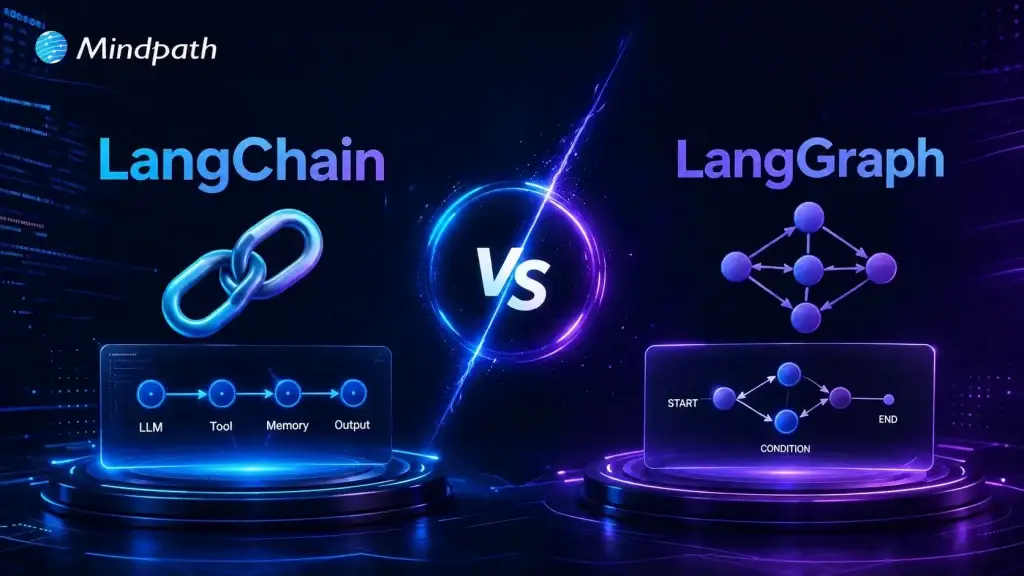
Enterprise AI is rapidly evolving from simple chatbots to intelligent systems that automate workflows, coordinate AI agents, and support business decisions. As organizations build more advanced AI applications, choosing the right framework becomes essential. The discussion around LangChain vs LangGraph is growing because each framework is designed to solve different enterprise AI challenges and development requirements.
Key Takeaways
- 01
Choose frameworks based on business needs, not popularity. - 02
LangChain simplifies building AI applications with reusable components. - 03
LangGraph supports complex, stateful, multi-agent AI workflows. - 04
Both frameworks serve different enterprise AI development requirements. - 05
Combining both frameworks delivers greater flexibility for enterprise AI.
While LangChain focuses on building AI applications with structured workflows, LangGraph is designed for stateful, multi-agent orchestration and complex decision-making. Understanding their differences helps enterprises select the right framework for long-term scalability and performance. In this blog, we will compare LangChain vs LangGraph and help you choose the best fit for enterprise AI.
Looking to build enterprise AI applications that align with your business goals? At Mindpath, we offer AI development services that help businesses design, develop, and deploy scalable AI solutions using frameworks like LangChain and LangGraph for intelligent automation and enterprise workflows.
What is LangChain? An Overview
LangChain is an open-source framework that helps developers connect large language models with external tools, business data, APIs, and memory. The LangChain framework for AI agents simplifies building intelligent, task-driven applications.
It provides reusable components for prompt management, retrieval, tool integration, and workflow creation. This modular approach enables developers to build scalable AI applications that can perform complex business tasks with greater efficiency.
Core Components of LangChain
- Models: Connects applications with different large language models seamlessly.
- Prompt Templates: Creates consistent, reusable prompts using dynamic input variables.
- Chains: Combines multiple AI tasks into structured sequential workflows.
- Memory: Maintains conversation context across multiple user interactions effectively.
- Indexes and Retrievers: Retrieves relevant business data for accurate AI responses.
- Agents: Enables AI to choose tools and execute tasks.
Advantages of LangChain
- Faster Development: Accelerates AI application development using reusable framework components.
- Easy Model Switching: Switches between AI models with minimal code changes.
- Private Data Integration: Connects securely with enterprise data using RAG techniques.
- Context and Memory: Preserves conversation history for better contextual AI responses.
- Autonomous Workflows: Automates complex tasks through intelligent AI agent workflows.
Drawbacks at a Glance
- Over-Abstraction: Hides application logic behind multiple framework layers.
- Limited Control: Reduces flexibility for implementing custom AI workflows.
- Frequent Updates: Breaking changes increase maintenance and upgrade complexity.
- Difficult Debugging: Complex stack traces make troubleshooting production issues harder.
What is LangGraph? An Overview
LangGraph is an open-source framework for building stateful AI applications using graph-based workflows. It enables LangGraph multi agent orchestration, allowing multiple AI agents to collaborate, share context, and complete complex tasks.
Instead of linear workflows, LangGraph uses interconnected nodes and persistent state to manage decisions and long running processes. This architecture makes it well suited for enterprise AI applications requiring reliability, scalability, and workflow control.
Core Components of LangGraph
- State: Stores shared application data across workflow execution steps.
- Nodes: Execute individual tasks, logic, or external tool operations.
- Edges: Connect nodes to define workflow execution sequence clearly.
- Conditional Edges: Route execution dynamically based on current application state.
- Checkpointing: Saves workflow state for recovery and debugging purposes.
- START and END: Define workflow entry and completion points clearly.
Advantages of LangGraph
- Cyclical Workflows: Supports loops, retries, and dynamic workflow execution paths.
- Persistent State Management: Maintains shared state throughout entire workflow execution.
- Human-in-the-Loop: Enables user reviews before critical workflow decisions.
- Multi-Agent Coordination: Orchestrates multiple AI agents working toward shared goals.
- Built-in Checkpointing: Automatically saves workflow progress for seamless recovery.
Drawbacks at a Glance
- Overkill for Simple Tasks: Adds unnecessary complexity for straightforward AI applications.
- Steep Learning Curve: Requires understanding graphs, states, and workflow architecture.
- Maintenance Burden: Complex state management increases long term maintenance efforts.
- Ecosystem Friction: Frequent updates may introduce compatibility and integration challenges.
LangChain Vs LangGraph: A Comparison Table
Understanding the difference between LangChain vs LangGraph helps enterprises select the right framework for their AI requirements. While both support AI application development, they differ in architecture, workflow design, scalability, and enterprise capabilities. The comparison below highlights their key differences.
| Feature | LangChain | LangGraph |
|---|---|---|
| Primary Purpose | Build LLM applications using reusable AI components. | Orchestrate complex, stateful AI agent workflows. |
| Architecture | Linear chains and pipelines. | Graph based architecture with nodes and conditional edges. |
| Workflow Type | Sequential execution. | Non linear execution with loops and branching. |
| State Management | Limited by default, requires additional handling. | Persistent state maintained throughout execution. |
| AI Agent Support | Supports single and simple tool using agents. | Designed for advanced multi agent orchestration. |
| Decision Making | Best for straightforward task execution. | Supports dynamic decision-making during workflows. |
| Control Flow | Fixed execution sequence. | Flexible routing based on workflow state. |
| Human in the Loop | Requires custom implementation. | Native support for approvals and interruptions. |
| Checkpointing | Not available by default. | Built in checkpointing and workflow recovery. |
| Memory Handling | Conversation memory through integrated components. | Shared workflow state across every execution step. |
| Complex Workflow Support | Moderate. | Excellent for enterprise grade AI automation. |
| Scalability | Suitable for small to medium AI applications. | Built for long running, scalable enterprise systems. |
| Development Speed | Faster for prototypes and MVPs. | Slower initial setup but stronger production control. |
| Learning Curve | Easier for beginners and AI developers. | Steeper due to graph concepts and state management. |
| Debugging | Can become difficult in larger applications. | Easier with checkpoints, traces, and workflow visibility. |
| Integration | Extensive integrations with models, vector databases, APIs, and tools. | Uses the same ecosystem while adding orchestration capabilities. |
| Enterprise Use Cases | Chatbots, RAG applications, document search, AI assistants. | Multi-agent systems, autonomous workflows, compliance processes, enterprise automation. |
| Best For | Rapid AI application development with minimal complexity. | Mission critical AI systems requiring reliability and orchestration. |
| Typical Business Choice | Organizations launching AI products quickly. | Enterprises deploying production ready AI agents at scale. |
Which Is Better: LangChain or LangGraph?
There is no universal winner in the LangChain vs LangGraph comparison because each framework is built for different enterprise AI requirements. The right choice depends on your application complexity, workflow design, scalability needs, and long term business goals.
When to Use LangChain?
Choose LangChain if your organization needs:
- AI chatbots and virtual assistants
- RAG based knowledge retrieval applications
- Rapid prototyping and faster development
- Sequential AI workflows with minimal orchestration
- Flexible integration with LLMs, APIs, and vector databases
When to Use LangGraph?
Choose LangGraph if your organization needs:
- Multi agent AI systems with shared responsibilities
- Long running, stateful AI workflows
- Human approval and compliance checkpoints
- Dynamic routing, loops, and conditional execution
- Enterprise grade automation requiring reliability and scalability
For organizations building advanced autonomous AI systems, LangGraph is often the best framework for AI agents. However, many enterprises achieve the best results by combining LangChain for application development with LangGraph for orchestration and workflow management.
Which Framework Should Enterprises Choose for AI?
Choosing the right framework depends on your enterprise AI goals, workflow complexity, and scalability requirements. Instead of asking is LangGraph better than LangChain, organizations should evaluate which framework aligns with their application architecture, operational needs, and long-term AI strategy for maximum business value.
At Mindpath, we build enterprise AI solutions tailored to your business requirements, from intelligent assistants to advanced multi agent systems. Our AI development experts help organizations design, develop, integrate, and scale secure AI applications using the right frameworks for long term success.
Frequently Asked Questions
Every successful AI solution begins with a strong idea, but not every idea is worth building. The ability to validate AI product ideas before investing in development helps businesses reduce risk, avoid unnecessary costs, and focus on solving real market problems.
Key Takeaways
- 01Confirm real customer demand before committing budget to AI development.
- 02Talk to potential users early to validate the problem, not just the idea.
- 03Test with a simple MVP before building a full-scale solution.
- 04Prioritize user actions over opinions when reading validation signals.
- 05Check data availability and AI costs before finalizing your investment decision.
As AI adoption continues to grow, organizations are under pressure to launch innovative products quickly. However, speed without validation often leads to solutions that fail to meet customer expectations or generate business value. A structured validation process ensures that an AI product addresses genuine user needs, fits market demand, and delivers measurable outcomes before significant resources are committed.
The challenge is that AI products require more than technical feasibility. They must combine reliable data, practical use cases, customer demand, and a sustainable business model. Understanding how to validate a product idea helps businesses make informed decisions with confidence. So, in this blog, you will learn the essential steps, proven validation methods, and practical strategies for evaluating AI product ideas before development begins. So, let us read more to learn!
Ready to turn your validated AI product idea into a scalable, market-ready solution? Mindpath offers expert AI development services to help startups and enterprises design, build, and deploy custom AI applications with confidence.
Why is It Essential to Validate AI Product Ideas Before Development?
AI innovation creates exciting opportunities, but successful products begin with strong product idea validation, not assumptions. Every concept should prove its value before development starts.
A structured product idea validation process helps businesses understand market demand, technical feasibility, and commercial viability before investing significant time and resources.
1. Verify Real Market Demand
An innovative AI solution has little value if it does not solve a meaningful customer problem. Validation helps businesses confirm that their target audience is actively looking for a solution and is willing to adopt or pay for it. This reduces the chances of launching products with limited market acceptance.
2. Reduce Financial Risk
Building AI products often involves significant investment in infrastructure, model training, integrations, and skilled talent. Validating the idea early helps identify weak concepts before major expenses occur, allowing organizations to allocate budgets more effectively.
3. Test Technical Feasibility
Not every business problem can be solved with existing AI technologies. Validation determines whether available models, data quality, and technical capabilities can deliver the expected results. It also highlights limitations that may require alternative approaches before development begins.
4. Control Development and Operational Costs
AI products can generate substantial ongoing expenses through API usage, cloud infrastructure, model inference, and data processing. Early validation provides realistic cost estimates, helping businesses evaluate whether the expected return justifies long-term operational spending.
5. Save Engineering Time
Development teams can spend months building sophisticated AI features that users ultimately ignore. Validation identifies the highest value use cases first, allowing teams to focus only on capabilities that solve real customer challenges and deliver measurable business outcomes.
6. Build Confidence Among Investors and Stakeholders
Validated ideas supported by customer research, pilot testing, or early adoption demonstrate lower business risk. This evidence strengthens stakeholder confidence, improves funding opportunities, and provides a stronger foundation for product development decisions.
Key Steps to Validate AI Product Ideas Effectively
A systematic validation process helps transform promising concepts into practical business opportunities. Following the right steps reduces uncertainty and supports smarter product decisions before development begins.
1. Define the Core Problem
Start by identifying the exact business or customer problem instead of focusing on the AI solution. Validate that the challenge is recurring by reviewing user discussions, reviews, forums, and industry conversations.
2. Speak With Potential Users
Interview your target audience to understand how they currently solve the problem. Focus on listening to their experiences instead of promoting your product idea.
3. Evaluate the Market
Research existing competitors, their pricing, and feature offerings to identify market gaps. Also assess whether enough potential customers face the problem to justify building a solution.
4. Check Technical Feasibility
Determine whether quality data is available and whether current AI technologies can deliver accurate results. Early feasibility testing prevents investing in ideas that are technically difficult to execute.
5. Test With a Simple MVP
Build a lightweight prototype, landing page, or product mockup instead of a complete application. Measure user interest through sign-ups, demo requests, or other early engagement signals.
6. Measure Results and Improve
Track user behavior, feedback, and adoption metrics to understand what works. A strong product validation process uses these insights to refine the idea before full-scale development begins.
Best Practices to Validate an AI Product Idea Before Investing
A few habits consistently separate teams that build the right thing from teams that build something impressive but unwanted.
1. Start with the Cost of Being Wrong
Know what six months of wasted development actually costs you. That number changes how seriously you take validation.
2. Check if the Data Actually Exists
If the data you need is messy, missing, or hard to access, that’s a real build risk, not a minor detail to sort out later.
3. Price Out the AI Itself
Model calls, inference, and cloud usage can quietly eat margins that looked fine on paper. Run the numbers early.
4. Test the Outcome, Not the Technology
People don’t care that it’s AI. They care if it saves them time, money, or hassle. Keep the test focused there.
5. Decide Your Bar for Success Upfront
Agree on what result would actually justify moving forward, whether that’s sign-ups, paid pilots, or repeat usage, before you start testing.
6. Watch Behavior More Than Opinions
What people say and what they actually do are often different. Give more weight to real actions like sign-ups than to praise.
7. Look Across Multiple Users
One excited user is a nice conversation. Several unrelated users with the same problem are closer to a market.
8. Keep a Record of Everything You Learn
Interview notes, test results, and feedback come in handy the moment someone questions the decision to move forward, including your future self.
Common Pitfalls to Avoid When Trying to Validate AI Product Ideas
Avoiding common validation mistakes helps businesses make better product decisions. These pitfalls can lead to wasted investment, delayed launches, and poor market adoption.
1. Prioritizing Technology Over Problems
Build solutions for customer needs, not impressive AI capabilities.
2. Ignoring Simpler Alternatives
Choose AI only when it provides clear business value.
3. Relying on Biased Feedback
Gather honest insights from potential customers, not close contacts.
4. Misreading Interest Signals
Focus on buying intent instead of likes or page visits.
5. Overlooking Error Impact
Measure how AI mistakes affect users and business outcomes.
6. Assuming Data Is Ready
Validate data quality before starting AI product development.
Are You Ready to Validate Your AI Product Idea and Move Forward?
Building an AI product without proper validation increases risk, cost, and uncertainty. Understanding how to validate an idea for a startup helps businesses confirm market demand, assess technical feasibility, and make informed investment decisions before beginning full-scale development.
If you are planning to build an AI solution, Mindpath can help transform your concept into a market-ready product. Our AI development experts support businesses with validation, strategy, MVP development, and scalable AI solutions that deliver measurable business value.
Frequently Asked Questions

Businesses of every size now recognize artificial intelligence as a practical tool for improving operations and customer experiences. However, many smaller organizations assume successful adoption requires hiring expensive AI specialists and building dedicated internal teams before starting their transformation journey.
Key Takeaways
- 01
SMBs can successfully adopt AI without hiring dedicated in-house AI specialists. - 02
Focusing on one high-impact business challenge delivers faster, measurable AI results. - 03
Experienced AI development partners simplify implementation, deployment, maintenance, and long-term optimization. - 04
Cloud-based AI platforms reduce infrastructure costs while enabling secure and scalable deployments. - 05
Regular monitoring, updates, and optimization ensure AI solutions remain accurate, reliable, and valuable over time.
The reality looks very different today because experienced technology partners, cloud platforms, and ready-to-use AI services simplify implementation. AI for small and medium businesses has become accessible through outsourcing, allowing organizations to deploy practical solutions without maintaining large in-house AI departments.
Need AI expertise without building an in-house team? Mindpath Tech offers AI development services to help SMBs build and deploy scalable AI solutions without the extra hiring costs.
Why are SMBs Investing in AI Today?
Small and medium businesses face increasing pressure to improve productivity while controlling costs and maintaining competitive customer experiences. AI offers practical opportunities to automate repetitive work, analyze business data, and support faster decision-making across different business functions.
Recent advances in cloud computing, large language models, and managed AI platforms have significantly reduced implementation complexity. Instead of building everything internally, businesses can work with specialized development partners that provide technical expertise throughout the project lifecycle.
- 80% to 89% of SMBs use AI daily. (Forbes)
- 50% to 68% of marketing teams automate content creation with AI. (Booth Associates LLC)
- AI software spending continues to grow as SMBs prioritize scalable generative AI solutions. (Gartner)
Why are In-House AI Teams No Longer Essential?
Many organizations believe AI success depends on hiring data scientists, machine learning engineers, and AI architects. While these professionals remain valuable, modern AI development offers alternative approaches that reduce staffing requirements.
1. Cloud AI Platforms Simplify Development
Leading cloud providers offer managed AI services requiring minimal infrastructure management. Businesses can focus on solving operational problems instead of maintaining complex technical environments.
2. Pre-Trained AI Models Reduce Development Time
Modern foundation models already understand language, documents, and business workflows. Developers can customize existing models instead of building entirely new systems.
3. Experienced AI Partners Provide Specialized Expertise
External AI specialists bring proven implementation experience across multiple industries and business environments. This reduces learning curves while improving project quality.
4. Scalable Engagement Lowers Operational Costs
Companies only pay for the expertise they need during planning, development, deployment, and optimization. This eliminates the cost of maintaining a permanent in-house AI team.
5. Faster Deployment Improves Business Value
Established AI development processes shorten implementation timelines while reducing technical risks. Businesses begin seeing measurable improvements much sooner.
6. Ongoing Support Remains Available
Reliable AI development partners continue monitoring, updating, and optimizing AI systems after deployment. This allows internal teams to focus on core business activities instead of managing complex AI maintenance.
What Challenges Do SMBs Face Without AI?
Many businesses delay AI adoption because they believe limited resources prevent successful implementation. Understanding these challenges helps organizations choose practical solutions instead of postponing innovation.
1. Limited Technical Expertise
Most businesses lack experienced AI professionals within their existing technology teams. Recruiting specialized talent often requires significant investment and lengthy hiring processes.
2. Budget Constraints
Building internal AI capabilities involves recruitment, infrastructure, training, and software licensing expenses. Smaller organizations usually prefer predictable project-based investments.
3. Unclear Implementation Strategy
Many businesses understand AI’s potential but struggle to identify suitable business problems. Poor planning often results in delayed projects and limited business outcomes.
4. Data Preparation Challenges
Business information frequently exists across multiple systems with inconsistent formats and quality. Preparing reliable data requires structured planning before implementation begins.
5. Integration with Existing Systems
AI solutions must connect smoothly with existing business applications and operational workflows. Poor integration reduces adoption and overall business value.
6. Long-Term Maintenance Concerns
AI systems require monitoring, updates, and performance improvements after deployment. Many organizations worry about supporting these responsibilities internally.
How Can SMBs Build AI Solutions Without an Internal AI Team?
Building AI successfully starts with solving real business challenges instead of pursuing technology trends. A structured implementation approach helps businesses reduce risks while achieving measurable operational improvements.
1. Identify a High-Value Business Problem
Begin with one operational challenge that creates measurable business impact.
- Focus on Repetitive Tasks
Automation delivers faster improvements with lower implementation complexity. - Measure Business Impact
Select problems affecting costs, productivity, customer service, or revenue. - Avoid Overly Complex Projects
Smaller projects reduce implementation risks and accelerate business learning. - Gather Stakeholder Input
Teams understand existing workflow challenges and improvement opportunities. - Define Success Metrics
Establish measurable business outcomes before development begins.
2. Partner with an Experienced AI Development Company
External expertise reduces technical complexity while accelerating implementation.
- Access Experienced Specialists
Proven experts avoid common implementation mistakes. - Receive Strategic Guidance
Experienced partners recommend practical AI approaches. - Reduce Recruitment Costs
Businesses avoid expensive permanent hiring requirements. - Improve Project Quality
Established development practices deliver reliable business solutions. - Gain Ongoing Technical Support
Expert assistance continues after successful deployment.
3. Start with Cloud-Based AI Services
Cloud platforms simplify deployment while reducing infrastructure investments.
- Lower Initial Costs
Businesses avoid purchasing expensive computing infrastructure. - Scale When Required
Resources increase alongside business growth. - Improve Reliability
Cloud providers maintain secure and highly available environments. - Deploy Faster
Existing AI services significantly shorten implementation timelines. - Simplify Maintenance
Infrastructure management remains largely handled by the cloud provider.
4. Build an MVP Before Expanding
Start small before investing in broader organizational automation.
- Validate Business Value
Early feedback confirms practical business benefits. - Reduce Implementation Risks
Smaller deployments identify improvement opportunities quickly. - Collect Employee Feedback
Users provide valuable recommendations for future enhancements. - Improve Adoption
Teams become comfortable using AI gradually. - Expand Strategically
Successful pilots guide future AI investments confidently.
5. Continuously Optimize AI Performance
AI implementation remains an ongoing business improvement process.
- Monitor Performance Regularly
Review business outcomes using measurable performance indicators. - Update Business Data
Fresh information improves AI accuracy consistently. - Refine Workflows
Operational improvements increase long-term business value. - Strengthen Governance
Maintain responsible AI usage through clear internal policies. - Plan Future Expansion
Successful projects create opportunities across additional departments.
What AI Solutions Deliver the Greatest Value for SMBs?
Not every AI project requires significant investment or complex technical implementation. The best AI solutions for small businesses focus on improving everyday operations while delivering measurable returns within reasonable implementation timelines.
1. Customer Support Chatbots
Automate customer interactions, answer common questions, and provide faster support around the clock.
2. AI Document Processing
Extract, organize, and process invoices, contracts, forms, and business documents with greater accuracy and efficiency.
3. Predictive Analytics
Analyze historical business data to forecast trends, optimize inventory, and support better decision-making.
4. Intelligent Sales and Marketing Automation
Automate lead qualification, personalized campaigns, customer segmentation, and follow-up activities to improve conversions.
5. AI-Powered Knowledge Management
Centralize business information and provide employees with instant access to accurate answers through AI-powered search.
6. Workflow Automation
Streamline repetitive processes across finance, HR, operations, and customer service to improve productivity and reduce manual work.
These AI solutions demonstrate how AI for small and medium businesses delivers measurable business value without requiring extensive in-house technical expertise. Organizations can successfully implement AI by partnering with experienced technology providers that manage planning, development, deployment, and ongoing optimization.
Businesses that choose outsourced AI development gain faster access to specialized expertise while reducing recruitment costs, implementation risks, and project complexity. This approach enables SMBs to adopt AI confidently, even with limited internal resources.
Ready to Build AI Without an Internal AI Team?
Artificial intelligence is no longer limited to large enterprises with dedicated research teams and extensive technology budgets. Today, AI for small and medium businesses enables organizations to automate operations, improve productivity, and deliver better customer experiences by partnering with experienced AI development companies.
Looking to build AI solutions without expanding your internal team? Mindpath offers AI development services that help SMBs design, develop, deploy, and optimize customized AI solutions tailored to their business goals. Our experienced AI specialists deliver secure, scalable, and cost-effective AI applications that accelerate innovation while reducing implementation complexity and long-term operational risks.
Frequently Asked Questions
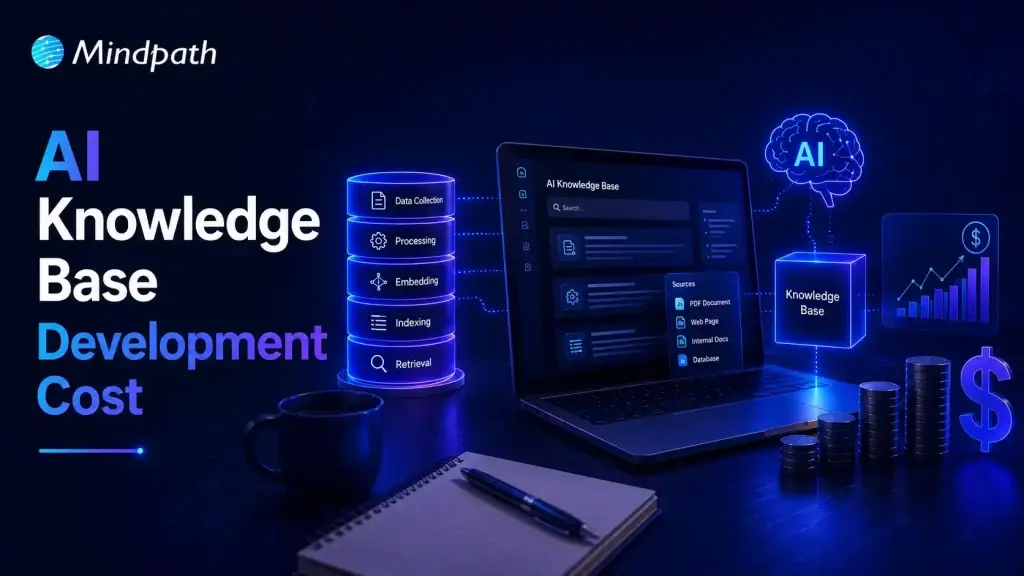
Every organization depends on quick access to accurate business information, yet many still struggle with scattered documents and disconnected systems. Understanding the Enterprise AI knowledge base cost is becoming a priority as companies invest in AI solutions that improve knowledge access, increase productivity, and support better decision-making across every department.
Key Takeaways
- 01
Enterprise AI knowledge bases centralize business information, improving productivity and organization-wide decision-making. - 02
Development costs depend on data quality, system integrations, security requirements, and AI capabilities. - 03
Clean, well-structured data improves AI accuracy, response quality, and implementation success. - 04
Starting with a focused, high-impact use case helps reduce implementation costs and project risks. - 05
Continuous optimization, maintenance, and scalable AI architecture maximize long-term business value and ROI.
An enterprise AI knowledge base does much more than store documents. It uses artificial intelligence to understand user questions, retrieve relevant information from multiple sources, and deliver reliable answers within seconds. As businesses continue adopting AI, knowing the factors that influence development costs helps them plan the right investment and avoid unexpected expenses. In this blog, we’ll break down the key cost factors, typical pricing, and practical ways to build an enterprise AI knowledge base within your budget.
Looking to improve your enterprise AI knowledge base with a custom RAG solution? At Mindpath, we offer RAG Development Services to create AI systems that retrieve reliable information and generate accurate business insights.
What Is an Enterprise AI Knowledge Base and Why Do Businesses Need One?
An enterprise AI knowledge base is an intelligent platform that stores, organizes, and retrieves business information using artificial intelligence. Unlike traditional knowledge repositories, it understands natural language queries and provides relevant answers from trusted company data. Many organizations also use a RAG knowledge base to improve response accuracy with real-time business information.
As organizations create more documents, policies, customer records, and operational data, finding the right information becomes increasingly difficult. An enterprise AI knowledge base solves this challenge by making knowledge instantly accessible, reducing manual searches, and helping teams work more efficiently. It also creates a single source of truth that supports consistent decision-making across the business.
Businesses need an enterprise AI knowledge base because it helps them:
- Reduce the time employees spend searching for information.
- Improve productivity by providing instant access to business knowledge.
- Deliver faster and more consistent responses to customer queries.
- Centralize information from multiple systems into one trusted source.
- Support informed decision-making with accurate and up-to-date knowledge.
- Scale knowledge management without increasing manual effort.
Advantages of Enterprise AI Knowledge Base
As businesses continue building a knowledge base in artificial intelligence, they gain more than faster information access. An enterprise AI knowledge base improves operational efficiency, supports better decisions, and enables teams to work with accurate, up-to-date knowledge across the organization.
- Faster Information Retrieval: Employees can find relevant answers in seconds instead of searching through multiple systems.
- Higher Employee Productivity: Teams spend less time looking for information and more time completing valuable work.
- Consistent Knowledge Access: Everyone receives the same accurate and up-to-date information from a centralized source.
- Better Decision-Making: Quick access to reliable business knowledge helps leaders and employees make informed decisions.
- Reduced Operational Costs: Automating knowledge retrieval lowers manual effort and reduces support and training costs.
- Scalable Knowledge Management: The system grows with your business while managing increasing volumes of information efficiently.
Drawbacks at a Glance
- High Initial Investment: Development, integration, and infrastructure can require a significant upfront budget before delivering long-term value.
- Data Quality Challenges: AI can only provide accurate answers when the underlying business data is complete, organized, and regularly updated.
- Complex Implementation: Integrating AI with existing business systems and workflows often requires specialized technical expertise.
- Ongoing Maintenance Requirements: The knowledge base must be continuously updated, monitored, and optimized to keep responses accurate and relevant.
- Security and Compliance Risks: Sensitive business information requires strong access controls, encryption, and governance to meet regulatory requirements.
- User Adoption Takes Time: Employees may need training and change management before fully trusting and using the AI knowledge base in their daily work.
What Factors Affect the Enterprise AI Knowledge Base Cost?
The cost of an enterprise knowledge management system depends on multiple technical and business factors. Understanding these helps businesses estimate the right budget for AI knowledge base projects and plan their investment more effectively.
1. Business Requirements
The project scope directly impacts the overall cost. More use cases and advanced features require greater development effort.
2. Data Quality
AI needs clean, organized, and updated data to deliver accurate results. Preparing business data often adds to implementation costs.
3. Knowledge Base Size
Larger knowledge bases require more storage and processing resources. This increases infrastructure and maintenance expenses.
4. AI Model Selection
The choice of AI model affects both development and operating costs. Advanced models generally require a higher investment.
5. System Integrations
Connecting the knowledge base with CRM, ERP, or other business applications increases implementation complexity. More integrations usually mean higher costs.
6. Security and Compliance
Enterprises often need encryption, access controls, and regulatory compliance. These requirements add to the overall development cost.
7. Maintenance and Support
Regular updates, monitoring, and performance improvements are essential after deployment. Ongoing maintenance should always be included in the project budget.
Enterprise AI Knowledge Base Cost Breakdown
The cost of an enterprise AI knowledge base depends on factors such as project complexity, data volume, integrations, and security requirements. Whether you’re building a traditional AI solution or an LLM knowledge base, understanding these cost components helps businesses estimate the required investment and plan their implementation more effectively.
| Component | Description | Estimated Cost |
| Basic AI Knowledge Base | 10–50 documents, managed cloud setup | $8,000 – $18,000 |
| Mid-Market Solution | Multi-source data with custom interface | $25,000 – $80,000 |
| Enterprise AI Knowledge Base | 10,000+ documents, deep integrations, compliance | $100,000 – $300,000+ |
| Offshore Development | Custom enterprise implementation | $30,000 – $80,000 |
| SaaS Subscription | Pre-built AI knowledge platform | ~$30/user/month |
| Cloud Infrastructure | Hosting, storage, vector database | $50 – $300+/month |
| LLM API Usage | AI model token consumption | Usage-based |
| Annual Maintenance | Updates, monitoring, optimization | 15%–30% of build cost/year |
| Security & Compliance | Encryption, audit logs, regulatory compliance | Up to 7% extra budget |
How to Reduce the Cost of Building an AI Knowledge Base Without Compromising Quality?
Reducing Enterprise AI knowledge base cost does not mean sacrificing performance or scalability. The right strategy and technology choices can help businesses maximize value while keeping development and operational expenses under control.
1. Start with a High-Impact Use Case
Begin with one department or business process instead of building an enterprise-wide solution. This reduces upfront costs and allows you to scale based on proven results.
2. Improve Data Before Implementation
Remove duplicate, outdated, and irrelevant content before training the system. Clean data improves AI accuracy and reduces implementation effort.
3. Use Existing Cloud AI Services
Leverage managed AI platforms instead of building infrastructure from scratch. This lowers deployment time and reduces infrastructure costs.
4. Choose the Right Knowledge System Building Tools in AI
Select tools that support integrations, scalability, and automation out of the box. The right knowledge system building tools in AI minimize custom development and long-term maintenance costs.
5. Integrate with Existing Business Systems
Connect the AI knowledge base with current CRM, ERP, and document management platforms. Reusing existing systems avoids unnecessary redevelopment expenses.
6. Monitor and Optimize Continuously
Track AI performance, user feedback, and operational costs after deployment. Regular optimization improves accuracy while preventing unnecessary spending over time.
Is an Enterprise AI Knowledge Base Worth the Investment?
Businesses looking at how to build an AI knowledge base should evaluate both the upfront investment and the long-term value it delivers. When implemented correctly, it becomes a strategic asset that improves efficiency, knowledge sharing, and decision-making.
- Reduces the time employees spend searching for information, leading to higher productivity.
- Delivers faster and more accurate responses by providing access to trusted business knowledge.
- Improves collaboration by creating a single source of truth across teams and departments.
- Scales easily as business data, users, and operational requirements continue to grow.
- The implementation cost of AI knowledge base is often offset over time through lower operational costs, improved efficiency, and better customer experiences.
- Provides long-term business value by supporting informed decisions and enabling AI-driven workflows across the organization.
Ready to Optimize Your Enterprise AI Knowledge Base Cost?
Building an enterprise AI knowledge base is a strategic investment that improves knowledge accessibility, operational efficiency, and business decision-making. The final cost depends on your data, integrations, security requirements, and AI capabilities, making careful planning essential for maximizing long-term value and return on investment.
At Mindpath, we design secure, scalable, and customized AI knowledge base solutions tailored to your business goals. From AI strategy and RAG implementation to enterprise integrations and ongoing optimization, our experts help you build reliable solutions that deliver measurable business outcomes while optimizing your investment.
Frequently Asked Questions
Artificial intelligence is changing how organizations manage everyday operations. AI agents for CRM and ERP help businesses connect systems, automate workflows, and reduce manual effort. They improve data accuracy, support faster decisions, and keep teams working with consistent information across departments.
Key Takeaways
- 01
AI agents connect CRM, ERP, and enterprise systems to create a unified business ecosystem. - 02
They automate repetitive workflows while improving speed, efficiency, and accuracy. - 03
Real-time synchronization enables faster business decisions and better collaboration. - 04
Businesses can automate sales, inventory, invoicing, forecasting, and customer service. - 05
A phased implementation ensures secure integration, scalability, and long-term value.
Yet many organizations still struggle with disconnected software, scattered data, and inefficient processes. What makes AI agents different from traditional automation, and why are enterprises adopting them rapidly? In this blog, we’ll explore how AI agents connect CRM, ERP, and business systems to improve efficiency and drive smarter operations.
Ready to build AI agents that seamlessly connect your CRM, ERP, and business systems? At Mindpath, we offer AI Agent Development Services to create intelligent, scalable AI agents tailored to your business needs.
Why Do Businesses Need AI Agents Across CRM, ERP, and Enterprise Systems?
In today’s enterprises, connected systems are essential for efficient operations. AI agents eliminate disconnected workflows, automate routine tasks, and enable intelligent decision-making across departments.
1. Eliminating Data Silos
AI agents connect CRM, ERP, and other enterprise applications into a single source of truth. This removes duplicate records and ensures every department works with accurate, real-time information.
2. Synchronizing Cross-System Data
Customer records, inventory updates, purchase orders, and financial transactions remain synchronized across multiple platforms. Employees no longer need to manually transfer information, reducing delays and human errors.
3. Automating End-to-End Workflows
AI agents execute complete business processes automatically from processing customer requests to validating invoices and updating ERP records—reducing repetitive work and accelerating operations.
4. Managing Exceptions Proactively
Instead of waiting for employees to identify issues, AI agents monitor workflows continuously. They detect shipment delays, invoice mismatches, approval bottlenecks, and vendor issues before they impact operations.
5. Improving Predictive Decision-Making
By analyzing historical and real-time business data, AI agents forecast customer demand, optimize inventory, improve cash flow planning, and reduce operational risks.
6. Supporting Faster Business Decisions
Business leaders receive real-time insights gathered from multiple enterprise systems in one place, enabling quicker responses to customer needs, financial performance, and supply chain changes.
How Do AI Agents Connect CRM, ERP, and Other Business Applications?
Modern organizations rely on enterprise software integration to keep information flowing seamlessly. AI agents act as intelligent connectors that automate data exchange and coordinate workflows.
1. Connecting Through APIs
AI agents securely exchange data between CRM, ERP, and other business applications using APIs, eliminating manual transfers.
2. Synchronizing Business Data
Customer information, inventory records, financial data, and sales information stay consistent across all connected systems.
3. Automating Cross-System Workflows
AI agents coordinate tasks involving multiple business applications from start to finish, reducing manual work and improving operational speed.
4. Triggering Intelligent Actions
When predefined business events occur, AI agents automatically create tasks, update records, notify teams, or initiate the next workflow.
5. Providing Real-Time Insights
AI agents collect data from different platforms and present a unified business view, helping decision-makers access actionable insights quickly.
6. Maintaining Secure Data Exchange
AI agents follow enterprise security policies and access controls while transferring business information, ensuring secure and reliable integration.
Real Business Use Cases of AI Agents for CRM and ERP Integration
Understanding how AI agents connect CRM and ERP becomes easier by looking at real-world business applications. These intelligent agents streamline operations, improve data accuracy, and automate workflows across multiple departments with minimal human intervention.
1. Sales Order Processing
AI agents capture customer orders directly from the CRM and instantly update the ERP system. This reduces manual data entry, speeds up order fulfillment, and minimizes processing errors.
2. Inventory Management
By combining real-time ERP inventory data with CRM sales information, AI agents monitor stock levels, predict demand, and help businesses avoid stock shortages or overstocking.
3. Customer Service Automation
Support teams gain instant access to complete customer histories by combining CRM and ERP data. This enables faster issue resolution and delivers a more personalized customer experience.
4. Invoice and Payment Management
AI agents automatically generate invoices after verifying completed orders and delivery status. They also synchronize payment updates with financial records to improve accounting accuracy.
5. Sales Forecasting and Planning
AI agents analyze CRM sales pipelines together with ERP financial and operational data to generate more accurate forecasts for budgeting, resource planning, and business growth.
6. Procurement and Vendor Coordination
AI agents monitor inventory thresholds and automatically initiate procurement workflows. They update vendor records, track purchase orders, and ensure timely replenishment of inventory.
Key Benefits of AI Agents for Enterprise Workflow Automation
AI agents help organizations automate complex business processes while improving operational efficiency, reducing manual work, and enabling intelligent decision-making.
1. Autonomous Task Execution
AI agents execute multi-step workflows without continuous human intervention. From order processing to invoice approvals, they complete tasks consistently and accurately.
2. Seamless Cross-System Integration
AI agents connect CRM, ERP, finance, HR, and other enterprise applications, eliminating information silos and enabling smooth data flow across departments.
3. Greater Accuracy and Fewer Errors
Before updating enterprise systems, AI agents validate information automatically, reducing manual errors and ensuring high-quality business data.
4. Improved Scalability
As business operations grow, AI agents handle increasing workloads without requiring additional employees, allowing organizations to scale efficiently.
5. Faster Business Operations
By automating repetitive administrative work, AI agents reduce processing times from hours to minutes, helping businesses respond faster to customer and market demands.
6. Intelligent Decision Support
AI agents analyze enterprise data from multiple systems and generate real-time insights, enabling business leaders to make informed strategic decisions.
7. Adaptive Problem Resolution
When workflow exceptions occur, AI agents identify issues automatically, recommend corrective actions, and keep business operations running with minimal disruption.
8. Higher Workforce Productivity
By taking over repetitive operational tasks, AI agents allow employees to focus on innovation, strategic planning, customer relationships, and higher-value business activities.
How to Successfully Implement AI Agents Across Your Business Systems
A structured implementation strategy helps businesses maximize the value of AI agents while minimizing deployment risks. By focusing on the right processes, systems, and governance, organizations can achieve long-term success.
1. Identify High-Impact Workflows
Start by identifying repetitive, time-consuming business processes that provide the greatest opportunity for automation. Prioritize workflows that deliver measurable business value.
2. Connect Enterprise Systems
Integrate AI agents with CRM, ERP, HR, finance, and other core business applications using secure APIs. Seamless connectivity ensures consistent data across every system.
3. Establish Data Governance
Ensure high-quality data, strong security policies, role-based access controls, and compliance standards before deploying AI agents across enterprise systems.
4. Monitor and Optimize Performance
Continuously track workflow accuracy, automation efficiency, business KPIs, and user adoption. Regular optimization helps AI agents deliver greater long-term value.
5. Scale Gradually
Begin with a pilot project, validate business results, and expand AI agents to additional departments and workflows as confidence grows.
Ready to Implement AI Agents for CRM and ERP?
AI agents are transforming enterprise operations by connecting systems, automating workflows, and enabling smarter business decisions. Organizations that embrace AI-powered automation can eliminate manual processes, improve operational efficiency, and create a connected digital ecosystem that supports sustainable growth.
If you’re looking for reliable AI agents for business automation, Mindpath delivers customized AI agent development and enterprise integration solutions. Our experts design, develop, and optimize AI agents that seamlessly connect CRM, ERP, and enterprise applications to accelerate digital transformation and drive measurable business outcomes.
Frequently Asked Questions
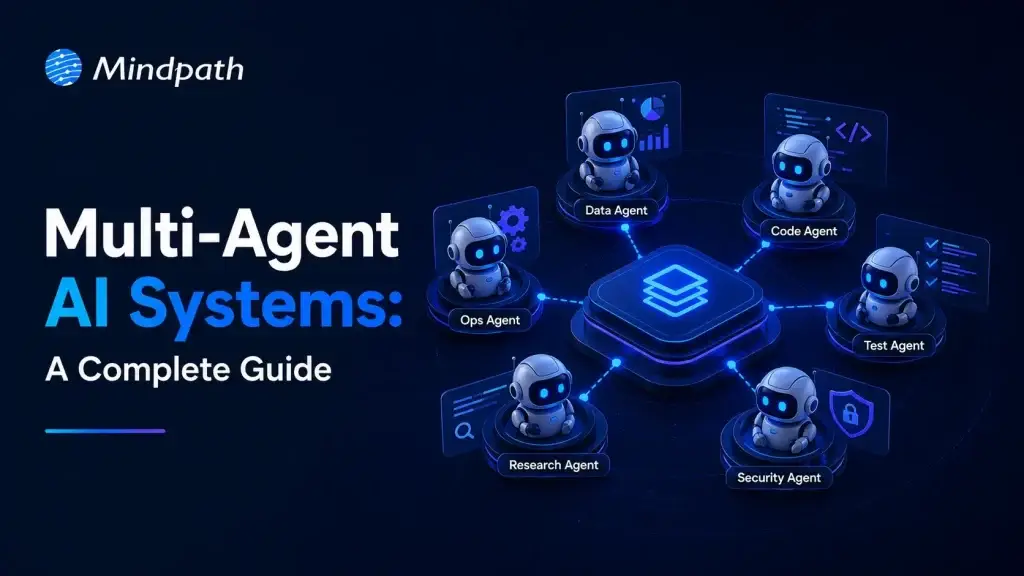
Businesses are entering a new phase where intelligent software handles complex decisions instead of completing isolated tasks. Multi-Agent AI Systems are leading this transformation by allowing multiple AI agents to collaborate, communicate, and solve business challenges with greater speed and accuracy. This shift is helping organizations automate entire workflows while improving operational efficiency across different departments.
Key Takeaways
- 01
Multi-agent AI systems simplify complex business workflows through intelligent collaboration. - 02
Specialized AI agents improve speed, accuracy, and operational efficiency. - 03
Businesses gain scalable automation with coordinated AI decision making. - 04
Strong architecture ensures reliable communication between multiple AI agents. - 05
Careful implementation maximizes long-term business value and performance.
As organizations expand their AI capabilities, they require solutions that can coordinate multiple tasks without constant human intervention. That is where intelligent collaboration between AI agents becomes valuable for modern enterprises. In this blog, we are going to explore what multi-agent AI systems are, their benefits, architecture, working process, use cases, implementation approach, and why businesses are adopting them in 2026.
Looking to deploy intelligent AI agents that collaborate seamlessly across your business? Explore our multi-agent AI system development services to build scalable, secure, and high-performing AI solutions tailored to your needs.
What are Multi-Agent AI Systems?
A multi-agent AI system is an artificial intelligence environment where sethrough AI agent orchestration to veral independent AI agents work together toward shared or individual objectives. Each agent performs specialized responsibilities while exchanging information and coordinating decisions to achieve efficient business outcomes.
Instead of relying on one intelligent model for every responsibility, these systems distribute tasks across multiple specialized agents. This collaborative approach improves decision quality, reduces processing delays, and enables businesses to automate increasingly complex operational processes.
How Do Multi-Agent AI Systems Work?
Multi-agent AI systems follow a structured workflow where specialized agents collaborate to complete complex business tasks efficiently.
1. Task Distribution: The system divides a business request into smaller tasks and assigns them to specialized AI agents.
2. Independent Processing: Each agent performs its assigned task using its own knowledge, tools, and reasoning capabilities.
3. Agent Communication: Agents exchange updates through AI agent orchestration to stay aligned throughout the workflow.
4. Decision Coordination: The system combines outputs from multiple agents to generate a unified and accurate response.
5. Continuous Learning: Feedback and performance data help agents improve accuracy and efficiency over time.
Benefits of Multi-Agent AI Systems
Organizations are increasingly investing in this approach because it delivers measurable improvements across business operations.
1. Improved Task Specialization
Each AI agent focuses on a specific responsibility instead of managing every business function simultaneously. This specialization improves response quality while reducing errors during complex business processes.
2. Better Scalability
Additional agents can be introduced whenever business requirements continue expanding across departments or operational functions. Organizations can therefore increase automation without rebuilding existing AI infrastructure.
3. Faster Decision Making
Multiple agents process different tasks simultaneously while continuously sharing relevant information with one another. Parallel execution significantly reduces delays across time-sensitive business workflows.
4. Greater Operational Reliability
If one agent experiences temporary issues, other agents continue performing their assigned responsibilities without interruption. This distributed structure minimizes operational downtime while improving business continuity.
5. Flexible Business Automation
Organizations can customize different agents for finance, customer service, logistics, sales, or internal operations independently. This flexibility allows businesses to automate diverse workflows using the same intelligent ecosystem.
Multi-Agent AI System Architecture
A well-designed architecture enables multiple AI agents to communicate, collaborate, and complete business objectives efficiently.
1. User Interface
The user interface acts as the entry point where users submit requests or business queries. It collects inputs and forwards them to the system for further processing.
2. Orchestrator
The orchestrator manages task allocation and coordinates communication between different AI agents throughout the workflow. It ensures every agent receives appropriate responsibilities and works toward the desired outcome.
3. Specialized AI Agents
Each agent is designed for a specific responsibility, such as research, planning, data analysis, customer support, or content generation. This specialization improves both efficiency and response quality across business operations.
4. Shared Knowledge Base
A centralized knowledge base stores documents, business rules, databases, and historical information for all agents. Access to shared information helps maintain consistency and supports better decision-making.
5. Communication Layer
The communication layer enables agents to exchange updates, share results, and coordinate their activities efficiently. This multi-agent AI framework ensures smooth collaboration without creating duplicated efforts.
6. Monitoring and Feedback System
The monitoring layer tracks agent performance, workflow progress, and system health in real time. Business feedback is also collected to improve future accuracy and overall system performance.
Real-World Use Cases of Multi-Agent AI Systems
Businesses across industries are adopting intelligent agent collaboration to automate complex workflows and improve operational efficiency.
1. Customer Support Automation
Different agents handle customer identification, issue analysis, response generation, and ticket resolution simultaneously. This approach delivers faster responses while improving customer satisfaction across multiple communication channels.
2. Supply Chain Management
Multiple agents monitor inventory levels, forecast demand, optimize transportation, and identify potential supply disruptions. Businesses gain better visibility while reducing operational delays and unnecessary costs.
3. Healthcare Operations
AI agents coordinate appointment scheduling, patient record management, clinical documentation, and insurance verification together. Medical professionals spend less time on administrative work and more time providing patient care.
4. Financial Services
Agents analyze transactions, detect fraudulent activities, generate compliance reports, and assess financial risks continuously. Financial institutions improve security while making faster and more informed business decisions.
5. Software Development
Different agents assist with requirement analysis, coding, testing, documentation, and deployment activities during software development. These collaborative AI agents accelerate development cycles while improving software quality.
6. Business Intelligence
AI agents collect information from different business systems before generating dashboards and strategic insights. Decision makers receive accurate recommendations without manually combining information from multiple sources.
How to Build a Multi-Agent AI System?
Organizations should follow a structured approach when planning how to build a multi agent AI system for business automation.
1. Identify Business Objectives
Begin by defining the workflows that require automation and measurable business improvements. Clear objectives help determine the required agent capabilities.
2. Design Agent Responsibilities
Assign specific responsibilities to every agent instead of expecting one model to perform every task. Specialized roles improve efficiency and simplify future maintenance.
3. Select the Right Technology Stack
Choose appropriate AI models, databases, APIs, cloud infrastructure, and development frameworks before implementation begins. Technology decisions directly influence scalability and long-term performance.
4. Develop Communication Workflows
Create standardized communication methods that allow agents to exchange information accurately and efficiently. Well-defined workflows improve collaboration across the complete system.
5. Test and Optimize
Validate system performance using real business scenarios before deploying it into production environments. Continuous testing improves reliability and supports successful multi-agent AI implementation.
Challenges of Multi-Agent AI Systems
Businesses should understand these common challenges before implementing multi-agent AI systems across critical operations.
1. Communication Complexity: Poor coordination between agents can reduce efficiency and create inconsistent outcomes.
2. Data Security: Protecting sensitive business data remains essential when multiple agents access shared information.
3. Integration Challenges: Connecting AI agents with existing legacy systems may require careful planning and development.
4. Performance Monitoring: Continuous monitoring helps maintain accuracy, reliability, and overall system performance.
5. Higher Implementation Costs: Initial development and deployment can require significant investment in technology and expertise.
6. Scalability Management: Managing a growing network of AI agents becomes more complex as business operations expand.
Ready to Build Smarter AI Systems for Your Business?
Businesses are rapidly moving toward intelligent automation that manages complete workflows instead of isolated tasks. Multi-Agent AI Systems provide the flexibility, scalability, and intelligence needed to improve operational efficiency, accelerate decision making, and support long-term digital transformation across industries.
At Mindpath, we help organizations design, develop, and deploy custom AI Development Services that solve real business challenges and support long-term growth. Our team builds secure, scalable, and future-ready AI agent solutions that integrate seamlessly with your existing systems while delivering measurable business value.
Frequently Asked Questions
Artificial intelligence is no longer reserved for large enterprises with massive technology budgets. Today, affordable AI solutions help small businesses automate routine work, improve customer experiences, and make smarter decisions without significant upfront investment. As AI becomes more accessible, business owners are discovering practical ways to compete more effectively while keeping operational costs under control.
Key Takeaways
- 01
Affordable AI solutions help businesses automate operations without increasing overall costs. - 02
Choosing AI software depends on business goals, workflows, and future scalability needs. - 03
Starting with one high-impact AI use case reduces implementation risks significantly. - 04
Integration, security, and usability are essential when selecting AI business software. - 05
Custom AI solutions deliver greater value as business operations become more complex.
Choosing the right AI solution can feel challenging because countless tools promise faster growth and better efficiency. The real value comes from selecting technologies that solve genuine business problems and support long-term success. In this blog, explore 10 affordable AI solutions for small businesses. So, let’s keep reading further!
Looking to automate complex business processes with AI? At Mindpath, Mindpath offers Agentic AI Development Services to create custom AI agents that boost efficiency.
Why Small Businesses are Investing in Affordable AI Solutions?
Small businesses are embracing AI because it delivers practical results without requiring large investments or complex technology teams. From improving productivity to enhancing customer experiences, modern AI tools help businesses operate more efficiently and grow with confidence. These benefits also make AI solutions for startups an attractive choice for building a strong competitive advantage.
1. Automating Repetitive Tasks
AI handles repetitive work that consumes valuable business hours. Teams can focus on strategic activities instead of routine administration. Productivity improves without increasing operational costs.
2. Delivering Better Customer Service
Customers expect quick responses throughout the day. AI-powered support helps businesses answer common questions anytime. This creates faster service and better customer satisfaction.
3. Improving Marketing Efficiency
Creating quality marketing content requires significant time and effort. AI simplifies content creation and campaign planning. Small businesses can maintain consistent marketing with fewer resources.
4. Making Smarter Business Decisions
Business data becomes more valuable when it is easy to understand. AI analyzes trends and highlights meaningful insights. Better decisions become faster and more confident.
5. Strengthening Business Security
Cyber threats continue to affect businesses of every size. AI identifies unusual activities before they become serious problems. This improves security without expensive infrastructure.
How to Choose the Right AI Software for Your Small Business?
Selecting the right AI software for small businesses depends on your goals, budget, and daily operations. A solution that aligns with your workflows delivers greater efficiency, faster adoption, and long-term business value.
1. Identify Your Biggest Challenge
Start by identifying the tasks that consume the most time and reduce productivity. Choosing low-cost AI solutions for specific challenges delivers faster results and better value.
2. Check Software Integration
Select AI software that integrates seamlessly with your existing business applications. Smooth integration reduces manual work and improves overall operational efficiency.
3. Evaluate Ease of Use
Choose software with a simple interface that your team can learn quickly. Easy-to-use tools encourage faster adoption and improve daily productivity.
4. Assess Overall Costs
Compare subscription fees, implementation expenses, and future scaling costs before making a decision. Free trials can help you evaluate value before investing.
5. Prioritize Security and Compliance
Ensure the AI platform follows strong security standards and protects sensitive business data. A secure solution helps maintain customer trust and regulatory compliance.
10 Affordable AI Solutions for Small Businesses
The right AI solution can help small businesses improve productivity, reduce costs, and deliver better customer experiences. Many of the best AI tools for startups are now affordable, making AI adoption easier than ever.
1. ChatGPT
ChatGPT is a conversational AI assistant that helps businesses create content, analyze information, automate workflows, and improve productivity. It supports everyday business tasks with natural language interactions, making AI accessible for teams of any size.

Best for: Content creation, research, customer support, and everyday business productivity.
Key Features:
- Generates blogs, emails, and marketing copy
- Summarizes documents and meeting notes
- Assists with customer support responses
- Analyzes data and extracts insights
- Supports custom GPTs for business workflows
2. Microsoft 365 Copilot
Microsoft 365 Copilot brings AI directly into Word, Excel, Outlook, Teams, and PowerPoint. It helps businesses complete daily work faster while improving collaboration and decision-making.
Best for: Automating daily office tasks across Microsoft 365 applications.
Key Features:
- Draft documents and emails
- Creates PowerPoint presentations
- Analyzes Excel data
- Summarizes Teams meetings
- Automates repetitive office tasks
3. Canva AI
Canva AI simplifies graphic design by generating professional visuals, presentations, and marketing assets within minutes. It enables small businesses to produce high-quality creative content without advanced design skills.
Best for: Creating professional marketing designs, presentations, and social media graphics.
Key Features:
- AI image generation
- Magic Design templates
- Background removal
- AI-powered presentation creation
- One-click content resizing
4. GitHub Copilot
GitHub Copilot is an AI coding assistant that helps developers write, complete, and optimize code faster. It improves software development productivity while reducing repetitive programming tasks.
Best for: Accelerating software development with AI-powered coding assistance.
Key Features:
- Real-time code suggestions
- Generates complete functions
- Explains complex code
- Supports multiple programming languages
- Integrates with popular IDEs
5. HubSpot AI
HubSpot AI helps businesses automate marketing, sales, and customer relationship management from a single platform. It improves customer engagement while reducing manual work.
Best for: Managing sales, marketing, and customer relationships with AI automation.
Key Features:
- AI email generation
- Lead scoring
- Marketing content creation
- CRM automation
- Sales forecasting
6. Zapier AI
Zapier AI connects different business applications and automates repetitive workflows without requiring coding skills. It helps businesses save time by eliminating manual processes.
Best for: Automating workflows between business applications without writing code.
Key Features:
- Connects thousands of apps
- AI workflow builder
- Automated task execution
- No-code automation
- Multi-step workflow creation
7. Cursor
Cursor AI is an AI-powered code editor designed to help developers build software more efficiently. It understands project context and assists with coding, debugging, and code generation.
Best for: Building, editing, and debugging software projects with AI assistance.
Key Features:
- Context-aware coding
- AI code generation
- Intelligent debugging
- Codebase understanding
- Natural language editing
8. Notion
Notion AI enhances team collaboration by generating content, summarizing information, and organizing business knowledge. It keeps documentation accurate and easily searchable.
Best for: Organizing business knowledge, documentation, and collaborative project planning.
Key Features:
- AI writing assistance
- Document summaries
- Meeting notes generation
- Knowledge management
- Project planning support
9. Fireflies AI
Fireflies.ai automatically records, transcribes, and summarizes business meetings using artificial intelligence. It helps teams capture important discussions without manual note-taking.
Best for: Recording, transcribing, and summarizing virtual business meetings automatically.
Key Features:
- Automatic meeting transcription
- AI meeting summaries
- Action item detection
- Searchable meeting history
- CRM integration
10. Claude AI
Claude is an advanced AI assistant built for business writing, research, document analysis, and strategic thinking. It handles long documents while providing detailed and reliable responses.

Best for: Analyzing business documents, research, and complex enterprise workflows.
Key Features:
- Long document analysis
- High-quality business writing
- Research assistance
- Data summarization
- Secure enterprise capabilities
Common Mistakes Small Businesses Should Avoid
- 01
Implementing AI without clear business goals leads to poor adoption and limited return on investment. - 02
Trying to automate every process at once often creates unnecessary complexity and disrupts daily operations. - 03
Ignoring data quality and security can reduce AI accuracy and expose sensitive business information. - 04
Choosing AI tools that lack integrations results in disconnected workflows and increased manual work. - 05
Skipping employee training and performance monitoring prevents teams from using AI effectively and achieving long-term success.
Ready to Build AI Solutions That Grow with Your Business?
Adopting AI does not have to be expensive or complicated. By understanding how to use AI in small business and choosing the right solutions, you can automate routine tasks, improve customer experiences, and make smarter business decisions. Start with one business challenge, measure the impact, and scale your AI initiatives as your needs evolve.
As your business grows, off-the-shelf tools may no longer meet your unique requirements. Mindpath’s AI development services help businesses design and build custom AI solutions that integrate seamlessly with existing systems, automate complex workflows, and deliver measurable results.
Frequently Asked Questions
Join our Newsletter!
categories
Join the world's largest training library and unlock new opportunities!
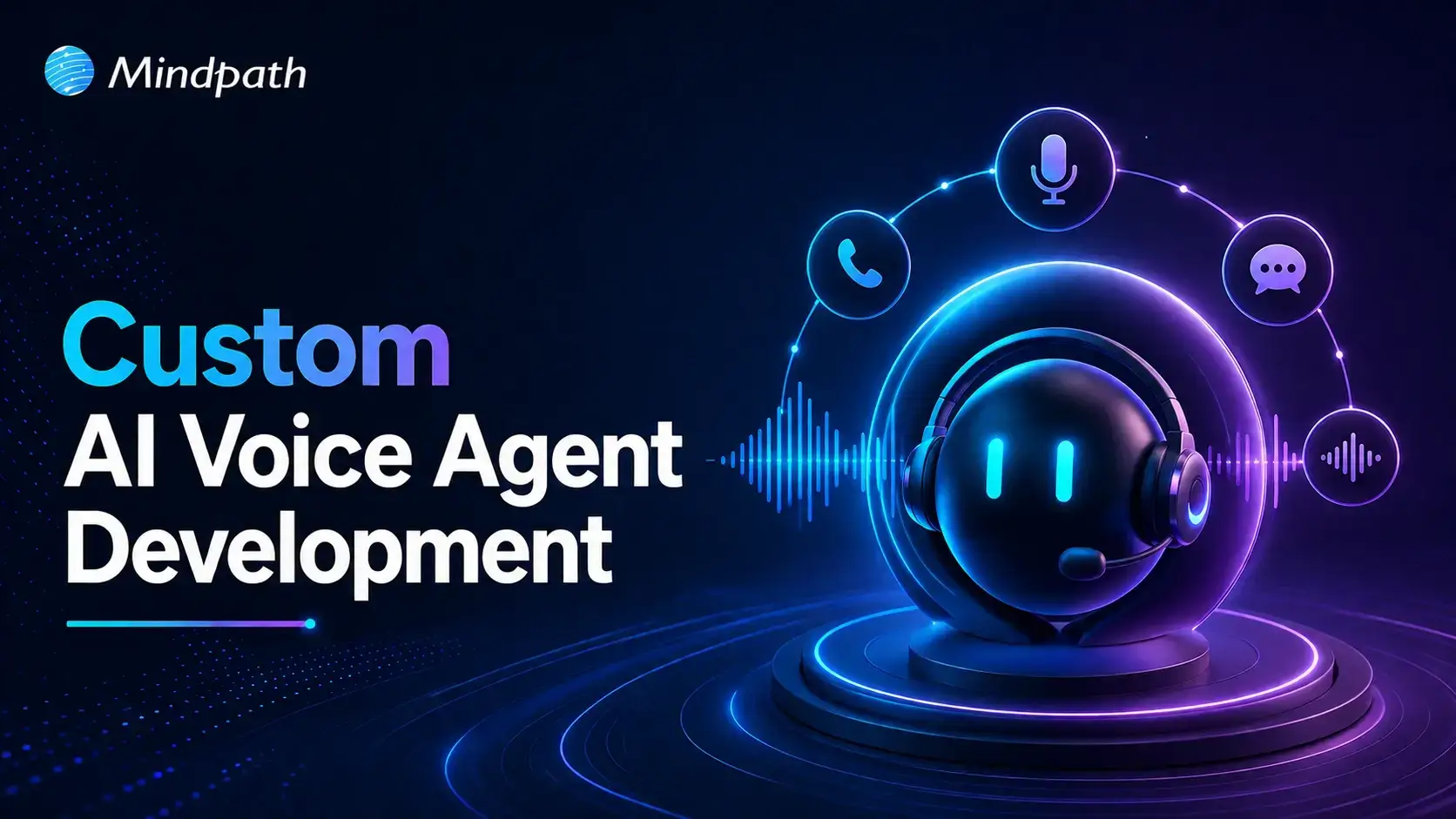
Turn Insights Into
Real Business Solutions
Exploring trends is only the beginning. Whether you’re planning AI adoption, modernizing legacy systems, or building scalable software, our experts help transform ideas into practical business outcomes.