Best Strategies to Scale Your Website in 2026

Join our Newsletter!

Featured Posts

Support Is One Click Away

Home

Best Strategies to Scale Your Website in 2026

Web application scaling 

Best Strategies to Scale Your Website in 2026

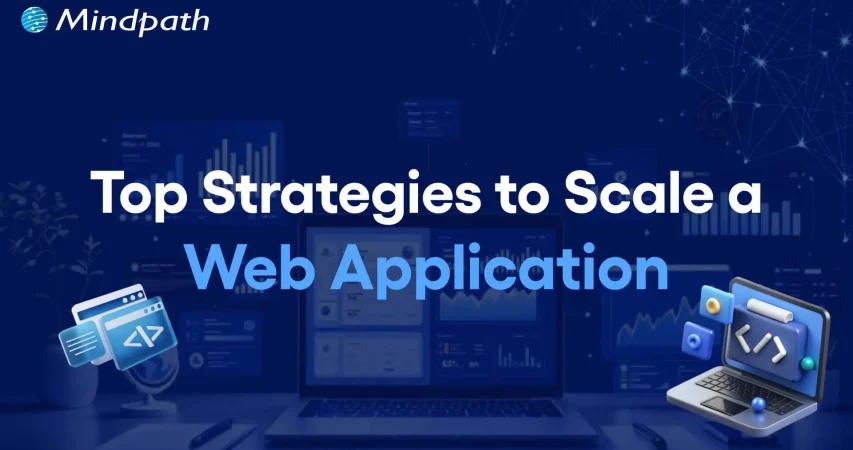
Growing a digital product in 2026 means having to think smarter and act sharper. Web application scaling is a permanent debate of teams that desire continuous growth without performance problems. The higher the user demand, the higher the expectations of speed, reliability, and experience. The pressure mounts up as the traffic increases, and systems become overstretched. This is a moment that is forcing businesses to reconsider the level of preparedness of their platforms.

As the growth escalates, all the technical decisions start to have an impact on stability and user trust. Thus, teams need to think ahead and at the same time, they need to be flexible to change. Scaling must help in momentum rather than decelerate the momentum. An effective strategy assists companies in managing growth with certainty and sanity. When properly done, growth becomes purposeful and manageable instead of being in a rush. The purpose of this blog is to explain how to tackle the idea of scaling websites in 2026 with importance and intent. Are you worried about scaling web applications? Keep reading further to know the best strategies!

Want to ensure your website can handle rapid growth without compromising performance? Mindpath’s web development services help you build scalable websites that grow with your business.

What is Web Application Scaling?

Web application scaling refers to developing an application that is capable of expanding without compromising its speed and performance. It assists apps to deal with additional users and operations without obstruction. Scaling web apps aims at maintaining consistency of performance as demand grows. Teams design systems which remain steady in the process of expanding. This will secure user experience and will help to grow the business in the long term.

With the increase in the number of users, apps need to adapt resources to prevent delays in loading or failure. In order to scale web application capacity, teams anticipate increased traffic and usage. An online service can increase to hundreds and thousands of users each day. This phase of growth ensures that pages remain fast and reliable with smooth interactions as a result of proper scaling.

The following are 2 main types of web application scaling:

1. Horizontal Scaling

Horizontal scaling involves the addition of additional servers to distribute the load. Traffic is distributed through a number of systems and this enhances stability and reliability. This approach increases scalability of web applications and it helps to grow without putting strain on individual server.

2. Vertical Scaling

Vertical scaling refers to the improvement of a single server to support additional work. Teams can be used to increase the CPU, memory, or storage in order to enhance performance. This is a method of maintaining scalability in web applications, but it ceases when the server gets saturated.

Planning to grow your website without compromising security? Discover application security best practices for web and mobile apps to check out strategies for safe and reliable scaling.

Effective Strategies for Web Application Scaling

Modern web application scaling needs proper planning and solid technical selection. In order to scale application growth without failure, teams should create scalable applications that remain fast, reliable and available to the growing demand of the user base. The right scaling strategy encourages long-term performance and contributes to the expansion of businesses.

1. Design for Flexibility First

A flexible structure facilitates growth and not confusion. Smaller services maintain system organization and are easy to manage. The teams make updates more quickly, without working on the entire product. This architecture will enable scalable web applications and alleviate technical pressure on a long-term basis.

2. Make Data Systems Growth-Ready

Powerful data processing maintains apps at high-speed in the case of expansion. Readable schemas assist systems to access information faster. Smart indexing also minimizes the unnecessary work of the database. The steps will create an effective base for web application scaling as the use of the application grows over time.

3. Balance Traffic Across Systems

Evenly distributed traffic maintains the stability of systems. There are several servers that distribute the workload. No individual server is overstrained. Such a balance enhances uptime and improves scalability in web application environments when it is at its peak.

4. Manage User Sessions with Care

Applications are usually executed on more than one server. State in one system should remain accessible in other systems. Interactions are consistent in external session storage. This would ensure that there is a reliable scalable web application experience among the users.

Must Read: Custom web application development

5. Reduce Load with Smart Caching

Caching keeps the repeated data nearer to the users. Reduced system effort is through faster access. Many repeated requests are not processed by the servers. The caching is more efficient in Web application scaling processes by enhancing speed and reliability.

6. Scale Resources Based on Demand

Traffic does not always remain at the same level all day long. Auto scaling will adjust the resources according to the change in usage. There is no lost capacity or performance loss within teams. This approach promotes a regulated expansion of any scalable application.

7. Speed Up Content Delivery

The speed of content delivery enhances customer satisfaction. CDNs will be used to serve files that are local. Smaller assets take shorter time to load in any device. Accelerated delivery enables platforms to scale to any part of the world without slowdown.

8. Watch Performance in Real Time

The growth requires constant visibility. Performance data illuminates the areas of weakness in an early stage. The notifications are directed at teams to take action when concerns extend. Real-time monitoring assists in making successful and predictable scaling choices.

Looking to scale your website smoothly without technical bottlenecks? Check out right tech stack for your web application to learn how the right stack ensures stability and speed.

Core Challenges of Web Application Scaling

Web application scaling is associated with distinct challenges that may influence the performance and user experience. The identification of the major issues assists the teams in planning more effectively and reaching the level of scalability in websites.

1. Limited Flexibility in Large Codebases

Monolithic systems are more difficult to upgrade and expand since each feature is closely interconnected. This restricts web application scalability and impedes the attempt to scale web sites effectively.

2. Slow Database Operations

Slow response is caused by inefficient queries and inefficient database structure. During the growth, teams find it difficult to preserve the performance, which influences the web application scaling.

3. Unequal Traffic Distribution

Excessive load balancing overloads certain servers but leaves others with nothing to do. This slows the web application scalability and also reduces reliability.

Must Read: High Performing Web Apps Features

4. Managing Sessions Across Multiple Servers

It becomes complicated in order to synchronize user sessions among numerous servers. Due to lack of planning, it restricts the ease of scaling of the web site.

5. Challenges in Caching and Data Updates

Incorrect cache management can serve outdated information to users. This disrupts web application scalability and reduces the effectiveness of scalable web applications.

6. Latency Issues for Distant Users

Applications with users spread across regions may experience slow response times. High latency can affect web application scaling and overall user satisfaction.

Want to plan your website’s growth with a clear development strategy? Explore web app development roadmap to learn how a structured plan ensures smooth scaling.

Ready to Scale Your Web Application Confidently?

Building a scalable web application requires careful planning, smart architecture, and efficient resource management. Teams must focus on performance, reliability, and growth readiness. By balancing traffic, managing sessions, optimizing databases, and implementing caching strategies, businesses can ensure smooth expansion. Following these strategies helps maintain speed, stability, and a strong user experience while scaling for increased demand.

At Mindpath, we help businesses develop scalable web applications through expert web development services tailored to growth and user needs. Our experts design flexible architectures, optimize databases, implement auto-scaling, and improve content delivery. We ensure your app remains fast, reliable, and ready for any increase in traffic. Partnering with us guarantees smooth growth, strong performance, and a consistent user experience.
Related Post

Discover the key factors influencing software development costs and how to optimize your budget. Learn how Mindpath can help.
Elevate your brand with a custom WordPress website. Enjoy unique design, enhanced functionality, scalability, and top-notch security for your business.

Related Post

ui ux design trends

At present, the UI and UX aspects of web app development are undergoing a paradigm shift. It is an understatement to say that the year 2026 has been a groundbreaking year when it comes to web app development. This is because an array of new UI/UX design trends has emerged. In fact, as per recent UX statistics, if you invest USD 1 in UX, you are likely to get a return of USD 100. It highlights the rising popularity of top-notch UI UX designs.

If you wish your business to stand out in the crowded digital space, it is essential to familiarize yourself with the latest UI UX best practices. By incorporating the top UI UX trends into your website, you can have a lasting impression on your target audience. Let us take a look at some of the most unique UX UI design trends that are set to rule in the year 2026 and beyond.

If you want to modernize your next project with UI/UX trends, our web development services can help you design and develop applications that would deliver engaging digital experience.

Top UI/UX Trends of Today

Gone are the days when websites used to be boring. Thanks to rising emphasis on UI UX, learning businesses have started realizing the strategic relevance of user experience and user interface. In the fast-paced business world, it is a must for businesses across diverse industries to incorporate captivating UX UI elements that can captivate online users.

If you wish to use your business website as a strategic tool, it is essential to review UI UX design elements that are ruling the web app development arena at present. It will certainly create an opportunity for you to develop a world-class website that can boost the overall experience of your users. Some of the major UX UI trends that are likely to rule the current as well as future web app development arena are:

1. AI-Driven Personalization

Today, businesses are relying on artificial intelligence technology to redefine their UI UX efforts. By leveraging AI, it has become possible to take personalization to the next level. Many businesses across diverse sectors and industries are incorporating AI to tailor the digital experiences of their users. By capitalizing on AI capabilities, it has become possible to create highly engaging as well as relevant interactions for the target audience.

Such a development in the web app development arena has undoubtedly revolutionized the experiences of users. Moreover, by focusing on AI-driven personalization, businesses are able to understand the behavior and preferences of their users in a better way. The insights are equipping businesses to promptly respond to the needs of their users and strengthen their association with them. Today, businesses have even started taking AI-driven personalization to the next level by creating dynamic layouts for their websites and developing adaptive designs.

Curious to learn how AI can transform web development? Take a deep dive into our Comprehensive Guide to AI in Web Development to get more insights!

2. Integration of Immersive Elements

One of the most popular UX UI trends that is dominating the web app development space revolves around the use of immersive elements. It has become common to add 3D elements to websites so that users can have a highly engaging experience. Some of the other common UX UI design examples that are gradually gaining popularity include virtual reality (VR) and augmented reality (AR) elements.

By incorporating such components into web app development, new possibilities have opened up for businesses. In fact, businesses have become capable of blurring the lines between the virtual world and the physical world. It has also been reshaping how online users interact with businesses in the modern era. In the future, this specific UX UI design trend is likely to gain further momentum due to its rising popularity among businesses and users alike.

3. Focus on Interactive Design

At present, businesses have shifted their attention towards interactive design in the context of web app development. By incorporating such elements, businesses can improve engagement and interaction with online users. It has become quite common to incorporate elements in the form of subtle animations and feedback to guide the users. Similarly, businesses have started incorporating dynamic animations that are capable of responding to the inputs of users.

Interactive design is considered to be an indispensable part of UX UI. Such design components can serve as catalysts and influence how online users interact within a website. This trend is here to stay since it can impact the experience of online users at diverse levels. If you wish your web application to have a lasting impact on your target audience, you must certainly start incorporating impactful interactive design features and components.

4. Introduction of Dark Mode

The dark mode is not exactly a new trend in the web app development space, but it has undoubtedly gained immense popularity in recent times. This mode has become immensely popular among online users owing to its sleek and captivating look. Moreover, the dark mode ensures the comfort of users, especially when they navigate websites and applications in low-light settings.

By including the dark mode element, it is possible for you to keep up with the amazing UX UI trend. This visual setting can create value for your web app by improving its overall aesthetics. Moreover, it can certainly enhance the overall experience of online users by improving their readability and reducing their eye strain. It is undoubtedly one of the top trends that businesses cannot afford to ignore today.

Curious about what’s shaping the future of web experiences? Discover top web development trends to discover the technologies and practices driving next-generation applications.

5. Sustainability in Designing

Today, immense focus is being laid on sustainability aspects. This trend has also been observed in the context of web application development. Currently, businesses are fusing sustainable and environmentally friendly design elements into their websites and applications. You must also start including elements that enhance the digital experiences of your users while minimizing their environmental impact. One of the top trends that is gaining momentum focuses on minimalism and efficiency. Similarly, another popular trend involves the use of recyclable resources.

It has become fairly common to prioritize efficiency in coding practices. By focusing on this aspect, it is possible for businesses to curb their footprint on the environment. This UX/UI trend is surely catching up in recent years, and it is expected to stay for a long time. It is the perfect time for modern businesses to incorporate this specific UX UI trend by locating unique ways to reduce waste and optimize the use of resources in web app design.

The top UX UI trends that have been identified are redefining the future of web app development today. Furthermore, these top trends are most likely to gain further momentum and influence how businesses create their websites as well as applications to shape user experience.

Want your UI/UX designs to truly stand out in real-world applications? Explore our Custom Web Development Services blog to see how tailored solutions turn great designs into seamless user experiences.

Final Words

The future of UI/UX design is full of new possibilities today. You can give your business an edge by choosing the best UX/UI design elements. Some of the major trends that you must look out for today include AI-driven personalization, integration of immersive elements, interactive design, dark mode, and many more.

You must undoubtedly consider joining hands with Mindpath since we offer comprehensive UI UX designs to modern businesses today. We aim to help you to keep up with the latest UI/UX design trends in 2026 and enjoy a competitive advantage. By choosing Mindpath’s top-notch app development services, businesses can create amazing applications that boost their performance and contribute to business growth.

Hiring NodeJS Developers
When hiring a NodeJS developer it’s essential to ensure they possess key technical skills that are fundamental to the role. Here are the core skills to look for:

1. Proficiency in JavaScript

A strong grasp of JavaScript fundamentals is crucial. This includes understanding core concepts like syntax, functions, and event handling, along with modern JavaScript features such as ES6+ (e.g., arrow functions, promises) that improve code readability and efficiency.

2. Asynchronous Programming Knowledge

NodeJS excels in handling multiple tasks concurrently, so developers need to be skilled in asynchronous programming. They should be comfortable using techniques like callbacks, promises, and async/await to perform non-blocking tasks, improving app performance.

3. Understanding of RESTful APIs

NodeJS excels in handling multiple tasks concurrently, so developers need to be skilled in asynchronous programming. They should be comfortable using techniques like callbacks, promises, and async/await to perform non-blocking tasks, improving app performance.

4. Database Handling Expertise

NodeJS developers must be familiar with various database technologies such as MongoDB, PostgreSQL, and MySQL. They should be capable of designing efficient data structures and querying the database effectively to meet the project’s data requirements.

5. Experience with Node.js Frameworks

Experience with NodeJS frameworks, like Express.js, NestJS, or Koa, is valuable. These frameworks streamline development by offering built-in solutions for routing, middleware, and handling HTTP requests, making it easier to build scalable applications.

6. Knowledge of NPM (Node Package Manager)

NPM is essential for managing third-party packages in NodeJS projects. A proficient developer should be familiar with using NPM to install and manage dependencies, ensuring the project remains organized and up-to-date with necessary tools.

7. Effective Error Handling

Proper error handling is essential for maintaining app stability. Developers should know how to catch and manage errors effectively, using techniques like try/catch blocks and logging, ensuring that the application remains reliable and easy to troubleshoot.
At Mindpath we offer a team of expert Node.js developers ready to take on your most challenging projects. With years of experience in building fast, scalable, and efficient applications, our developers specialize in leveraging Node.js to deliver top-tier web solutions. Whether it’s creating real-time applications, managing APIs, or integrating with various databases, we ensure your project is completed on time and within budget. Looking for skilled Node.js developers who can bring your ideas to life? Mindpath offers top-tier Node.js development services, ensuring high-performance, scalable, and reliable applications. Ready out now  to discuss your project needs and see how we can help you succeed!
How much does hiring a ReactJS developer cost? Learn about factors affecting rates, and how to find the best talent within your budget.
lead generation chatbot

Have you thought about the impact that a lead generation chatbot could have on attracting and engaging customers for your business? The benefits of chatbots are clear: Because these chatbots start conversations immediately, they create a welcoming experience that encourages visitors to leave their details. They make conversation feel fluid and natural, keeping prospects looking, listening, and engaged, without breaks. They can help you seize opportunities as soon as they arrive, ensuring no lead gets away, and usually bring a steady stream of interested prospects to your business.

In addition to just collecting contact details, these chatbots can also qualify a lead, figuring out their needs and pairing those needs with the appropriate solution. They can answer questions quickly, suggest services, and schedule meetings in real time. This efficient method saves time for your sales team while keeping the customer journey uninterrupted. Chatbots are automating lead management and personalizing lead management like never before. In this blog, we will take a closer look at their use cases.

Want to build a powerful chatbot tailored to your business needs? Mindpath’s custom chatbot development services will provide expert solutions to enhance customer experience and boost lead generation.

What is a Lead Generation Chatbot?

A lead generation bot is an intelligent online marketing tool that engages with visitors on your website, captures their information, and even starts to categorize them as potential customers. The chatbot works constantly, so you will never miss another sales opportunity. It will ask some thoughtful questions and have a pleasant tone to ensure prospects feel like they were treated respectfully, while also extracting valuable contact information for your business.

A chatbot does not wait for visitors to do something like the outdated contact form. Its proactive behavior opens up the conversation and allows visitors to interact. A chatbot speaks to visitors instantly, answers questions, leads visitors to book a demo, or suggests the next step. Your chatbot can take information collected and send it directly to your marketing tools, so lead follow-up is fast and organized.

Looking to see how AI chatbots can boost your sales? Check out real-life examples of AI chatbots that increased conversions to discover strategies that truly work.

Benefits of AI Chatbots for Lead Generation

Lead bots are impacting how companies are collecting and converting potential customers through real-time interaction. Utilizing AI chatbots for lead generation allows for the quick acquisition of information while taking potential customers smoothly into the next step.

Benefits of AI Chatbots for Lead Generation

1. Expand Your Reach Across Channels

A lead generation chatbot can talk to prospects through your website, email, social media, and various messaging channels such as WhatsApp. You’re connected to customers on their most convenient platforms, and it makes it easy to have a conversation. The more dialogues you open across key communication points, the more customers will engage, putting you in a better position to convert a quality lead. When you utilize lead generation tools such as chatbots, your business remains prominent and accessible across all communications.

2. Boost Lead Conversion Speed

A sales chatbot AI can qualify prospects quickly and send them on to your sales team or follow-up system. With real-time engagement, you can respond to inquiries and gather needed information without delays. Which means that leads stay warm and are more likely to take action sooner rather than later. An AI chatbot for customer support can also help field questions that affect purchasing decisions, enhancing conversion rates even further.

3. Provide Consistent, 24/7 Engagement

A lead generation chatbot is available 24/7 and is able to engage with visitors when they show that they are serious about purchasing. Customers can get answers or help whenever they need them without waiting for store hours. This establishes trust with the customer and reduces the chances they will drop off during the purchasing process. This level of availability also strengthens connections with customers and the level of engagement overall.

Also Read: AI for Customer Services

4. Lower Your Cost Per Lead

Chatbot sales systems take away the manual and extra people that traditionally went into copy and qualifying leads, which will have a direct impact on chatbot pricing as more value is received for less money. Because of the efficiency of Conversational AI chatbot sales automation and how they scale, businesses won’t have to pay more to scale the amount of leads generated to scale resulting in every lead gained becoming progressively cheaper over time.

5. Scale Without Limits

By utilizing a chatbot for sales automation, businesses have the ability to manage hundreds of conversations simultaneously. This means you will never miss out on having a conversation with a potential customer, regardless of the demand, and your chatbot will operate seamlessly even during peak traffic and campaigns. Scalability like this means everything to growing businesses that want to take their reach to the next level.

6. Unlock Actionable Data Insights

A sales chatbot AI is able to collect in-depth insights around visitor behavior, intentions to buy, and preferences that can help improve your marketing campaigns and target customers more accurately. Captured custom chatbot analytics can inform more about which conversations converted into sales and why. Taking this data-driven approach, every single interaction, both now and in the future, improves through the method of practice.

Wondering how top businesses make smarter choices? Discover the importance of data-driven decision-making for businesses to drive growth and stay ahead.

How to Build Your Own AI Chatbot for Lead Generation?

Building a lead generation AI chatbot can help your business engage prospects, answer questions instantly, and collect valuable data automatically. With the right tools and strategy, you can create a chatbot that not only interacts with visitors but also converts them into potential customers.

Steps to Build Your Own AI Chatbot for Lead Generation

1. Plan and Design Lead Qualification

Define what a valuable lead means for your business before creating your lead generation chatbot. Plan key questions to qualify prospects and decide the follow-up steps, such as sending them to sales or booking meetings. Choose the platforms, like your website or WhatsApp, where the chatbot can engage the most visitors.

2. Integrate With Key Business Tools

Connect your chatbot to essential tools like CRM for tracking, email platforms for follow-ups, and scheduling tools for instant bookings. Use analytics to track performance and refine your strategy. Whether through custom or pre-built options, integrations make your chatbot a powerful automated sales AI bot.

3. Build a Strong Base

Plug-in solutions offer ready-made bot structures but limit customization. AI-powered platforms can set up your chatbot quickly with features that save time. A DIY build gives full control but requires more effort to create a flexible and high-performing bot.

4. Choose the Right Platform

Pick a platform with features like lead scoring, CRM integration, and multi-channel capabilities. Decide between coding, low-code, or no-code options based on your team’s skills. The right choice will help you create a reliable lead generation chatbot template that supports your goals.

5. Launch and Optimize Your Bot

Deploy your bot where it can have the most impact, such as your website or popular messaging apps. Start with a small audience to test and refine performance. Keep updating it to ensure your lead generation chatbot consistently delivers results.

Curious how chatbots understand and respond like humans? Learn what conversational AI is to see how it powers smarter lead generation and sales.

Looking to Build a Custom Chatbot for Your Business?

A lead generation chatbot improves the way businesses connect with potential customers. It engages prospects instantly, qualifies them effectively, and guides them toward the next step. With features like multi-channel reach, scalability, and data insights, it streamlines lead capture and boosts conversion rates while ensuring a smooth and professional customer experience at every stage of the interaction.

At Mindpath, our custom chatbot development services are designed to create solutions that match your business goals and enhance lead generation. We build chatbots that engage visitors, qualify leads faster, and integrate smoothly with your existing systems. With our expertise, you can deploy a chatbot that drives conversions, strengthens relationships, and supports your business growth effectively.