
Latest Insights On
GenAI, Tech, and Digital Transformation
Stay updated with expert insights, success stories, and real-world applications of cutting-edge technology.
The artificial intelligence you witness in mainstream applications today is extremely powerful and could do things which seemed impossible a few years ago. However, professionals would be aware of the architecture used for AI and the problems it brings to the able. The growing frequency of discussions around neuromorphic computing indicates that modern AI architectures need innovative solutions to address their limitations.
What could be the biggest limitations in the current state of AI? The most notable operational and physical constraints for AI include power consumption, bandwidth limitations and cooling requirements. A report suggests that all the world’s LLMs would stack up an annual electricity cost of 25 trillion dollars by 2027. Therefore, the neuromorphic paradigm had to emerge as a solution to achieve sustainable AI.
Ready to move beyond traditional AI and adopt intelligent systems that think and learn more like the human brain? Mindpath’s AI development services enable businesses to build future-ready AI solutions that drive innovation.
Why Traditional AI Architecture Needs a New Approach?
Many readers will be quick to search for the definition of neuromorphic artificial intelligence and how it is different from traditional AI. The breakthrough capabilities in modern AI systems come at the cost of massive resource consumption and various inefficiencies. The search for answers to ‘what is neuromorphic computing’ begins with the quest to find ways for improving sustainability in AI. Why do you have to worry about sustainable AI? It is important to note that training and running AI systems requires huge amounts of water, electricity and other resources.
Industry leaders have actively pointed out the need for cleaner sources of energy and that the future of AI needs innovative breakthroughs. Researchers have tried to work with alternative computing architectures that can ensure lower energy consumption without sacrificing performance. As a matter of fact, experts thought that quantum computing will be a major catalyst for the growth of AI. However, the infrastructure required for quantum computing will impose huge costs and is impractical for large-scale AI workloads.
What is Neuromorphic Computing?
The efforts of researchers to find new and efficient energy sources led to the development of the neuromorphic architecture. Neuromorphic computing is a brain-inspired hardware approach that replaces traditional binary logic with spiking neural networks and in-memory processing, delivering ultra-low-power, real-time AI. It involves simulation of the neural and synaptic structures of the brain for information processing. The primary goal of the neuromorphic architecture revolves around developing more capable and energy-efficient AI systems that overcome the bottlenecks of conventional computing.
As artificial intelligence systems continue growing, they need advanced hardware and software driving their functionalities. The neuromorphic paradigm of computing will serve as a growth accelerator for artificial intelligence by serving the benefits of high-performance computing. It works by emulating the human brain and nervous system as different components of a computer.
How Does Neuromorphic Computing Work?
The most common question about the neuromorphic paradigm for computing revolves around how it works. Neuromorphic systems work by drawing similarities with the human brain, using spiking neural networks (SNNs) that transmit information via discrete electrical spikes rather than continuous numerical values, so energy is consumed only when active firing occurs. Neurons and synapses serve as the basic building blocks of the human brain and help in transferring information with minimal energy consumption.
The neuromorphic paradigm for computing involves modeling the neurological and biological mechanisms in the form of spiking neural networks. Spiking neural networks or SNNs are a variant of artificial neural networks with spiking neurons and synapses.
The spiking neurons store and process data just like biological neurons with each neuron featuring unique charges, delays and threshold values. The synapses in SNNs provide the pathways between neurons and also feature weight values and delay. You can program the neuron charges, neuron thresholds, synaptic weights and delays with the neuromorphic paradigm.
The neuromorphic computing architecture involves using transistor-based synaptic devices as the synapses. These devices or ‘chips’ feature circuits for electric signal transmission along with a learning component to change weight values according to different activities. As compared to traditional neural networks, the spiking neural networks work with timing as a crucial factor.
The charge value of neurons in SNNs builds up gradually and upon reaching the threshold value, the neuron will spike and send information across its synaptic web. However, the neuron will dissipate and eventually leak charge when the charge value does not meet the threshold. Another notable aspect of spiking neural networks is their event-driven nature in which neuron and synaptic delays values support asynchronous information distribution.
Neuromorphic Computing Hardware: Key Innovations and Chips
The continuous evolution of the neuromorphic paradigm in computing has led to the development of new types of hardware. One of the earliest implementations of neuromorphic hardware is evident in the form of a theoretical experiment. The Stanford University created Neurogrid, which involved a mixed chip system with analog and digital capabilities, which can simulate neuromorphic networks.
The most interesting highlight in the evolution of neuromorphic architectures is the support of government bodies for neuromorphic research. For example, the Human Brain Project of the European Union aimed to understand the human brain better to come up with new computing technologies. Some of the notable advancements that came from the project are the large-scale SpiNNaker and BrainScaleS neuromorphic machines.
The technology industry is also not behind in the quest to develop neuromorphic chips with big players like Intel and IBM making a huge impact. Intel has created the Loihi chips while IBM has come with the next-generation NorthPole chips for neuromorphic architectures. As of now, the majority of neuromorphic devices leverage silicon and CMOS technology. Researchers have been looking for ways to use new materials such as phase-change and ferroelectric materials to improve the neuromorphic architectures.
How Can You Implement Neuromorphic Computing in the Real World?
The real world applications of neuromorphic paradigm of computing provide tangible proof of its potential to revolutionize AI. Neuromorphic architecture may become a game-changer in many areas with promises of unexpected efficiency improvements. An overview of the applications of neuromorphic architectures can help you understand their benefits.
1. Autonomous Vehicles
One of the most promising applications of neuromorphic AI can be found in the case of autonomous vehicles. Autonomous vehicle manufacturers leverage intelligent sensors and multiple cameras to collect images from the environment and detect obstacles for safer driving. Neuromorphic computers can facilitate higher performance and lower latency, thereby improving the navigation capabilities of self-driving vehicles.
2. Edge Computing
Neuromorphic architectures will also revolutionize edge computing with the benefit of low power consumption. With the help of efficient neuromorphic devices in edge networks, advanced AI systems can overcome the need to depend on remote cloud servers. This new approach can play a major role in using AI for time-sensitive applications on devices with limited resources.
Challenges and Limitations of Neuromorphic Computing
If you want to measure the probabilities of neuromorphic artificial intelligence gaining traction, then you must know about the challenges. Most of the neuromorphic computing examples you see in the real world are experimental in nature or in the nascent stages. Researchers have pointed out some prominent challenges that must be traversed to get the best of neuromorphic architectures in AI.
1. Lack of Standardization
Most of the neuromorphic research projects are restricted to universities and labs. It indicates that the technology is not ready for mainstream applications. On top of it, you cannot find clear standards for hardware and software in neuromorphic architectures, thereby creating scalability issues.
2. Integration Challenges
Even if neuromorphic engineering delivers tangible outcomes, it will take a lot of time and resources to achieve integration with existing systems. You should know that most of the deep learning applications use traditional neural networks, which use conventional hardware. Therefore, it will be extremely difficult to incorporate neuromorphic architectures in the computing infrastructures of legacy systems.
The Future of Neuromorphic Computing
The neuromorphic paradigm for computing will emerge as one of the hot topics in technology for 2026. Anyone keeping tabs on the AI industry will know that hardware improvements and research efforts will bring neuromorphic computing to mainstream applications. Neuromorphic architectures will revolutionize AI capabilities and can establish the perfect foundation for accelerated growth of artificial intelligence.
Mindpath is a leading AI development service provider with a knack for innovation and technical leadership. We aim to set new benchmarks of excellence in creating novel AI solutions by leveraging the latest technologies. Our experts specialize in diverse technology stacks and strive to achieve the best outcomes in alignment with your goals. Consult with us now and discover the ideal path for your business growth.

Are you ready to take your business intelligence to the next level? Imagine if you could make faster, smarter decisions with the help of advanced analytics tools. That’s where augmented analytics comes in. But what exactly is it, and how can it revolutionize the way businesses unlock insights? Let’s explore how this cutting-edge technology is transforming the world of business intelligence.
What Is Augmented Analytics?
Augmented analytics is a new approach to data analysis that makes use of technology such as machine learning (ML), artificial intelligence (AI), and natural language processing (NLP). These technologies collaborate to simplify and accelerate the process of gaining insights from data. The fact that augmented analytics does not require extensive technical expertise distinguishes it from other approaches. It is intended to provide relevant information to people at all levels, from business users to data analysts, without the requirement for specialized expertise. Users can ask basic enquiries and receive immediate responses using techniques such as natural language queries and natural language creation. In many circumstances, augmented analytics can deliver more complete and precise insights in minutes, reducing time and boosting decision-making. Even someone with no technical knowledge can now identify crucial trends and patterns in data, which would have previously needed the skills of a data scientist. This makes it a game changer for firms that want to be more data-driven and responsive.
How Augmented Analytics Work?
Augmented analytics employs artificial intelligence, machine learning, and natural language processing to simplify and accelerate data analysis. It automates the process of gathering, cleaning, and linking data from diverse sources, allowing teams to prepare data without requiring complex technical expertise. Instead of manually developing models, users can ask queries in plain language, and the system will instantly analyze the data and deliver thorough insights. These insights are presented instantaneously via dashboards, with real-time answers and explanations, reducing the time and effort often necessary to create reports and visualizations. This makes data analysis more accessible and efficient for everyone in the organization.
Advantages of Augmented Analytics in Business Intelligence
1. Breaking Data Barriers
In traditional business intelligence, each team frequently develops its own data models to address specific concerns. However, these models may not contain all important data, resulting in missed opportunities. For example, a marketing team can analyze CRM data while ignoring crucial findings from sales or customer support, which could have an influence on their marketing strategy. This results in data silos, in which important information is kept inside one department and not shared across the organization. Augmented analytics accelerates this process by integrating all of your data sources into a single streamlined solution. When you ask a question, the system collects data from all linked platforms, databases, and storage places to provide a comprehensive, correct response. It also updates itself with each query, resulting in tighter links across data sets. The insights and visualizations created are easily shareable across teams, allowing employees to collaborate and access the data they want. This not only eliminates silos but also guarantees that everyone in the organization is on the same page, using the most up-to-date information for improved decision-making and faster solutions to business difficulties.
2. Smarter Business Choices
Waiting weeks for vital insights can lead to missed chances, whilst speeding the analysis can result in forgetting important facts. Augmented analytics tackles both of these issues by analyzing billions of information in seconds and providing timely and accurate insights. It doesn’t end there; augmented analytics explain the “why” behind each insight, giving you more information to make smarter decisions. This provides business users with not just the answers they want, but also the knowledge to properly comprehend the data. Real-time insights allow teams to act on information immediately, increasing overall efficiency and responsiveness. Whether it’s recognizing new trends, analyzing customer preferences, or making fast changes to strategy, augmented analytics guarantees that business choices are made using the most accurate and up-to-date information. By simplifying the process and lowering the risk of human mistakes, it allows organizations to remain agile and make wiser, more confident decisions, resulting in better commercial outcomes.
3. Real-Time Data
Unlike standard business intelligence tools, which can take a long time to process data and give insights, augmented analytics returns results practically instantaneously. Simply ask a query, and the AI will process billions of data points in milliseconds. It then offers clear and simple insights and visualizations, allowing you to understand exactly what is going on in your business. Since the insights are supplied in real time, teams can act on them instantly, helping firms to seize time-sensitive opportunities. This speed not only facilitates speedy decision-making but also guarantees that firms remain agile and responsive to change. Whether it’s modifying strategy, recognizing patterns, or resolving difficulties, augmented analytics guarantees that users always have up-to-date, actionable insights at their fingertips, making the process faster, smarter, and more efficient.
4. More In-Depth Analysis
Getting precise understanding from your data used to be a complicated and time-consuming process. However, with augmented analytics, you can swiftly delve into your data by analyzing billions of data points and many elements in only seconds. This provides you with more precise and granular insights that were previously difficult to obtain. Not only does it help you understand the “why” behind the findings, but it also reveals hidden patterns and trends that can be used to guide future decisions. This higher degree of research helps you to go beyond surface-level discoveries and uncover previously unknown aspects. Augmented analytics can uncover subtle links between variables by analyzing large volumes of data in real time, delivering a more comprehensive view of your organization. The capacity to do in-depth analysis assists firms in making well-informed, data-driven choices, whether it’s increasing the customer experience, optimizing processes, or refining strategy. Companies can utilize this powerful tool to more accurately identify growth possibilities, minimize risks, and forecast future trends, providing them with a competitive advantage in an ever-changing market.
5. Accessible Data for All
Traditionally, business intelligence systems depended significantly on IT teams and data experts to do the majority of the workload. However, augmented analytics transforms this by allowing anybody in the organization, regardless of technical experience, to access precise information. Augmented analytics enables users to study data in real time and construct their own visualizations to make sense of it. This change enables data scientists and analysts to focus on more complex duties, while the rest of the team can freely investigate and use data to make choices. By making data more available to everyone, augmented analytics creates a data-driven decision-making culture throughout the organization. Employees from many areas, including those who lack technological expertise, may now utilize the power of data to improve their processes, solve problems, and spot new opportunities. This data democratization not only boosts the general use of business intelligence tools, but it also helps to break down team barriers, fostering cooperation and creativity. When everyone is on the same page, organizations can make faster, smarter choices and achieve better business results.
How Mindpath Can Help?
Wrapping Thought!
In today’s fast-paced corporate environment, keeping ahead requires making better judgements faster. Augmented analytics is the key to uncovering real-time, in-depth insights that improve your company’s performance. This breakthrough solution allows everyone in your organization to make data-driven decisions, regardless of technical skills, by breaking down data silos, allowing smarter decision-making, and democratizing data access. With Mindpath’s experience, your company can easily implement augmented analytics, expedite data processing, and ensure that everyone—from data scientists to non-technical team members—has access to vital insights. We help you incorporate AI and machine learning into your processes to increase collaboration, decision-making, and general efficiency.
Want to unlock the full potential of your data with Mindpath's augmented analytics solutions?
Partner with us today to transform your business insights and decision-making!
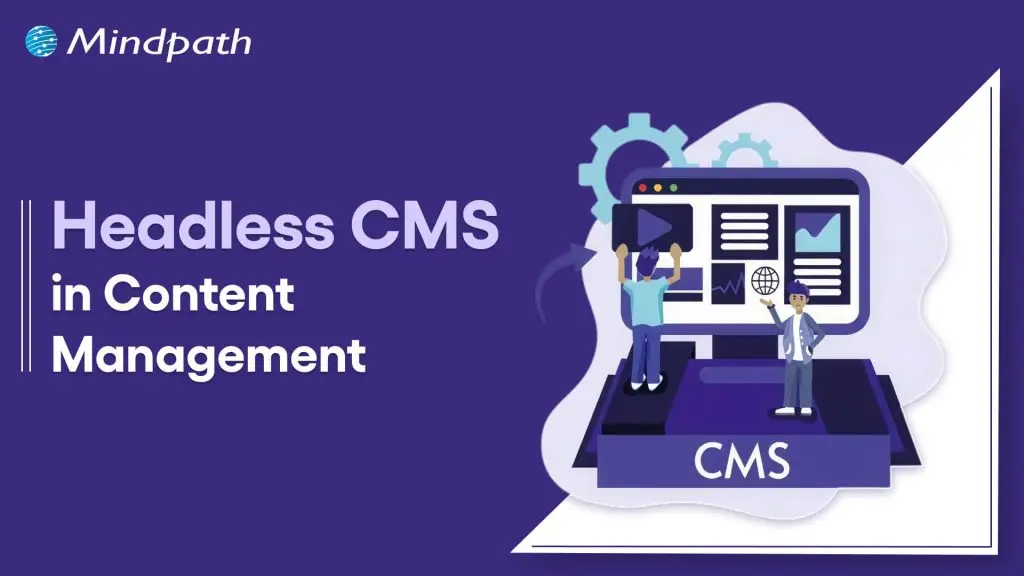
The digital landscape always adopts unique approaches that engage audiences widely. So, accordingly, businesses are striving to offer exceptional online experiences to be prominent in the digital world. To achieve this, a systematic content-management system can play a critical role. However, traditional CMS systems might limit your performance while restricting your content delivery over multiple channels.
Key Takeaways
- 01
A headless CMS separates the backend from the front end and uses APIs to deliver content across multiple platforms. - 02
It gives businesses greater flexibility to create custom websites, mobile apps, and digital experiences without predefined layouts. - 03
Headless CMS supports consistent content delivery across websites, mobile apps, IoT devices, and other digital channels. - 04
Common use cases include custom front-end development, e-commerce, content-first integrations, IoT applications, and web applications. - 05
A successful implementation involves assessing requirements, choosing the right CMS, migrating content, modeling content, and integrating APIs.
This is where a headless CMS can be a desirable option to rely upon. As per the statistics, the estimated market of headless CMS software is going to touch USD 7,113.6 million by 2035. (Source: Click) This is efficiently transforming the way businesses manage and distribute their content.
What is a Headless CMS, and How Does It Work?
A headless CMS is known to be a content management system that generally decouples the backend from the front-end. Talking about the traditional CMS platforms, they were able to analyze how content is displayed. But a headless CMS allows developers to prefer their desired front-end technology, making the process more adaptable and versatile.
A headless CMS uses APIs to deliver content and ace its way for making your customers’ experience more user-centric. Now, you are well aware of what is a headless CMS. Further, let us learn about its working capabilities.
- Through a headless CMS architecture, content developers can work within the backend, where they can seamlessly add, modify, or organize content as per their requirements.
- The backend is considered to be a repository or a database. So, instead of creating HTML pages, the headless CMS offers content through APIs. This allows your developers to fetch it and display it over multiple platforms.
- Accordingly, front-end developers can use JavaScript frameworks like Angular, React, or Vue.js to present the content in a more appealing way. This ensures your brand values have been implemented properly into the content.
How a Headless Content Management System Can Be Beneficial for Your Business?
A headless content management system comes with a series of benefits that can escalate the versatility of your business in the digital landscape.
1. Efficient Omnichannel Service
A headless content management system allows your team to channelize content seamlessly through different channels. No matter if you prefer IoT devices, a website, or a mobile app, your content will remain consistent. This is how your users will love the interactive experience while fueling your brand values.
2. Enhanced Flexibility
Your business doesn’t have to work with pre-defined layouts, as a headless CMS will always help you perform uniquely. You can easily understand the power of your front-end technologies while allowing you to leverage your creativity and custom efforts.
No matter if you want a personalized website or a mobile app with a unique interface, a headless CMS platform can offer you flexibility while bringing life to your vision.
3. Offers Scalability and Keeps Your Business Future-Proof
Headless CMS offers scalability to your designs. With your business growth, you might discover new channels and technologies. So, a headless CMS makes it easier for integration. The decoupled architecture ensures your content can be efficiently distributed without disturbing your active work structure.
So, no matter if you want to diversify your product line or want to reach new markets, headless CMS can completely support your growth.
4. Better Market Delivery
With the backend and front-end separated in a headless CMS platform, it ensures your workflow is not disturbed. This allows your business to initiate rapid content updates, respond swiftly, and launch detailed campaigns faster as per the market demands.
This valuable approach offers you a great significance in the competitive edge. With better turnaround times, your business can gather better opportunities while reacting to changing trends.
5. Easy Customization
Businesses can easily personalize their content with the help of headless CMS options. This can be done to satisfy your users’ preferences and behavior. By delivering data-rich insights, you can easily target your audience segments for better reach. Further, this step can enhance your customer engagement while escalating their satisfaction rate.
For your information, personalization always breeds loyalty, and a headless CMS always equips you with tools that tailor content as per individual user requirements. Moreover, it creates memorable experiences that give rise to long-term customer relationships.
Where You Should Utilize a Headless CMS?
A headless CMS can be your ultimate solution for a series of scenarios, as given below. Discover where the headless CMS options can be your viable preference.
1. Custom Front-end Development
If you require a unique and custom front-end experience, a headless CMS can allow your front-end developers to effectively discover their creativity. So, your user experience and designs are not limited to any pre-built templates. It allows you to generate a unique digital experience that can make your customers happy.
2. Multi-platform Requirements
If you want your content delivery to be seamless through multiple platforms, a headless CMS architecture can be your suitable pick. It simplifies content distribution while keeping your user experience valuable over different channels.
3. Content-first Integrations
There are many organizations that desire content marketing. So, a headless CMS can easily align your content creation with its delivery. Apart from this, it accesses your markets to acknowledge engagement while your development team can handle the technical aspects.
4. E-commerce Applications
Headless CMS can be a suitable choice for your e-commerce platforms, where you need to endlessly update your content and products. Moreover, it allows you to initiate swift updates in your pricing, product listing, and promotional content.
5. IoT Applications
Headless CMS can easily manage and offer content to a variety of connected devices in IoT applications. It includes healthcare devices, smart applications, and even manufacturing equipment. Further, headless CMS architecture ensures real-time updates and proper content distribution to these devices.
6. Personal Web Application
Organizations that create custom web apps or websites with unique approaches and functionality requirements can adopt the values of Headless CMS. You can use APIs to access and display content as per your requirements, offering you greater flexibility in layout and designs.
How to Implement Headless CMS with Best Practices?
Integrating a headless CMS is not random, as you need to adopt a better plan.
1. Assess Your Requirements
In the initial phase, start by identifying your content delivery needs. This might include the type of content and the number of platforms you want to target.
2. Opt for the Right CMS
Prefer a headless CMS that fulfills your business motive. You can consider elements like ease of use, scalability, content modeling ease, etc.
3. Data Migration
In the next step, you need to think about migrating your existing content to the headless CMS platform. This includes transferring all the content from your existing CMS platform to the new one.
4. Content Modeling
Next, you need to think about content modeling that can match your business’s unique requirements.
5. API Integration
There are many headless CMS platforms that offer APIs to access and further retrieve the content. So, you can develop APIs for your front-end apps.
Conclusion
The digital landscape is changing in a blink. So, brands that can offer consistent and engaging content through multiple channels are more likely to survive in the market. So, a headless CMS platform can make your modern development teams unique by offering them the flexibility they desire.
No matter if you want to extend your digital presence or just want to elevate your engagement rate, a headless CMS can provide you with a good foundation to be successful. Here, Mindpath can be your ultimate partner. This company can help you with the best CMS implementation while keeping you ahead with your unique innovations and dedicated content.

Imagine a world where businesses can enjoy the flexibility of public cloud services while keeping sensitive data safe in a private environment. Sounds ideal, doesn’t it? That’s the promise of hybrid cloud! But why is it gaining so much attention? What makes it the perfect choice for modern businesses? Let’s dive into the key benefits of this game-changing approach.
Looking to improve cloud performance without adding complexity? At Mindpath, we offer managed cloud services that simplify operations, strengthen security, and support business growth.
What is Hybrid Cloud?
A hybrid cloud is a configuration that combines private and public cloud technologies. It combines private servers in your office or data center with public cloud services from firms such as Google Cloud or Amazon Web Services. This architecture allows enterprises to store and manage their data and apps in the most appropriate location for their purposes. For example, sensitive or vital data can be kept protected in the private cloud, while less crucial operations can be done on the public cloud to save money and enhance speed. Businesses can also shift workloads across various clouds, making it an extremely adaptable and practical option. Hybrid clouds are popular because they provide businesses with the best of both worlds: security and flexibility. They are especially useful during digital transitions, when firms need to change their systems without totally shutting down their existing activities. This strategy enables businesses to work smarter, save money, and expand more effectively.
How Does Hybrid Cloud Work?
A hybrid cloud combines two or more types of cloud environments, such as private data centres and public cloud services, into a single system. This connectivity enables enterprises to effortlessly transfer data and applications across various environments. The hybrid cloud requires robust networking to function properly. This is accomplished via techniques such as local networks (LAN), virtual private networks (VPN), and APIs, which allow smooth communication between the various elements of the cloud. Virtualization and containerization are two common current technologies used in hybrid cloud systems. These solutions simplify resource management and sharing by producing virtual replicas of hardware or software. These resources are also managed using specialized software, which enables organizations to swiftly change or assign them as needed.
Advantages of Hybrid Cloud
1. Better Return on Investment (ROI)
A hybrid cloud enables you to integrate your existing private infrastructure with public cloud services. This allows you to simply extend your computer capacity without having to invest in expensive new hardware or run additional data centers. Instead of investing more in physical servers, you can leverage the public cloud to meet additional storage, computing power, and processing requirements. This technique guarantees you only pay for what you use, which helps to keep prices down. By embracing the public cloud’s flexibility and scalability, you improve your capacity to manage rising workloads while saving money on infrastructure. As a consequence, organizations can enhance their return on investment (ROI) by employing cloud services more efficiently and lowering operating costs. This combination of flexibility and cost savings makes hybrid cloud an excellent solution.
2. Enhanced Speed and Performance
Hybrid cloud solutions enhance performance, particularly for applications that require quick processing and minimal latency. By combining private and public cloud resources, data can be processed closer to end users, saving travel time and resulting in faster response times. This is vital for applications that need real-time processing, such as video streaming, online gaming, and financial transactions. For applications deployed in remote regions or with high performance requirements, a hybrid cloud configuration can guarantee that data is handled quickly by allocating resources to the best location. This can be accomplished by edge computing, which brings processing closer to the user, minimizing latency and improving the user experience. By lowering latency, hybrid cloud enables organizations to provide quicker, more dependable services, hence boosting overall application performance and customer happiness.
3. Accelerated Innovation
Hybrid cloud solutions allow enterprises to use cutting-edge technologies such as AI and machine learning without having to entirely replace or expand their present infrastructure. This makes it easy to implement modern tools and capabilities while minimizing costs and interruption. Businesses can maximize their existing systems while gaining access to the cloud’s scalability and flexibility by combining private and public cloud services. This allows teams to operate more effectively, minimizing the time required to create and deploy new apps. Organizations can bring innovations to market faster by shortening development cycles and responding to customer needs and industry developments in real time. The hybrid cloud method enables firms to explore, create, and deploy apps more quickly, providing a competitive advantage. This mix of technological access and operational flexibility accelerates innovation, allowing businesses to stay competitive in a rapidly changing digital market.
4. Stronger Control Over Applications
A hybrid cloud model provides enterprises with more flexibility over where their applications are hosted and how computing resources are distributed. This flexibility enables businesses to select the optimum environment for each application, ensuring that sensitive data is kept safe and regulatory needs are satisfied. This is particularly significant in regulated businesses. Businesses can enhance their data privacy and control by hosting particular apps in private clouds or on-premises. Simultaneously, less sensitive apps can operate on the public cloud, improving scalability and efficiency. Businesses can leverage hybrid cloud to guarantee that their applications are efficiently managed, reducing risks while still benefiting from the flexibility and cost savings provided by public cloud services. This control enables organizations to achieve privacy requirements and regulatory compliance.
5. Flexible and Efficient Operations
Hybrid cloud computing allows enterprises to pick the environment that best meets their needs. Hybrid solutions, whether in a private or public cloud, enable you to adapt and grow in response to individual requirements. One of the primary advantages of hybrid cloud is the ability to construct apps with containers. Containers make programs portable, allowing them to be seamlessly transferred between public and private clouds. This flexibility enables enterprises to take use of the finest aspects of any cloud environment, therefore improving performance, security, and cost-effectiveness. A hybrid cloud allows you to easily modify your operations to suit changing demands, such as scaling up during peak hours or relocating apps to a more secure environment when necessary. This versatility benefits companies to stay agile, reducing downtime and improving overall operational efficiency.
Cloud Computing Services at Mindpath
We provide a variety of cloud computing services to help your organization function smoothly and efficiently. Whether you need to store data, operate apps, or extend your operations, our cloud solutions offer the flexibility and security you want. We assist you in selecting the best cloud configuration for your organization, whether it’s a private cloud for sensitive data or a public cloud for ease of access and scalability. Our staff guarantees that your cloud environment is optimized for speed, cost-effectiveness, and security, enabling you to focus on developing your business rather than worrying about technology. Mindpath’s cloud computing services allow you to develop quicker, enhance productivity, and take use of the newest cloud technologies to remain ahead of the competition.
Wrapping Note!
Hybrid cloud is transforming businesses by offering a mix of flexibility, security, and scalability. It allows companies to optimize resources, improve performance, and innovate faster, all while ensuring data privacy and compliance. At Mindpath, we provide tailored cloud computing services to help you harness the full potential of hybrid cloud, enabling your business to stay agile and competitive. Let us help you take your business to the next level with the power of hybrid cloud.

Are you wondering how DevOps compares to traditional IT? What makes one approach more efficient or suitable for today’s fast-paced tech world? Whether you’re a business owner, a tech enthusiast, or just curious about modern IT practices, understanding the differences between DevOps and traditional IT models can help you make the best decision for your needs. Let’s dive in and explore how these two approaches stack up!
What is DevOps?
DevOps is a fundamental idea that tries to bring together two key teams: development and operations. Previously, these teams operated independently, which sometimes resulted in miscommunication and delays. DevOps addresses this by fostering a more collaborative environment.
The term DevOps is derived from “development” and “operations.” It’s all about making it easier for these two teams to collaborate on software development, testing, and delivery. When development and operations collaborate, it is simpler to address challenges such as delayed software upgrades, poor coordination, and feature delivery delays.
Companies can employ DevOps to speed up their software development process. It involves leveraging tools, automating activities, and enhancing team communication, all of which contribute to faster, more efficient product releases for clients.
Advantages of DevOps
1. Cost Effective
DevOps saves businesses money by automating various procedures, reducing the need for additional human resources and accelerating software development. Developers can create more effective code, identify errors early, and make changes more quickly by utilizing DevOps principles like continuous integration and delivery, which reduces total expenses. Automation also lowers mistakes, delays, and increases the quality of the finished product. DevOps enables firms to generate high-quality software at a lower cost, helping them remain competitive in the market.
2. Security
Security is an essential concern for most firms, and DevOps helps by incorporating security into every stage of the development process. DevOps automates the development and deployment processes, enabling developers to work swiftly and safely. DevOps employs continuous testing and feedback to automatically detect problems and vulnerabilities as software is produced, resulting in high-quality and secure code. Automated technologies also aid in the early detection of security concerns, making them easier to resolve before they grow into larger difficulties. Companies can employ DevOps to reliably release updates and safeguard their software throughout its lifecycle.
3. Increased Flexibility
DevOps provides developers more freedom by allowing them to distribute new features or upgrades fast and effectively. The development team can quickly implement changes due to continuous delivery and testing, allowing organizations to respond to market needs and customer feedback. This agility enables businesses to remain ahead of the competition and get the first-mover advantage by being the first to provide new goods or improvements. Faster releases not only make customers happier, but they also allow organizations to innovate more frequently and adapt quickly to changing demands, making the entire development process more dynamic and flexible.
4. Fosters Communication
Implementing DevOps methods improves communication inside an organization. DevOps fosters collaboration between development and operations teams, directing everyone towards similar business objectives and supporting a united approach to goal achievement. This practice successfully removes communication obstacles, resulting in a smoother workflow and ensuring that both teams collaborate effortlessly. As a consequence, organizations can offer higher-quality goods that better fulfil the expectations of their customers. Superior communication and cooperation not only drive project success but also help to create a more productive and profitable corporate environment.
What is Traditional IT?
Traditional IT is the old technique of handling technology in enterprises. It makes use of real equipment like servers, computers, and network equipment to store data and operate programs. This system requires a significant amount of room, electricity, and money to put up and maintain. It also necessitates the usage of an in-house IT team to oversee everything, from hardware installation and configuration to problem resolution and overall operation. Because the infrastructure is built from physical components, it can be rather expensive, especially when it comes to upgrading or replacing obsolete gear. Businesses must also prepare for data storage, security, and backups, which can require additional time and resources. Furthermore, scaling up operations or introducing additional services can be cumbersome and expensive, as it often requires more hardware and manual setup.
Advantages of Traditional IT
1. Data privacy
One significant advantage of traditional IT is data privacy. Traditional IT gives you complete control over where your data is stored, generally on your own servers or hardware. This means that you can control who gets access to your data and how it is safeguarded. Because the data remains within your organization, you do not have to be concerned about third-party firms gaining access to it, which can provide you with peace of mind. Furthermore, storing data locally allows you to implement unique security measures tailored to your company’s specific requirements. To safeguard sensitive information, you can use firewalls, encryption, and other techniques. For firms that manage sensitive data, having direct control over it can be a significant advantage since it decreases the chance of breaches or unauthorized access.
2. Consistent data access
Traditional IT has a significant edge in terms of constant data access. By keeping data on premises, or on your own servers or hardware, you can ensure that it is always accessible, even if there are network or internet outages. Because the data is kept locally, you do not need an external internet connection to access it, making it more dependable during internet outages or disturbances. This is especially valuable for firms that require immediate and ongoing access to essential data, such as financial records or client information. Even if the internet goes down, conventional IT allows employees to view and work with data stored on the company’s servers. Additionally, local storage allows businesses to customize their access and backup strategies, ensuring data is always available when needed.
3. Security
Improved security is one of the most significant advantages of traditional IT. Data and apps are stored on your own servers, so you have complete control over who can access them. This makes it easy to restrict access to just authorized staff, ensuring sensitive information is safeguarded. You can use security measures such as firewalls, encryption, and access restrictions to guarantee that only authorized people have access to sensitive data. Traditional IT allows you to monitor and trace who accesses what data, providing you with greater management and control over your security. If your company handles sensitive or secret information, having this degree of control is essential for avoiding unauthorized access or data breaches.
4. Reliability
Traditional IT is highly reliable since it is not dependent on internet access. Because data is kept on your own servers, it is always available, even during internet outages or disturbances. This decreases the likelihood of service disruptions, which can harm cloud-based services. In the case of traditional IT, all apps and data are available locally, allowing your firm to continue operations without the need for an external network connection. This makes traditional IT a more dependable alternative for organizations that want regular access to their data, particularly in places where internet connectivity is unpredictable. Furthermore, because the infrastructure is managed internally, firms can set up their own backup systems and disaster recovery plans, lowering the chance of data loss or interruption.
DevOps vs. Traditional IT: A Comparison Table
| Aspect | Traditional IT | DevOps |
| Development & Operations | Work in silos, lack of collaboration | Integrated teams, continuous communication |
| Delivery Methodology | Waterfall, long development cycles | Continuous Integration/Continuous Delivery (CI/CD) |
| Process Management | Manual processes, prone to errors | Automated processes, faster and more reliable |
| Incident Management | Reactive, issues fixed after they occur | Proactive, issues identified and resolved early |
| Flexibility | Rigid, difficult to adapt | Agile, quick to respond to changes and feedback |
| Testing | Testing after development, delayed bug discovery | Shift-left testing, bugs detected early |
| Feedback Loops | Delayed feedback after release | Continuous, real-time feedback from users and teams |
DevOps Services at Mindpath
Mindpath offers full DevOps services to optimize your software development and delivery operations. By combining development and operations teams, we encourage seamless cooperation and quicker, more dependable releases. Our emphasis on automation, continuous integration, and real-time monitoring helps to eliminate manual mistakes while maintaining consistency across environments. We also prioritize proactive issue identification, which enables teams to handle possible issues before they affect your systems. With Mindpath’s DevOps services, you can expect shorter development cycles, faster updates, and higher software quality, all while increasing team efficiency and cooperation.
Final Thought!
Whether you choose DevOps or traditional IT depends on your business needs and priorities. DevOps offers agility, automation, and faster, more efficient software delivery, making it ideal for businesses aiming to stay competitive in a fast-moving tech landscape. On the other hand, traditional IT provides control over data, security, and reliability, which may suit businesses with specific data privacy concerns or those in less connected environments. At Mindpath, we help you navigate these options, offering tailored solutions to enhance your development processes and deliver high-quality, secure software.

Remote work security refers to the practices, technologies, and policies that protect corporate data and networks when employees work outside a traditional office environment. Teams operate across devices, networks, and locations every day, and without corporate firewalls in place, even small gaps can create serious vulnerabilities. The risks evolve quickly, which is why businesses need protection strategies built on strict user verification, encrypted network connections, and continuous endpoint monitoring without disrupting daily workflows or user experience.
Decisions on security must be clear and consistent as organizations increase remote setups. Leaders need to pose the correct questions and take actions. Meanwhile, employees require straightforward and easy to use systems that facilitate day-to-day operations. Consequently, there is a need to have a balanced approach to succeed in the long term. This blog will provide explanations of important aspects of remote work cybersecurity in a clear and practical manner. So, keep reading further!
Ready to secure your remote workforce and protect your business from evolving cyber threats? Contact us to explore how our team can help you build a safer and more resilient remote work environment.
The Growing Cyber Risk in Remote Work Environments
Not only in the office, remote work also faces rising cyber threats today. Remote work security is vital because employees are using their personal networks and devices to access systems. These are some of the weak points that hackers attack. Consequently, minimal security breaches have the potential to compromise business information and interrupt routine business activities within a short time.
Simultaneously, remote workforce cybersecurity is exposed to increasing threats as the techniques of attacks advance daily. Phishing, ransom, and identity attacks are growing at a high rate. Remote setups are fast to adapt to cybercriminals. Thus, organizations need to remain vigilant and increase security to manage these changing threats.
Want to better understand how to scale teams without increasing security risks? Explore the benefits of hiring remote developers to balance flexibility with control.
Here are some of the remote workforce security risks:
1. Unsecured Network Risks
At home or cafes, employees tend to connect to unsecured networks. These connections can easily be intercepted by attackers to get sensitive data.
2. Weak Password Security Risks
A large number of users use the same password on several accounts. A single breach may reveal multiple systems within a short time.
3. Personal Device Security Risks
Individual gadgets frequently lack frequent security patches and safeguards. This provides malware and attacks with easy entry points.
4. Phishing and Social Engineering Risks
To deceive users, hackers use spoofed emails, or messaging. Such attacks seek to steal usernames or confidential information.
5. Shadow IT Security Risks
Employees sometimes use apps without company approval for convenience. This bypasses security controls and increases risk.
6. Software Update Security Risks
Remote devices might not get security patches in a timely manner. This exposes systems to well-known threats and vulnerabilities.
7. Physical Security Risks
The devices may be lost or found in high-traffic or communal areas. Critical business information may be put at risk as a result of unauthorized access.
Looking to simplify how your remote teams stay connected and secure daily? Discover powerful remote work tools that support safer collaboration.
Importance of Cybersecurity in Remote Work
Remote work security is key in safeguarding data and systems when working remotely. Here are the reasons why solid cybersecurity is still needed in the daily remote work setting.
1. Protecting Expanding Digital Entry Points
Remote work adds devices, networks and points of access to systems. Cybersecurity for remote work helps control risks in these expanded environments.
2. Securing Sensitive Business Data
Every day, employees gain access to and share crucial information that is not secured by office infrastructure. Work from home security will also protect data when storing and transferring data.
3. Reducing Phishing and Online Fraud Risks
Users who are distantly located are faced with rising phishing attacks in the form of emails and fraudulent communications. High level of security awareness will avoid unintentional sharing of sensitive login information.
4. Maintaining Strong Security Standards
Both personal and shared devices may not have consistent security updates and protection tools. The use of consistent policies guarantees similar protection standards across all systems.
5. Ensuring Business Continuity
Cyber attacks have the ability to interrupt workflow and slow down processes happening remotely. Good security control mechanisms assist in stability and prompt recovery exercises.
6. Building Trust and Meeting Compliance
Data security breaches may destroy reputation and decrease customer confidence within a short time. Adequate security would keep the rules and guard business reputation.
Planning to strengthen your security foundation as your business grows? Read about application security best practices to protect your systems effectively.
Cybersecurity Best Practices
Remote working security requires effective habits to safeguard information and systems in remote configurations. These are the best practices that can be implemented in order to enhance safety and minimize risks.
1. Safe Network Access (VPN Use)
Connect with secure VPN to all remote work activities on a daily basis. This secures information transfer among the commonly shared and open internet systems.
2. Home Network Protection
Protect home routers by using strong passwords and updating encryption parameters. Store smart devices on different networks to minimize security risks.
3. Timely Software Updates
Automatically update all systems and security applications. Frequent patches seal identified vulnerabilities and thwart cyber attacks in real-time.
4. Stronger Login Protection (MFA)
Implement several authentication measures whenever accessing the company system. Remote work security enhances safety of access via additional authentication measures.
5. Strong Password Management
Use different passwords on each account using secure password tools. Do not use the same passwords in personal and work accounts.
6. Employee Security Awareness
Train employees on how to detect phishing emails and suspicious online activities. Establish a powerful security culture to avoid unintentional data breaches.
Is Your Organization Truly Ready for Strong Remote Workforce Security?
Remote work has transformed the way teams work and exchange information on a daily basis. Powerful Remote Work Security assists in safeguarding information, hardware, and networks during the increase in cybercrime. It guarantees safer communication, stronger control, and minimized risks in the distributed work setting in the long term business stability and trust.
At Mindpath, we offer remote work security solutions to secure modern distributed teams with robust, trustworthy systems. Our strategy revolves around safe access, data security and risk mitigation. We assist companies to create secure remote working environments that do not affect productivity at all.

The global artificial intelligence market size is expected to reach USD 2480.05 billion by 2034. Yet many organisations fail to translate such huge investments in favour of their business values. Many generative AI projects are going to lose their efficiency recently due to challenges like poor data quality.
Further, inadequate risk controls have been increasing the costs. So, the major issue lies in filling the gap between predictive models and implementing them into your business workflows. This is where the relevance of MLOps essentials comes into the picture. MLOps have the capacity to align the life cycle of machine learning while incorporating continuous monitoring.
Looking to integrate AI into your existing systems without disrupting operations? At Mindpath, we offer AI development services that ensure smooth implementation and measurable results.
What is MLOps?
MLOps, or Machine Learning Operations, is a set of practices that unifies machine learning model development, deployment, and operations. By combining ML with standard software DevOps principles, it automates and streamlines the entire ML lifecycle, ensuring models remain accurate, scalable, and reliable in real-world production environments.
Unlike traditional ML development, where models were often operated in a single system, MLOps treats the complete lifecycle of ML as a software product lifecycle. This means you can be assured of better collaboration, reproducibility, scalability and automation.
- MLOps can help your team take ML models from experimentation to production level safely and quickly.
- It manages the models reliably over time and collaborates across engineering, data science and operations teams.
How MLOps Essentials Overpowers the Traditional DevOps while Solving Leading ML Challenges?
MLOps and DevOps take complete responsibility for automating processes while encouraging collaboration between teams. But MLOps is capable of tackling unique challenges of machine learning that DevOps can’t necessarily address.
- In traditional software systems, once you deploy your app, it is mandatory to work within a stable environment with minimal challenges.
- However, ML models heavily depend on data and need continuous updates and validation when new data enters.
- DevOps prioritises managing the software code and the infrastructure. On the other hand, MLOps essentials include handling the lifecycle of models that can degrade over time.
- This involves addressing many major issues like data drift, model degradation, and model performance. All of these risks need periodic retraining and real-time assessment.
Planning AI initiatives but unsure where to start? Explore the complete AI roadmap guide to understand how to structure, prioritize, and scale your AI initiatives effectively.
What are Some Core Components of an MLOps Architecture?
The MLOps architecture can differ as per your organisational requirements. Some of the major components are here in this section for a complete reference.
1. Data Layer
This involves storage, data ingestion, preprocessing and versioning. As your models completely depend on data, tracking and handling their quality is necessary.
2. Development Environment
This is where the data scientists create and train models using their notebooks or integrated development environments. So, your experiments must be reproducible. This means the data, code and the environment settings are versioned.
3. Model Registry
This works as the main repository where the trained models are stored along with the metadata like deployment status. This feature can ensure you of data governance.
4. Monitoring
Once you complete the deployment process, your models must offer you accurate predictions. Moreover, precise and continuous assessment can offer you better performance while predicting potential defects. So, your model can also be relevant in the real-world usage.
5. Data Regulations
The regulatory efforts have been broadening due to major AI usage. So, your organization must prioritize relevant rules. Following the relevant practices can help your model serve trustworthiness.
Facing challenges in optimizing large models for scalable deployment? Learn how Low-Rank Adaptation streamlines fine-tuning with minimal resource overhead.
List of Top MLOps Tools You Should Adopt in 2026
Let us further highlight some of the best MLOps tools for your model development and monitoring. All these tools have the ability to simplify and streamline the ecosystem of your machine learning.
1. LangChain
It is a versatile and effective framework developers use to initiate apps powered by language models. It leverages several components that enable you to build, deploy and monitor context-rich applications. The following framework consists of some major components like libraries, templates, LangServe and LangSmith.
2. Qdrant
This is one of the best MLOps tools in 2026 that is taking the market by storm. It is an open-source search engine that offers a production-ready service with a viable API. Moreover, it allows you to store, manage and search the vector embeddings. As it is written by Rust, it remains extremely quick and efficient even you work with it under high load.
3. MLFlow
MLFlow is an open-source tool that enables you to handle the core parts of the ML lifecycle. Developers majorly use it for experiment tracking. However, you can also utilise it for deployment, reproducibility, and model registry.
4. Prefect
When talking about MLOps essentials, this tool leads the competitive edge. This is a modern data stack, people use for coordinating and monitoring the workflows across multiple applications. It is a light-weight and open-source tool created for an end-to-end MLOps pipeline.
Must Read: Low Code Developement
What are Some Benefits of MLOps Service?
The MLOps market size is going to extend to USD 25.93 billion by 2034. So, the adoption of MLOps has been increasing efficiently while fueling model deployment and automating monitoring. Businesses now understand that adopting MLOps can bring them a series of benefits, as given below.
1. Better ROI
As per the reports from Deloitte, organisations using MLOps technology claim an average ROI of 28% with better returns. This remains consistent with the growing demand of the market trends, where AI and ML are going to drive business value.
2. Increases Efficiency
Around 94% of companies initiate time-consuming and repetitive tasks. So, MLOps service can automate such processes while boosting your job satisfaction level. Further, this allows your team to prioritise strategic activities while improving your operational efficiency.
3. Faster Delivery
MLOps essentials allow you to lessen the deployment times by automating your CI/CD pipelines. This enables your business to adapt quickly as per the market changes and use AI-driven insights without any delays.
4. Serves Cost-Effective Results
Automating the manual tasks through MLOps architecture, you can minimise the chances of human error and high operational charges. Additionally, it allows your business to simplify the workflows while allocating the resources in a better way.
Want to make your model deployment process more environmentally responsible? Explore how energy-efficient computing drives sustainable innovation.
How to Implement MLOps Seamlessly?
You need to value a structured approach when it comes to MLOps implementation. Here, you can go through some major steps that serve efficiency.
1. Get Your Data Prepared
Before anything else, you need to prioritise the quality of your data. Start by gathering, cleaning and organising data to make them ready for action.
2. Create Your ML Model
Now that you have the best shape for your data, it’s time for you to leverage a model. So, prefer your features, algorithms and fine-tune the hyperparameters to gather the best results.
3. Deploy Your Model
Deployment is all about leveraging your model in the real world for a service or business application.
4. Assess the Performance
ML models might differ in their performance when the conditions change. So, you need to continuously monitor its accuracy.
5. Retrain for the best Results
Retraining your model time to time can help you get accurate and relevant data that can fulfil your current customers ‘requirements.
Curious about which AI models can accelerate your machine learning workflows? Learn more about the top AI models and how they fit into effective MLOps practices.
Conclusion
Whether you are looking to automate the process or to enhance your model’s governance, MLOps essentials remain the major aspect to stay competitive in the current scenario. Further, MLOps can improve your time to market. However, you need to prefer the right approach and mindset to leverage the best of MLOps.
If you are looking for expert support that can optimise your MLOps strategy and implementation, Mindpath can be your perfect pick. This company can help your machine learning management turn into production-rich success.
Machine learning technologies are majorly changing the traditional functionalities of businesses. With the significant improvement in AI and ML algorithms, your computers can now assess huge datasets with ease and efficiency. As per a report by McKinsey, around 60% of global companies have already channelised ML in their operations. Many of them claimed a 15 to 25% boost in their operational principles.
Machine learning applications have been growing drastically. Starting from finance, healthcare, and retail, every other industry uses ML to gather better insights while boosting their operational effectiveness. With so much incredible potential in ML, let us explore some of its most winning applications across multiple businesses.
Ready to leverage machine learning to transform your business operations and drive smarter decisions? Contact us today to explore how our experts can help you implement the right ML solutions for your needs.
What are some of the Efficient Capabilities of Machine Learning for Business?
As per the current statistics, around 49% of businesses have been using ML and AI to verify their sales prospects. So, machine learning has turned out to be one of the most effective technologies that has been shaping the functionalities of modern businesses. It can help your organisation turn raw data into actionable data. Further, it can automate your complicated operations and assist you in making data-rich decisions.
Starting from startup businesses to global enterprises, everyone is willing to apply machine learning to encourage their efficiency and reduce costs. Most importantly, it is helping them to satisfy their customers with better results.
1. Automation
ML is capable of automating your repetitive tasks like report generation, data entry, and email responses while saving your resources and time.
2. Data-driven Decisions
ML applications can easily assess huge datasets to reveal integral patterns. This approach can help your business make precise predictions while sticking to strategic decision-making.
3. Better customer experience
MI applications can customise product recommendations and marketing messages. This can satisfy your customer requirements.
Want to make smarter business decisions backed by accurate insights and real-time analytics? Learn how data-driven decision making can transform your strategy and explore our in-depth guide to get started.
Top Machine Learning Use Cases that are Boosting Business Performance
There are plenty of machine learning use cases that are viable for various industries. Here, we will learn about some of the most eminent machine learning applications.
1. Healthcare
Healthcare businesses are using ML to diagnose specific diseases, predict patient details, and discover drugs. Further, by assessing lab results, medical images, and patient histories, ML systems can assist doctors in leveraging early diagnosis while customising treatments.
One such real-life example of machine learning is DeepMind Health, which once collaborated with Moorfields Eye Hospital to give rise to an AI system that precisely predicts over 50 eye conditions.
2. Finance
Machine learning is exceptionally good in fraud detection, portfolio optimisation, and risk modelling. Moreover, financial organisations majorly depend on predictive algorithms. This helps in verifying irregular transactions. Most importantly, it reduces the chances of human error while improving your decision-making abilities.
3. Manufacturing
Most of the leading manufacturers use ML to predict the chances of equipment failures. Further, you can detect any defects in your products while optimising your supply chains. As a result, you can be assured of predictive maintenance while reducing unnecessary downtime.
One such major machine learning application example in this category is General Electric, which implements ML in its Digital Twins platform. This approach highlights real-world equipment to encourage performance.
4. Ecommerce
In the retail industry, ML is capable of offering personalisation, demand forecasting, and pricing optimisation. Further, it can assess your consumers’ preferences and their shopping habits. You can leverage tailored recommendations while improving your stock management. For example, brands like H&M use ML-enabled demand forecasting tools to verify their store data.
5. Marketing
As a marketer, you can use ML to read your audience’s behaviour. Additionally, you can improve your ad targeting and measure the performance of your campaigns. It also assists brands in predicting what content will match with your users’ interests and when you should deliver it.
6. Logistics
Machine learning assists logistics providers in optimising their routes while forecasting their delivery times. It can also enhance their warehouse operations.
Wondering how machine learning is transforming patient care and driving smarter healthcare solutions? Explore our detailed guide on AI in healthcare to discover how ML-powered innovations are improving outcomes and efficiency.
What are some real-world examples of Machine Learning Applications?
Let us discover some leading brands and real-world examples of machine learning applications. This can help you unwind the real potential of ML in the recent scenario.
1. Self-Driving Car
A very specific form of ML, that is reinforcement learning, is used primarily and is employed to drive autonomous car tech. For example, the autonomous vehicle brand Waymo uses ML sensors to record the surrounding environment of the car in real-time. This can help you understand the reaction of the car in multiple driving scenarios.
2. Traffic Predictions
When you use Google Maps to plan your trips, it generally estimates how long it will take to arrive at that specific location. So, it generates an estimated time based on the historical traffic data. Further, Uber uses ML to leverage demand forecasting, ride-handling optimisation, and route planning.
3. Virtual Assistants
This is one of the best real-life examples of machine learning you might have experienced. You must be acquainted with devices like Amazon Alexa, iPhone’s Siri, and Google Home. So, these devices integrate speech and emotional recognition technology along with ML to assess data. They understand when you start talking and what you are saying.
4. Language Translation
To overcome all the language challenges and to facilitate easy international trips, Google Translate uses Google Neural Machine Translation. This is based on NLP for translating words in over 1000+ languages.
Curious about how artificial intelligence is transforming business operations and unlocking new growth opportunities? Discover our detailed guide on types of AI to explore the different approaches powering modern machine learning applications.
What are Some Challenges of Adopting Machine Learning Applications?
No doubt, machine learning in business has a lot of advantages. However, there are some companies that face challenges in implementing the technology effectively. Such risks mainly include technical expertise and data quality.
1. Shortage of Talent
ML engineers, data scientists, and AI specialists are heavily adopted for their expertise. Therefore, many businesses find it difficult to get qualified professionals who can precisely train, design, or manage ML systems.
2. Lack of Efficient Data
ML models generally depend on clear and well-maintained data. Moreover, inconsistent and ineffective data can minimise your model’s reliability while giving rise to poor decision-making.
3. High Integration Cost
Setting up the infrastructure of ML, like data pipelines and cloud computing, requires heavy charges. So, this can be a burden for small or mid-sized businesses.
Planning to scale your machine learning initiatives with more flexible and efficient infrastructure? Discover the latest cloud computing trends to explore how they support faster deployment and better performance for ML-driven solutions.
Conclusion
As of now, you are well aware of what machine learning is. It has been serving as an essential tool across multiple industries. Further, it enables businesses to process data effectively while automating the processes. It can also enhance your customer experience and push you towards better decision-making.
Mindpath is here to assist you in leveraging the best of machine learning for business. We can develop custom ML solutions that can fulfil your company’s requirements while channelising effective results. With our machine learning consulting, you can leverage all the benefits while implementing ML in a better way.

Are you curious about what’s next for React JS in 2025? With the fast-paced world of web development, it’s essential to stay ahead of the curve. What new features, tools, or practices will shape the future of React JS? In this blog, we will explore the key trends and innovations that will define React JS in 2025.
ReactJS is a popular tool for developers to create websites and applications. It makes it easier to design interactive and quick user interfaces by breaking down significant web pages into smaller, reusable elements known as components. Think of it as a website building block approach that simplifies and speeds up its construction. ReactJS is changing along with technology. Keeping up with the newest ReactJS trends for 2025 helps developers remain ahead of the competition. Understanding these trends will enable you to employ the finest tools, enhance your abilities, and design more efficient and contemporary websites. Whether you’re a newbie or an experienced developer, knowing what’s coming in ReactJS will help you stay competitive and prepared for the future.
Let’s delve into the ReactJS trends 2025!
ReactJS Trends 2025
1. Server-Side Rendering (SSR)
2. WebAssembly
WebAssembly is a low-level binary format that runs natively in web browsers, with performance comparable to native programs. It enables web applications to do complicated tasks considerably more quickly, making it perfect for high-performance activities like gaming, video editing, and data processing in the browser. WebAssembly improves React JS performance by offloading expensive calculations, making the app quicker and more responsive. It also enables React to interface with other languages such as Rust, C++, and WebGPU, allowing developers to combine the benefits of various technologies in a single program. As the web advances, WebAssembly is becoming an essential tool for developing high-performance online applications. Its ability to run code rapidly and operate with many technologies makes it a significant trend to watch in 2025 for React JS.
3. Improved Developer Tools
Better developer tooling is crucial for increasing productivity and enhancing the quality of React JS development. React JS already has strong tools such as React DevTools, Create React App, and React Testing Library, which help developers work quicker and more efficiently. In the future, React JS is intended to provide even more tools and functionalities. One such feature is React Fast Refresh, which allows for hot reloading while maintaining component state, making development more efficient. Another interesting feature is React Profiler, a tool that allows developers to evaluate and optimize the performance of React JS apps, ensuring that they execute smoothly. Furthermore, the React Developer Roadmap will offer advice on learning and mastering React, allowing developers to plan their path with the framework. These tools modifications will ease the development process, allowing developers to create faster, more powerful apps.
4. Concurrent Mode Features
Concurrent Mode is an upcoming React JS feature that allows many components to render simultaneously without interfering with the main thread or influencing user interaction. This increases the efficiency and responsiveness of React apps, allowing them to function more smoothly and quickly. Concurrent Mode enables React to handle complicated updates more effectively, allowing for additional features such as suspense, which helps manage loading states, transitions, for smoother UI changes, and error boundaries, which give improved error handling. The concurrent option is currently experimental and must be activated manually; however, it is intended to become the default rendering option in future versions of React JS. React apps that employ Concurrent Mode will be able to give a better user experience through quicker and more responsive interfaces.
5. Focus on Mobile Development
With the increasing popularity of mobile devices, mobile-first development has become important. React JS already enables mobile app development with React Native, which blends React JS and native components to create cross-platform mobile applications. This enables developers to create apps that run on both iOS and Android using a single codebase. Looking ahead, React Native is projected to gain even more strength and complexity. It will continue to leverage React JS’s features, as well as advances in mobile technology, to improve connectivity with native platforms such as SwiftUI, Jetpack Compose, and Expo. These enhancements will accelerate mobile app development and give customers smoother, more native-like experiences. As mobile usage continues to climb, React Native will be essential in helping developers generate high-quality, cross-platform apps.
ReactJS Development at Mindpath
1. ReactJS Front-End Development
We are involved in creating responsive and dynamic user interfaces to improve user experience and interaction with your website.
2. React Native App Development
Our team develops cross-platform mobile apps with React Native and gives them the native look and feel across iOS and Android devices.
3. ReactJS Consulting
We expertly guide you on the usage of ReactJS in your projects so that the development strategy and architecture may be better optimized for the projects.
4. ReactJS API Integration
We will integrate your ReactJS applications easily with external APIs and connect them seamlessly for smooth data and functionality exchange.
5. ReactJS Enterprise App Development
We develop scalable and reliable applications that large organizations can use to take up complex requirements with high performance and efficiency.
6. ReactJS Maintenance & Support
Continuous maintenance and support services that keep your ReactJS applications in motion, fixing any issues fast.
7. React Web Design
We design engaging and user-friendly web interfaces that provide an impressive user experience through a focus on aesthetics and functionality using ReactJS.
8. Custom React JS App Development
Build customized ReactJS applications that meet your business requirements, providing personalized solutions to all your needs.
9. ReactJS Upgradation
Upgrade your existing ReactJS applications to their latest versions, offering you brand new features and improved performance.
10. ReactJS Product Development
We develop innovative products with ReactJS; high quality and performance-driven applications that fulfill your business needs.
11. ReactJS Ecommerce Development
We will build robust, interactive e-commerce platforms using ReactJS to ensure a great online shopping experience.
12. ReactJS Migration
We help migrate your existing applications to ReactJS while ensuring smooth transitioning and improved performance.
13. ReactJS Plugin Development
Developing custom plugins for ReactJS that extend functionality and fit in perfectly with other tools and systems.
14. ReactJS Social Media & Interactive Apps
Let us help you create engaging social media and interactive applications using ReactJS that improve user interaction and their experiences.
15. ReactJS Customization Services
We will customize ReactJS components and applications according to your needs and wishes.
Wrapping Note!
As we approach 2025, React JS is expected to introduce new advancements that will improve both development and user experience. Server-Side Rendering (SSR), WebAssembly, and Concurrent Mode are three key technologies that promise to increase app speed and response time. Mobile-first development using React Native will continue to advance, making it easier to create cross-platform mobile applications. By staying on top of these changes, developers can build speedier, more efficient apps while remaining competitive. Mindpath’s React JS development services are designed to help you fully use these breakthroughs, from front-end development to mobile app production and continuous maintenance.
Ready to bring your ideas to life with cutting-edge React JS solutions?
Partner with Mindpath for expert development and innovative results.

Have you ever wondered what would happen to your business if a disaster struck and you lost access to critical data or systems? Whether it’s a hardware failure, cyberattack, or even a natural disaster, the impact can be devastating. But what if there was a way to ensure that your business could quickly recover and keep running smoothly? That’s where Cloud Disaster Recovery comes in. In this blog, we will explore how this powerful solution can safeguard your data and help your business bounce back faster than ever. Let’s dive in!
What is Cloud Disaster Recovery?
Cloud Disaster Recovery (Cloud DR) is a dependable method for organizations to backup and recover essential data and systems in the event of an unforeseen catastrophe. It entails keeping copies of apps, information, and resources in a secure cloud setting. When disaster strikes, such as a hardware breakdown or a cyberattack, organizations can swiftly recover their data and restart operations. Cloud DR also includes capabilities like automation, which make the recovery process faster and more efficient. It is adaptable, letting businesses scale their storage and recovery requirements as they develop, assuring ongoing protection and minimal downtime.
Why is Cloud Disaster Recovery Important?
Cloud Disaster Recovery is vital because it enables organizations to remain safe and recover rapidly when unforeseen difficulties arise, such as system outages, cyberattacks, or natural catastrophes. Losing data or access to vital systems can result in delays, financial losses, and reputational damage. Businesses can use Cloud DR to swiftly recover their data and resume operations without taking extensive interruptions. It guarantees that essential information is always secure and ready for use. It also saves time and money by automating the recovery process and offering a flexible option to scale with the company’s demands. This makes it a wise and dependable option for being prepared.
Advantages of Cloud Disaster Recovery
1. Flexible Scaling
Traditional disaster recovery systems frequently rely on physical data centers, which can be expensive and limited in flexibility. Businesses must purchase servers, storage devices, and networking equipment while also maintaining the complete system for recovery operations. This method not only requires a significant initial expenditure, but it also fails to respond rapidly to changing needs. Cloud Disaster Recovery addresses this issue by providing flexible and scalable solutions. Businesses can employ resources on demand through services such as public cloud alternatives or Disaster Recovery as a Service (DRaaS). This means customers can adjust the capacity they require, like storage or processing power, immediately through user-friendly websites. This strategy saves money by removing the need for costly physical infrastructure and maintenance. It also enables organizations to adapt rapidly to expansion or unanticipated events, ensuring that they have the necessary resources when they need them. Businesses who migrate to cloud disaster recovery benefit from a cost-effective and adaptive solution to preserve their data and systems while focusing on their core activities.
2. Fast Recovery
Cloud-based disaster recovery guarantees faster and easier recovery operations, allowing organizations to minimize downtime. One of the primary benefits is the usage of virtual machines (VMs), which allow you to verify workload availability without impacting everyday operations. This allows firms to routinely review their recovery plans and ensure they are prepared to respond in the event of an emergency. The cloud also provides high-speed bandwidth and enhanced disc performance that can be customized to meet certain recovery time objectives (RTOs). These customizable solutions let firms recover vital systems and data more effectively. Unlike traditional techniques, which rely on physical resources, cloud services allow faster access to the tools and backups required for recovery. Cloud disaster recovery minimizes the time required to restart regular operations after an interruption by combining simplicity of testing, customizable choices, and quicker data retrieval. This guarantees that firms remain robust, retain loyal customers, and reduce financial and operational losses.
3. No Location Limits
Cloud Disaster Recovery (Cloud DR) has the benefit of being independent of a specific physical location. Unlike traditional disaster recovery solutions, which rely on local or remote data centers, Cloud DR enables enterprises to store backups in data centers located anywhere in the world. This avoids the possibility of losing access to important data and systems if a calamity strikes the principal site of the organization’s equipment. Businesses can utilize Cloud DR to pick backup facilities in various geographic areas, ensuring that their data is secured from local threats such as floods, fires, and power outages. This flexibility enables businesses to develop a disaster recovery strategy that meets their specific demands while avoiding any disruptions caused by physical location limits. Additionally, the cloud’s global reach enables organizations to expand and modify their recovery solutions to individual requirements, without being constrained by on-premises equipment. This gives greater protection and business continuity, regardless of where the calamity occurs.
4. Geo-Redundant Backup
Geo-redundancy in cloud disaster recovery improves data security and availability by utilizing a cloud provider’s worldwide network of data centers. These data centers are dispersed across numerous areas, allowing firms to store disaster recovery resources in various places. This regional spread serves as a safety net against local calamities such as earthquakes, floods, and power outages that can affect a particular region. Businesses that deploy disaster recovery resources in several areas can ensure that if one data center fails, backup systems in other places will continue to function. This not only improves the dependability of disaster recovery plans, but it also minimizes the likelihood of downtime and data loss. Geo-redundancy also offers shorter recovery times by allowing firms to retrieve their data from neighboring regions if one location faces issues. This worldwide approach to data security is especially useful for enterprises that operate in numerous locations, as it provides a resilient and scalable solution for protecting essential data and maintaining uninterrupted operations in the face of regional interruptions.
5. Usage-Based Pricing
The cloud disaster recovery pay-as-you-go model gives companies a cost-effective method to set up recovery facilities without having to pay large upfront fees. Unlike traditional managed co-location providers, which sometimes demand long-term contracts, cloud services allow businesses to pay only for the resources they utilize. This means that organizations might avoid making large initial expenditures and instead see catastrophe recovery costs as continuous, flexible expenses. With this strategy, corporations can adjust their payments depending on their real needs, adding or subtracting resources as needed. This allows organizations to grow their disaster recovery solutions without worrying about paying for wasted capacity. Pay-per-use alternatives assist firms in maintaining a cost-effective and adaptive data security strategy by converting substantial capital expenditures into affordable operational costs.
Also Read: Cloud Computing Attacks: A Comprehensive Guide for Prevention
Cloud Computing Services at Mindpath
Mindpath provides flexible and dependable cloud computing services to match your company requirements. Our cloud solutions provide safe data storage and access from anywhere. We have you covered for disaster recovery, data storage, and scalable computing power. Our pay-as-you-go strategy allows you to pay for just the resources you use, making it both cost-effective and flexible. This allows you to scale up or down as needed, without incurring significant upfront expenditures. Our cloud services are supported by a worldwide network of data centers, which guarantees excellent availability and security. Fast recovery options allow you to swiftly get back on track if something goes wrong.
Final Note!
Cloud Disaster Recovery is a crucial option for organizations seeking to secure data and reduce downtime in the event of unforeseen interruptions. Businesses can safeguard their operations while controlling costs by utilizing flexible scalability, rapid recovery, geo-redundancy, and usage-based pricing. The cloud provides unrivalled flexibility, speed, and global reach, making it the best option for modern disaster recovery. Mindpath offers dependable and scalable cloud computing services to help you stay safe, adaptive, and prepared for any emergency. With our pay-as-you-go strategy, you can focus on your core business while we handle catastrophe recovery, ensuring that your data and systems are always secure and accessible.
Partner with Mindpath today and discover how our flexible, cost-effective cloud computing services can keep you secure and run smoothly.

Continuous Integration and Continuous Deployment (CI/CD) pipelines have revolutionized modern DevOps best practices. In fact, they are the backbone of DevOps in recent years. CI/CD pipelines allow teams to release high-quality software faster and more reliably. This is possible because a CI/CD pipeline can automate the key stages of the software development lifecycle.
CI/CD Pipelines have empowered software teams and developers like never before. You need to have an in-depth understanding of what is CI/CD in DevOps, as it has been acting as a game-changer. In the business context, a CI/CD Pipeline allows faster product releases and creates value by reducing costs and streamlining the overall development process. It is time to explore what is CI/CD pipeline at a deeper level.
Want to reduce deployment delays and boost business efficiency? Mindpath’s DevOps Consultation and Implementation services streamline DevOps processes to deliver smooth and scalable software delivery.
CI/CD Pipeline Meaning: Continuous Integration and Continuous Deployment
CI/CD, short for Continuous Integration and Continuous Deployment, is an automated workflow that enables software teams to build, test, and release code changes rapidly and reliably. A CI/CD pipeline refers to the series of steps that automate this process, helping teams deliver new software versions while minimizing manual errors and ensuring every code change is validated before it reaches users. CI/CD pipelines are also defined as the practice that improves software delivery throughout the development lifecycle, and they have been transforming the software development process through automation.
CI/CD pipeline introduces automation throughout diverse stages such as development, testing, production, and monitoring. Teams are in a position to develop top-quality software in a fast and secure manner. The automated testing process allows the identification of dependencies and other issues at an early stage, thereby saving valuable time later.
Ready to maximize the impact of your CI/CD workflows? Explore the benefits of DevOps to understand how it boosts performance, reduces errors, and accelerates releases.
Mechanism of CI/CD Pipeline
Now that you know CI,CD pipeline full form, and its meaning, it is time to explore its underlying mechanism. The insight can definitely help you understand how a CI/CD pipeline works. To understand how it works, you need to bear in mind that there exist three interrelated methods, including Continuous Integration, Continuous Delivery, and Continuous Deployment.
1. Continuous Integration
Continuous Integration refers to the process of fusing changes to code into a shared repository several times a day. An automated system is responsible for building the app and running tests every time the developer works on the code. CI fundamentally encompasses automated unit tests and static code analysis.
The fundamental goal at this stage is to discover issues relating to integration. In the absence of continuous integration, bugs may surface after multiple changes have been made at the time of a major release. This makes it challenging to find as well as fix them. Continuous Integration minimizes the specific threat by performing tests of every minute change in an isolated manner.
2. Continuous Delivery
Continuous delivery lays emphasis on the automation of the process that takes place after the code passes the CI stage. CD prepares each change for release so that the deployment can be done smoothly to production at a given time. In the case of a CD pipeline, after the verification of the build, it is moved through the staging environment as well as the pre-production environment in an automatic manner.
It is essential to bear in mind that continuous delivery does not involve the deployment of code to production in an automatic way. The codebase is kept in a deployment-ready state so that software development teams will be able to release as per their need or convenience. CD enables organizations to release software more regularly.
3. Continuous Deployment
Continuous deployment is responsible for automatically releasing code changes to end-users after passing a series of predefined tests. These predefined tests could be integration tests that test code in a copycat environment and help to ensure code integrity.
This automated process of releasing software code changes directly to the production environment after they have passed all the necessary automated tests eliminates the need for manual intervention. It enables teams to deliver updates and new features to users quickly. It also helps to fix bugs fast. Basically, it accelerates the feedback loop with customers and minimizes the risk relating to large and infrequent releases.
Looking to understand how CI/CD pipelines are becoming smarter and more efficient? Check out the role of AI in DevOps to learn how automation and intelligence are transforming pipeline performance and reliability.
Key Benefits of CI/CD Pipeline
Now that you know what is CI/CD pipeline it is time to look at some of its key benefits. CI/CD pipeline benefits allow software teams to develop software in an agile manner while ensuring quality. Some of the top benefits include:
1. Faster Time to Market
One of the main benefits of CI/CD pipelines is that teams are able to deliver new features and fix bugs for users faster as well as more often. In fact, this is how major tech giants have been making incremental improvements in their products and creating value for their target market audience.
With the help of CI/CD tools in DevOps businesses are able to quickly respond to user feedback and develop quality software apps. A typical CI/CD pipeline example automates the build, test, and deployment of a web application, thereby ensuring that the software is introduced in the market in a timely manner.
2. High-Quality Codes
While releasing software, the role of proper testing is of paramount importance. Now that you know what is CI/CD in DevOps, you can say that high priority is given to testing. A central part of any CI/CD pipeline involves a series of automated tests that are run on every build.
Automated tests ensure that teams can perform tests in a continuous manner, and the quality of software solutions can be maintained. The automated nature of tests plays a key role in enhancing the quality of code that is generated.
3. Shorter Feedback Loops
While talking about the CI/CD pipeline example, a thing that is non-negotiable is rapid feedback. Getting feedback early ensures that teams can save sufficient time as well as effort while developing software applications. Teams are able to give frequent updates, which helps in receiving immediate feedback from the users. It thus helps to bring about appropriate changes and increase user satisfaction.
4. Less Downtime
Even with automated testing, there is a possibility that bugs may sometimes sneak their way through production. A key benefit of using CI/CD tools in DevOps and making regular updates is that it makes it easier to locate the cause of an issue. As the commits are smaller, teams and developers can roll back the change without having to remove necessary elements. This certainly simplifies how issues are fixed and reduces the overall downtime.
5. Better Communication and Collaboration
One of the main benefits of CI/CD pipelines revolves around improved communication and collaboration among team members. This practice enables members to function in a cohesive manner and make changes to the code. They can also respond to the queries and comments of one another in a transparent manner. The ongoing feedback loop makes sure that there is no communication gap among the team members. The rise in effectiveness in team collaboration is reflected in the ultimate software solution.
Wondering how CI/CD pipelines are evolving in modern DevOps practices? Discover the latest DevOps trends to learn which tools, methodologies, and innovations are driving smarter and more reliable pipelines.
Final Words
In the prevailing software development arena, the concept of CI/CD pipeline has emerged as a breath of fresh air. It has shown the power that automation can bring while developing software solutions. Some of the key benefits of CI/CD pipelines that you should be aware of include high-quality code, faster time to market, and many more. The explanation of the underlying mechanism of the CI/CD pipeline is there so that you can understand how the process works.
Mindpath’s top-grade DevOps solutions can certainly assist modern business organizations to leverage CI/CD pipelines to the fullest. Our experts will ensure that, through continuous integration and continuous delivery, your business can develop excellent software applications that can improve user satisfaction.

Key Takeaways
- 01
ReactJS helps build fast, interactive social media interfaces. - 02
Reusable components make development and maintenance easier. - 03
Real-time features can be integrated using technologies such as WebSockets. - 04
Scalability depends on the complete architecture, not ReactJS alone. - 05
Performance, security, SEO, and backend infrastructure should be considered during development.
Social media platforms need to deliver fast, interactive, and highly responsive experiences across devices. Users expect feeds to update quickly, notifications to appear without unnecessary delays, media to load smoothly, and interactions such as likes, comments, and messaging to feel seamless.
This is where ReactJS can be a strong technology choice for social media platform development. React is a JavaScript library for building user interfaces with reusable components, allowing development teams to create complex interfaces from smaller, maintainable building blocks.
For businesses planning a new social networking platform or modernizing an existing product, ReactJS can support both development efficiency and a consistent user experience when it is implemented with the right architecture.
Ready to stay ahead of the latest ReactJS trends? Our ReactJS development services help you build modern, scalable, and future-ready applications tailored to your unique business needs.
Why ReactJS is Suitable for Social Media Platforms
Social media applications contain many interactive elements: news feeds, profiles, reactions, comments, search, messaging, notifications, media galleries, and personalized recommendations.
React’s component-based approach makes it possible to build these interface elements independently and reuse them across different areas of an application. For example, a social media team could create reusable components for user profiles, post cards, reaction buttons, comment sections, and notification panels.
This approach can make large applications easier to maintain as new features are introduced.
React also supports modern rendering capabilities for web applications through React DOM, including client-side and server-side rendering APIs.
Key Benefits of ReactJS for Social Media App Development
1. Reusable UI Components
Social media platforms contain many repeated interface patterns. A post displayed in a user’s feed may also appear on a profile page, search result, or community page.
With React, developers can create reusable components instead of rebuilding the same interface repeatedly. This can improve development consistency and make future updates easier.
2. Interactive User Experiences
Social platforms depend heavily on real-time interaction. Users expect actions such as liking a post, opening comments, switching between tabs, or updating their profiles to respond quickly.
React is designed around components and state-driven UI updates, making it well suited to applications with frequent interface changes.
For example, when a user reacts to a post, the interface can update the relevant component without requiring the entire page to be rebuilt.
3. Scalable Front-End Architecture
As a social media product grows, its interface can become increasingly complex. New features may include groups, communities, live content, messaging, creator tools, advertisements, subscriptions, and recommendation systems.
A well-planned React architecture allows these features to be organized into manageable components and modules.
However, React itself does not automatically make an application scalable. Backend architecture, databases, APIs, caching, infrastructure, and application design also need to be planned for the expected traffic and data volume.
4. Performance Optimization Opportunities
Performance is particularly important for social media platforms because users frequently browse content and interact with multiple elements during a single session.
Development teams can use techniques such as code splitting, lazy loading, efficient component design, caching, optimized media delivery, and performance monitoring to improve the experience.
React also provides performance-focused developer tools that help teams analyze component rendering and identify potential performance issues.
5. Faster Feature Development
Reusable components can reduce repetitive front-end development work. Once common components are established, development teams can use them as building blocks for new features.
This can be useful for startups and growing businesses that need to test and launch new social features without rebuilding the entire interface each time.
ReactJS Features That Matter for Social Networking Platforms
A React-based social media application can support a wide range of user-facing functionality, including:
- Personalized content feeds
- User profiles and profile customization
- Likes, reactions, comments, and shares
- Real-time notifications
- Search and filtering
- Private messaging interfaces
- Communities and discussion groups
- Image and video content
- Infinite scrolling
- Content creation and editing
- Moderation dashboards
- Creator and business profiles
The important point is that React handles the user interface layer. Features such as real-time messaging, recommendation engines, authentication, data storage, video processing, and notifications typically require additional backend services and infrastructure.
ReactJS and Real-Time Social Media Features
Real-time functionality is one of the biggest requirements for modern social applications.
For example, users may need to receive notifications when someone comments on their post or sends them a message. These experiences can be implemented using technologies such as WebSockets or other real-time communication mechanisms alongside a React front end.
The React interface can then update the relevant components as new data becomes available.
This separation between the front end and backend services also allows development teams to design the application around APIs and independent services.
What Should Businesses Consider Before Choosing ReactJS?
ReactJS can be a strong option, but technology selection should be based on the product’s actual requirements.
Before starting development, businesses should consider:
1. User scale: How many users and concurrent sessions are expected?
2. Application complexity: Will the platform include messaging, live video, communities, or recommendation systems?
3. SEO requirements: Which pages need to be discoverable through search engines?
4. Performance: How will images, videos, scripts, and dynamic content be delivered efficiently?
5. Security: How will authentication, authorization, user data, and content moderation be handled?
6. Future development: Will the architecture make it easy to introduce new features?
React provides the front-end foundation, but successful social media platform development requires a broader technology and architecture strategy.
ReactJS for Social Media Platform Development: The Bottom Line
ReactJS offers a practical foundation for building modern social media interfaces because it supports reusable components, dynamic interactions, and flexible application architectures.
For businesses developing a social networking platform, the goal should not simply be to choose a popular framework. The technology should be combined with an appropriate backend, API architecture, database strategy, security model, cloud infrastructure, performance optimization, and product roadmap.
A well-designed ReactJS application can provide the responsive interface users expect while giving development teams a maintainable foundation for introducing new social features as the platform grows.
If you are planning to build or modernize a social media platform, a technical discovery phase can help determine whether ReactJS fits your product requirements, expected scale, performance goals, and long-term development strategy.
Join our Newsletter!
categories
Join the world's largest training library and unlock new opportunities!
Featured Posts
Turn Insights Into
Real Business Solutions
Exploring trends is only the beginning. Whether you’re planning AI adoption, modernizing legacy systems, or building scalable software, our experts help transform ideas into practical business outcomes.