The Role of AI Agents in Transforming Business Operations

Join our Newsletter!

Featured Posts

Support Is One Click Away

Home

The Role of AI Agents in Transforming Business Operations

role of AI agents

The Role of AI Agents in Transforming Business Operations

In the fast-changing business world, AI agents are making a big impact by helping businesses work faster and smarter. As a business owner, you can certainly consider using AI agents for the purpose of automating repetitive tasks and gaining data-driven insights that can help in making strategic decisions. In fact, the strategic integration of AI agents by retail businesses has shown a 30% decline in operational costs, reports Experro in AI Agent Statistics 2025. It shows that when used well, AI agents can boost business efficiency and give a strong competitive edge. 

AI agents have definitely cemented their place in the business realm of the 21st century within a short span of time. Although the novel technology is in its nascent stage, it has shown immense promise. Let us explore the role of AI agents in the modern business landscape.

Want to stay ahead in this fast-paced world by implementing AI agents in your operations? Mindpath offers AI development services that provide advanced AI solutions and enhance business growth.

What are AI Agents?

An AI agent refers to a novel system that is capable of autonomously performing tasks by designing workflows. They can encompass an array of functions beyond natural language processing. Some of their core functions include problem-solving and decision-making. AI agents can even perform actions and interact with their environment. 

What makes AI agents unique is that they are capable of solving complex tasks across enterprise applications. They can solve tasks relating to software design and code generation. Additionally, they are capable of solving tasks relating to conversational assistance as well as IT automation. AI agents basically utilize advanced natural language processing techniques for the purpose of comprehending and responding to the inputs of users. 

Curious how AI agents can improve your organisation’s choices? Discover AI in Decision Making to learn how intelligent systems enhance efficiency, reduce risks, and support strategic planning.

Benefits of Using AI Agents In Business Operations

The use of AI in business operations has gained momentum in recent years. Business entities of different natures and sizes have been integrating the capabilities of artificial intelligence in order to simplify and streamline their operations. Furthermore, the emergence of AI agents has been nothing less than a boon for businesses. Some of the popular AI agent examples that you may come across today include Siri as well as Google Assistant.

Some of the top benefits that businesses enjoy by adopting AI agents in their processes and operations include: 

1. Increased level of productivity

AI agents undoubtedly increase the overall productivity of business entities. This is possible since AI agent software is able to automate repetitive and time-consuming tasks. Businesses can leverage AI agents and ensure that their human employees can be free to focus on more complex and high-value tasks and processes. This automatically increases the output of businesses. 

2. Cost savings

AI agents deliver considerable cost savings for business entities by automating routine operations and minimizing the requirement for labour. With the help of AI agents, you can also decrease operational expenses in a number of areas, such as customer service. Furthermore, by relying on AI agents, the possibility of errors is reduced significantly.  

3. Better customer experience

The incorporation of AI agents by businesses creates an opportunity to enhance customer experience. With the help of AI agents, such as chatbots, businesses can offer personalized responses to their customers. Moreover, these AI agents can ensure to respond to the queries and complaints of customers instantly. Therefore, the overall satisfaction level of customers can be enhanced if businesses use AI agents. In fact, the introduction of AI agents in the customer service landscape is nothing new today.

4. Improved operational efficiency

Businesses are able to accelerate their workflows and streamline their processes by leveraging AI agents. AI agents create an opportunity for businesses to coordinate diverse processes and decrease delays. So, businesses are able to focus on their priority areas and optimize their operations. Furthermore, the 24/7 availability of AI agents ensures that there is productivity in an ongoing manner without any downtime. 

Wondering how AI agents can directly impact customer engagement? Explore AI Chatbot Examples to discover how intelligent automation improves conversions and customer support.

Revolutionary Impact of AI Agents on Business Operations

In the digital era, numerous digital tools and technologies have come into existence that have been adopted by businesses. However, a technology that is full of promise is none other than the AI Agent. Several business entities have witnessed the power of AI agents. In order to understand the revolutionary nature of AI agents, you need to take a look at their key impacts:

1. Automation

AI agents are optimizing the workflows of businesses through automation. They serve as valuable tools that can automate complicated or complex tasks that would otherwise need human resources. AI agent automation is undoubtedly one of the main areas that has undergone change in the modern business landscape. This shift certainly represents a major change in how businesses operate and handle tasks while ensuring resource optimization. Automation has definitely been acting as a key driver when it comes to modernizing business operations. 

2. Data-Driven Insights

The data-driven insights that are powered by AI agents have the potential to help businesses make strategic decisions. As a business owner, you can definitely consider integrating AI agents into your decision-making process. Since AI agents are capable of analyzing a large volume of data, your business can strategically utilize them to uncover patterns and trends. Using AI agents in decision-making is of high strategic value since it can empower businesses to optimize their processes and forecast demands. Moreover, through the data-driven insights, you will be capable of detecting risks that may not be noticed by human beings. 

3. Improved Customer Service and Support

The impact of AI business transformation can be felt in the area of customer service and support. The activities that are undertaken in the customer service domain are typically repetitive, and they are high in volume. In recent times, businesses have been integrating AI agents in their customer service function in order to promptly respond to the needs of the customers. This shift has been creating value not only for businesses but also for customers. Business entities are able to promptly respond to their customers thanks to AI agents. Similarly, customers do not have to wait for long hours to get their queries resolved.  

4. Increased Scalability

Heightened scalability through AI agents has certainly been transforming business operations today. This is because organizations are able to handle a high workload without having to increase their human resources. While adopting conventional models, businesses had to hire more staff to meet demand. However, that is not the case when it comes to AI agents. AI agents are capable of managing high volumes of tasks in an autonomous manner. Hence, there is efficient as well as rapid scaling that creates value for businesses.   

Want to tailor AI agents for your specific business needs? Explore OpenAI Fine-Tuning to discover how you can customize models for smarter, task-specific intelligence.

Best Practices While Incorporating AI Agents

In order to derive optimum value from AI agents, it is fundamental for businesses to adopt best practices. Such practices can play a catalytic role and enable your business to transform its operations in the intended manner. Some of the best practices that business entities need to bear in mind are:

1. Maintaining expert oversight

It is true that AI agents are capable of making decisions in an independent manner. However, human experts need to have the final authority over the decisions made by AI agents. As AI agent development is still a new concept, the role of human beings cannot be negated. Furthermore, it is crucial to set clear guidelines relating to the level of autonomy of the agents. 

2. Provision of internal data for training

Business entities need to bear in mind that the effectiveness of AI agents depends on the data used for training. As a business owner, you need to make sure that the AI agents remain connected with the appropriate data sources. This step is crucial to increasing the overall effectiveness of AI agents in the business context. 

3. Fostering a collaborative mindset

The staff should understand how AI agents work so that they can be optimally put to use. Members from the technical and non-technical teams must work together to gain a detailed insight into the key features and functionalities of AI agents. They need to locate areas where AI-based automation can alleviate or remove challenges. 

4. Emphasis on regular training

Business firms must arrange training workshops and other educational sessions so that their team members can cultivate essential skills to leverage AI agents. The team members need to be updated about the latest developments in the AI landscape.

Looking to see how AI agents can boost your business growth? Explore AI in Business Strategy to discover how autonomous systems align with long-term goals and competitive advantage.

Final Words

AI agents have certainly emerged as a revolutionary force in the contemporary business realm. Business firms can leverage these novel tools to streamline their work processes. Moreover, you can make use of AI agents to simplify how you handle your work and operations. In the prevailing business era, AI agents can certainly act as a lifesaver for your business and help you accomplish your business goals and objectives in an efficient and effective manner. 

Mindpath offers world-class AI development services that perfectly meet the needs of modern businesses. You must leverage these services so that your business can be equipped to capitalize on AI agents in an optimal manner. Our top-notch solutions can certainly transform your business processes and practices while giving you a competitive edge against your rivals and competitors. 
Related Post

How much does hiring a ReactJS developer cost? Learn about factors affecting rates, and how to find the best talent within your budget.
Discover the basics of Large Language Models (LLMs) and how Mindpath can help you build a customized AI solution to enhance efficiency and drive innovation.

Related Post

PHP & Node.JS for web development

Stuck between PHP and Node.js for your next project? The right choice shapes the success of your development journey. So, whether about speed, scalability, or a strong community to have at your back, understanding their strengths and differences will make a difference. In this blog, we will explore the key differences and strengths of these two technologies, so you can confidently choose the best fit for your needs and goals. Come! Let’s dive in! 

Overview of Node.js 

Node.js is a JavaScript runtime environment that helps users develop fast and scalable network applications. It has been designed to perform a lot of tasks all at once; hence, it is efficient, making it quite perfect for apps that deal with a lot of data processing quickly, like real-time apps working across different devices. Released in 2009, Node.js has risen to the very top of web development tools. It is a technology completely developed in JavaScript and, more notably, runs on many Linux-powered servers. With Node.js, you can build a wide range of applications.  

Overview of PHP 

PHP, or Hypertext Preprocessor, is a high-level open-source programming language used to develop server-side web applications. It was developed by Rasmus Lerdorf in 1994 and is famously known for running popular websites such as Wikipedia, Tumblr, and Facebook. PHP is a synchronous programming language which means it does only one thing at a time. On the server-side, PHP is run by an interpreter called Zend Engine, often used with web servers like Nginx and Apache. During this process, the client-side waits for the server to finish executing the PHP script before continuing, as it doesn’t execute the next code line until the previous one is completed. PHP offers great flexibility, allowing easy integration of its code into HTML or HTML5. It also connects smoothly with various SQL databases such as MariaDB, MySQL, and PostgreSQL, making it a versatile choice for web development. 

Benefits of Using Node.js    

1. Fast  

Node.js has gained huge popularity because it is built on Google Chrome’s V8 JavaScript Engine, which makes it super-fast. This is one of the fastest backend technologies as of today. This speed advantage allows you to create applications that are more responsive with a better user experience. It’s equally great for building real-time applications such as chatbots or gaming apps. 

2. Scalable   

Node.js allows you to make your applications highly scalable, and you can easily keep adding new features or functions to your application without the need to rewrite the whole code. Since Node.js is built on a non-blocking I/O model, dealing with multiple connections at the same time becomes quite easy. So, performance isn’t much of a hassle with Node.js, even with large numbers of users. 

3. Large and Active Community  

Being open source, Node.js has large and active developer communities in continuous improvement. This is important in the sense that you will easily find a need for help or support, and new libraries and frameworks for Node.js are continuously being developed. 

4. Usability  

Node.js is relatively user-friendly, especially for the developers familiar with JavaScript. That’s why many front-end developers nowadays learn Node.js to work with the backend because it’s easy to learn and use. 

5. Reliable   

Another great advantage of NodeJS is its reliability as NodeJS operates in a mode called “event-driven programming,” which makes the server capable of handling several requests all at once and error-free.  As a result, one can be assured that your NodeJS application will be able to handle many users.  

Looking for robust and real-time application solutions?

Mindpath excels in crafting tailored Node.js applications that drive business growth and innovation.

Benefits of PHP  

1. Well-established  

One of the big benefits of PHP is that it has stood for a long time and is well-established. Because of this, its community has many developers who constantly work to improve the language. As such, at any one time, one can easily find help or support; besides, there are always new tools and frameworks being created for PHP. 

2. Efficient Performance  

The most prominent reason behind the efficient performance of PHP is the opcode cache. This keeps the pre-compiled version of your code and avoids it from getting processed by PHP every time from scratch. This allows your apps to run faster and more efficiently. As a result, it provides better performance, reduces hosting costs, and gives users a smooth experience. 

3. Easy to use  

PHP is user-friendly, having an easy syntax that a fresher can learn quite easily. Many developers working on the front-end are now working on the backend of PHP also, because of its simplicity to work with. 

4. Security  

PHP has very tight security features that ensure your applications are protected. It has inbuilt protection against common threats like cross-site scripting and SQL injection attacks. Additionally, PHP supports a range of security extensions and libraries that enhance its ability to safeguard your application against various security vulnerabilities, ensuring a safer environment for your data and users. 

5. Cost-Efficient 

Another key advantage of PHP is its low cost. Because PHP is open source, one does not need to pay for licenses and support. It hence becomes quite cheap to operate with PHP, especially in small business settings and startups. 

Node.js vs PHP: Comparison Table 

Feature 

Node.js 

PHP 

Popularity 

Gaining rapid popularity, especially for modern applications 

Well-established, widely used for many websites 

Performance 

Extremely fast due to its efficient JavaScript engine 

Generally efficient but not as fast as Node.js 

Scalability 

Excellent scalability with a non-blocking I/O model 

Scalable but might require more effort for large applications 

Community 

Large and growing, with many new tools and frameworks 

Large and established community 

Ease of Use 

User-friendly for those familiar with JavaScript 

Simple syntax, but might be less intuitive for beginners 

Real-Time Applications 

Ideal for building real-time apps like chatbots and games 

Less suited for real-time applications 

Integration 

Seamless integration with JavaScript throughout the stack 

Often requires additional technologies for full stack JS 


Mindpath Node.js Development Services 

At Mindpath, we specialize in creating high-performance and scalable solutions with Node.js. Our team of experienced developers is dedicated to delivering outstanding results by catering to your business needs. Be it the development of a new application or the enhancement of an existing one, our experts will help you get it right. Here’s a rundown of what our Node.js development services look like: 

1. Node.js Web App Development: 

Our developers create high-performance, scalable web applications using Node.js. We are committed to providing your digital appearance with an invulnerable add-on, optimized completely with the business goals, to create applications that will create a lasting impression. 

2. Node.js CMS Development: 

We develop custom-made content management systems to assist in the effective management of your content. Our CMS solutions are designed to simplify content management, providing you with an intuitive interface to handle all your content effortlessly. 

3. Node.js API Development: 

We create strong and powerful APIs that will enable other systems to be smoothly integrated. Our APIs are designed to enhance functionality and connectivity, ensuring smooth and reliable communication between different applications. 

4. Node.js Consulting Services: 

We assure you expert help in maximizing your business projects with Node.js potential. We provide strategic guidance and technical insights to optimize your Node.js applications, driving innovation and efficiency. 

5. Node.js Maintenance & Support: 

Our maintenance and support practice are continuous for on-the-go help. Our team is always ready to address any issues and provide continuous improvements, ensuring optimal performance and reliability. 

6. Node.js Migration Services: 

We will support you in the node .js migration of your existing applications for scalability and performance improvements. Our migration services are designed to minimize disruption and ensure a seamless transition to a more efficient and powerful platform. 

Conclusion  

In the debate between PHP and Node.js, each of these technologies has different advantages, targeted at other needs. The longevity and large community of PHP make it a reliable choice for most traditional web applications, while the modern architecture and speed of Node.js make it perfect for scalable, real-time applications. As technology continues to unwind, Node.js is fast becoming the go-to technology for its performance and flexibility, especially in dynamic and data-intensive environments. At Mindpath, we use the full power of Node.js to deliver solutions that are cutting-edge and perfectly aligned with your business objectives. We make sure you leverage the strong points of Node.js by building applications that are fast, scalable, and reliable

Ready to elevate your application’s performance?

At Mindpath, we leverage the power of Node.js to deliver scalable and high-performing solutions.

Discover the top Node.js trends shaping digital technology in 2024, from AI and TypeScript to IoT and cloud computing. Explore how Node.js drives innovation!
energy efficient computing

In every digital action and decision we make, from storing information to running software, energy is consumed. The more companies leverage technology, the more they are transitioning to energy-efficient computing to lower their power usage, while reducing their environmental impact. This approach is looking at technology used in business from an energy usage standpoint but still achieving the same performance. This will help companies save money and become more responsible corporate citizens.

With pressure mounting for organizations to meet their sustainability commitments, companies are becoming greener within their technology strategies. Whether utilizing data center migrations to improve performance or selecting devices with lower energy usage, every decision counts toward a more sustainable future. This blog is going to detail how energy-efficient computing allows for long-term business success and creates technology solutions for both the environment and performance.

Ready to make your business more sustainable and cost-effective? Partner with Mindpath today to explore how our energy-efficient solutions can transform your operations!

What is Energy Efficiency in Computing?

Energy efficiency in computing is when technology is used in a way that lowers power consumption while continuing to offer good performance. Energy efficiency is often used interchangeably with the term green computing, which refers to the design and use of systems that can perform a task with less energy to lower overall electrical consumption.

In a way, energy efficiency improves the management and use of IT resources. Energy efficiency supports sustainable development through the mitigation of energy waste, reduced operating costs, and reduced environmental impact of digital systems. Green computing has a significant role in building more sustainable and responsible technology ecosystems for the future.

Principles of Energy-Efficient Computing

To build sustainable IT solutions, it’s important to follow key principles that reduce energy use without affecting performance. These principles guide the design and management of systems that are both powerful and smart.

1. Algorithm Optimization

Writing efficient code helps computers do tasks faster using less power. When algorithms are simple and well-structured, they reduce processing time and save energy naturally.

2. Efficient Hardware Design

Using devices that need less power but still work well is a big part of saving energy. This includes better-designed chips, improved memory, and smarter storage systems.

3. Power Management

Smart systems can lower energy use by adjusting power based on what the computer is doing. For example, they slow down the processor or turn off parts when they’re not needed.

4. Sustainable Practices

Using eco-friendly materials and cleaner processes helps reduce the impact of making devices. Recycling old equipment, working from home, and checking energy use regularly also support energy-efficient goals.

Curious how small businesses can leverage technology to boost efficiency and sustainability? Check out emerging technologies for small businesses to discover tools and strategies that can transform your IT operations.

Benefits of Energy-Efficient Computing

Energy efficiency in computing is becoming a key focus as digital systems continue to grow. It supports a smarter approach to technology by encouraging responsible energy use in everyday operations. Here are some of the key benefits it can offer:

1. Reduces Energy Use and Power Bills

Sustainable computing helps lower the amount of electricity used across devices and systems. By using energy-efficient computing systems and optimized processes, businesses can cut down on unnecessary energy waste. This directly leads to lower electricity bills over time. It also supports a more sustainable and cost-aware IT environment.

2. Supports a Healthier Environment

When technology uses less energy, it puts less pressure on natural resources. Responsible device use helps reduce carbon emissions and limit electronic waste. These practices also help conserve fuel and raw materials needed for power. As a result, green computing has become a key step toward protecting the planet.

3. Builds a Responsible Brand Image

Companies that follow green practices show their commitment to sustainability. Using energy-efficient computing systems sends a positive message to customers and employees. It shows the company cares about the environment and long-term impact. This can improve brand loyalty and attract people who value responsible businesses.

4. Saves Money with Smarter Solutions

Choosing energy-efficient solutions means spending less on electricity and cooling. Using energy-efficient algorithms and virtual systems helps reduce the need for extra hardware. Over time, this leads to fewer devices, lower maintenance costs, and less electronic waste. All of this adds up to significant long-term savings for companies.

5. Helps Meet Environmental Rules

Governments are putting strict rules in place to reduce energy waste and pollution. By using energy-efficient data centers and low-energy devices, companies stay in line with environmental laws. This helps them avoid fines and builds a more trustworthy business. Following energy efficiency practices also prepares companies for future regulations.

Want to stay ahead in optimizing IT infrastructure while reducing energy consumption? Explore cloud computing trends to learn how the latest cloud innovations are driving efficiency and sustainability in enterprise computing.

Want to Make Your Technology Smarter and Greener?

Energy-efficient computing is becoming essential for companies that want to grow responsibly. It helps reduce power use, cut costs, and lessen the environmental impact of digital systems. By improving how we design and manage technology, companies can still achieve high performance while using fewer resources. This shift supports long-term success and builds a stronger foundation for growth. As more organizations focus on sustainability, energy-efficient computing becomes a smart and necessary step toward a cleaner and more efficient future for everyone.

At Mindpath, we specialize in sustainable software development that helps businesses reduce energy use while keeping systems fast and reliable. We create sustainable IT solutions by using efficient coding practices, smart architecture choices, and scalable technologies that use fewer resources. Our approach helps clients lower operating costs, reduce their carbon footprint, and meet environmental goals with ease.

Whether you’re upgrading systems or starting from scratch, we design digital solutions that support both your business growth and the planet. Let us help you build software that’s future-ready and environmentally responsible.

Frequently Asked Questions

1. How can energy-efficient computing improve long-term business performance?

Energy-efficient computing helps businesses run systems smoothly while using less power. This leads to lower operating costs, better system performance, and reduced downtime. Over time, it supports consistent growth by making IT operations more reliable, cost-effective, and aligned with sustainability goals.

2. What are some simple ways to start energy-efficient computing in daily operations?

Energy-efficient computing can start with small steps like using energy-saving devices, optimizing software, and turning off unused systems. Moving to cloud-based solutions and monitoring power usage regularly also helps businesses gradually reduce energy consumption without affecting daily performance.

3. Does energy-efficient computing affect system speed or performance?

Energy-efficient computing is designed to maintain or even improve performance while reducing energy usage. Optimized algorithms, smart hardware, and better power management ensure systems run efficiently without slowing down, making it possible to achieve both sustainability and high performance together.

4. How can businesses measure the impact of energy-efficient computing?

Businesses can measure impact by tracking energy usage, system performance, and cost savings over time. Tools that monitor power consumption and efficiency levels provide clear insights. These metrics help companies understand improvements and make better decisions for future technology investments.

5. Why is energy-efficient computing important for future-ready businesses?

Energy-efficient computing supports long-term sustainability by reducing environmental impact and operational costs. As regulations and awareness grow, businesses that adopt efficient practices stay ahead. It helps build a responsible image while ensuring systems are prepared for future technological and environmental challenges.

Discover how energy-efficient computing can reduce costs, helping businesses create a sustainable, future-ready infrastructure.
generative ai applications for enterprises 

Generative AI is changing how modern firms operate, innovate and grow. By harnessing generative AI applications for enterprises and adopting generative AI for business, they are finding better ways to create, plan, and deliver value. It helps teams speed up the flow of work, foster creativity, and make data-driven decisions with greater accuracy. Each industry has begun to see how this technology is turning challenges into opportunities to succeed.

With growing adoption, generative AI is becoming a central component of business strategy. One ‍of the main areas where it is applied is the customer experience improvement and gen AI in market research, helping organizations better understand trends, customer behavior, and insights. The simplification of the company’s processes and the building of more adaptable systems that can react to the changes in the market. As a result, it is reshaping the entire way companies handle their innovations and efficiencies. In this article, we will uncover the different applications of generative AI for everyday scenarios, and the ways in which companies employ it to bring positive changes. Therefore, let’s tread further into‍‌ it!

Ready to translate the GenAI opportunities into real operational impact for your organisation? Mindpath offers AI development services that guide you on how to turn your ideas into product-ready systems.

Understanding Generative AI: A Quick Dive In

Generative AI is changing the ways in which businesses innovate by generating real and useful outputs in a manner that incorporates data-driven insights through machines, marking the ongoing gen AI revolution. It assists organizations to increase creativity, decision-making, and accelerate the processes within departments. This technology is going viral due to its capability to transform ideas into workable solutions. This results in business growth that can be measured.

Based on a report by Grand View Research, generative AI is estimated to have a market value of 16.87 billion USD in 2024 and will grow to 109.37 billion USD by 2030, at a CAGR of 37.6%. The rising adoption of generative AI applications in enterprises is a clear signal that companies are using the technology to update their processes, create new products and maintain their competitive advantage in the digital ‍‌era.

Looking to stay ahead of enterprise innovation in generative AI? Check out Gen AI trends to learn what’s shaping real-world business adoption.

Benefits of Generative AI for Enterprises

Here are some key benefits of generative AI for enterprises:

1. Generative AI opens the door for anyone to use sophisticated creative tools. Thus enabling non-technical and non-design people to make high-quality content of a professional nature. Such a transformation has the potential to ignite creative and innovative ideas in the whole industry ‍sector.

2. It enhances the overall productivity by overcoming the monotonous activities involved in text summary, code generation, and drafting of content. Subsequently, the employees will be capable of focusing on the tasks that are of a strategic nature and of high value, thereby yielding real results.

3. With the help of generative AI applications for enterprises which automate content creation, product design, and data analysis, companies can save both time and money. Such efficiencies are instrumental in speeding up projects and reducing operational costs by a large margin.

Must Read: Generative AI Tools for Content & Code Creation

4. In addition, research and development benefits from this as well, as it allows specialists to validate their hypotheses at a quicker pace and process a vast amount of data. Consequently, the time to first discovery, quality of materials, and rate of innovation across sectors are all‌‍ ‍‌increasing.

5. Generative ‍AI is a creative tool that can be used in conjunction with human beings to come up with fresh ideas and new design paths. It energizes innovation and enables the creative teams to extend their creative limits in any discipline.

6. GENAI technology is also a big factor behind personalization as it helps in creating content and recommending products or services that are suitable for the tastes of each user. Hence, customer experiences become more delightful, and the level of engagement gets higher.

Wondering how creative teams leverage generative AI beyond simple content generation? Discover how generative AI works in the creative industry to check out real-world enterprise use cases.

What are the Applications of Generative AI in Businesses?

Businesses‌ of various industries are implementing real-life examples of generative AI, showcasing practical generative AI use cases to raise their creativity levels, accelerate their workflows and make their decisions more efficient. Our focus will be on how companies are leveraging this technology for the transformation of their operations, the increase of their innovation, and the provision of an intelligent customer ‍‍‌experience.

1. Software Development

  • Automating Software Testing

One of the ways generative AI tools enhance software testing is by the automatic creation of test cases and running them for checking software quality. They analyze the code, locate the errors at the earliest stage, and complete the developers’ fixing process by giving them the solution promptly before the release.

  • Improving Code Quality

Artificial Intelligence (AI) code writing assistants analyze the already written code and propose better alternatives for writing. They locate defects, enhance the readability, and generally, the codebase becomes more efficient.

  • Writing and Completing Code Faster

Developers employ generative AI-powered coding examples from real-world applications to create code snippets or even finish a whole function just by giving a text prompt. As a result, they are able to cut down on their time spent on tedious tasks and increase the pace of software‌‍ ‍‌development.

2. Marketing and Sales

  • Creating Social Media Content

One of the major generative AI applications that businesses may leverage is the automatic production of social media content which may include captions, visuals, and hashtags. Thus, enterprises are able to go on with their online presence and, concurrently, communicate with their target audience in a most efficient way.

  • Personalizing Email Campaigns

Another major business use of generative AI is the development of one-to-one emails that represent the customer’s preferences and behavior. With such a method, firms become capable of providing authentic and influential messaging, which, as a result, gives rise to the intensification of the customer relationships and the growth of ‍‌‍‌engagement.

  • Writing Engaging Ad Copy

One of the major business examples that generative AI can be used for is the creation of brief ad texts and a few words describing different ad campaigns. It allows the marketing department to be agile in the execution of their creativity by rapid testing various options and identifying the best response from the targeted ‍customers.

Planning to modernize financial workflows with intelligent automation? Discover Gen AI in finance to check out real-world enterprise use cases.

3. Finance Department

  • Detecting Fraudulent Activities

One of the key generative AI applications for enterprises is the case of figuring out fraudulent financial transactions. By keeping an eye on the trends in real-time, it notifies the responsible units when evoking abnormal conduct is detected that can be used to commit a fraud.

  • Automating Regulatory Compliance

By means of generative AI, the bank can keep up with the ever-changing compliance regulations since the system itself keeps track of the regulatory changes and also drafts reports automatically. This tool has the advantage of letting the organization cut down on the manual labor and abiding by the updated ‍ ‍‌regulations.

  • Personalizing Financial Advice

Generative‍‌ AI enables financial advisors to come up with tailored investment plans that depend on the client’s objectives and the level of risk they’re comfortable with. The technology equips the professionals to make wiser suggestions and to give more understandable portfolio insights.

4. Manufacturing Department

  • Designing Products and Parts

Generative AI is a tool for engineers to find several design alternatives by using specified materials, measurements, and performance requirements, making AI in manufacturing a practical support for faster and smarter design decisions. The turnaround for new product development is greatly enhanced with the help of creative and efficient design variations being readily available for ‍‌selection.

  • Optimizing the Supply Chain

Supply chain optimization is one of the most effective generative AI applications for enterprises. Such a system scans massive data files to forecast consuming patterns, to streamline transportation, and to give advance warnings of delays in the production line.

  • Enhancing Manufacturing Efficiency

Generative AI helps Manufacturers detect the variation in the production process that results in lower resource consumption. The latter is creating more productive and efficient workflows that not only increase output levels but also reduce the‍‌ waste.

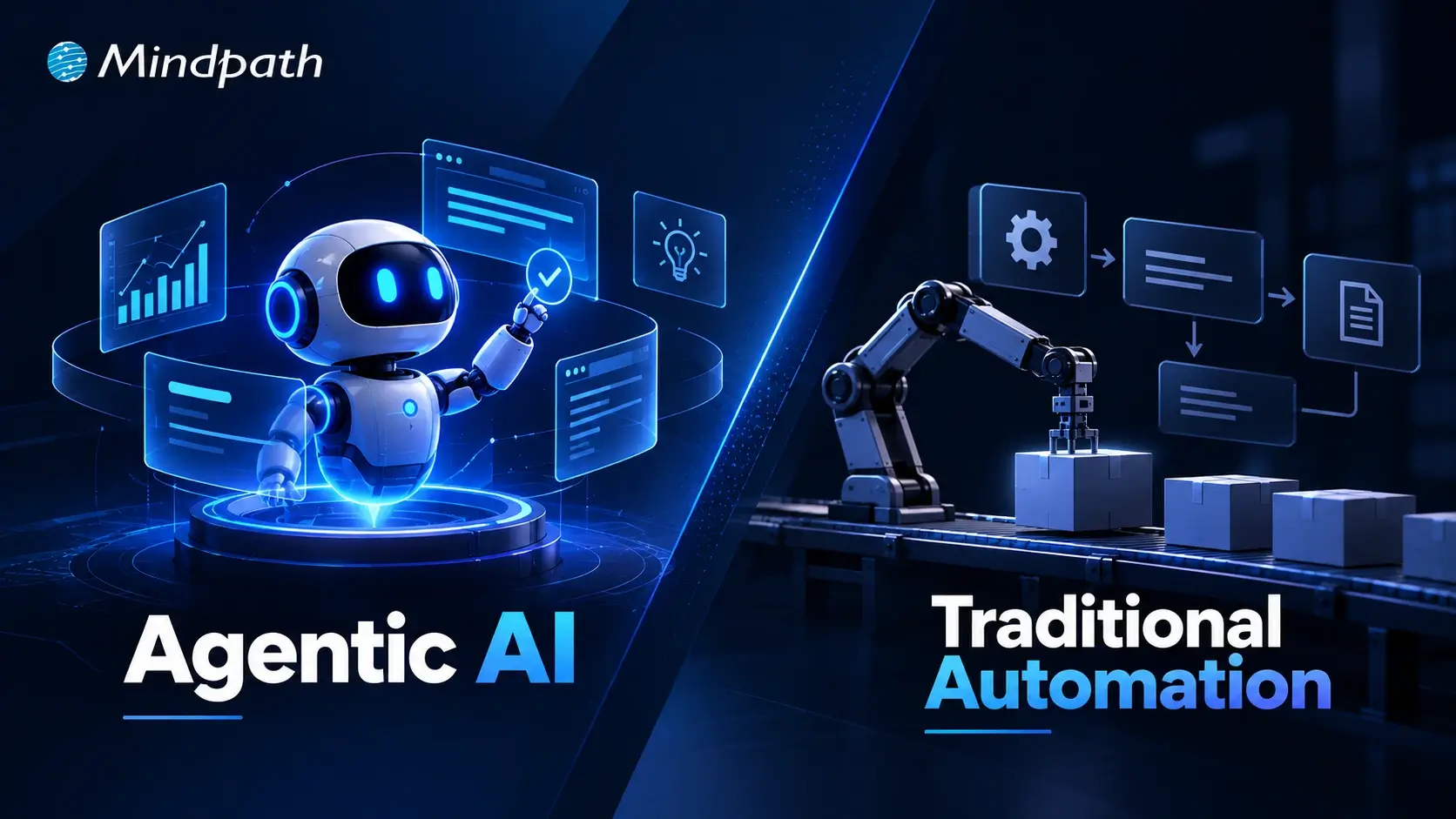
Ready to understand why enterprises are shifting beyond prompt-based AI systems? Check out Agentic AI vs Generative AI to learn how intelligent agents reshape workflows.

Ready to Unlock the Power of Generative AI for Your Business?

Generative AI changes the whole business landscape by redefining the ways companies innovate, create, and operate. The usage examples of the different industries show that it is a potent instrument. This enhances the creativity, productivity, and decision-making abilities of the employees. Companies implementing such technology are able to maintain a competitive position amid the turbulent market conditions and increase their velocity of growth. This brings more intelligent solutions with a positive ‍ ‌environmental impact to the market.

At Mindpath, we offer expert AI development services designed to help enterprises integrate and scale generative AI solutions with confidence. Our team builds intelligent systems that automate tasks, optimize workflows, and enhance customer experiences. Partner with Mindpath to transform your business with custom AI-driven innovations that accelerate growth and redefine digital success.