Home

AI Agents vs RPA: Which is Better for Business Automation?

AI Agents vs RPA: Which is Better for Business Automation?

Join our Newsletter!

AI Agents vs RPA

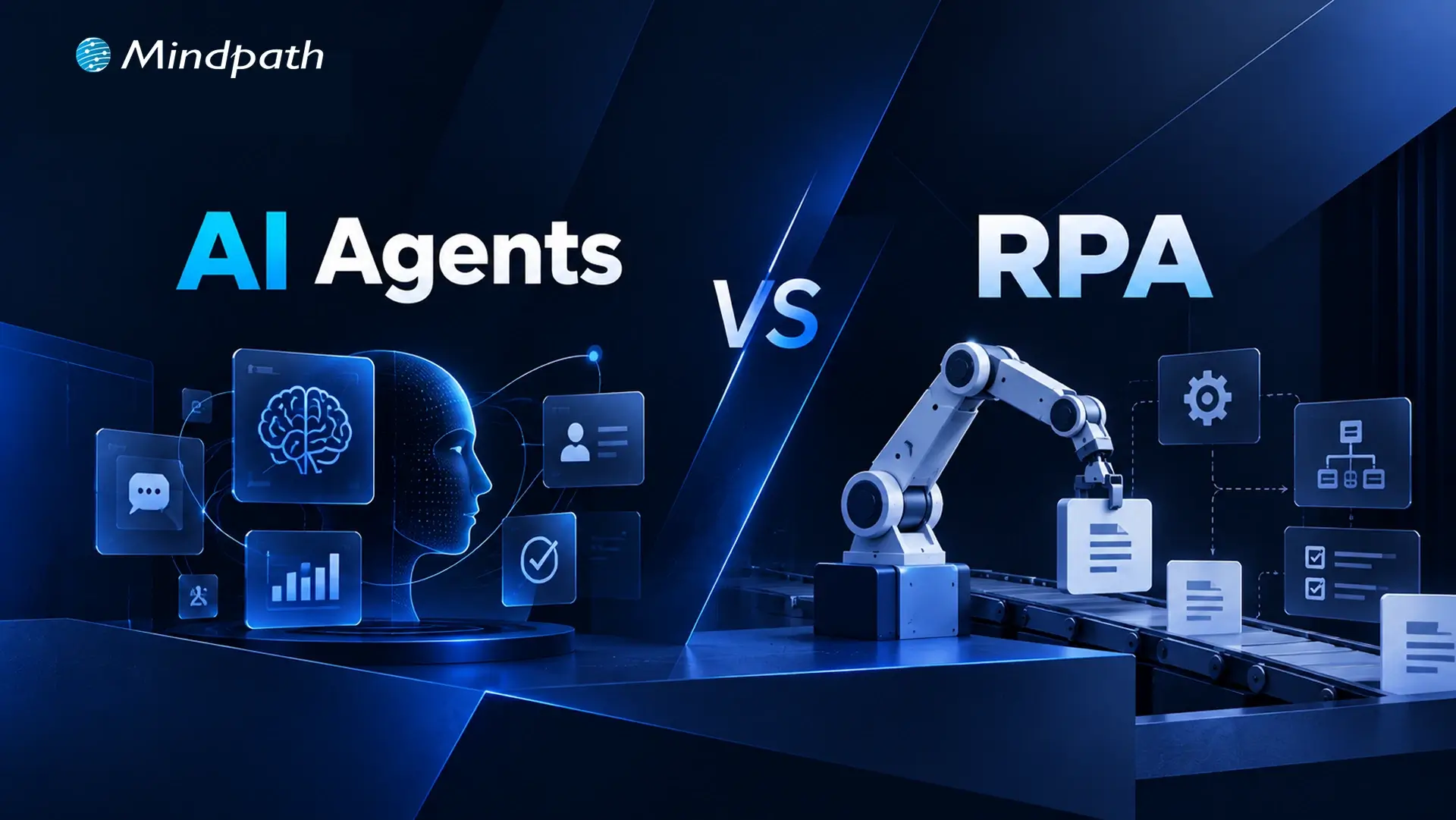
Choosing between AI agents vs RPA is becoming a practical automation decision for businesses. RPA remains effective for predictable, rule-driven workflows, while AI agents can handle tasks that require context, interpretation, and changing inputs. The right approach depends on how the process operates and what the automation needs to accomplish.

Key Takeaways

  • 01
    RPA suits stable, repetitive workflows with clear rules and predictable outcomes.
  • 02
    AI agents handle dynamic processes requiring context, interpretation, and decision-making.
  • 03
    Process stability, data quality, security, and integration needs influence automation choices.
  • 04
    RPA and AI agents can complement each other within a broader automation strategy.
  • 05
    Automation success depends on measurable business outcomes, proper governance, and ongoing maintenance.

A workflow with fixed rules may benefit from structured automation, while a process involving multiple systems, exceptions, or judgment may need a more adaptive approach. Understanding these differences helps teams avoid automating the wrong process with the wrong technology. In this blog, we compare AI agents and RPA to help businesses identify the right fit for different automation needs.

Ready to build smarter business automation? Mindpath offers AI Development Services to help businesses build scalable AI-powered automation solutions.

What are AI Agents?

AI agents are software systems designed to achieve specific goals by understanding information, making decisions, and taking actions. They can work across multiple steps, use connected tools, and adjust their actions based on context instead of following one fixed workflow.

For businesses exploring AI automation, agents can support processes that involve unstructured data, changing conditions, and decisions. They are useful when a task requires the system to understand what is happening and determine the next appropriate action.

1. Interpret Natural Language and Unstructured Information

2. Make Context-Based Decisions Within Defined Boundaries

3. Work Across Multiple Applications and Tools

4. Adapt Actions When Process Conditions Change

5. Support Research, Customer Service, Analysis, and Workflow Orchestration

What is RPA?

RPA, or Robotic Process Automation, uses predefined rules and workflows to automate repetitive digital tasks. It follows configured instructions to interact with software applications, move information, and complete routine operations consistently without requiring the reasoning capabilities associated with AI agents.

RPA works particularly well for structured processes where inputs, actions, and expected outcomes are predictable. In the AI agents vs RPA discussion, RPA remains relevant for high-volume tasks that follow stable rules and require reliable execution.

1. Follow Predefined Rules and Workflows

2. Automate Repetitive, Structured Tasks

3. Transfer Data Between Business Applications

4. Execute High-Volume Processes Consistently

5. Support Tasks Such as Data Entry, Invoice Processing, Reporting, and Record Updates

AI Agents vs RPA: Key Differences

AI agents and RPA can both automate business processes, but they approach automation differently. The key differences become clearer when you look at how each technology handles decisions, data, process changes, and execution.

1. Decision-Making

RPA follows predefined rules, while AI agents can interpret context and determine the next action.

2. Process Flexibility

RPA works best with stable workflows, while AI agents can handle greater process variation.

3. Data Handling

RPA is suited to structured data, while AI agents can work with documents, conversations, and other unstructured information.

4. Task Execution

RPA repeats configured actions, while AI agents can coordinate multiple steps toward a defined goal.

5. Human Involvement

RPA typically escalates predefined exceptions, while AI agents may require human oversight for complex or high-impact decisions.

6. Maintenance

RPA workflows need rule updates, while AI agent systems require monitoring of models, prompts, tools, and policies.

The following comparison highlights the practical differences between RPA vs AI across common business automation requirements:

Comparison Factor RPA AI Agents
How it works Executes predefined rules and step-by-step workflows Understands a goal, evaluates context, and determines actions
Decision-making Executes actions based on predefined rules and conditions. Makes context-based decisions within defined boundaries
Type of work Repetitive, predictable, rule-based tasks Dynamic, multi-step, judgment-based tasks
Data handled Structured data such as forms, fields, and spreadsheets Structured and unstructured data such as documents, emails, and conversations
Response to changes Requires workflow or rule changes Can adapt its actions based on changing context
Task complexity Best for individual or clearly defined workflows Can coordinate multiple tasks toward a broader goal
System interaction Performs configured actions in specific applications Can use multiple tools, APIs, databases, and applications
Typical example Copying invoice data into an accounting system Reviewing an invoice, identifying an issue, checking related records, and deciding the next workflow
Human oversight Mainly required when predefined exceptions occur Often required for approvals, sensitive actions, or uncertain decisions
Best suited for Stable processes with clear rules and predictable outcomes Processes requiring interpretation, adaptability, and contextual decision-making

Where RPA and AI Agents Fit Best?

The right automation approach depends on the nature of the process. RPA is well suited to workflows that follow consistent steps and produce predictable outcomes. AI agents are better suited to processes where information changes, exceptions occur, or actions depend on context.

RPA works well for: 

1. RPA Works Well for Repetitive Tasks With Clearly Defined Steps

2. RPA Works Well for Structured Data Entry and Transfer

3. RPA Works Well for Recurring Reporting and Record Updates

4. RPA Works Well for Rule-Based Invoice and Document Processing

5. RPA Works Well for High-Volume Workflows With Predictable Outcomes

AI agents work well for: 

1. AI Agents Work Well for Processes Involving Unstructured Information

2. AI Agents Work Well for Tasks Requiring Interpretation and Contextual Decisions

3. AI Agents Work Well for Workflows With Frequent Changes or Exceptions

4. AI Agents Work Well for Multi-Step Processes Involving Different Tools and Systems

5. AI Agents Work Well for Research, Analysis, Customer Interactions, and Task Coordination

This distinction helps businesses build intelligent automation around actual process requirements instead of applying the same technology to every workflow. Stable and predictable tasks can remain rule-driven, while more dynamic processes can use AI agents where adaptability and contextual decision-making add value.

Business Value of AI Agents and RPA

Automation should be evaluated by the business value it creates, not simply by the number of tasks it can perform. RPA can reduce manual effort in repetitive workflows, improve process consistency, and handle high transaction volumes. AI agents can extend automation into processes that require interpretation, coordination, and contextual decisions.

The value also depends on the process being automated. RPA can deliver measurable efficiency when workflows are stable and rules are clear. AI agents can support productivity in more variable processes by handling information, coordinating tasks, and assisting employees with decision-heavy work. In the AI agents vs RPA comparison, factors such as implementation effort, maintenance, scalability, error handling, and oversight should all be considered.

1. Operational Efficiency

Automate repetitive work and reduce manual processing time.

2. Error Reduction

Apply consistent processes and reduce avoidable manual mistakes.

3. Employee Productivity

Free teams to focus on higher-value activities.

4. Scalability

Handle increasing workloads without proportionally increasing manual effort.

5. Cost Management

Evaluate automation costs against process volume, complexity, and maintenance needs.

6. Process Consistency

Standardize routine activities across teams and business functions.

What to Consider Before Choosing an Automation Approach?

Choosing an automation technology starts with understanding the process itself. A workflow may look suitable for automation but still require significant preparation before implementation. Process stability, data quality, system dependencies, and the level of human judgment involved can all affect the right approach.

Businesses should also consider how the automation will be governed after deployment. Access permissions, data security, auditability, human oversight, and ongoing maintenance become increasingly important as automation takes on more complex responsibilities.

1. Process Stability

Determine whether the workflow follows consistent steps or changes frequently.

2. Data Quality

Check whether the required data is accurate, accessible, and structured appropriately.

3. Integration Complexity

Identify the applications, APIs, databases, and legacy systems involved.

4. Security

Define what information the automation can access and which actions it can perform.

5. Governance

Establish permissions, approval controls, monitoring, and audit trails.

6. Human Oversight

Decide which actions require review or approval before execution.

7. Maintenance

Plan for workflow updates, system changes, performance monitoring, and exception handling.

Which Automation Approach Fits Your Business Best?

RPA works well for stable, repetitive workflows governed by clear rules, while AI agents are suited to dynamic processes that require context, interpretation, and decision-making. The right choice depends on process complexity, data, risk, and desired outcomes. In many cases, combining both can create a practical and scalable automation strategy.

Mindpath helps businesses identify suitable automation opportunities and build AI-powered workflows aligned with their operational goals. Our AI development services cover AI agents, data engineering, RAG, model fine-tuning, and related capabilities needed to move from automation planning to production.
Not Sure Where AI Fits Your Business?

We assess your processes and recommend where to start.

Frequently Asked Questions

Yes. AI agents can handle interpretation and decisions, while RPA can execute structured tasks across existing business applications.
Consider process variability, decision requirements, data types, integration needs, security controls, and the level of human oversight required.
Not necessarily. Stable RPA workflows can continue operating while AI agents are introduced for processes requiring greater flexibility or contextual understanding.
Frequent process changes, poor data quality, unclear ownership, complex exceptions, or missing governance controls can create challenges during implementation.
Track processing time, manual effort, errors, exceptions, operating costs, workflow completion, and employee adoption against a defined baseline.

Support Is One Click Away

Featured Posts

Related Post

Conversational AI Trends 2024

Artificial Intelligence is the term of the decade. While we might not notice, AI is slowly seeping into our everyday life. Conversational AI, a byproduct of AI is already popular in the form of voice assistants like Siri and Alexa, customer assistant chatbots, messenger bots, and more such solutions.
Market research suggests that in 2022, the worldwide conversational AI market was valued at approximately $7.61 billion. It’s expected to expand steadily at a compound annual growth rate (CAGR) of 23.6% from 2023 to 2030. This growth is primarily driven by increased demand, lower chatbot development expenses, AI-driven customer support, and the adoption of omnichannel approaches.
In this blog, we will explore 5 conversational AI trends that will be prominent in the year 2024. So let’s dive right in!

5 Conversational AI Trends for 2024

1. Chatbots Will Become More Compassionate

One of the biggest trends in the area of conversational AI is that chatbots are going to acquire emotional intelligence. Chatbots will be able to recognize human emotions and respond to them in a manner that’s more humane.
AI chatbots with emotional intelligence will be able to understand complex human emotions such as frustration, dissatisfaction, and anger and thus tweak their response strategy to handle the unpleasant situations that might take place during customer interactions.
Emotional intelligence can also come in handy to enhance chatbot responses and make them much more user-friendly.

2. More Personalization For Customers

Conversational AI, especially in the domain of chatbots, is becoming more sophisticated by the day where their application is not limited to simply answering the questions. Conversational AI chatbots are all set to offer more personalization to customers in the coming year.
With their ability to understand natural language, chatbots will be able to grasp customer intent. With adequate training on customer data, they will be able to offer customized responses to customer queries, ultimately boosting the customer experience.
Moreover, conversational AI-powered platforms will also be able to curate content such as articles, videos, guides, etc., for users based on their previous activities, providing a rather holistic and personalized experience.

3. Conversational Search Engines

In 2024, conversational search engines will revolutionize how users interact with search platforms. Traditional keyword-based search is gradually being replaced by more conversational and natural language queries. So instead of typing keywords, we can ask search engines questions as we would to any other human being, and they would respond!
With the advancement of AI and machine learning algorithms, search engines will become adept at understanding the context and intent behind user queries, leading to more relevant search results.
Conversational search engines will enable users to ask complex questions in a more conversational tone, and the search engine will provide answers based on understanding the semantics of the question rather than just matching keywords. This will enhance the search experience, especially on mobile devices and smart speakers, where typing is cumbersome.

4. Quick Deployment Of Virtual Agents

Advancements in natural language processing (NLP) and machine learning algorithms will enable companies to build and deploy virtual agents rapidly, without extensive customization or development time.
In 2024, the demand for virtual agents will continue to rise, driven by the need for efficient customer service solutions and automation in various industries. Pre-trained models and modular architectures will streamline the deployment process, allowing organizations to implement virtual agents within weeks rather than months.
Training these models is the most time-consuming process. With the availability of large-scale data, it would become much easier and quicker to train the models and deploy them over the coming years.

5. Multilingual Capabilities Will Expand

Conversational AI technologies will evolve to support a wide range of languages, dialects, and accents, enabling businesses to cater to a global audience seamlessly.
As businesses continue to expand globally, the need for multilingual conversational AI solutions will become more pronounced in 2024. Enterprises operating in diverse markets will require AI-powered platforms that can communicate effectively with customers in their native languages.
Advanced translation models and cross-lingual transfer learning techniques will allow the development of multilingual virtual assistants that can understand and respond to user queries in multiple languages.
To wrap up, the year 2024 promises to be an exciting year for conversational AI, with innovations in emotional intelligence, personalization, search capabilities, virtual agent deployment, and multilingual support reshaping the landscape of customer interactions and user experiences. These conversational AI trends are all set to transform the customer experience for businesses.
If you are also looking to give your business a competitive edge and improve customer experience, it’s the right moment to invest in conversational AI. At Mindpath, we take pride in having innovation as our core value. Our team of professionals combines cutting-edge technology with deep industry knowledge to deliver bespoke solutions tailored to your business needs.
Whether you want a custom AI chatbot or leverage technologies like OpenAI’s ChatGPT, we can help you with all of it.
So if you are looking to unlock the full potential of conversational AI for your business, we can help! Contact us now to explore how our advanced AI solutions can elevate your customer experience and drive business success.
Let’s talk

Conversational AI, a byproduct of AI is already popular in the form of voice assistants like Siri and Alexa, customer assistant chatbots, messenger bots, and more such solutions.  
LLaMA LLM

Are you hearing a lot about the LLaMA LLM lately and wondering what it is and why it’s special? If so, you’re not alone. Buzz regarding this powerful open large language model (LLM) continues to build and spread from technology forums to developer circles and the larger AI community. It’s fundamentally reshaping how many people think about AI tools and putting the spotlight on open-source innovation that has never been seen before.

The emergence of open-source LLMs fundamentally reshapes how AI is developed, shared, and scaled. Until now, the primary focus in the industry has been on the deployment and governance of closed prompts within a closed model. Large language models with open-source options, like LLaMA, are a welcome addition that now allows access for researchers, developers, and even startups, with fewer restrictions to experiment, customize, and build. It will not only provide greater access to advanced AI but also create a larger momentum for innovation across many sectors. In this blog, we’ll explore what sets LLaMA apart and how it’s driving this change. 

Looking to harness the power of LLMs and AI for your business but don’t know where to start? Mindpath offers AI Development Services to help you build, customize, and deploy intelligent solutions that drive real results.

Before diving further, let us have an idea about open LLMs: 

Understanding Open LLMs

Open-source large language models (LLMs) are incredible power AI models that can be deployed, changed, and shared for free by anyone. Where closed or paid models like OpenAI’s GPT are restricted to only those who pay to access the models, open-source LLMs are built on being open and transparent, meaning that developers and researchers can inspect, make improvements and train on their own data. These models are often contributed as a collaborative effort by communities or organizations who believe in promoting open innovation making it possible for others to learn and create new things with AI. 

There are many benefits to using open-source LLMs. They can save researchers a lot of money, because there’s no licensing fee and they can be adapted in very precise ways to what the researcher wants. Developers can also rely on strong open-source communities from which they can freely draw robust sets of tools, tutorials, and updates. This community effort often supports not only researchers’ progress but also helps more people get involved in shaping the future of these technologies. 

Curious about the different kinds of AI and how they impact businesses? Learn about the types of AI to understand where LLMs like LLaMA fit in the broader artificial intelligence landscape.

Among these Open-source LLMs, the most popular one is LLaMA LLM. Let’s dive into that! 

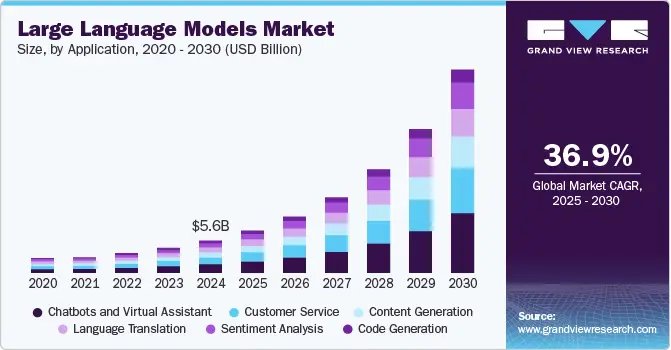
large-language-models-market

What is LLaMA LLM?

LLaMA is a large language model developed by Meta that can understand and generate human-like text. It learns from a huge amount of data and uses a special design, or architecture, to figure out patterns in language. This helps it give smart and relevant answers, whether it’s writing something, translating, or answering questions. 

What makes LLaMA stand out is its strong performance and the way it is available for the tech community. Many people ask, is LLaMA open source? While it’s not fully open like some models, Meta has made it available to researchers and developers, making it easier for them to explore, test, and build new AI tools using LLaMA. 

Why is LLaMa LLM So Popular?

LLaMA AI has quickly gained popularity in the AI community, and it’s easy to see why. Its performance, accessibility, and flexibility make it a strong choice for developers, researchers, and businesses alike. Here are some key reasons behind its rising popularity: 

1. Scalability and Efficiency

LLaMA is scalable, which means it can run on different kinds of hardware — from powerful GPUs to everyday computers. This makes it easier for researchers and developers who may not have access to expensive systems. By making advanced AI tools more reachable, LLaMA helps more people experiment and innovate. That’s why many developers now use LLaMA in app development without needing a huge setup or high costs. 

2. Adaptability

LLaMA can be trained for specific uses, which makes it really flexible. Whether it’s a chatbot for customer service or a tool that creates content, it’s possible to fine-tune LLaMA to fit different industries and goals. This adaptability means it can work well in many real-world situations. It’s not just a one-size-fits-all model, rather it adjusts to what you need it to do. 

3. State-of-the-Art Performance

LLaMA has shown top performance in different language tasks like translation, classification, and more. These results come from how well the model is designed and trained. Meta’s AI team used smart methods and architecture to make sure LLaMA performs at a high level. Because of this, it stands out as one of the most powerful tools in the language model space today. 

4. Open-Source Initiative

Meta has taken steps to make LLaMA more open and available to the research community. By releasing the models and sharing detailed documentation, they’ve made it easier for others to use, study, and build on LLaMA. As a leading example of an open source LLM, LLaMA is helping more people explore and contribute to the future of AI in a truly collaborative way.  

Want to customize large language models to fit your specific business needs? Learn how OpenAI’s Fine-Tuning API enables developers to fine-tune AI models for more accurate and specialized applications.

Real–World Applications of LLaMA

LlaMA LLM is being used in many real-life projects today. Its open nature makes it easier for developers to build and improve solutions, and it’s often seen as a strong example of how open models can drive real innovation. Here are a few practical ways people are using LLaMA today:

1. Faster Content Creation for Marketing Teams

A digital marketing agency can use LLaMA to write content like blog posts, social media captions, or newsletters. This helps them save time and focus more on creative ideas and strategies. Since LLaMA can quickly generate useful content, the team can keep up with deadlines without stress. It’s a great LLaMA open source LLM example that shows how AI can help marketing teams work faster and smarter. 

2. Smarter Chatbots for Customer Support

A business can use a chatbot powered by LLaMA to answer customer questions. The bot gives fast, helpful replies to common queries, so human support agents can handle more complex problems. Over time, the chatbot can learn from interactions and get even better. This helps improve customer satisfaction. You can even build one yourself by following a simple LLaMA open source LLM tutorial, which makes it easier for teams to create smart support tools. 

3. Breaking Language Barriers with AI

An international company can use LLaMA to translate emails, documents, or messages into different languages. This helps their teams communicate better across regions. LLaMA can provide quick and accurate translations, making global teamwork easier. With an open-source model like this, it’s possible to build tools that support real-time communication without high costs or complex setups. 

4. Understanding Customers Through Sentiment Analysis

A brand tracking tool can use LLaMA to understand how customers feel by reading reviews or social media posts. The tool can spot trends, positive feedback, or complaints. This helps companies make better decisions to improve their products or reputation. Because LLaMA is flexible and open, teams can customize it to track the right kind of feedback for their needs. 

Want to see AI in action, improving business outcomes? Explore AI chatbot examples to understand how LLM-powered chatbots are driving real-world results.

Curious about Using LLaMA for Your Business?

LLaMA LLM is changing the way people use and develop AI by making powerful language models more open and accessible. Its flexibility, strong performance, and the support of an open community allow researchers, developers, and businesses to build smarter, faster, and more customized AI solutions. As an open-source LLM example, LLaMA is helping drive innovation across many industries, breaking barriers and making advanced AI tools available to more people than ever before. 

If you want to harness the power of LLaMA in your own projects, Mindpath AI Development services can help. We specialize in building tailored AI tools using open-source models like LLaMA to meet your unique business needs. Whether you want to improve customer support, create content, or analyze data smarter, our team can guide you through every step to bring your AI vision to life efficiently and effectively. 

Legacy modernization roadmap 

Enterprise systems drive day-to-day operations, but most leaders eventually experience the burden of outdated platforms. Businesses want speed, security, and scale, yet legacy complexity can slow down critical decisions and digital initiatives. A clear legacy modernization roadmap brings direction and control to this transformation. It helps organizations align technology with business objectives and make measurable changes with greater confidence.

Key Takeaways

  • 01
    A legacy modernization roadmap gives enterprises a structured path for transforming outdated systems while aligning technology with business goals.
  • 02
    A strong roadmap can help reduce technical debt, control costs, improve security, and increase enterprise agility.
  • 03
    The modernization process typically includes system assessment, strategy definition, risk planning, phased execution, testing, and continuous monitoring.
  • 04
    Enterprise modernization works best when technical decisions are connected to measurable business outcomes and ROI targets.
  • 05
    Continuous monitoring after deployment helps organizations maintain performance, security, scalability, and long-term modernization value.

Nevertheless, modernization does not only require technology upgrades. It requires clarity, leadership focus, and effective execution at every level. That is why enterprise leaders need to consider modernization as a strategic priority rather than a side project. The right roadmap connects business vision with technical action, manages risk, and creates a structured path toward long-term growth. In this blog, we break down a practical legacy modernization roadmap designed with enterprise decision-makers in mind.

Looking to align technology upgrades with your overall business strategy? Mindpath’s legacy modernization services help ensure your systems support growth and deliver better ROI.

What Is a Legacy Modernization Roadmap?

A legacy modernization roadmap gives enterprises a clear, structured plan to upgrade outdated IT systems. It takes leaders through system evaluation, objective creation, strategy selection, planning, implementation, and optimization while keeping business goals in focus. Consequently, organizations can reduce technical debt, enhance performance, and develop secure, cloud-ready systems that support long-term growth.

In simple terms, an enterprise modernization roadmap connects the current state of legacy systems with the desired future state. It defines what needs to change, why it needs to change, how the transformation should happen, and how success will be measured.

Legacy system transformation focuses on turning rigid, high-maintenance platforms into agile and scalable architectures. Teams can divide large systems into manageable stages and adopt approaches such as cloud, microservices, and automation. This can enhance flexibility, improve security, and help enterprises respond more quickly to changing market needs.

Want to understand how modernizing legacy systems can transform your business operations? Explore the benefits of modernizing legacy systems to drive efficiency and growth.

Why Do Enterprises Need a Legacy Modernization Roadmap?

Companies often face sluggish systems, rising maintenance expenses, security concerns, and difficulty adapting to new business requirements. A clear legacy modernization roadmap, supported by a strong legacy modernization strategy, helps leaders improve performance while creating a more structured path toward sustainable business growth.

The roadmap also helps organizations decide which systems should be modernized first, which modernization approach is appropriate, and how technical changes should connect to measurable business outcomes.

1. Strong Business Alignment

Businesses require a sense of direction that links technology with expansion strategies. A clear roadmap converts IT initiatives into long-term business goals and helps turn existing systems into growth enablers.

2. Lower Costs and Better Returns

Legacy systems can be demanding in terms of maintenance and repair. Modern platforms can lower operating expenses and provide stronger returns through improved efficiency and smarter resource utilization.

3. Better Security and Compliance

Obsolete software can expose businesses to security risks and compliance gaps. Modern systems can strengthen data protection and help companies meet industry requirements more effectively.

4. Greater Agility and Scalability

Companies have to react quickly to market changes, shifting customer expectations, and new opportunities. A legacy modernization roadmap supports flexible architectures that enable faster releases and more seamless scaling.

5. Smarter Technology Adoption

Businesses want to adopt innovation without creating unnecessary conflicts within their existing technology environment. The application of AI in legacy modernization can support smart tools that improve insights, automation, and decision-making.

6. Reduced Operational Risk

Changing core systems without a strategy can create disruption and uncertainty. A structured modernization roadmap keeps transition risks under control and helps businesses maintain continuity throughout the transformation.

Looking to modernize your systems with advanced AI technologies? Learn from AI-driven legacy system modernization to accelerate your transformation journey.

A Step-by-Step Legacy Modernization Roadmap

A good modernization plan makes transformation objectives measurable. A practical legacy modernization roadmap can help enterprise leaders progress with greater organization, control, and certainty.

The process can be viewed as six connected stages: system assessment, strategy definition, risk planning, phased execution, testing, and continuous optimization. Each stage supports the next and helps organizations reduce transformation risk.

1. System Discovery and Assessment

Teams map existing systems and identify dependencies. They evaluate technical health, identify performance bottlenecks, and flag areas that may create transformation risks. They can also use legacy modernization tools to uncover hidden risks and code issues.

2. Strategy and Value Definition

Leaders establish the future architecture and define desired business outcomes. They select the appropriate modernization strategy based on business objectives, system complexity, technical constraints, and expected value.

A legacy modernization roadmap helps align technical decisions with measurable ROI targets, ensuring that modernization remains connected to business priorities.

3. Planning and Risk Readiness

Teams develop a clear execution plan using milestones. They define the process for data migration, compliance, security controls, testing, and operational continuity. The legacy application modernization roadmap helps teams reduce risks before implementation begins.

4. Phased Execution and Deployment

Professionals upgrade systems through manageable stages instead of attempting a complete transformation at once. Controlled deployment cycles help reduce disruption and allow teams to validate progress at each stage.

A legacy modernization roadmap keeps teams focused on stability, measurable milestones, and steady progress throughout implementation.

5. Testing and Quality Validation

Automated, functional, security, and performance tests should be performed at each stage. Teams can measure system functionality against defined KPIs and business objectives. This step helps validate whether the modernized system can deliver reliable performance under real workloads.

6. Optimization and Continuous Monitoring

After deployment, leaders monitor system health, performance metrics, security, and user feedback. Teams can then optimize processes and infrastructure to support future scaling and long-term business growth.

Wondering how SaaS can reduce the complexity of legacy systems? Explore SaaS trends to streamline your transformation process.

How to Measure a Legacy Modernization Roadmap

A modernization roadmap should not end when the new system goes live. Enterprises need measurable KPIs to determine whether the transformation is delivering the expected business and technical value.

1. System Performance

Organizations can track response times, uptime, application performance, and system reliability to determine whether modernization has improved technical efficiency.

2. Cost Efficiency

Teams can compare infrastructure, maintenance, support, and operational costs before and after modernization to understand the financial impact.

3. Security and Compliance

Security incidents, vulnerabilities, compliance gaps, and remediation requirements can help organizations assess whether modernization has strengthened their security posture.

4. Business Agility

Release frequency, development speed, integration time, and the ability to respond to changing business requirements can indicate whether the modernized architecture provides greater agility.

5. User Experience

Organizations can also measure user satisfaction, task completion, adoption, and feedback to understand whether the transformation improves the experience for customers and employees.

Ready to Build a Future-Ready Enterprise with a Clear Roadmap?

A strong legacy modernization roadmap gives enterprise leaders clarity and control. It connects business objectives with technology action systematically. Phased execution helps organizations reduce risk, control costs, and improve performance. Teams can support long-term digital growth with greater certainty through proper planning, governance, and continuous optimization.

At Mindpath, we provide legacy modernization services that help businesses achieve measurable outcomes using a successful legacy modernization framework tailored to their enterprise-specific needs. Our specialists evaluate existing systems, establish modernization strategies, and execute transformation with a focus on security, scalability, and quantifiable value.

FAQs

1. Why Should Enterprise Leaders Prioritize a Legacy Modernization Roadmap Now?

Competitive pressure and rising maintenance costs demand faster innovation. A legacy modernization roadmap helps leaders align technology with strategic growth goals. It creates clarity, reduces operational risk, and strengthens long-term scalability in an increasingly digital business environment.

2. How Long Does a Legacy Modernization Roadmap Typically Take?

Timelines depend on system complexity, data volume, and business readiness. Some initiatives move quickly with a focused scope, while large transformations require phased execution. A well-structured legacy modernization roadmap defines milestones early and keeps teams aligned with realistic delivery targets.

3. How Do We Measure Success During Modernization?

Enterprises should measure improvements in performance, cost efficiency, uptime, security, and user experience. Business impact should guide every technical decision. A clear legacy modernization roadmap establishes KPIs at the start and tracks measurable outcomes throughout the transformation journey.

4. Which Architecture Approach Suits Complex Legacy Systems?

Enterprises often evaluate cloud-native, microservices, or hybrid models based on workload demands. Technical audits help identify system dependencies and scalability limits. A legacy modernization roadmap supports informed architecture decisions that balance innovation, risk control, and operational stability.

5. How Can We Manage Data and Compliance Risks During Modernization?

Data migration requires strong governance and phased validation. Teams should conduct security reviews and compliance checks before execution. A structured legacy modernization roadmap reduces exposure to data loss and regulatory gaps. Mindpath’s legacy modernization services provide expert guidance for secure and compliant transitions.