Generative AI in Education – Reshaping the Future of Learning 

Join our Newsletter!

Featured Posts

Support Is One Click Away

Home

Generative AI in Education – Reshaping the Future of Learning 

generative ai in education

Generative AI in Education – Reshaping the Future of Learning 

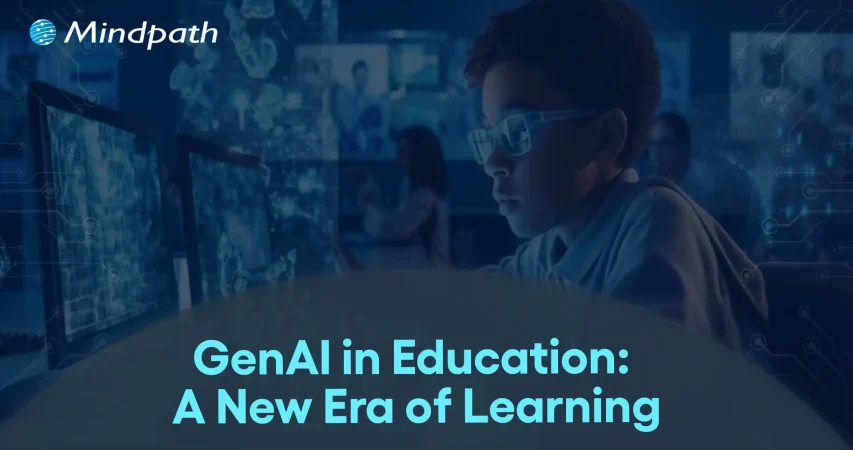
The rapid growth of artificial intelligence and its impact across different sectors have made everyone rethink the potential of AI. As artificial intelligence becomes a monumental force of transformation in education, policymakers and educators must reevaluate their perspectives on AI. With the rising demand to incorporate generative AI in education, it is important to understand how generative AI creates opportunities for students and educators.

At the same time, you must also discover the challenges that may prevent long-term growth of AI in the education sector. Let us find out whether generative AI has the potential to redefine learning with insights on its advantages and real-world examples.

Ready to transform your education platform with AI? Discover how Mindpath empowers institutions with intelligent, outcome-driven AI-powered solutions.

Unraveling the Significance of Generative AI for Education

Generative AI encompasses any type of AI model that can generate original content, such as text, audio and images. As compared to traditional AI, generative AI relies on simulation of human creativity to generate completely new and contextually relevant output for different user instructions. The ‘human-like’ abilities in generative AI make it one of the major forces of transformation for the education sector. With the arrival of LLMs like the GPTs by OpenAI, the pace of transformation of the education industry has increased.

The growing number of generative AI in education research paper publications also showcases a rising interest in the potential of gen AI to revolutionize education. If you take a closer look at the numbers from different surveys, you will notice how AI has become an integral part of classrooms. For instance, a study by the RAND Corporation in 2023 revealed that only 18% of teachers used AI tools regularly. Another survey in 2024 by Study.com showcased that almost 84% of educators actively used AI in their classrooms.

One of the leading players in AI, Anthropic, released their Education Report on the basis of half a million anonymous student conversations on Claude LLM in the US. The report revealed that students in science and quantitative course like computer science relied more on generative AI for learning. The report also highlighted that almost 47% of student interactions with Claude focused on direct output creation and direct problem solution. According to a corresponding student survey, around 84% of students reported using AI to save time, while 78% of students claimed that it offered better understanding.

Want to discover how you can create engaging educational content quickly without compromising on quality? Check out the best Generative AI tools for content creation to streamline your workflow and boost productivity.

Use Cases of Generative AI for Education

The adoption of generative AI in education sector depends significantly on the effectiveness of generative AI in making education more accessible and efficient. As evident from the Education Report by Anthropic, generative AI helps students save time, learn better, and find direct solutions to problems in their learning journey. The following sections will show you why generative AI is a big thing in the education sector right now.

1. Personalization of Learning at Scale

The first use case of generative AI in the domain of education deals with personalization of learning experiences at scale. Generative AI has the capability to deliver personalized learning experiences at scale while adapting to individual learning styles and needs. Until now, the scale of a classroom created difficulties for educators to offer personalized learning experiences.

The role of gen AI in education sector is not only about assisting students but also giving each student what they need to achieve success. Generative AI tools can evaluate the performance data of students and identify their strengths and limitations alongside finding out their learning modalities. Subsequently, Gen AI can use the analysis to create customized learning resources according to the comprehension level of each student.

Generative AI can help with the shift from one-size-fits-all assessments towards dynamic quizzes and assignments. AI tools can review the test results of students and recommend suggestions to improve performance in weak areas. The assurance of instant feedback on the work of learners and problem-solving approaches can make the learning experience of students more productive.

Want to see how AI chatbots can support personalized learning experiences? Explore our guide on chatbot in education to understand how they enhance individualized learning.

2. Assistance for Educators

Most of the discussions about implementing generative AI in the field of education revolve around benefits for learners. You must also know about the implications of generative AI for educators to understand its range of applications. Educators spend more time on administrative tasks which increase the burden on them. Generative AI can work as a powerful assistant for educators and help with automation of many repetitive tasks.

Educators can use generative AI tools for automated grading of multiple-choice tests and provide nuanced feedback for written assignments. In addition, generative AI can also help educators generate engaging content like simulations, gamified learning modules and virtual labs to create more effective and engaging learning experiences.

Generative AI also helps in evaluation of educational data to recognize trends and gaps that can be used for designing the curriculum. The use of gen AI ensures comprehensive coverage of concepts alongside alignment with popular educational standards. On top of it, Gen AI tools for education can also help educators in drafting lesson plans, assignments and worksheets. Generative AI not only alleviates the burden on educators but also gives them more time to focus on learners.

3. Improving the Accessibility of Education

Another notable addition among the opportunities associated with adoption of generative AI in the education industry is the assurance of improved accessibility. Generative AI can make education accessible beyond the traditional boundaries. For instance, generative AI tools can offer real-time transcription of lecture videos or facilitate text-to-speech translation. With these features, learners with hearing impairments or reading difficulties can enjoy significant advantages.

The answers to “how can AI be used in education?” also focus on making learning easier for students. Generative AI can provide summaries for complex research papers or academic articles, thereby making long form content easier to understand.

Looking to understand how institutions are using AI tools to support students more effectively? Learn more about educational chatbot solutions and how they enhance the overall learning experience.

Limitations for Generative AI in the Field of Education

The adoption of generative AI in the world of education might bring multiple opportunities for improvement. At the same time, you cannot ignore the concerns arising from some limitations of generative AI. One of the biggest concerns associated with use of gen AI in education revolves around plagiarism and academic integrity. How will educators find out whether students have not used AI for plagiarizing the work of other students or experts?

The pros and cons of generative AI in education also emphasize how relying too much on AI can create problems. For example, depending on AI can hinder the development of research and critical thinking skills in learners. Another formidable challenge for the full-fledged adoption of AI in education is the lack of awareness. Educators need comprehensive training to use the best capabilities of generative AI with special attention to ethical guidelines.

Curious about what’s shaping the future of digital learning and modern classrooms? Discover the latest emerging trends in education technology to stay ahead of the curve.

Final Thoughts

The review of the pros and cons of adopting generative AI in the domain of education reveals a balanced perspective. The most distinguishable trait of generative AI which makes it useful for education is the ability to generate new content. The common highlight in all generative AI in education examples is the creation of new content. Generative AI can create lessons, learning plans, quizzes and other learning materials according to user instructions.

At Mindpath, we offer Artificial Intelligence development services for the Edtech world, tailored as per your requirements. Our GenAI powered solutions are built to help educational institutions to get the benefits of generative AI to enhance efficiency, engagement, and bring benefits to the learners. Partner with Mindpath to develop customized AI solutions that will help you take your EdTech vision further.

Related Post

Discover staff augmentation for IT projects, its benefits, and top providers in the USA. Learn how it can bridge gaps and save costs.
Discover the latest DevOps trends to enhance collaboration, streamline processes, and drive business success.

Related Post

In the Illustrator image, a person is checking new technologies for her business on a laptop.
The world is changing rapidly and so is the technology spectrum across the globe. We are stepping into a digitally advanced world with new technologies like Generative AI, Web3, Blockchain, etc. Today’s businesses constantly seek innovative technologies to gain a competitive edge and drive strategic decision-making.   With the flood of technologies coming every year, some of them remain truly essential for modern-day businesses to thrive. Therefore, in this blog, we’ll explore ten upcoming technologies poised to transform business decision-making in the near future.  So let’s get started!  

8 Upcoming Technologies To Drive Business Decision

1. GenAI

GenAI or generative AI is already making strides with popular tools like ChatGPT, Dall-E, Midjourney, etc. Generative AI, as the name suggests, is able to generate content like text, images, codes, designs, etc., based on “prompts” given by the users.   ChatGPT, a hot example of GenAI took the world by storm as soon as it was introduced. Many software have been launched since. In the coming years, GenAI is expected to play a crucial role in helping business leaders with decision making. GenAI empowers businesses to automate creative processes and deliver hyper-personalized experiences at scale, from creating personalized marketing content to designing custom products. 

2. GenAIPowered Chatbots 

The next notable technology is Gen-AI-powered virtual assistants or chatbots which are becoming increasingly popular amongst users. GenAI-powered virtual assistants leverage natural language processing and machine learning algorithms to understand and respond to user queries and requests intelligently.  Virtual assistants include chatbots, voice assistants like Alexa & Siri, language-based assistants like ChatGPT & Bard, etc. GenAI and conversational AI are taking the customer experience to the next level. By harnessing the power of conversational AI, businesses can provide personalized customer support, streamline internal processes, and enhance productivity. 

3. Digital Twins 

Another trailblazing technology that’s going to assist businesses in making the best of their resources in the coming time is Digital Twins. Digital Twins are digital copies or replicas of real-world physical assets, systems, machines, tools, processes, etc.   To put simply, imagine you have a toy car that you want to understand better. You create an exact digital copy of this toy car on your computer, including all its parts and how they work together. This digital copy is called a digital twin. Now, whenever you want to experiment with or understand how the toy car behaves in different conditions, you can use the digital twin instead of the actual toy. For example, you could test how it moves on different surfaces, how it performs with various modifications, or how it reacts to changes in speed.  By creating a digital twin of products, equipment, or infrastructure, businesses can gain valuable insights into performance, predict maintenance needs, and enhance operational efficiency.

4. Multimodal User Interfaces (UIs)  

User Interfaces (UIs) play a key role in delivering optimal customer experience. But most UIs till now have confined users to interact with machines in a monotonous way like typing on keyboard. That’s not the case with Multimodal User Interfaces (UIs). Multimodal UIs combine various interaction modalities such as voice, gesture, touch, and gaze to provide more intuitive and immersive user experiences.  To put it simply, multimodal user interfaces are like having multiple ways to talk to your computer or device. It’s not just typing on a keyboard anymore. You can use your voice, touch the screen, wave your hand, or even look at something to interact with it. By accommodating diverse user preferences and accessibility needs, multimodal UIs enhance engagement and usability across different devices and platforms. 

5. Intelligent Applications  

Intelligent applications support advanced analytics, machine learning, and automation capabilities to deliver context-aware insights and recommendations in real time. Think of intelligent applications as smart helpers. These apps use AI/ML along with advanced analytics to understand what you need and help you out.  These intelligent apps can serve as a golden opportunity for businesses to better predict customer behavior, optimize supply chain operations, as well as automate decision making process.  

6. Tokenization  

Have you heard of digital tokens? Tokenization allows the conversion of physical assets and contracts into digital tokens. Wondering how? Here’s an example! When you make a purchase online, you might use your credit card. Instead of giving the website your actual credit card number, which could be risky if the site gets hacked, tokenization replaces your card number with a unique token. This token acts as a placeholder, representing your card securely without exposing your real information.   Tokenization is all set to enable secure and transparent payments without any third-party intermediaries.  

7. Quantum Processors  

Quantum processors, as complex as they sound, are actually going to simplify the complex procedures and provide fast results. These are superfast computer processors aimed at delivering faster results for any problem. For example, quantum processors can handle the complex calculations needed to understand how molecules behave and interact with each other, which is crucial for developing new medicines.  While still in the early stages of development, quantum processors have the potential to revolutionize fields such as cryptography, optimization, and drug discovery, enabling businesses to tackle previously intractable problems with unprecedented speed and efficiency. 

8. Web3 

Lastly, let’s talk about Web3. It represents the next generation of the internet. Web3 is all about creating an immersive user experience and creating a decentralized platform. Technologies like blockchain, decentralized finance (DeFi), and decentralized apps (DApps), are at the core of Web3.   It will give more control to users over their data and provide transparency in transactions. With Web3, instead of going through a centralized payment processor like PayPal, you can use a decentralized cryptocurrency like Bitcoin or Ethereum to make the purchase directly, without any intermediaries.  Business leaders need to adapt themselves to provide a customer experience that is democratize and free from intermediaries.   These were the 8 new technologies 2024 that will become crucial for business owners for making business decisions.  

Wrapping Up

In today’s digital world, businesses need to use new technologies to stay competitive and grow. These technologies, like GenAI, digital twins, smart virtual assistants, Web3, etc., can help them make better decisions and be more innovative. By keeping up with these changes and being open to trying new things, businesses can succeed in the digital age.  As a leader in upcoming technologies, Mindpath Tech is well-positioned to guide businesses through this journey of adaptation and innovation. With our expertise and commitment to staying ahead of the curve, we can help businesses harness the power of transformative technologies and thrive in the digital landscape.  So are you ready to become future-ready? Get in touch!  
Discover the top 8 emerging technologies set to revolutionize business decision-making in the near future, including Generative AI, Web3, Blockchain, and more.
what is a chabot

In this fast-paced world of business, companies are actively seeking smarter tools to improve customer service and communication. Chatbots are one of the most common, and a great way to get attention. If you have engaged with a virtual assistant on a website, chances are that you have seen it in action. So, what is a chatbot? You may have wondered about this when you are chatting with a brand online or if you are shopping on a website where you are getting instant replies.

As these types of digital assistants proliferate, they are quickly becoming an essential aspect of how businesses operate in 2026. With faster response times and the ability to interact with multiple customers at once, it is no surprise that chatbots are altering how companies relate to their customers. In this blog, we will provide you with everything you need to know about chatbots including benefits, features and examples of chatbots in action.

Struggling to keep up with customer queries or deliver 24/7 support efficiently? Mindpath’s GenAI-driven chatbot development services can help you manage customer service and boost business performance.

What is a Chatbot in Simple Words?

A chatbot is an artificial intelligence (AI) software application that is designed to have human-like conversations. They use natural language processing (NLP) to understand what users are stating and respond in a way that feels natural in a conversation and is helpful. They can help with answering questions, can guide the user, and can perform some tasks.

Chatbots can be a part of a website, an app, a messaging app, or a voice assistant. AI chatbots help businesses communicate with customers 24/7. They can perform tasks like making bookings, solving common problems, and providing information. AI chatbots are invaluable tools for improving customer experience and communication.

How does a Chatbot Work?

Chatbots work by using artificial intelligence and natural language processing to understand what users are saying. When someone types or speaks to a chatbot, it reads the message and tries to figure out what the person wants. It does this by matching the message with words or phrases it already knows.

Once the chatbot understands the request, it picks the most suitable response and replies to the user. Some chatbots follow simple rules, while others learn from past conversations to improve over time. This process allows chatbots to provide quick and helpful replies in a natural and professional way.

What are the Benefits of Using AI Chatbots for Businesses?

AI chatbots are now widely used by businesses to improve customer interaction and automate routine tasks. Here are some of the key benefits of chatbot technology that can help boost your business:

benefits-of-ai-chatbots-scale

1. Improve Sales

Chatbots can increase sales by showing new products or offering special discounts to website visitors. They send helpful messages that guide users toward making a purchase. These bots also assist in product selection and order placement. This makes it easier for new visitors to become paying customers.

2. Lead Generation

Chatbots help gather leads even before a conversation starts. They ask visitors for basic details like name and email to begin the chat. They can also qualify these leads by asking relevant questions based on customer needs. This helps your sales team know who they’re speaking with and what the customer is looking for.

3. Boost Customer Engagement

Chatbots make online experiences more interactive and personal. Instead of searching through a website, users can chat and get instant answers. Bots reply with clear information based on user questions. This keeps customers engaged and helps them find what they need quickly.

4. Reduce Costs

Using chatbots is more affordable than hiring multiple support agents. They can handle many tasks like answering FAQs or booking appointments, which saves time and money. You’ll still need some team members, but bots make the process faster. This is especially helpful for managing high volumes without extra costs.

5. Understand Your Customers Better

As chatbots collect important customer data during conversations, they can also run surveys to check customer satisfaction. By reviewing these chats, businesses can find out what customers like or dislike. This feedback helps improve products and services over time.

Wondering why chatbots are becoming essential for modern businesses? Explore the top Benefits of Chatbots Every Business Leader Should Know and learn how they drive growth.

6. Fewer Support Requests

Chatbots handle many common questions, which reduces the number of queries sent to human agents. This helps agents focus on more complex issues. It also improves customer satisfaction by providing quick solutions. A chatbot for business can balance automation and personal support effectively.

7. Multilingual Support

Multilingual support allows chatbots to speak different languages. This is helpful if your business has customers from various countries. The bot can reply in the language your customer prefers. This makes a chatbot for small businesses and large companies more accessible to global audiences.

8. 24/7 Customer Support

Chatbots are always available, even when your team is offline. If someone is browsing late at night and needs help, the bot can step in. It can guide them to the right product or answer their questions. This leads to better customer service and more satisfied clients.

9. Lower Bounce Rates

Chatbots can keep users on your site longer by offering help when someone is about to leave. They provide answers or discounts that encourage people to stay. This improves your website’s engagement and SEO performance. Visitors feel supported and are more likely to explore further.

10. Boost Marketing

Marketing chatbots can suggest products, offer deals, and guide customers through the buying process. They also collect useful data for future campaigns. One of the ideas can be a spinning wheel offering discounts, which encourages users to buy. This creates an engaging and effective marketing strategy.

How can conversational AI take your customer engagement to the next level? Explore the power of Conversational AI Chatbots for Business Growth and discover how they drive results.

Real-World Use Cases of Chatbots

Chatbots are being used across many industries to simplify tasks and improve customer experiences. Here are some real-world chatbot examples that show how businesses are using them effectively for different needs.

use-cases-of-chatbots-scale

1. Help Customers Book Tickets Easily

A chatbot can answer common questions like seat availability, movie timings, and refund policies while guiding users to book tickets smoothly. PVR Cinemas uses this on their website to help visitors quickly complete bookings and check offers.

2. Make Customer Experience More Engaging

Chatbots can add personality by offering quizzes, jokes, and product suggestions in a fun and helpful way. LEGO’s chatbot Ralph helps users find the right gift through playful questions and interactive chat.

3. Handle Event-related Queries at Scale

When thousands of people need answers about an event, a chatbot can respond instantly with details like schedules, speakers, and directions. Slush uses one to manage large volumes of attendee questions efficiently on their event site.

4. Assist With Product Searches and Suggestions

A chatbot can search inventory and offer personalized product recommendations based on customer preferences. Sephora’s chatbot does this well by guiding users to suitable makeup products and checking stock availability.

5. Provide Updates on Orders and Shipping

Instead of navigating emails and websites, customers can enter their order ID in a chatbot to get instant shipping updates. H&M allows shoppers to track their deliveries directly through its chatbot.

Thinking about Using Chatbots to Elevate Customer Experience?

Chatbots are transforming how businesses interact with customers by offering fast, helpful, and personalized service. From booking tickets to answering questions, these tools simplify tasks and improve user satisfaction. With so many benefits, it’s no surprise that more companies are embracing chatbot technology to stay ahead in 2026.

At Mindpath, we offer custom chatbot development tailored to your business goals. Our chatbot development services are designed to help you improve customer interactions, increase engagement, and streamline operations. Whether you need a simple support bot or a fully integrated solution for sales, marketing, or service, our expert team builds smart, reliable chatbots that deliver real results.

Frequently Asked Questions

1. How can a chatbot improve customer experience on a website?

A chatbot improves customer experience by offering instant responses, guiding users to the right information, and reducing wait times. It creates a smooth journey by helping visitors find what they need quickly, which increases satisfaction and encourages them to stay longer on the website.

2. What is a chatbot used for in daily business operations?

A chatbot is used for handling routine tasks like answering FAQs, booking appointments, collecting customer data, and assisting with purchases. It helps teams save time by automating repetitive work while ensuring customers receive quick and consistent support throughout their interaction.

3. Can chatbots work effectively for both small and growing businesses?

Yes, chatbots are useful for both small and growing businesses. They help manage customer queries without needing a large team, making operations more efficient. As the business grows, chatbots can scale easily to handle more interactions without increasing costs significantly.

4. What should businesses consider before implementing a chatbot?

Before implementing a chatbot, businesses should define clear goals, understand customer needs, and choose the right type of chatbot. It is also important to plan integration with existing systems and ensure proper testing to deliver a smooth and effective user experience.

5. What is a chatbot’s role in improving website engagement?

A chatbot plays an important role in keeping users engaged by starting conversations, offering assistance, and providing relevant suggestions. It reduces bounce rates and encourages interaction, helping businesses create a more interactive and user-friendly website experience that keeps visitors interested.

ai in web development

Have you ever pondered if machines could design, code or even personalize user experiences better than humans? Sounds like a dream, right? Well, this isn’t a dream anymore, it is the power of Artificial Intelligence. You heard it right; artificial intelligence is becoming a powerful tool in web development in today’s digital world. Want to know how AI in web development can be beneficial for you? From accelerating development to building smarter sites, AI is quietly revolutionizing the construction and experience of digital platforms. 

But what does this revolution look like? And why are businesses and developers embracing AI more than ever? The answers may surprise you. Stay tuned as we uncover the ways AI is transforming the future of web development! 

Are you ready to elevate your website? Contact us for top-notch AI development services and we will bring your AI-driven web vision to life. 

Role of AI in Web Development

AI in web development refers to the use of artificial intelligence for building websites, faster, smarter and easier to manage. It can help with a lot of things such as writing code, fixing bugs and even assisting with the design. AI can be used in web development to save time, reduce errors and create personalized websites. By leveraging AI, developers can avoid doing repeated tasks and focus on more important things. It can find errors, accelerate things and also help users get their requirements faster.

AI plays a major role in making websites better by suggesting designs, writing parts of the code and even testing how well a website works. Once the site goes live, AI can watch how people use it and make things smoother. Now you must have got a good idea about AI in web development. Let us also learn about some of its benefits: 

Also Read: Benefits of AI

Benefits of AI in Web Development

AI is simplifying website creation for everyone. It assists with coding, designing, and even communicating with users. If you’re creating a website or just beginning, AI can help you save time and get things to work more efficiently. Here are some easy ways it can actually help.

Benefits of AI in Web Development

1. Smarter Coding and Testing

The powerful combination of AI and web development can help developers to write cleaner codes by spotting bugs early and improving how the code works. With deep learning, AI-based tools also facilitate automated testing, which assists quality assurance teams in verifying whether the website functions correctly. Although some problematic areas continue to require manual testing, AI streamlines the process and reduces costs. That’s one of the reasons why QA and testing budgets have declined over the past few years, and why more individuals are using AI websites for improved results. 

2. Smooth Website Development

AI in web development handles mundane and time-consuming work so developers can concentrate on the larger aspects of a project. With smart tools and data-driven choices, the entire web development process becomes more efficient and faster. This is incredibly useful, particularly if you’re new to it. By using AI to create websites, you save time and effort while building something awesome and making web development feel less stressful and a lot more efficient from the very start. 

3. Boosts Customer Support

AI in customer service makes it simple to integrate smart chatbots onto websites that are able to engage with visitors’ day and night. These virtual assistants comprehend questions and respond in natural, friendly terms. They provide instant answers, resolve issues rapidly, and never require breaks. This allows owners of websites to assist users without requiring a support team full-time. It’s an easy method to ensure visitors are satisfied and that they always receive assistance, even when there is no one present. 

4. Cost Effective and Personalized Experience

With the help of AI tools, websites are now able to provide customers with a more personalized and seamless experience at reasonable costs. Work that required time can now be processed automatically, saving time for both users and website owners. AI also assists in identifying fraudulent or toxic activities, protecting users. This is why many top AI websites utilize intelligent features to serve customers better. Ultimately, AI assists in providing more value to the customer at a low cost. 

5. Effortless Content Management

Website content management becomes a lot simpler with the assistance of AI. Through analyzing user behavior on a website, AI provides clear concepts regarding what type of content users like most. Website owners can develop improved posts, videos, or pages that genuinely interest visitors due to this. With the assistance of AI web templates and smart recommendation tools, you can lead users to whatever they require and retain them for a longer period. It’s an easy way to make content better and make each visit feel more personal.

Is your business making the most of AI to stay ahead of the competition? Explore how integrating AI in your business strategy can optimize processes, drive growth, and improve decision-making.

How to Use AI in Web Development?

Today, web development thrives on the partnership between AI and human expertise. While AI handles repetitive tasks and enhances efficiency, it still relies on human creativity and problem-solving. Here’s how you can use AI in web development to streamline your process and improve results. 

1. Artificial Design Intelligence (ADI)

Artificial Design Intelligence (ADI) assists you in creating a complete website by simply responding to a few simple questions. It selects the most suitable layout, design, and content depending on your requirements. It’s like having an intelligent assistant that designs a professional-looking site that reflects your style and objectives. This AI website generator makes the process fast and efficient, ensuring you get the site you want with minimal effort.  

2. Search Easier with Voice Assistants

Rather than typing and reading lengthy pages, users can simply speak their question. Voice AI listens, the correct answer quickly, and voices it back. Voice AI assists websites in providing rapid and clear responses, speeding up searches, making it easier, and more accessible to all. 

3. Coding Assistants

Developers can use smart coding assistants to speed up their work. These tools suggest code, spot errors, and help build websites faster. Even when working on big ideas, they take care of the small stuff. It’s like having a smart helper while writing your code. 

4. Personalize User Help with Chatbots

AI chatbots make it easy for users to get the info they need. They can ask questions in simple language, and the bot instantly provides answers or links. The benefit of chatbot is that it provides fast, accurate responses, making the experience more personal and efficient by using the website’s content.

5. Easy Search Engine Optimization (SEO)

AI can make SEO much easier by providing the best keywords, topics, and headlines for your content. It can even write parts of your text, ensuring the right keyword density for better search engine rankings. This helps your website attract more visitors without the hassle of manual research. 

AI is reshaping industries by automating the processes, empowering faster decision-making, and providing data-driven insights. Learn how AI is e-commerce is transforming the future of e-commerce sector.

Ready to Transform Your Website with AI?

AI is changing web development by making tasks faster and more efficient. From designing and coding to improving user experience, AI helps developers focus on what truly matters. By integrating AI, your website can become smarter, more personalized, and easier to manage for everyone involved. 

Mindpath offers top-tier AI development services and delivers high-performing artificial intelligence solutions that enhance your website’s design, performance, and functionality. Our expert team utilizes AI tools to streamline processes, boost user experience, and create custom solutions.  

Frequently Asked Questions

1. Is AI in web development suitable for small businesses and startups?

Yes, AI in web development is highly suitable for small businesses and startups. It helps reduce development costs, automate repetitive tasks, and speed up website launches. Even with limited resources, businesses can build professional, scalable, and user-friendly websites without needing a large technical team. 

2. Will AI replace human web developers in the future?

No, AI is designed to assist, not replace, web developers. While it can automate coding suggestions, testing, and design support, human creativity, strategy, and problem-solving remain essential. Developers use AI as a productivity tool to work faster and more efficiently, not as a substitute for expertise. 

 3. How secure are AI-powered websites?

AI-powered websites can be highly secure when properly configured. AI tools can detect unusual behavior, prevent fraud, and monitor vulnerabilities in real time. However, security also depends on proper development practices, regular updates, and human oversight to ensure strong protection against evolving cyber threats. 

 4. How does AI in web development improve user engagement?

AI in web development enhances user engagement by analyzing visitor behavior and delivering personalized content, recommendations, and experiences. It can adjust layouts, suggest relevant products or articles, and provide instant support through chatbots, making interactions more meaningful and increasing the chances of conversions. 

 5. What skills are needed to start using AI in web development?

To start using AI in web development, basic knowledge of programming, APIs, and web frameworks is helpful. Familiarity with AI tools, automation platforms, and data analysis can be beneficial. However, many modern AI platforms are beginner-friendly and require minimal technical expertise to get started.