Home

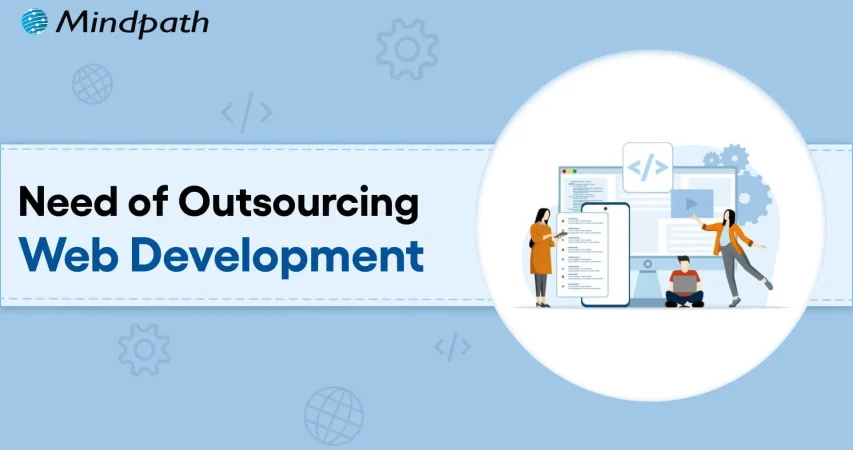
Why Outsource Web Development to Scale Your Business Efficiently?

Why Outsource Web Development to Scale Your Business Efficiently?

Lorem ipsum dolor sit amet, consectetur adipiscing elit. Ut elit tellus, luctus nec ullamcorper mattis, pulvinar dapibus leo.

Join our Newsletter!

outsource web development

In the current hyper-computing and changing digital environment, a scalable and user-friendly web presence has become a basic necessity. However, it requires a strategic approach along with creative thinking. And this is where you can outsource web development to enjoy the desired results.

Today, outsourcing web development has become a profitable solution for companies. After all, it helps them innovate and efficiently scale in this expanding digital world. Furthermore, when you outsource web development to external experts, you will be able to witness distinct advantages. In this detailed blog, we will explore some primary reasons why you should outsource website development. Besides, you will also get to know how to select the right partner to enjoy long-term success. So, keep reading further!

Struggling to scale your digital presence while keeping development costs and timelines under control? Our web development services provide scalable solutions that help your business grow faster.

Scaling a Business Begins with Smarter Strategies

Scaling a business goes beyond just increasing revenue or expanding your team. It involves scaling strategically and at the same time being profitable and productive. However, when a company grows, it can face a few serious issues, which can impede its growth.

1. Resource Constraints

Rapid growth may create considerable pressure on internal teams. Besides, it may put a strain on your budget. As a result, you may suffer from inefficiencies and burnout.

2. Skill Gaps

New technologies and project demand expertise and experienced professionals. And your team might not have them yet.

3. Rising Operational Costs

Budget allocation can be affected by Infrastructure improvements, regulatory compliance, and employee training.

Outsourcing offers businesses a smart way of overcoming the scaling challenges. Through collaboration with an external service provider, businesses will be able to re-distribute their resources efficiently.

Want to scale your business efficiently through outsourcing? Discover web development technologies that help you build faster and more scalable digital solutions.

In-House Web Development- Complexity and Costs

It is crucial to understand the pitfalls of managing an in-house team before delving into  reasons to outsource web development projects. Well, the following are some common pitfalls you may encounter.

1. Recruitment and Training

Recruiting, training, and retaining talented employees is a costly and time-consuming process.  For instance, it can take weeks to hire a senior web developer. Moreover, you will have to offer competitive salary to retain him/her.

2. Heavy Overhead Costs

Besides salaries, you can face heavy overhead costs if you create an in-house team. You will have to pay for equipment, office room, training, HR resources, etc.

3. Limited Skill Set

In case a project requires a new framework, some design aesthetics, and niche technology, then your internal team might not have that. And it can lead to delays and poor results. On the other hand, it can be time-consuming and costly to train your own team.

All these things make outsourcing web development services an ideal solution for every business.

Curious how leading brands stay ahead while outsourcing their web projects? Check out the latest web development trends to learn what is driving innovation and long term growth.

Why Outsource Web Development- Strategic Benefits

Outsourced web development doesn’t just help companies offload their problems. It also helps them attain growth more efficiently and effectively.

1. Access to Global Talent

When you hire web development outsourcing companies, you get to access a wide pool of global talent. You can be sure of getting highly talented and specialized professionals for the work.

You can easily find proficient web developers with vast experience in any framework, technology stack, AI, etc. Whether you need a Django or Python expert, a React.js specialist, or a professional UI designer, you can recruit one easily through the outsourced company.

2. Affordable

You can lower operational costs without compromising project quality when you outsource web development. It helps you take advantage of their latest infrastructure as well as expertise.

Moreover, with an outsourced web development company, you no longer have to stress about maintaining the expensive software, hardware, or in-house IT teams. You can invest the saved money in other crucial aspects that support business expansion.

3. Flexibility and Scalability

A majority of businesses experience a linear growth. They have new product launches, strategic realignment, and peak seasons. Well, outsourcing provides businesses with the required flexibility to scale their growth as required.

4. More Focus on Core Organizational Functions

Every hour you spend on hiring, managing, or training is an hour not invested in what makes your organization unique. When you outsource web development, you can free up your team and concentrate on the core competencies.

You will get sufficient time for strategy, product innovation, market expansion, customer relationships, sales, and more. All these things will support the overall business growth.

5. Better Security and Compliance

Trusted web development services always prioritize and focus on industry-leading compliance and security practices, with a strong emphasis on web application security. Furthermore, they follow established project management methodologies, such as Scrum or Agile.

With this, businesses can enhance their data security measures and ensure compliance with necessary regulatory standards while reducing the risk of security vulnerabilities.

6. Faster Time to Market

Web development companies function with established, proven methodologies, dedicated development teams, etc. They can start a project more quickly and complete it on time.

A faster time to market means you can capture market share and meet the demands of customers in a more efficient and effective manner.

7. Access to New Technologies

Web development is evolving rapidly. Keeping your in-house team updated on new security protocols, best methods, and new frameworks can be a significant challenge. However, an outsourcing web development firm specializes in these.

They have protected experience, dedicated R&D, and continuous training programs to keep their team updated. Besides, with them, you will get access to the latest methodologies, technologies, and tools without spending a lot of money.

In short, outsourcing web development can strategically support your business growth by offering cost efficiency, global talent, flexibility, and security, allowing you to concentrate on core activities.

Planning to outsource your web projects for better scalability? Check out web development tools that enhance collaboration and improve project outcomes.

When Can You Opt for In-House Development?

Well, outsourcing web development can offer a lot of benefits. But in some cases, in-house development will be a perfect solution.

For example, if your project is based on proprietary information and sensitive data, then you may opt to use in-house development in order to have better control of security practices.

When your projects are aligned with the business strategy, then in-house development may be able to provide you with better integration.

Major Considerations for Successful Outsourcing

While the business benefits of outsourcing web development are quite clear, successful outsourcing partnerships require a thoughtful approach. Consider these tips and proceed with care.

1. Understand What You Need

It is crucial to be clear about your expectations and goals. In the absence of clear requirements, you may face delays.

2. Choose the Right Partner

Remember that it is not always bout the price. When looking for an agency, check their experience in the industry. Besides, ensure that the agency has a proven track record.

3. Effective Communication

Have effective communication protocols and channels. The use of modern project management systems, and elaborate reporting are important to ensure effective communication.

4. Keep a Track

Monitor your outsourced web development projects on a regular basis and also collect relevant feedback. You should have a transparent communication with your service provider to ensure lasting success.

Looking to scale your business faster with smarter digital solutions? Discover AI in web development to learn how automation and intelligent features can enhance your outsourcing strategy.

Want to Grow Your Business With Outsource Web Development?

Professional web development is a strategic investment that drives business growth. It helps create high-performing, secure, and user-friendly websites, boosts customer engagement, improves search visibility, and ensures your brand stands out in a competitive digital landscape.

At Mindpath, we understand that every business has unique needs, goals, and challenges. Our professional web development services deliver tailored, scalable, and high-quality solutions designed to enhance user experience, strengthen your digital presence, and give your business a competitive edge.
Support Is One Click Away

Featured Posts

Related Post

Digital Twin technology

Manufacturers all over the world have been under pressure to meet emerging challenges in an environment with limited resources. The prominent setbacks for the manufacturing industry include supply chain shortages and talent gaps. However, the advent of digital twin technology serves as the best example of how technological innovation can shape the future of manufacturing. Digital twins can not only enhance capacity but also ensure more efficiency and resiliency in manufacturing operations.

The growing demand for fast-paced and continuous operations in manufacturing creates various limitations. Digital twins offer virtual representations of production lines, equipment or the whole factory to help manufacturers with more effective decision-making. Manufacturers must know about the utility of digital twins and how they can unlock untapped value to prepare factories of the future.

Looking to harness digital twin technology to gain deeper insights and future-proof your business? Contact us for expert guidance and tailored solutions that help turn digital twin innovation into real-world impact.

Understanding the Digital Twin Technology

The foremost highlight in any introduction to digital twins will focus on their definition. The most common answers to ‘what is digital twin technology’ paint them as virtual representations of physical objects or systems. Digital twins use real-time data to imitate the behavior, conditions and performance of their physical counterparts. Digital twins help with continuous monitoring and analysis of objects, systems or products throughout their complete lifecycle. In addition, digital twins can also feature external processes and crucial variables that can influence the performance of real-world assets.

One of the significant highlights of digital twins is that they work with data flowing between the object and its virtual representation in real-time. The two-way flow of data ensures the most accurate simulations of the physical world. Businesses can also use multiple digital twins together to create models for more complex systems, aimed at a larger digital transformation strategy.

Digital twins provide a clear impression of how something works and predicts its behavior in future scenarios. As a result, they can help in accelerating innovation and improving efficiency along with making well informed decisions. You can come across use cases of digital twins in predictive maintenance, product development, supply chain optimization and process optimization.

Breaking Down the Architecture of Digital Twins

If you want to capitalize on the power of digital twins in diverse use cases, then it is important to know their architecture. You can find digital twin providers like IBM, Microsoft, General Electric and Siemens with solutions that provide a comprehensive suite of services. The digital twin examples may feature hardware layers, synchronization services, data processors and other tools to draw the most accurate simulations of real objects and processes. However, awareness of the architecture of digital twins can help you figure out exactly what you need to make the most of the innovative technology.

1. Physical Asset

The physical asset in digital twins can be any real-world object, process or system that you want to study or monitor within virtual environments.

2. Virtual Model

The virtual model in digital twins is the digital representation of the physical asset that you want to know more about.

3. Data Sources

One of the notable highlights in the answers to ‘what is a digital twin’ points at the two-way flow of data between the physical asset and the virtual model. Data sources are an integral component in digital twin architecture as they ensure accuracy in virtual representations. Internet of Things or IoT devices serve as data sources by recording relevant metrics for creating digital twins.

4. Data Pipelines

Data pipelines are used for transmitting sensor data to the virtual model in real time. They play a vital role in ensuring that the digital twin is synchronized with the physical asset.

5. Feedback Loop

The feedback loop helps in sending control signals or insights from the virtual model to the physical asset. It serves as a promising component for optimizing performance and efficiency alongside enhancing decision-making.

6. Analytics Engine

Digital twins needs an analytics engine running on AI or machine learning to detect patterns and facilitate predictive analytics. The functionalities of the analytics engine helps in drawing accurate simulations alongside offering support for effective asset tracking.

7. Visualization Dashboard

The visualization dashboard is another crucial component that completes the digital twin definition by providing access to the virtual representation. You can use the visualization dashboard to interact with the two-dimensional or 3D representation of the physical asset.

Breaking Down the Working Mechanism of Digital Twins

The uses of digital twins can vary by huge margins across different industries and applications. You must also know that digital twins follow some common steps that you will find in every example.

1. Data Collection

Organizations can start their digital twin projects by embedding sensors on a physical object to capture its performance, operating environment and condition. The digital twin meaning in case of IoT applications revolves around using smart objects that feature in-built sensors to collect and share data continuously. In the case of IT environments, teams can create digital representations of computers, applications and software with virtualization technologies. Subsequently, the teams can use software agents to collect data from the digital asset for supporting the digital twin.

2. Creation of the Virtual Model

The primary focus of digital twins aligns with the creation of digital replicas of certain objects or systems. Virtual modeling involves using the data collected from the physical asset to create a digital model. It is important to define digital twins with key attributes that help them offer realistic reactions to variables. The variables can refer to interactions with the physical asset or its environmental conditions. The attention to virtual modeling ensures that digital twins can offer reliable and accurate simulation of the responses of the physical assets in different conditions.

3. Real-Time Data Integration

You cannot think of a digital twin without live data integration as it ensures continuous communication between the digital twin and physical asset in real time. Live data integration offers a dynamic feedback loop that can help organizations with performance optimization and enhancements in system reliability. The two-way data exchange also helps in efficient predictive maintenance by anticipating issues ahead of time. Most of the organizations automate the real-time data exchange process to focus on more critical and strategic tasks.

4. Analysis and Decision-Making

Digital twins offer the most promising solutions to experiment safely within virtual environments. You find better answers to ‘how do digital twins work’ in manufacturing plants where digital twins can help in finding out how an upgrade may affect efficiency and performance. The best thing here is that manufacturers don’t have to implement the upgrade directly to measure its impact. On top of it, analytics engines used in digital twins can recommend operational changes to make the changes more cost-effective.

Variants of Digital Twins

Most of the discussions about digital twins don’t emphasize the fact that you can find different types of digital twins. Organizations can deploy different variants of digital twins in one production environment with the advantage of learning from different levels of physical assets.

1. Product Twins

Product twins refer to the virtual representations of products after the ideation stage or throughout the complete lifecycle. You can use product digital twins for design improvements, enhancing service satisfaction and manufacturing efficiency.

2. Process Twins

The variety of digital twin applications also draws attention towards the use of process twins that help in understanding how different systems work with each other. Process twins offer visualization of the interactions between systems and suggest actionable feedback to improve quality standard or process speed.

3. Part Twins

Part twins or component twins focus on the most granular level of larger systems. The primary goal of part twins revolves around measuring the insights from basic components of larger systems. Component twins serve a promising role in understanding the performance of certain components and identifying larger problems before they happen.

4. Place Twins

The largest deployment of digital twins can happen in the form of place twins. You can find examples of place twins in factory twins, which simulate a complete physical location or place. In some cases, you may assume similarities between process twins and place twins. However, place twins also include spatial data, such as climate, context and temperature of the physical location.

Unraveling the Use Cases of Digital Twins

Organizations in different industries leverage digital models to understand complex systems and promote innovation. Digital models have also proved as the most useful tools for efficient optimization and predictive equipment maintenance. You can find a digital twin use case in almost every major industry with widespread applications.

1. Construction of Physical Structures

Digital twins can prove to be the most useful tools for engineers to design durable and safe physical structures, such as buildings, bridges and dams. For example, digital twins can help engineers determine whether a specific design for a bridge can enhance its durability. As a result, engineers can identify any setbacks and make changes in the design before starting construction.

2. Healthcare

Another promising area where digital twins can offer significant advantages is in the domain of healthcare. Digital twins can come up with crucial insights from forecasts of disease progression to identify how patients will respond to different treatment options. Furthermore, healthcare professionals can use digital twins to enhance diagnosis through detailed modeling that helps in understanding how interactions between organs can affect health.

3. Urban Planning

You can also notice the benefits of digital twins in urban planning applications, especially for traffic supervision. City models use spatial data, IoT object data and AI analytics to determine how new transportation systems or infrastructure upgrades will affect the city’s environment and traffic. Digital twins serve a pivotal role in planning for smart cities and urban planning experts aim to tap into their power to enhance sustainability and quality of life.

Identifying the Advantages of Digital Twin Technology

The use cases of digital twins across different industries reveal their potential to revolutionize digital transformation. You can notice how digital twins offer more visibility into complex systems while opening doors for experimentation without real-world changes. An overview of their advantages can help you understand how they can unlock the future.

1. Faster Research and Development

How do you think a business can step into the future ahead of time? Without research and development, companies cannot experiment with new product designs, manufacturing processes or workflows. The advantages of digital twins make it easier to experiment within a virtual environment, thereby opening the doors for accelerated innovation. Digital twins offer a more cost-effective and safer approach to research and development without the need for real tests.

2. Scalability

Companies can stay competitive in the modern business landscape only by adapting to changes in product demand, customer priorities and economic conditions. Digital twins offer virtual environments where you can adjust parameters and test configurations safely before full-scale deployment. You can also connect digital twins to live systems and ensure that they can continuously transmit their scaling adjustments in real time to the physical asset.

3. Operational Efficiency

The next crucial outcome of digital twin technology is the assurance of enhanced operational efficiency. Digital twins can provide the insights required to achieve operational efficiencies throughout the value chain. Organizations can use different datasets to collect real-time data on physical asset and production performance. With more visibility into the asset or process bottlenecks, digital twins can help in crafting potential solutions.

Final Thoughts

The progressive use of digital twins is a perfect example of how the world is welcoming innovation and preparing for the future. Digital twins provide the easiest solution to multiple problems that affect efficiency, cost-effectiveness and productivity in different industries. With the help of virtual models that mimic real-world assets, companies can reinvent their manufacturing, services and internal management.

Mindpath is one of the leading destinations for digital twin app development with years of expertise in end-to-end IT solution development. We are proud to have team members who are eager to learn and specialize in new technologies, including digital twins. Our experts are familiar with the use of popular tech stacks for digital twin development in alignment with your business goals. Consult with our team and build your first digital twin right now.

Discover how digital twin technology boosts efficiency, enhances product quality, and supports sustainability. Learn its impact on modern businesses and industry sectors.
The cost of hiring a ReactJS developer in New Jersey varies based on several factors, including experience level, project complexity, and location. Developers charge different rates depending on their expertise, with junior developers costing less than senior professionals. Additionally, project costs can range from a few thousand dollars for simple applications to tens of thousands for complex enterprise solutions. Understanding these costs can help you budget effectively and find the right developer for your needs. Below is a breakdown of ReactJS developer costs in New Jersey.

1. Hourly Rates by Experience Level

Hourly rates for ReactJS developers depend on their expertise. Junior developers charge between $12 and $40 per hour, making them ideal for basic projects. Mid-level developers charge $40 to $80 per hour and are suitable for more complex applications and API integrations. Senior developers with extensive experience in large-scale projects can cost $80 to $150+ per hour. The higher the experience level, the higher the rate, but also the greater the efficiency and quality of work.

2. Cost for Simple ReactJS Projects

For small-scale applications, prototypes, or basic websites, hiring a ReactJS developer in New Jersey can cost between $5,000 and $15,000. These projects often involve standard UI development, minimal backend integration, and basic features. If you need a simple yet effective React-based solution, hiring a junior or mid-level developer may be the most cost-effective approach. However, ensuring quality requires choosing a developer with at least some hands-on experience.

3. Cost for Complex ReactJS Applications

If your project requires advanced functionalities, API integrations, database management, and optimized performance, expect to pay anywhere from $20,000 to $60,000 or more. These applications often need mid-level to senior developers who can write scalable, maintainable code and handle challenging development tasks. Costs also increase if you require additional services like UX/UI design, third-party tool integrations, or real-time features.

4. Factors That Affect the Cost

The total cost of hiring a ReactJS developer isn’t just about hourly rates; it also depends on factors like project timeline, required skill set, and location. Developers in major cities may charge higher rates, and if your project demands full-stack development, additional frameworks, or post-launch support, the cost will rise. To optimize your budget, clearly define project needs and hire the right developer with the necessary expertise.

Looking for skilled ReactJS developers in New Jersey? Mindpath offers expert ReactJS development services tailored to your project needs. Whether you need a simple web app or a complex enterprise solution, our experienced developers deliver high-quality, scalable, and cost-effective solutions. Hire top ReactJS talent today and bring your vision to life with Mindpath’s expertise.
Contact us now to get started!

Discover the ultimate guide to hiring Node.js developers in London. Learn about the skills, benefits, and cost factors involved in finding the right talent for your project.
GenAI tools for teachers

The year is 2026 and AI isn’t just knocking at the doors of the education industry as it has become an integral part of the classroom, research lab and faculty room. Educators have been burdened with expectations and exhaustion due to changing curriculum designs in different parts of the world. The arrival of GenAI tools in education sector has marked the introduction of many new opportunities for educators.

Generative AI is gradually becoming an indispensable companion of teachers worldwide for many reasons. Most important of all, gen AI tools are not replacing the human element in the teaching experience. On the contrary, generative AI empowers teachers and helps them provide personalized learning experiences to every student. Let us find out the top generative AI tools that can help teachers.

Want to stay ahead in the education sector by offering smarter, more efficient solutions? Mindpath offers generative AI development services to help education businesses build custom, scalable AI tools tailored to their needs.

Understanding the Significance of Generative AI for Teachers

The biggest problem for teacher in the modern education industry is the burden of tedious and repetitive administrative tasks. Imagine the stress on teachers who have to evaluate the test papers of each student and prepare lesson plans for the next day. The use of GenAI tools for teachers can help in reducing the burden of administrative tasks, especially with automated grading and generation of personalized learning materials. Generative AI tools can allow teachers to invest their efforts in interacting with students, fostering creativity and nurturing critical thinking skills.

Teachers should understand that generative AI is not just another technological trend that will fade away with time. As a matter of fact, generative AI signifies a major paradigm shift in the domain of education. You can notice the broader impact of generative AI in education sector in different solutions like personalized learning at scale, automated content generation and better student engagement. Generative AI can help learners by creating adaptive learning systems that align with the learning style, strengths and weaknesses of each learner.

The reduced administrative burden on educators helps them interact directly with students and craft innovative teaching strategies. GenAI tools also help educators provide instant feedback on student assignments thereby allowing students to learn quickly from their mistakes. Teachers can rely on generative AI to improve student engagement by creating interactive content and personalized assessments. As a result, generative AI helps educators transform learners into active participants in the learning journey.

Looking for ways to integrate cutting-edge AI into your teaching strategy? Read this blog on generative AI trends to stay ahead with the newest AI innovations.

What are the Top Generative AI Tools for Teachers?

The blend of artificial intelligence and education brings promising results for learners as well as educators. You might be wondering about the top generative AI tools preferred by teachers and their special features. The following list of generative AI tools can help you understand the significance of gen AI in the education sector.

1. ChatGPT

The biggest generative AI tool that attracts the attention of educators worldwide is ChatGPT. It is still one of the basic tools that transformed how we interacted with artificial intelligence. Educators can trust ChatGPT for its versatility and use it as an assistant for different types of tasks. ChatGPT is one of the top 10 AI tools in education for drafting lesson plans, summarizing research papers or providing answers to difficult student questions. Educators can trust ChatGPT for brainstorming, content creation and delivering responsive student support.

2. Sendsteps

Sendsteps AI is a unique platform that makes the process of creating assignments a lot easier for learners. It relies on the power of natural language processing to understand the teacher’s instructions with accuracy. The AI tool uses teacher instructions to craft content personalized to specific needs and learning objectives of students. Educators can also use Sendsteps for creating interactive quizzes with the facility of automatic grading.

3. Google Gemini

Another big name among the best AI tools for students and teachers is Google Gemini. It stands out with multimodal capabilities that make it better than text-only models. Google Gemini can not only generate text but also images and audio content, thereby enhancing its versatility for classroom applications. Teachers can rely on Gemini to create lesson materials, interactive quizzes with audio prompts and explanation of scientific concepts with diagrams.

4. Canva Magic Studio

You cannot think about AI tools in the field of education without focusing on Canva and its ‘Magic Studio’ AI features. Canva is a distinct AI tool in education that allows you to create visually stunning presentations effortlessly. Teacher can also use it to craft compelling educational videos, infographics and interactive worksheets. The ‘Magic Studio’ feature of Canva also provides personalized recommendations for content generation while creating teaching aids.

5. Quizizz

Quizizz is another generative AI platform that helps teachers in creating interactive quizzes. It can help teachers in crafting engaging quizzes, interactive lessons and polls from different source materials. The AI tool can also help in generating different types of questions, such as open-ended or multiple-choice questions. Educators can transform quizzes and assessments into fun experiences for students with Quizizz while obtaining an accurate impression of student performance.

6. Socrative

The list of top generative AI tools that can help teachers also includes Socrative, an AI-powered student response system. Socrative is the best example of using generative AI for educators to enhance their capabilities for evaluating student assignments. Teachers can use Socrative to create open-ended questions and quizzes to collect formative assessment data. The data obtained from such tests can help teachers recognize the weaknesses and students and modify their teaching approaches.

7. Nearpod

Nearpod is also a useful generative AI tool for embedded open-ended questions, quizzes and polls in presentations. Teachers can use Nearpod as one of the top education AI tools to create engaging lessons for students. The tool also provides valuable data on student performance along with creative tools for educators. The creative tools can help in creating interactive learning experiences that boost critical thinking and creativity of learners.

8. Flipboard

One of the most interesting AI tools that teachers can use in 2025 is Flipboard. It is the best AI for education delivery in a completely new and innovative format. Flipboard helps educators in combining articles, videos and other web content on a specific topic in the format of a digital magazine. Educators can share the digital magazines with students through links that can enhance the learning experience.

9. Magic School AI

Magic School AI is a comprehensive collection of AI tools for educators, focused on automation of common classroom tasks. It is one of the best generative AI tools to create subject-specific lesson plans, worksheets and rubrics. Teachers can find more than 60 tools in Magic School AI for different aspects of the teaching experience.

10. Curipod

The collection of GenAI tools for education must also include Curipod for its capabilities as a lesson planning assistant. It helps in making classroom learning more engaging with interactive activities. Curipod can create presentations with interactive elements to encourage student participation. Teachers can use Curipod as a trusted solution for real-time understanding of student performance and fostering active learning.

Could understanding AI applications in other industries help you choose the best tools for your classroom? Discover how generative AI in market research, providing insights that can spark innovation in teaching.

11. Eduaide.AI

Eduaide.AI is one of the few generative AI tools created specifically for educators. It helps in streamlining lesson planning and creation of learning resources. The AI tool can help in generating lessons plans aligned with popular standards. The intuitive interface of the platform combined with emphasis on pedagogical support makes it an invaluable tool for educators.

12. Otter.AI

Otter.AI is also another notable example of education AI tool with distinctive features. The AI-powered transcription service leverages generative AI for real-time transcription of spoken language in class lectures or parent-teacher conferences. The tool plays a crucial role in enhancing accessibility of education and efficiency of taking notes.

13. Evernote

Evernote is a comprehensive organizational tool for an educator, which utilizes generative AI for content curation. Teachers can use Evernote to save videos, articles and other web content to create educational content. The AI tool helps in effective collection and organization of research materials, creation of lesson plans and sharing personalized learning resources with students.

14. Gradescope

Gradescope also showcases another example of using generative AI tools for learning improvement through the use of AI for simpler and faster grading process. Teachers can use Gradescope for automated assessment of complex assignments like essays, code submissions or problem sets. The AI-powered features of the platform not only save the time of teachers but also ensure grading consistency and offers accurate analytics for student performance.

15. Raindrop.io

Raindrop.io is another promising addition to the list of top gen AI tools in the domain of education. It is a bookmarking tool that helps teachers in saving and organizing web content alongside creating collections of bookmarks. Teachers can share the bookmarks with learners, which may be videos, articles or any relevant web content for future reference.

Curious about the most impactful ways generative AI is being applied across different industries and classrooms? Explore detailed generative AI use cases in our comprehensive guide to see how these tools are transforming education and beyond.

Ready to Transform Education with Generative AI?

Generative AI tools are revolutionizing education by reducing administrative burden, enabling personalized learning, and boosting student engagement. Educators can focus on creativity, critical thinking, and meaningful interactions while students enjoy adaptive and interactive learning experiences in the classroom.

At Mindpath, AI development services help education businesses build custom, scalable generative AI solutions. From automating lesson plans and grading to creating personalized learning platforms, our expert team designs tailored AI tools that empower teachers and enhance student engagement.