Home

AI Integration Cost: What Businesses Should Budget in 2026

AI Integration Cost: What Businesses Should Budget in 2026

Join our Newsletter!

AI Integration Cost

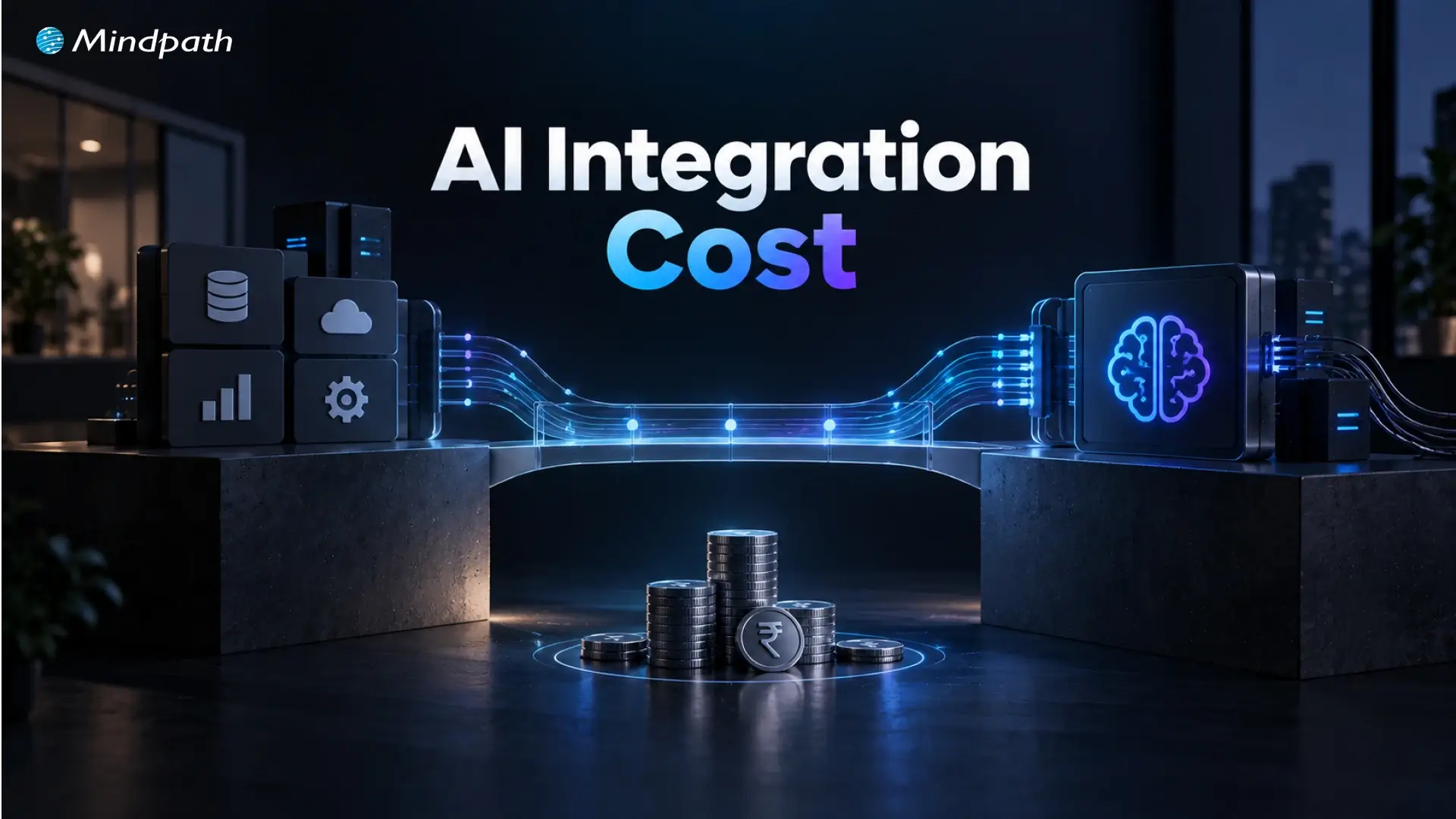
AI integration cost is rarely a fixed figure. It depends on the use case, existing technology stack, data readiness, integrations, security requirements, and business scale. A simple AI feature connected through an existing API can require a very different budget than a complex enterprise AI system spanning multiple applications, data sources, and workflows.

Key Takeaways

  • 01
    AI integration budgets vary based on use case, data readiness, integrations, security, infrastructure, and business scale.
  • 02
    Initial development costs are only part of the investment required to operate AI systems successfully.
  • 03
    Data preparation, legacy integrations, security, API usage, and infrastructure can create unexpected expenses.
  • 04
    Recurring costs include model usage, cloud resources, monitoring, maintenance, optimization, and technical support.
  • 05
    Phased implementation and continuous cost monitoring can help businesses manage AI spending and reduce budget overruns.

The initial development budget is only part of the equation. Model usage, cloud infrastructure, monitoring, maintenance, security, and ongoing optimization can continue adding costs after deployment. For technology leaders, understanding these factors early helps prevent unrealistic estimates and poorly scoped AI initiatives. In this blog, we break down the key costs businesses should consider when planning AI integration in 2026.

Not sure what your AI integration could cost?

We help businesses scope AI projects, identify cost drivers, and plan practical implementation strategies.

Plan Your AI Integration →

What is Included in AI Integration Cost?

AI integration involves more than connecting an AI model to an existing application. The overall budget covers the technical work required to make the system useful, secure, reliable, and compatible with existing business processes. The scope can include several layers, depending on the project.

Common one-time costs include:

1. Discovery and Architecture

Defining the use case, technical architecture, workflows, and integration requirements.

2. Data Preparation

Cleaning, structuring, transforming, and connecting the data required by the AI system.

3. Development and Integration

Connecting AI capabilities with applications, databases, APIs, CRM, ERP, or internal tools.

4. Testing and Deployment

Validating accuracy, security, performance, and reliability before production use.

These initial costs are only one part of the budget. Businesses also need to account for recurring expenses such as model or API usage, cloud infrastructure, monitoring, maintenance, security updates, and ongoing optimization.

How Much Does AI Integration Cost in 2026?

There is no standard price for AI integration. The budget changes significantly based on the number of systems involved, data complexity, security requirements, user volume, and the level of customization required. The ranges below can serve as practical planning estimates.

Business / Project Scale Typical 2026 Budget Common Scope Cost Complexity
Small AI Integration $10K–$30K AI chatbot, single API, basic workflow automation Low
Mid-Size Integration $30K–$100K Multiple APIs, document processing, custom workflows Moderate
Complex AI Implementation $100K–$250K+ Advanced data pipelines, custom AI workflows, several business systems High
Enterprise AI $250K–$1M+ Large-scale AI platforms, governance, security, multiple departments Very High

These figures are illustrative planning ranges, not fixed market prices. A mid-size project with clean data and existing infrastructure could cost less than a smaller project involving legacy systems, complex integrations, or strict security requirements.

What Factors Increase AI Integration Cost?

Several technical factors can significantly change the final project budget. The complexity often comes from the environment surrounding the AI rather than the model itself.

1. Data Readiness

Incomplete, inconsistent, or poorly structured data requires additional engineering before it can support reliable AI workflows.

2. Integration Complexity

Connecting AI with CRMs, ERPs, databases, internal applications, legacy systems, and third-party APIs increases development effort.

3. Model Requirements

A basic API-based model has different infrastructure and development needs than RAG and fine-tuning, or agentic AI workflows.

4. Security and Compliance

Sensitive data may require encryption, access controls, audit logs, private deployments, and additional security testing.

5. Infrastructure

Cloud compute, storage, databases, vector databases, networking, and monitoring can add both implementation and operational expenses.

6. Specialized Expertise

AI engineers, data engineers, solution architects, and security specialists may be required for complex implementations.

The biggest cost increases often occur when these requirements are discovered late. Defining the architecture, data requirements, integration scope, and security expectations early can make the budget far more predictable.

Hidden Costs That Can Increase AI Integration Cost

The initial AI implementation cost does not always reflect the full investment required to move an AI system into production. Some expenses appear during integration, scaling, or ongoing operations and can affect the final budget.

1. Data Cleanup

Business data may require cleaning, restructuring, labeling, or enrichment before it can support reliable AI workflows.

2. Legacy Integration

Older systems may need custom connectors, middleware, or additional development to work with modern AI tools.

3. API Usage

The API integration cost can increase with request volume, connected services, data transfer, and usage-based pricing.

4. Security Requirements

Encryption, access controls, compliance checks, audit trails, and security testing can add development effort.

5. Infrastructure Scaling

Growing usage can increase spending on compute, storage, databases, networking, and other cloud resources.

6. Monitoring and Maintenance

Production AI systems require performance monitoring, testing, updates, troubleshooting, and ongoing optimization.

7. Employee Adoption

Training, documentation, workflow changes, and technical support may be needed for successful adoption.

Accounting for these expenses early gives businesses a clearer view of their total AI investment. It also helps teams distinguish the initial project budget from the ongoing costs required to operate and scale the system.

What are the Ongoing Costs After AI Integration?

Launching an AI system is only the beginning of the investment. Once it is in production, businesses need to budget for the resources required to keep it accurate, available, secure, and cost-efficient as usage grows.

Key recurring expenses can include:

1. Model and API Usage

Costs can increase with higher request volumes, larger inputs, and frequent model calls.

2. Cloud Infrastructure

Compute, storage, databases, networking, and supporting services contribute to monthly operating expenses.

3. Monitoring

Production systems need monitoring for performance, latency, errors, usage patterns, and unexpected outputs.

4. Model Optimization

Prompts, retrieval pipelines, workflows, or models may need periodic improvements as requirements change.

5. Maintenance

Integrations can require updates when connected applications, APIs, or business processes change.

6. Support and Security

Ongoing technical support, vulnerability management, access reviews, and compliance activities can add operational costs.

Businesses should therefore calculate total cost of ownership, rather than evaluating an AI project only by its initial development price. Tracking these recurring expenses against measurable outcomes also makes it easier to determine if the system is delivering the expected business value.

How to Build a Realistic AI Integration Budget?

A practical AI budget starts with the business problem, not the technology. Before selecting a model or development approach, teams should establish what the system needs to achieve and what resources are already available.

A simple budgeting process can include:

1. Define the Use Case

Identify the workflow, users, expected outcomes, and measurable business goals.

2. Map the Technical Scope

List the applications, APIs, databases, data sources, and workflows that need to connect with the AI system.

3. Assess Data Readiness

Determine whether existing data is accessible, structured, secure, and suitable for the intended application.

4. Select the Implementation Approach

Compare existing AI platforms, custom development, and hybrid approaches based on technical requirements and internal capabilities. A build vs buy AI assessment can help frame this decision.

5. Separate Initial and Recurring Costs

Account for development, integration, and deployment separately from API usage, infrastructure, maintenance, and support.

6. Plan for Contingencies

Reserve part of the budget for unexpected data, integration, security, or infrastructure requirements.

7. Use Phased Implementation

Start with a defined scope, measure results, and expand the system after validating its performance and business value. Businesses considering in-house vs outsourcing AI development can also factor internal expertise and long-term maintenance into this planning process.

How Should Your Business Budget for AI Integration?

AI integration requires a budget that accounts for development, data preparation, integrations, infrastructure, security, and ongoing operations. AI integration cost varies with every project, making it important to assess the use case, technical readiness, implementation scope, and recurring expenses before committing to an investment.

Mindpath AI development services help businesses plan and build AI systems around their specific workflows and technical requirements. Our team supports AI architecture, data engineering, integrations, RAG development, fine-tuning, and AI agent development, helping businesses move from planning to production with a practical roadmap.
Worried About AI Integration Costs?

We help you plan your AI project before development begins.

Frequently Asked Questions

Assess the use case, data readiness, integrations, infrastructure, security requirements, expected usage, and recurring expenses before creating the initial budget.
Unprepared data, complex legacy integrations, changing requirements, higher usage, security needs, and underestimated maintenance can increase the final project cost.
Yes. Model usage, cloud infrastructure, monitoring, maintenance, support, and optimization should be considered to understand the complete investment.
A phased approach works well when requirements are uncertain or the organization wants to validate business value before expanding the implementation.
Define specific KPIs before implementation and compare operational costs against measurable improvements in productivity, efficiency, revenue, or customer experience.

Support Is One Click Away

Featured Posts

Related Post

top digital transformation trends

In the digital world, new digital technologies are emerging at a rapid pace. It is imperative for business entities operating in diverse industries and sectors to familiarize themselves with the top digital transformation trends in 2026. The global spending on digital transformation is likely to touch USD 3.9 trillion by the year 2027. It highlights the bright future of digital transformation.

In order to stay ahead in the competitive business space, you need to keep a tab on the key trends that contribute to digital transformation for businesses. The insight into these trends can surely guide your business towards a path of innovation and creativity. Let us explore some of the chief trends that can influence the trajectory of your business in 2026.

Looking to use the digital transformation trends practically in your business operations to enhance performance? Contact us to get personalized advice on how to implement these trends successfully.

Digital transformation trends are the emerging technologies, strategies, and business practices that organizations adopt to modernize operations, improve customer experiences, increase efficiency, and drive innovation through digital technology.

Major Digital Transformation Trends in 2026

Businesses need to familiarize themselves with major digital transformation trends that are dominating in 2026. Such trends can create new opportunities for businesses to stay ahead in their industries. The top digital transformation trends include:

1. Rapid Adoption of Generative AI

The emergence of generative AI has certainly broadened the boundaries of Artificial Intelligence. In fact, you cannot ignore AI and automation in digital transformation today. By leveraging generative AI for business, they have the amazing opportunity to redefine personalization. Moreover, by making use of generative AI capabilities, it has become possible for businesses to automate the content creation process.

It is undoubtedly among the top trends that are catching up among businesses. You can strategically integrate generative AI elements to showcase your commitment to innovation. In the future, as generative AI further matures, businesses can transform their existing workflows as well as processes.

2. Boosting Efficiency through Cloud Computing

Cloud computing is certainly among the top enablers of digital transformation for businesses at present. Businesses need to keep track of the latest cloud computing trends in 2026 so that they can improve their productivity. Moreover, it can also create an opportunity for businesses to minimize their overall costs.

Businesses can consider adopting a hybrid cloud infrastructure. It will enable them to ensure high portability, IT agility, and vendor-related flexibility. Businesses cannot ignore the strategic relevance of cloud computing technology in their digital transformation journey. It can play a catalytic role by fostering innovation for businesses.

3. Rising Adoption of Mobile Technologies

While discussing the topic of digital transformation, one cannot omit mobile technologies. Instead, it is among the top digital transformations in IT that one can come across. Today, the reliance on mobile is expanding among customers. This trend has automatically been driving digital transformation initiatives among businesses today.

Regardless of the industry in which businesses operate, it is essential for businesses to develop mobile apps. By doing so, the communication between businesses and their potential and existing customers can be simplified. It can certainly redefine the overall experiences of customers. It can even give rise to new opportunities for businesses to transform the customer journey.

4. Increased Focus on Cybersecurity

In the highly dynamic and volatile cyberspace, businesses have started refocusing on cybersecurity aspects. The rapid adoption of new types of technologies has automatically escalated cybersecurity concerns for businesses as well as customers. This is because malicious actors such as cybercriminals and online hackers have been using sophisticated techniques to compromise the security of legitimate users online.

To prepare themselves in the evolving cybersecurity space, businesses have started prioritizing their cybersecurity preparedness. Modern businesses are adopting new cybersecurity measures and interventions to strengthen their cybersecurity posture. This specific trend is likely to gain further prominence in the evolving digital landscape.

Wondering how artificial intelligence is reshaping security in the digital era? Check out AI in cybersecurity to learn how intelligent threat detection and automation are transforming protection strategies in 2026.

5. Shift Towards Data-Driven Business

In the contemporary business world, the role of emerging technologies in digital transformation is surely instrumental. It has also created an opportunity for businesses to shift towards a data-driven approach. Today, businesses are relying on concrete data and facts to make decisions. Such a shift has undoubtedly shown the high value of rich and insightful data for businesses.

By relying on real-time and accurate data, it has become possible to respond to the evolving needs of customers promptly. Furthermore, it has also empowered businesses to adapt to the dynamic business climate and make cautious and well-informed decisions. It is definitely a major source of competitive advantage for businesses in the current times. This particular trend certainly holds the promise to redefine the journey of businesses as well as their customers.

6. Growing Popularity of Agentic AI

Although the concept of Agentic AI is in its nascent stage, it has captured the attention of one and all. In fact, this novel technology holds the promise to become a cornerstone of digital transformation for modern businesses. By integrating agentic AI, businesses can automate repetitive tasks. Furthermore, this technology can enable businesses to optimize their overall decision-making process.

Even though Agentic AI is still evolving, it has started to impact several industries and businesses. As such systems have a high degree of autonomy, they can make important decisions with little human intervention. It is certainly among the top emerging technologies in digital transformation that businesses must focus on.

7. High Expansion of Edge Computing

Edge computing is a novel concept where data processing and data storage are brought closer to the source of data. This approach has been gaining considerable momentum in the business world today. This is because it can give rise to a host of benefits for businesses in the form of reduced latency, better real-time responsiveness, and reduced use of bandwidth.

In the competitive business landscape, edge computing certainly acts as a vital source of advantage for businesses today. By leveraging the novel technology, businesses can carry out their operations in a more reliable manner. Moreover, it also creates the opportunity for businesses to save costs by reducing the amount of data that is transmitted to the cloud.

Strategic Importance of Digital Transformation

In the prevailing business environment, it is imperative for businesses to familiarize themselves with the latest digital transformation trends for 2026. By being aware of the emerging technologies, you can strategically deploy appropriate digital technologies to advance towards your digital transformation journey.

Digital transformation is of high strategic importance for entities since it can boost efficiency, promote automation, and improve the experience of customers. Moreover, it can foster innovation, which is a must for contemporary businesses today. By leveraging digital transformation for business growth, you can ensure that your business can effectively adapt to the evolving business climate. It can serve as the ultimate pathway that can help businesses achieve sustainable growth in the digital age.

Wondering how digital trends drive real business impact? Discover digital transformation for businesses to see how companies are evolving in 2026.

Final Words

In the 21st century, digital technologies have been influencing how business entities operate. In order to adapt to the rapidly evolving business setting, it is a must for businesses to keep a tab on the top digital transformation trends. A broad range of trends has been identified, including the rapid adoption of Generative AI, leveraging cloud computing, rising use of mobile technologies, increased focus on cybersecurity, and a shift towards data-driven business. Similarly, businesses are also focusing on novel technologies like Agentic AI as well as edge computing to boost their capabilities.

As the strategic relevance of digital technologies is immense, businesses must choose a top service provider that can help them advance in their digital transformation journey. Businesses must consider the innovative solutions of Mindpath to stay ahead in the digital transformation race. The modernization and digitalization of solutions can surely help businesses thrive in the technology-driven business world.

AI in Web Development

Imagine a world where websites not only look great but also adapt to user needs in real time, offer personalized content, and even predict future trends. Sounds futuristic, right? Well, with AI now playing a pivotal role in web development, this is becoming a reality. But how exactly can artificial intelligence transform the way we design, build, and maintain websites? And what advantages does it offer for businesses and developers alike? In this blog, we will explore how AI can be leveraged in web development. 

Artificial intelligence (AI) is the development of computer programs that are capable of doing activities that would typically require human intelligence, such as pattern recognition, decision-making, and voice understanding. It encompasses technologies such as natural language processing, deep learning, and machine learning. AI is playing an increasing part in web development since it makes websites smarter and more effective. Websites can utilize AI to provide personalized content, learn from user behavior, and even automate processes like chat assistance and recommendation systems. By streamlining repeated tasks, it saves developers time and enhances the user experience overall, making websites more approachable. AI can help in improving security, speeding up performance, and creating more intelligent search functions, which will make websites easier to create and more beneficial for customers. 

Want to know more? Let’s explore how leveraging Ai in web development can be beneficial! 

Benefits of AI in Web Development

1. Minimized Human Errors

AI reduces the possibility of human errors during web development, such as errors or bugs. It can automate testing, which enables AI to swiftly identify and address coding errors. This not only speeds up the entire development process but also improves the stability and dependability of the product. Developers can guarantee fewer mistakes and produce websites of a higher quality by outsourcing these responsibilities to AI. In the long term, it improves efficiency and saves time by enabling engineers to concentrate on more difficult jobs. In order to ensure seamless operation and reduce the need for ongoing manual monitoring, AI can also continually monitor the website, identifying any problems even after launch. This leads to improved site stability and user experience.  

2. Personalized Solutions

AI is rapidly being used by web developers to provide personalized user experiences on websites. AI enables websites to personalize content based on each user’s choices, behavior, and past interactions. AI-powered systems can provide personalized content, product recommendations, and targeted marketing messages by analyzing user data. This personalization increases user engagement and conversion rates, making users more inclined to act on the site. A customized experience also helps to promote client loyalty by making people feel valued and appreciated. 

Furthermore, AI can forecast future user behavior by identifying patterns and trends, allowing businesses to stay one step ahead in satisfying client wants. This proactive strategy can improve client satisfaction and sales.  

3. Optimized Communication

There are many different types of websites, and some can be difficult to use. Artificial intelligence-powered virtual assistants and chatbots offer real-time customer care, answering queries and supporting customers around the clock. They can manage a wide range of interactions, from simple enquiries to more complicated activities, increasing customer satisfaction while reducing the effort for support workers. 

These AI technologies help develop user trust by providing quick assistance, making them feel supported and appreciated. This short response time can substantially enhance the entire user experience, increasing the likelihood that visitors will return to the website. Furthermore, since AI learns from interactions, these chatbots can enhance their replies over time, delivering even greater service and awareness of customer needs.  

4. Elevated User Experience

Businesses can now provide personalized experiences to each visitor thanks to AI-powered websites, which greatly increases engagement levels. AI can adapt to users’ choices and tailor material to their interests and behaviors. Web designers use this feature to provide a more personalized experience for each user, ensuring that the material is relevant to their interests. AI improves the entire user experience by offering relevant information, recommendations, and features that are both pleasurable and engaging. This level of personalization not only keeps customers on the site longer, but also motivates them to explore further, resulting in higher satisfaction and loyalty. As a consequence, organizations can develop stronger relationships with their target audience and achieve greater conversion rates. 

5. Responsive Design Enhancement

AI plays an important role in optimizing websites for responsive design, guaranteeing a consistent user experience across devices and screen sizes. It enables developers to construct flexible layouts that can dynamically modify information in response to user preferences and device capabilities. 

AI allows websites to analyze how visitors engage on various mobile, tablet, or desktop platforms and adapt appropriately. This implies that users will get a consistent and user-friendly experience no matter how they visit the site. Businesses that offer responsive design can improve customer happiness, lower bounce rates, and ultimately generate more engagement and conversions. This versatility not only improves the overall aesthetic appeal of the site, but also guarantees that customers discover what they need fast and simply, regardless of the device they are using. 

6. Enhanced SEO and Ranking Improvement

AI improves SEO strategy by analyzing search engine algorithms, detecting relevant keywords, and offering optimizations to boost search ranks. AI systems can analyze website performance in real time, watch rivals’ activity, and recommend SEO modifications to increase organic traffic. 

AI’s capacity to digest large volumes of data quickly allows it to discover insights that human marketers might not recognize right away. This enables organizations to keep on top of trends and adjust their plans accordingly. Websites that use AI-driven suggestions can boost their exposure in search engines, attract more visitors, and eventually increase conversions. This emphasis on continual optimization guarantees that organizations can effectively compete in the digital world while maintaining a strong online presence. 

Leverage AI in Web Development at Mindpath

Mindpath leverages artificial intelligence to improve web development and boost innovation. Our AI development services use modern algorithms and machine learning. Our Predictive Analytics solution helps you forecast trends, while Machine Learning Applications improve operational efficiency. Automation Solutions frees your team from everyday activities, allowing them to focus on strategic goals. With our Business Intelligence solution, we turn raw data into usable insights, providing visualizations and reports to help you make educated decisions. Our Conversational AI services create chatbots and virtual assistants that increase user engagement and offer immediate assistance. 

Final Note!

Implementing AI in web development enables firms to improve user experiences and optimize processes. AI builds websites that surpass user expectations by eliminating human error, personalizing information, optimizing communication, and enhancing responsive design. Additionally, AI-driven SEO tactics assist organizations in remaining competitive in a rapidly changing digital market. 

Mindpath leverages AI’s potential to generate innovation and success. Our services, ranging from predictive analytics to conversational AI, are meant to keep you ahead of the curve, allowing you to make informed decisions and provide amazing user experiences. With Mindpath, you can embrace the future of web development and open up new chances for growth. 

Ready to elevate your web development with AI?

Partner with Mindpath today to unlock innovative solutions tailored to your business needs.

Explore AI in web development and how it enhances user experiences, streamlines operations, and drives business success.
agentic ai examples

Generative AI represented a major milestone in the evolution of artificial intelligence. It played a crucial role in enhancing employee capabilities and brought AI closer to the average user. However, you should also look at agentic AI examples to discover how artificial intelligence has moved one step ahead. Agentic AI revolves around the use of agents that not only generate content but also have capabilities for autonomous decision-making.

You should know that big names, including NASA, NVIDIA and Microsoft, have been leading the race for adoption of AI agents. The growing use of AI agents in business is a testament to the fact that they are better than chatbots, which take thousands of prompts to generate remotely useful outputs. An overview of the business use cases of agentic AI can help you understand its true potential.

Ready to use the future-leading  AI solution in your operations? Mindpath offers Agentic AI development services that empower your businesses, help you automate processes, and drive innovation.

What Is Agentic AI? Fundamentals, Use Cases, and How It Works

LLMs empowered businesses with many capabilities, albeit with a reactive nature and the inability to retain context or memory. Therefore, the utility of LLMs and generative AI was restricted to improving individual productivity in different tasks. Agentic AI refers to autonomous systems powered by Large Language Models (LLMs) that can independently plan, reason, and take actions, using external tools and memory, to achieve complex goals, rather than just responding to prompts. This marked a shift towards proactive, self-directed artificial intelligence.

The most popular agentic AI use cases showcase how agents have introduced a revolutionary transformation in the working of AI. Agentic AI encompasses autonomous AI systems that have capabilities like memory and reasoning and can solve complex problems. 

AI agents can understand the goals for multi-step problems and break them down into subtasks alongside interacting with humans and systems. The agents can also execute the subtasks and adapt to new changes with minimal human intervention. 

Why Should Your Business Choose AI Agents?

Many business owners will wonder why they should adopt AI agents. Is it just because big companies are using agentic AI? The examples of agents in AI have proved how agentic AI brings a new set of capabilities to the use cases of AI across different industries. 

Businesses can now have AI systems that not only learn from data but also process information in real-time and execute tasks with different levels of human oversight. Agentic AI delivers promising benefits for businesses such as

  • Enhanced productivity
  • Personalized workflows
  • Operational efficiency at scale
  • Better accuracy and faster decision-making
  • Cost optimization
  • Easier cross-team collaboration

Are you missing opportunities to make faster, smarter decisions because your business isn’t leveraging AI to its full potential? Learn from our blog AI decision-making use cases guide to discover practical ways AI can accelerate insights and give your business a competitive edge.

How Have Businesses Used AI Agents?

Agentic AI is capable of managing everyday tasks and can also enhance agility across enterprise operations. It has been reshaping the way businesses in different industries work with a proactive approach. The curiosity about agentic applications of artificial intelligence is gaining momentum among businesses as AI agents revolutionize workflows. Awareness of the use cases of AI agents in business can provide the ideal foundation to embrace them. 

1. Customer Support Automation

Chatbots and voice assistants have been the most prominent contributions of artificial intelligence in the domain of customer support. Businesses must recognize the limitations of chatbots and voice assistants as they require the right prompts to deliver useful responses. However, AI agents can achieve automation of customer service beyond answering few commonly asked questions.

AI-powered customer service agents don’t need human guidance to function and solve complex multi-step problems. AI agents can offer customer support in different industries for diverse functions without being limited to a specific number of questions. Their capabilities for autonomous decision-making help them in understanding the customer’s need and providing relevant answers.       

2. Proactive Threat Mitigation

Cybersecurity is one of the biggest concerns for businesses as most organizations have security systems that cannot keep up with emerging threats. The adaptability of agentic AI tools ensures that they can learn and respond to security risks in real time. Agents have smart capabilities for round-the-clock network monitoring to identify anomalies and respond to threats before they cause any damage. 

Agentic AI can add an intelligent and dynamic threat detection system that not only offers safeguards but also creates a more resilient security system. You can rely on AI agents for running simulations of attacks to identify vulnerabilities before malicious attackers. On top of it, agentic AI can also facilitate real-time scoring of user activity which helps your team focus on critical threats. 

3. Automation of Enterprise Workflows

Organizations have been experiencing different issues in managing their enterprise workflows with little to no improvement from using various tools. The search for answers to ‘what is agentic AI’ reveals how agents excel at automation without human intervention. Agents can help businesses in streamlining processes through automation of repetitive tasks. For example, AI agents can use meeting notes to issue project tickets without human inputs. 

Agentic AI can help businesses in pooling all their data to avoid information silos. Their ability to retain context helps them develop in-depth understanding of how your business works. As a result, AI agents can enhance productivity and efficiency in enterprise workflows without incurring additional overheads.

4. Faster and Streamlined Software Development

Businesses need smarter software development tools that enhance productivity and transform the traditional notions of customer experience. The rising adoption of AI development services is clearly visible in the use of AI coding assistants, also known as copilots. Agentic AI can help in creating a new generation of AI coding assistants that can write large segments of code. 

Even with mixed reviews, agentic AI has gained appreciation from experts who believe that smart agents will write most of the code in future. Coding assistants will not only help in writing code but also leverage special agents to review code and identify errors. Agents also have the capability to leverage reverse engineering for extracting specifications from code, which makes them a powerful catalyst for coding automation.

Curious how tailored solutions can accelerate growth? Check out the custom software development benefits to see how personalization drives efficiency and innovation.

5. Accelerated Lead Conversion

How many times have your sales teams struggled to convert leads into potential customers? You can find answers to ‘what is agentic AI example’ in the use of agents for lead conversion. Sales representatives can use AI agents to get the accurate insights for zeroing in on the right prospects. For example, agentic AI can help businesses by highlighting the prospects that are most likely to convert. As a result, your sales teams will focus specifically on leads that have real potential.

Another promising contribution of agentic AI to the sales department of your organization is the assurance of offering personalized content. Smart AI agents offer customized follow-up responses, thereby informing your sales representatives about how they can communicate with leads. Furthermore, agentic AI also helps in identifying high-risk deals that may lose momentum.

6. Creating Smarter Product Roadmaps

Business owners must also recognize the scope for improving the methods for developing product roadmaps with agentic AI. With every stakeholder demanding priority for their feature, it becomes difficult to know which aspect deserves your attention. The value of an agentic AI development company becomes clearly visible in such cases where your product team needs agentic AI. 

Professional development companies can help you avoid redundancies in product roadmap development with different functionalities. You can use agents for gathering qualitative data from user research, surveys and feedback to gain holistic understanding of customer requirements. The comprehensive user behavior analysis with agentic AI can create the path for developing smoother customer experiences.                    

7. Enhancing the Agility of Operations Teams

The real-world use cases of agentic AI in business also draw attention towards issues in operations teams. Manual processes not only lead to inefficiencies and delayed decisions but also the inability to dig deeper into data for identifying bottlenecks. The benefits evident in agentic AI examples across different business operations can be applied for operations teams of your organization.

AI agents can help businesses with demand forecasting by drawing accurate prediction of supply requirements. At the same time, the proactive nature of AI agents empowers them to adjust shipping and delivery routes in real time. Agentic AI also offers the advantage of tracking supplier performance and identifying risks which can slow down production. 

8. Establishing Intelligent HR Operations

HR is one of the prominent entries among the many business functions you can transform with AI agents. As a matter of fact, agentic AI use cases in HR operations are low-risk and high-value use cases. It is for this reason that most of the companies using agentic AI leverage it for human resource operations. 

AI agents can make many things easier for HR, including providing responses to simple questions of employees. In addition, smart AI agents can also help HR with internal knowledge retrieval, documentation and tagging alongside other business processes. Every agent in your HR system will be tailored for one specific task and will have the ability to interact with each other. 

Looking to stay ahead in the rapidly evolving world of artificial intelligence and understand how emerging technologies can impact your business? Check out our blog on the top AI trends to see how AI is transforming the industry and driving innovation.

Build Smarter Business Operations with Agentic AI

The real use cases of agentic AI in businesses reveal many interesting insights on their actual potential. You can capitalize on AI agents to bring a certain degree of autonomy in various business operations while incorporating human oversight. Agentic AI marks another phase in the evolution of artificial intelligence by facilitating the creation of systems that are proactive and can take decisions on their own.

Mindpath is a pioneering agentic AI development company with a credible record in creating AI agents for different business functions. We have developed AI agents capable of integrating seamlessly into your enterprise workflows. Our team has the ability to ensure that your agentic AI systems align with your business needs and vision. Consult with our experts and discover the most efficient ways to embrace agentic AI now.