Home

Why AI Projects Fail Without Good Data Engineering First?

Why AI Projects Fail Without Good Data Engineering First?

Join our Newsletter!

data engineering for ai

Businesses invest in AI models to improve decisions, automate workflows, and drive growth, yet many projects struggle with unreliable outputs and delayed deployments. The underlying issue often lies in inadequate data engineering for AI, where inconsistent records, disconnected systems, and poor data quality prevent even well-designed models from delivering dependable results.

Key Takeaways

  • 01
    Poor data quality leads to unreliable AI predictions, inaccurate outputs, and delays in project deployment.
  • 02
    Automated data pipelines improve data consistency, accessibility, and reliability throughout the AI development process.
  • 03
    Strong data governance protects sensitive information and supports trustworthy AI outputs.
  • 04
    Early collaboration between data engineers and AI teams reduces rework and infrastructure problems.
  • 05
    Reliable data engineering helps control maintenance costs and supports scalable AI development.

Successful AI initiatives require reliable data pipelines, consistent information, and infrastructure that supports changing business needs. Without these foundations, model performance and long-term scalability remain difficult to maintain. In this blog, we examine why AI projects fail without proper data engineering, and the practical steps businesses can take to build reliable, AI-ready data foundations.

Why Data Quality Determines AI Success?

AI models rely on accurate, complete, and consistent information to produce reliable results. When datasets contain missing values, duplicate records, or outdated details, predictions become less dependable. Strong data quality for AI helps businesses improve model accuracy and make better informed decisions. AI data analytics services can also help businesses turn reliable data into actionable insights.

Even advanced algorithms cannot compensate for fundamental data problems. Effective data engineering for AI prepares information before it reaches a model, reducing errors and helping AI systems perform consistently across real-world business scenarios.

1. Incomplete Data

Missing records can weaken predictions and limit model reliability.

2. Inconsistent Formats

Conflicting data structures make integration and analysis difficult.

3. Outdated Information

Old records can lead to inaccurate forecasts and recommendations.

4. Biased Datasets

Unrepresentative information can produce unfair or misleading outcomes.

5. Incorrect Labels

Poorly labeled training data can reduce model accuracy.

6. Duplicate Records

Repeated information can distort patterns and affect model performance.

Common Data Engineering Gaps That Derail AI Projects

AI projects often encounter problems when data infrastructure cannot support the demands of model development and deployment. Disconnected systems, manual data preparation, and unreliable pipelines make it difficult for teams to access accurate information when needed.

Understanding how poor data affects AI model performance helps businesses identify weaknesses before they become costly setbacks. Common data engineering gaps include:

1. Fragmented Data Sources

Information stored across disconnected systems creates inconsistencies and limits accessibility.

2. Manual Data Processing

Repetitive tasks increase the risk of human error and delay development.

3. Unreliable Data Pipelines

Failed transfers and delayed updates leave AI models working with incomplete information.

4. Limited Real-Time Processing

Outdated data affects applications that depend on timely insights.

5. Weak Data Documentation

Missing context makes datasets harder to understand, validate, and maintain.

6. Poor Scalability

Infrastructure that cannot handle growing data volumes slows AI deployment and increases maintenance effort.

How to Build an AI-Ready Data Foundation?

Building a reliable data foundation starts with understanding what an AI application needs to work effectively. Businesses should identify relevant data sources, define quality standards, and establish processes that keep information accurate, accessible, and consistent throughout the project lifecycle. These requirements should be considered when planning an AI roadmap.

1. Identify Data Requirements

Determine which datasets the AI application needs and how frequently they must be updated.

2. Integrate Data Sources

Connect relevant systems and standardize formats to create consistent, usable datasets.

3. Automate Data Pipelines

Use ETL or ELT processes to collect, transform, and deliver data with minimal manual effort.

4. Implement Quality Checks

Validate incoming records, detect anomalies, and address missing or duplicate information before it reaches the model.

5. Choose Suitable Storage

Select databases, data warehouses, or data lakes based on the application’s requirements and expected data volumes.

6. Monitor Pipeline Performance

Track data freshness, processing failures, and quality issues to maintain dependable operations.

For businesses without sufficient in-house expertise, AI data engineering services can help establish suitable infrastructure, automate data workflows, and prepare datasets for AI development. The goal is to build a foundation that supports current requirements while accommodating future growth. These foundations also support the development of reliable AI software applications.

Data Governance and Security Must Be Built In

A reliable data foundation also requires clear rules for how information is collected, accessed, stored, and maintained. Without proper governance, businesses risk exposing sensitive information, using outdated records, or losing visibility into how data reaches their AI models.

This is why data engineering for AI must include security and accountability alongside data preparation. Understanding why data engineering is important for AI projects also means recognizing the need for trustworthy information throughout the AI lifecycle.

1. Data Lineage

Track where information originates and how it changes during processing.

2. Access Controls

Restrict sensitive datasets to authorized users and applications.

3. Privacy and Compliance

Apply relevant data protection requirements when handling personal or confidential information.

4. Data Ownership

Assign clear responsibilities for maintaining datasets and resolving quality issues.

5. Ongoing Monitoring

Review data access, pipeline activity, and potential security risks regularly.

Align Data Engineering with AI and Business Goals

Data engineering works best when it begins alongside AI planning. When data engineers, data scientists, and business teams collaborate early, they can identify data requirements, address technical limitations, and build infrastructure around specific business objectives. This reduces rework and keeps development focused on practical outcomes.

For example, a predictive maintenance system needs reliable equipment readings and historical failure records, while an AI-powered knowledge assistant requires organized documents, regular updates, and appropriate access permissions. Teams developing knowledge assistants can also evaluate RAG vs. fine-tuning when considering their AI implementation approach.

Businesses should focus on these key areas:

1. Define Business Objectives

Identify the specific problem the AI application must solve.

2. Identify Data Requirements

Determine which datasets are needed and whether they are reliable and accessible.

3. Coordinate Technical Teams

Involve data engineers and AI developers early to prevent integration issues.

4. Choose Suitable Infrastructure

Select tools and pipelines that match the application’s data needs.

5. Plan for Ongoing Maintenance

Establish responsibilities for monitoring data quality and updating pipelines.

Businesses with limited internal expertise can consider AI consulting services to assess their infrastructure and address technical gaps. Experienced professionals can help establish reliable pipelines and prepare data for AI deployment.

How Better Data Engineering Improves AI Project ROI?

Reliable data infrastructure reduces time spent fixing errors, preparing datasets, and maintaining pipelines. Businesses can measure its impact through practical indicators:

1. Data Preparation Time

Track hours spent cleaning and organizing datasets.

2. Pipeline Reliability

Monitor failures, delays, and data quality issues.

3. Development Timelines

Measure delays caused by data-related problems.

4. Model Performance

Compare results after improving data quality.

5. Maintenance Costs

Track resources needed to maintain data pipelines.

6. Integration Speed

Measure how quickly new data sources become usable.

Businesses can use data engineering services for AI or hire AI data engineers to address infrastructure gaps and support sustainable AI development. Reliable monitoring and deployment practices, including those covered in MLOps strategies for automating model deployment, can help teams manage AI systems throughout their lifecycle.

Is Your Business Ready to Scale AI?

Successful AI projects require reliable data, well-maintained pipelines, and infrastructure aligned with business goals. Data engineering for AI helps businesses address these foundations before data issues affect model performance, deployment timelines, and long-term maintenance.

Businesses can take these steps to prepare for AI adoption:

  • Audit existing data: Identify quality issues, disconnected systems, and missing information.
  • Review data pipelines: Check reliability, automation, and scalability.
  • Strengthen governance: Establish clear data access, ownership, and security policies.
  • Plan for growth: Ensure infrastructure can support future AI workloads.
  • Seek expert guidance: Use data engineering consulting to identify gaps and build a practical improvement roadmap.

Mindpath helps businesses build dependable data foundations through data engineering and AI services tailored to their technical needs and business objectives.
Ready to Build a Reliable AI Foundation?

Improve data quality and build dependable pipelines for AI success.

Frequently Asked Questions

Review data completeness, consistency, accuracy, and accessibility. Testing sample datasets early helps identify issues before they affect model performance or delay deployment.
Businesses should establish data engineering foundations during AI planning, especially when data comes from multiple systems or requires frequent cleaning and integration.
Yes, if the infrastructure meets the application’s data quality, security, integration, and performance requirements. An assessment can reveal necessary improvements.
Automated pipelines, regular quality checks, and continuous monitoring help prevent recurring data errors and reduce manual troubleshooting.
External support is useful when internal teams lack the expertise, capacity, or tools to build reliable data pipelines and prepare datasets for AI deployment.

Support Is One Click Away

Featured Posts

Related Post

Multi Cloud vs Hybrid Cloud

Deciding between multi-cloud vs. hybrid cloud strategies is becoming an important choice for organizations that want to remain agile and scalable. Every organization needs to find a way to balance flexibility, security, and performance, and this holds true with cloud architecture as well. The more complex challenge is determining which model can optimize operations while allowing the teams in the organization to innovate unhindered. As technology progresses to new heights, a strong cloud architecture can be a differentiating element within an organization’s growth.

It is essential to be certain of how both cloud models serve your business objectives and technical goals to make the better decision. It is not just an issue about infrastructure, but positioning your organization for the future and digital resilience. Understanding their differences helps organizations make confident and data-driven decisions in a world where technology changes rapidly. In this blog, we will explain some of the fundamental principles of multi-cloud and hybrid cloud so that the decision on which is best for you will be less difficult.

Want to determine which cloud strategy will be ideal for your organization? Contact us to get DevOps Consultation & Implementation services and make smart business decisions that lead to future growth.

Understanding the Fundamentals of Hybrid Cloud and Multi-Cloud

A hybrid cloud is an IT architecture that combines on-premises infrastructure or private cloud environments with public cloud services such as AWS, Google Cloud, or Microsoft Azure. Organisations can house sensitive data in a private cloud to protect it, while still utilizing the on-demand, scalable, and cost-effective computing of the public cloud. Hybrid clouds offer enhanced control, resource utilisation, and performance. This approach allows organisations to efficiently manage workloads across both environments, keeping critical data secure while scaling non-sensitive operations through the public cloud.

A multi-cloud strategy is the intentional use of two or more public cloud providers, such as AWS, Microsoft Azure, and Google Cloud, to distribute workloads and achieve specific corporate objectives. In the multi-cloud vs. hybrid cloud debate, companies will tend to prefer multi-cloud solutions for flexibility, avoiding being locked into a single vendor platform, and minimizing operational risks such as downtime or loss of data. Each application in a multi-cloud environment can run on a public cloud platform or private cloud platform based on relative performance or cost needs.

Wondering how application architecture impacts multi-cloud and hybrid cloud success? Explore cloud-native development to learn how cloud-native apps improve scalability and flexibility.

Advantages of Hybrid Cloud

A hybrid cloud gives companies the right combination of flexibility and control, helping companies manage data securely and securely provide scalability and efficiency for operations.

1. Strong Security and Data Control

Hybrid cloud allows companies to maintain improved control of sensitive data and mission-critical systems. Companies can use private servers to store private information and public clouds for everyday tasks, allowing for a balance between security and freedom.

2. Smarter Cost Management

Businesses can reduce their costs by maintaining constant workloads on private systems, while variable workloads can move to the public cloud. This model allows for a pay-as-you-go system that reduces risk of overspending and improves cost optimization.

3. Faster Performance and Low Latency

Hybrid cloud enhances performance by positioning time-sensitive jobs, such as analytics or IoT applications, nearer to the end user. The configuration call for helps to reduce latency and increase response times for the users.

4. Reliable Disaster Recovery

Businesses are able to store crucial data in the public cloud while ensuring that a main version is also preserved on their premises and if there is a systems failure, they can quickly restore and resume business as usual with minor interruptions.

5. Greater Scalability on Demand

Organizations can easily scale their capacity up or down via the public cloud when they find themselves in busy periods or running promotional activities that bring in high traffic. After the busy period ends, they can scale down their capacity, so they aren’t wasting money and resources.

6. Better Compliance and Data Governance

Hybrid cloud helps companies follow data protection rules by keeping customer data on local servers. At the same time, they are still able to carry out non-sensitive work in a public cloud, thus making an informed decision on multi-cloud vs hybrid cloud.

7. Boosted Innovation and Flexibility

Teams can experiment with fresh tools and services in the public cloud without interfering with core systems. This illustrates that the difference between multi-cloud vs hybrid cloud can drive business innovation and flexibility within the digital age.

Is your cloud strategy aligned with long-term digital growth goals? Discover digital transformation for businesses to understand how the right cloud approach accelerates innovation.

Examples of Hybrid Cloud

These are some real-world hybrid cloud examples and how organizations use this approach to improve business flexibility, security, and efficiency.

1. Digital Transformation

A hybrid cloud modernizes IT systems with a remote workforce and protects data in a secure environment.

2. Disaster Recovery

Hybrid clouds help your business continue operating normally by recovering data at a fast speed in the event of outages.

3. Development and Testing

Developers develop and test apps in their public clouds, then port to private clouds.

4. Cloud Bursting

During peak traffic, additional workloads move from private clouds to public clouds without impacting performance.

5. Edge Computing

Delivers and processes data near the user, resulting in faster and lower latency experiences.

6. AI & Machine Learning

A hybrid cloud supports AI workloads with the best scalability and the security of their data.

Looking for ways to optimize costs and scale applications seamlessly in complex cloud setups? Discover serverless architecture in cloud computing to explore how serverless solutions support modern cloud architectures.

Advantages of Multi-Cloud

The following are the main benefits of a multi-cloud strategy that will help to improve business performance and facilitate better operations.

1. Business Continuity Edge

In comparing multi-cloud vs. hybrid cloud, one advantage of multi-cloud is that it allows operations to continue even if one of the providers has an outage. By spreading workloads across a combination of platforms, businesses provide continued performance and reliability.

2. Flexible Cost Management

In the hybrid cloud vs. multi-cloud comparison, another of the advantages of multi-cloud is improved cost control. This allows companies to choose the cheapest cloud provider for each workload and optimize resources effectively.

3. Customized Security Approach

Multi-cloud allows organizations to engage with providers that best suit their compliance and security requirements. This helps to ensure improved data security and better alignment with regulatory standards.

4. Independent Provider Choice

Using a multi-cloud strategy, organizations will have less reliance on one vendor. They will have the flexibility to move workloads, negotiate terms, and meet changing demand in the market.

5. Optimized Technology Access

Each cloud provider has a service that they do best, e.g., AI, analytics, or integration. Multi-cloud allows organizations to select the cream of the crop and combine them together to get the best performance and innovation.

6. Enhanced Global Reach

Multi-cloud allows applications to be deployed across multiple locations to minimize latency and enhance speed. This is especially useful for global companies that need to provide consistent, reliable speeds globally.

7. Ongoing Innovation Power

By utilizing countless ecosystems in the cloud, firms are able to engage with new, emerging technologies that give them flexibility and even a competitive advantage regarding innovation and continued growth.

Curious about where cloud adoption is heading next? Explore cloud computing trends to discover emerging technologies shaping multi-cloud and hybrid strategies.

Examples of Multi-Cloud

Here are real-world examples of multi-cloud that demonstrate how businesses use multiple providers to enhance their performance, flexibility, and reliability.

1. Specialized Services

A business may use Google Cloud for analytics and AWS or Azure for AI tools to get the best of each platform.

2. Disaster Recovery & Continuity

A financial firm can rely on OCI for core apps and IBM Cloud as a backup to ensure uninterrupted operations.

3. Cost & Performance Balance

A retailer may host its e-commerce site on one cloud and run analytics on another to save costs and improve speed.

4. Diverse SaaS Usage

An organization can follow a multi-cloud approach by using Salesforce for CRM and Workday for HR management.

5. Compliance & Data Security

A healthcare provider may store patient data in a private cloud while using a public cloud for general operations.

Looking to build healthcare software that meets strict compliance and data security standards? Explore our blog on healthcare software to discover how secure cloud-based solutions protect sensitive patient data.

Multi-Cloud vs. Hybrid Cloud: A Comparison Table

Below is a brief comparison table showcasing the primary differences between hybrid cloud and multi-cloud, so you can gauge which model may work better for your business requirements.

Aspect Hybrid Cloud Multi Cloud
Definition Combines private and public clouds to work as one integrated environment. Uses multiple public cloud providers for different workloads.
Primary Goal Balance security with scalability by keeping sensitive data on private clouds. Maximize flexibility and performance by choosing the best services from each provider.
Architecture Integrates on-premise infrastructure with one or more cloud services. Operates across multiple independent cloud platforms without tight integration.
Data Management Data moves between private and public clouds based on need. Data is distributed across several cloud platforms for specific tasks.
Security Control Offers stronger control and compliance for sensitive workloads. Security depends on each provider’s standards and your management strategy.
Cost Efficiency Reduces cost by keeping predictable workloads in private environments. Optimizes cost by comparing pricing and using best-fit providers.
Use Case Ideal for regulated industries needing data privacy and scalability. Perfect for businesses aiming for high availability and vendor flexibility.
Example A bank using private cloud for transactions and public cloud for analytics. A retailer using AWS for e-commerce, Google Cloud for data, and Azure for AI.

Ready to Choose the Right Cloud Strategy for Your Business?

Deciding between multi-cloud vs. hybrid cloud depends on your organization’s needs for flexibility, performance, and security. Both approaches empower businesses to innovate and scale effectively. Understanding their core differences helps you design a cloud strategy that aligns with your goals and builds a strong foundation for long-term digital success.

At Mindpath, we deliver expert cloud computing services to help businesses design secure and scalable environments. Our team builds tailored multi-cloud vs. hybrid cloud solutions that enhance performance, reduce costs, and boost efficiency. Partner with us to create a future-ready infrastructure that keeps your business innovative, adaptable, and competitive in a fast-changing digital world.

Learn the key differences between multi-cloud and hybrid cloud strategies and discover how Mindpath’s cloud services can help.
freelance full stack developer

In the current business landscape, business entities are engaging in a wide range of projects. Due to the high diversity coupled with the complexity of projects, many companies are hiring the best freelance full-stack developers for their projects. According to the reports, full-stack developer jobs are one of the most in-demand jobs since their year-over-year postings are rising by more than 35 %.

Key Takeaways

  • 01
    Freelance full-stack developers handle both front-end and back-end work independently.
  • 02
    Hiring freelancers cuts costs by avoiding employee benefits and long contracts.
  • 03
    Their agility helps businesses launch web apps with shorter delivery timelines.
  • 04
    Strong cloud and testing skills ensure scalable and reliable applications.
  • 05
    Growing demand makes freelance full-stack developers valuable for future projects.

As the reliance of companies across industries on digital technologies rises, the demand for full-stack development freelance services is likely to surge. Businesses that prioritise their digital transformation journey have been considering freelance full-stack developers. If you wish to excel in your tech projects, you must definitely consider the best freelance full-stack developer for hire.

If you’re looking to hire full-stack developers who see beyond code and focus on your future transformation, Full Stack Development Services will provide you with forward-thinking professionals who deliver innovative solutions that drive business growth.

Who is a Freelance Full-Stack Developer?

Before deciding whether a freelance full-stack developer is an ideal choice for your project or not, you must familiarise yourself with the particular role. A Freelance Full-Stack Developer is a professional who is proficient in the front-end and backend components of a web application. These developers have solid expertise in a broad range of technologies such as CSS, HTML, React, JavaScript, and many more. As in recent years, a greater number of businesses are integrating digital technologies into their processes, and the reliance on capable freelance full-stack developers has skyrocketed. 

The high versatility of these professionals while building entire web apps from scratch gives rise to benefits for businesses. Apart from their prowess to create apps, these professionals are capable of managing databases and deploying and maintaining software in a cloud environment. Thus, businesses that decide to hire a freelance full-stack developer can succeed in their technology-driven projects. 

Looking for the best way to scale? Explore how full-stack development for web projects improves flexibility and long-term growth. 

Skills of a Freelance Full-Stack Developer

Businesses need to familiarise themselves with the top skills and expertise of a Freelance and remote full-stack developer. The insight in this specific area can certainly help you understand the true potential of these professionals. The top skills that these professionals leverage in order to help business firms excel in their web development projects are:

1. High proficiency in front-end technologies

A capable Freelance Full-Stack Developer is proficient in popular front-end languages such as Angular, React, and CSS. 

2. Expertise in backend aspects

A highly skilled Freelance Full-Stack Developer has immense knowledge relating to database management, along with popular languages Python and Node.js. The professional also has expertise in API development, which equips them to handle backend operations flawlessly.

Also Read: Full-stack Development with Node.js

3. Solid foundation in cloud technologies

Talented Freelance Full-Stack Developers possess solid insight into cloud technologies. The rich insight empowers them to design highly scalable and secure applications for businesses. 

4. Testing and debugging skills

The skills relating to testing and debugging processes enable these professionals to develop robust and well-functioning applications. By conducting rigorous testing, they are able to locate flaws or vulnerabilities in web apps and adopt appropriate remedial measures in a prompt manner. 

5. Robust version control

Freelance Full-Stack Developers are capable of tracking changes to code. The skill pertaining to version control ensures that the quality of code can be maintained throughout the app development process. Furthermore, these developers focus on collaborating with others to ensure the success of projects. 

Want to gain deeper insight into which development role best suits your business needs? Explore our blog – Front-End vs Back-End vs Full-Stack Developer.

How Can a Freelance Full-Stack Developer Add Value to Your Project?

In the digitalised business realm, it is a necessity for businesses to consider partnering with the best freelance full-stack developers. Businesses can derive immense value if they decide to partner with a top Freelance Full-Stack Developer or hire a remote full-stack developer.

1. Expertise to handle end-to-end projects

By hiring the best Freelance Full-Stack Developers, you can rest assured about the entire web development lifecycle. These professionals will capitalise on their skills and expertise to handle a diverse range of projects efficiently. As they can work on the entire project lifecycle in an independent manner, you do not have to rely on other teams or professionals. 

2. Cost-effective solutions

Hiring the best Freelance Full-Stack Developers is undoubtedly a highly cost-effective solution for businesses. By choosing freelance full-stack developers, you can eliminate unnecessary costs relating to employee benefits or long-term contracts. Additionally, you do not have to hire entire project management teams to work on your web development projects. Moreover, by leveraging the expertise of these professionals, you can surely excel in your project in an efficient manner. 

3. High agility

Generally, Freelance Full-Stack Developers are highly agile as well as adaptable when it comes to handling web app development projects. As a result, they can deliver results for businesses with shorter delivery timelines. Furthermore, their ability to work in an independent manner can decrease the overall time taken to work on projects for businesses. Businesses can certainly derive immense value from their ability to launch their web apps in the market successfully. 

4. Flexible way of handling projects

By joining hands with Freelance Full-Stack Developers, businesses can handle their projects in a flexible manner. As these professionals work as freelancers, they offer flexible options for their business clients. Based on your exact project needs, these web developers can deliver tailored solutions to meet your specific project objectives. 

5. Capitalising on transferable abilities

Freelance Full-Stack Developers have highly transferable abilities thanks to their comprehensive knowledge of web development. As a result, business entities can take advantage of full-stack developers to take care of their varying needs relating to web design and web app development. The transferable abilities of these professionals undoubtedly empower businesses to reduce the overall complexity of their projects. 

Planning to validate your product idea quickly? Discover how hiring a full-stack developer for MVP accelerates product validation.

Promising Future of Freelance Full-Stack Developers

The future of Freelance Full-Stack Developers is full of possibilities in the current times. This is mainly because of the rising demand for these professionals in the contemporary business world. The skills that Freelance Full-Stack Developers possess make them highly dependable professionals. Furthermore, their proficiency makes them capable of tech agility and working on complete projects independently. 

The future-proof skills and prowess of full-stack developers increase their worth for companies. In the future, as more businesses engage in web development projects, the dependence on these developers may further increase. Such a trend is likely to increase the full-stack developer’s salary significantly in the long run.

Some of the chief reasons for the bright and prosperous future of freelance full-stack developers include:

  1. The growing demand for flexible web app development solutions in the business world.
  2. The ability of these professionals to offer end-to-end web app development solutions to businesses. 
  3. The flexible nature of solutions that are offered by full-stack developers in the evolving business climate.
  4. The updated knowledge of these developers about the latest industry trends, as well as the latest technology tools. 
  5. The ability to solve diverse web app projects with varying levels of complexity.     

Also Read: Full-stack Development Trends

Final Words

The emergence of the role of freelance full-stack developers has been a boon for modern business entities. In order to thrive in the tech-driven business landscape, a majority of businesses are hiring full-stack developers who can handle their web development projects efficiently. These professionals are undoubtedly playing a catalytic role in helping firms excel in their development projects. 

If you wish to capitalise on the skills of the best freelance full-stack developers, you must consider partnering with Mindpath. By leveraging its staff augmentation services, you can hire full-stack developers who can drive your projects towards success. Therefore, by integrating highly skilled professionals, your business can boost its project management capabilities.  

Frequently Asked Questions

1. How does a business find a reliable freelance full-stack developer for a long-term project?

Look for proven experience across front-end and back-end technologies, along with a strong portfolio. Checking past client feedback and conducting a small trial task can help verify reliability before committing to a longer engagement or a larger, more complex project.

2. What is the difference between hiring a freelance full-stack developer and a full development agency?

A freelance developer typically works independently and offers more flexibility and lower costs. An agency provides a larger team with broader resources but often comes at a higher price. The right choice depends on project size, budget, and timeline requirements.

3. Can a freelance full-stack developer handle an entire project without additional support?

For most small to mid-sized projects, yes. Their end-to-end expertise allows them to manage design, development, and deployment independently. Larger or highly complex projects may still benefit from additional specialists, but a skilled freelancer can cover most core requirements.

4. How do businesses ensure smooth communication when working with a freelance full-stack developer remotely?

Setting clear expectations early, using shared project management tools, and scheduling regular check-ins helps maintain alignment. Most experienced freelancers are comfortable working across time zones and adapt well to a client’s preferred communication style and reporting frequency.

5. Is hiring a freelance full-stack developer a cost-effective option for short-term projects?

Yes, especially for short-term or one-time projects. Businesses avoid the overhead of full-time hiring while still gaining access to specialized skills. This makes freelance developers a practical choice for startups or companies testing new product ideas quickly.

Discover why hiring a freelance full-stack developer in 2024 can boost your project’s efficiency, quality, and cost-effectiveness. Learn more with Mindpath!
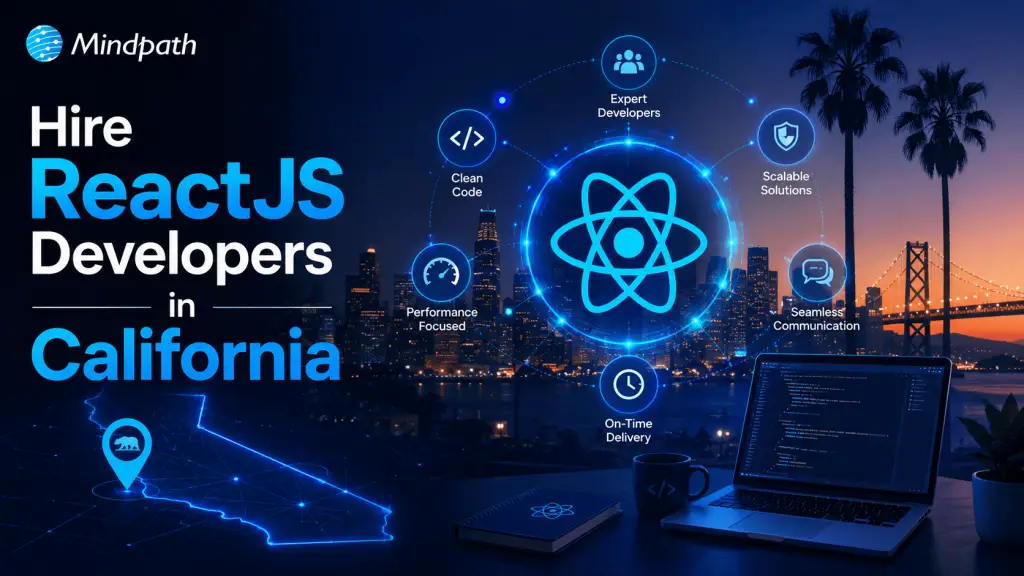
Hire ReactJS Developers in California

Are you looking for top ReactJS developers in California to build a high-performance web application? Do you need experts who can create scalable, fast, and user-friendly solutions? Finding the right developers can be challenging, but with the right approach, you can hire the best talent to bring your vision to life.

California is home to some of the greatest ReactJS developers, making it an excellent location to discover top talent for your web development requirements. Whether you’re creating a dynamic web application, a complicated business solution, or improving an existing platform, hiring talented ReactJS developers can help you create quick, scalable, and user-friendly solutions.
With the increasing need for high-performance web applications, organizations want developers that can use ReactJS to provide seamless user experiences. California’s booming technology ecosystem gives access to seasoned individuals who understand current development trends, best practices, and industry standards. Hiring the proper ReactJS developers ensures that your project is constructed for efficiency, adaptability, and long-term success.

Let’s explore how you can find and hire skilled ReactJS developers in California for your project!

Steps to Hire ReactJS Developers in California

1. Define Your Project Needs

To hire a ReactJS developer in California, begin by describing the sort of application you want. Whether it’s an e-commerce platform, a SaaS solution, or a business tool, having a clear vision helps you choose the best developer. List the project’s needed features and functions, such as user authentication, payment processing, and real-time updates. A well-defined feature list helps the developer grasp the scope of work. Creating a budget and project timeframe is also essential. Determine your investment budget and set timeframes for development milestones. A well-structured budget and timetable serve to expedite the recruiting process and guarantee that everything runs smoothly. By carefully outlining your project requirements, you can discover a ReactJS developer with the required competence to produce a high-quality, scalable, and efficient application.

2. Write a Clear Job Description

A well-written job description will help you recruit the best ReactJS developers in California. Clearly define the project details, such as the sort of application being built and the intended results. Define important duties to help applicants understand their involvement in the project. Specify the fundamental abilities necessary, such as knowledge of ReactJS components, state management, and hooks. If the project requires complicated functionality, it includes extra abilities such as Redux, TypeScript, or API integration. Indicate your desired experience level: junior developers for easier duties, mid-level for greater responsibilities, or senior developers for advanced problem-solving and leadership. Providing this transparency helps you obtain applications from the most qualified people. A well-structured job description simplifies the hiring process, making it simpler to identify a developer who suits your project requirements and technical expectations.

3. Source Qualified Candidates

Finding the best ReactJS developer in California begins with looking in the proper locations. Use employment boards like LinkedIn, Indeed, and AngelList to connect with competent developers who are actively searching for work. These systems enable you to screen individuals based on their experience, talents, and location. Networking is also a good approach to uncover great talent. Engaging with industry leaders, attending tech meetings, and joining online developer groups can lead you to competent ReactJS developers through recommendations and referrals. Working with specialized tech recruiting companies is a more targeted strategy. These agencies have access to pre-screened candidates, which saves time and effort during the hiring process. Using numerous sourcing techniques, you can locate highly competent ReactJS engineers who meet your project’s demands and technical specifications.

4. Screen Resumes and Portfolios

Once you’ve compiled a list of possible ReactJS developers in California, evaluate their resumes and portfolios. Look for applicants that have hands-on expertise with ReactJS and are familiar with major frameworks like Redux, Next.js, and TypeScript. Examine their previous projects to determine their technological competence. A successful portfolio should include well-structured, useful, and responsive apps. Pay special attention to projects that exhibit proficiency in creating reusable components, maintaining state effectively, and integrating APIs. Assess their knowledge of JavaScript foundations, as ReactJS depends significantly on JavaScript principles such as ES6 capabilities, asynchronous programming, and DOM manipulation. Candidates with strong JavaScript skills are more likely to manage complex development tasks effectively. With rigorous portfolio and resume screening, you may create a shortlist of the most skilled developers who have the right experience and technical expertise for your project.

5. Conduct Technical Assessments and Interviews

After selecting applicants, the following stage is to assess their technical talents and problem-solving ability. Conduct code challenges to assess their ReactJS competency, with an emphasis on component development, state management, and performance optimization. Evaluate their abilities to build clean, efficient, and scalable code. In the interview, ask technical questions on essential ReactJS concepts including the virtual DOM, JSX, lifecycle methods, and hooks. Understanding the principles is critical for creating high-quality apps. Beyond technical competence, assess communication, cooperation, and teamwork abilities. Developers frequently collaborate with designers, backend engineers, and project managers, thus assessing their teamwork skills is essential. Strong problem-solving abilities, effective communication, and adaptability are essential characteristics of a great ReactJS developer. By mixing coding challenges with in-depth conversations, you can confidently select a developer who meets your technical and project requirements.

6. Make an Informed Hiring Decision

After conducting technical tests and interviews, thoroughly analyze each candidate’s overall suitability for the position. Consider their technical proficiency, problem-solving talents, and ReactJS experience. Examine their previous work, coding style, and approach to issues to guarantee they can manage your project’s complexity. Beyond technical knowledge, evaluate cultural fit and collaborative abilities. A developer that shares your company’s beliefs and work environment will be more productive and cooperate with your team. Once you’ve found the ideal applicant, negotiate a salary plan based on their expertise and industry norms. Discuss project expectations, work arrangements, and contract terms to ensure that all parties understand. Complete the recruiting process by establishing onboarding protocols and giving access to relevant tools and resources. A well-designed hiring decision ensures you bring a skilled ReactJS developer on board who can contribute to the success of your project.

Looking for skilled ReactJS developers to build your next project? Mindpath provides top-tier ReactJS talent tailored to your business needs. Our expert developers deliver high-performance, scalable, and user-friendly applications.

Let’s bring your vision to life with the right expertise. contact Mindpath today! to hire the best ReactJS developers in California!

Discover the ultimate guide to hiring Node.js developers in London. Learn about the skills, benefits, and cost factors involved in finding the right talent for your project.