How Small Businesses Are Using AI Agents to Compete with Companies 10 Times Their Size

Home

How Small Businesses Are Using AI Agents to Compete with Companies 10 Times Their Size

How Small Businesses Are Using AI Agents to Compete with Companies 10 Times Their Size

Join our Newsletter!

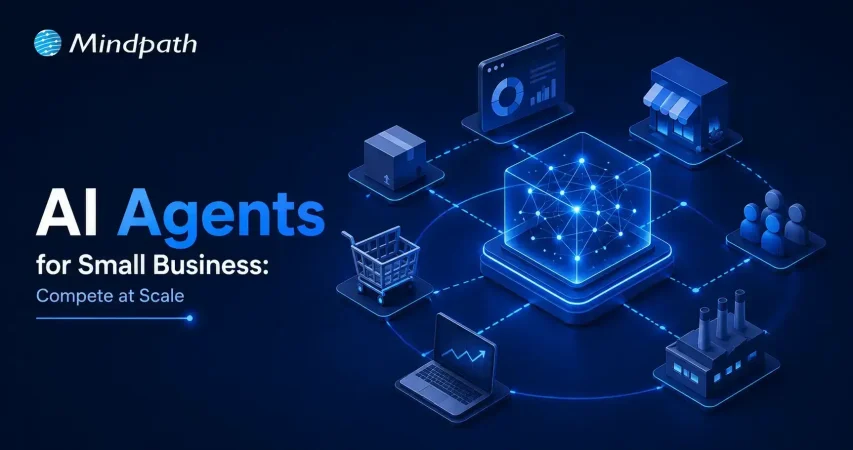
AI agents for small businesses

A scrappy 5-person start-up just secured its first client, one that was previously reserved for a corporation with thousands of workers. How did that happen? AI agents for small businesses are now filling in this void by taking care of customer support, sales follow-up, or general day-to-day tasks without requiring a large workforce. Owners are now investing in strategy and growth, while relieving themselves of the grunt work. In this rapidly changing landscape, smaller players have a fighting chance at the big leagues.

Key Takeaways

  • 01
    AI agents help small businesses operate efficiently without expanding their workforce.
  • 02
    Routine tasks can be automated, giving teams more time for growth.
  • 03
    Small businesses can compete with larger companies through smarter operations.
  • 04
    AI improves customer service, marketing, sales, and daily business management.
  • 05
    Affordable tools make AI adoption easier for businesses of all sizes.

It’s not that they’re looking to replace people. It’s all about providing small teams the firepower that larger teams have been using for years. The tasks that used to take whole departments are now accomplished in the background quietly, thus freeing up time for what matters. Owners are not bogged down with repetitive work and can concentrate on relationships, creativity and large decisions. In this blog, we’ll explore in depth how it works and what it means to businesses that are ready to compete smarter, not harder. So, let’s keep reading further!

Want to level the playing field with larger competitors? Discover how our AI development services can help you leverage AI for faster growth and efficiency.

Why Small Businesses Are Adopting AI Agents Faster Than Ever?

AI agents for small businesses are becoming more cost-effective and user-friendly, accelerating the adoption of AI agents among small businesses. They are user-friendly and can be used by the owners to automate the scheduling, invoicing, and customer service tasks without hiring additional employees or experts.

Small business AI automation also creates equality in the competitive landscape, enabling smaller teams to compete with larger ones. Today, this is accelerating quickly and across industries, as owners save time, reduce expenses and concentrate on growth by letting computers handle the repetitive tasks.

Key Factors Driving the Adoption of AI Agents for Small Businesses

1. Instant Scalability

Quickly and effortlessly increase your capacity as your business grows without adding new staff.

2. 24/7 Customer Engagement

Always available to your customers while providing fast, on-point answers.

3. Data-Driven Decision Support

Provides analytical information that subsequently helps in better decision-making.

4. Hyper-Efficiency and Cost Savings

Getting rid of monotonous tasks through automation and cutting down on the overall expenses.

5. No-Code Accessibility

Enables straightforward AI integration without needing any technical knowledge.

How Small Businesses Are Using AI Agents to Compete with Larger Enterprises?

The rise in adoption has led businesses to leverage AI agents in innovative ways to boost productivity, enhance customer experiences, and accelerate growth. Here are some of the most helpful applications of AI agents in small businesses today.

1. Always-On Support

AI agents for small businesses can handle customer inquiries, order updates, and support requests on various channels without delay. This enables small businesses to provide a credible service level at all times, with no compromise on customer satisfaction.

2. Smart Lead Generation

Businesses can leverage autonomous AI agents to help them find leads, validate contact details, and tailor outreach efforts, saving hours of manual research. This helps smaller sales teams produce more opportunities and compete with larger sales teams.

3. Personalized Marketing

AI-powered tools look at customer behavior, preferences, and buying history to craft highly relevant marketing campaigns. Businesses can use AI for small businesses to provide personalized experiences, leading to better engagement, conversion rates, and customer loyalty.

4. Content Scaling

It can be difficult to produce content regularly when you’re working with limited resources and a small team. AI agents can generate blog posts, social media posts, emails, and promotions from just one piece, ensuring businesses stay active on various platforms.

5. Predictive Planning

AI agents continually assess sales trends, seasonal demand, and business metrics, helping to guide more intelligent decision-making. This allows businesses to minimize waste, prevent stock shortages and make better financial decisions.

6. Smarter Hiring

The process of recruiting can be a time-consuming task, including resume screening, candidate evaluation, and onboarding. AI automation for small businesses streamlines these processes, making it easier to hire the right people and concentrate on creating better experiences in the workplace.

7. Rapid Execution

In most cases, small businesses realize an edge when they are able to start following up on new opportunities quickly. By streamlining repetitive tasks, AI agents can lower operational delays, allowing businesses to navigate market shifts and customer expectations more quickly.

8. Financial Automation

Manual handling of invoices, payments, and financial records can lead to unwarranted administration. AI agents perform these tasks in the background, increasing accuracy and freeing up business owners’ time for growth-focused initiatives.

Must-Know Insights

  • 38% to 78% of small and medium businesses (SMBs) use or are trying out AI tools and autonomous agents.
  • According to businesses, there has been a 133% rise in productivity as a result of AI-led automation.
  • The use of AI can lead to a 25%-30% decrease in the costs of running a business.
  • AI support available 24/7 helps attract more sales and enhance the level of customer satisfaction.
  • On average, companies make $3.70 for every dollar they invest in AI.

Popular AI Agent Examples Small Businesses Are Using Today

The growing popularity of AI agents for small businesses comes from their ability to solve real business challenges without adding complexity. Here are some popular AI agent examples that small businesses are using today to save time, improve efficiency, and stay competitive in a fast-moving market.

1. Sales & Outreach

These AI-powered business tools help businesses find potential customers and manage outreach more efficiently. Small teams can spend less time prospecting and more time closing deals.

2. Customer Support

Customer inquiries can be handled quickly and consistently throughout the day. This improves customer satisfaction while reducing pressure on support teams.

3. Admin & Scheduling

Daily tasks like scheduling meetings and managing emails become easier to handle. Teams stay organized and can focus on higher-value work.

4. Content Marketing

One piece of content can be turned into multiple formats for different channels. This helps businesses maintain a strong online presence with less effort.

5. Finance & Invoicing

Routine financial tasks such as invoicing and payment tracking can be managed automatically. This saves time and helps keep business records accurate.

Ready to Give Your Small Business a Competitive Edge?

The adoption of AI agents for small businesses is changing how companies operate, grow, and compete. By automating routine work, improving customer experiences, and supporting smarter decisions, small teams can achieve more while focusing their energy on strategic business goals.

At Mindpath, we provide AI development services that help businesses build practical and scalable solutions tailored to their needs. Whether you want to automate workflows, improve customer engagement, or increase operational efficiency, our team can help you turn AI opportunities into measurable business results.
Frequently Asked Questions

1. Are AI agents for small businesses expensive to implement?

Not necessarily. Many solutions are available through affordable subscription plans, making them accessible even for small teams and startups. The cost is often lower than hiring additional staff for repetitive operational tasks.

2. What tasks should businesses automate first?

The best starting point is usually time-consuming and repetitive work such as customer support, appointment scheduling, data entry, and invoice management. Automating these areas can create immediate time savings and improve overall efficiency.

3. How quickly can AI agents for small businesses deliver results?

The timeline depends on the use case, but many businesses notice improvements within a few weeks. Faster response times, reduced manual work, and smoother daily operations are often among the earliest benefits.

4. Can AI agents work alongside existing employees?

Yes. AI agents are designed to support teams by handling routine tasks and administrative work. This allows employees to focus on customer relationships, strategic planning, and other activities that require human judgment.

5. How can a small business choose the right AI solution?

Start by identifying the biggest operational challenge or bottleneck. The right solution should address a specific business need, integrate with existing systems, and provide measurable improvements in productivity or customer experience.

Related Post

AI Tech Stack Guide

A solid and consistent AI tech stack is crucial to building powerful AI applications that actually operate. It merges the right data tools, machine learning frameworks, cloud environments, and deployment platforms to ensure your app absorbs data, learns from it, and improves over time. Smart decisions made at each layer will create a smoother development cycle, giving you a more powerful and scalable final product.

Every component of an AI tech stack combines to enable your application to be precise, quick, and able to handle real-world obstacles. Understanding how each piece is put together will enable you to sidestep potential obstacles and build smarter solutions. In this blog, you will see how to combine all of these pieces to build AI-powered applications that pass the real-world test.

Want to enhance your product with intelligent features? From recommendation engines to predictive analytics, Mindpath’s AI development services bring advanced capabilities to your applications.

What is a Tech Stack?

A tech stack is the group of tools and technologies used to build and run a software application. It includes everything from the AI programming languages and frameworks to the databases, servers, and APIs that help different parts work together. Every choice you make for your tech stack shapes how your product works, how easily it can grow, and what skills your team will need to keep it running smoothly.

A good tech stack also makes it easier to track how people use your product and see where you can improve. For any company building software, investing in the right tech stack is an important step. It gives your team what they need to create, maintain, and improve your product, so it keeps meeting customer needs as you grow.

What Does AI Tech Stack Mean?

An AI tech stack encompasses all of the required tools, frameworks, libraries, and systems for the full development, deployment, and management of an AI-powered application. It covers the whole journey of an AI application from when you find and clean data, to training your model, to getting it in action. Whether it is a chatbot, image analysis, or a predictor, the right tech stack will seamlessly work in the background to optimize the performance of your solution while it learns.

Finding the right combination of tools can keep your team organized and the project prepared to scale. Having a clear tech stack allows you to spend less time fixing a glitch and more time creating a smart feature that provides value. Preparing a clear tech stack can also provide you with a solid foundation to better manage more users, test new ideas and iterate on the AI solution, while adapting to the changing requirements of the technology.

Looking to align your AI tech stack with the most impactful advancements in the industry? Discover the top AI trends shaping the next generation of intelligent solutions.

Types of AI Tech Stack

There are different types of Artificial Intelligence tech stacks, each designed to handle specific tasks and goals. Understanding these categories helps you choose the right tools for your project’s needs.

Types of AI Tech Stack

1. Generative AI

The GenAI tech stack provides the means to build intelligent systems that can produce new products like text, images, or audio. It blends together the powerful models available, the right data, and the handiest tools to streamline and improve development.

2. Domain-Specific AI

Some sectors require targeted stacks to accommodate specialized needs and regulations, such as healthcare, finance, and retail, that engage with trusted AI outcomes.

3. Enterprise AI

This works with large organizations and allows them to develop their own AI capabilities with respect to their internal processes and suitability for their growth. It integrates bespoke development, optimal operations, and seamless integration, providing an organized approach to their more complex requirements.

4. Consumer AI

It focuses on delivering users top-level, helpful, simple, and fast AI experiences they can engage with every day. Consumer AI taps into models, smart apps, and solid cloud or edge connections to produce a seamless experience for users.

Curious about where AI is headed? Head to our blog The Future of AI: How AI is Transforming the World to learn more!

Layers of an AI Tech Stack

Building an effective AI system means understanding how each layer supports the next. These layers work together to turn raw data into smart, reliable applications.

layer of an AI tech stack

1. Infrastructure Layer

This layer forms the base of a modern AI stack, giving you the hardware and software needed to build and run AI systems. It covers everything from powerful processors to storage and operating systems that keep everything running smoothly. Without a strong foundation here, AI development would be slow and unreliable.

2. Data Layer

Good data is the heart of AI application development. This layer handles how data is collected, stored, cleaned, and prepared for use. Clean, well-organized data helps models learn accurately and perform better.

3. Model Layer

This layer is where you build and train the brains of your AI. It includes frameworks and tools that make it easier to design, test, and deploy models. A well-managed model layer speeds up AI app development and boosts results.

Must Read: AI for Customer Service

4. Application Layer

Here, all your hard work connects directly with users. This AI tech stack layer includes the user interface, APIs, and logic that bring your AI features to life. A clear application layer ensures people get real value from your AI.

5. Observability and Governance Layers

These layers help you keep an eye on how well your AI works and that it stays secure and fair. They cover monitoring, performance checks, and rules for data protection. Together, they build trust and long-term success.

6. Orchestration Layer

This part keeps every piece of your AI system working together smoothly. It manages workflows and automates tasks to save time. Proper orchestration means you spend less effort fixing things and more time improving them.

7. Generative Model Layer

This layer focuses on models that can create new content like text or images. It uses strong foundation models and customizes them for what your project needs. A good setup here drives innovation for creative AI solutions.

Struggling to choose the right AI model to power your AI-driven application? Explore our detailed guide on the top AI models to understand their capabilities, strengths, and real-world applications

Best Practices for Building an AI Technology Stack

Building an effective AI tech stack takes careful planning and the right approach for your goals. Following best practices helps you make smart choices and get the most out of your AI development tools and resources.

1. Define Your AI Goals Clearly

Start by knowing exactly what you want your AI tech stack to do. Clear goals help you choose the right tools and avoid wasting time on things you don’t need. It could be improving customer service, automating tasks, or predicting trends. When everyone understands the goal, the project runs smoother and stays focused.

2. Prioritize Good Data Early

Good AI starts with good data that’s clean, organized, and reliable. Make sure you have a strong system to collect and manage your data from day one. Accurate data helps your models learn better and make smarter decisions. Invest time in setting up clear data processes to get the best results.

3. Keep It Flexible and Automated

A flexible setup makes it easier to update or add new tools as your needs change. Modular systems let you swap parts without starting over, saving time and money. Use automation to handle boring, repetitive tasks, so your team can focus on important work. This approach helps you scale and stay ready for growth.

Wondering which generative AI tools are transforming modern AI application development? Learn more about the top GenAI tools for the future of AI development to strengthen your AI tech stack.

4. Ensure Security and Teamwork 

Keeping your AI secure should always be a top priority, especially when handling private data. Follow all rules and regulations to stay compliant and avoid risks. Make sure your team works well together by setting clear roles and sharing information. Strong teamwork and security build trust in your AI system.

5. Keep Improving Your Models

Your AI models should never stand still. Create a process to check how they perform and update them with fresh data. This helps your system stay smart and relevant as things change. Regular updates mean better results and a competitive edge.

6. Plan for Easy Growth

Think ahead so your system can handle more users, bigger data, and new features as you grow. A scalable setup saves you from costly rebuilds later. Make sure your tools and infrastructure can expand without any problems. This way, your AI stays strong no matter how much your business grows.

Not sure how to strategically implement AI beyond just the technical stack? Explore our detailed guide on AI in business strategy to understand how to turn AI capabilities into measurable business value.

Looking to Power Your Business with Smart AI Tech Stack?

A clear and well-structured AI tech stack makes it easier to turn complex ideas into reliable AI applications. By choosing the right tools and following smart practices, you can handle data better, keep your systems secure, and scale with confidence. A good foundation now means your solutions will adapt smoothly as your needs and goals grow.

At Mindpath, we offer trusted AI development services to help you build and maintain AI solutions that work in real business scenarios. Our team combines the best tools and strategies to design applications that learn, perform, and deliver results. Let us help you leverage AI to achieve your goals and maximize the value of your investment.

SaaS Development Services

Selecting the appropriate SaaS development services may seem like walking through a rapidly shifting technological environment. Businesses in the present day require solutions that are innovative, scalable, and flexible. You may end up comparing different providers, and each one of them claims to have unique expertise. The difficulty lies in finding a service that is consistent with your objectives and generates real value. It involves thinking outside the box and taking into account teamwork, problem-solving, and sustainability. So, how are you going to find a service that best suits your business vision?

The key is to find a partner that is knowledgeable about your growth strategy and technology needs. Successful SaaS development services engage both hands-on experience and progressive innovation. When you are seeking options, make sure you take into account compatibility with your team, development strategy, and scalability. You require a clear understanding of procedures, communication, and delivery schedule. This blog will help you make the right decision in your SaaS development journey. Let’s dive in together!

Want to choose the right partner to build scalable and efficient SaaS software for your business? Mindpath’s  SaaS Development Services provide expert developers and custom solutions to deliver growth-oriented applications.

Understanding Software-as-a-Service (SaaS) Development

SaaS development refers to the development, deployment, and maintenance of software applications delivered over the Internet as a service. These applications are cloud-based, unlike the conventional software. They are available to users either on a web browser or on an app interface. An effective SaaS development service makes applications to be scalable, secure and user-friendly. It concentrates on delivering constant updates and excellent user experiences across all devices.

SaaS development needs proper software engineering and cloud knowledge. Developers should also know what customers require and what is trending in the market. This understanding enables the creation of software, which is efficient, reliable, and sustainable. SaaS development focuses on cooperation, problem-solving, and constant enhancement in order to fulfill business objectives. It guarantees the product to expand with the user requirements without compromising the performance or security at any point.

Want to understand how SaaS can streamline your operations and drive business growth more efficiently? Discover our guide on the benefits of SaaS to explore how it enhances scalability, flexibility, and cost savings.

The following are reasons why businesses today require SaaS development services:

1. Cost Optimization

SaaS reduces start-up infrastructure and the cost of licensing. Companies enjoy the benefit of stable prices and expenditure.

2. Scalable Architecture

SaaS software development is capable of scaling users and features in an easy way. The systems can easily adapt to growth and demand.

3. Anywhere Accessibility

The use of the cloud allows remote and distributed teams. Users can be able to work anywhere safely.

Must Read: Cloud Security Tools

4. Rapid Deployment

The SaaS solutions take a shorter time to launch via browsers. This minimizes the setup time and fast-tracks time to value.

5. Simplified Maintenance

Service providers deal with updates, security, and performance. SaaS developers assist in lowering internal IT workloads.

6. Innovation Readiness

SaaS solutions are compatible with contemporary tools and artificial intelligence. This helps companies remain competitive and data oriented.

Wondering how AI can transform your SaaS product with automation and predictive capabilities? Read our guide on the benefits of AI to discover its impact on growth and efficiency.

Key Steps to Choose the Right SaaS Development Services

The choice of SaaS development services requires a clear idea, planning, and business orientation. The most important steps to selecting SaaS application development services that facilitate long-term growth are as follows.

Key Steps to Choose the Right SaaS Development Services

1. Define Your SaaS Idea and Objectives

Be clear about your SaaS concept, what problem it will address, and who your audience will be. Clear goals contribute to the alignment of attributes, functionality, and business objectives in the long run. This transparency enables the SaaS development services to create a product that is focused and efficient.

2. Research Potential Development Partners

Begin by doing research on credible SaaS development companies that have a successful track record with SaaS projects. Check their portfolios, case studies, and feedback from clients to determine credibility. This study can assist you in narrowing down partners who can provide scalable solutions.

3. Assess Technical Skills and Expertise

Evaluate the technical competence of the in-house development team in the front end, back end, and cloud computing. Ensure that they know the process of developing secure and scalable SaaS applications. Well-developed technical capabilities reduce the development risks and improve the overall performance of the product.

4. Review Project Management Practices

Understand how the company manages schedules, work and communication in the development process. Agile project management is flexible and responds more rapidly to changes. Analytical thinking will ensure consistency and quality in development.

Must Read: SaaS Challenges for Businesses

5. Understand the Development Process

Inquire about their entire development cycle such as designing, testing, and implementation. Make sure that security and performance, as well as scalability, are considered at an early stage. A trusted Saas development platform enhances easier cooperation and implementation.

6. Check Industry Experience

Experience in the industry helps teams to know more about your business challenges. Experienced developers are able to foresee risks and recommend workable improvements. This results in improved custom SaaS development projects.

7. Prioritize Security and Compliance

Make sure that the development team has good security standards and compliance requirements. The process of development should include data protection and compliance with regulations. This ensures the safety of user information and builds up confidence in the product.

8. Evaluate Support and Make the Final Decision

Evaluate the capacity of the company to offer long-term support and maintenance. Constant improvement and interaction are key to successful products. Select SaaS development services, which reflect your growth plans and vision.

Want to stay ahead in the competitive market by understanding how SaaS is evolving? Discover our guide on SaaS trends to explore the latest innovations shaping the future of the industry.

Ready to Transform Your Business with SaaS?

Selecting the appropriate SaaS development services will keep your company competitive, scalable and efficient. Successful SaaS products are the result of clear planning, technical expertise and strong project management. Using systematic steps assists in choosing partners who provide secure, reliable and innovative solutions. Having the right team ensures your software keeps up with the business requirements and enhances performance and user satisfaction.

At Mindpath, we provide professional custom SaaS development services based on your business objectives. We are a team of prolific developers and present scalable, secure, and user-friendly solutions. Our priorities are innovation, a smooth partnership, and continuous support to achieve optimal performance of your SaaS product. Mindpath is the choice that ensures a future-proofed platform that is designed to expand with your users and business vision.

Support Is One Click Away

Featured Posts

Related Post

Discover the key factors influencing software development costs and how to optimize your budget. Learn how Mindpath can help.
Explore how Generative AI in Human Resources is revolutionizing recruitment, making HR processes smarter and more efficient.